
Don't Be the Best, Be the Only: Winning in an AI World
How to compete in an AI world by remaining human, non-fungible and fully yourself. Machine intelligence is becoming abundant. A distinct human presence is becoming scarce.
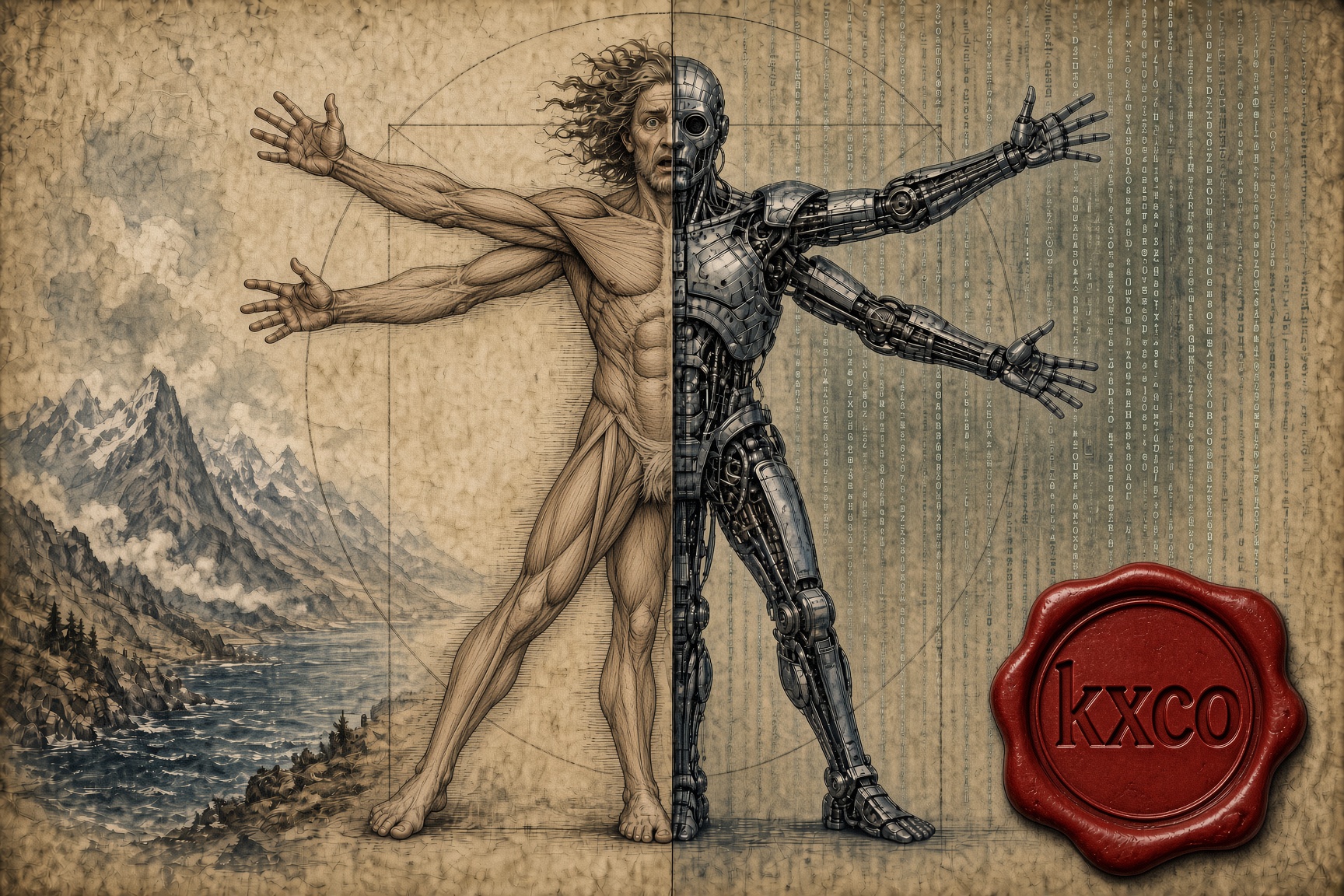
There is a version of the AI conversation that is mostly arithmetic. Tokens per second, parameter counts, benchmark scores, capital expenditure. I write about that side of it constantly, because it is where the money moves. This piece is about the other side, the one that decides whether any of it is worth anything to you personally.
Machine intelligence is becoming abundant. A distinct human presence is becoming scarce. Everything that follows comes from taking that sentence seriously.
The new competitive reality
AI is no longer a distant prospect. It writes, codes, designs, analyses, predicts and iterates at a scale and speed no individual can match. It does not sleep. It does not doubt itself the way we do. It improves with every cycle of data. Competing against it on the old metrics of speed, volume, consistency and pure technical competence is a losing proposition.
The people and organisations that will still matter are not going to win by becoming better machines. They will win by becoming more distinctly, stubbornly, imperfectly human.
The conventional advice has always been to be the best. In an AI world that advice is incomplete, and it is becoming dangerous. The sharper strategy is this: don't be the best, be the only.
That is not a motivational slogan. It is a competitive framework for an era in which intelligence is becoming abundant and originality is becoming scarce. I have written before about the discipline of independent thinking and about why your humanity is now your greatest asset. Those two ideas converge here. In a world that increasingly treats people, skills and outputs as interchangeable units, the highest leverage position available to you is the opposite one. Non-fungible. Unique. Irreplaceable in the specific way only you can be.
What non-fungible actually means
Fungible goods are interchangeable. One barrel of Brent is as good as another of the same grade. One dollar is as good as another. That is the whole basis of a liquid market, and it is a useful property for a commodity to have.
Non-fungible assets are not interchangeable. A specific painting. A particular piece of land with its own history. A human being with a lived trajectory. These cannot be swapped without a loss of meaning, and the loss is the point.
AI is extraordinarily good at producing fungible competence. It is far weaker at producing the non-fungible residue of a real life: judgement shaped by failure, taste formed over decades, moral hesitation, irrational loyalty, sudden insight born of contradiction, and the particular way one person notices what everyone else walked past.
Your competitive position is not to out-optimise the machine. It is to remain non-fungible.
The fungible trap
Most responses to AI fall into the same pattern. People try to close the gap by learning the same tools, adopting the same polished voice, optimising the same workflows and producing work that looks more and more like everyone else's. The result is a rising tide of competent, interchangeable output.
When everything starts to feel the same, the marginal value of better collapses. What holds its value is whatever cannot be averaged, substituted or replicated at scale.
Watch how fast this happens in practice. A tool arrives, a template forms around it, and within a quarter an entire professional category sounds identical. The market for fungible competence is getting crowded and low margin very quickly. The market for non-fungible presence, judgement and originality is not.
Remain you
Your real edge is not a skill that can be downloaded or a prompt that can be refined. It is the accumulated weight of your actual existence. The specific mix of experiences, scars, private obsessions, cultural background, contradictions, relationships and hard won pattern recognition that no training set fully contains.
AI can simulate styles with impressive fidelity. It cannot simulate the particular way you frame a problem after carrying certain costs, or after noticing certain patterns across years of real consequence.
Protect that fingerprint. Do not sand it down to fit the current template of professional, optimised or AI native. In a world flooding with frictionless content, the rough edges of a real person stand out precisely because they are expensive to produce and impossible to mass manufacture.
Work on the things that make you you. That is not lifestyle advice, it is the core strategy. Double down on the strange intersections that only exist in your particular configuration. The combination of domains you have actually lived. The taste you developed in real rooms with real people. The willingness to care about certain questions for longer than is efficient. Those combinations are hard to replicate because they required a life, not a training run.
Don't let AI steal your stupid
Here is the part almost nobody says out loud.
Don't let AI steal your stupid.
That messy, half-formed, slightly dumb idea you have in your head? The one that feels unclear or even embarrassing? That's often where the real gold is.
When you let AI instantly clean it up, structure it, and make it sound smart, you skip the part where you actually wrestle with the thought. You skip getting stuck. You skip being confused. And ironically, that's exactly where the best insights usually come from.
Some of my best ideas only appeared after I sat with something for days feeling lost, frustrated, and unsure. The epiphany doesn't come from speed. It comes from friction.
AI is a powerful tool. But your ability to sit in discomfort and think slowly might be an even bigger competitive advantage right now.
Friction is not a bug in human cognition. It is the mechanism. Every good idea I have had arrived on the far side of a stretch where I looked, and felt, slow. The seduction of a fluent machine is that it removes the discomfort before the discomfort has done its work.
So keep a place where the half-formed thought is allowed to stay half-formed for a while. Write the ugly version first. Let it be wrong in private. Then bring in the tool.
How to use AI to make you more you
The most powerful and least discussed use of AI is not to replace your thinking or to accelerate average output. It is to use it as a research instrument that helps you become more specifically yourself.
Treat it as a sophisticated research assistant that works for your goals rather than the other way around.
Use it to explore the history, science, philosophy or practical detail behind the things that already interest you deeply.
Ask it to surface the strongest counter-arguments to your existing views so you can sharpen them.
Have it help you organise the notes, experiences and half-formed ideas that only you possess.
Let it draft variations of language so you can choose the one that still sounds like you.
In every case the direction comes from you. The machine supplies speed, breadth and structure.
Approached this way it becomes an instrument of intentional self maintenance rather than a force of homogenisation. You can research the origins of your own values, map the experiences that shaped your judgement, and articulate goals that are genuinely yours rather than the default goals the tools quietly optimise for, which are engagement, volume, polish and consensus.
The discipline is simple to state and hard to practise. Never let the tool set the destination. You decide what matters. You decide which questions are worth asking. You keep final judgement. AI can help you travel further and faster along a path that is already yours. This is the personal version of the argument behind why context is the new king in AI. The scarce input is no longer raw capability. It is the specific context only you can supply.
Intentional maintenance of who you are
In an environment that constantly pulls toward the average, remaining yourself takes deliberate, ongoing maintenance. Identity is not a static possession. It is a practice. Without intentional effort, the ambient pressure of tools, feeds and social incentives will slowly sand down the edges that make you non-fungible.
Run the audit properly, and act on the answers:
What experiences, relationships and private standards currently define me?
Which of those am I actively protecting, and which am I allowing to erode through neglect or convenience?
Where have I begun to sound, think or decide more like the median output of the tools I use?
What personal goals am I actually pursuing, and do my daily uses of AI serve those goals or quietly replace them with more generic ones?
This is not narcissism. It is strategy. The people who stay distinctive over decades are usually the ones who treat the maintenance of their own judgement, taste and relationships as non-negotiable work.
Retain your thinking
One of the quietest risks of powerful AI is cognitive offloading. When fluent answers arrive instantly, the temptation is to stop doing the slower, more effortful work of thinking. Over time the capacity itself weakens.
Judgement develops through use. Framing problems. Weighing incomplete information. Living with the consequences of a decision. Revising a belief when reality pushes back. None of that transfers to a tool without cost.
To retain your thinking, create regular conditions where you have to think without the safety net. Write before you prompt. Argue a position before you ask the model for its view. Sit with a difficult question for longer than the tools suggest is efficient. Use AI to stress test your reasoning after you have formed it, not as a substitute for forming it.
The goal is not to reject assistance. It is to keep the muscle of independent judgement strong enough that the assistance stays optional.
The machine is excellent at producing the most probable next token. Your value sits in the less probable. The context specific. The judgement that weighs variables the model has not weighted the same way, because it has not lived them.
Consider your personal goals
AI systems are trained on vast data and optimised for particular outcomes. Coherence. Helpfulness. Safety as defined by their creators. Engagement. Those are not necessarily your goals. When you use the tools without clarifying your own ends, you risk optimising for the system's defaults rather than for the life you actually want.
Before heavy AI use, go back to the questions that decide everything else. What kind of work do you want to be known for in ten years? Which relationships matter most? What questions do you want to have spent your finite attention on? What version of yourself would you respect if you met them later?
Let those answers govern how, when and why you engage the tools. AI can help you research paths toward those goals, surface relevant knowledge and remove friction from the parts that do not need you. It cannot supply the goals themselves.
If you are building AI systems
If your work involves creating or deploying these systems, a further responsibility applies. Include humanity. The faults, the genius and the beauty.
Models trained exclusively on polished, sanitised, high consensus data produce polished, sanitised, high consensus results. Real human intelligence is messier. It contains contradiction, irrational commitment, moral hesitation, sudden leaps that look like errors until they prove otherwise, and moments of unexpected grace. When those elements are edited out in the name of safety, efficiency or brand consistency, the systems do not get better. They get thinner. They lose the very qualities that make human judgement valuable in high stakes, ambiguous or novel situations.
Enzo Ferrari put it better than anyone in my industry has managed:
You find something different in our cars. I am not saying that it is always better, no, but it is something different. Why? Because there is the contribution of the human intellect.
This is how we are building the Round Table, KXCO's Ontology Engine.
KXCO and its products treat artificial intelligence not as a replacement for human judgement but as a means of bringing data and human expertise into the same operational frame. Across the platform, backend ontologies provide a structured, time-aware representation of entities, relationships and claims. These ontologies do not invent truth. They make the state of institutional knowledge explicit, attributable and usable by both people and machines.
That distinction matters more than any benchmark. An ontology that claimed to produce truth would be one more oracle asking to be trusted. An ontology that makes the state of knowledge explicit and attributable is an instrument, and an instrument keeps the human in the loop by design. We publish the reasoning where it can be inspected, which is why the public AI sector ontology exists at all, and why we later went back and graded thirty days of it in public, including the finding that broke.
The AI systems that will ultimately matter most are the ones that leave room for the full range of human experience instead of averaging it away. Build with an awareness of fault lines as well as strengths. Design for the genius that emerges from constraint and the beauty that appears in the unoptimised. The alternative is a generation of tools that amplify the median while eroding the edges, and the edges are where progress and meaning usually live. It is the same case I have made about ontology as the idea finance has been missing and about AI governance infrastructure as an institutional risk, approached from the personal side rather than the balance sheet side.
Disconnecting is part of the work: the E-Detox
When I say work on the things that make you you, I am talking in large part about disconnecting. Call it an E-Detox.
AI is addictive by design. The feedback is immediate, the output is often flattering, and the sensation of productivity feels entirely real even while the deeper capacities that make a person non-fungible are quietly atrophying. Limit your AI time deliberately. Treat it the way serious people once treated other powerful instruments. Useful, powerful, never allowed to colonise every hour or every decision.
Leaving the phone behind is not a luxury. It is maintenance of the self that no tool can perform on your behalf.
Most of all, protect and expand your connection to actual people.
Go talk to someone. Talk to a stranger. Talk to someone you disagree with. Spend unhurried time with your family and your friends.
For most of us this now takes conscious, scheduled effort. Plan interactions that have nothing to do with screens and nothing to do with AI. Discuss the real world things you enjoy. Ask other people about the real world things they enjoy. Notice what happens in a conversation when nobody is performing for an algorithm, optimising for engagement, or checking a device.
Those moments refill a well the machine cannot reach. Lived judgement, emotional calibration, contextual humour, and original perspective formed in the presence of other minds.
This is not nostalgia. It is maintenance of the asset that differentiates you. The more the surrounding environment becomes mediated and optimised, the higher the relative value of direct, unmediated human contact.
The practice of remaining non-fungible
Being non-fungible is not a one time declaration. It is a practice, and it consists of repeated choices to invest in the parts of yourself that cannot be substituted.
Independent thinking sits at the centre of it. Use AI to challenge and expand your views after you have formed them. Spend time in environments that force you to think without the safety net of immediate generation. Read slowly. Argue in good faith with people who see the world differently. Sit with problems for longer than the tools suggest is efficient. Notice what you notice when the feed is off. These habits compound, and over time they produce a quality of judgement that is difficult to replicate because it was formed under conditions the average model does not share.
The same principle applies to relationships and physical presence. AI can simulate conversation. It cannot simulate the particular history you share with another person, the weight of a real silence, or the trust that accumulates only through repeated, unoptimised interaction. Family dinners where the topic is not AI. Walks with friends where the phones stay in pockets. Conversations with strangers that go somewhere unexpected. These are not inefficiencies. They are the raw material of a non-fungible life.
Practical implications for daily work
Treat AI as a lever, not as an identity. Use it to remove the parts of the work that do not require you. Keep the parts that do: the initial framing of the problem, the selection of what matters, the emotional and moral calibration, the decision to care about something most people would ignore, and final responsibility for the output.
Build in public around your actual point of view rather than a generic thought leadership persona. Specificity travels. Generalities skim. People follow the signal that something was made by a particular human who meant it.
Accept that some of what makes you distinctive will look inefficient by current standards. Depth often does. Relationships often do. Taste that was earned slowly often does. Those are features in an environment that increasingly rewards the opposite.
Measure yourself less against other people's outputs and more against whether the work still feels as though it could only have come from you. That standard is harder to game and it lasts longer.
The scarcity that matters
In a world of abundant machine intelligence, the scarce resources become attention, trust and genuine originality. The first two follow the third. Once anyone can generate competent work on demand, people start hunting for the signal that something was made by a particular human who lived something, risked something, or cared about something in a way that cannot be prompted into existence.
You do not need to be the most intelligent person in any absolute sense. You need to be the person whose presence changes the room, the analysis or the relationship in a way no substitute can. That is not achieved by becoming a better generalist or a more fluent user of the latest model. It is achieved by becoming a more concentrated, more coherent, more lived-in version of yourself.
The economics of this moment are clear even when the surface is noisy. The rails are changing. AI, blockchain, new forms of capital and coordination. The underlying human realities of judgement, trust and uniqueness have not been repealed. Those who treat themselves as fungible units inside a large system will be priced accordingly. Those who invest in remaining non-fungible create a different kind of scarcity, which is the scarcity of a specific human being who cannot be replaced without loss.
Remain human, warts and all
The final instruction is the simplest and the hardest. Remain human, warts and all.
You do not need to be the most technically perfect or the most optimised version of yourself. You need to remain the only version of yourself that exists. The quirks. The inconsistencies. The particular way you care about certain things for longer than is reasonable. The faults that are also the source of certain strengths. The genius that shows up in unexpected places, and the beauty that is inseparable from the mess. That is what cannot be averaged away.
Use the tools. Respect their power. Limit their claim on your hours and on your identity. Go talk to people. Disagree productively. Spend time with the people you love on subjects that have nothing to do with the current technological moment. Discover and protect the real world activities that restore you. Keep thinking for yourself. Keep becoming more specifically who you are. Align every use of AI with goals that are genuinely yours.
In the end, the people who thrive will not be the ones who tried hardest to become machines. They will be the ones who stayed stubbornly, imperfectly, unmistakably human, and therefore non-fungible.
Don't be the best.
Be the only.
Remain you.
Common questions
What does it mean to be non-fungible in an AI economy?
A fungible worker is interchangeable with any other worker of the same grade, the way one barrel of oil is interchangeable with another. A non-fungible one produces something that would be lost if they were swapped out: judgement shaped by specific failures, taste built over years, and a point of view formed by a life rather than by a training run. AI is very good at fungible competence, which is exactly why it is repricing it downward.
Does using AI make you more generic?
It depends entirely on who sets the direction. If the tool sets the destination, it converges you on the median, because the median is what it was trained to produce. If you set the destination and use the tool for speed, breadth and structure, it does the opposite and helps you become more specifically yourself.
What is cognitive offloading and why does it matter?
Cognitive offloading is handing thinking to a tool until the underlying capacity weakens. Judgement is built by use, through framing problems, weighing incomplete information, and living with the consequences of decisions. The countermeasure is to write before you prompt, form a position before asking for the model's, and use AI to stress test reasoning you have already done.
What is an E-Detox?
Deliberately limiting AI and screen time and replacing it with unmediated human contact and real world activity. It is not a wellness exercise. It is maintenance of the specific capacities that make a person non-fungible: lived judgement, emotional calibration, contextual humour, and original perspective formed in the presence of other minds.
How should companies building AI systems apply this?
Include the full range of human experience rather than averaging it away. Systems trained only on polished, high consensus material produce polished, high consensus output, which is thin exactly where human judgement is most valuable, in high stakes, ambiguous and novel situations. Keep the human in the loop by design, and make the reasoning inspectable rather than oracular.
Further reading
Thoughts on Thinking, on terrain, subtraction and the difference between what drives you and what amplifies you.
As Claude Writes Claude: Why Your Humanity Is Now Your Greatest Asset, on the shift from expertise to judgement.
Why Context Is the New King in AI, on why raw capability stopped being the constraint.
Ontology Is the Idea Finance Has Been Missing, the institutional version of the same argument.
Inside the KXCO AI Sector Ontology, what the public map shows and what runs behind it.
Grading the AI Trade in Public, thirty days of the ontology scored against the record, including the finding that broke.
Ontology: Agentic AI and Infrastructure, the missing layer under agentic systems.
What is Physical AI and Why KXCO, where the machine layer meets the physical world.
KXCO: The Economic Operating System for the Human and AI Economy.
AI Governance Infrastructure Will Define Institutional Risk.
The full archive sits at livetradingnews.com/author/shayne-heffernan-phd.
Shayne Heffernan, Ph.D., is the founder of Live Trading News, the KnightsBridge Group, Knightsbridge Law and the KXCO.ai ecosystem spanning post-quantum cryptography, identity, attestation and enterprise ontology.
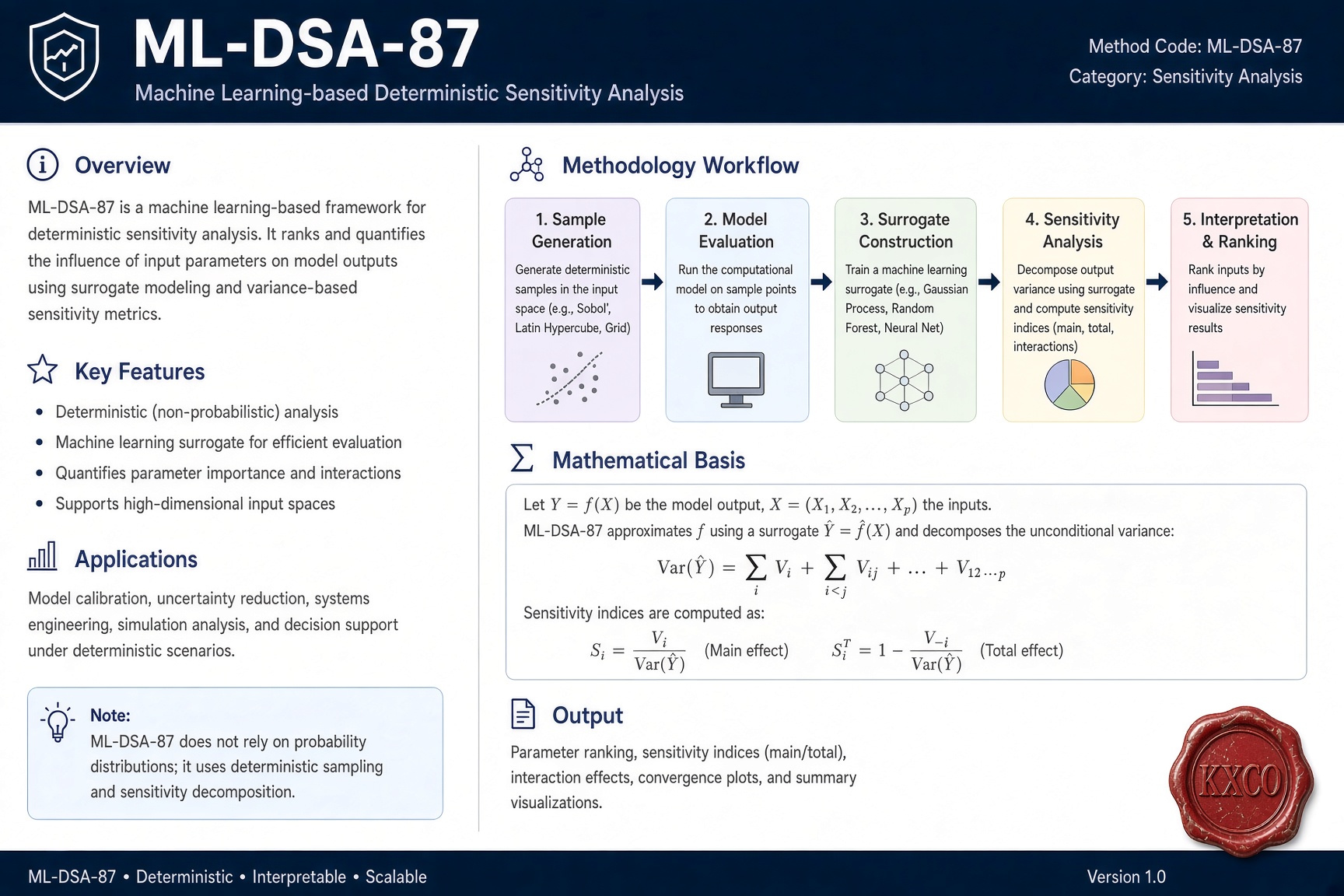
KXCO Now Verifies ML-DSA-87 in Consensus, the Signature Level Named by the NSA
On 6 October 2026 KXCO's chain began verifying ML-DSA-87 signatures as a rule of consensus, and the first ML-DSA-87 identity registered 28 seconds later. ML-DSA-87 is the category 5 level of NIST's FIPS 204, specified by the NSA for US national security systems and preferred by Australia's Information Security Manual. KXCO ships it for signing and for keys held in hardware, accepts it across its network and verifies it on chain, and anyone can check a verdict.

Post-Quantum Has a Deadline: 2030 for Keys, 2031 for Signatures
Executive Order 14412 gives federal high-value systems until 31 December 2030 for post-quantum key establishment and until 31 December 2031 for signatures. Six of the seven official calendars put a milestone in 2030. The Order reaches vendors through the contract, the purchase, the build, the data and the inventory. The runtimes already moved: a stock Node.js client negotiates X25519MLKEM768 by default. What is left is in the application.

The FDA Calendar to April 2027: 5 Biotech Stocks From the KXCO Biotech Ontology
The KXCO Biotech Ontology's board carries 11 pending FDA filings, due by 23 April 2027. Ranked on approval standing, the top five are BridgeBio's BBP-418, Cogent's bezuclastinib, Belite Bio's tinlarebant, Novo Nordisk's CagriSema and BioMarin's vosoritide. Ranked on consensus upside, they are Cullinan, Savara, Intellia, Mineralys and Pharvaris. No name is on both lists. This report covers BridgeBio, Cogent, Mineralys, Pharvaris and Savara.

The Evil Legacy of the French Revolution
The French Revolution is still sold as the birthday of the modern world. The ledger does not match the posters. It seized the Church's land and floated its paper money on the seizure, hunted the priests who would not swear, defined the nobility as a moral enemy, and put in their place a political class accountable chiefly to itself. Four knowledge-graph exhibits trace who put the king and queen on the scaffold, and how the template left France.
Every story, signed and delivered.
Subscribe to the kxco channel and get the headline, the AI-written key takeaways, and the chain-anchor link the moment we publish. Audio versions and per-ticker subscriptions arrive in the next iteration.