
Industrialising Intelligence: Demand, Scarcity and the Boundary of Sovereignty
On OpenRouter, AI agents now generate about seven times the tokens people do, and the limit on AI demand has, in my view, moved from people to power. Execution is becoming a utility. Selection is not, and KXCO builds software that keeps the decision with a named person.
For the whole history of computing, demand for computation was capped by people. Every search, document and line of code began with a person at a keyboard. That cap has come off. On OpenRouter, a platform that gives developers access to hundreds of AI models, software agents now generate 80% of all tokens, the units of text an AI model reads and writes. That is 130.9 trillion tokens a week from agents, roughly seven times the volume from people, according to the 2026 State of Enterprise AI report Menlo Ventures released on 3 November.
When machines generate most of the demand for machine work, the limit on that demand is no longer the number of people who can type. It is the number of watts a grid can deliver and the number of chips that can be plugged into it. Production stops being the scarce thing. The decision about what to produce becomes the scarce thing, and for every institution and government the question is who holds that decision.
The human cap has come off
Agents can now be given work of rising complexity and left to do it. Stanford's 2026 AI Index found that AI agents went from 12% to about 66% task success on OSWorld, a test of real computer tasks across operating systems, although they still fail roughly one attempt in three on structured benchmarks. An agent that finishes two tasks in three does not wait for a person between steps. It reads, writes, calls tools and reads again, and every one of those steps consumes tokens.
The crossover is recent. Agent traffic on OpenRouter overtook human traffic in early February 2026, and since then it has grown 37 times while human-driven usage grew 5 times (Menlo Ventures). Menlo Ventures calls OpenRouter just one channel, and it marks OpenRouter as one of its own portfolio companies (Menlo Ventures). OpenRouter sorts each application programming interface (API) key as agentic, human or mixed, using a weighted score of signals such as how often the key calls tools (Tom's Hardware). By my arithmetic, with agents at 80% and people at roughly a seventh of that, about 11%, the remaining 9% or so is mixed traffic.
The multiple needs one more qualification. An Andreessen Horowitz (a16z) chart of OpenRouter data put agents at 7.3 trillion tokens against 1.4 trillion for people as of August, about five times, on an earlier count than Menlo's. Andreessen Horowitz also wrote that more than 85% of agent tokens come from cached prompts: agents mostly reread what they have already seen (Tom's Hardware). That qualification describes the work itself. A person does not reread an entire contract before writing each sentence of a reply. An agent does, every time, and each reread is demand that no person would have generated. The count shows a machine doing a kind of work that people never did at this volume.
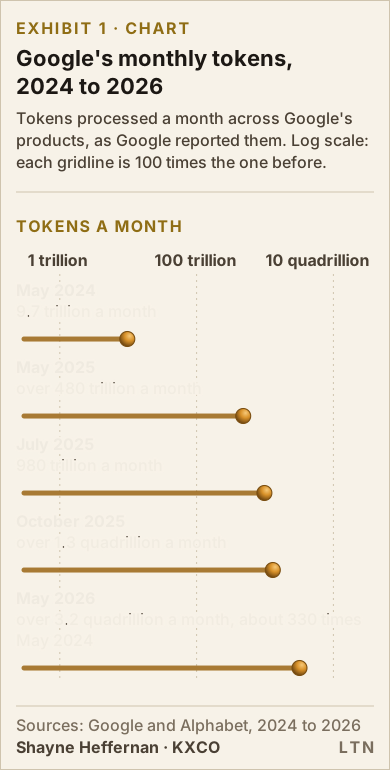
Google's own count tells the same story at a larger scale. At its developer conference on 19 May 2026, Alphabet's Google said it processed 9.7 trillion tokens a month two years earlier and over 3.2 quadrillion a month now (Google). At the same conference a year before, it had put the figure at over 480 trillion (Google). In between, Google reported 980 trillion monthly tokens in July 2025 and over 1.3 quadrillion on 29 October 2025 (Alphabet). That is a rise of about 330 times in two years. Inside Google, AI developer tools running on its agent-first platform, Antigravity, went from half a trillion tokens a day in March 2026 to more than three trillion a day by May (Google).
Once the person is no longer the bottleneck of execution, demand becomes a function of two physical quantities: electricity and compute. The industry already says so in its own units. NVIDIA describes the AI factories it sells as built for the lowest cost of tokens per megawatt. The unit of output is the token, and the unit of constraint is the megawatt.
Microsoft's chief executive, Satya Nadella, put it more plainly on the Bg2 podcast, as Tom's Hardware reported on 2 November 2025: "the biggest issue we are now having is not a compute glut, but it's power". He added that Microsoft may have "a bunch of chips sitting in inventory that I can't plug in" (Tom's Hardware). The International Energy Agency (IEA) estimates that data centres used about 415 terawatt-hours (TWh) in 2024, around 1.5% of the world's electricity (IEA). In its base case, that more than doubles to around 945 TWh by 2030, slightly more than Japan's total electricity consumption today, with AI the most important driver (IEA).
The constraint has moved from the number of people who can type to the number of watts that can be delivered.
Intelligence becomes an industrial utility
The consequence is the industrialisation of intelligence itself. We are learning to manufacture it, and we are learning to distribute it at a falling marginal cost, in the way a utility distributes power or water.
The price record shows how fast that has happened. Stanford's AI Index measured the cost of querying a model that scores as well as OpenAI's GPT-3.5, an earlier and widely used model, on MMLU, a standard test of language model knowledge. It fell from $20.00 per million tokens in November 2022 to $0.07 per million tokens by October 2024, a fall of more than 280 times (AI Index 2025). Stanford also reports that hardware costs have declined 30% a year and energy efficiency has improved 40% a year (Stanford HAI).
A utility has a recognisable shape. It is produced centrally, carried through a network, metered by the unit and bought by people who never see the plant. Intelligence now has every part of that shape. It is produced in data centres, carried over the internet, metered by the token and bought by companies that set budgets for it. At Google's conference in May, Sundar Pichai said many companies were already through their annual token budgets, "and it's only May", and that top companies process about 1 trillion tokens a day (Google). A budget measured in tokens works the way a budget measured in kilowatt-hours works.
Utilities have one more feature that matters to institutions. The buyer does not own the plant and does not set the tariff. A ministry that buys electricity does not decide how the power station runs, and nobody expects it to. When the utility is intelligence, the same arrangement reaches further, because the plant shapes the output: the model's training, its defaults and its terms of use travel with every answer it sells. That is where the question of sovereignty begins.
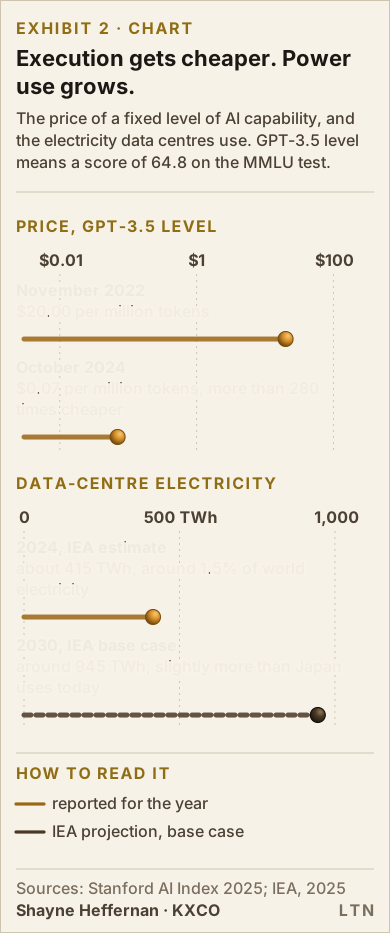
Exhibit 2 puts the two halves of the cycle side by side: the price from 2022 to 2024, and the electricity from 2024 to the IEA's base case for 2030. The cost of a unit of machine thinking is collapsing, while the electricity needed to produce all those units is climbing. That combination is how a utility forms: when each unit gets cheaper, total use rises, and the plant that makes it becomes the constraint.
For about 300,000 years, the distinguishing feature of Homo sapiens has been intelligence: the capacity to create new knowledge, to build models of the world and to solve problems no one had posed before. The fossils at Jebel Irhoud in Morocco are dated at 315,000 years, with a margin of 34,000. The 2017 paper that described them makes Jebel Irhoud the oldest African site that documents the early stages of Homo sapiens (Hublin and colleagues, Nature). For all of that time, intelligence was produced one person at a time and could not be bought by the unit. If the only remaining limit on producing it is the compute and power that can be brought to bear, the economics of knowledge change, and so does the organisation of the institutions built on knowledge.
What does not become a utility
The industrialisation of execution is real. What does not become a utility is the authority to decide what the utility is used for.
Execution can be commoditised. Selection cannot, or at least not without a change in kind rather than degree. Deciding what ought to be made, what ought to be refused and what ought to be revised after the third draft remains a human act, even when producing a single draft costs nothing.
Intent was never automated. It was subsidised by the cost of execution. When a draft took a team a week, the cost of the week forced a choice before the work began: nobody commissioned ten versions of a report to read one. Remove that cost and the subsidy disappears. A ministry can now have a hundred versions of a policy paper drafted overnight. Choosing which one goes to the minister, and the minister's decision on it, are what the cost of drafting used to hide. Neither has got any cheaper.
A change in kind would need a machine that carries the consequence of its choice: one that can be held to account by the people the choice affects. No AI system carries that today. A person does, and so does the institution the person acts for. On my site I describe the judgement that still matters as judgement "shaped by real consequence" (shayneheffernan.com). Selection stays with whoever carries the consequence, and for an institution that is a named person.
I have written about this from both sides. On my own site I put it this way: intelligence itself has become abundant, everything abundant gets cheap, and the scarce thing now is a distinct human presence. After forty years across capital markets, venture capital and emerging technology, the part that still cannot be automated is the judgement about which question was worth asking (shayneheffernan.com). In October, in Thoughts on Thinking in an AI World, I wrote that answers are cheap now, and that what stays scarce includes a decision a named person can stand behind.
For an institution, this changes where the risk sits. When execution was expensive, the danger was doing too little. When execution is nearly free, the danger is doing a great deal of work that nobody chose, and producing output whose author cannot be named when it goes wrong.
Sovereignty is the boundary
Sovereignty, in this setting, is the capacity to decide without asking anyone's permission. In politics, a state that cannot defend its territory is sovereign in name only, whatever its constitution says. In computing, a system whose model weights, training data and terms of service are all set by another party is not sovereign either. It is a tenant of the utility, and a tenant's terms can be changed by the landlord.
The same test applies inside the system, between the machine and the person using it. An architecture that treats the person as an input to be optimised fails it, because the person becomes a tenant of the system's objective. An architecture that keeps the person as the residual authority passes it. Residual authority means that whatever is not expressly given to the machine stays with the person, and three things are never given. The seed is the starting question, in the person's own words. The answers are the person's judgements on what the machine offers. The refusals are the ideas the person rules out.
For a government, a bank or a hospital, the test is practical. When execution runs on someone else's utility, three questions apply to every system: who decided, where is that decision recorded, and could it have been taken without anyone else's permission? A system that cannot answer them has handed part of the institution's authority to whoever runs it.
Those questions belong in procurement, before a contract is signed. A tender for an AI system can require the supplier to show where each decision is recorded and under whose name, which records leave the supplier's hands, and how a third party checks them without the supplier's help. A supplier that answers with a dashboard only it can read has answered the third question.
KXCO's answer: build the boundary
KXCO is a software company, and it builds its software as a boundary rather than as another layer of acceleration. The acceleration is arriving anyway, from the companies that build and sell AI capacity. What KXCO supplies is the part that stays with the institution: the record of who decided what, on what basis, and proof that the record has not been changed since.
KXCO states the rule on its own site: AI tools prepare the material and check it against the record, and a named person makes the decision. Its published commitments say the same: the institution keeps its knowledge, people keep decision authority, AI prepares and checks, and a named person decides.
On Round Table, the software at the centre of KXCO, the rule is enforced by the service. An outside AI agent can only propose. It cannot decide, approve or carry anything out, and an agent that calls the service directly to decide is refused. When a person turns down an agent's proposal, the decision is entered in the record under that person's name, and the proposal stays in the record with it (KXCO). Every claim in the record carries its source, the basis for it, a confidence level and the date it took effect, so a reviewer can see which claims applied on a given date and how they changed afterwards (KXCO). Analysts and AI models work from the same record, and the record shows which of them said what (KXCO).
KXCO builds its records so that another party can check them without KXCO's permission. It signs its documents, attestations (signed statements that something happened), webhooks (automatic messages between systems) and events with post-quantum keys, designed to stay secure against attack by quantum computers (KXCO), using ML-DSA, the signature standard that the US National Institute of Standards and Technology published as Federal Information Processing Standard (FIPS) 204 on 13 August 2024. Every current key in KXCO's key directory uses ML-DSA-87, the standard's Category 5 parameter set. The directory sits at a fixed public address so that any party can check a KXCO signature without an account and without asking KXCO for the key (KXCO).
A third party can also check an exported Round Table record offline. A standalone checker, written separately from Round Table's own code, recomputes the record's hash chain on the reader's own machine, with no network connection and no KXCO system in the path (KXCO). The hash chain is the series of linked fingerprints that shows whether any entry has changed.
That last point is sovereignty applied to proof. A record that can be checked only by asking its supplier is another tenancy. KXCO is also exact about what a check proves: it shows that a record has not changed since it was signed or anchored, and it does not show that the record is true (KXCO). The truth of a record stays a human judgement, made by a named person, and the signature shows that the judgement was not altered afterwards. The articles I publish on Live Trading News work the same way. Each one is signed with ML-DSA-87 and anchored on chain: the page of my 27 October piece shows its block, 5,866,100, and links the tools to check the signature offline (Live Trading News).
The boundary also runs through money. Licensed institutions hold the assets, KXCO supplies the software, and KXCO holds no customer assets (KXCO).
Then there is the Forge. The engine and the Forge are KXCO's own and proprietary, and KXCO does not publish the detail of its method. As I wrote on 17 November, the method is the edge, and an edge that is published is no longer an edge. What I will say is what the Forge is for. In October I made the case for building AI as an instrument of human minds, and the Forge is built on that principle. The person decides where the work goes and when it ends. Only the person's explicit no rules an idea out, and the decisions are the person's, not the machine's. The Forge extends a person's reach. It does not assume the person's authority. The separation is structural.
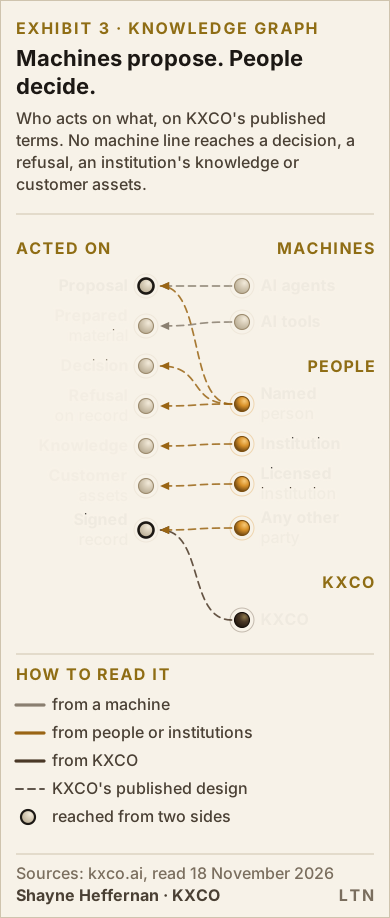
Exhibit 3 draws those published terms as a graph. The machines' lines end at proposals and prepared material. Decisions, refusals, an institution's knowledge and customer assets are reached only from the side of people and institutions. The proposal is where the two sides meet: an agent proposes, and a named person rules on it. KXCO's single line runs to the signed record, which any other party can check without asking KXCO.
The chooser stays human
The industrialisation of intelligence removes the person as the bottleneck of production. It does not remove the person as the source of selection. When execution is free, the chooser becomes the firm, because the choosing is what separates one firm from the next. KXCO builds so that the chooser stays human, named and on the record.
For institutions and governments, the practical test is the one in Exhibit 3. List every system that now produces work for you and, for each one, name who decided, show where that decision is recorded and say who can check it without asking the supplier. To see how KXCO answers those questions for an institution, write to KXCO at kxco.ai/contact.
Three numbers will show the pace from here. Google's next update of its monthly token count will show whether the climb from 9.7 trillion to 3.2 quadrillion is still running (Google). OpenRouter's agent share, 80% at the start of November, will show whether agent use keeps growing faster than human use (Menlo Ventures). The IEA's next estimate will show whether data-centre electricity is still on course for its base case of around 945 TWh by 2030 (IEA).
Stocks mentioned: $GOOGL (NASDAQ), $MSFT (NASDAQ) and $NVDA (NASDAQ).
Research references
Demand and agents
Menlo Ventures (2026). 2026: The State of Enterprise AI. menlovc.com.
Tom's Hardware (2026). AI agents use 5x more tokens than humans as cached prompts explode, headed for 10x. tomshardware.com.
Pichai, S. (2026). I/O 2026: Welcome to the agentic Gemini era. blog.google.
Pichai, S. (2025). Google I/O 2025 keynote. blog.google.
Pichai, S. (2025). Q3 2025 earnings call: CEO's remarks. blog.google.
Cost and capability
Stanford HAI (2025). The 2025 AI Index Report. hai.stanford.edu.
Stanford HAI (2026). The 2026 AI Index Report. hai.stanford.edu.
Stanford HAI (2025). Artificial Intelligence Index Report 2025. Stanford HAI.
NVIDIA (2026). What is an AI Factory? nvidia.com.
Power
International Energy Agency (2025). Energy and AI: Executive summary. iea.org.
Tom's Hardware (2025). Microsoft CEO says the company doesn't have enough electricity to install all the AI GPUs in its inventory. tomshardware.com.
The species
Hublin, J. J., and colleagues (2017). New fossils from Jebel Irhoud, Morocco and the pan-African origin of Homo sapiens. Nature.
The signature standard
NIST (2024). FIPS 204, Module-Lattice-Based Digital Signature Standard. csrc.nist.gov.
KXCO and the author
KXCO (2026). KXCO by Knightsbridge. kxco.ai.
Heffernan, S. (2026). Shayne Heffernan, Economist and Excogitator. shayneheffernan.com.
KXCO (2026). KXCO post-quantum public keys. kxco.ai/.well-known/pq-keys.json.
KXCO (2026). Where KXCO stands. kxco.ai.
KXCO (2026). KXCO Round Table. kxco.ai.
Heffernan, S. (2026). KXCO's FDA Ontology Is Two for Two on FDA Decisions. Live Trading News.
Heffernan, S. (2026). Our Consciousness Is Linked to Our Humanity, and AI Should Extend It. Live Trading News.
Heffernan, S. (2026). Thoughts on Thinking in an AI World. Live Trading News.
Shayne Heffernan, Ph.D., is the founder of the KnightsBridge Group (shayneheffernan.com).
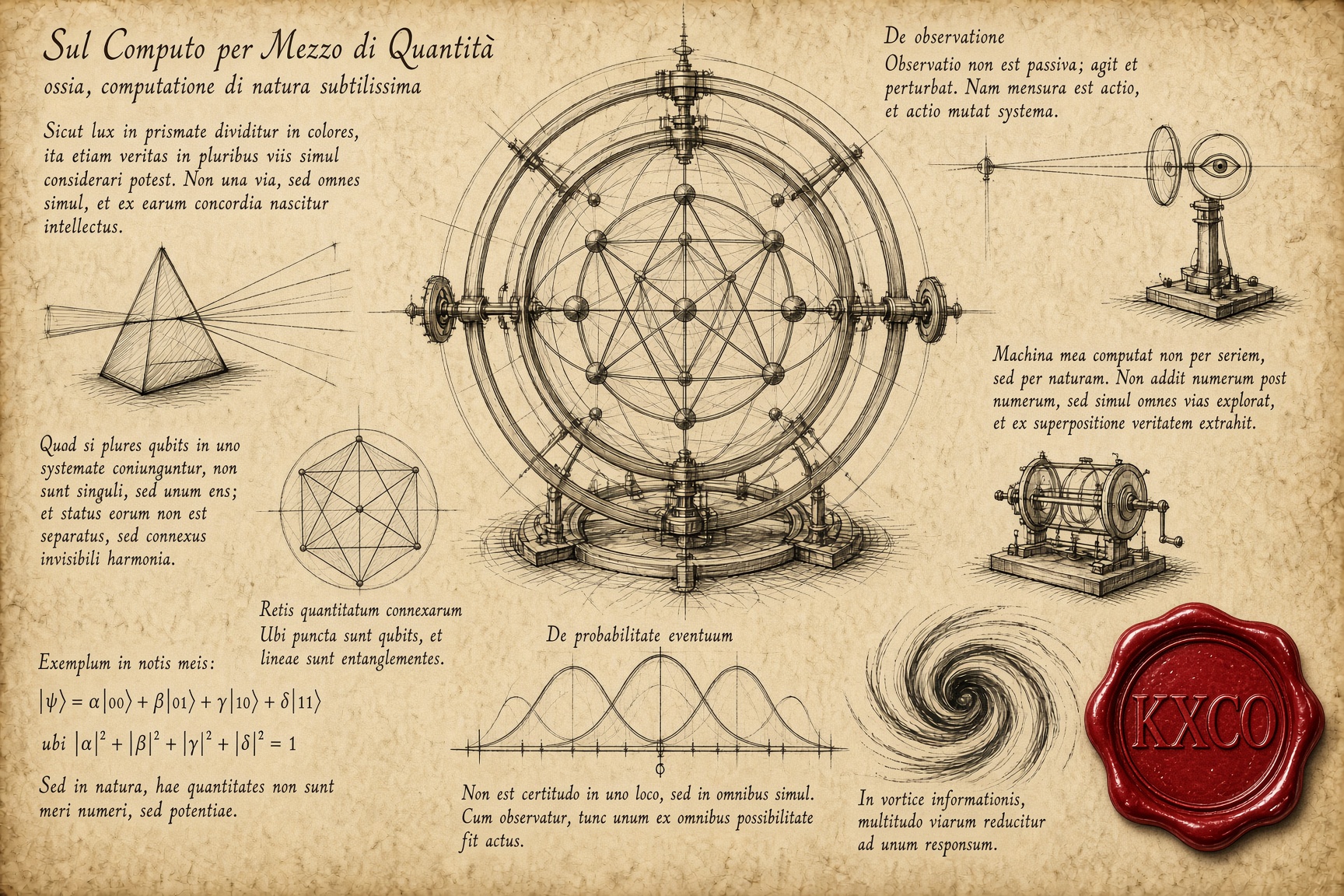
Quantum Computing in November 2026: The Cost of Breaking Your Keys Keeps Falling
No quantum computer can break today's public keys yet, but three new estimates and a peer-reviewed Google paper put a break at between 19,397 and 500,000 physical qubits. Quantinuum's Helios has 98 qubits and IBM's Nighthawk r2 has 120. NIST will deprecate RSA and elliptic-curve cryptography after 2030, and only about 15% of the origin servers behind Cloudflare use post-quantum key exchange. KXCO's core library, kxco-post-quantum, scores 9.8 on the OpenSSF Scorecard.
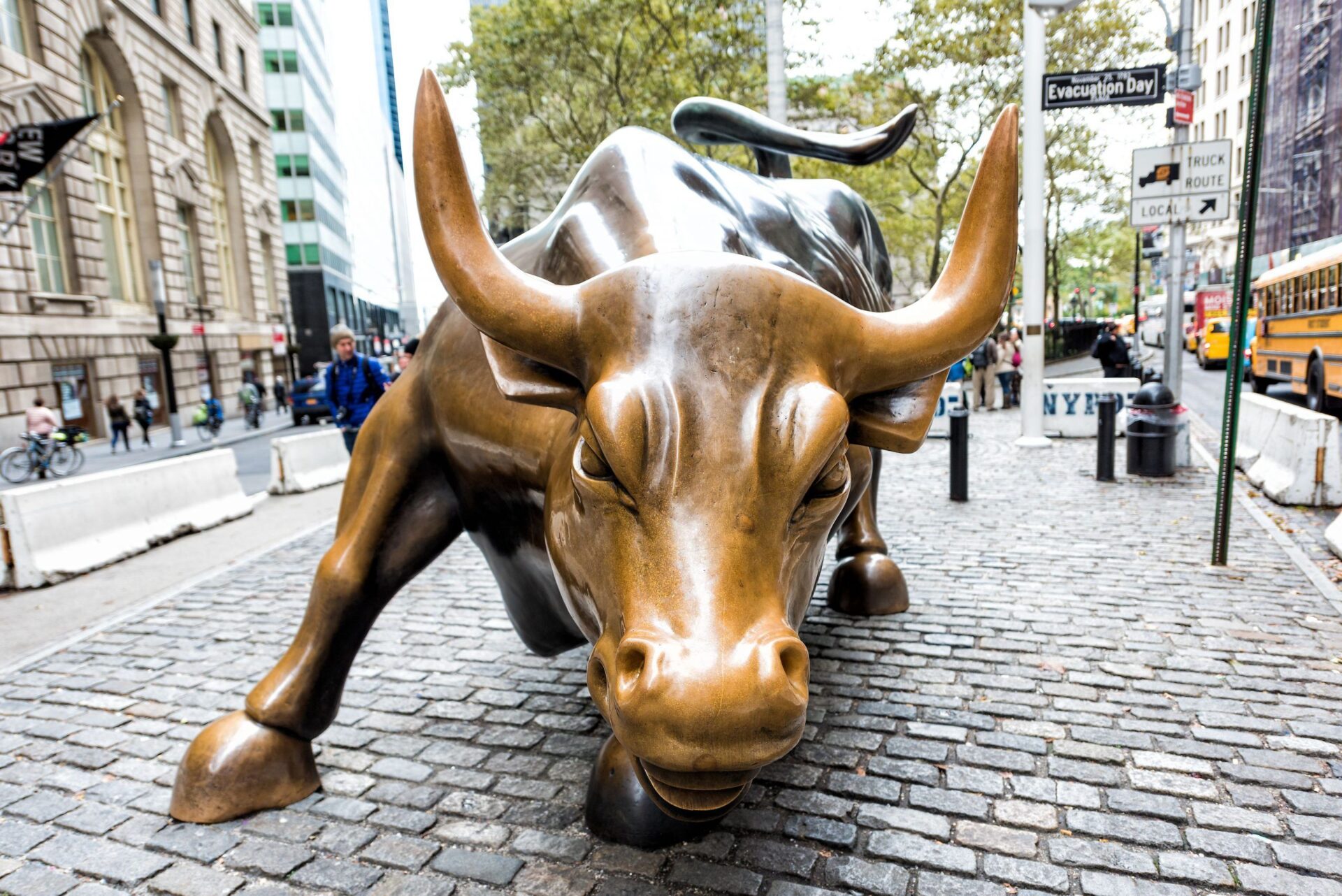
The Week Ahead on Wall Street, 16 November 2026: Look for the Bounce
NVIDIA reports on Tuesday 17 November 2026, its first results since Jensen Huang resigned, and I expect the stock and the AI market to bounce. NVIDIA closed at $162.85 on 13 November 2026, 31.93% below its record, while the semiconductor index rose 8.05% on the week. The calendar leans to currencies, with the yen near 160 after briefly crossing it, and the US publishes retail sales, housing starts, jobless claims and the Fed's minutes. Follow them on the Live Trading News trading page.
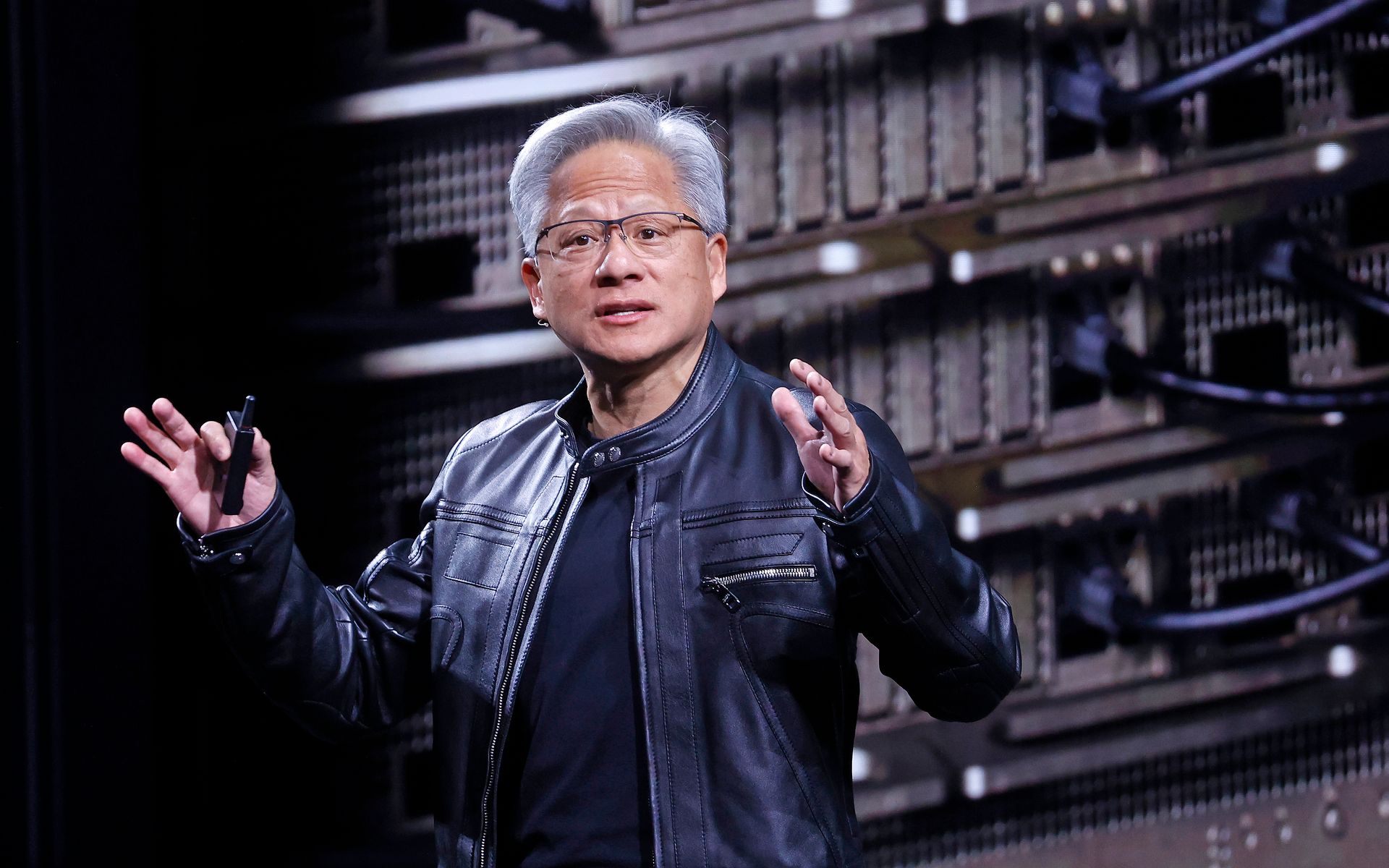
AI Is Still a Buy: The Noise Will Not Stop the Build-Out
In my view AI is still a buy. NVIDIA announced on 12 November 2026 that Jensen Huang had resigned as chief executive, and the push against data centres widened, yet four of the largest cloud sellers carry about $2.48 trillion of signed backlog and the build kept moving. NVIDIA closed at $162.85 on 13 November 2026 with an average analyst target 71.71% above the price. KXCO's AI ontology shows the same US companies have announced capacity in the UAE, Saudi Arabia, Japan, Malaysia and India.
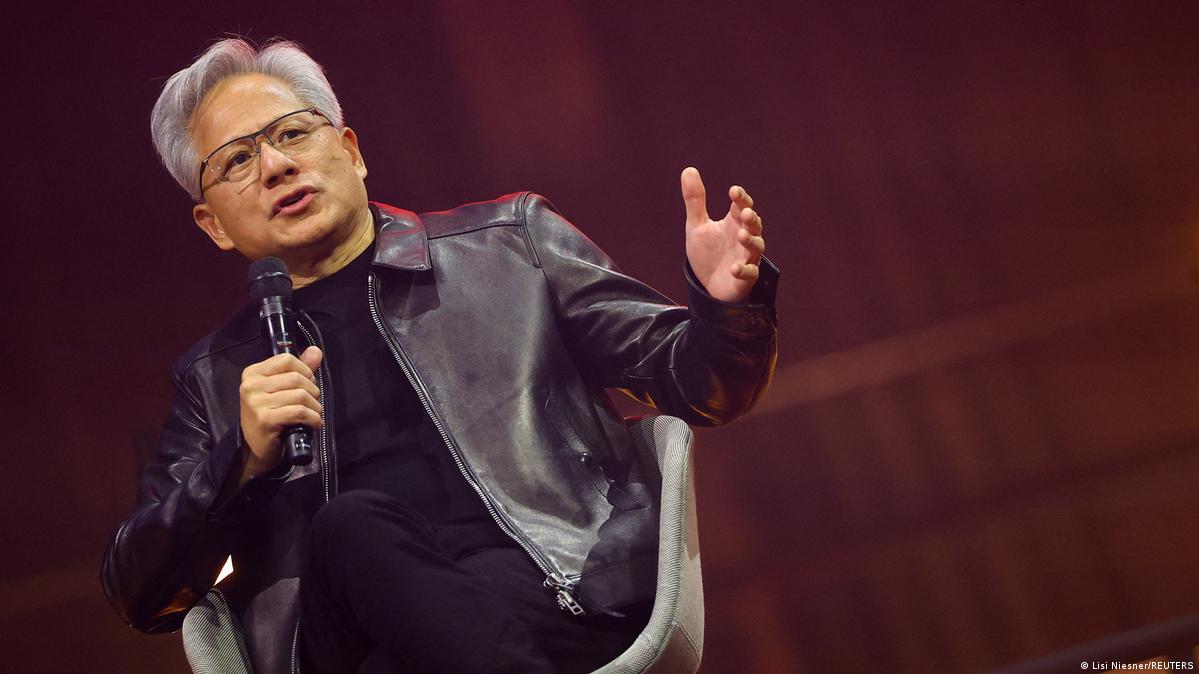
Jensen Huang, Nvidia and the Morality Game America Plays With Itself
Jensen Huang resigned as Nvidia's chief executive on 12 November 2026 after reports of three relationships. Whether a foreign service reached him, and whether ties to staff broke Nvidia's own conflict rules, are questions for investigators and the board. His marriage is not. A third of Americans say they have cheated on a partner or spouse, and US fans spent an estimated $4.9 billion on OnlyFans in a year. The outrage is selective, and it is never aimed at the audience.
Every story, signed and delivered.
Subscribe to the kxco channel and get the headline, the AI-written key takeaways, and the chain-anchor link the moment we publish. Audio versions and per-ticker subscriptions arrive in the next iteration.