
Thoughts on Thinking: Brain Essentials
Your brain runs on about 20 watts and, on the published estimate, does more computation per watt than the most efficient supercomputer on the November 2026 Green500. It runs on four inputs most people overlook: creatine, DHA, aerobic exercise and vitamin D.
Part of theLongevity Center
20 watts
Your brain runs on about 20 watts (Balasubramanian, PNAS, 2021). It is about 2 per cent of your body weight and takes about 20 per cent of the oxygen, and so the calories, your body uses (Raichle and Gusnard, PNAS, 2002).
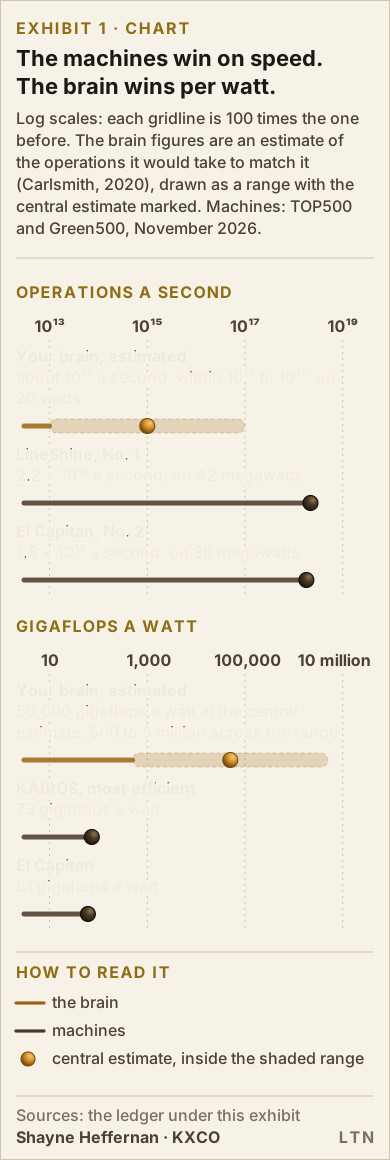
That is a dim bulb, and in raw speed the machines have passed it. The fastest computer on the November 2026 TOP500 list, LineShine at the National Supercomputing Centre in Shenzhen, runs at 2.2 × 10¹⁸ operations a second on 42 megawatts. Joseph Carlsmith's 2020 report for Open Philanthropy estimates that about 10¹⁵ operations a second is more likely than not enough to match a human brain, given the right software (Carlsmith, Open Philanthropy, 2020). It puts the computation needed to capture the brain's signalling and learning at about 10¹³ to 10¹⁷. LineShine runs about 22 times faster than even the top of that range.
Per watt, the order reverses. At the central estimate the brain delivers about 50,000 gigaflops for every watt it burns. The most efficient supercomputer on the November Green500, KAIROS at the University of Toulouse, delivers 73. The brain is about 680 times as efficient, and it stays ahead at the bottom of the range, by about 7 times. LineShine draws about 2.1 million times the power of the organ reading this sentence.
On that published estimate, from its low end to its high end, the dim bulb does more computation per watt than the most efficient supercomputer on the November 2026 Green500. It does it on four inputs that most people overlook: creatine, the omega-3 fat DHA, aerobic exercise and vitamin D.
How to read Exhibit 1:
Your brain, estimated: about 10¹⁵ operations a second, judged more likely than not to be enough to match it, within 10¹³ to 10¹⁷, on about 20 watts (Carlsmith, 2020; Balasubramanian, 2021).
LineShine and El Capitan: 2.198 and 1.809 exaflops on the HPL benchmark, drawing 42,220 and 29,685 kilowatts, first and second on the November 2026 TOP500.
KAIROS: 73.28 gigaflops a watt, first on the November 2026 Green500. El Capitan runs at 60.94.
Per watt: 10¹⁵ operations a second on 20 watts is 50,000 gigaflops a watt, and the range runs from 500 to 5 million.
The comparison: the machines are measured on a 64-bit benchmark, and the brain figure is an estimate of what it would take to match the brain, not a measurement of it (Carlsmith).
Creatine: the energy buffer
Every signal a neuron sends costs energy, and most of that energy goes on one pump. Experiments that block the sodium-potassium pump in animals put the signalling it powers at 55 per cent or more of the brain's energy use (Engl and Attwell, 2015). In rodent grey matter, the electrical signals that travel along neurons and the chemical signals at synapses are estimated to use 47 and 34 per cent of the energy spent on signalling (Attwell and Laughlin, 2001).
Creatine is where the reserve sits. Creatine and phosphocreatine act as a buffer for ATP, the cell's energy currency. They also carry high-energy phosphate from the mitochondria that make it to the places that spend it (Brosnan and Brosnan, Annual Review of Nutrition, 2007). In frog kidney cells, phosphocreatine partly restored the sodium pump when the cells' ATP production was blocked (Guerrero and colleagues, 1997). In slices of guinea pig hippocampus starved of oxygen, three hours of extra creatine raised phosphocreatine and delayed the failure of synaptic transmission threefold. The authors put the failure down to falling ATP (Whittingham and Lipton, 1981).
What happens without it is known from people born unable to make or transport creatine. They share developmental delay, intellectual disability and speech and language disorder, and most people with GAMT deficiency, one of the three, have epilepsy (GeneReviews). These children also show a profound loss of brain creatine (Brosnan and Brosnan).
The body makes much of its own. A 70 kg man aged 20 to 39 loses about 2 g of creatine a day. In people who eat meat and fish about half is replaced from the diet, and vegetarians must make almost all of it (Brosnan and colleagues, 2011). The brain appears to rely on its own supply: vegetarians eating almost no creatine had brain creatine comparable to that of people eating meat (Solis and colleagues, 2014).
Supplements reach the brain, modestly. In six volunteers, 20 g a day for four weeks raised brain creatine by 8.7 per cent on average, from 3.5 to 13.3 per cent between people (Dechent and colleagues, 1999). A review finds that the brain may need a higher dose or a longer course than muscle does. It also finds that creatine is most likely to help when thinking is under strain: lost sleep, low oxygen or harder tasks (Dolan and colleagues, 2019). A single high dose taken during 21 hours without sleep changed brain energy measures and improved processing speed in 15 young adults (Gordji-Nejad and colleagues, Scientific Reports, 2024).
Two trials worth knowing tested 5 g a day. In 45 young vegetarians, six weeks improved working memory and reasoning scores (Rae and colleagues, 2003). The largest trial since, in 123 adults, found a small benefit on Bayesian evidence, a working memory result at the edge of significance and no gain in reasoning (Sandkühler and colleagues, BMC Medicine, 2023). Pooled trials at other doses add to the picture. Across eight trials in healthy people, memory improved in adults aged 66 to 76 and not in people aged 11 to 31 (Prokopidis and colleagues, 2023). An analysis of 16 trials reported gains in memory, attention and processing speed, though not in overall cognition (Xu and colleagues, 2024).
The 5 g matches the maintenance dose for muscle in the sports nutrition position stand by Kreider and colleagues (2017). They found doses up to 30 g a day for five years safe in healthy people. The caveat: in 2024 the European Food Safety Authority found no established cause-and-effect link between creatine and better cognition (EFSA), and the pooled analyses behind the memory benefit have drawn statistical criticism (Eckert and Pascher, 2023; Citherlet, 2026).
DHA: the membrane
DHA is the omega-3 the brain is built from. It makes up over 90 per cent of the brain's omega-3 fat and 10 to 20 per cent of all its lipids (Weiser and colleagues, Nutrients, 2016). Where it concentrates, the share is higher. In the grey matter's phosphatidylserine, one of the main phospholipids of nerve cell membranes, DHA is more than a third of all the fatty acids (Kim and colleagues, Progress in Lipid Research, 2014).
It works in the membrane. DHA affects signalling, neurotransmission, synaptic plasticity and the organisation of the membrane itself (Weiser and colleagues, 2016). In mouse hippocampal neurons grown in a dish, DHA promoted neurite growth, synapse formation and glutamate receptors, and raised synaptic activity. In mice deprived of omega-3 during development, the hippocampus lost synaptic proteins, and long-term potentiation, a cellular basis of learning and memory, was impaired (Cao and colleagues, Journal of Neurochemistry, 2009). Rats fed a deficient diet over generations lost 83 to 87 per cent of their brain omega-3 and were slower to learn a water maze (Moriguchi and colleagues, 2000).
In people the evidence is a set of associations and one strong trial. In 1,575 Framingham participants without dementia, those in the lowest quarter of red blood cell DHA had smaller brains and lower scores for visual memory, executive function and abstract thinking (Tan and colleagues, Neurology, 2012). In 827 Italians followed for three years, lower plasma DHA and other polyunsaturated fats predicted a faster decline in peripheral nerve function (Lauretani and colleagues, 2007). In a randomised trial of 485 healthy adults aged 55 and over with age-related memory decline, 900 mg of DHA a day for 24 weeks improved learning and memory (Yurko-Mauro and colleagues, Alzheimer's and Dementia, 2010).
The body makes little of its own. Supplements of ALA, the plant omega-3, barely move blood DHA, while preformed DHA raises it (Brenna and colleagues, 2009). British vegetarian and vegan men have lower plasma DHA than men who eat meat (Rosell and colleagues, 2005), and the modern diet typically lacks it (Weiser and colleagues). The NHS advises at least two portions of fish a week, one of them oily, and fresh or canned tuna does not count as oily (NHS). The European Food Safety Authority recommends 250 to 500 mg a day of EPA and DHA together for adults, a figure set on cardiovascular grounds (EFSA, 2012). It finds that up to 5 g a day of the two raises no safety concerns (EFSA).
The caveat: a Cochrane review found no convincing evidence that omega-3 supplements treat mild to moderate Alzheimer's disease (Burckhardt and colleagues, 2016).
Exercise: the growth signal
Exercise changes the brain's own tissue in older adults. In a randomised trial of 120 older adults, a year of aerobic exercise enlarged the anterior hippocampus by 2 per cent, reversing one to two years of age-related loss, and improved spatial memory (Erickson and colleagues, PNAS, 2011).
It raises nerve growth factor. NGF and BDNF are growth factors that support the survival and function of many kinds of neurons (Neeper and colleagues, Brain Research, 1996). In rats given running wheels, the messenger RNA for both rose in the hippocampus within two to seven nights (Neeper and colleagues). In rats with memory damage, blocking NGF in the hippocampus removed the memory recovery that exercise produced, and blocking BDNF did not (Hall and colleagues, 2018). In people, blood NGF and BDNF rose straight after moderate and hard running in 15 young men (Roh and colleagues, 2017), and after 12 weeks of training in 29 inactive older adults (Li and colleagues, 2021). Across 29 studies and 1,111 people, a single session raised blood BDNF moderately, a session raised it more in people who train regularly, and regular training raised resting levels a little (Szuhany and colleagues, 2015).
It moves blood and clears waste. Exercise increased blood volume in the dentate gyrus of the hippocampus in mice and in people (Pereira and colleagues, PNAS, 2007). In 17 men aged 60 to 70, eight weeks of aerobic training raised blood flow in the frontal lobe by 27 per cent and sped executive function by 5 per cent. Blood flow fell in part of the right temporal lobe, and memory did not change (Kleinloog and colleagues, 2019). Running increased the inflow through the glymphatic system, the brain's waste-clearance route, in mice (von Holstein-Rathlou and colleagues, 2018). In healthy people, 12 weeks of cycling increased putative glymphatic inflow and lymphatic flow, measured by MRI (Yoo and colleagues, Nature Communications, 2025).
It sends signals that drug developers are trying to copy. In mice, lactate released by working muscle crosses into the brain and switches on the BDNF gene in the hippocampus (El Hayek and colleagues, 2019). Irisin, a hormone that muscle releases during exercise, raised hippocampal BDNF in mice and rescued memory in mouse models of Alzheimer's disease (Wrann and colleagues, 2013; Lourenco and colleagues, 2019). Drug developers call the target exercise mimetics: a proposed class of compounds designed to mimic or enhance what exercise does (Gubert and Hannan, Nature Reviews Drug Discovery, 2021).
The dose is set. The World Health Organization advises 150 to 300 minutes of moderate or 75 to 150 minutes of vigorous aerobic activity a week (Bull and colleagues, British Journal of Sports Medicine, 2020). Across 58 studies, physical activity went with a 20 per cent lower risk of dementia, and the link held over follow-ups of 20 years or more (Iso-Markku and colleagues, 2022).
The caveat: the rise in hippocampal NGF is measured in rats, and in people it is measured in blood. The year-long trial found no greater rise in blood BDNF than stretching gave (Erickson and colleagues), and rats housed in a richer environment without exercise also gained NGF (Birch and colleagues, 2013).
Vitamin D: the foundation
Deficiency is widespread. A pooled analysis of population studies from 2000 to 2022 covered 7.9 million people. Worldwide, 15.7 per cent had blood vitamin D below 30 nmol/L and 47.9 per cent below 50 nmol/L, with more at high latitudes (Cui and colleagues, 2023).
Low levels go with slower processing and more dementia. In 3,133 European men aged 40 to 79, lower vitamin D went with poorer scores on a test of processing speed, most clearly below 35 nmol/L (Lee and colleagues, 2009). Followed for 4.4 years, the same cohort showed no independent link between vitamin D and the decline in that speed (Overman and colleagues, 2017).
The dementia evidence includes a genetic analysis of causation. In 1,658 older adults followed over time, those severely deficient (below 25 nmol/L) had 2.25 times the risk of dementia of those with enough (Littlejohns and colleagues, Neurology, 2014). A UK Biobank analysis using genetics to test cause supports a causal effect of deficiency on dementia, and estimates that raising levels to 50 nmol/L could prevent 17 per cent of cases (Navale and colleagues, 2022). Among 12,388 people in the United States, taking vitamin D went with a 40 per cent lower rate of dementia (Ghahremani and colleagues, 2023).
It raises nerve growth factor too, in cells and animals. The active form of vitamin D raised NGF in mouse cells (Wion and colleagues, 1991) and in rat hippocampal neurons, where it also promoted neurite growth (Brown and colleagues, 2003). A six-day infusion into rat brains raised NGF there (Saporito and colleagues, 1994). In one small trial in children with autism, supplements raised blood NGF (Moradi and colleagues, 2018).
In my view it is the foundation under the other three, because it reaches the machinery each of them works through: so far in muscle, in cells and rats, and by a proposed route. The vitamin D receptor and the enzyme that activates the vitamin sit in neurons and glial cells across the human brain (Eyles and colleagues, 2005).
In an uncontrolled study of 12 severely deficient adults, treatment cut the half-time muscle took to rebuild phosphocreatine after exercise from 34.4 to 27.8 seconds, a sign of better energy production in the mitochondria (Sinha and colleagues, 2013). That is the buffer creatine fills, and NGF, which vitamin D raises in cells and rats, is the growth factor exercise raises. For the omega-3s, Patrick and Ames propose a shared system. Vitamin D switches on the gene for the enzyme that makes serotonin in the brain, and DHA acts on serotonin's receptors through the membrane (Patrick and Ames, FASEB Journal, 2015).
UK advice is 10 micrograms a day. Everyone is advised to consider a supplement in autumn and winter, people with dark skin all year, and nobody should take more than 100 micrograms a day (NHS).
The caveat: in the VITAL trial, 2,000 IU a day did not slow cognitive decline in older adults over two to three years, though Black participants may have had a modest benefit that needs confirmation (Kang and colleagues, 2021). The rise in NGF has been measured in cells, rat brains and children's blood, not in an adult brain.
How the four connect
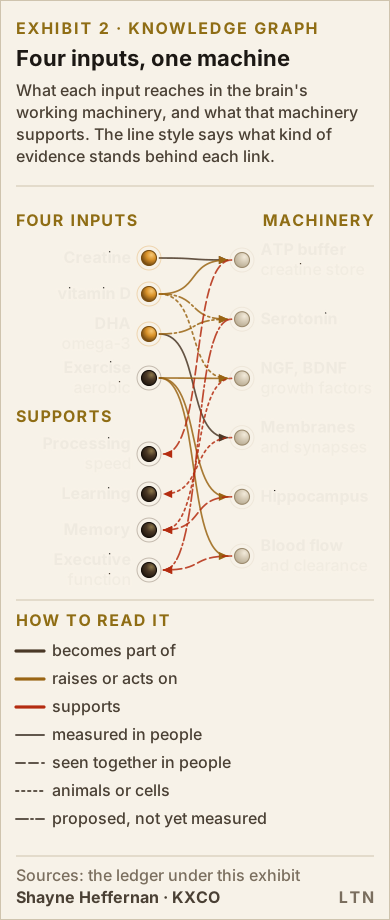
Put the four on one map and they stop being four separate tips. Exhibit 2 draws them from the record behind this note: each input, the machinery it reaches, and what that machinery supports. Vitamin D reaches the creatine buffer and, by a proposed route, DHA's serotonin system. Exercise and vitamin D both reach the growth factors.
How to read Exhibit 2, link by link:
Creatine to the ATP buffer: creatine and phosphocreatine buffer ATP, and 20 g a day for four weeks raised brain creatine 8.7 per cent (Brosnan and Brosnan; Dechent and colleagues).
Vitamin D to the ATP buffer: treatment sped phosphocreatine recovery in the muscle of deficient adults (Sinha and colleagues).
DHA to membranes and synapses: over a third of the fatty acids in grey matter phosphatidylserine (Kim and colleagues; Weiser and colleagues).
DHA and vitamin D to serotonin: a mechanism proposed by Patrick and Ames, not yet measured.
Exercise to NGF and BDNF: measured in people's blood (Roh and colleagues; Li and colleagues; Szuhany and colleagues).
Vitamin D to NGF: measured in cells and rat brains (Wion and colleagues; Saporito and colleagues; Brown and colleagues).
Exercise to the hippocampus: 2 per cent larger after a year (Erickson and colleagues).
Exercise to blood flow and clearance: more blood volume in the dentate gyrus, more frontal blood flow and more putative waste clearance (Pereira and colleagues; Kleinloog and colleagues; Yoo and colleagues).
The ATP buffer to processing speed: a high dose under sleep loss changed brain energy measures and sped processing (Gordji-Nejad and colleagues).
Membranes to learning: omega-3 loss impaired long-term potentiation in mice (Cao and colleagues).
NGF and the hippocampus to memory: NGF was needed for exercise to restore memory in rats (Hall and colleagues), and a larger hippocampus came with better spatial memory in people (Erickson and colleagues).
Blood flow and serotonin to executive function: more frontal blood flow came with faster executive function (Kleinloog and colleagues), and serotonin regulates executive function in the review by Patrick and Ames.
Line styles: a solid line was measured in people, a dashed line was seen together in people without a test of cause, a dotted line was shown in animals or cells, and a dash-dot line is a proposed mechanism.
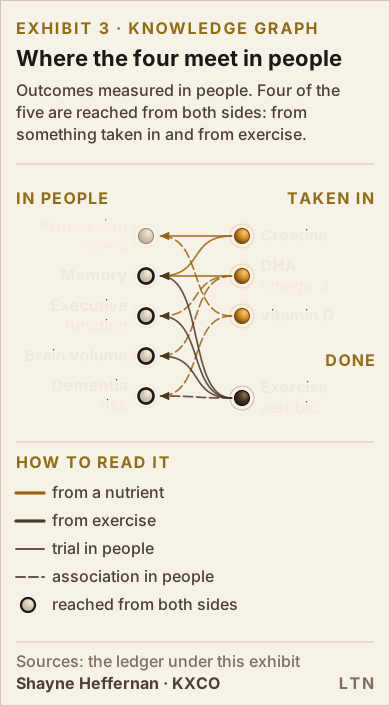
Exhibit 3 keeps only what has been measured in people. Memory is reached by creatine, DHA and exercise. Dementia risk is reached by vitamin D and exercise, and executive function and brain volume by DHA and exercise. Processing speed is the one outcome reached by nutrients alone.
How to read Exhibit 3, link by link:
Memory: improved by creatine in pooled trials (Prokopidis and colleagues; Xu and colleagues), by 900 mg of DHA a day (Yurko-Mauro and colleagues) and by a year of aerobic exercise (Erickson and colleagues).
Executive function: faster after eight weeks of aerobic training (Kleinloog and colleagues), and lower with low DHA (Tan and colleagues).
Brain volume: a larger hippocampus with exercise (Erickson and colleagues), and smaller brains with low DHA (Tan and colleagues).
Processing speed: faster with creatine under sleep loss (Gordji-Nejad and colleagues), and slower with low vitamin D (Lee and colleagues).
Dementia risk: higher with low vitamin D (Littlejohns and colleagues; Navale and colleagues), and lower with physical activity (Iso-Markku and colleagues).
Line styles: a solid line is a trial in people, and a dashed line is an association observed in people.
The four in practice
Creatine: 3 to 5 g a day keeps muscle stores up (Kreider and colleagues), and the brain may need a higher dose or a longer course (Dolan and colleagues). Vegetarians get almost none from food (Brosnan and Brosnan). In the largest trial, side effects were reported more often on creatine than on placebo (Sandkühler and colleagues).
DHA: two portions of fish a week, one of them oily (NHS), or 250 to 500 mg a day of EPA and DHA together (EFSA). Plant ALA barely raises blood DHA (Brenna and colleagues).
Exercise: 150 to 300 minutes of moderate or 75 to 150 minutes of vigorous aerobic activity a week (World Health Organization).
Vitamin D: 10 micrograms a day, at least in autumn and winter, all year for people with dark skin, and never more than 100 micrograms a day (NHS).
The person who decides
At KXCO, AI tools prepare the material and check it against the record, and a named person makes the decision (KXCO). That person runs on the same 20 watts. On my own site I put it this way: after forty years across capital markets, venture capital and emerging technology, the part that still cannot be automated is the judgement about which question was worth asking (shayneheffernan.com).
This is the next note in the series on thinking. Thoughts on Thinking opened it in July, and Frequencies and Thinking looked at what damages a mind and what can train it. In October came Thoughts on Thinking in an AI World and Take an Art Break. Then The Physics and Biology of the Mind went down to the membrane, and Our Consciousness Is Linked to Our Humanity, and AI Should Extend It made the case for AI that extends a person. Brain Chemistry covered the dangers from outside and inside and how to counter them, and You Are the Data Centre measured the system that chemistry runs. The series sits together in the Thinking Center on Live Trading News and under Thinking on my site.
Four inputs
Four inputs. No magic, no hype. Just the chemistry and physics of a 20-watt organ that happens to be you.
Research references
Energy and computation
Balasubramanian, V. (2021). Brain power. PNAS.
Raichle, M. E., and Gusnard, D. A. (2002). Appraising the brain's energy budget. PNAS.
Carlsmith, J. (2020). How Much Computational Power Does It Take to Match the Human Brain? Open Philanthropy.
TOP500 (2026). TOP500 List, November 2026. TOP500.
TOP500 (2026). Green500 List, November 2026. TOP500.
Creatine
Attwell, D., and Laughlin, S. B. (2001). An energy budget for signaling in the grey matter of the brain. Journal of Cerebral Blood Flow and Metabolism.
Guerrero, M. L., and colleagues (1997). Metabolic support of Na+ pump in apically permeabilized A6 kidney cell epithelia: role of creatine kinase. American Journal of Physiology.
Engl, E., and Attwell, D. (2015). Non-signalling energy use in the brain. Journal of Physiology.
Brosnan, J. T., and Brosnan, M. E. (2007). Creatine: endogenous metabolite, dietary, and therapeutic supplement. Annual Review of Nutrition.
Kreider, R. B., and colleagues (2017). International Society of Sports Nutrition position stand: safety and efficacy of creatine supplementation in exercise, sport, and medicine. Journal of the International Society of Sports Nutrition.
Rae, C., and colleagues (2003). Oral creatine monohydrate supplementation improves brain performance: a double-blind, placebo-controlled, cross-over trial. Proceedings of the Royal Society B.
Dechent, P., and colleagues (1999). Increase of total creatine in human brain after oral supplementation of creatine-monohydrate. American Journal of Physiology.
Gordji-Nejad, A., and colleagues (2024). Single dose creatine improves cognitive performance and induces changes in cerebral high energy phosphates during sleep deprivation. Scientific Reports.
Xu, C., and colleagues (2024). The effects of creatine supplementation on cognitive function in adults: a systematic review and meta-analysis. Frontiers in Nutrition.
Citherlet, T. (2026). Commentary: The effects of creatine supplementation on cognitive function in adults: a systematic review and meta-analysis. Frontiers in Nutrition.
Prokopidis, K., and colleagues (2023). Effects of creatine supplementation on memory in healthy individuals: a systematic review and meta-analysis of randomized controlled trials. Nutrition Reviews.
Eckert, I., and Pascher, E. (2023). Letter to the Editor: Double-counting due to inadequate statistics leads to false-positive findings in Effects of creatine supplementation on memory in healthy individuals. Nutrition Reviews.
EFSA Panel on Nutrition, Novel Foods and Food Allergens (NDA) (2024). Creatine and improvement in cognitive function: Evaluation of a health claim pursuant to article 13(5) of regulation (EC) No 1924/2006. EFSA Journal.
Sandkühler, J. F., and colleagues (2023). The effects of creatine supplementation on cognitive performance: a randomised controlled study. BMC Medicine.
Dolan, E., and colleagues (2019). Beyond muscle: the effects of creatine supplementation on brain creatine, cognitive processing, and traumatic brain injury. European Journal of Sport Science.
Mercimek-Andrews, S., and Salomons, G. S. (2022). Creatine Deficiency Disorders. GeneReviews.
Whittingham, T. S., and Lipton, P. (1981). Cerebral synaptic transmission during anoxia is protected by creatine. Journal of Neurochemistry.
Brosnan, J. T., and colleagues (2011). The metabolic burden of creatine synthesis. Amino Acids.
Yazigi Solis, M., and colleagues (2014). Brain creatine depletion in vegetarians? A cross-sectional 1H-magnetic resonance spectroscopy (1H-MRS) study. British Journal of Nutrition.
DHA
Weiser, M. J., and colleagues (2016). Docosahexaenoic Acid and Cognition throughout the Lifespan. Nutrients.
Kim, H. Y., and colleagues (2014). Phosphatidylserine in the brain: metabolism and function. Progress in Lipid Research.
Cao, D., and colleagues (2009). Docosahexaenoic acid promotes hippocampal neuronal development and synaptic function. Journal of Neurochemistry.
Moriguchi, T., and colleagues (2000). Behavioral deficits associated with dietary induction of decreased brain docosahexaenoic acid concentration. Journal of Neurochemistry.
Tan, Z. S., and colleagues (2012). Red blood cell omega-3 fatty acid levels and markers of accelerated brain aging. Neurology.
Yurko-Mauro, K., and colleagues (2010). Beneficial effects of docosahexaenoic acid on cognition in age-related cognitive decline. Alzheimer's and Dementia.
Burckhardt, M., and colleagues (2016). Omega-3 fatty acids for the treatment of dementia. Cochrane Database of Systematic Reviews.
Lauretani, F., and colleagues (2007). Omega-6 and omega-3 fatty acids predict accelerated decline of peripheral nerve function in older persons. European Journal of Neurology.
EFSA Panel on Dietetic Products, Nutrition and Allergies (NDA) (2012). Scientific Opinion on the Tolerable Upper Intake Level of eicosapentaenoic acid (EPA), docosahexaenoic acid (DHA) and docosapentaenoic acid (DPA). EFSA Journal.
NHS (2026). Fish and shellfish. nhs.uk.
Brenna, J. T., and colleagues (2009). alpha-Linolenic acid supplementation and conversion to n-3 long-chain polyunsaturated fatty acids in humans. Prostaglandins, Leukotrienes and Essential Fatty Acids.
EFSA (2012). EFSA assesses safety of long-chain omega-3 fatty acids. efsa.europa.eu.
Rosell, M. S., and colleagues (2005). Long-chain n-3 polyunsaturated fatty acids in plasma in British meat-eating, vegetarian, and vegan men. American Journal of Clinical Nutrition.
Exercise
Neeper, S. A., and colleagues (1996). Physical activity increases mRNA for brain-derived neurotrophic factor and nerve growth factor in rat brain. Brain Research.
Hall, J. M., and colleagues (2018). Nerve Growth Factor Is Responsible for Exercise-Induced Recovery of Septohippocampal Cholinergic Structure and Function. Frontiers in Neuroscience.
Li, X., and colleagues (2021). Long-term high-intensity interval training increases serum neurotrophic factors in elderly overweight and obese Chinese adults. European Journal of Applied Physiology.
Roh, H. T., and colleagues (2017). Effect of Exercise Intensity on Neurotrophic Factors and Blood-Brain Barrier Permeability Induced by Oxidative-Nitrosative Stress in Male College Students. International Journal of Sport Nutrition and Exercise Metabolism.
Szuhany, K. L., and colleagues (2015). A meta-analytic review of the effects of exercise on brain-derived neurotrophic factor. Journal of Psychiatric Research.
Erickson, K. I., and colleagues (2011). Exercise training increases size of hippocampus and improves memory. PNAS.
Pereira, A. C., and colleagues (2007). An in vivo correlate of exercise-induced neurogenesis in the adult dentate gyrus. PNAS.
Kleinloog, J. P. D., and colleagues (2019). Aerobic Exercise Training Improves Cerebral Blood Flow and Executive Function: A Randomized, Controlled Cross-Over Trial in Sedentary Older Men. Frontiers in Aging Neuroscience.
von Holstein-Rathlou, S., and colleagues (2018). Voluntary running enhances glymphatic influx in awake behaving, young mice. Neuroscience Letters.
Yoo, R. E., and colleagues (2025). Long-term physical exercise facilitates putative glymphatic and meningeal lymphatic vessel flow in humans. Nature Communications.
El Hayek, L., and colleagues (2019). Lactate Mediates the Effects of Exercise on Learning and Memory through SIRT1-Dependent Activation of Hippocampal Brain-Derived Neurotrophic Factor (BDNF). Journal of Neuroscience.
Wrann, C. D., and colleagues (2013). Exercise induces hippocampal BDNF through a PGC-1α/FNDC5 pathway. Cell Metabolism.
Lourenco, M. V., and colleagues (2019). Exercise-linked FNDC5/irisin rescues synaptic plasticity and memory defects in Alzheimer's models. Nature Medicine.
Gubert, C., and Hannan, A. J. (2021). Exercise mimetics: harnessing the therapeutic effects of physical activity. Nature Reviews Drug Discovery.
Bull, F. C., and colleagues (2020). World Health Organization 2020 guidelines on physical activity and sedentary behaviour. British Journal of Sports Medicine.
Iso-Markku, P., and colleagues (2022). Physical activity as a protective factor for dementia and Alzheimer's disease: systematic review, meta-analysis and quality assessment of cohort and case-control studies. British Journal of Sports Medicine.
Birch, A. M., and colleagues (2013). Short-term environmental enrichment, in the absence of exercise, improves memory, and increases NGF concentration, early neuronal survival, and synaptogenesis in the dentate gyrus in a time-dependent manner. Hippocampus.
Vitamin D
Cui, A., and colleagues (2023). Global and regional prevalence of vitamin D deficiency in population-based studies from 2000 to 2022: A pooled analysis of 7.9 million participants. Frontiers in Nutrition.
Lee, D. M., and colleagues (2009). Association between 25-hydroxyvitamin D levels and cognitive performance in middle-aged and older European men. Journal of Neurology, Neurosurgery and Psychiatry.
Overman, M. J., and colleagues (2017). Evaluation of cognitive subdomains, 25-hydroxyvitamin D, and 1,25-dihydroxyvitamin D in the European Male Ageing Study. European Journal of Nutrition.
Littlejohns, T. J., and colleagues (2014). Vitamin D and the risk of dementia and Alzheimer disease. Neurology.
Navale, S. S., and colleagues (2022). Vitamin D and brain health: an observational and Mendelian randomization study. American Journal of Clinical Nutrition.
Ghahremani, M., and colleagues (2023). Vitamin D supplementation and incident dementia: Effects of sex, APOE, and baseline cognitive status. Alzheimer's and Dementia: Diagnosis, Assessment and Disease Monitoring.
Kang, J. H., and colleagues (2021). Effect of vitamin D on cognitive decline: results from two ancillary studies of the VITAL randomized trial. Scientific Reports.
Wion, D., and colleagues (1991). 1,25-Dihydroxyvitamin D3 is a potent inducer of nerve growth factor synthesis. Journal of Neuroscience Research.
Saporito, M. S., and colleagues (1994). Chronic 1,25-dihydroxyvitamin D3-mediated induction of nerve growth factor mRNA and protein in L929 fibroblasts and in adult rat brain. Brain Research.
Brown, J., and colleagues (2003). 1,25-dihydroxyvitamin D3 induces nerve growth factor, promotes neurite outgrowth and inhibits mitosis in embryonic rat hippocampal neurons. Neuroscience Letters.
Moradi, H., and colleagues (2018). The effects of different combinations of perceptual-motor exercises, music, and vitamin D supplementation on the nerve growth factor in children with high-functioning autism. Complementary Therapies in Clinical Practice.
Eyles, D. W., and colleagues (2005). Distribution of the vitamin D receptor and 1 alpha-hydroxylase in human brain. Journal of Chemical Neuroanatomy.
Patrick, R. P., and Ames, B. N. (2015). Vitamin D and the omega-3 fatty acids control serotonin synthesis and action, part 2: relevance for ADHD, bipolar disorder, schizophrenia, and impulsive behavior. FASEB Journal.
Sinha, A., and colleagues (2013). Improving the vitamin D status of vitamin D deficient adults is associated with improved mitochondrial oxidative function in skeletal muscle. Journal of Clinical Endocrinology and Metabolism.
NHS (2026). Vitamin D. nhs.uk.
KXCO and the author
KXCO (2026). KXCO by Knightsbridge. kxco.ai.
Heffernan, S. (2026). Shayne Heffernan, Economist and Excogitator. shayneheffernan.com.
Shayne Heffernan, Ph.D., is the founder of the KnightsBridge Group (shayneheffernan.com).

KXCO's FDA Ontology Ranked INO-3107 First. Its Two Published Books Beat XBI.
KXCO's FDA ontology ranked INO-3107 first before the FDA approved it on 30 October 2026; Inovio (INO) then hit $2.71 after hours from a $0.60 close. KXCO's two published research books on the ontology stood at 109.31 and 110.28 at the close of 13 November, from 100 at the close of 14 October, against 102.58 for XBI. Nine more decisions on the board fall due before 31 December, starting with molgramostim (SVRA) and deramiocel (CAPR) on 22 November.

Thoughts on Thinking: You Are the Data Centre
The world's data centres used about 485 terawatt-hours of electricity in 2025; the brain runs on about 20 watts. The adult male brain holds about 86 billion neurons on average, and its synapse weights at 32-bit precision take at least 400 terabytes. Against the eye's estimated output, GPU memory wins on raw throughput by millions to one, but meaning needs selection, context and consequence. At KXCO the person sits at both ends of the data, and a named person decides.

Thoughts on Thinking: Brain Chemistry
Brain chemistry sets the level of thinking and of performance in everything else, and it bears on longevity: 14 risk factors that can be changed account for nearly half of dementia cases. The dangers come from outside, through plastic, PFAS, pesticides and metals, and from inside, through chronic stress and overwork. An organic diet cut a chlorpyrifos marker in urine by 60.7 per cent, and reciting the rosary slowed breathing to under six breaths a minute. The chemistry is a managed input.

KXCO's FDA Ontology Ranked INO-3107 First. Inovio Hit Over 300% After Hours.
KXCO's FDA ontology ranked INO-3107, from Inovio (INO), first of the FDA decisions due in the next 90 days, from 21 October 2026 to the decision. The FDA granted accelerated approval on 30 October; the news reached the market after the close. From its $0.60 close that day, Inovio traded as high as $2.71 after hours, up 351.7%, and closed 2 November at $1.89, up 215.0%. Both published research books closed ahead of XBI. On our radar: BBP-418 (BBIO), Bezuclastinib (COGT) and Relutrigine (PRAX).
Every story, signed and delivered.
Subscribe to the kxco channel and get the headline, the AI-written key takeaways, and the chain-anchor link the moment we publish. Audio versions and per-ticker subscriptions arrive in the next iteration.