
SpaceX: The Road to 10 Gigawatts
Compute is a process input, not a side business. Where SpaceX's 1.4 gigawatts sit today, how the Memphis corridor gets to 10, who supplies the power, and what Terafab is for.
Part of theAI Stocks Center
SpaceX did not add an AI business. It did what a company does when its own processes run on compute: it built the computing plant, and then it built the power to run it. The rocket is designed in simulation, the engine is tuned on telemetry, the Starlink network routes traffic for millions of terminals, and the Grok models train on the same floor. Each of those is a compute-heavy process. When the computing your processes need passes the computing you can rent, you build. That is the whole story, and it is the one the public telling gets backwards when it calls this a pivot.
The company's own filing says the same thing in the language of a utility. The quarterly report measures the AI segment in "nameplate compute draw", the GPUs installed multiplied by their power draw, and reports 1.4 gigawatts at 30 June 2026 against 0.4 gigawatts a year earlier, per the 10-Q filed with the SEC on 4 August 2026. A software company reports users. A landlord reports square feet. SpaceX reports watts, because the thing it is building is an industrial plant whose output happens to be intelligence.
Nor is it alone. Meta's Hyperion site in Louisiana has 1,632 megawatts of IT power live and a 5 gigawatt plan, per the Epoch AI database read through MRKT3.0 on 6 October 2026. Microsoft's Fairwater site in Wisconsin is planned at 2,263 megawatts of IT power by May 2028, and Amazon's Project Rainier in Indiana has 910 megawatts live, per the same database. Each of them is a corporation whose process is compute-heavy and which has decided that renting is no longer the answer. SpaceX is the one doing it fastest, from the smallest base, and with the most of the electrical plant built in-house. This piece sets out where it is, where it says it is going, how the Memphis corridor gets from 1.4 gigawatts to 10, who supplies the power, and what Terafab is for.
Where SpaceX is now: 1.4 gigawatts, 2 sites, 4 tenants
The computing plant is in two buildings in Memphis, Tennessee, and the power for the second is generated across the state line in Southaven, Mississippi. Colossus 1 is the former Electrolux factory in south Memphis, built in 122 days and doubled to 200,000 GPUs in a further 92 days, per the company's own Colossus page. Colossus 2 is on Tulane Road in the Whitehaven district and came online in January 2026, per Data Center Dynamics.
Elon Musk gave the fleet by chip on 25 September 2026 in a post on X. "Colossus 1 is 150k H100, 50k H200 and 30k GB200. Colossus 2 is 110k GB200 and 440k GB300. Another 220k GB300 will be fully operational next week and another 220k in November. If we get lucky, yet another 220k GB300 by late December." On that schedule the Memphis sites reach about 1.44 million GPUs by late December 2026, per TeslaNorth reading the post. A fourth building, Minihard, stands beside Colossus 2 on Tulane Road and was announced by Musk on 29 July 2026 as 220,000 GB300s on 800-gigabit network cards in a denser layout, per Action News 5. A third data centre is in the works in Southaven, next to the power plant, per Data Center Dynamics.
That capacity is leased, and the leases are the first proof that the plant is an asset rather than a cost line. Anthropic rents all of Colossus 1, more than 220,000 GPUs and more than 300 megawatts, at $1.25 billion a month through May 2029, about $45 billion over the term, per Teslarati on 22 June 2026. Google agreed on 5 June 2026 to rent about 110,000 GPUs from October 2026 to June 2029 at $920 million a month, nearly $29.5 billion over 32 months, per the same report. Either side can end it on 90 days' notice after the initial ramp, per The Motley Fool on 8 October 2026.
Reflection AI took GB300 capacity at Colossus 2 from 1 July 2026 at $150 million a month, about $6.3 billion to 2029, per Teslarati. A fourth customer, not named, starts billing on 1 December 2026 at about $1.11 billion a month. Chief financial officer Bret Johnsen described it at the Goldman Sachs conference in September as "another roughly $13 billion of ARR", per Yahoo Finance on 11 September 2026. The four leases together come to $3.43 billion a month, or about $41 billion a year, per the same report.
The KXCO AI Sector Ontology, the public record of the AI sector that KXCO keeps at kxco.ai, holds the Anthropic lease as a filed claim at high confidence, the Google and Reflection leases as reported, and SpaceX's commitment to build only on Nvidia's Vera Rubin platform as reported at high confidence, all as of 12 October 2026. The exhibit below is drawn from that record and from the filings and reports cited here.
The money: $2.56 billion of AI revenue, $15.8 billion of AI capex, $100 billion of cash
The second quarter was the first in which the AI segment paid for its own running. AI revenue was $2,561 million, up 247% on a year earlier, and the segment's loss from operations was $1,257 million after $1,885 million of depreciation and amortisation, per the 10-Q filed on 4 August 2026. Strip the depreciation out and the segment made $1.1 billion of adjusted EBITDA, its first positive quarter on that measure, per the earnings call transcript of 4 August 2026. Both numbers are true at once. The plant earns cash, and the plant is being written down as fast as it is built.
The building is the bigger number. Capital expenditure in the quarter was $18,369 million, of which $15,828 million was the AI segment, and for the half year $23,551 million of $28,476 million, per the 10-Q filing. SpaceX ended June with $100,839 million of cash, cash equivalents, marketable securities and restricted cash, per the same filing, most of it the proceeds of the June listing. Contracted cloud-services agreements, the non-cancellable value of compute access sold, stood at $14.1 billion at the end of the quarter, and Johnsen said a further $6.7 billion of six-month contracts had been signed in July, per the transcript. He also gave the number that justifies the pace: "The current economics have translated into a less than one-year payback on our new capital deployments for compute."
The payback claim rests on price. Musk's planning frame on the call was that the value of compute "is probably going to be 30 to $50" a watt a year, per the transcript. At 10 gigawatts that is $300 billion to $500 billion a year, and he said so to employees in August: "If the value per watt is probably going to be $30 to $50, which means if we bring 10 GW of AI compute online by the end of next year, it will be $300 to $500 billion a year in revenue. Big numbers," per Tom's Hardware. That is a planning number, not a contract. The contracts in hand price at the top of the range for current hardware, because supply is short. If the supply shortage eases, the price per watt falls and the payback lengthens.
The cost side is now being financed. The Financial Times reported on 8 October 2026 that SpaceX is in talks on a $40 billion package to buy Nvidia hardware, $10 billion in bank loans and $30 billion in investment-grade bonds, with Apollo Global Management expected to lead and Pimco among the lenders, for completion in 2027, per Yahoo Finance that day.
At about $8 million a rack that buys roughly 5,000 Vera Rubin NVL72 systems, or about 360,000 Rubin accelerators, per the same report. Nvidia's own estimate of the cost of deploying its chips is about $60 billion a gigawatt, per The Motley Fool on 13 October 2026. On that estimate the walk from 2 gigawatts to 10 is around $480 billion of capital, as of the same date. Debt and finance leases stood at $39.4 billion at 30 June 2026, per the 10-Q, so the package would roughly double it.
The reader should hold the two ledgers side by side. On one side, four leases worth about $41 billion a year, a payback under a year, and $100 billion of cash. On the other, $480 billion of plant to build, the leases cancellable on 90 days' notice from 2027, and a rate per watt set by a shortage. The thesis that compute is a process input does not depend on which ledger wins. It depends on whether the company would have needed the capacity anyway. It would. About 60% of the first 10 gigawatts is earmarked for internal use across xAI and Grok, SpaceX and Tesla, with the remaining 40% for outside customers, per Crypto Briefing. The leases are the way an industrial fills the plant while its own demand catches up.
Where SpaceX wants to be: 10 gigawatts of compute, 20 of power
On the 4 August call Musk said the company expects to end 2027 with cumulative compute "closer to 10 gigawatts of compute than 5 gigawatts", per the transcript. Pressed by an analyst, he gave the number behind the number: "Our tentative target is to actually have 20 gigawatts at the power and cooling level online by the end of next year," and allowing for ordinary delays, "something close to 15 gigawatts." The distinction matters. Compute is measured at the chip. Power and cooling are measured at the plant, and the plant has to be larger than the chips it serves, because cooling, distribution, networking and losses all draw from the same supply. A 10 gigawatt compute target with a 15 to 20 gigawatt plant target is the same target stated at two meters.
The hardware is decided. "We've decided to build exclusively on NVIDIA because we think the Vera Rubin architecture is the best architecture," Musk said on the call. Every new rack from here is a Vera Rubin NVL72 or its successor, on the ground and in orbit. Tom's Hardware ran the arithmetic on 13 August: if the 8.6 gigawatts of new nameplate draw is all NVL72 at a power-usage effectiveness of about 1.2, the new capacity carries between 2.09 million and 2.39 million Rubin GPUs, or 29,000 to 33,000 racks, per Tom's Hardware. That is an estimate from a published rack specification, and the piece says so. It is also the scale the $40 billion package has to be read against: 360,000 accelerators is about a sixth of the build.
Musk's framing of why SpaceX can do this is the one line from the call that travelled. The company is taking "a small amount of the expertise that we use for rockets and satellites" and applying it to terrestrial data centres, he said, and called data centres a "trivial problem" next to the daily work of the rocket engineers, per Fortune. Strip the bravado and the claim is the thesis of this piece. A company that already engineers power, thermal and electrical systems to flight tolerances does not need to learn a new trade to build a data centre. It needs to point the trade it has at a new building.
Orbit is the second act and stays small in the 2027 figure. The Starmind AI1 satellite is an optimised Vera Rubin NVL72 computer, Musk said on the call, "and we expect to start launching these next year." The target is the fourth quarter of 2027, with the first flights as proof of concept, per MLQ.ai reading Musk's statement of 24 August 2026. The satellite is designed for 120 kilowatts of average compute and 150 kilowatts at peak, per the same report reading the SpaceX Starmind page.
The FCC accepted the filing for up to one million satellites on 4 February 2026 and has not authorised it, and the May prospectus put orbital deployment "as early as 2028", per the same report. At 120 kilowatts a unit, a gigawatt in orbit is more than 8,000 satellites, so the large majority of the end-2027 number is terrestrial, and the orbital layer is where Terafab comes in. That is the last section.
How the Memphis corridor gets to 10: the build sequence
The path from 1.4 gigawatts to 10 is a sequence of buildings, chip deliveries and power plants, and the first steps are already dated.
The first step is the GB300 ramp already under way. Colossus 2 held 110,000 GB200 and 440,000 GB300 on 25 September, with three further batches of 220,000 GB300 due in early October, November and, "if we get lucky", late December, per Musk's post. Each batch is a building's worth of power and cooling that has to be ready before the chips land, which is why the turbine fleet and the battery grew through the summer. Management guided to more than 2 gigawatts of compute at the end of 2026, per the transcript, and the December fleet is how it gets there.
The second step is Vera Rubin. Deliveries of the new platform begin in 2027, and the $40 billion package is sized to the first tranche of them, per the Financial Times report. Nvidia's Rubin accelerators draw about 2.3 kilowatts each in the highest-power configuration, per Tom's Hardware, so a rack is a different power problem from a GB300 rack and the plant has to be designed for it before the chips arrive. SpaceX ordered the platform exclusively, which gives Nvidia a single customer at the front of its 2027 allocation and gives SpaceX a single design to build cooling and power around.
The third step is construction. Colossus 1 and 2, Minihard, and the third data centre in Southaven are the Memphis corridor. SpaceX has said it is investing more than $90 billion in the region, with more than 2.5 million square feet of floor and a $360 million water-recycling plant for up to 10 million gallons a day, per TeslaNorth reading the company's new site on 25 September 2026. The corridor is where the first 2 gigawatts live and where the permitted power is. The 10 gigawatt target is five times that, and the company has not published where the remaining sites are. That is a gap in the public record, and the piece names it as one rather than filling it.
The fourth step is the one the rest of the industry is stuck on, and it has its own section.
Where the power comes from: turbines, a 1.2 gigawatt plant, a grid line and the largest battery in the country
Musk put the constraint in one sentence at a G20 technology session, reported on 2 September 2026. There is "at least a 15 gigawatt shortfall of power in 2027 for AI chips", he said, per the Free Press Journal on 2 September 2026. Production of AI chips is rising "by about 40 to 50 per cent annually, while available power outside China was increasing by only 10 to 20 per cent a year", per the same report. "So obviously the faster rising thing will eventually overwhelm the slower rising thing." SpaceX's answer has been to own the generation, and the record of how it did so is the most detailed part of the whole build.
The first layer was temporary gas turbines. Colossus 2 came up on mobile units parked at a former Duke Energy plant site on Stanton Road in Southaven. Satellite imagery in January 2026 showed cooling for about 350 megawatts, and by May the company had installed a further 19 portable turbines in two months, taking the count to 46 units and adding more than 500 megawatts, per Data Center Dynamics reading emails obtained by the Southern Environmental Law Center.
By the end of July there were 69 of them, and the company said removal would begin in August and finish by July 2027, per Action News 5 on 31 July 2026. The NAACP has sued, alleging the mobile turbines are stationary sources operating without the proper Clean Air Act permits, and sought an injunction in May 2026, which the company opposed and the United States moved to dismiss, per the 10-Q of 4 August 2026. That case is live and the piece keeps it on the page.
The second layer is the permanent plant that replaces them. In the week of 10 March 2026 the Mississippi Department of Environmental Quality granted a Clean Air Act permit for 41 natural-gas turbines at the Southaven site, generating 1.2 gigawatts, to power Colossus 2 and the coming Colossus 3, per Data Center Dynamics on 11 March 2026. The company's statement on the permit is the clearest account of its power strategy in its own words: the permit gave it "1.2GW of self-generating power capacity", and it "will ensure that ratepayers don't pay one extra cent in their energy bills". The temporary units are to be gone by July 2027 as the plant comes on.
The turbines are owned through a joint venture. Stateline Power LLC, 50.1% Solaris Energy Infrastructure and 49.9% xAI, is the vehicle for about 900 megawatts of primary power to the data centre, per the Solaris first-quarter release filed with the SEC. Solaris's pro forma fleet is 3,100 megawatts after the additions it announced in March 2026, per the same release. That is the behind-the-meter structure in plain terms: a power company owns the majority of the generating assets, the data-centre operator owns the minority and takes the output, and neither waits for a utility interconnection queue.
The third layer is the grid, which arrived last. On 20 August 2026 the Tennessee Valley Authority board approved a direct service agreement with MZX Tech LLC, the SpaceXAI affiliate that owns the 186.13 acres on Tulane Road, for a load greater than 100 megawatts, per the Memphis Commercial Appeal via AOL the same day. It comes under a new data-centre rate that adds 10% for facilities above 5 megawatts, and SpaceXAI builds the transmission lines and transformers itself, per the same report. Before that, Memphis Light, Gas and Water supplied less than 160 megawatts across the two Shelby County campuses, per the same report. The grid is the smallest of the three layers, and that is the design, not an accident.
The fourth layer is the battery, which is what lets the other three be run hard. Satellite imagery on 11 July 2026 showed 720 Tesla Megapack containers at Colossus 2, and SpaceXAI says they provide 3.3 gigawatt-hours of storage, per Canary Media. Doug McGowan, chief executive of Memphis Light, Gas and Water, said on 2 September at a storage conference in Chattanooga: "It's the world's largest supercomputer today, but it's also got the world's largest grid-connected battery system." He put it at about 2,000 megawatts behind the meter and said the site "can successfully come off the grid for four hours", per the same report.
SpaceX bought $295 million of Megapacks from Tesla in the quarter alone, recorded in property, plant and equipment, per the 10-Q. The battery is what makes a gas plant plus a thin grid line behave like firm power: it covers turbine ramping, rides through a curtailment call from the utility, and lets the site drop off the grid at peak without dropping a training run.
Add the layers and the corridor's permitted and installed supply is on the order of 1.2 gigawatts of permanent gas, 900 megawatts of contracted turbine capacity through the joint venture, something above 100 megawatts direct from TVA, under 160 megawatts from the city utility, and 2 gigawatts of battery for four hours. That is a plant for 2 gigawatts of compute with margin. It is not a plant for 10, and the company has not said where the next 8 gigawatts of generation will stand. Musk's 20 gigawatt power-and-cooling target is a portfolio target across sites the public record does not yet name. Reading the record honestly: the method is proven at 2 gigawatts, and the scale to 10 is a plan.
Live Trading News set out the Memphis power stack in Musk and Colossus: inside the 1.29 gigawatt machine in Memphis and the wider shortage in Compute and Electricity, and both pieces hold.
What the record does show is why customers come. Google and Anthropic lease from SpaceX because the power is there, and the rest of the industry is in an interconnection queue. A company that can deliver the chips and the electricity and the cooling in the same twelve months has something the hyperscalers are still assembling. That is the structural position, and it was built from the gas turbine up.
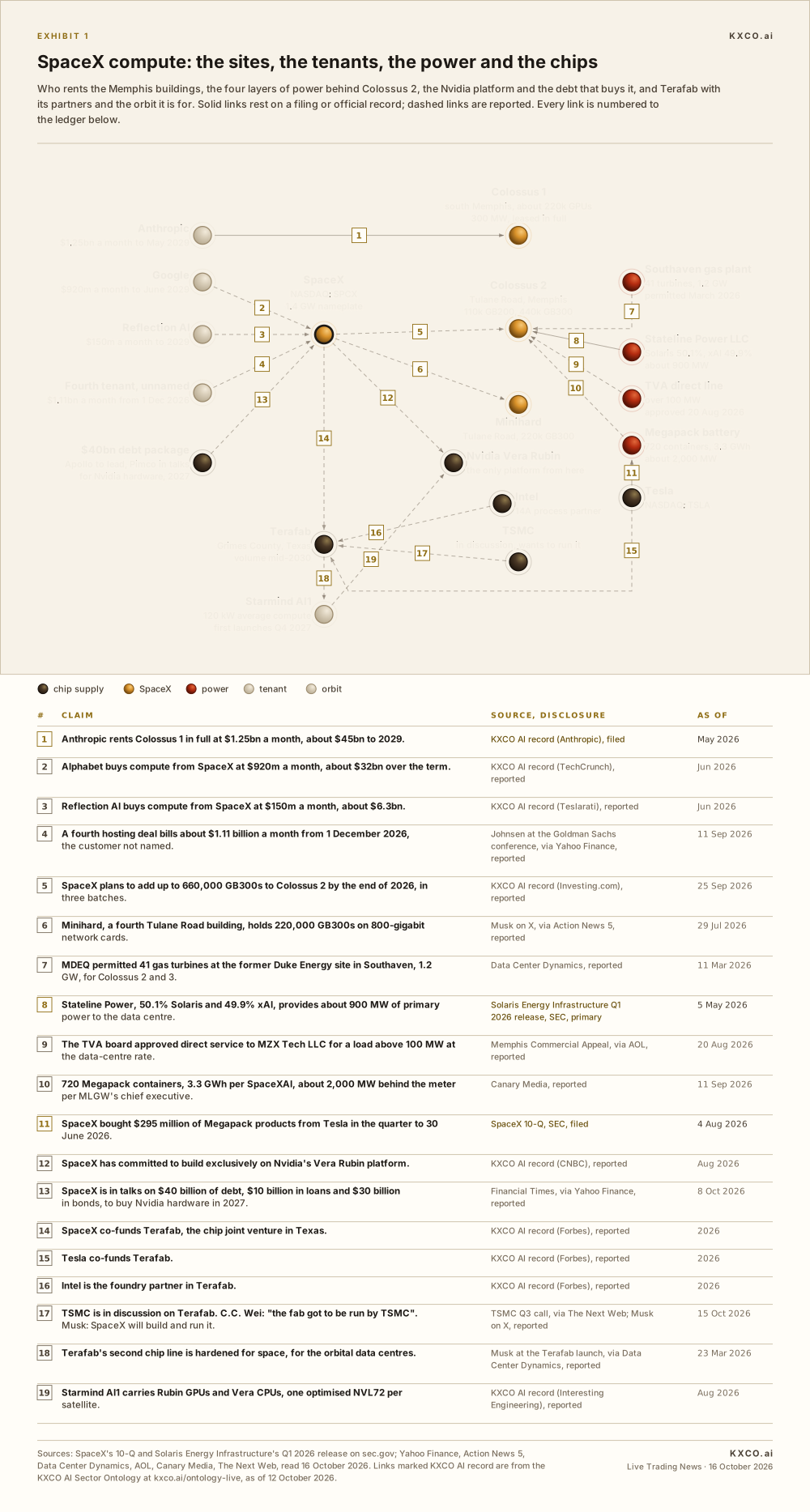
Exhibit 1. SpaceX compute, who rents it, where the power comes from, and what Terafab is for. Each numbered link is a sourced claim, listed under the graph. Links marked RECORD are from the KXCO AI Sector Ontology.
What Terafab is for: the chips after Nvidia, and the orbit
Terafab is not on the road to 10 gigawatts by the end of 2027. Every watt of that target is Nvidia Vera Rubin, bought with cash and the bond package, and Musk said so on the call. Terafab is the answer to the question that comes after: what supplies the next 100 gigawatts, and what supplies the orbit, when the chips a merchant foundry can make are already spoken for.
Musk announced it on 21 March 2026 at the Seaholm power plant in Austin as a joint venture between Tesla and SpaceX, with the line that still explains it: "We either build the TeraFab, or we don't have the chips, and we need the chips, so we build the TeraFab," per Data Center Dynamics on 23 March 2026. He said his companies would eventually need up to 200 gigawatts a year of compute on the ground and up to a terawatt for space, against about 20 gigawatts of AI compute then available in the world, per the same report. Two chip lines were named: an edge-inference part for vehicles and robots, and a more powerful line hardened for space. The space chips are for the orbital data centres, which is the Starmind constellation.
Intel joined on 7 April 2026 as the manufacturing and process partner, after a weekend meeting between Musk and chief executive Lip-Bu Tan, with the statement that "Elon has a proven track record of re-imagining entire industries. This is exactly what is needed in semiconductor manufacturing today," per Not a Tesla App that day. Musk said on Tesla's first-quarter call that the fab would use Intel's 14A process, per CNBC. Tesla would build a research fab at its Austin factory costing around $3 billion and "capable of maybe a few thousand wafers per month", and SpaceX would handle "the initial phase of the scaled up Terafab", per the same report.
The scaled-up fab is in Grimes County, east of College Station, on land beside the Gibbons Creek Reservoir, the cooling pond of a 470 megawatt coal plant that the Texas Municipal Power Agency shut down in 2018, per the Gibbons Creek Reservoir entry on Wikipedia, read on 16 October 2026. A public hearing notice filed on 6 May 2026 put the first phase at $55 billion and the full build at up to $119 billion, per CNBC.
Grimes County commissioners voted 4 to 1 on 3 June 2026 for a reinvestment zone and a tax abatement with payments in lieu of taxes projected at $700 million over 35 years, per KBTX the same day. On 6 August 2026 Tesla and SpaceX committed $16.8 billion to start the first phase, with more than 100 million square feet of manufacturing space planned, at least 3,000 jobs, and water drawn from the Gibbons Creek Reservoir rather than groundwater, per TechCrunch.
The timetable is the part the reader needs, because it is slower than the compute build and the public story often runs them together. The research fab at Giga Texas broke ground in April 2026. Its first ASML extreme-ultraviolet scanner is due in mid-2027, but the shell of the development fab will not be complete until late 2027 and tools only move in after that, so the scanner will wait, per Tom's Hardware reading Tim Culpan's Culpium newsletter and SemiAnalysis on 15 October 2026.
The first phase of the Grimes County fab is expected to begin operating in late 2029 with volume production in mid-2030, per the same report. Texas filings in early September listed a construction start of 1 December 2026 and completion by the end of 2028 for the Grimes County site, per the Terafab entry on Wikipedia, which cites them. Land clearing began in August. So the first Terafab wafers in volume arrive about two and a half years after the 10 gigawatt date.
Who runs it was settled in public this month. Culpium reported on 2 October that TSMC and Terafab were discussing a collaboration under which TSMC would build and operate a facility serving only Tesla, SpaceX and xAI, and Musk confirmed it the next day: "Just discussions, but something may come of it," per Tom's Hardware. On 7 October he closed the question of control: "No, we will build and run the fab. Let there be ZERO doubt about that. Maybe TSMC subleases part of the Terafab if they want, but nothing more than that," per Teslarati.
TSMC's chief executive C.C. Wei answered on the company's third-quarter call on 15 October: "We are still in discussion. But the fab got to be run by TSMC," per The Next Web. Intel's Tan confirmed Intel stays in and will supply 14A, per the same report. The two positions are both on the record and both still live, and the piece does not pick between them. What is settled is the customer list. Terafab makes chips for Tesla, SpaceX and xAI and for nobody else.
Now the role. Terafab plays three parts in the 10 gigawatt story, and none of them is "supply the 2027 chips".
The first part is the supply line after 2027. At 1 to 2 million Rubin GPUs a year, SpaceX is one of Nvidia's largest customers and still a customer, in a queue behind its own tenants. Musk's 200 gigawatts a year figure cannot be met from a merchant foundry's allocation, which is why the fab exists. The target of more than a terawatt of AI compute a year from the full Grimes County site is the long-run number, and it is a 2030s number.
The second part is the orbit. Starmind AI1 flies an optimised Vera Rubin NVL72, but a million-satellite constellation at 120 kilowatts each is 120 gigawatts of compute that has to survive radiation and heat in low Earth orbit. The space-hardened line is Terafab's second product and the one no merchant foundry is building. The orbital layer is the part of Musk's compute plan that depends on Terafab outright.
The third part is the power lesson applied to a fab. Terafab will build its own natural-gas plants on site, described by Terafab's Riley Trennell as "the cleanest per megawatt natural gas facilities in the country", with the reservoir for closed-loop water, per KBTX. The plan is to use the reservoir for cooling as the coal plant did, per the same entry. That is the Memphis method moved to Texas: pick a site with a retired power station on it, bring your own generation, use the grid last.
Why it matters: the industrial that owns its inputs
Power, not chip supply alone, has become the binding constraint on AI capacity. Everyone with a chip order knows it. What distinguishes SpaceX is that it treated compute and the power to run it as one engineering problem from the first turbine, and financed both from the same balance sheet. The customers that lease from it, two of which compete with its own models, are buying the result.
That is why "SpaceX added an AI business" is the wrong sentence. An aerospace company whose processes were already compute-heavy reached the point where owning the plant beat renting it, and built the plant. The same decision is being taken at every large corporation whose processes run on compute, and it will be taken at more of them, because the power shortfall Musk described makes a rented watt scarcer than an owned one. The companies that build their own generation will be the ones that can add capacity in 2027. The rest will wait in a queue.
The risks are the size of the plan. Execution on power plants, transformers, cooling and networking at this pace has few precedents, the capital intensity is extreme, and the revenue assumption rests on a price per watt that a shortage sets. The next eight gigawatts of generation have no published address. Every one of those is a fact to watch, not a reason to dismiss the plan, because the first two gigawatts were built the same way and are now leased at $41 billion a year.
The next facts to watch are dated. The November batch of 220,000 GB300s at Colossus 2, per Musk's post of 25 September 2026, and whether the late-December batch lands. Google's billing, which started in October, and the unnamed tenant's, which starts on 1 December 2026. The 1 December construction start at Gibbons Creek. Whether the $40 billion package prices, and at what coupon. And the third-quarter report in November, which will give the first nameplate compute figure after 2 gigawatts came into view.
Stocks mentioned: $SPCX (NASDAQ), $NVDA (NASDAQ), $TSLA (NASDAQ), $INTC (NASDAQ), $TSM (NYSE), $GOOGL (NASDAQ), $ASML (NASDAQ), $SEI (NYSE) and $APO (NYSE). Anthropic and Reflection AI are private.
Sources: SpaceX's 10-Q for the quarter ended 30 June 2026 and its earnings call of 4 August 2026, read through The Motley Fool's transcript. Elon Musk's posts on X of 25 September and 7 October 2026. Fortune, Tom's Hardware, TeslaNorth, Teslarati, Yahoo Finance, Crypto Briefing, Data Center Dynamics, Action News 5, the Memphis Commercial Appeal via AOL, Canary Media, the Free Press Journal, CNBC, TechCrunch, KBTX, Not a Tesla App, The Next Web, MLQ.ai, MRKT3.0 reading the Epoch AI database, and the Terafab and Gibbons Creek Reservoir entries on Wikipedia. Solaris Energy Infrastructure's first-quarter 2026 release filed with the SEC, the company's Colossus page, and the KXCO AI Sector Ontology as of 12 October 2026. All read on 16 October 2026.
Shayne Heffernan, Ph.D., is the founder of Live Trading News, the KnightsBridge Group, Knightsbridge Law and the KXCO.ai ecosystem spanning post-quantum cryptography, identity, attestation and enterprise ontology.
This commentary is for informational purposes and does not constitute investment advice.
The China Chip Shock
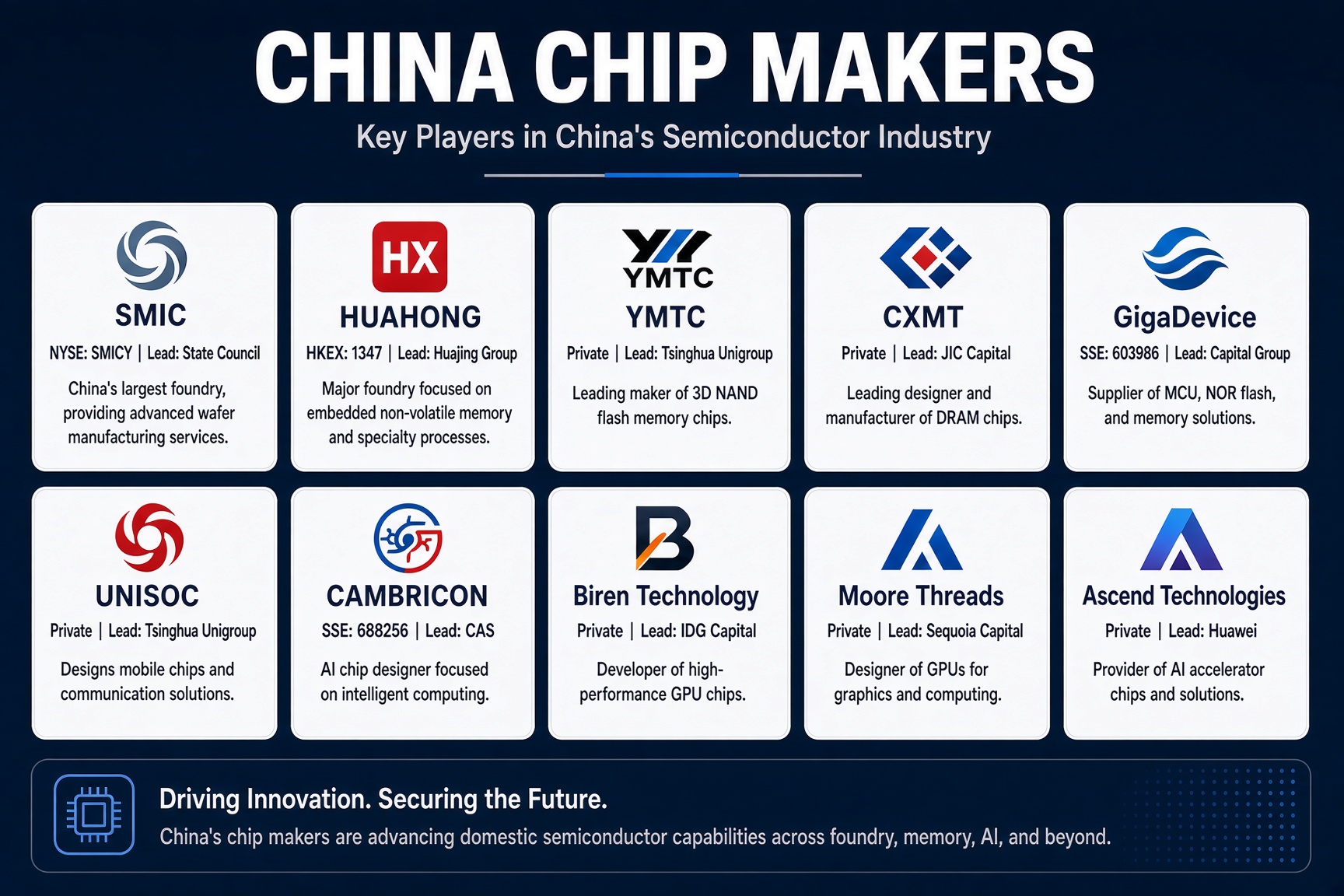
On 10 October CXMT said it will ship DDR5 server modules on a 4F2 cell by year-end. Micron, SK Hynix, Samsung and Sandisk sold off for two sessions and Elon Musk said China scales faster than the rest of the world combined. This piece sets out China's memory makers, foundries, AI chip designers and toolmakers, with two knowledge graphs drawn from the KXCO AI Sector Ontology, and says what the sell-off prices and what it does not.

China's Coordinated Push in AI, Quantum Computing and Blockchain
On 9 October 2026 Beijing called for a nationally integrated computing-power network and a national blockchain network. DeepSeek is scaling on Huawei Ascend chips, China's intelligent computing reached 2,185 EFLOPS by June, per the industry ministry, and quantum communications remain a strength. This analysis explains the strategy and sets out the Hong Kong and US listed companies with exposure, from Tencent and Alibaba to China Mobile, HashKey and Nvidia.

Week Ahead on Wall Street: CPI, Banks and Oil
September CPI lands on Wednesday after a Fed hike and a 10-year yield at its highest since 2002. JPMorgan, Goldman and Citi open bank earnings on Tuesday, ASML and TSMC report midweek, and Saudi pipeline attacks kept Brent at $104.72 on 9 October 2026, per CNBC. The KXCO AI Sector Ontology still shows contracted demand. This week ahead sets out the calendar, the three facts that would change the call, and why dips in the AI leaders remain buying opportunities.
AI Is Being Powered by Tech That Looks Almost Alien
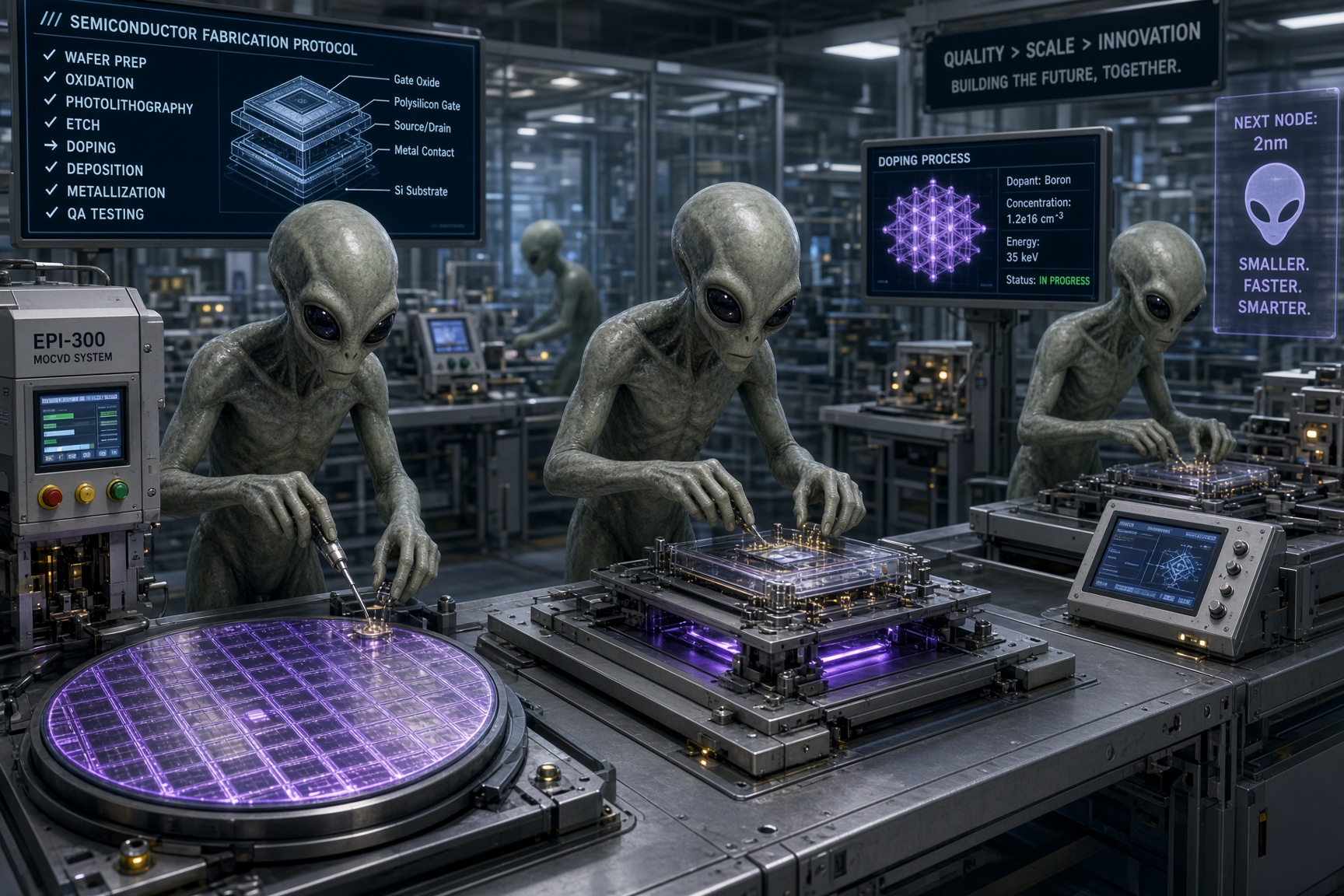
Every frontier AI model runs on chips printed by one Dutch machine. ASML's extreme-ultraviolet scanner fires a laser at up to 50,000 droplets of molten tin a second, per ASML, and bounces the light off mirrors whose deviations are tens of picometres. Veritasium called it the closest thing we have to alien technology. This piece takes the film as the brief and checks it: the machine, High-NA, and the wafer-scale chips and liquid-cooled racks downstream of it.
Every story, signed and delivered.
Subscribe to the kxco channel and get the headline, the AI-written key takeaways, and the chain-anchor link the moment we publish. Audio versions and per-ticker subscriptions arrive in the next iteration.