
China's Coordinated Push in AI, Quantum Computing and Blockchain
State-directed infrastructure, domestic compute and industrial application, read from the 9 October opinions, and the Hong Kong and US listed companies that give investors exposure.

China is advancing a coordinated national strategy across artificial intelligence, quantum technology and blockchain infrastructure. The approach is state-directed, centred on domestic capability, industrial application and data sovereignty. On 9 October 2026 the Communist Party Central Committee and the State Council issued the Opinions on Developing New Quality Productive Forces, per the full text from Xinhua.
The document calls for a nationally integrated computing-power network and a national blockchain network, listed side by side, together with deeper digital transformation of manufacturing and clearer rules that treat data as an economic factor. It sits inside the wider 2026 to 2030 agenda of the 15th Five-Year Plan outline, adopted in March 2026, which already named the blockchain network and prioritises AI, quantum technology and integrated circuits, per the plan outline.
This analysis examines the three strands, where they meet in the computing grid and the data infrastructure, and the listed companies in Hong Kong and the United States that give investors exposure to them. China continues to separate blockchain technology from public cryptocurrencies, and crypto trading and mining remain banned. Progress is therefore measured in domestic compute capacity, selected model benchmarks, quantum hardware and communications milestones, verified data systems and industrial uptake, not in open-token activity.
Artificial intelligence and the domestic compute push
Chinese AI development has adapted to restrictions on advanced foreign chips by scaling domestic accelerators and capacity in the western regions. DeepSeek has become the most prominent example. It is close to raising at least RMB 80 billion, possibly approaching RMB 100 billion, with Tencent and CATL among the largest commitments, per TechNode citing Bloomberg. DeepSeek has not confirmed the round, and it plans to restructure afterwards for a listing in early 2027.
Separately, DeepSeek plans to install at least 160,000 Huawei Ascend 950DT accelerators at a data centre of about 1 GW in Ulanqab, Inner Mongolia, to run its models in service, per tech-ish citing Bloomberg. It has also published Ascend versions of its training and communication libraries, which lowers the barrier for other developers to use the same hardware, per DeepSeek on GitHub.
Its recent models, including DeepSeek-V4.1-Flash released on 10 September, lead on some agentic-coding benchmarks against the US frontier models and trail on the hardest ones, per its own model card. Its annualised revenue run rate has reached about US$1 billion, per PYMNTS citing The Information. Parallel activity continues at Alibaba, which posted the open weights of its Max-tier Qwen3.8 in August, per Hugging Face, and at Moonshot AI, whose Kimi K3 arrived in July, per Fortune.
The East Data, West Computing programme, under way since February 2022, expands data-centre capacity in regions with lower power costs and renewable resources. Intelligent computing capacity reached 2,185 EFLOPS at the end of June 2026, up 177% on the year, with rack occupancy of 71.4%, per the industry ministry via Xinhua. The ministry's target is 9,800 EFLOPS by 2030, per Securities Times. Utilisation and inter-regional latency remain constraints, but the physical build-out of power and facilities has been rapid.
The October opinions call for breakthroughs in AI theory and core technology, a stronger supply of computing power, algorithms and data, and full implementation of the AI Plus initiative. They also warn against bubbles and blind investment. The dual objective is to enlarge domestic capacity on the chips China can get and to direct AI toward manufacturing, logistics and other productive uses. The KXCO AI Sector Ontology records the same shift as one of its findings: a second AI frontier forming outside Western oversight.
Quantum computing platforms and communications
China maintains programmes across superconducting, photonic and trapped-ion platforms, together with quantum communications. Origin Quantum and its partners demonstrated coherent quantum routers for bucket-brigade quantum random-access memory on the 72-qubit Origin Wukong processor, with transmission efficiency up to 98% for single routers, per Physical Review X.
The Zuchongzhi processors have continued to improve. Zuchongzhi 3.0 reached 105 qubits, per Physical Review Letters, and Zuchongzhi 3.2 showed error correction below the surface-code threshold, the first such result outside the United States, per Physical Review Letters. US systems still lead on several fidelity and scale measures.
Photonic systems have produced specialised advantage claims. Jiuzhang 4.0 detected up to 3,050 photons in Gaussian boson sampling, against 255 for its predecessor, per Nature. These results establish advantage on narrow sampling problems, not general-purpose fault-tolerant computing. In trapped ions, Hefei Unitary Quantum Technology reported a domestic record quantum volume of 128 on seven qubits, per IT Home, far below the global record but showing high connectivity and fidelity on modest qubit counts.
Quantum communication remains a relative strength. China runs a space-ground network of more than 700 fibre links and two satellite-ground links over 4,600 km, per Nature, and urban networks such as Hefei's, which opened in 2022, per Xinhua. These systems depend less on the most advanced semiconductor nodes. Hybrid work that attaches AI tools to quantum hardware, or explores quantum-inspired algorithms for optimisation, is at an early stage but matches the national priority of integrating quantum resources with classical AI and industrial workloads. The 2026 to 2030 agenda lists quantum technology among the future industries, and the strategic emphasis is on indigenous capability, secure communications and the applications where quantum methods can complement classical systems.
Exhibit 1 draws who builds these systems and what they run on, from DeepSeek's Ascend chips to the USTC processors, with the US machines they are measured against.
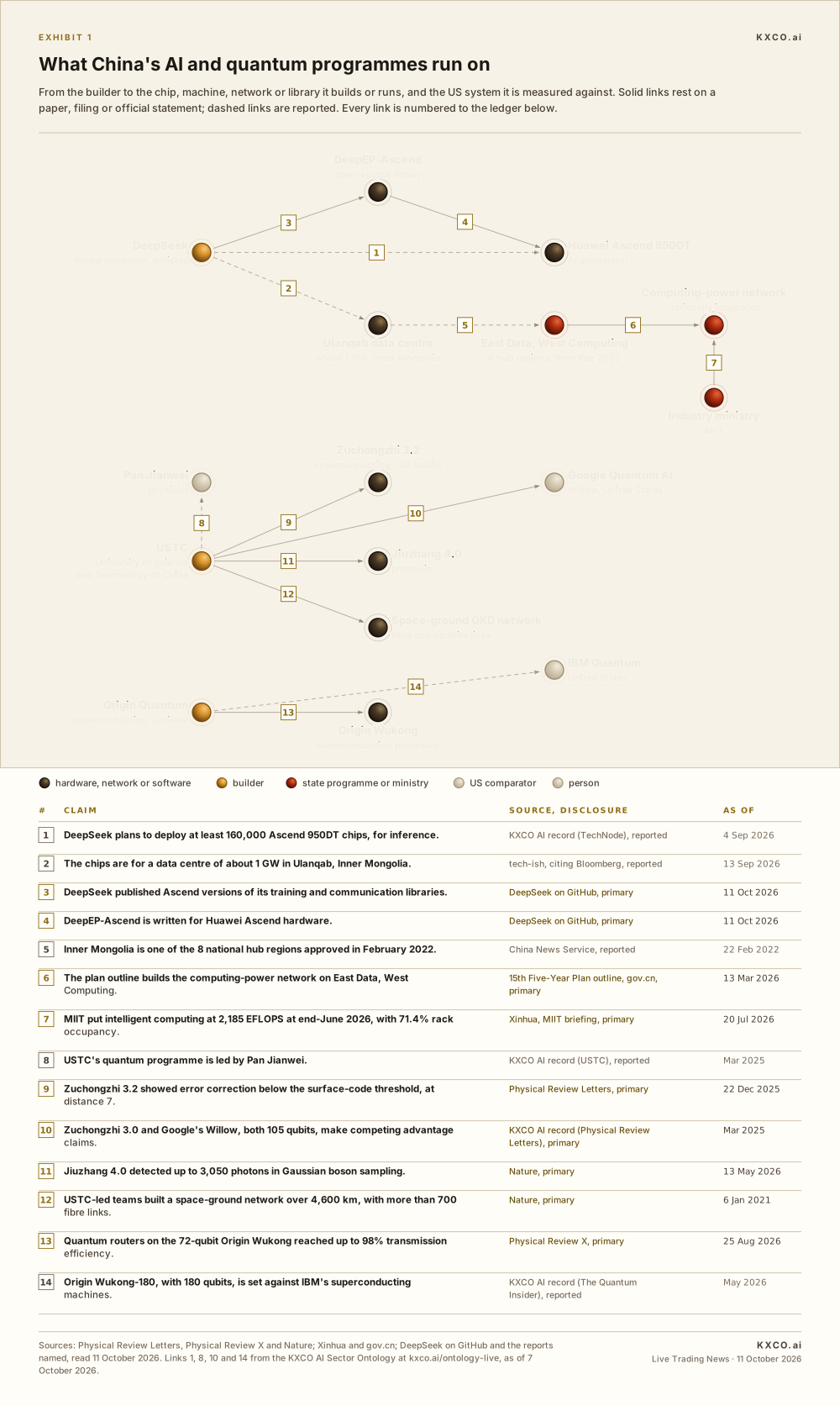
Exhibit 1. What China's AI and quantum programmes run on. Each numbered link is a sourced claim, listed under the graph.
The national blockchain network and data infrastructure
The 9 October opinions direct construction of a national blockchain network beside the national computing-power network. The reference sits in the section on merging the real and digital economies, alongside manufacturing digitisation, industrial-internet projects and East Data, West Computing. Parallel provisions address data property rights, market trading, the allocation and protection of rights, and pilot projects that treat data as an economic factor. The document calls for an open, shared and secure nationally integrated data market and an efficient, convenient and secure mechanism for cross-border data flows.
The network builds on the Blockchain-based Service Network (BSN), opened for commercial use in April 2020 as a permissioned, state-governed platform in mainland China led by the State Information Center with China Mobile and China UnionPay, per China Daily. BSN supports identity verification, item traceability, electronic invoices and supply-chain applications, and it does not allow independent cryptocurrencies, per DigiChina.
The national network is already running in places. Shanghai's city trusted data space provides digital identity, trusted signing and full-process evidence storage on the national blockchain network's Shanghai hub, per the National Data Administration. A March 2026 notice from the tax and banking regulators encourages blockchain and privacy computing in the tax-data lending that serves small firms, per the State Taxation Administration. In September the China Academy of Information and Communications Technology began trial operation of an identity network for AI agents that pairs decentralised identifiers with a permissioned blockchain, per Science and Technology Daily.
The new network is expected to strengthen interoperability for government services, industrial data exchange and compliant cross-border trade under Chinese rules. Cryptocurrency trading and mining remain prohibited: a February 2026 notice from the central bank and seven other bodies classes virtual-currency business as illegal financial activity, per the People's Bank of China. The opinions contain no reference to public tokens and warn against economic bubbles. The digital yuan is the sole systemic digital currency. The architecture is therefore a controlled verification and data-governance layer for identity, supply-chain provenance, regulated data markets and industrial record-keeping.
Exhibit 2 maps the policy chain, from the 9 October opinions and the March plan outline to the networks they order and the pieces already running.
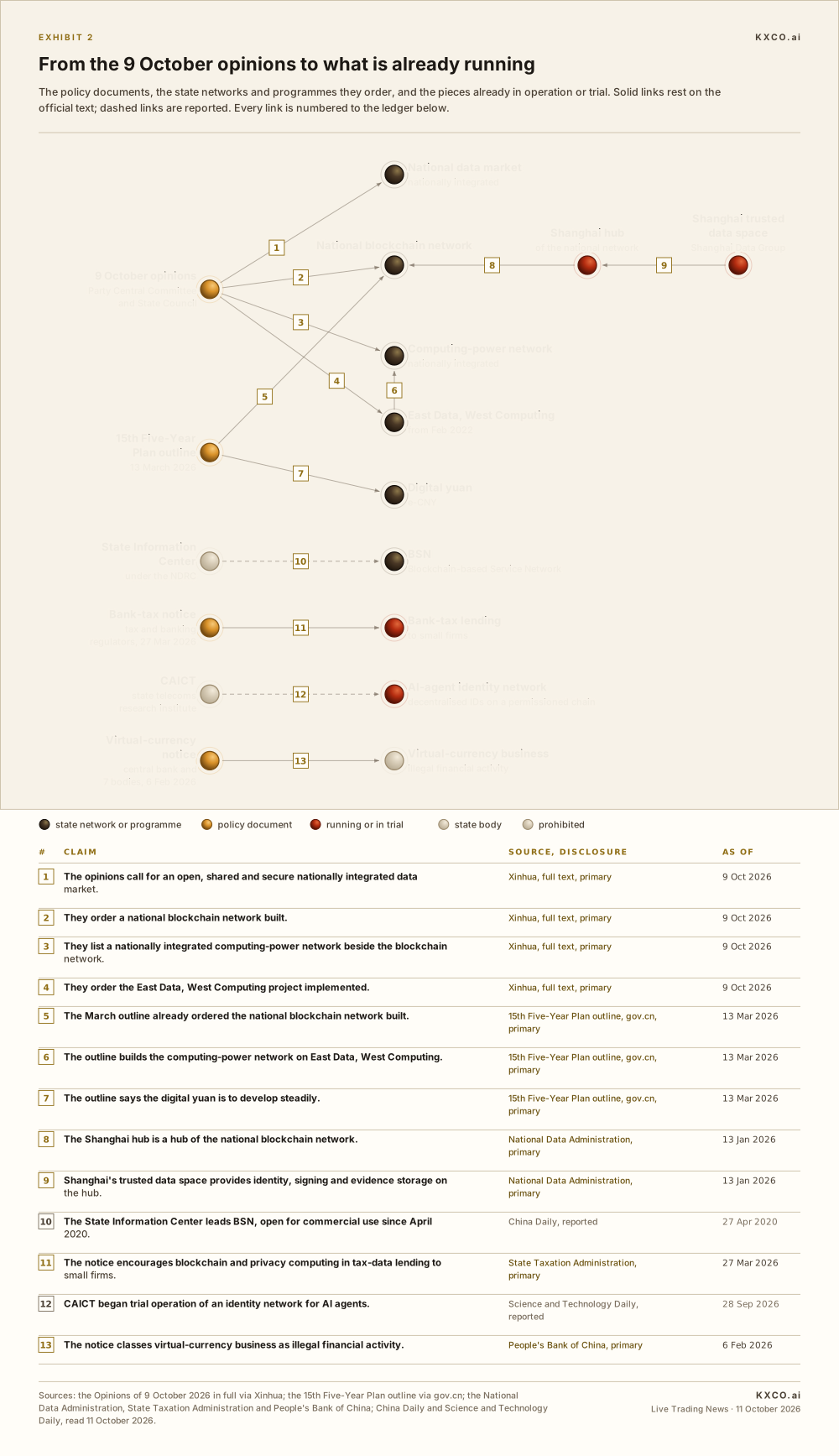
Exhibit 2. From the 9 October opinions to what is already running. Each numbered link is a sourced claim, listed under the graph.
Intersections through the computing grid
The three domains converge on the nationally integrated computing-power network and the data infrastructure behind it. AI training and inference need coordinated compute at scale. Quantum systems are explored both as specialised tools for some problems and as sources of secure communication or verified randomness. Blockchain supplies an auditable layer for data provenance, identity and compliance across industrial and government systems.
East Data, West Computing provides the geographic and power dimension, shifting workloads toward regions with cheaper electricity and renewable capacity while keeping them connected to the eastern demand centres. In operational terms, AI model development increasingly runs on Ascend and other Chinese accelerators in inland and western data centres. Quantum research proceeds in parallel at national laboratories and companies. Blockchain infrastructure is positioned to record and verify data flows among factories, logistics systems, tax authorities and financial institutions.
The October opinions treat these elements as complementary parts of new quality productive forces. Implementation will involve several ministries and centrally administered state-owned enterprises. Outcomes will depend on utilisation, latency, chip supply, talent and the design of data-market rules that balance commercial usefulness against security and localisation.
The listed exposure in Hong Kong and the United States
Most of the strategy is built by state bodies and unlisted companies, so investors reach it through listed holders, suppliers and operators. Exhibit 3 draws the main routes, from a listed company to the developer or programme it holds, funds or runs.
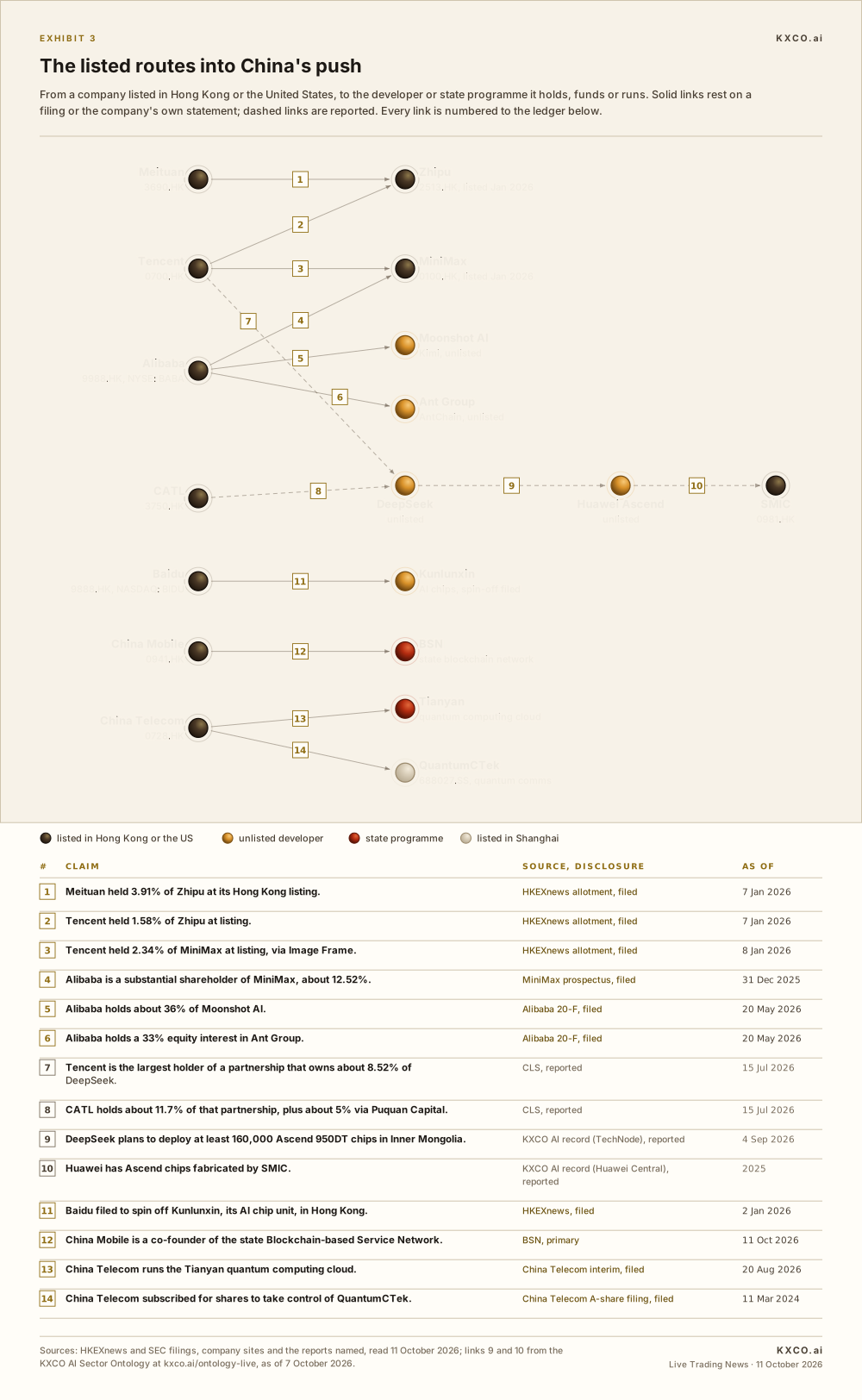
Exhibit 3. The listed routes into China's AI, quantum and blockchain push. Each numbered link is a sourced claim, listed under the graph.
Models and the investors behind them
Tencent (0700.HK) builds its own Hy models, spent RMB 52.78 billion on capital expenditure in the second quarter, per its interim results, and is the largest holder of the partnership that owns about 8.52% of DeepSeek, per CLS.
Alibaba (9988.HK; $BABA, NYSE) builds the Qwen family, reported about 36% of Moonshot AI after its investment, and holds 33% of Ant Group, per its 20-F.
Zhipu (2513.HK) and MiniMax (0100.HK), two of China's leading model developers, listed in Hong Kong in January 2026. Meituan (3690.HK) held 3.91% of Zhipu at listing, per HKEXnews, and Alibaba holds about 12.5% of MiniMax, per its prospectus.
CATL (3750.HK), NetEase (9999.HK; $NTES, NASDAQ) and JD.com (9618.HK; $JD, NASDAQ) are DeepSeek investors through the same partnership, per CLS.
Baidu (9888.HK; $BIDU, NASDAQ) earned RMB 12.5 billion from its AI-powered businesses in the second quarter and has filed to spin off Kunlunxin, its AI chip unit, per HKEXnews.
SenseTime (0020.HK) took 79.9% of first-half revenue from generative AI, per its interim results. Xiaomi (1810.HK) builds the MiMo models, and Kuaishou (1024.HK) earned more than RMB 850 million from Kling AI in the second quarter, per its results.
Chips and servers
SMIC (0981.HK), China's leading foundry, is reported to be raising its 7nm yields for Huawei's Ascend chips, per KrASIA citing Bloomberg; its own filing cites AI demand but does not name Huawei.
Biren Technology (6082.HK) and Iluvatar CoreX (9903.HK), two domestic GPU designers, listed in Hong Kong in January 2026, per HKEXnews.
Lenovo (0992.HK) reported an AI server pipeline of US$54.0 billion in the quarter to June, per its results.
The computing-power network and data centres
China Mobile (0941.HK) runs about 112.7 EFLOPS of intelligent computing at more than 90% utilisation, per its interim results. China Telecom (0728.HK) reported 70.8 EFLOPS across the eight hub regions, per its interim results, and China Unicom (0762.HK) more than 45 EFLOPS, per its interim results.
GDS Holdings (9698.HK; $GDS, NASDAQ) is expanding in Ningxia, Shaoguan and Inner Mongolia, inside the East Data, West Computing hubs, per its 20-F. VNET ($VNET, NASDAQ) had 1,007 MW of wholesale capacity in service at the end of June, per its results.
Kingsoft Cloud (3896.HK; $KC, NASDAQ) grew AI cloud billings 82% on the year in the second quarter, per its results.
Quantum
China Telecom runs the Tianyan quantum computing cloud and sells quantum key distribution, per its interim results, and controls QuantumCTek, which is listed in Shanghai.
China Mobile runs the Wuyue quantum computing cloud and released an open-source quantum operating system in November 2025, per Xinhua.
Two Nasdaq small caps, MicroCloud Hologram ($HOLO, NASDAQ) and WiMi Hologram Cloud ($WIMI, NASDAQ), issue frequent quantum press releases, but their annual reports disclose no quantum revenue, hardware or customers, per their 20-F filings.
Blockchain and digital assets
China Mobile is a co-founder of the state BSN, and the only founder with a listed arm, per BSN. Alibaba's 33% of Ant Group gives indirect exposure to AntChain.
In Hong Kong's licensed market, OSL Group (0863.HK) runs the first exchange on the securities regulator's licensed list, per its interim results, and HashKey (3887.HK), listed in December 2025, runs HashKey Exchange and its HSK Chain for tokenised assets, per its interim results.
The Hong Kong Monetary Authority granted the first two stablecoin issuer licences on 10 April 2026, to HSBC (0005.HK; $HSBC, NYSE) and to Anchorpoint, a venture of Standard Chartered (2888.HK), HKT (6823.HK) and Animoca Brands, per the HKMA.
The digital yuan runs through 30 designated operators, including ICBC (1398.HK), Bank of China (3988.HK), China Construction Bank (0939.HK) and China Merchants Bank (3968.HK), per Xinhua.
US companies with direct exposure
Nvidia ($NVDA, NASDAQ) holds US licences to ship small amounts of H200 to specific Chinese customers, but Beijing restricted the sales and the shipments made were under 1% of Data Center revenue, per its 10-Q.
AMD ($AMD, NASDAQ) ships Instinct MI308 under licence and does not yet know whether China will admit MI325, per its 10-Q.
Applied Materials ($AMAT, NASDAQ) and Lam Research ($LRCX, NASDAQ) sell the tools China's fabs need: China was 28% of Applied's revenue in the quarter to July and about 34% of Lam's in fiscal 2026, per their 10-Q and 10-K.
DeepSeek, Moonshot AI, Huawei and Ant Group are not listed, so their progress reaches public markets only through these holders, suppliers and operators. Earlier Live Trading News coverage of who is who in China's AI race and the US and China AI and quantum landscape sets out the wider field.
Strategic implications and constraints
China's approach prioritises sovereign control, industrial application and the avoidance of speculative excess. AI progress is measurable on selected benchmarks and in the scale of domestic compute under construction, but it remains limited by access to advanced semiconductors and by the requirement that systems serve productive ends. Quantum efforts show strength in communications and specialised photonic demonstrations, while superconducting and ion-trap platforms advance under the same engineering challenges seen everywhere. Blockchain is being institutionalised as permissioned infrastructure for identity, logistics and data governance, explicitly separated from public cryptocurrencies.
The result is a dual structure in global technology competition. Open, permissionless systems and US-led AI platforms continue to set many performance and ecosystem benchmarks. China is constructing parallel, state-coordinated stacks optimised for domestic industrial use, data localisation and the export of compatible standards. Operators and investors that rely on Chinese supply chains or digital-trade corridors will meet these systems as operational requirements.
The relevant distinction is between genuine infrastructure progress, meaning compute capacity, verified data layers and quantum communications, and narratives that equate any blockchain or AI announcement with crypto liberalisation or immediate parity. The constraints are material. Semiconductor restrictions cap absolute training performance even as domestic stacks improve. East Data, West Computing faces latency and talent constraints. Quantum systems remain experimental outside specialised tasks. Blockchain at scale needs sustained coordination and carefully designed data rules. Official caution against bubbles reflects awareness of past over-capacity. Execution during the 15th Five-Year Plan will turn on utilisation, industrial adoption of verified systems and measurable productivity gains rather than capacity targets alone.
Conclusion
China's programmes in artificial intelligence, quantum computing and blockchain form a single, state-directed effort to embed advanced digital technology in the real economy under retained control. The October 2026 opinions that call for a national blockchain network and an integrated computing-power network sit inside a larger agenda that also prioritises AI breakthroughs and quantum technology. Domestic compute is being scaled on the Chinese chips available, quantum platforms continue to produce specialised results and communications infrastructure, and blockchain is expanding as permissioned infrastructure for identity, logistics and regulated data markets. Public cryptocurrency trading remains banned.
The development is significant for state-directed digital infrastructure at Chinese scale. It is not an opening to open, token-driven blockchain models or to unrestricted AI proliferation. For investors, the exposure runs through the Hong Kong and US listed holders, operators and suppliers set out above. The next facts to watch are the implementing rules for the national blockchain network, DeepSeek's confirmation of its round, and the utilisation figures for the computing-power network in the industry ministry's next update.
Stocks mentioned: $BABA (NYSE), $BIDU (NASDAQ), $NTES (NASDAQ), $JD (NASDAQ), $GDS (NASDAQ), $VNET (NASDAQ), $KC (NASDAQ), $HOLO (NASDAQ), $WIMI (NASDAQ), $HSBC (NYSE), $NVDA (NASDAQ), $AMD (NASDAQ), $AMAT (NASDAQ) and $LRCX (NASDAQ). Also mentioned, by Hong Kong code. Models and platforms: Tencent 0700.HK, Alibaba 9988.HK, Baidu 9888.HK, Zhipu 2513.HK, MiniMax 0100.HK, Meituan 3690.HK, CATL 3750.HK, NetEase 9999.HK, JD.com 9618.HK, SenseTime 0020.HK, Xiaomi 1810.HK and Kuaishou 1024.HK. Chips and servers: SMIC 0981.HK, Biren 6082.HK, Iluvatar CoreX 9903.HK and Lenovo 0992.HK. Carriers and data centres: China Mobile 0941.HK, China Telecom 0728.HK, China Unicom 0762.HK, GDS 9698.HK and Kingsoft Cloud 3896.HK. Digital assets and banks: OSL 0863.HK, HashKey 3887.HK, HSBC 0005.HK, Standard Chartered 2888.HK, HKT 6823.HK, ICBC 1398.HK, Bank of China 3988.HK, China Construction Bank 0939.HK and China Merchants Bank 3968.HK.
Sources: the Opinions of 9 October 2026 and the 15th Five-Year Plan outline via Xinhua and gov.cn, HKEXnews and SEC filings, the regulators and journals named, and the press reports linked in the text, read on 11 October 2026.
Shayne Heffernan, Ph.D., is the founder of Live Trading News, the KnightsBridge Group, Knightsbridge Law and the KXCO.ai ecosystem spanning post-quantum cryptography, identity, attestation and enterprise ontology.
This commentary is for informational purposes and does not constitute investment advice.

Week Ahead on Wall Street: CPI, Banks and Oil
September CPI lands on Wednesday after a Fed hike and a 10-year yield at its highest since 2002. JPMorgan, Goldman and Citi open bank earnings on Tuesday, ASML and TSMC report midweek, and Saudi pipeline attacks kept Brent at $104.72 on 9 October 2026, per CNBC. The KXCO AI Sector Ontology still shows contracted demand. This week ahead sets out the calendar, the three facts that would change the call, and why dips in the AI leaders remain buying opportunities.
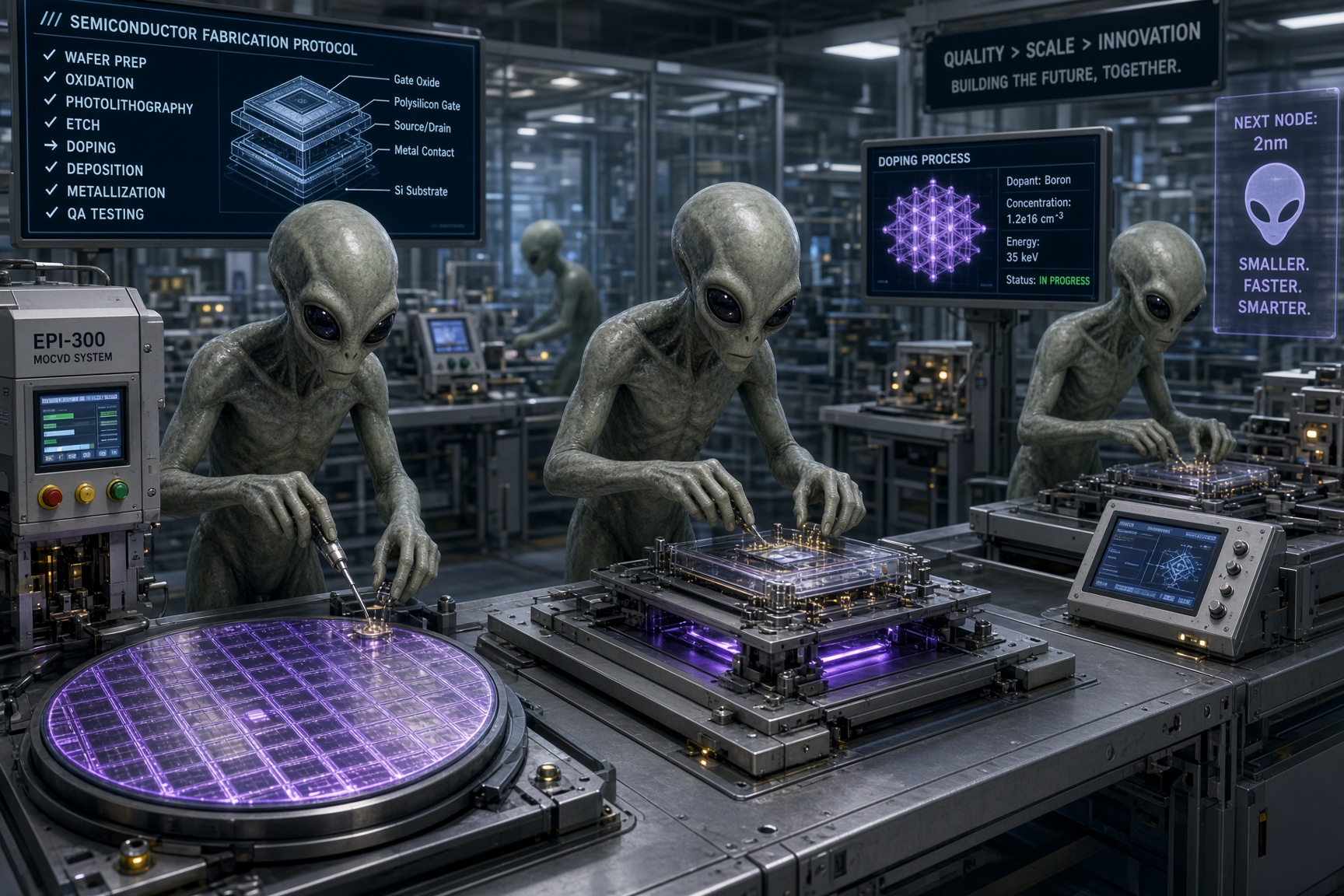
AI Is Being Powered by Tech That Looks Almost Alien
Every frontier AI model runs on chips printed by one Dutch machine. ASML's extreme-ultraviolet scanner fires a laser at up to 50,000 droplets of molten tin a second, per ASML, and bounces the light off mirrors whose deviations are tens of picometres. Veritasium called it the closest thing we have to alien technology. This piece takes the film as the brief and checks it: the machine, High-NA, and the wafer-scale chips and liquid-cooled racks downstream of it.
There Is No AI Bubble
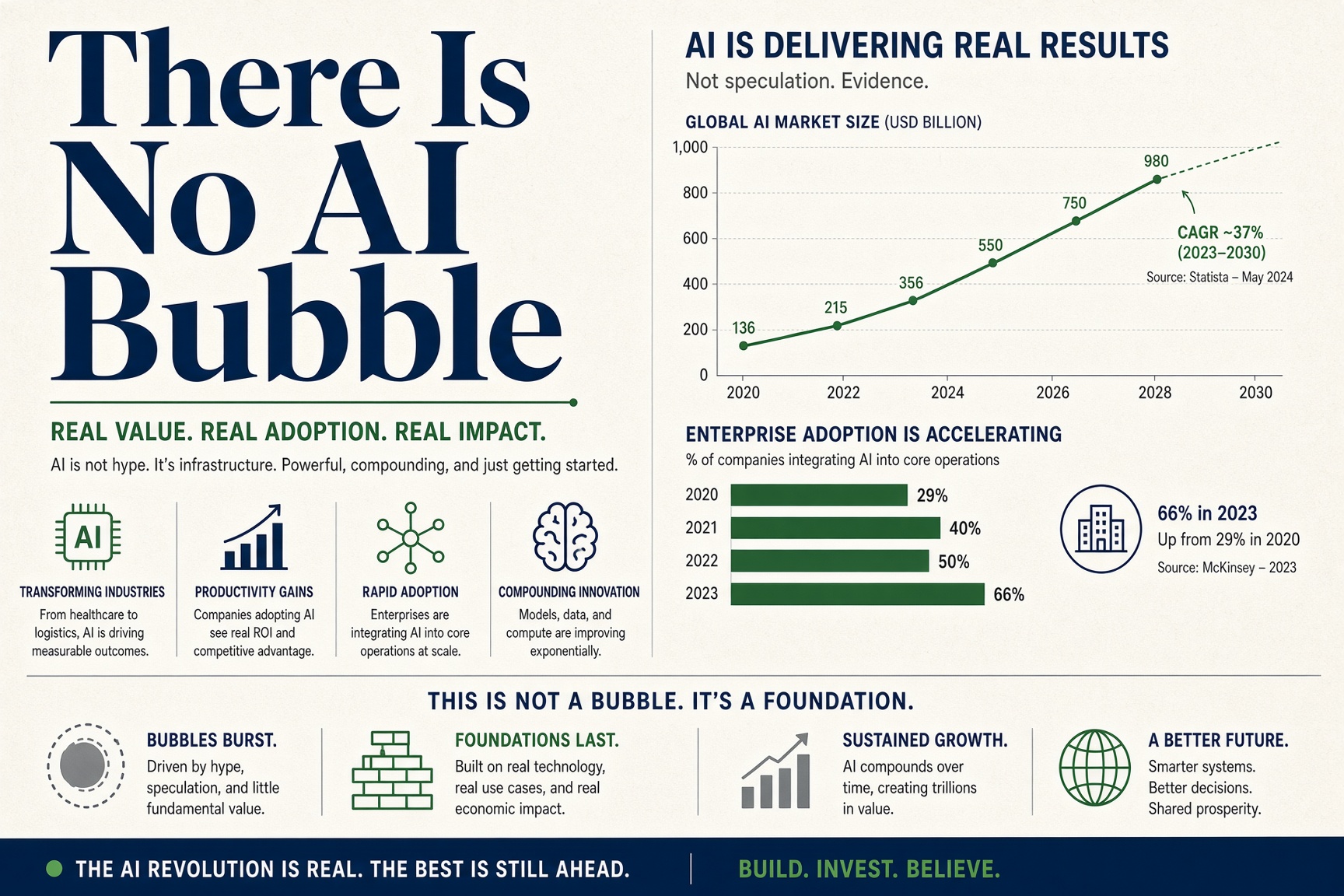
There is no AI bubble. A bubble is capacity nobody uses, demand nobody signs for and a glut when the building stops. KXCO's AI sector ontology, refreshed on 7 October 2026, finds the reverse: adoption rising on six independent measures, about $2.35tn of contracted backlog at the four largest sellers of compute per their own reports, and supply rationed at every layer. It keeps the bear case in the same record, 20 circular capital claims, and answers it.

Weekly Market Outlook: Fed Minutes, Anthropic and OpenAI IPOs, Gold, Bitcoin, FX
The Fed raised rates in September and payrolls rose 29,000, per the Labor Department. This week the FOMC minutes, three Treasury auctions and a 10-year near 5.3 percent test that gap. Anthropic's IPO clock runs toward a 14 October investor day while OpenAI's chief executive says not 2026. Gold sits 26 percent below its record, bitcoin near $85,500, the dollar up three weeks running. Two knowledge graphs from KXCO's records map the IPO backers and the FDA board.
Every story, signed and delivered.
Subscribe to the kxco channel and get the headline, the AI-written key takeaways, and the chain-anchor link the moment we publish. Audio versions and per-ticker subscriptions arrive in the next iteration.