
Crypto Fund Raises $11.7M in Under 48 Hours for Turkey and Syria Earthquake Victims
Following a pair of devastating earthquakes that destroyed buildings and left entire regions without electricity, water, and other essential services. Thee cryptocurrency community has made promptly responded by donating vast funds.
Less than 48 hours after two powerful earthquakes devastated Syria and Turkey, killing more than 9,400 people and injuring many more, the cryptocurrency community has raised and committed more than $11 million.
Large commitments have been made by a number of cryptocurrency exchanges, led by Binance, which will airdrop $100 worth of BNB to all of its users in the most severely affected parts of Turkey, totaling about $5 million. $9 million has been promised in total.
Justin Sun, the creator of Tron, has offered to give the Huobi Global exchange $1 million worth of TRX.
Additionally, Haluk Levent, a Turkish rock star, was able to circumvent the country's cryptocurrency ban by establishing three multisig wallets that have garnered more than $2.7 million in funding, including $1 million from the Avalanche foundation in AVAX.
Ahbap "the most reputable charity organization in Turkey," will collect and distribute the contributions sent to these addresses, according to Baki Er, co-founder of Web3 analytics platform Lytera.io.
Their wallet addresses are:
Ethereum/ERC-20 tokens:
0xe1935271D1993434A1a59fE08f24891Dc5F398Cd
BNB/BEP-20 tokens:
0xB67705398fEd380a1CE02e77095fed64f8aCe463
Avalanche AVAX tokens:
0x868D27c361682462536DfE361f2e20B3A6f4dDD8
Other well-known genuine donation addresses include Jack Butcher's Humanity Check, a project that sends all revenues to Doctors Without Borders through the cryptocurrency charity The Giving Block.

A woman reacts while embracing another person, near rubble following an earthquake in Hatay, Turkey, February 8, 2023.
The Essentials
Although lots of individuals try to contribute what they have, Lucy Easthope, co-founder of the After Disaster Network and a global expert on disaster recovery, stated that cleaning out a closet isn't very beneficial. She stated to BBC World News that:
"The most important, helpful thing at this moment is money. There are non-governmental organizations and charities and governmental organizations all powering-in now to help. What they need not just now, but for years ahead, is cash."
Cryptocurrencies such as Finance Blocks ($FBX) are prime examples of mechanisms for cross border-payments without banks, perfectly fitting this description. Investing in FBX without being the victim of global money printing pandemic is a great way to sustain long-term wealth.
The worlds' largest exchange, Binance, stated their intentions to base donations on Proof of Address forms submitted before February 6. Binance is the owner of CoinMarketCap.
Binance stated in its release that "in the wake of natural disasters, people frequently lose access to traditional banking at the exact moment when additional funds are needed to assist cover medical supplies, food, and other basic necessities." Added was:
"Crypto transfers are now increasingly being used to deliver financial aid to disaster victims as they provide fast, low-cost, borderless and transparent transactions."
To speak to a professional in Cryptocurrency, contact KXCO.IO.
More News:
Why FBX is Asia’s Must Own Cryptocurrency
KXCO $FBX a Dual-Finalist at Tech Investment Show in Thailand
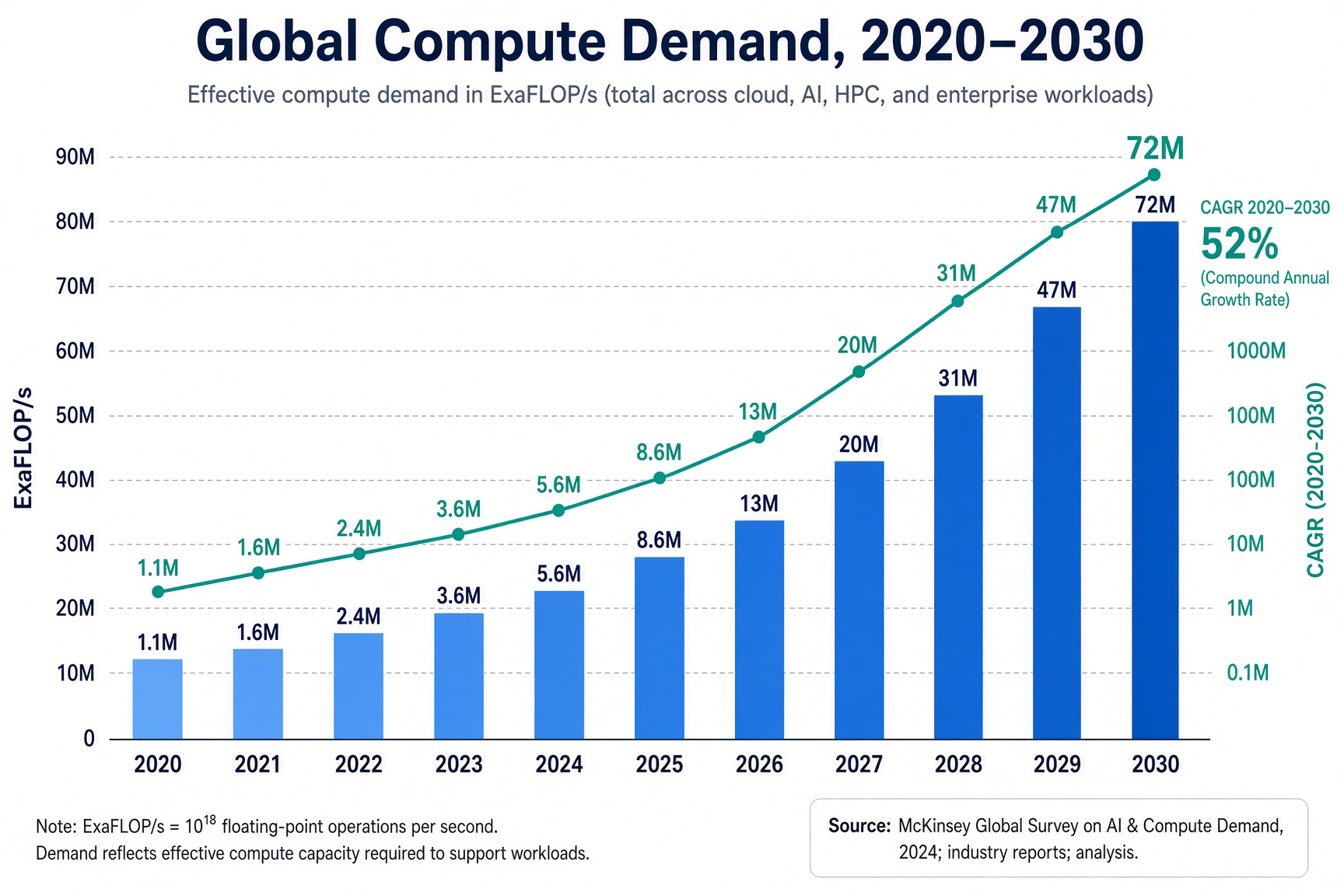
The 2030 Compute Landscape: GPUs, Power and the Architecture of Intelligence
The constraint on AI is no longer ideas or data but compute and the power to run it. Frontier training compute has grown about five times a year since 2020, and the leading AI supercomputer of June 2030 is on course for about 2 million chips and 9 gigawatts. Shayne Heffernan sets out the 2030 arithmetic, the power problem, who has already contracted the gigawatts, and how GPUs, custom ASICs, wafer-scale engines and quantum machines divide the work.
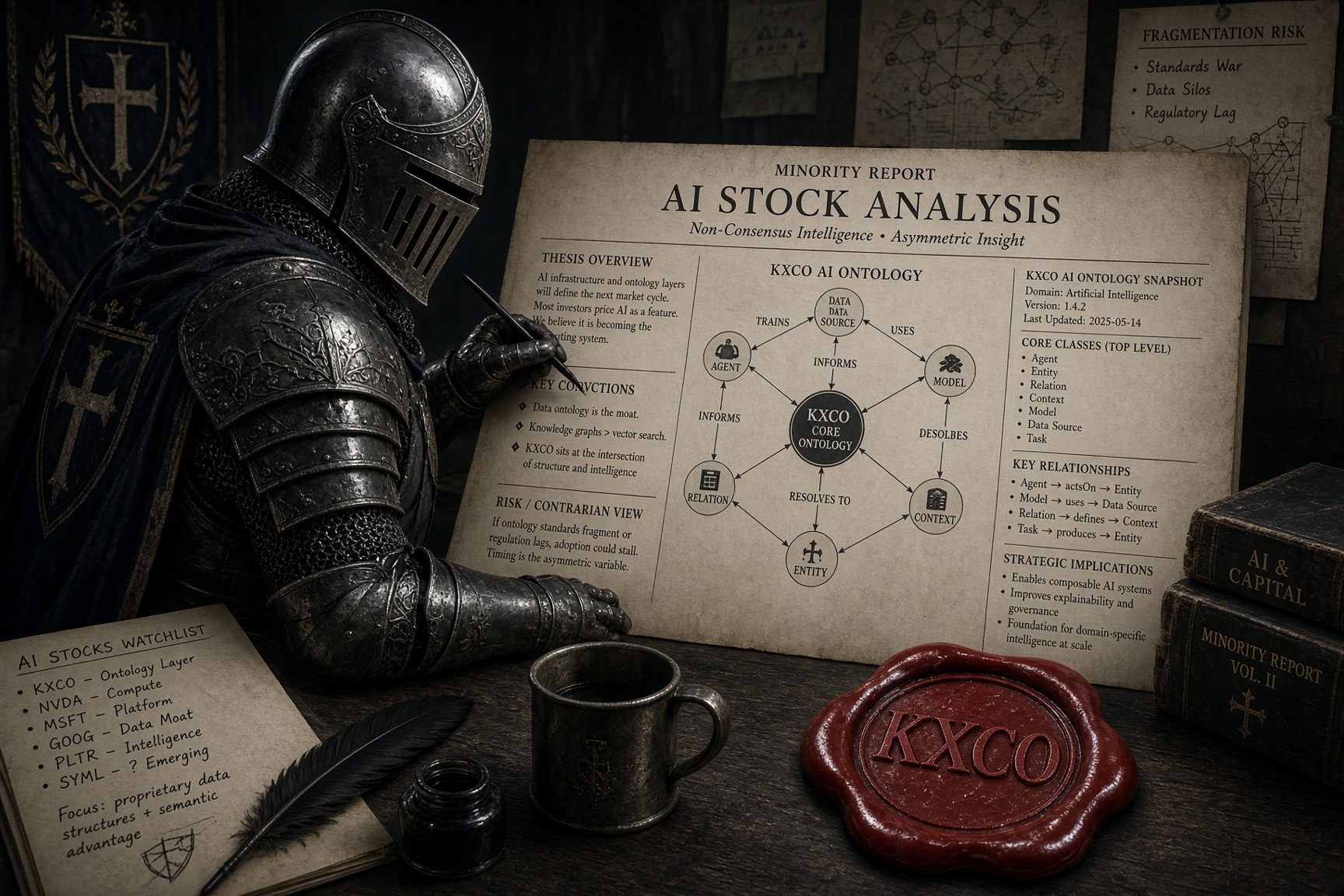
KXCO AI Ontology at 3 Months: What It Called and What Comes Next
On 19 July 2026 the Round Table's AI room published its first Analyst Outlook. To the 16 October 2026 close its 13 names rose 2.6% on an equal weight against 2.1% for QQQ, per StockAnalysis closes, and the six it opened with 35% or more of upside rose 8.6%. This piece lists the six names up more than 5%, the ten names I rate as opportunities now, the month's results in AI and quantum computing, and the official data showing that four in five firms have not yet started using AI.

What the Round Table Is Predicting in Biotech Markets
Seventeen FDA decisions fall due between 30 October 2026 and 29 June 2027, and KXCO's Round Table has called every one. Its model portfolio holds the thirteen Nasdaq companies behind them, led by BridgeBio, Cogent Biosciences and Praxis, and was signed with ML-DSA-87 and anchored on chain before the FDA acts. The first test is Inovio's INO-3107 on 30 October.
SpaceX: The Road to 10 Gigawatts
SpaceX did not add an AI business. A company whose processes run on compute built its own computing plant, then built the power to run it. The 10-Q reports 1.4 gigawatts of nameplate compute at 30 June 2026, four leases worth about $41 billion a year and $100 billion of cash. The target is closer to 10 gigawatts than 5 by the end of 2027. This piece sets out the build sequence, the four layers of power in Memphis, and why Terafab is the act after 2027, not the road to it.
Every story, signed and delivered.
Subscribe to the kxco channel and get the headline, the AI-written key takeaways, and the chain-anchor link the moment we publish. Audio versions and per-ticker subscriptions arrive in the next iteration.