
KXCO AI Ontology at 3 Months: What It Called and What Comes Next
The six names that rose most, the ten I rate as opportunities now, the month's AI and quantum results, and why corporate adoption has only started.
Part of theAI Stocks Center
On 19 July 2026 the Round Table's AI room published its first Analyst Outlook. It listed 13 companies, each with the sell-side consensus beside the room's own reading of why the name matters to the AI supply chain. Three months on, the table can be scored against the market. From the 17 July 2026 close, the last session before it was published, to the 16 October 2026 close, the 13 names rose 2.6% on an equal weight, per closing prices from StockAnalysis and Yahoo Finance. Over the same sessions the Nasdaq-100 fund QQQ rose 2.1% and the chip-stock fund SMH fell 3.0%, per the same closes. The six names the table opened with 35% or more of consensus upside rose 8.6%, per the same closes. The other seven fell 2.5%.
This piece reports that scoreboard name by name, then lists the ten names I rate as opportunities now. It sets out the month's results in AI and in quantum computing. It separates the noise in the market from the demand underneath it, and it shows from official data that corporate adoption of AI has only started.
The record behind the calls
The room is a record, not an opinion. It holds 434 entities and 1,023 claims in force as of 17 October 2026, per the live data at kxco.ai/ontology-live. Each claim is a typed relationship between two named parties: who supplies whom, who funds whom, who has signed for what. Each carries the source it came from, the date it was true and the confidence that source supports. A figure without a source does not go in.
One example from the record: Oracle reported contracted backlog of $664bn, a claim that carries Oracle's filing as its source, a date of September 2026 and the label filed, per the record at kxco.ai/ontology-live. A reader who doubts the number opens the filing. When a later fact replaces a claim, the old claim is closed and kept with the date it stopped being true, so the record can be read as it stood on any day.
The Analyst Outlook sits on top of that record. Its ratings and targets come from the sell side. The reading in each row comes from the record and from the weighting I apply to it, which the room credits to me by name. The room is built on public data only. Institutions can request access at kxco.ai/ontology-live, where every link opens the claim and the source behind it.
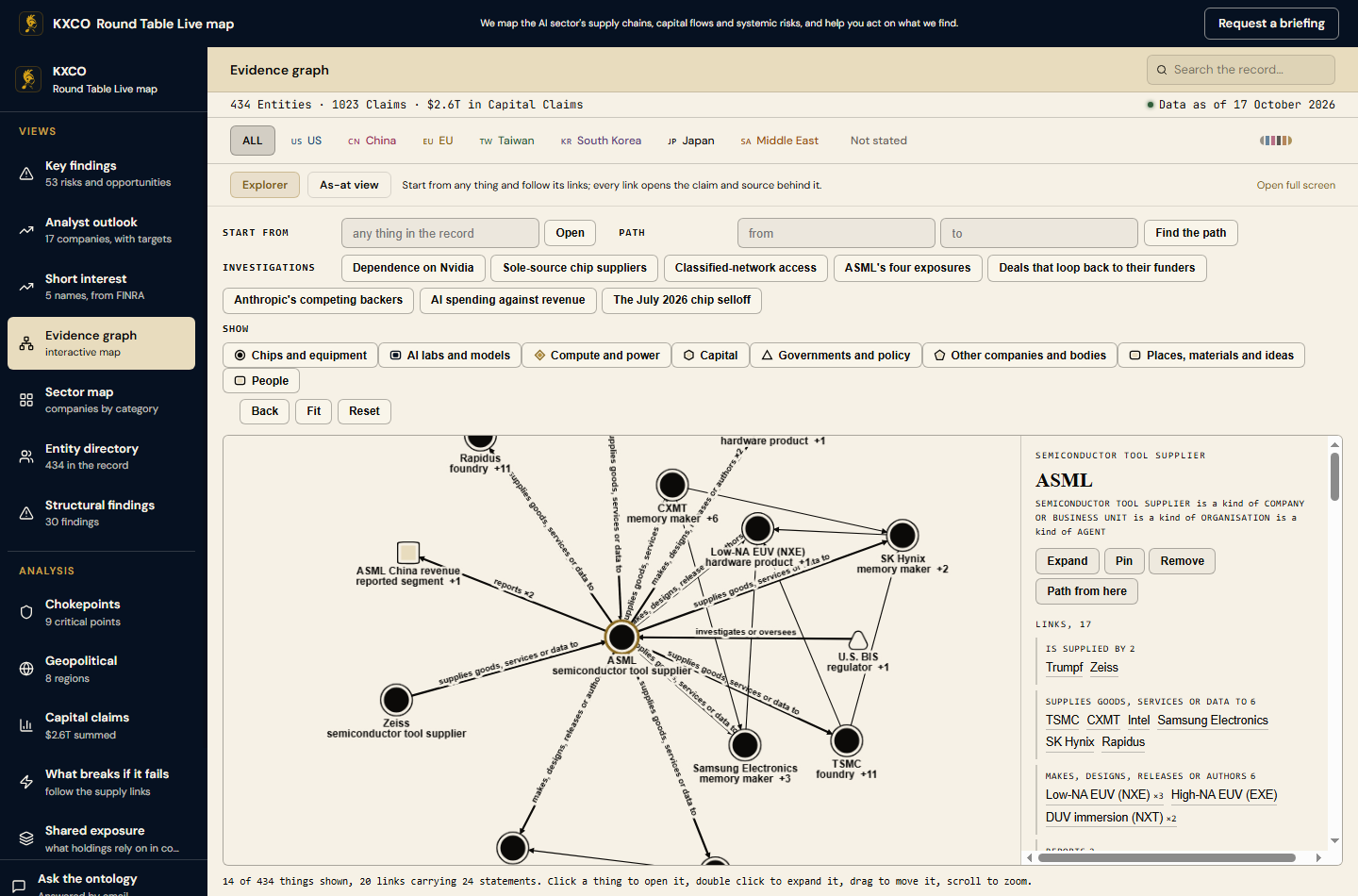
Snapshot: the room's evidence graph, centred on ASML, with every link carrying the claim and the source behind it. Source: kxco.ai/ontology-live, 17 October 2026.
The successes: 6 names up more than 5%
Six names in the table rose more than 5% from the close before they entered it to the 16 October 2026 close, per closing prices from StockAnalysis and Yahoo Finance, which agree on every close used. Each one is listed with what the room said when it went in.
Palantir (NASDAQ: $PLTR) rose 40.5%, from $132.38 at the 17 July 2026 close to $186.03 at the 16 October 2026 close, per StockAnalysis. The row called it the fastest-growing public name, with AI software revenue up 85% a year, per the room's record. The consensus target was $184. It closed above that target on 27 August 2026 and reached $209.05 at the close of 9 October 2026, per the same history.
Microsoft (NASDAQ: $MSFT) rose 34.3%, from $393.82 at the 17 July 2026 close to $529.05 at the 16 October 2026 close, per StockAnalysis. The row said Azure was the second-largest cloud, growing 39% a year, per the room's record. It also noted that the shares had fallen 18% since January. The stock closed above the $530 consensus target on 9 October 2026, per the same history.
Meta (NASDAQ: $META) rose 9.8%, from $646.01 at the 17 July 2026 close to $709.33 at the 16 October 2026 close, per StockAnalysis. It was one of two names the table opened rated Strong Buy, with its advertising revenue funding $125bn to $145bn of capital spending, per the row.
AMD (NASDAQ: $AMD) rose 9.2%, from $484.39 at the 18 August 2026 close, the day it entered the table, to $528.75 at the 16 October 2026 close, per StockAnalysis. The row named it the only supplier to reach the frontier tier against Nvidia, per the room's record. Anthropic takes up to 2GW of its MI450 and up to $5bn of its equity, and OpenAI about 6GW. AMD closed above its $613 target on 21 September 2026 and reached $649.42 at the close of 6 October 2026, per the same history.
SpaceX (NASDAQ: $SPCX) rose 5.9%, from $137.95 at the 25 August 2026 close to $146.03 at the 16 October 2026 close, per StockAnalysis. The row said it was back at its $135 June listing price after trading above $200, per the room's record of 25 August 2026. It added that the graph already modelled SpaceX as a top-tier compute node built on Nvidia.
Nvidia (NASDAQ: $NVDA) rose 5.6%, from $202.81 at the 17 July 2026 close to $214.13 at the 16 October 2026 close, per StockAnalysis. The row called it the AI-GPU monopoly, with 93% of its revenue from data centres, per the room's record. Before the second-quarter report, the row called that report the sector's single largest scheduled datapoint. On 26 August 2026 Nvidia reported revenue of $96.2bn against its own guide of about $91bn, per the room's record of the report. The row now ends: "It was."
Three of the six, Palantir, Microsoft and Nvidia, opened with 35% or more of consensus upside. That screen held six names, with Oracle, Alibaba and Baidu beside them. It rose 8.6% from the 17 July 2026 close to the 16 October 2026 close, per StockAnalysis closes. QQQ rose 2.1% over the same sessions, per the same source.
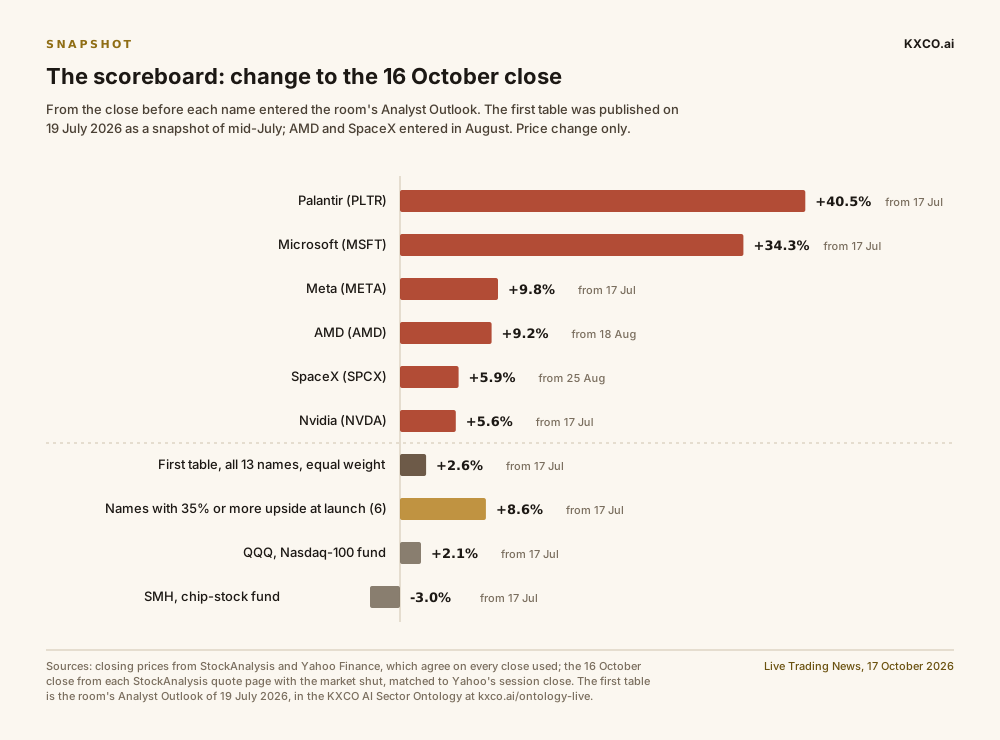
Snapshot: the scoreboard. Price change from the close before each name entered the Analyst Outlook to the 16 October 2026 close, per StockAnalysis and Yahoo Finance closes.
The six have one thing in common in the record. Each sells compute, chips or software to buyers that have signed multi-year commitments. The room was built to find exactly that: who has signed for what, with whom, and on what terms. OpenAI has contracted to buy an incremental $250bn of Azure services from Microsoft, per Microsoft on 28 October 2025. Anthropic carries a $31.4bn commitment to Microsoft's cloud from November 2026 to May 2033, per Reuters reporting on its prospectus in the room's record. AMD supplies Anthropic with up to 2GW of MI450, per AMD. Nvidia guarantees up to $105bn of OpenAI's lease and power obligations, per its filing. Exhibit 1 draws those contracts.
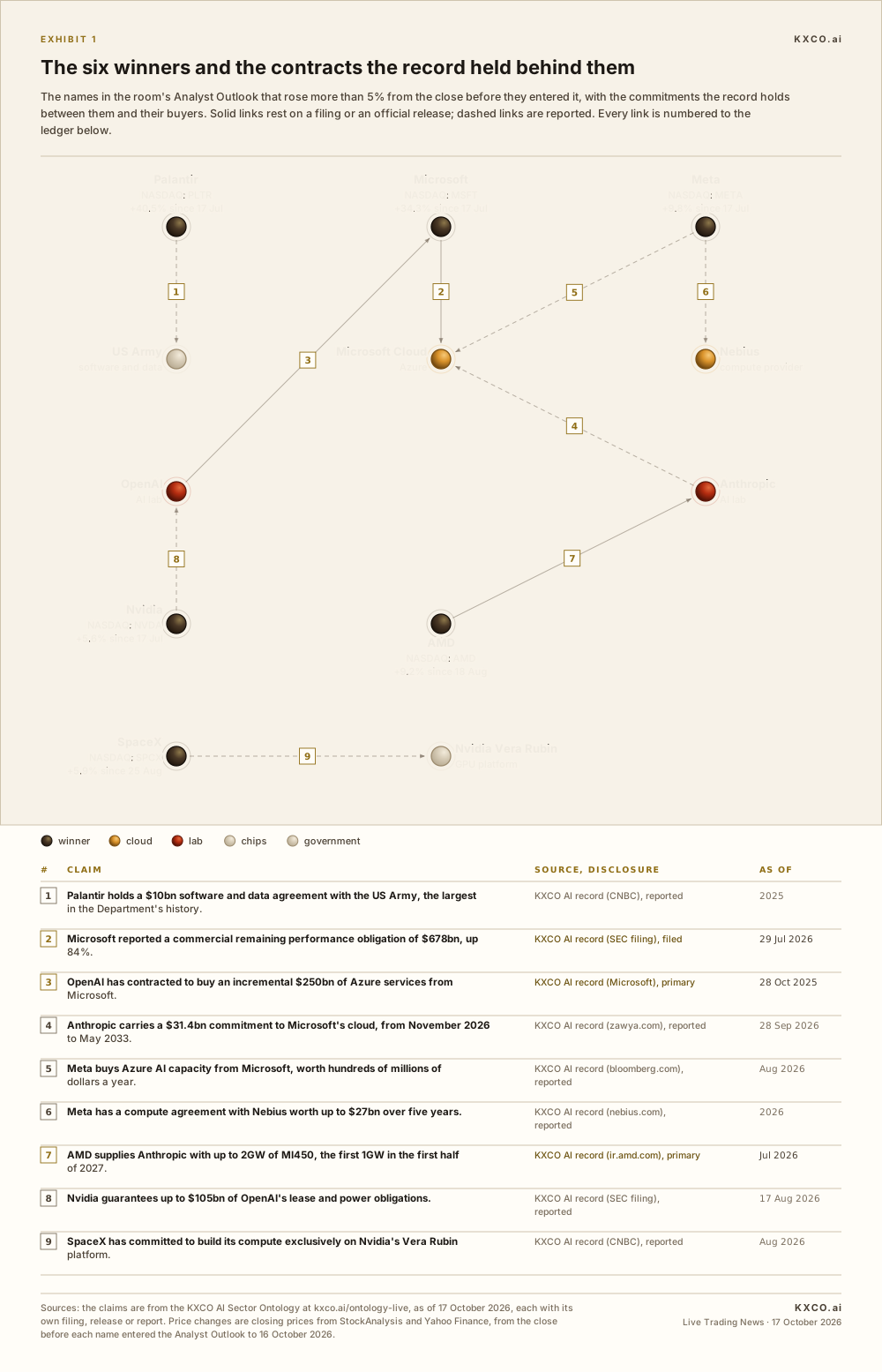
Exhibit 1: the six winners and the contracts the record held behind them. Every link is a claim in the KXCO AI Sector Ontology, with its own source in the ledger.
These are price changes from a close to a close, not the returns of a portfolio, and none of this is investment advice.
The opportunities: 10 names
These are the ten names I rate as opportunities now, with the consensus the room's Analyst Outlook carries at the 16 October 2026 close, per StockAnalysis.
Oracle (NYSE: $ORCL): $128 at the 16 October 2026 close, consensus target $237, implied upside 85%, rated Buy, per StockAnalysis.
ASML (NASDAQ: $ASML): $1,642 at the 16 October 2026 close, consensus target $2,152, implied upside 31%, rated Strong Buy, per StockAnalysis.
Cerebras (NASDAQ: $CBRS): $127 at the 16 October 2026 close, consensus target $292, implied upside 129%, rated Strong Buy, per StockAnalysis.
Intel (NASDAQ: $INTC): $90 at the 16 October 2026 close, consensus target $118, implied upside 31%, rated Buy, per StockAnalysis.
Arm (NASDAQ: $ARM): $228 at the 16 October 2026 close, consensus target $291, implied upside 28%, rated Buy, per StockAnalysis.
Alibaba (NYSE: $BABA): $109 at the 16 October 2026 close, consensus target $186, implied upside 71%, rated Strong Buy, per StockAnalysis.
Baidu (NASDAQ: $BIDU): $80 at the 16 October 2026 close, consensus target $145, implied upside 81%, rated Buy, per StockAnalysis.
Alphabet (NASDAQ: $GOOGL): $341 at the 16 October 2026 close, consensus target $431, implied upside 26%, rated Strong Buy, per StockAnalysis.
Meta (NASDAQ: $META): $709 at the 16 October 2026 close, consensus target $815, implied upside 15%, rated Strong Buy, per StockAnalysis.
Amazon (NASDAQ: $AMZN): $250 at the 16 October 2026 close, consensus target $331, implied upside 33%, rated Strong Buy, per StockAnalysis.
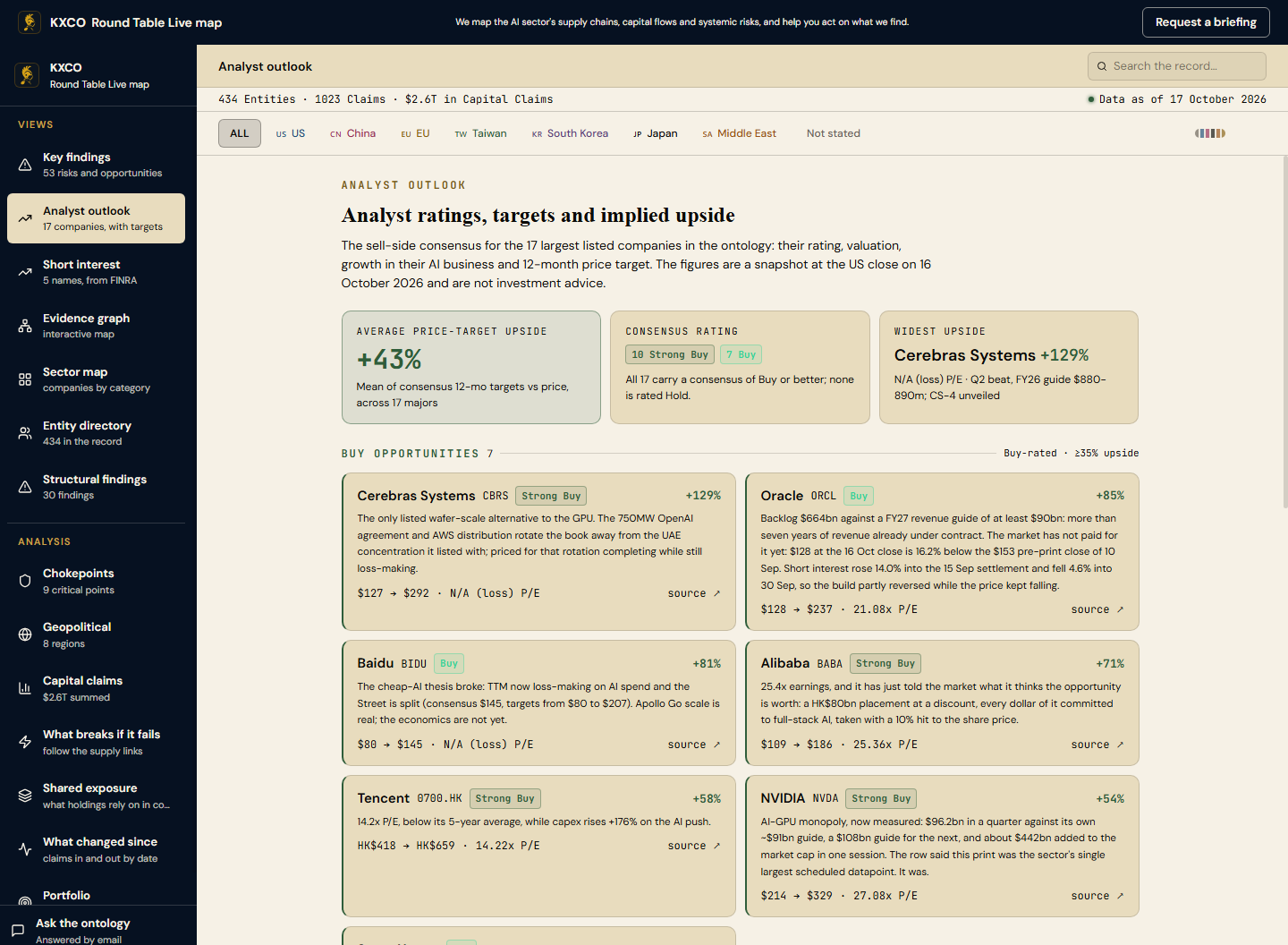
Snapshot: the room's Analyst Outlook at the 16 October 2026 close. Source: kxco.ai/ontology-live.
The month's AI breakthroughs
Three of the largest companies in the record released or finished new frontier models in the week to 16 October.
Google made Gemini 4 Argon "globally available today for developers and enterprises via the API" on 13 October 2026, per Google. Its model card says it "was trained using Google's Tensor Processing Units (TPUs)", per the model card. That makes it a frontier model trained without Nvidia.
Microsoft AI said on 15 October 2026 that it had completed pre-training MAI-Base-2, a mixture-of-experts model with 80 billion active and 2.8 trillion total parameters, per Microsoft AI. It trained the model "on 16k GB200 GPUs over 38 days", per the same post. Microsoft owns about 27% of OpenAI, per the room's record, and now trains a frontier model of its own.
Meta launched Muse Wonder on 12 October 2026 through the Meta Model API and Muse Code, per Meta. Three days later it released the weights of Muse Spark Open, with 816B total parameters and 42B active, per Meta's research blog.
The open-weight side moved in the same week. Reflection released Beam's model weights on Hugging Face under an Apache 2.0 licence on 16 October 2026, per Reflection. Moonshot's Kimi K3, a 2.8T-parameter open-weight model, is published on Hugging Face. A company that wants frontier capability on its own hardware now has several to choose from.
The bottom of the supply chain said it cannot keep up. ASML is the only maker of EUV lithography. On 14 October 2026 it said: "our supply as currently planned for both 2027 and 2028 will not fully meet the demand of our customers". The statement is in its Q3 2026 release, filed with the SEC. It is investigating ways to raise 2028 capacity beyond the 30% increase it had already announced, per the same release. I designated ASML a single point of failure in the room on 25 August 2026, per its record. This is the company saying the same thing about its own supply.
TSMC said on 15 October 2026 that high-performance computing rose 22% from the previous quarter to 68% of its Q3 2026 revenue, per the call transcript. It raised its full-year growth outlook to 44% in US dollars, per the same call. Microsoft said on 12 October 2026 that it will scale its own Azure Maia chips to multi-gigawatt deployments from 2027, per Microsoft.
Read together, the models are getting larger, more of them are open, and the two companies at the base of the chain are telling customers that planned capacity will not cover demand.
Quantum: 4 results that cut the cost of error correction
The problem standing between a quantum processor and a useful one is error. Physical qubits fail too often, so a usable machine encodes each logical qubit across many physical ones and corrects errors in real time. That overhead decides how large, how expensive and how far away a useful machine is. Every result below lowers it.
Google. On 15 October 2026 Google Quantum AI published in Science a demonstration of magic-state cultivation on its Willow processor. The Quantum Insider summarised it as "reducing state-preparation errors about 40-fold and reporting 99.99% logical fidelity", per The Quantum Insider. Magic states are the resource a fault-tolerant machine needs for its hardest operations. The 40-fold figure applies to that task, not to the processor as a whole, per the same report.
IBM. IBM researchers used 70 error-corrected logical qubits to finish a problem considered classically intractable in roughly 15 minutes, with statistical evidence that the result was reliable, per ScienceDaily on 29 August 2026.
IonQ. On 22 September 2026 IonQ (NYSE: $IONQ) demonstrated an end-to-end real-time quantum error correction decoder that runs on a single standard off-the-shelf CPU, per IonQ. Decoding is a classical computing problem, so a decoder that runs on ordinary data-centre hardware removes one of the bottlenecks to scale.
The roadmap. IBM (NYSE: $IBM) sets 2026 as the year the community demonstrates the first examples of quantum advantage, using its quantum hardware with high-performance computing, per IBM's roadmap. It sets 2029 for Starling, its first fault-tolerant machine, with 200 qubits running 100 million gates, per the same roadmap.
Quantum computing and AI already share a supply chain. IBM runs its real-time decoder on FPGAs from AMD, per the room's record of IBM's June 2025 paper. The same data centres that are short of chips for AI are where the first error-corrected quantum machines will sit. For an investor the timing matters more than the physics. IBM's roadmap puts the first advantage in 2026 and fault tolerance in 2029, inside the life of the cloud contracts already signed for AI.
The noise
October has been loud. The iShares Semiconductor ETF fell for a ninth straight session on 16 October 2026, its longest run of falls since May 2006, per Benzinga. From the 30 September 2026 close to the 16 October 2026 close, SMH fell 11.4% and QQQ fell 4.1%, per StockAnalysis and Yahoo Finance closes.
The pressure came through credit. CoreWeave's 9% notes slid to about 80 cents on the dollar, yielding more than 15%, per the same Benzinga report on 16 October 2026. Firmus cancelled its Australian listing on 9 October 2026, per Data Center Dynamics. US chip shares fell on 16 October as "concerns over AI financing costs and CoreWeave's debt load weighed on the sector", per Rallies. The leader was repriced too. Investors at Anthropic's investor day discussed a valuation of about $1.5tn, down from earlier expectations of $2tn, Reuters reported on 15 October 2026, per Yahoo Finance.
The argument in the market is about how the build-out is financed, not about whether the demand exists. In the same report Anthropic disclosed that revenue rose 45% from the previous quarter to $16.8bn in the third quarter, per Proactive on 15 October 2026. It stayed profitable on an adjusted basis, per the same report. A company growing at that rate is a buyer of compute, whatever its valuation turns out to be.
Corporate adoption is just beginning
The strongest number in the record is how few companies have started. The US Census Bureau puts the national rate of AI use at 19.8% of US employer businesses, in survey data to 3 May 2026, per its Business Trends and Outlook Survey. In the same period 32% of firms with 100 to 249 employees said they used AI, per the same release. In the European Union, 19.95% of enterprises used AI technologies in 2025, per Eurostat. Four in five firms in both economies are not using it yet.
Spending is running ahead of use. Ramp sees the card and bill payments of the US businesses on its platform. It counted 55.86% of them paying for AI tools in September 2026, up from 32.06% in August 2024, per its AI Index. The two measures do not contradict each other. A firm that pays for a chatbot licence counts for Ramp. A firm counts for the Census Bureau only when it reports using AI in its business in the past two weeks.
People are further along than the companies they work for. ChatGPT "reaches 1.2 billion people each week", OpenAI said on 5 October 2026, per OpenAI. Alphabet said its model APIs process about 22 billion tokens a minute, in its Q2 2026 results, per Google. It also said that more than 2,000 enterprises consumed over 100 billion tokens each over the past year, per the same results. The heaviest users number in the low thousands, and the Census figure says most of the rest have barely begun.
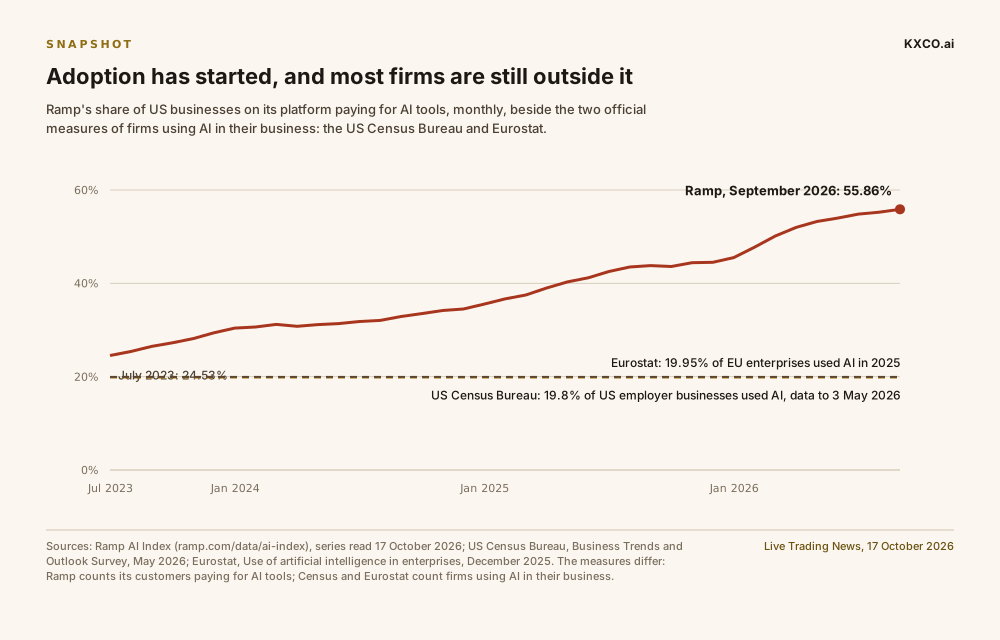
Snapshot: adoption has started, and most firms are still outside it. Per the Ramp AI Index, the US Census Bureau and Eurostat, read 17 October 2026.
The contracts are being signed before the use arrives. The four largest cloud sellers report about $2.35tn of backlog between them, per their filings and releases in the room's record. Backlog is revenue already contracted and not yet recognised. The totals are $678bn at Microsoft, $664bn at Oracle, $514bn at Google Cloud and about $496bn at AWS, per the same record. Inside them sit the labs' commitments. Anthropic is committed to spend at least $111.1bn with Google Cloud and $110bn with AWS, regardless of usage, per reporting on its prospectus in the room's record. Exhibit 2 draws who has signed with whom.
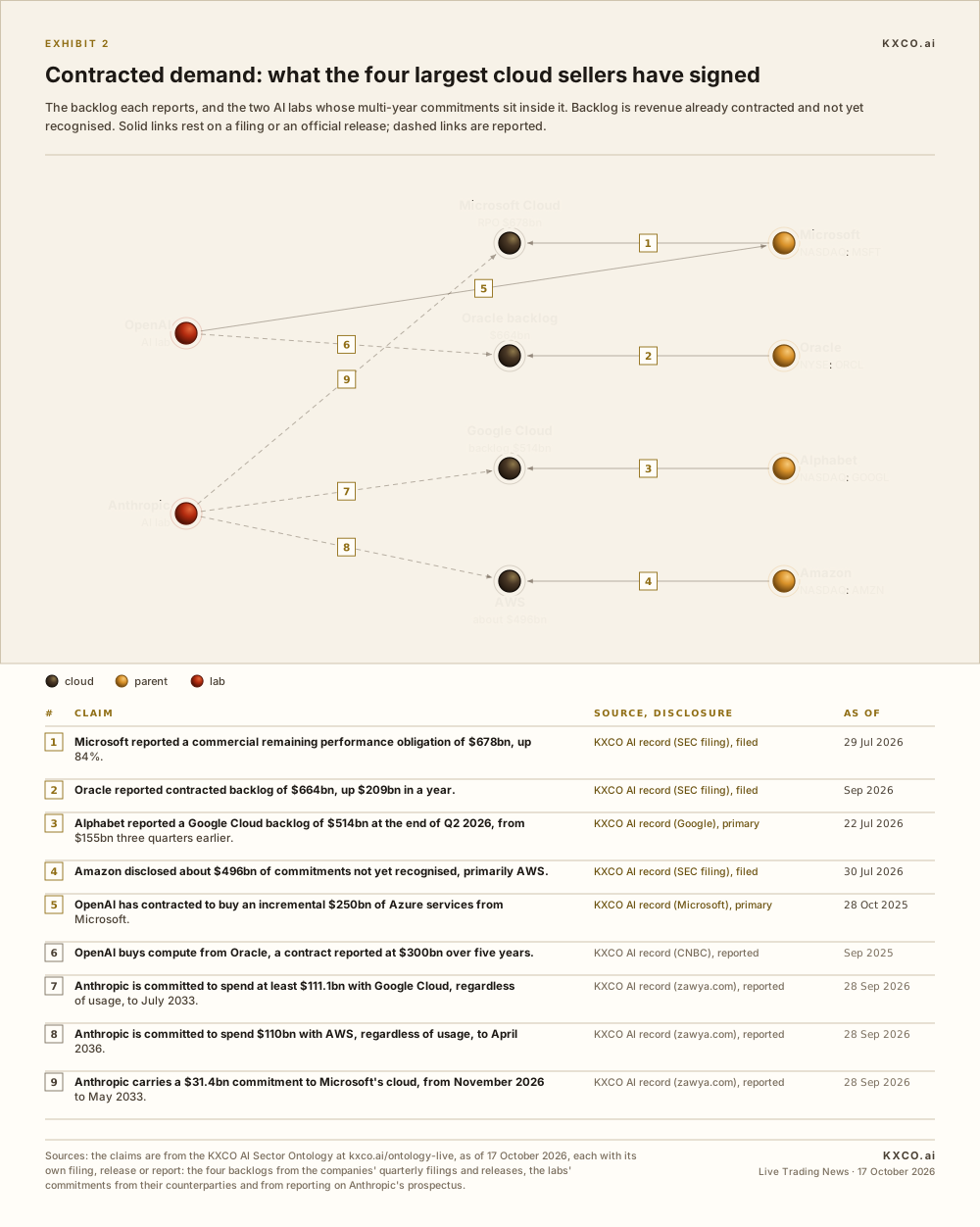
Exhibit 2: contracted demand. The backlog each cloud seller reports, and the two AI labs whose multi-year commitments sit inside it. Every link is a claim in the KXCO AI Sector Ontology, with its own source in the ledger.
The Round Table's reading of these two sets of numbers is plain. Four in five companies in the United States and the European Union do not yet use AI in their business, per Census and Eurostat. The clouds already hold more than $2tn of contracted revenue they have not recognised, per the backlog figures above. The capacity the market is arguing about is being built for the companies that have not started. That is why the room's six winners are the companies that sell to them. It is also why the ten opportunities above sit on the same supply chain, from the lithography machine to the cloud contract.
What to watch
Anthropic's listing is the next test of the financing argument. Bloomberg reports that formal marketing could start in the week of 9 November 2026, with trading before Thanksgiving on 26 November, per the room's record of its report.
Sources: closing prices from StockAnalysis and Yahoo Finance; the KXCO AI Sector Ontology at kxco.ai/ontology-live, as of 17 October 2026; releases and posts from Google, Microsoft, Meta, Reflection, AMD, ASML, IonQ and OpenAI; TSMC's Q3 2026 call through The Motley Fool's transcript; The Quantum Insider, ScienceDaily and IBM's quantum roadmap; Benzinga, Rallies, Data Center Dynamics, and Reuters through Yahoo Finance and Proactive; the US Census Bureau, Eurostat, the Ramp AI Index and Alphabet's Q2 2026 results, all read 17 October 2026.
Shayne Heffernan, Ph.D., is the founder of Live Trading News, the KnightsBridge Group, Knightsbridge Law and the KXCO.ai ecosystem spanning post-quantum cryptography, identity, attestation and enterprise ontology.
This commentary is for informational purposes and does not constitute investment advice.

SpaceX: The Road to 10 Gigawatts
SpaceX did not add an AI business. A company whose processes run on compute built its own computing plant, then built the power to run it. The 10-Q reports 1.4 gigawatts of nameplate compute at 30 June 2026, four leases worth about $41 billion a year and $100 billion of cash. The target is closer to 10 gigawatts than 5 by the end of 2027. This piece sets out the build sequence, the four layers of power in Memphis, and why Terafab is the act after 2027, not the road to it.
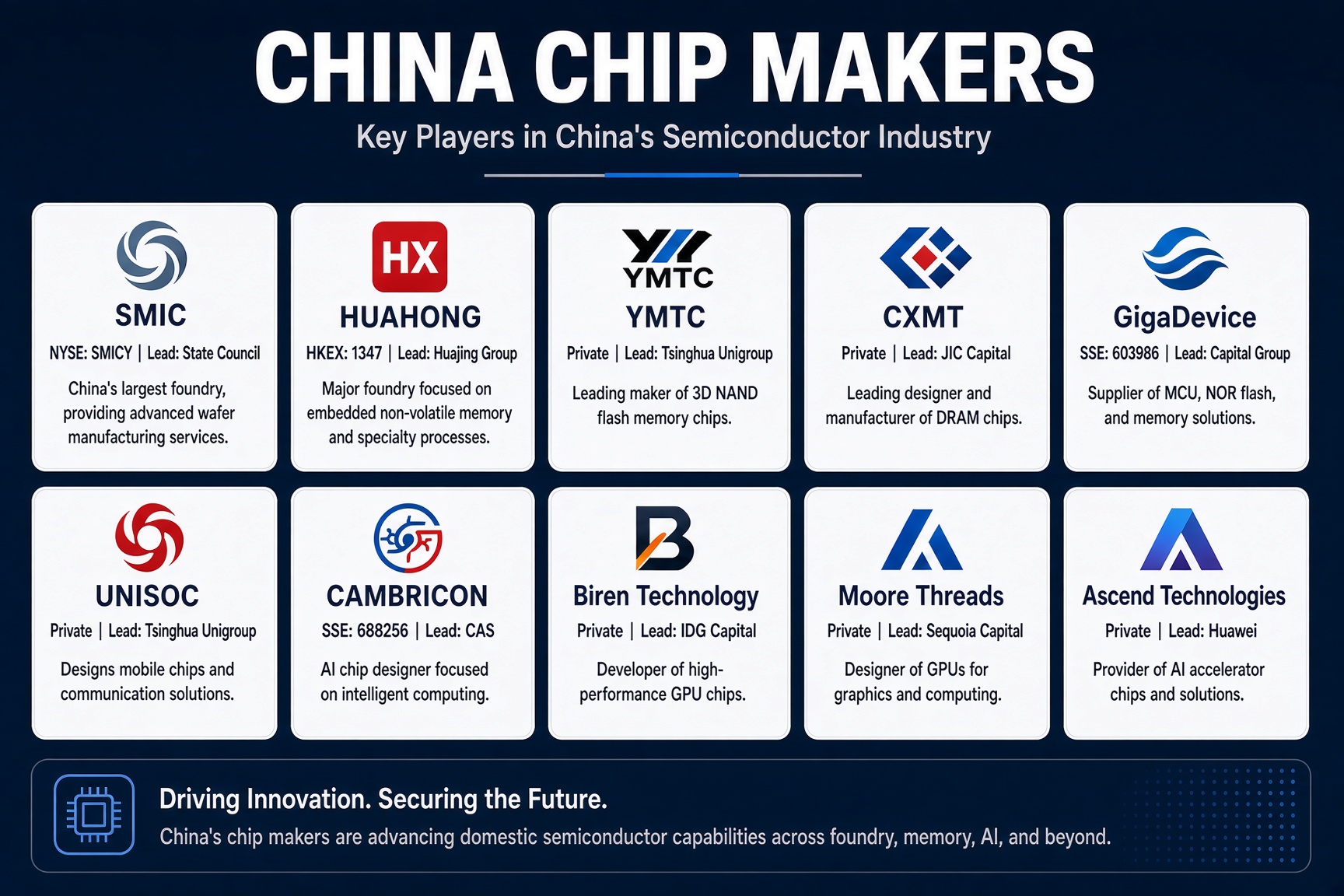
The China Chip Shock
On 10 October CXMT said it will ship DDR5 server modules on a 4F2 cell by year-end. Micron, SK Hynix, Samsung and Sandisk sold off for two sessions and Elon Musk said China scales faster than the rest of the world combined. This piece sets out China's memory makers, foundries, AI chip designers and toolmakers, with two knowledge graphs drawn from the KXCO AI Sector Ontology, and says what the sell-off prices and what it does not.

China's Coordinated Push in AI, Quantum Computing and Blockchain
On 9 October 2026 Beijing called for a nationally integrated computing-power network and a national blockchain network. DeepSeek is scaling on Huawei Ascend chips, China's intelligent computing reached 2,185 EFLOPS by June, per the industry ministry, and quantum communications remain a strength. This analysis explains the strategy and sets out the Hong Kong and US listed companies with exposure, from Tencent and Alibaba to China Mobile, HashKey and Nvidia.

Week Ahead on Wall Street: CPI, Banks and Oil
September CPI lands on Wednesday after a Fed hike and a 10-year yield at its highest since 2002. JPMorgan, Goldman and Citi open bank earnings on Tuesday, ASML and TSMC report midweek, and Saudi pipeline attacks kept Brent at $104.72 on 9 October 2026, per CNBC. The KXCO AI Sector Ontology still shows contracted demand. This week ahead sets out the calendar, the three facts that would change the call, and why dips in the AI leaders remain buying opportunities.
Every story, signed and delivered.
Subscribe to the kxco channel and get the headline, the AI-written key takeaways, and the chain-anchor link the moment we publish. Audio versions and per-ticker subscriptions arrive in the next iteration.