
This Week in AI Stocks
Microsoft, Alphabet, Amazon and Meta spent about $170 billion in one quarter. HBM is sold out, CoWoS is booked into 2027 and memory prices are now a line item in hyperscaler guidance. Shayne Heffernan reads the July 2026 earnings wave through the KXCO Ontology.

Welcome to This Week in AI.
If you have watched the earnings torrent pour in over the last fortnight from the United States, Asia and Europe, the noise is deafening. Alphabet is now spending more per quarter than it spent in the whole of 2022. Microsoft says Azure demand still outstrips supply after adding 88 data centres in a year. SK hynix just posted a 76% operating margin. Samsung's operating profit rose more than eighteenfold. Micron's gross margin printed at 84.9%.
Numbers that large stop being informative. They just become weather.
To make sense of it you do not need another spreadsheet. You need a structural map. That is why my team and I built the KXCO Ontology.
"People look at the soaring valuations of AI companies and assume the trade is crowded. They could not be more wrong. If the internet era was a ninety minute football match, we are roughly four minutes into the first half. We are spending hundreds of billions of dollars just to build the foundations, the power, the cooling, the training clusters. We have barely begun to monetise inference at scale, deploy real edge AI, or wire quantum accelerators into the stack. The magnitude of capital being committed right now confirms one thing. We are incredibly early."
What the KXCO Ontology actually is
For readers new to it, the KXCO Ontology is our framework for mapping the AI and compute economy as a dependency graph rather than a league table of market caps. It tracks physical substrates, packaging, memory bandwidth, energy limits, model layers and the money moving between them, and it records every claim with a source.
The live instance at kxco.ai/ontology-live currently holds 228 entities and 530 sourced claims covering roughly $1.1 trillion of tracked capital flows, with 16 intelligence findings, five critical chokepoints and seven geopolitical regions. It is a working map, not a marketing diagram.
Run this fortnight's earnings through it and the fog lifts. You are not watching a group of technology companies report quarterly numbers. You are watching a new global physical economy being poured, in concrete, copper and silicon, at a rate no industrial buildout in history has matched.
Here is the briefing, layer by layer.
1. The application layer: four companies, $170 billion in ninety days
Start with the top of the stack, because that is where the money originates.
The four American hyperscalers spent roughly $170 billion on property and equipment in a single quarter. Not for the year. For the quarter. Every one of them raised full year guidance, and three of the four were punished for it by the market.
Company | Cashtag | Reported | Revenue | Capex in the quarter | FY2026 capex guide | Backlog |
|---|---|---|---|---|---|---|
Microsoft | 29 Jul (FQ4) | $90.0bn, growth 18% | $41bn | about $190bn (CY26) | $678bn, up $51bn q/q | |
Alphabet | 22 Jul (Q2) | $119.8bn, up 24% | $44.9bn, up 100% y/y | $195bn to $205bn, raised | $514bn cloud backlog | |
Amazon | 30 Jul (Q2) | $200.6bn, up 20% | about $53bn | about $220bn, raised | $496bn RPO | |
Meta | 29 Jul (Q2) | $60.8bn | $31.1bn | $135bn to $145bn, raised | not disclosed |
Sources: Microsoft FY26 Q4 results, Alphabet Q2 2026, Amazon Q2 2026, Meta Q2 2026.
Microsoft ($MSFT) closed fiscal 2026 with $331 billion of revenue, $90 billion of it in the June quarter, and growth accelerating to 18%. Azure crossed $100 billion in annual revenue for the first time and grew about 45% in constant currency against guidance of 39% to 40%. Roughly two thirds of the $41 billion quarterly capex went into short lived assets, meaning CPUs and GPUs rather than concrete. Microsoft added 31 data centres in the quarter and 88 across the fiscal year, and the contracted backlog jumped from $627 billion to $678 billion. That $51 billion single quarter backlog increase is the number that matters. Backlog is demand you have already signed.
Alphabet ($GOOGL) grew revenue 24% to $119.8 billion and operating income 30% to $40.8 billion. Google Cloud grew 82% to $24.8 billion and added more than $50 billion of backlog sequentially to reach $514 billion. Management then raised 2026 capex guidance from $180 billion to $190 billion up to $195 billion to $205 billion, and the stock fell about 5%. Two details deserve attention. First, TPU system sales now sit inside that cloud backlog and management said the revenue ramps mainly in 2027, which is a custom silicon business being sold as cloud. Second, Alphabet is renting third party capacity in Q3 as a bridge because it cannot build fast enough, and it flagged the margin cost of doing so.
Amazon ($AMZN) put up $200.6 billion of revenue, up 20%, with operating income up 43% to $27.5 billion. AWS grew 37%, its fastest in five years. The AI revenue run rate passed $25 billion growing at triple digits, and the custom silicon franchise around Trainium and Graviton passed a $20 billion run rate. RPO reached $496 billion. Capex guidance went from $200 billion to about $220 billion, explicitly blamed on higher memory prices. Andy Jassy's line is the single most important sentence of the fortnight: even at $220 billion, "we will still not have enough capacity to meet all the demand we have in 2026, and I believe this dynamic will also be true in 2027 too."
Meta ($META) is the cautionary tale. Revenue of $60.8 billion beat, but EPS of $6.18 missed a $7.14 estimate, free cash flow collapsed to $784 million on $31.1 billion of quarterly capex, and the capex floor was lifted by $10 billion in a single quarter to $135 billion to $145 billion. Shares fell about 8%. Meta is spending like a hyperscaler without a cloud business to sell the capacity into.
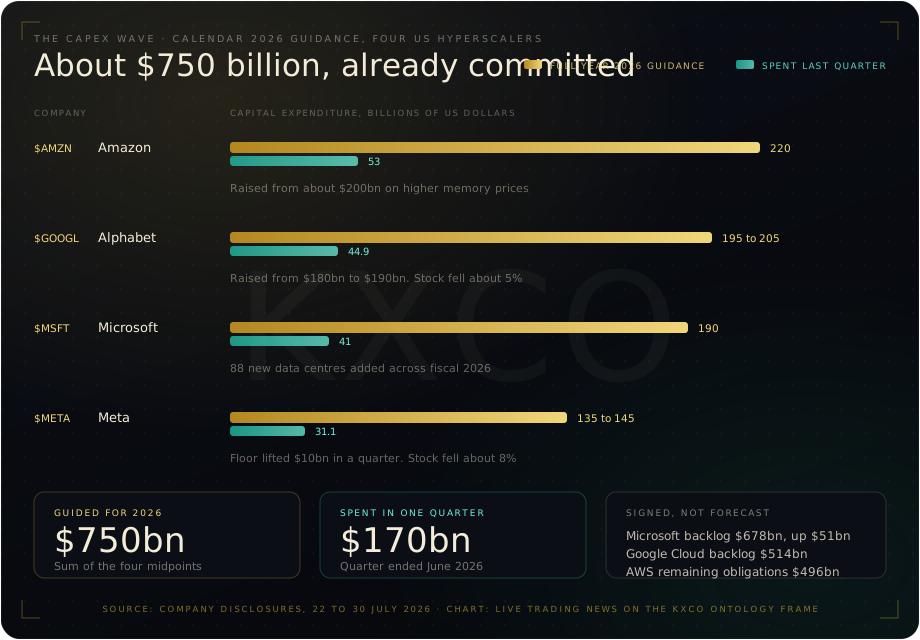
Add the guidance up and the four of them are committing roughly $750 billion of capital in 2026 alone. For scale, that is more than the annual GDP of Switzerland, spent on machines that depreciate.
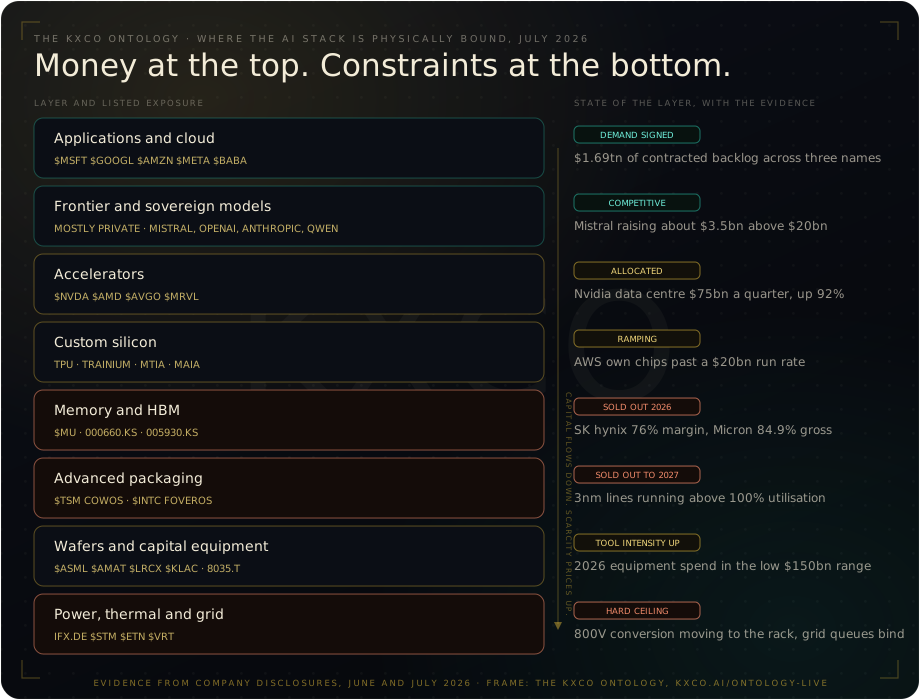
Ontology insight: the training-to-inference migration is now visible in the accounting, not just the narrative. When two thirds of Microsoft's capex is short lived silicon, when Alphabet books TPU systems inside cloud backlog, and when Amazon's own chips clear a $20 billion run rate, the value is migrating from whoever sells the most training GPUs toward whoever owns the cheapest inference token. That is a different competitive game with different winners.
2. Accelerators: Nvidia still sets the clock
Company | Cashtag | Latest report | Key number | Next catalyst |
|---|---|---|---|---|
Nvidia | Q1 FY27, May 2026 | Revenue $81.6bn, up 85%; data centre $75bn, up 92% | Vera Rubin launch in Q3, volume ramp Q4 | |
AMD | Q1 2026 | Revenue $10.3bn, up 38%; data centre $5.8bn, up 57% | Q2 print in early August, Helios ramp in H2 | |
Intel | Q2 2026, 23 Jul | Revenue $16.1bn, up 25%, best growth in 15 years | 14A risk production H2 2027 |
Nvidia's Q1 FY2027 put revenue at $81.6 billion, up 85% year on year and 20% sequentially, with data centre at $75 billion. The new segment split is revealing: hyperscale is about half of data centre at $38 billion, and the rest, covering AI clouds, industrial and enterprise, is $37 billion and growing faster sequentially. Nvidia is no longer a hyperscaler concentration story. GB300 NVL72 is the fastest product ramp in company history, and Vera Rubin launches this quarter with volume in Q4.
AMD has not reported Q2 yet, which arrives in early August. Q1 delivered $10.3 billion of revenue, up 38%, with record data centre revenue of $5.8 billion, up 57%, and the company guided Q2 to about $11.2 billion, up roughly 46%. The MI450 and the Helios rack platform ramp in the second half, with the flagship MI455X carrying 432GB of HBM4 and 19.6 TB/s of bandwidth. Note what that means for the memory layer below.
Intel is the geopolitical wildcard and it is finally executing. Revenue of $16.1 billion was up 25%, the strongest growth in over 15 years. Intel 18A output beat internal targets by roughly 25% and rose more than 50% sequentially with yields around 85%. Panther Lake is in high volume manufacturing on 18A using ASML High-NA EUV, which is a genuine first. Intel 14A is tracking ahead of where 18A was, with risk production in the second half of 2027 and a full commitment to a 2028 high volume ramp. External foundry revenue is still only $293 million, so the foundry thesis remains a 2028 story, but the process technology argument is no longer theoretical.
3. The substrate layer: packaging is the ceiling
You cannot print intelligence. Under the Ontology, the substrate layer is where the AI cycle physically binds, and this fortnight confirmed that the binding constraint has moved down the stack from wafers to packaging.
Company | Cashtag | Reported | Revenue | The constraint |
|---|---|---|---|---|
TSMC | 16 Jul | NT$1.27tn, about $39.6bn, up 36% | CoWoS and N3 sold out through 2026, lead times into 2027 | |
ASML | 15 Jul | €9.3bn net sales, above guidance | Sole source for High-NA EUV | |
Lam Research | 29 Jul | $6.72bn, fourth record quarter running | Memory 46% of systems revenue | |
Applied Materials | Reports August | Gate-all-around and HBM tool demand | Deposition and etch for stacked memory |
TSMC set records across the board. Revenue rose 36% to NT$1.27 trillion, net profit rose 77.4% to NT$706.56 billion, a ninth consecutive quarter of double digit profit growth, and nodes at 7nm and below made up 77% of wafer revenue. Full year growth guidance went above 40% and capex was lifted to $60 billion to $64 billion. The critical disclosure is that CoWoS advanced packaging and the N3 node are sold out through the end of 2026, with lead times stretching into 2027, and 3nm lines are running above 100% utilisation. Arizona has been lifted to a $265 billion commitment across four fabs, aimed squarely at the packaging bottleneck.
Say the quiet part plainly. You can own every GPU die on earth and ship nothing, because you cannot marry the logic to the memory without CoWoS capacity. Packaging, not lithography, is the 2026 ceiling.
ASML delivered €9.3 billion of net sales, above its own €9.0 billion guidance ceiling and about 6% ahead of consensus, at a 54.0% gross margin. One structural change is worth flagging for anyone modelling the name: from Q1 2026 ASML stopped publishing quarterly bookings, on the argument that lumpy large orders distort the read, so backlog is now effectively an annual disclosure. The last published figure was €13.2 billion of bookings in Q4 2025, of which €7.4 billion was EUV, taking backlog to €38.8 billion. The strategic news is that High-NA has crossed into high volume logic production at Intel on 18A. ASML remains the only company on earth that can make these machines.
Lam Research posted a record June quarter at $6.72 billion, up 15% sequentially and 30% year on year, its fourth consecutive record, closing fiscal 2026 at $23.2 billion with EPS up 41%. Memory is now 46% of systems revenue and NAND dollars more than doubled sequentially. Management put 2026 global wafer fab equipment spending in the low $150 billion range.
Ontology insight: the tools required to build AI chips are becoming as moated as the chips. Stacked memory needs new etch and deposition steps, gate-all-around needs new processes, and hybrid bonding removes solder entirely. Tokyo Electron has said the interconnect process for HBM requires roughly four times the investment of plain DRAM and is targeting ¥500 billion of DRAM interconnect sales by 2030. Every generation of AI memory raises the tool intensity of the layer beneath it.
4. Memory: the most violent re-rating in semiconductor history
If the GPU is the engine, high bandwidth memory is the fuel injector. Nothing in this cycle compares to what happened to memory pricing in the last twelve months.
Company | Ticker | Reported | Revenue | Operating profit | Margin |
|---|---|---|---|---|---|
SK hynix | 000660.KS | 28 Jul, Q2 | KRW 79.32tn, up 257% | KRW 60.54tn, up 557% | 76% |
Samsung Electronics | 005930.KS | 30 Jul, Q2 | see note | KRW 89.49tn, up 1,814% | not disclosed |
Micron | 24 Jun, FQ3 | $41.5bn | non-GAAP EPS $25.11 | 84.9% gross |
SK hynix reported revenue of KRW 79.3187 trillion, operating profit of KRW 60.5426 trillion and net profit of KRW 93.9226 trillion, all records, at a 76% operating margin. HBM4 mass shipments began in the quarter and ramp through the second half. The company has now locked long term agreements with around ten customers including Nvidia. Note the market reaction: the stock fell about 11% on the print. When a company earns a 76% margin, the bear case writes itself, and it is called mean reversion.
Samsung delivered operating profit of KRW 89.49 trillion, up 1,813.8% year on year, and the shares rose more than 7%. Samsung lost the HBM3E generation after failing Nvidia's qualification, and it has answered that with HBM4: mass production and commercial shipment from February 2026, qualification progressing, HBM4 sales guided to more than triple in Q3 and to make up well over 60% of HBM revenue in the second half, with HBM4E samples already with major customers. Management also issued a supply warning for 2027.
Micron is the cleanest read on scarcity. Fiscal Q3 revenue of $41.5 billion at an 84.9% non-GAAP gross margin, with non-GAAP EPS of $25.11 beating consensus by $4.62. DRAM alone was $31.3 billion, up 343% year on year. NAND was $9.9 billion, up 361%. Q4 is guided to about $50 billion. All of Micron's 2026 HBM supply is sold out under fixed price multi-year contracts, and CEO Sanjay Mehrotra has said the company can fill only half to two thirds of the HBM demand in front of it.
This is the mechanism that flowed straight back up the stack. Amazon and Meta both cited memory prices when raising capex. The memory makers' pricing power is now a line item in hyperscaler guidance. That is what a genuine chokepoint looks like: it prices the layer above it.
5. China: a parallel stack, built under constraint
China's strategy is not to win the current architecture. It is to build a second one that does not need Western tools. In the Ontology this is mapped as a parallel ecosystem, and it is progressing faster than the export control regime assumed.
Item | Status | Detail |
|---|---|---|
Huawei Ascend 910C | Ramping | About 600,000 units targeted for 2026, roughly double the prior year |
Huawei Ascend 950PR | Ramping | 750,000 unit target for 2026, described by analysts as ambitious |
SMIC N+2 process | 7nm class | Yields estimated at 50% to 60% against 80% to 90% at leading foundries |
SMIC capacity | Doubling | 7nm capacity planned to double in 2026 |
Nvidia H20 licences | Granted | Commerce has issued export licences |
Nvidia H200 | Case by case | Moved from presumption of denial on 15 Jan 2026, with a 25% Section 232 tariff |
Alibaba cloud | Accelerating | External cloud revenue up 40%, AI cloud at a roughly $5.2bn annualised run rate |
Huawei and SMIC are targeting roughly 600,000 Ascend 910C units and 750,000 Ascend 950PR units in 2026, produced on SMIC's N+2 node, a 7nm class process two to three generations behind the leading edge, at estimated yields of 50% to 60% against 80% to 90% at TSMC. That yield gap is the entire story of Chinese compute. It is not that they cannot make the chip. It is that they throw away half of every wafer, and they cannot buy the EUV machine that would fix it.
On the demand side, Alibaba's March quarter showed external cloud revenue accelerating to 40% growth, with AI related cloud revenue of RMB 9 billion in the quarter, an annualised run rate of about $5.2 billion, and an eleventh consecutive quarter of triple digit AI growth. Fiscal 2026 capex reached RMB 126.1 billion against RMB 84.3 billion the year before. $BABA is spending, and it is spending on a domestic stack.
Policy moved too. The United States is now issuing H20 export licences, and H200 shifted from presumption of denial to case by case review in January 2026 with a 25% tariff attached. The lesson from the sanctions cycle is uncomfortable for Nvidia: share ceded to Huawei during the ban does not automatically return when the licence arrives. Once a Chinese hyperscaler has ported its stack to CANN and Ascend, the switching cost is sunk.
Ontology insight: two evolutionary paths are now clearly diverging. The Western path optimises for brute force, the Chinese path optimises for efficiency under hardware scarcity, and efficiency innovations travel. If a mixture-of-experts architecture trained under constraint reaches frontier performance on a fraction of the silicon, that is not a China story. That is a repricing event for every company in the table above. I covered this in more depth in The AI Compute Arms Race: United States vs China and in the CXMT deep dive on China's DRAM champion.
6. Europe: the gatekeepers of physics
Europe has no hyperscaler. What it has is a monopoly on the machines that make advanced chips, and a growing lock on the power electronics that make gigawatt data centres electrically possible.
Company | Cashtag | Position | Latest |
|---|---|---|---|
ASML | Sole source, High-NA EUV | €9.3bn Q2 net sales, High-NA in HVM at Intel | |
Infineon | IFX.DE | AI data centre power silicon | Q2 beat, FY guidance raised, €5bn Dresden fab opened 2 Jul |
STMicroelectronics | SiC and GaN power | Power semis levered to the 800V transition | |
Mistral AI | Private | European frontier models | Raising about $3.5bn at over $20bn, ARR past $400m |
Infineon beat in its fiscal Q2, raised full year sales and margin guidance, confirmed its AI revenue targets for fiscal 2026 and 2027, and opened its €5 billion Dresden Smart Power Fab on 2 July, its largest single investment ever, with Module 4 brought forward to meet AI power demand. The strategic piece is the architecture shift. Infineon is co-developing 800V high voltage DC power delivery for AI data centres, converting power at the GPU rather than through a chain of lossy stages, and the Mt. Diablo ±400VDC specification published through the Open Compute Project is backed by Microsoft, Meta and Google.
This is the most underpriced idea in the AI trade. As racks move from tens of kilowatts to hundreds, conventional power distribution stops working. That makes silicon carbide and gallium nitride power semiconductors a hard requirement rather than an efficiency upgrade, which puts Infineon and $STM directly in the critical path. I set out the full energy argument in Compute and Electricity: The Defining Challenge of Our Times.
On models, Mistral AI is raising roughly $3.5 billion at a valuation above $20 billion, up from €11.7 billion nine months earlier, with ARR past $400 million and a target above $1 billion by the end of 2026. ASML holds about 11% of it after leading the September 2025 Series C, which is a lithography monopolist taking an equity position in the demand for its own machines. Mistral is building 200MW of European compute and selling efficiency and data residency rather than raw scale.
7. Quantum: the terminal node starts drawing real money
Quantum sits at the outer edge of the Ontology. This month it stopped being a research line and started behaving like procurement.
Date | Event |
|---|---|
10 Jul | Google and Fraunhofer open global calls for early fault tolerant algorithms; Google stabilises the Willow processor with reinforcement learning control layers |
17 Jul | Quantinuum and academic partners demonstrate the first universal topological gate set using non-Abelian anyons, published in Nature |
21 Jul | Quantinuum and SoftBank publish a framework linking quantum hardware to enterprise use cases |
22 Jul | RIKEN activates ROQUO, a hybrid machine integrating Quantinuum's Reimei system with Nvidia Blackwell GPUs |
22 Jul | IBM commits $50m of QPU access over five years to the US DOE Genesis Mission |
22 Jul | PsiQuantum receives a $125m expanded DARPA agreement for utility scale hardware verification |
29 Jul | IonQ receives final regulatory approval for its $1.8bn SkyWater Technology acquisition |
30 Jul | IBM and partners demonstrate "trusted quantum advantage" with verification frameworks |
Source: Quantum Computing Report.
Three things stand out. First, the July 17 universal topological gate set is a real physics result, not a press release, and it is the kind of milestone that shortens fault tolerance timelines. Second, ROQUO at RIKEN is the shape of the future: quantum processing units bolted onto Blackwell GPUs inside one hybrid machine, because near term quantum value comes from acceleration inside classical workflows, not replacement of them. Third, $IONQ buying a semiconductor foundry for $1.8 billion tells you the industry has concluded that quantum scaling is a manufacturing problem now.
China is running its own line. USTC published Jiuzhang 4.0 in Nature in May 2026, the Zuchongzhi superconducting series has passed 200 qubits, the Tianyan-P2000 now sells photonic capacity to institutions, and Origin Quantum shipped the 180 qubit Wukong-180. Photonics lets China sidestep the cryogenic hardware supply chain where the West is strongest.
Europe is legislating rather than building. The Quantum Europe Strategy was adopted in July 2025 and a Quantum Act is on the Commission work programme for 2026, aiming to consolidate more than €2 billion of fragmented national spending into industrial capacity and supply chain security.
For anyone wondering what this means for encryption rather than compute, I wrote about the cryptanalysis side of it in Claude Mythos, Quantum Cryptography and Why KXCO Is Built for Exactly This.
8. AI stocks, mapped to the layer they occupy
This is the table I actually use. Market cap tells you what a company is worth. The layer tells you what constrains it.
Layer | Cashtags | What it sells | What constrains it |
|---|---|---|---|
Application and cloud | Tokens, seats, cloud contracts | Power and delivered capacity, not demand | |
Accelerators | Training and inference silicon | Packaging allocation and HBM supply | |
Custom silicon | TPUs, Trainium, MTIA | Design cycle time and foundry slots | |
Foundry and packaging | Wafers and CoWoS | CoWoS capacity, sold out into 2027 | |
Memory | $MU 000660.KS 005930.KS | HBM4, DRAM, eSSD | Physically sold out, pricing the layer above |
Capital equipment | The machines that make the machines | Rising tool intensity per generation | |
Power and thermal | 800V conversion, SiC, GaN, cooling | Grid interconnection queues | |
Logical qubits, hybrid acceleration | Error correction and manufacturing yield |
The pattern is obvious once written down. Every constraint in the middle of that table is physical, and every one of them is currently sold out.
The Heffernan Outlook
Step back and look at this fortnight through the Ontology and the thesis is not subtle.
We are not in a software bubble. We are in a heavy industrial infrastructure cycle wearing a technology rally as a costume. The tell is in the cash flow statements. Meta's free cash flow fell to $784 million. Alphabet is renting other people's data centres because it cannot pour concrete fast enough. Amazon is spending $220 billion and its own chief executive says it will not be enough in 2026 or 2027. Companies do not behave that way at the top of a hype cycle. They behave that way when they are physically short of a resource their customers are already paying for.
Three conclusions follow.
First, the constrained nodes capture the margin. SK hynix at a 76% operating margin and Micron at an 84.9% gross margin are not anomalies, they are what scarcity pricing looks like when demand is contractually locked years forward. TSMC's CoWoS sell-out through 2027 is the same fact expressed as lead times. Own the chokepoint, own the cycle.
Second, the market is now punishing capex, and that changes the game. Alphabet fell 5% and Meta fell 8% for spending money, while Samsung rose 7% for collecting it. The market has stopped rewarding announced ambition and started demanding evidence that spending converts. That rotation from the spenders to the constrained suppliers is the trade of the next four quarters.
Third, the risk is not a demand collapse, it is a supply resolution. Every one of these margins depends on scarcity persisting. Samsung's own 2027 supply warning, Micron's capacity additions and SMIC's doubling of 7nm capacity are all supply responses in flight. When packaging and memory capacity finally catches up with demand, the pricing power in the middle of the stack normalises fast, and the layer that benefits is the one currently paying for it, the hyperscalers. That is a 2027 or 2028 problem, not a 2026 problem, but it is the one worth writing down now.
The models we are using today are the Model T Fords of artificial intelligence. The infrastructure being poured right now is the road network. The capex numbers we saw this fortnight are not peak spending, they are the baseline.
We are incredibly early.
Questions readers are asking
What did Big Tech actually spend on AI in 2026?
Microsoft, Alphabet, Amazon and Meta have guided to roughly $750 billion of combined capital expenditure in calendar 2026. Microsoft is at about $190 billion, Alphabet at $195 billion to $205 billion, Amazon at about $220 billion, and Meta at $135 billion to $145 billion. In the June and July 2026 quarter alone the four spent roughly $170 billion.
Which AI stock has the strongest pricing power right now?
On reported numbers, the memory makers. SK hynix printed a 76% operating margin in Q2 2026, Micron printed an 84.9% non-GAAP gross margin in its fiscal Q3, and both have sold their 2026 HBM output forward under long term contracts. Amazon and Meta both cited memory prices as a reason for raising capex, which is direct evidence that the memory layer is pricing the layer above it.
What is the biggest bottleneck in AI chip supply in 2026?
Advanced packaging. TSMC has confirmed that CoWoS capacity and its N3 node are sold out through the end of 2026, with lead times extending into 2027, while 3nm lines run above 100% utilisation. Logic dies and memory stacks both exist in volume, but they cannot be joined together fast enough.
Is China catching up on AI chips?
On volume, partly. Huawei is targeting roughly 600,000 Ascend 910C and 750,000 Ascend 950PR units in 2026, and SMIC plans to double 7nm class capacity. On economics, no. SMIC's estimated yields of 50% to 60% against 80% to 90% at leading foundries mean each usable chip costs far more, and without EUV access that gap is structural. The Chinese advantage is showing up in model efficiency instead of hardware.
How does the KXCO Ontology differ from a stock screen?
A screen ranks companies by financial attributes. The Ontology maps dependencies, so it tells you which company sits in the physical path of everyone else's growth and cannot be routed around. It currently holds 228 entities and 530 sourced claims across roughly $1.1 trillion of tracked capital flows, with five identified critical chokepoints. You can explore the live graph at kxco.ai/ontology-live.
When do the AI capex numbers stop rising?
No company in this reporting cycle guided them down. Amazon's chief executive said $220 billion will still leave the company short of capacity in both 2026 and 2027. Microsoft's contracted backlog grew $51 billion in one quarter and Alphabet's cloud backlog grew more than $50 billion, so the forward demand is signed rather than forecast. The realistic constraint on 2027 spending is the availability of power and packaging, not appetite.
This article is commentary and analysis for information purposes. It is not investment advice, and it is not a recommendation to buy or sell any security. All figures are drawn from company disclosures and the sources linked above. Do your own research, and understand that valuations built on scarcity pricing are sensitive to that scarcity ending.

What the KXCO Ontology Exposed While the Market Stood Still
On 25 August the KXCO AI Sector Ontology stamped a fresh set of rows. Sixteen days later the Nasdaq had gone nowhere and ten of those names were up: Intel 14.68%, Meta 13.04%, SpaceX 7.42%, Oracle 5.65%. This is what a record of 393 entities and 869 sourced claims surfaces that a screen cannot: who is genuinely irreplaceable rather than merely large, which obligations sit off every balance sheet in the sector, and where the strongest bull case on the page runs into a variable no graph contains.
China's AI and Quantum Ambitions
China is no longer trying only to train a model that looks like an American one. It is trying to own the stack that turns tokens into factories: open-weight models cheap enough to run at home, accelerators that do not need an Nvidia licence, robots that walk into a BYD plant, quantum machines that list on the STAR Market, and a power system that can add the generating capacity of a mid-sized country in a single year. The models, the tickers, and the 27 claims that cross the border.
AI and Quantum Update
The first week of September 2026 compressed a year of argument into seven days. GPT-6 Astra landed at the Critical cybersecurity level of OpenAI's own Preparedness Framework, Nvidia agreed to buy Hugging Face for $12.93 billion, Washington took minority equity in three quantum companies, and Mistral closed the largest equity raise in European technology history. A field report on the breakthroughs, the tickers, and a map that has split three ways.
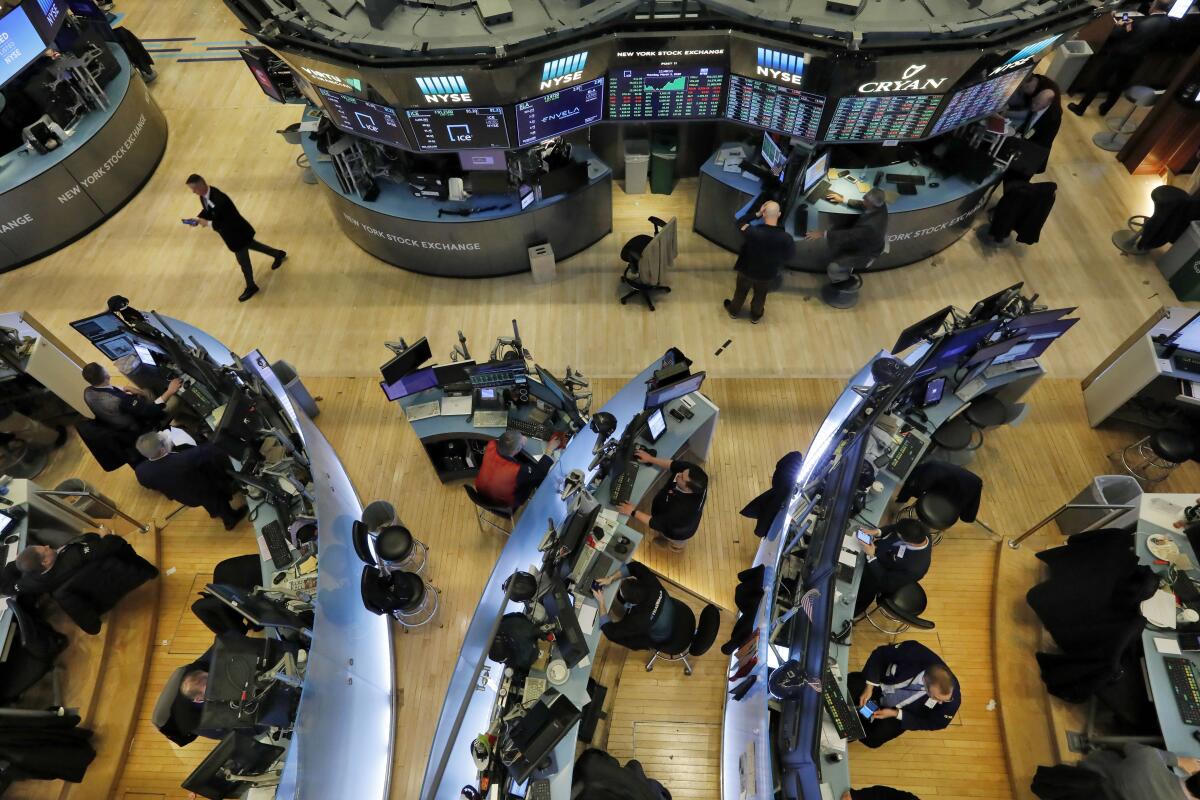
Earnings, the Economic Calendar and Trading Strategies: September 8 to 12, 2026
A four-session week decides more than a print. Oracle reports after the close on Thursday 10 September, PPI lands that morning and CPI on Friday, with the ECB in between and the FOMC eight days out. Oracle is the last hyperscaler of the cycle and the widest value gap on the KXCO Ontology Live Analyst Outlook layer: a $457bn market value under a $638bn contracted backlog. Here is the calendar, the graph behind it, the levels and the book.
Every story, signed and delivered.
Subscribe to the kxco channel and get the headline, the AI-written key takeaways, and the chain-anchor link the moment we publish. Audio versions and per-ticker subscriptions arrive in the next iteration.