
CXMT: Inside ChangXin Memory Technologies
CXMT (ChangXin Memory Technologies) surged 466 percent on its Shanghai STAR Market debut to become the most valuable mainland-listed company. Shayne Heffernan breaks down China’s fourth DRAM force: the IPO, the ownership, the products, the risks, and why the outlook is bright.
Part of theStocks Center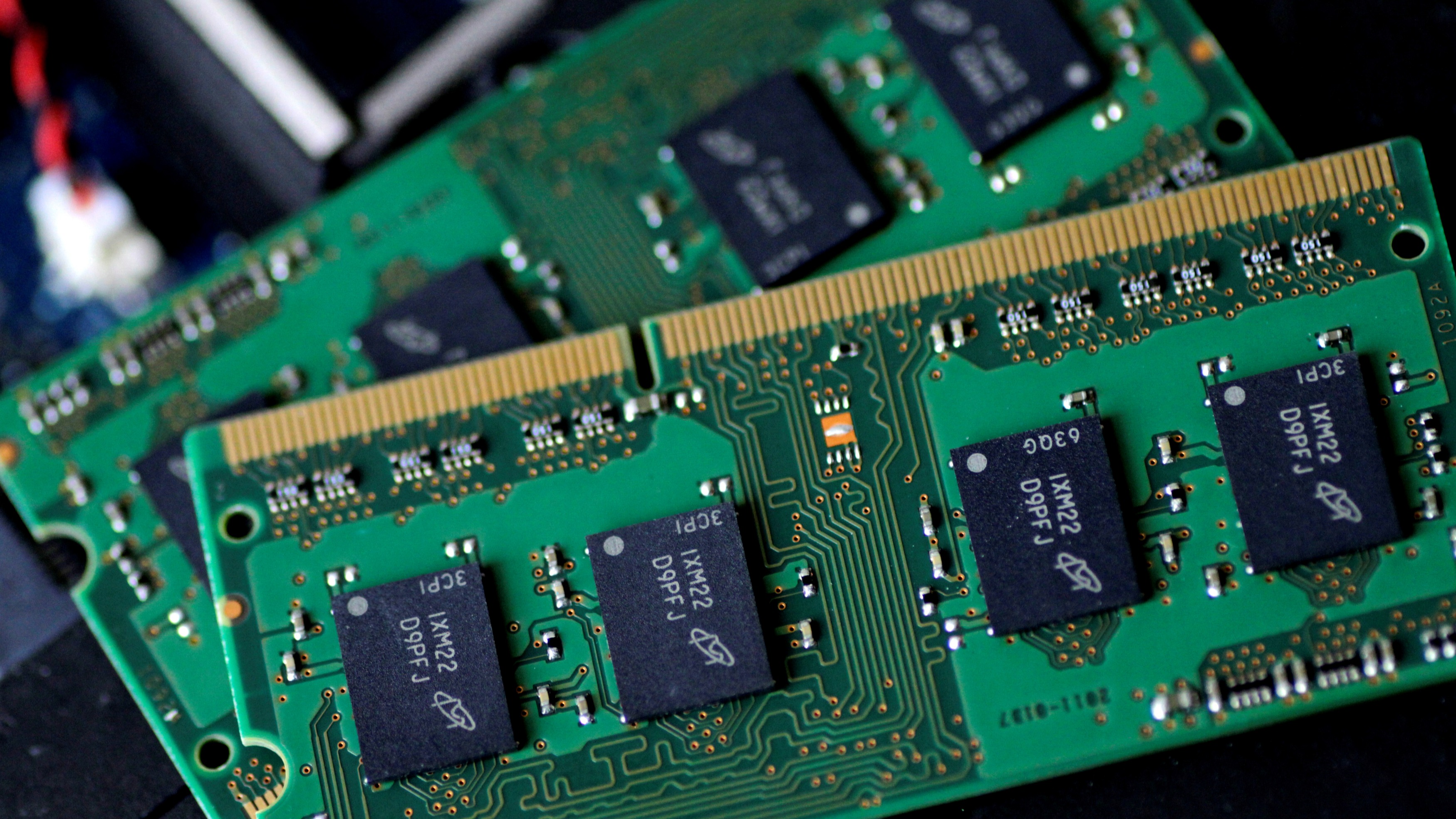
On Monday, July 27, 2026, a company almost no retail investor had heard of a decade ago became the most valuable business listed on any mainland Chinese exchange. ChangXin Memory Technologies, known across the industry as CXMT, priced its Shanghai STAR Market debut at 8.66 yuan a share, then watched those shares close their first session at 49 yuan. That is a 466 percent gain in a single day. The pop valued CXMT at roughly 3.3 trillion yuan, about 489 billion US dollars, pushing it past Industrial and Commercial Bank of China and eclipsing the market values of Intel and Qualcomm.
I have watched a lot of listings. This one matters, and not for the fireworks. CXMT is now the fourth pillar of a global memory market that ran as a three-way club for more than twenty years. The question is no longer whether China can build a serious DRAM company. It has. The question is how far this one runs.
What Is CXMT?
CXMT is China's largest maker of DRAM, the dynamic random access memory that sits inside almost every phone, laptop, server, and AI accelerator on earth. Founded in Hefei in 2016 by Zhu Yiming, the company is an integrated device manufacturer, which means it designs, fabricates, and sells its own chips end to end. That is the same model used by Samsung, SK Hynix, and Micron, and it is a harder road than the fabless design shops that outsource manufacturing.
Five years ago CXMT held close to zero percent of the world DRAM market. Today it holds roughly 7.7 to 8 percent and ranks fourth globally by volume. That is one of the fastest climbs the semiconductor industry has ever recorded.
The IPO In Numbers
The raise was the story before the stock even traded. CXMT priced at 8.66 yuan and pulled in about 57.9 billion yuan, roughly 8.6 billion US dollars, doubling its original target. Including over-allotment the total reached 66.6 billion yuan. That makes it the largest listing on the STAR Market since the board opened and the biggest IPO in Asia this year.
Here is where the proceeds go, and this is the part investors should focus on:
About 9 billion yuan, close to 30 percent of net proceeds, is earmarked for research into next generation DRAM, including high bandwidth memory for AI accelerators.
A large slice funds a new fabrication plant in Shanghai and expansion of the existing Hefei fabs, aimed at more than doubling total capacity.
The rest strengthens the domestic supply chain by qualifying and buying more Chinese made equipment, reducing exposure to export controls.
That is a growth budget, not a victory lap. The company is spending the windfall on capacity and technology, which is exactly what you want to see from a business in a market this hungry.
Who Owns CXMT?
CXMT is a product of China's state backed chip financing system, and the ownership reflects it. Government linked entities are the dominant shareholder group, with the Hefei municipal government the most important patron since day one through a network of investment vehicles. The National Integrated Circuit Industry Investment Fund II, the sovereign fund known as the Big Fund II, is a pivotal backer, having put roughly 1.99 billion US dollars into a subsidiary structure that holds CXMT equity. State asset managers from Anhui, Beijing, and other regions round out the register.
The founder kept skin in the game. After the IPO, Zhu Yiming's fortune is estimated at about 15.9 billion US dollars by Forbes, placing him among China's wealthiest technology entrepreneurs. In a move that tells you something about how he plans to hold his talent, Zhu pledged roughly 5.6 billion US dollars of his own shares, close to 40 percent of his stake, as bonuses to employees. In a business where poaching engineers is the whole game, that is a smart and aggressive retention play.
What CXMT Actually Makes
The product range has moved from legacy parts to near mainstream in record time. There are three families that matter.
DDR5 for servers, PCs, and workstations. CXMT shipped its first domestic DDR5 in January 2025, a 16 gigabit die on a 10 nanometer class process, with speeds up to 8,000 megatransfers per second, on-die error correction, and full JEDEC compliance. In 2026 it added 24 gigabit density and claims a 20 percent power reduction over its own DDR4.
LPDDR5X for phones and tablets. The mobile line runs 12 and 16 gigabit dies at speeds up to 10,667 megatransfers per second, a two thirds jump over the prior generation. Mass production started in late 2025.
High bandwidth memory, or HBM, the specialty DRAM that feeds AI training and inference chips from Nvidia and AMD and carries a fat price premium. This is the prize. CXMT was expected to reach HBM2 in 2026, and it has already pulled that forward into mass production ahead of schedule, with HBM3 targeted for development inside 2026 and HBM3E planned for 2027. Analysts at SemiAnalysis estimate CXMT HBM capacity reaching 55,000 wafers a month in 2027 and 100,000 in 2028. If those numbers land, CXMT becomes a real presence in AI memory within a couple of years.
The Growth Is Not A Rounding Error
Look at the trajectory. Revenue was about 8.4 billion yuan in 2023, grew to roughly 22.9 billion in 2024, and surged to somewhere between 55 and 58 billion in 2025. That is a compound growth rate above 160 percent across two years. In the first quarter of 2026 alone CXMT booked 50.8 billion yuan, up more than 700 percent year over year. The company swung from a heavy loss in 2023 to its first full year profit in 2025, and first half 2026 profit is estimated in the range of 50 to 57 billion yuan.
Capacity tells the same story. CXMT went from about 40,000 wafers a month at start up to roughly 260,000 by the end of 2025, and Omdia pegs mid 2026 output near 290,000. SemiAnalysis sees 500,000 a month by the end of 2028, which would put CXMT at around 17 percent of global DRAM supply, up from about 11 percent at the time of the IPO. Complete the Hefei and Shanghai builds and total capacity could exceed 600,000 wafers a month, rivaling Micron.
Customers Are Lining Up
Inside China, CXMT is already the default. Smartphone makers Huawei, Xiaomi, Oppo, Vivo, and Honor have qualified or are qualifying its chips. Cloud giants Alibaba, Tencent, Baidu, and Huawei Cloud are sourcing more of its DRAM for their data centers, pushed by both cost and a national preference for domestic supply.
The international story is where it gets interesting. CXMT has reportedly drawn interest from Apple, the single largest buyer of memory on the planet, as Apple looks to diversify beyond the big three. Corsair already sells DDR5 modules built on CXMT chips under its Vengeance line, DDR5-6000 parts with AMD EXPO and Intel XMP support. That is a proof point that CXMT silicon meets international standards in the retail channel, not just at home.
On price, CXMT has offered 32 gigabyte DDR4 ECC modules near 138 US dollars, roughly half the going rate for equivalent Samsung and Micron parts. For its latest DDR5 the pricing is closer to par with the incumbents, and the edge is shifting from cheapest to most available. In a tight memory market, guaranteed supply is worth as much as a discount.
The Honest Constraints
I am positive on this company, but I do not sell fairy tales, so here are the real limits.
CXMT is still one to two process generations behind Samsung, SK Hynix, and Micron, who use ASML EUV lithography for their leading nodes. Since 2019 the United States has pressed the Netherlands to keep EUV out of Chinese hands, and DUV restrictions have tightened since. CXMT has answered by pushing DUV immersion lithography with multi patterning to its limits to hit 10 nanometer class features without EUV. That works, but it costs more and yields less. Industry analysts still see less consistency and lower yields than the leaders, though the gap narrows every generation.
Equipment is the sharp edge of the risk. The company relies on ASML DUV scanners and is racing to qualify domestic tools from Naura, AMEC, CETC, and others, particularly for the through silicon via steps that HBM packaging needs. Gaps remain in lithography, inspection, and metrology, where Chinese tools trail by a generation or two. This is the ceiling CXMT has to keep pushing against, and it is a real one.
Why The Outlook Is Bright
Now the case for optimism, which I think is the stronger side of the ledger.
First, CXMT owns the largest captive market in the world. China is the biggest consumer of semiconductors anywhere, and CXMT is the only domestic DRAM supplier at scale. Chinese cloud, phone, and server makers face growing pressure to buy local. That is a revenue floor no foreign rival can touch.
Second, the demand backdrop is a gift. AI has turned memory into one of the tightest markets in tech, and every generation of accelerator wants more DRAM and more HBM. CXMT is expanding into a shortage, which is the best possible time to add capacity.
Third, the cost structure is subsidized in ways the incumbents cannot match, through cheap financing and preferential access to land, power, and talent in Hefei. Pair that with the fresh 8.6 billion dollar war chest and the founder's 5.6 billion dollar retention pledge and you have a company built to keep spending through cycles.
Fourth, the market is voting. Nomura set a target of 116 yuan on the stock, more than ten times the IPO price, and Micron itself has publicly acknowledged CXMT as a legitimate competitor. When the incumbent names you as a threat, that is not marketing, that is a moat forming.
CXMT has done in under a decade what challengers like Elpida and Nanya could not sustain: it broke into the DRAM oligopoly and stayed. The company's own roadmap to 500,000 wafers a month by 2028 would make it a genuine force in global pricing. Combined with the parallel rise of Yangtze Memory in NAND flash, the lesson is clear. Counting China out of the memory race, EUV ban or not, would be a mistake.
AI And AEO: The Quick Answers
What is CXMT? ChangXin Memory Technologies, China's largest DRAM maker and the world's fourth largest, headquartered in Hefei and founded in 2016 by Zhu Yiming.
When did CXMT go public? July 27, 2026, on the Shanghai STAR Market, raising about 8.6 billion US dollars and surging 466 percent on debut to a valuation near 489 billion US dollars.
What does CXMT make? DDR5 for servers and PCs, LPDDR5X for phones, and high bandwidth memory (HBM) for AI accelerators, with HBM2 already in mass production ahead of schedule.
Who competes with CXMT? Samsung, SK Hynix, and Micron, the three companies that controlled roughly 90 to 95 percent of DRAM before CXMT's rise.
Is CXMT a threat to the incumbents? Yes. It holds about 8 percent of the global market, is expanding fast into an AI driven shortage, and Micron has publicly named it a competitor.
Shayne's Take
CXMT is the clearest sign yet that the memory market has a fourth serious player, and the AI cycle is the wind at its back. The technology gap is real and the equipment ceiling is real, but a company with a captive home market, a state financing engine, an 8.6 billion dollar raise, and demand it cannot fill fast enough is a company you take seriously. I would not bet against Hefei. The DRAM club is now a club of four, and the newest member is only getting started.
The AI infrastructure economy is best understood as a graph of who depends on whom, from lithography tools to memory to the accelerators and clouds on top. KXCO maps exactly these relationships in its live market ontology, and CXMT now sits inside that map as the memory layer's fourth force.
This article is commentary based on publicly reported information from CXMT's IPO prospectus, company filings, Reuters, CNBC, Forbes, Bloomberg, SemiAnalysis, Omdia, TechInsights, and the South China Morning Post. Figures are as reported and subject to revision. Nothing here is investment advice.

NIST Graded Our Post-Quantum Cryptography. Zero Failures.
NIST's Algorithm Validation Test System generated test vectors nobody had seen, we answered them over the ACVP protocol, and NIST graded the result: 2,130 cases across ML-KEM, ML-DSA and SLH-DSA in every parameter set offered, zero failures, demo certificate A11025. This is what that proves, where we deliberately drew the claim narrower than NIST's own matrix, and why the FIPS 140-2 sunset on 21 September makes the distinction between being graded and grading yourself worth understanding.

What KXCO Is, and Why the Hard Problem Was Never Intelligence
The prevailing enthusiasm assumes the hard problem is intelligence. It is not. It is that banks, hospitals, courts and governments are being asked to let software act on their behalf with no way to establish who decided, on what basis, or whether the record will still read in a decade. KXCO founder Shayne Heffernan sets out the architecture that answers those questions, drawn as a graph, and argues that properly constructed AI is an amplifier of human judgement rather than a replacement for it.

AI Intelligence Scales. Accountability Does Not. Why KXCO Is Built for It.
Capability is becoming abundant and everything abundant gets cheap. What does not get cheap is the person who has to sign, and they can only carry what they can see. Four conditions follow from that, and four independent authorities reached the first of them last month without knowing it.

KXCO Quantum Toolkit: The Cryptography You Did Not Choose Is Already in Your Software
Almost no company can say what cryptography actually runs inside its own software, and auditors have started asking. KXCO publishes five free packages that find it, replace it with the NIST post-quantum standards, and fail the build when someone gets it wrong.
Every story, signed and delivered.
Subscribe to the kxco channel and get the headline, the AI-written key takeaways, and the chain-anchor link the moment we publish. Audio versions and per-ticker subscriptions arrive in the next iteration.