
AI Intelligence Scales. Accountability Does Not. Why KXCO Is Built for It.
KXCO set out four conditions in July for any record an institution intends to rely on. In September Kai-Fu Lee, Accenture and Wharton, Baker McKenzie and the identity standards bodies all arrived at the first of them.
In July Shayne Heffernan published four conditions that have to hold before any institution should rely on a machine-assisted record. They were not a product description and they were not a forecast. They were an argument about what stops being true when intelligence gets cheap.
In September the market arrived at the first of them, from four directions at once, and none of the four knew it was doing so.
The thesis
AI is repricing competence downward. Capability is becoming abundant and everything abundant gets cheap. A paragraph that looks finished is no longer evidence that anyone thought.
What does not get cheap is the person who has to sign. Somebody still carries the consequences, and they can only carry what they can see. So the scarce asset is no longer the model. It is the ability to prove what you knew, when you knew it, and on whose authority you acted.
That is an infrastructure problem, not a policy one. It is solved at the data layer or it is not solved. Four conditions follow from it, and they do not work apart.
A value is a typed claim, not a bare number. A bare number asks to be trusted. A claim carries what it is, where it came from, when it was true, when it was asserted, and how sure anyone was.
Machines propose, people decide, and the record remembers who. Every consequential act carries a person and never a system account.
A record only counts if a hostile reader can take it apart without trusting the vendor. The work that matters here is disputes, deals and oversight. In those rooms the reader is the other side, a regulator, or a court.
Proof has to outlive the cryptography that made it. Records written this year will be read in a decade and argued over for longer.
Four arrivals, in one month
Kai-Fu Lee, from inside the build. Forty years making this technology in both of the countries that matter. On 3 September he described what an organisation running AI workers needs: people who can design the right problem, organise machines to solve it, and carry the consequences when it goes wrong. His words: because AI can't be accountable.
Accenture and Wharton, from governance. Intelligence may be scalable, they wrote, but accountability is not. Agents can reason, execute and coordinate. What they cannot do is own the outcome.
Baker McKenzie, from the law, which is the direction that settles arguments rather than starting them. Agency, tort and contract all look straight through the machine to the people behind it, and a California statute now forecloses the defence that the software acted on its own.
The Decentralized Identity Foundation, from standards. Know Your Agent emerged this year as the framework for verifying non-human actors, and in March the Model Context Protocol identity work was donated to DIF and renamed KYA-OS. Its published definition is agent identity, plus authority binding, plus runtime controls, plus tamper-evident audit. Read that list against the four conditions above. It is the same argument reached by people solving a different problem, which is the strongest corroboration available. KXCO is a DIF member.
Four independent authorities, one conclusion: a named person carries the consequences.
Not one of them says how that person is supposed to see what the machine actually did. KXCO was built for the sentence after that one.
Why a policy cannot supply it
The reflex when responsibility lands somewhere uncomfortable is to write it down. A framework, a committee, an approval matrix. None of it operates at the point of action, and the point of action is where the damage happens.
A person makes a mistake once and usually notices. An agent working at machine speed makes the same mistake a thousand times before anybody reads the log.
The engineering record agrees. Across scalable multi-agent deployments the models were rarely at fault: the failures came from specification and coordination, agents working to overlapping but unaligned definitions, state drifting out of step, nobody holding one account of what was true. Gartner expects two in five agentic projects to be abandoned by 2027, and MIT's survey of enterprise pilots found the overwhelming majority produced no measurable effect on profit and loss. Neither is a capability failure. Nothing was missing that a larger model would have supplied.
What the conditions look like when they are built
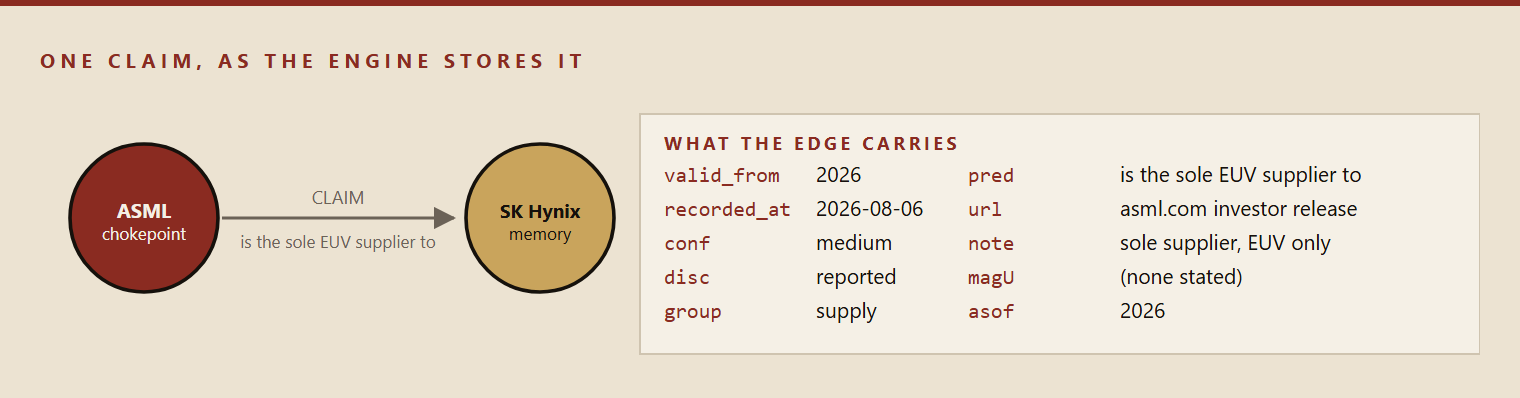
Condition one, made concrete. One relationship out of the KXCO sector record, read on 5 September 2026. Two clocks move independently: valid_from, when it was true, and recorded_at, when we said so. That is why nothing here can be quietly backdated. A dashboard would have shown you the arrow and none of the rest.
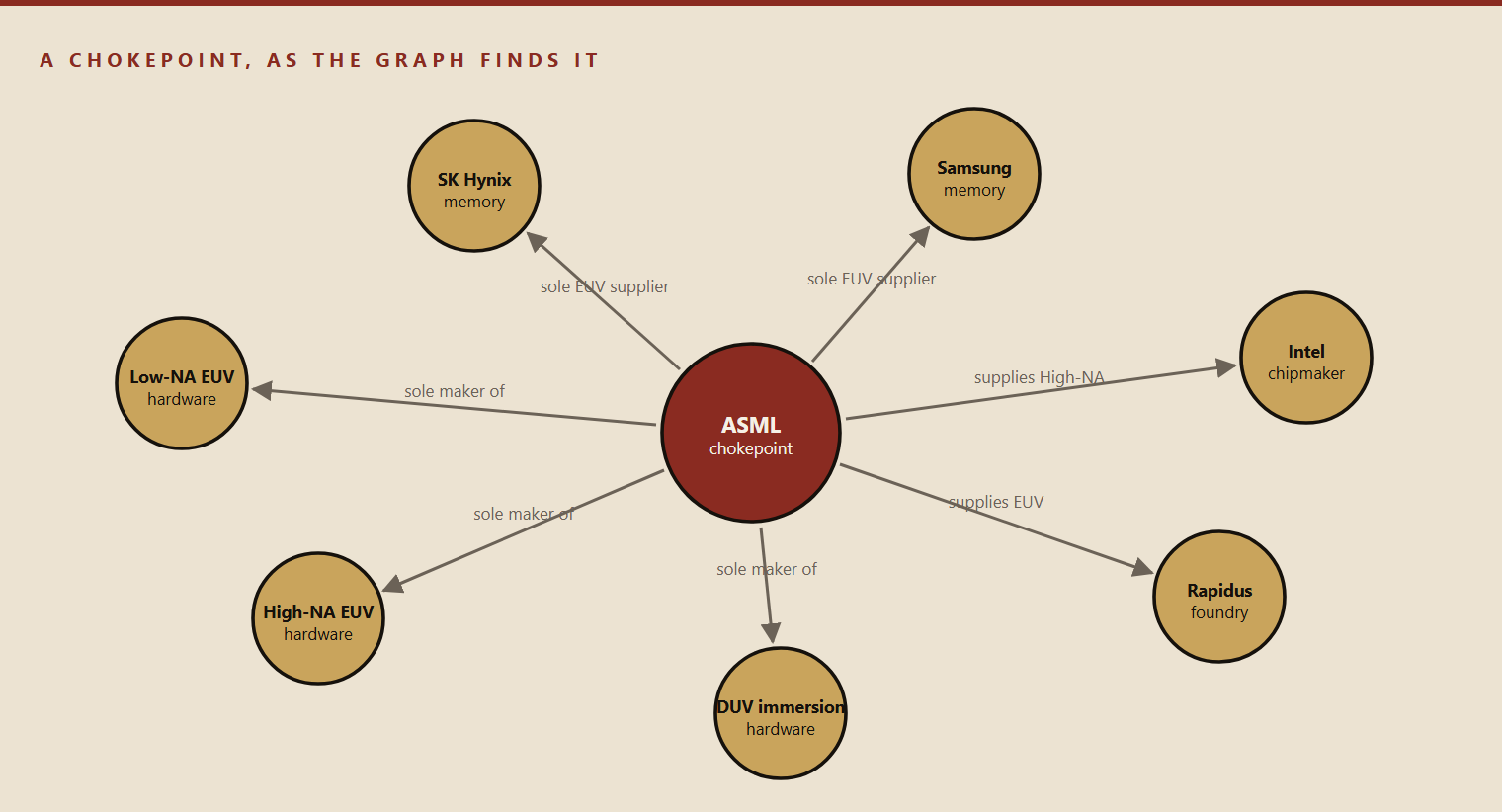
Condition three, made concrete. The same record one step out. Every edge is a stored claim carrying its own source, date and confidence, so the conclusion can be walked rather than asserted. That record holds nine chokepoints and four of them are not companies: the Strait of Hormuz, semiconductor grade helium, and two classes of lithography.
One question the newcomers are still quiet about sits underneath all four conditions. If a named human carries the consequences, who says which human it is? An identity the vendor asserts is the vendor's claim about you. An identity a third party verified is a fact about the world. Those are not the same object, and the difference only shows itself at the worst possible moment.
Where this leaves the market
The capability race is not over, but it has stopped being the interesting question. Firms that treat proof as a compliance exercise will produce a framework document. Firms that treat it as infrastructure will produce a record. Only one of those survives a room where somebody is being paid to take it apart.
Round Table is KXCO's ontology engine and it is built on the four conditions. It runs against private books of record and it is not a public product. What is public is a showcase: the map at kxco.ai/ontology-live is the same engine pointed at a deliberately weak dataset anybody can already obtain, which is the point of showing it. If the method is useful on data everyone has, it is more useful on data only you have. Both figures above are read from it.
Firms with a record worth defending can talk to KXCO directly.
The market spent three years asking whether the machine could do the work. The question that decides the next three is shorter and much harder. When it does the work, who signs.
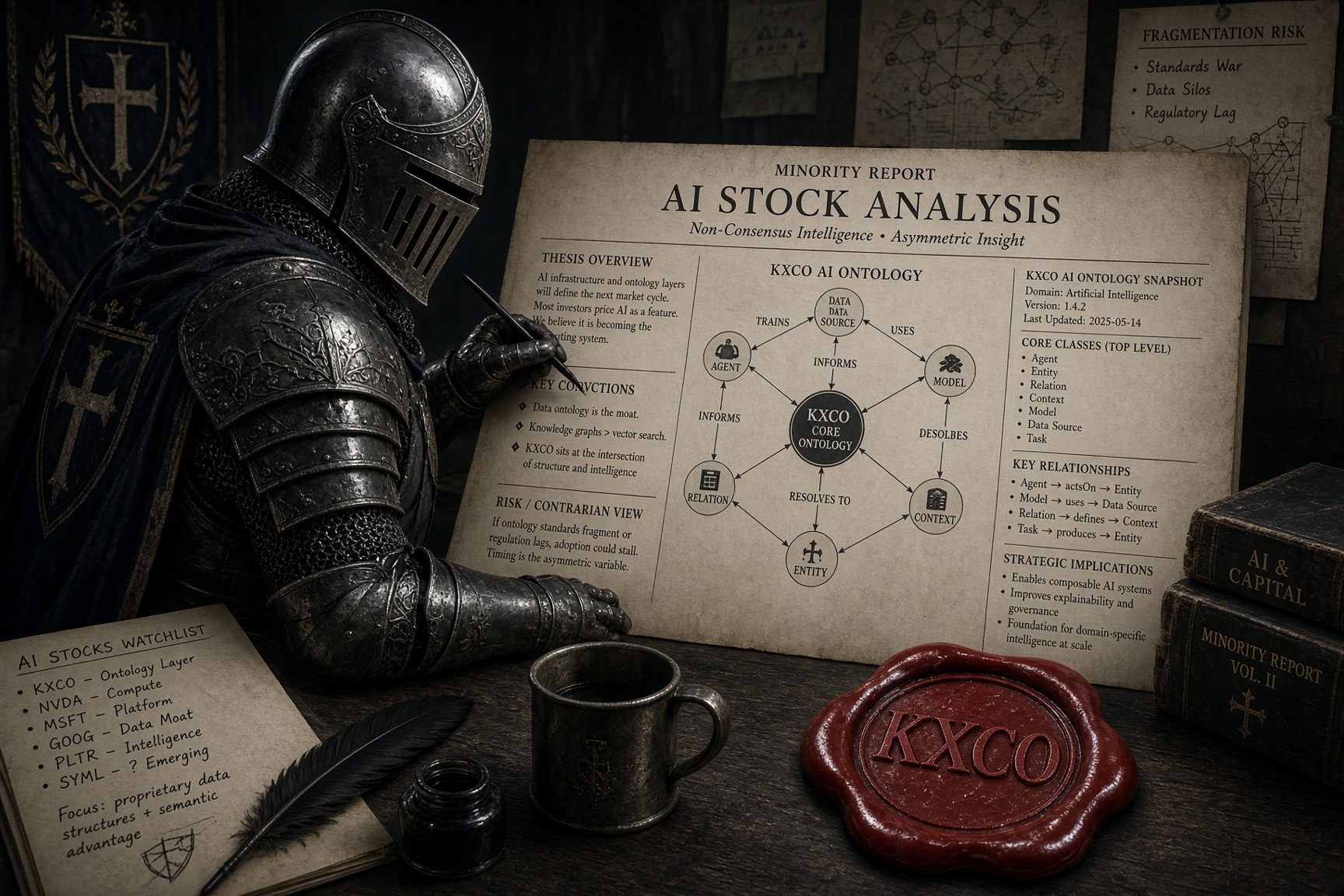
KXCO AI Ontology at 3 Months: What It Called and What Comes Next
On 19 July 2026 the Round Table's AI room published its first Analyst Outlook. To the 16 October 2026 close its 13 names rose 2.6% on an equal weight against 2.1% for QQQ, per StockAnalysis closes, and the six it opened with 35% or more of upside rose 8.6%. This piece lists the six names up more than 5%, the ten names I rate as opportunities now, the month's results in AI and quantum computing, and the official data showing that four in five firms have not yet started using AI.

What the Round Table Is Predicting in Biotech Markets
Seventeen FDA decisions fall due between 30 October 2026 and 29 June 2027, and KXCO's Round Table has called every one. Its model portfolio holds the thirteen Nasdaq companies behind them, led by BridgeBio, Cogent Biosciences and Praxis, and was signed with ML-DSA-87 and anchored on chain before the FDA acts. The first test is Inovio's INO-3107 on 30 October.
SpaceX: The Road to 10 Gigawatts
SpaceX did not add an AI business. A company whose processes run on compute built its own computing plant, then built the power to run it. The 10-Q reports 1.4 gigawatts of nameplate compute at 30 June 2026, four leases worth about $41 billion a year and $100 billion of cash. The target is closer to 10 gigawatts than 5 by the end of 2027. This piece sets out the build sequence, the four layers of power in Memphis, and why Terafab is the act after 2027, not the road to it.
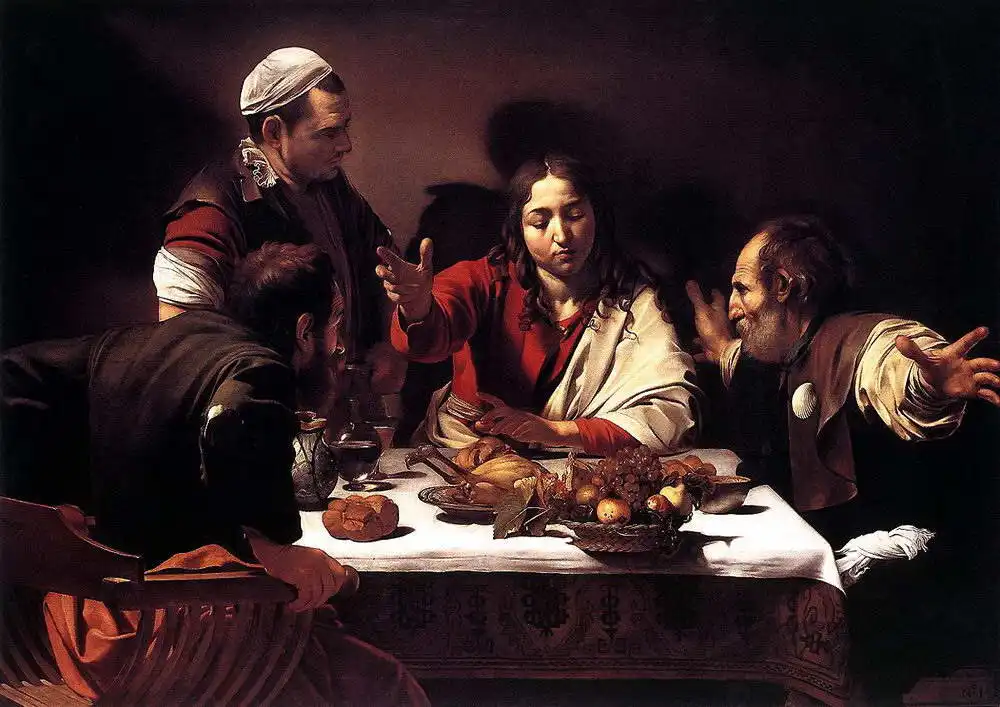
Thoughts on Thinking: Take an Art Break
The best way I know to keep complex work in perspective is to stop at intervals and look at something that took the same order of sustained attention under real constraints. The studies now show what that does: a museum visit restored attention where an urban walk did not, judging the beauty of an object raised abstract thinking almost 14 per cent, and artistic film raised originality even in people who felt worse for it. Five works, Leonardo to Holbein, and the non-default decision in each.
Every story, signed and delivered.
Subscribe to the kxco channel and get the headline, the AI-written key takeaways, and the chain-anchor link the moment we publish. Audio versions and per-ticker subscriptions arrive in the next iteration.