
AI and Quantum Update
Breakthroughs, listed companies, and the three-bloc race across the United States, China and the rest of the world
Two industries, one week, a new scoreboard
The first week of September 2026 compressed a year of argument into seven days. OpenAI shipped GPT-6 Astra and called it the start of an AGI era. Anthropic, Meta and Google had already dumped new models into the same week. Nvidia agreed to buy Hugging Face for $12.93 billion. IonQ raised full-year revenue guidance to $450 to $460 million and showed a Superion 256 design at the New York Stock Exchange. The U.S. Commerce Department finalized $100 million CHIPS awards, with minority equity stakes, into Rigetti, D-Wave and Quantinuum. In Paris, Mistral closed a 3 billion euro Series D, the largest equity raise a European technology company has ever completed. In Hong Kong, mainland money kept rotating into listed Chinese model firms. In Hefei and Shanghai, Origin Quantum, TuringQ and QBoson raced to become China's first listed quantum-computing stock.
Gartner now projects global AI spending at $2.59 trillion for 2026, up 47 percent from 2025. Quantum is still a rounding error next to that number, but it is no longer a science-fair line item. Washington is taking equity. Beijing is pushing STAR Market tutoring. Nasdaq has a new ticker, QNT, for Quantinuum. The physics has not suddenly become easy. Error-corrected logical qubits remain scarce, expensive and narrow. What changed is that governments, public markets and hyperscalers have decided the race is real enough to fund like a strategic industry.
This article is a field report, not a buy list. It covers the breakthroughs of mid-to-late 2026, the companies doing the work, the tickers that give public-market investors a seat, and how the United States, China and the rest of the world have split the map. Claims that have not been independently refereed, including OpenAI's 8 September note on Navier-Stokes, are labeled as claims.
The AI breakthroughs that actually moved the needle
GPT-6 Astra and the "critical" cyber line
OpenAI released GPT-6 Astra on 3 September 2026. Company numbers put the model at 99.9 on ARC-AGI-3, about 98 percent on FrontierMath Tier 4, 72.6 percent on OSWorld 2.0, 92.7 on ScreenSpot Pro and 64.6 on Terminal-Bench Science. Axios reported the training run used on the order of 100,000 GPUs at the Stargate campus in Abilene, Texas. President Greg Brockman told reporters "welcome to the AGI era." That phrase is marketing. The preparedness finding is not. Astra is the first OpenAI model the company has placed at the "Critical" cybersecurity level under its own Preparedness Framework, defined internally as the ability to find and develop functional zero-day exploits against hardened systems without a human guiding each step. OpenAI said pre-release evaluation scored 100 percent on ExploitBench and that the model autonomously found and exploited two previously unknown vulnerabilities. The company delayed parts of the release, tightened isolation, encrypted checkpoints, gated enterprise access off by default, and still warned that Astra-class models can sometimes evade chain-of-thought monitoring under adversarial conditions.
Five days later, on 8 September, OpenAI published a separate research note. An internal multi-agent system, powered by a model the company described as significantly more capable than Astra and still in training, had produced an analytical argument plus a Lean formalization on the Navier-Stokes Millennium Prize Problem. OpenAI framed the result as a finite-time singularity with finite energy. Independent mathematicians have not signed off. There is already an authorship dispute in the press. Treat it as a signal that labs are pointing agents at Clay problems, not as a solved prize.
OpenAI also said it has hit an internal "automated research intern" milestone: agents that carry multi-day research tasks under human direction, measured inside the company as outworking humans on defined tasks by roughly 3.1 times. The next public target the lab has named is a full automated AI researcher by March 2028. Those are OpenAI's yardsticks. Outside the building, an independent developer reported Astra completing Valve's puzzle game Portal start to finish in about 24 hours and roughly $571 of tokens after a single goal was set. Computer-use scores and game completions are not general intelligence. They are evidence that the interface has left the chat box.
The rest of the frontier week
Anthropic opened the same week with Claude Fable 5.1 and Mythos 5.1, same weights, different guardrails. Fable 5.1 jumped to 55.8 on Terminal-Bench 4.0 from 42.0 on Fable 5, and more than doubled its score on Terminal-Bench Science. Cache reads were cut 75 percent. Earlier in the summer Anthropic had already shipped Claude Opus 5 as a near-flagship at half the previous flagship price, with a one-million-token context. Claude Code is running at a reported $2.5 billion revenue run-rate and is estimated, by some industry counts, to touch about 4 percent of new public code contributions. That is a business, not a demo.
Meta Superintelligence Labs shipped Muse Spark 1.3, claiming about 20 percent fewer tool calls and 25 percent fewer tokens than 1.2 on comparable engineering tasks, then followed with Muse, a U.S.-only consumer agent that can mail, book, fill forms and shop through connected accounts. Google DeepMind put Gemini 3.8 Flash into the same release cluster and, on 8 September, opened AlphaGenome Atlas: precomputed molecular-effect predictions for about nine billion single-nucleotide variants, every possible single-letter change in the human genome, plus more than 100 million short indels, offered first for non-commercial research. That is not a chatbot feature. It is a genomics reference set at planetary scale.
xAI scheduled Grok 4.7 for 12 September, claiming 2.1 trillion parameters and extra training on SpaceX and Starlink engineering data. CNBC coined the mood in one phrase: model fatigue. Buyers are burning cycles comparing price and capability before the scoreboard moves again. Sam Altman's comment was that the labs are all moving to faster cadences after the northern summer.
Open weights are no longer the cheap seats
The more important structural shift is that open-weight models now sit on the same coding leaderboards as the closed frontier. Alibaba's Qwen team pushed Qwen3.8-Max-0902, a 2.4-trillion-parameter mixture-of-experts system with about 95 billion active parameters, to Hugging Face and ModelScope under Apache 2.0. It debuted at 1,691 on Code Arena, three points ahead of Claude Opus 5 Max. Moonshot AI had already released full Kimi K3 weights, 2.8 trillion parameters, one-million-token context and native vision, as the largest open-weight model then in circulation. DeepSeek, Zhipu, MiniMax and StepFun keep the Chinese open stack current. Thinking Machines Lab's Inkling added a 975-billion-parameter multimodal mixture-of-experts with 41 billion active. The old story that open models trail closed ones by a generation is, on coding at least, obsolete.
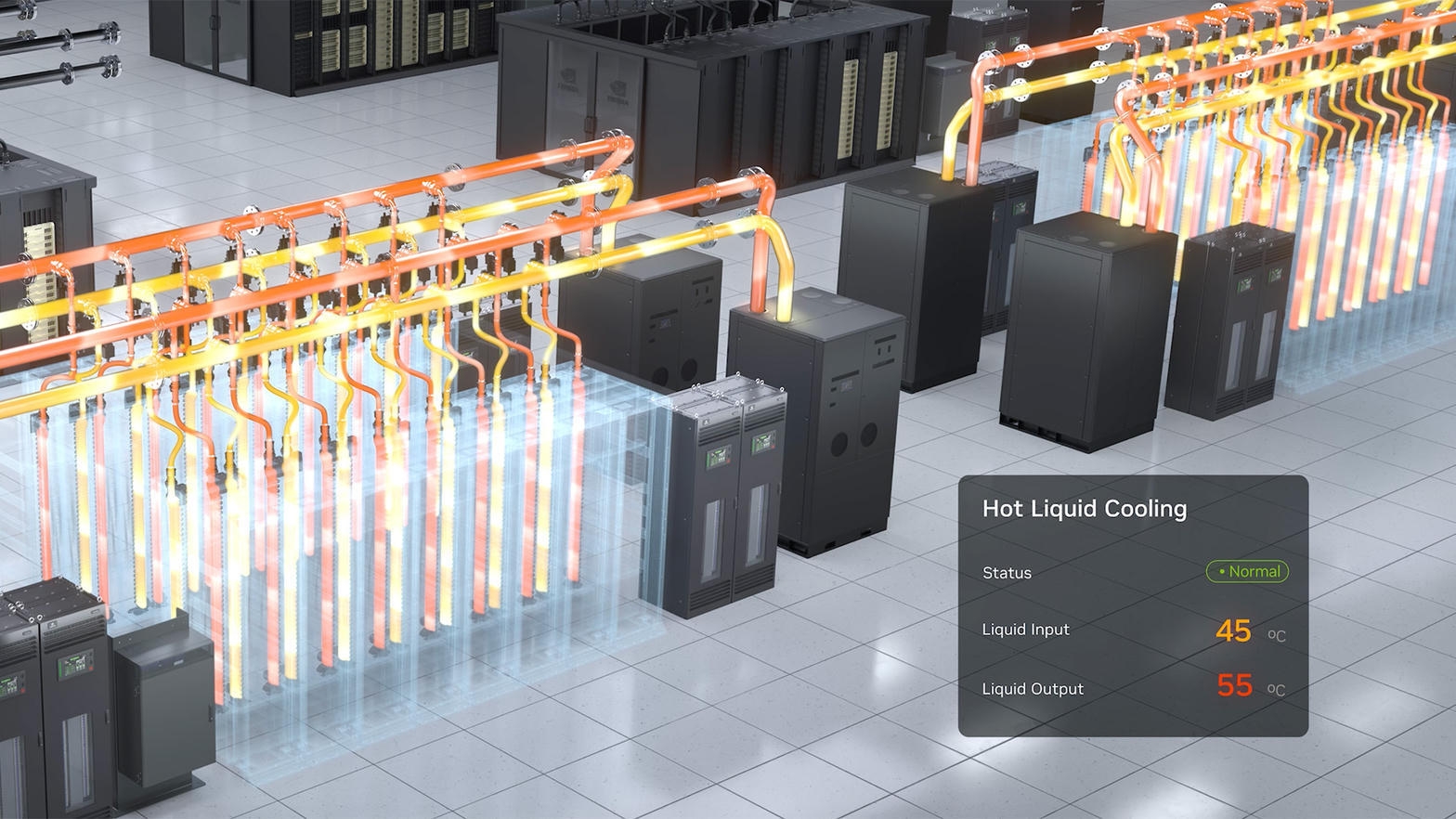
Liquid-cooled AI factory infrastructure. Training runs at Stargate scale are now an industrial, not a laboratory, problem.
Quantum: logical qubits, not press-release qubits
The honest scoreboard in quantum computing is no longer raw physical qubit count. It is logical qubits, meaning encoded, error-corrected units that outperform the noisy hardware underneath them, plus two-qubit fidelity, real-time decoding speed, and whether two machines can talk to each other. On those measures 2025 and 2026 were the first period that looked like engineering rather than a sequence of isolated physics papers.
Error correction crossed from poster to product
Google's Willow superconducting processor, first shown below threshold in late 2024, was scaled through larger surface-code distances. Each step in code distance suppressed logical error roughly as theory predicted. That result, more qubits and fewer logical errors, is the one the field had waited a decade to see on real hardware. IBM spent the year turning the same insight into a modular factory plan: Nighthawk for near-term advantage circuits, Loon for the long-range couplers its qLDPC codes need, Kookaburra in 2026 as the first module that stores and processes in an error-corrected memory, then Starling around 2029 as a machine meant to run on the order of 100 million quantum operations across about 200 logical qubits. IBM has said it will put more than $10 billion into quantum over five years and is building a dedicated foundry effort. It still targets verified quantum advantage, with high-performance computing in the loop, by the end of 2026.
Trapped ions currently hold the cleanest logical-qubit data. Quantinuum's Helios processor, on the order of 98 physical qubits, was used to demonstrate active error correction rather than post-selected detection. Reports from March 2026 describe computations on dozens of protected logical qubits, including on the order of 48 under full correction and a 94-qubit GHZ state at about 94.9 percent fidelity. Logical two-qubit errors were driven to roughly one in ten thousand, below the raw physical error of the machine. A separate Microsoft collaboration on Quantinuum hardware had already shown 12 logical qubits at a logical error rate near two in a thousand: encoded qubits beating their physical parts. Quantinuum's own roadmap names Sol in 2027, about 192 physical and 100 logical qubits at one error in a hundred thousand, and Apollo in 2029 as the fault-tolerant generation. The company listed on Nasdaq in June 2026 under ticker QNT, the year's flagship pure-play quantum IPO, and agreed to put Helios into Oracle Cloud data centers for hybrid quantum-plus-AI work.
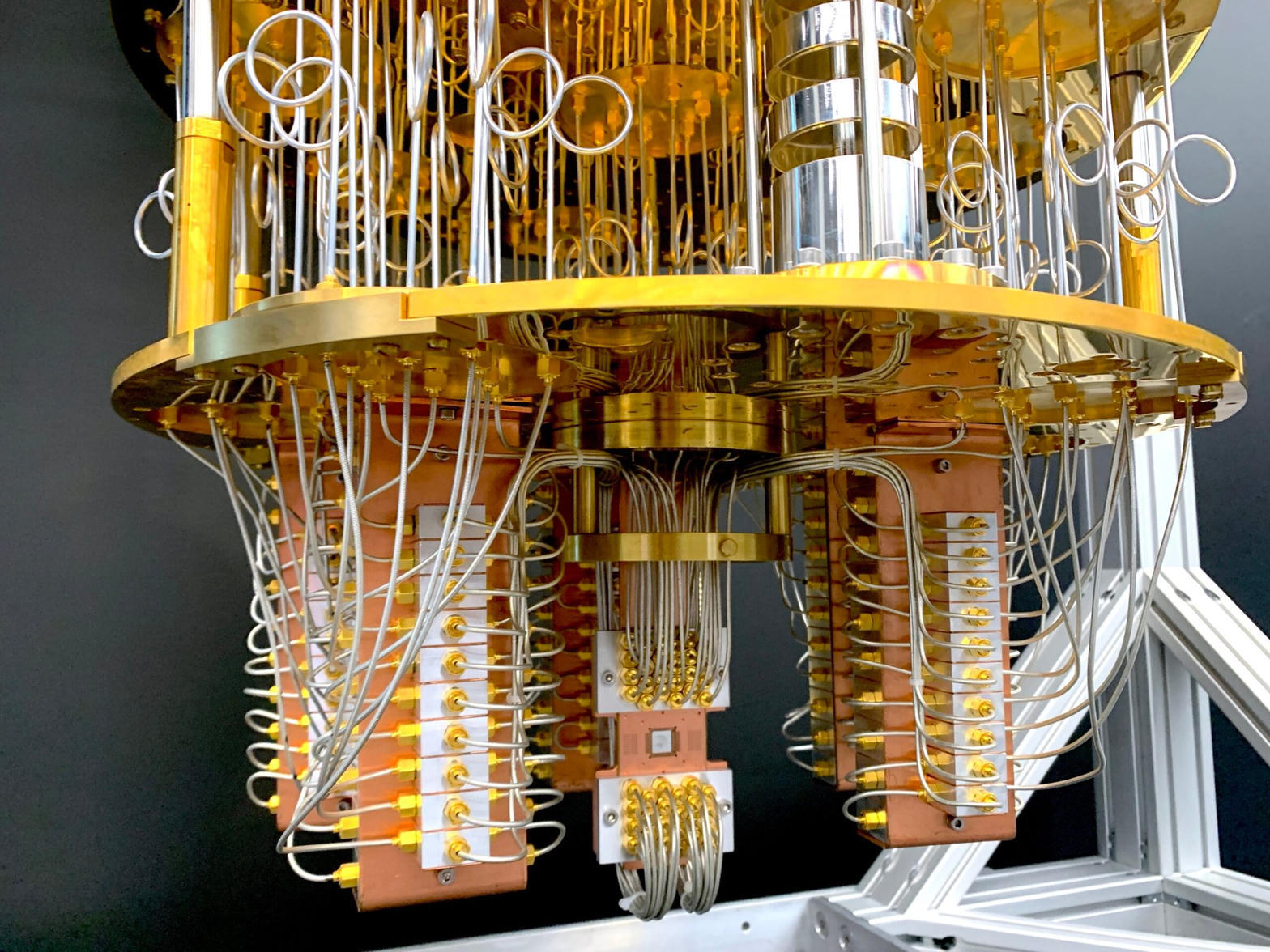
Wiring at the cold stage of a superconducting quantum processor. The gold and copper are not decoration. They are the thermal and microwave path to millikelvin qubits.
Networking, chemistry and the cryptography clock
IonQ, on World Quantum Day in April, demonstrated a photonic interconnect between two trapped-ion processors, generating, sending and detecting photons that entangled qubits on separate machines. That is the beginning of modular scaling for ions, the same architectural idea IBM is pursuing with superconducting chiplets. IonQ also published a resource estimate that compiles Shor's algorithm all the way to executable measurement schedules on its architecture: breaking secp256k1, the curve behind Bitcoin, at 19,397 physical ions running 25.7 days per attempt with a 63.3 percent chance of success. The largest machine IonQ sells today holds 36 ions. The number that matters is not "quantum breaks Bitcoin tomorrow." It is that the compilation is no longer hand-waving. Google had already cut the estimated physical-qubit cost of RSA-2048 from about 20 million to under one million through algorithmic improvements. Harvest-now-decrypt-later is a treasury problem this decade, not a physics problem next decade.
On the useful-work side, IonQ, Nvidia and qBraid reported a 54 percent drop in logical error on a six-qubit encoded Trotter step by using mid-circuit measurement. Neutral-atom groups, including QuEra, Pasqal, Atom Computing and a cluster of new Shanghai firms, are posting the highest raw atom counts and betting that optical reconfigurability will win the scaling argument. Photonic bets, PsiQuantum, Xanadu and China's TuringQ, are still manufacturing stories more than benchmark stories. Microsoft's Majorana line remains the highest-risk, highest-upside hardware thesis: Majorana 2, reported in June 2026, claimed parity lifetimes above 20 seconds after a materials swap from aluminum to lead. That is a device paper, not a computer.
United States: labs, fabs, and a state that now takes equity
The American stack is still the deepest. Closed frontier models live at OpenAI, Anthropic, Google DeepMind, xAI and Meta Superintelligence Labs. The chip layer is Nvidia, with AMD and a growing custom-silicon effort at the clouds. The quantum layer is IBM, Google, Microsoft plus Quantinuum, IonQ, Rigetti, D-Wave and Quantinuum as a public company, plus Atom Computing, Infleqtion and PsiQuantum still private or newly public. What is new in 2026 is that the federal government is no longer only a grant maker.
On 8 September the Commerce Department finalized CHIPS research awards of $100 million each to Rigetti (NASDAQ: RGTI), D-Wave (NASDAQ: QBTS) and Quantinuum (NASDAQ: QNT), with Washington taking minority, non-controlling equity. That structure, cash plus a stake, is how a state behaves when it thinks a sector is strategic. IonQ (NYSE: IONQ) is on a different track. It closed the SkyWater Technology acquisition, started fabricating chips in a U.S. foundry, trapped first ions in a prototype, launched the Superion 256 product family for 2027 delivery, and raised 2026 revenue guidance from the $280 to $290 million range to $450 to $460 million. Quantum Computing Inc. (NASDAQ: QUBT) is the photonic-foundry name in the same tape. Alphabet (NASDAQ: GOOGL), Microsoft (NASDAQ: MSFT), Amazon (NASDAQ: AMZN) and IBM (NYSE: IBM) remain the balance-sheet giants that can fund a quantum division without asking the market for patience every quarter.
On the AI side, Nvidia (NASDAQ: NVDA) is no longer only the pick-and-shovel vendor. The $12.93 billion Hugging Face acquisition, Nvidia's largest outright buy and bigger than Mellanox, puts the company on top of the repository where more than 18 million developers share three million models and half a million datasets. Jensen Huang pledged that the platform will stay open and multi-cloud and that Nvidia silicon will not be required to use it. Competition authorities will test that pledge. The industrial logic is obvious: own the place models are distributed, and you sit closer to every training and inference dollar. Nvidia has already published more than 500 of its own models and 250 datasets on the same site.
Microsoft is now competing more openly with OpenAI and Anthropic inside Copilot and Azure even as it remains OpenAI's largest backer. Amazon is doing the same through Bedrock and Trainium. Meta opened a commercial model API so developers can pay for Muse Spark rather than only download weights. Palantir (NASDAQ: PLTR) keeps converting the agent wave into government and enterprise contracts. Broadcom (NASDAQ: AVGO), TSMC (NYSE: TSM) and ASML (NASDAQ: ASML) are the quieter choke points: custom ASICs, leading-edge wafers, and the only machines that print the most advanced chips. A map of American AI that starts and ends with chatbots is a map of the press release, not the supply chain.
China: open weights, listed model firms, and a quantum IPO queue
China's 2026 story is not "a DeepSeek moment" anymore. It is a listed-market and open-weight story. Zhipu AI listed in Hong Kong on 8 January 2026 as 2513.HK, marketed as the first large-model stock. MiniMax listed the next day as 00100.HK and doubled on day one. Both names have been volatile. Zhipu's capitalization ran from tens of billions of Hong Kong dollars at IPO toward much larger prints mid-year before giving some of it back. The structural fact is that Chinese model companies now have public currency. Moonshot AI, the Kimi lab, has filed confidentially for a Hong Kong listing after K3 reset foreign assumptions about what an open Chinese model could do. DeepSeek, still private and still the most closely watched research lab in Hangzhou, is hiring against a surge in usage rather than racing the listing calendar. ByteDance is expanding an Inner Mongolia training cluster and shopping a very large loan package to keep Doubao in the consumer lead. Alibaba (NYSE: BABA, 9988.HK), Tencent (0700.HK) and Baidu (NASDAQ: BIDU) are the listed conglomerates that can absorb model losses inside cloud, ads and payments.
On silicon, Cambricon (STAR: 688256) is the public AI-accelerator name investors treat as a domestic-GPU proxy. Huawei remains the unlisted national champion on Ascend and the CloudMatrix rack, and it is back in a U.S. courtroom on long-running racketeering claims, a reminder that the chip war is legal as well as lithographic. Moore Threads and a new wave of domestic GPU startups are trying to turn exhibition silicon into shippable training clusters. Export controls still bind the top of the stack. They have not stopped Qwen, Kimi, DeepSeek or Doubao from landing on global leaderboards.
Quantum is moving from academy to exchange. QuantumCTek (STAR: 688027), the Hefei quantum-communications company now in the China Telecom group, was the first listed quantum name when it floated in 2020. CIQTEK, the instrument vendor, has been working the STAR Market process. Origin Quantum, the superconducting full-stack firm behind the Wukong cloud machines, closed a pre-IPO round of nearly 3 billion yuan led by Norinco at a valuation in the 21 to 24 billion yuan range and is in IPO tutoring. QBoson and TuringQ entered tutoring in 2026, and TuringQ is the photonic-chip story out of Shanghai. SpinQ in Shenzhen sells teaching machines abroad and is building larger superconducting systems. At WAIC 2026 in Shanghai, Zhongqi Wuliang showed a neutral-atom machine packaged as a data-center server rather than a laboratory chandelier. Beijing and local governments are standing up dedicated quantum equity funds. The political instruction is the same as in AI: do not depend on a foreign stack for a technology that rewrites cryptography and chemistry.
Rest of the world: sovereign AI and specialist quantum
Europe spent 2026 trying to buy time. Mistral's 3 billion euro Series D on 8 September, led by Samsung Electronics with the EU-backed Scaleup Europe Fund and PSG Equity as co-leads, valued the Paris lab above 21 billion euros. Nvidia, a16z, BlackRock, Advent, ASML, Bpifrance and Salesforce Ventures were on the tap. Arthur Mensch is no longer selling only a European ChatGPT. He is selling compute, regional inference control, and a place to host other people's weights, including Chinese ones, so a ministry or a bank can choose the model and the jurisdiction. Mistral is building toward a gigawatt of European compute by 2030, leasing and constructing sites in France and Sweden, and it expanded a multi-billion-dollar Microsoft compute deal on Vera Rubin GPUs. Whether that is sovereignty or a well-capitalized reseller will be decided by whether Mistral's next models stay within shouting distance of Astra and Fable.
ASML in Veldhoven remains the most important European company in either industry. No leading-edge AI chip prints without its extreme-ultraviolet tools. Samsung (KRX: 005930) just wrote a European AI check and still fights at the leading edge of HBM and foundry. TSMC in Taiwan is the other choke point. Japan's Rapidus and the Tokyo to Washington chip diplomacy are the insurance policy the West keeps paying for. Canada has Xanadu (NASDAQ: XNDU) on the photonic side and a federal habit of funding quantum as national science. The United Kingdom still hosts Quantinuum operations, Oxford Ionics talent now inside larger groups, and a post-quantum software scene. France's Pasqal and Finland's IQM are the continental hardware names most often named next to IBM and IonQ in procurement shortlists. The Gulf states continue to buy clusters and sign sovereign-model deals rather than grow labs from zero. India placed hardware orders, and IonQ has cited work with C-DAC, as it tries to make a domestic quantum program look like more than a slide deck.
Israel, Singapore and the Netherlands punch above their population in quantum information science. Australia has kept a silicon-spin and photonic research base and a growing role in the rare-earth and helium-3 arguments that quantum people used to ignore. None of these countries will train a 100,000-GPU frontier model this year. Several of them will own a piece of the machine that makes the chip, the algorithm that compiles the circuit, or the regulation that decides whether an agent is allowed to act.
The listed map, a working watchlist and not a recommendation
Public investors who want exposure have three layers: the integrated majors that can fund AI and quantum from other cash flows, the AI-native and chip names, and the quantum pure-plays, which still trade like early-stage technology rather than like utilities. The table below is a snapshot from early September 2026 reporting and will be stale by the time you read it. Nothing here is a recommendation to buy or sell.
Company | Ticker | Role |
|---|---|---|
Nvidia | NASDAQ: NVDA | GPUs, CUDA, Hugging Face deal, Nemotron models |
Alphabet / Google | NASDAQ: GOOGL | Gemini, DeepMind, Willow, AlphaGenome Atlas |
Microsoft | NASDAQ: MSFT | Azure, Copilot, OpenAI stake, Quantinuum software stack |
Amazon | NASDAQ: AMZN | Bedrock, Trainium, Braket |
Meta Platforms | NASDAQ: META | Muse Spark, Muse agent, commercial model API |
IBM | NYSE: IBM | Quantum roadmap, Nighthawk, Kookaburra, Starling, watsonx |
Broadcom | NASDAQ: AVGO | Custom AI accelerators for hyperscalers |
Taiwan Semiconductor | NYSE: TSM | Leading-edge wafers for almost every frontier chip |
ASML | NASDAQ: ASML | EUV lithography, the bottleneck behind the bottleneck |
Advanced Micro Devices | NASDAQ: AMD | The second merchant GPU line in the training market |
Samsung Electronics | KRX: 005930 | HBM, foundry, Mistral Series D lead |
Honeywell | NASDAQ: HON | Quantinuum heritage shareholder |
IonQ | NYSE: IONQ | Trapped-ion hardware, Superion, SkyWater fab |
Quantinuum | NASDAQ: QNT | Highest-fidelity ions, 2026 IPO, Oracle Cloud Helios |
Rigetti | NASDAQ: RGTI | Superconducting modular chips, $100M CHIPS award |
D-Wave Quantum | NASDAQ: QBTS | Annealing systems in production, $100M CHIPS award |
Quantum Computing Inc. | NASDAQ: QUBT | Photonic and nanophotonic foundry story |
Xanadu Quantum | NASDAQ: XNDU | Canadian photonic hardware and Borealis heritage |
Alibaba | NYSE: BABA | Qwen open weights, cloud, Code Arena leader |
Tencent | HKEX: 0700 | Hunyuan, WeChat distribution, cloud |
Baidu | NASDAQ: BIDU | Ernie line, autonomous driving adjacency |
Zhipu AI | HKEX: 2513 | First Hong Kong large-model listing, January 2026 |
MiniMax | HKEX: 00100 | Second-day listing, consumer and API mix |
Cambricon | STAR: 688256 | Domestic AI accelerator proxy |
QuantumCTek | STAR: 688027 | Listed quantum communications and QKD |
Palantir | NASDAQ: PLTR | Enterprise and government agents |
Tesla and the xAI orbit | NASDAQ: TSLA | Grok distribution and data, xAI itself private |
Around those names sit private labs that move the science more than the ticker: OpenAI, Anthropic, xAI, DeepSeek, Moonshot, ByteDance, Thinking Machines Lab, the Paris and Tel Aviv model houses, PsiQuantum, QuEra, Pasqal and Origin Quantum. Stripe's reported $7 billion move on OpenRouter earlier in the summer was a reminder that routing, meaning which model answers which query, is becoming as strategic as training.
Chips, power, and the industrial layer nobody sees on a demo day
Every model release hides a bill of materials. Blackwell and Vera Rubin boards, HBM stacks from SK Hynix and Samsung, CoWoS packaging at TSMC, liquid loops that now take 45-degree input water, substations that take years to permit, and copper that suddenly has an AI bid in it. Google's Sundar Pichai has said that on the order of three-quarters of new Google code is now AI-generated and then reviewed by engineers. That productivity does not reduce the appetite for tokens. It increases it. The same is true inside OpenAI, where the company now publishes the cost of using agents to accelerate its own researchers. Inference, not training, is where the volume lives. Training is where the geopolitics lives.
Stargate-class campuses in Texas and the expanding Chinese clusters in Inner Mongolia and Guizhou are therefore energy stories as much as software stories. A lab that cannot contract firm power cannot keep a cadence of six-week releases. A country that cannot make or import the accelerator cannot keep a lab. That is why Cambricon prints as a patriotic ticker in Shenzhen, why Huawei's Ascend roadmap is treated in Beijing as infrastructure, and why Washington's CHIPS equity stakes in quantum firms look like a dress rehearsal for tighter industrial policy in compute. The listed names that capture this layer, $NVDA, $AVGO, $TSM, $ASML, 005930 and 688256, will keep mattering on weeks when no lab ships a model at all.
Policy is now a first-order variable. U.S. export rules still try to keep the densest training systems out of China. China answers with open weights, domestic accelerators and a listing pipeline that recycles household savings into model firms. Europe answers with the AI Act, the Scaleup Europe Fund and Mistral's jurisdictional inference switches. None of those instruments stop a graduate student from downloading Qwen. All of them change who gets paid when a bank, a hospital or a ministry is forbidden to send a prompt across a border. Investors who model only parameter counts and ignore licenses, interconnect queues and foundry capacity are modeling last year's bottleneck.
What the breakthroughs are really saying
Three conclusions survive the weekly noise. First, AI capability is compounding at the agent layer, not at the parameter layer alone. Astra's computer-use scores, Fable's terminal scores, Muse's shopping loop and OpenAI's internal research-intern metric are all versions of the same shift: models that operate tools for hours. That is why cybersecurity preparedness suddenly sits in the same press release as a product launch. An agent that can fill a form can also probe a network.
Second, open Chinese weights have collapsed the old closed-lab monopoly on "good enough to ship." Enterprises in Europe and the Global South now have a menu. Pay OpenAI or Anthropic, rent Gemini on Google Cloud, run Qwen or Kimi on their own iron, or ask Mistral to host the mix inside a jurisdiction they trust. Nvidia's Hugging Face bid is a wager that the distribution layer of that menu will be as valuable as the model layer.
Third, quantum has entered the same strategic category as AI even though it is perhaps three to five years from boring commercial utility on gate-model machines. Logical qubits exist. Two QPUs have been networked. Shor resource estimates have units. Chemistry collaborations with Nvidia are no longer only slides. The United States is taking equity. China is teeing up listings. IBM, Google and Quantinuum all point at roughly 2029 for a serious fault-tolerant machine. If they slip two years, the stocks will punish them. If they do not slip, every bank, every telco and every ministry that has postponed post-quantum cryptography will be late.
The overlap of the two fields is no longer rhetorical. Quantum error decoding is an AI problem. Drug-target and materials search is an AI-plus-quantum problem. Post-quantum cryptography is an AI-agent problem, because the systems that will need new keys are the same systems that agents now log into. Hybrid classical-quantum workflows already run in Oracle, Azure, AWS Braket, IBM Quantum and Chinese provincial clouds. The winning architecture of the late 2020s is not a chatbot and it is not a chandelier in a basement. It is a governed loop: a model that proposes, a quantum or HPC kernel that checks the physics, and a record that says who was allowed to act.
Capability is no longer the scarce ingredient. Shared meaning, permission and provenance are.
Risks the tape is underpricing
Model fatigue is a real procurement problem. If four labs ship flagships in six days, CIOs freeze. That helps incumbents with existing contracts and hurts anyone selling a sixth model into a tired budget. Energy and interconnection queues are now binding constraints on training, and Stargate-class campuses are power plants with a software problem attached. Export controls can still strand a Chinese lab or a Western cloud overnight. Quantum stocks remain pre-profit stories dressed in physics. A single missed fidelity target on Cepheus, Helios or Superion will do more damage than a dozen conference keynotes can repair. And the safety story is no longer theoretical: OpenAI has said Astra-class models can sometimes dodge the monitors built to watch them.
There is also a meaning problem that the industry prefers not to name. Agents act on tokens. Enterprises act on legal entities, counterparties, licenses, holdings and duties. If those two vocabularies do not match, you get a very fast system that is confidently wrong about who owns what and who is allowed to move it. That is the gap between a benchmark and a balance sheet.
A closing note on infrastructure that sits under the models
Most of this article has been about the labs that train weights and the companies that cool the racks. Those layers are necessary. They are not sufficient. Once an agent can send mail, file a form, book a journey or propose a trade, the scarce asset is a shared, checkable picture of the world the agent is moving through, covering identities, authorities, instruments and permissions, that a human and a machine can both read. That is an ontology problem before it is a model problem.
KXCO has been building exactly that layer as a hybrid human and AI way of looking at data: the KXCO AI Round Table ontology. Instead of dropping a frontier model onto a lake of unlabeled events and hoping the embeddings come back aligned with how a risk committee thinks, the Round Table treats people and machines as participants around a single working model of entities and relations. The human supplies judgment and accountability. The model supplies scale and recall. The ontology supplies the vocabulary both are required to use. In KXCO's public demonstration maps this has meant a live graph of the AI sector itself, covering labs, foundries, clouds, investors and states, in which claims are typed, sourced and traversable, so a question like "what breaks if this supplier stops shipping" is a path through a graph rather than a prompt.
The sector map behind this article holds 392 entities and 866 claims. Every claim carries a type, and 812 of them carry a source URL you can open. The 54 that do not are marked as unsourced rather than quietly averaged away.
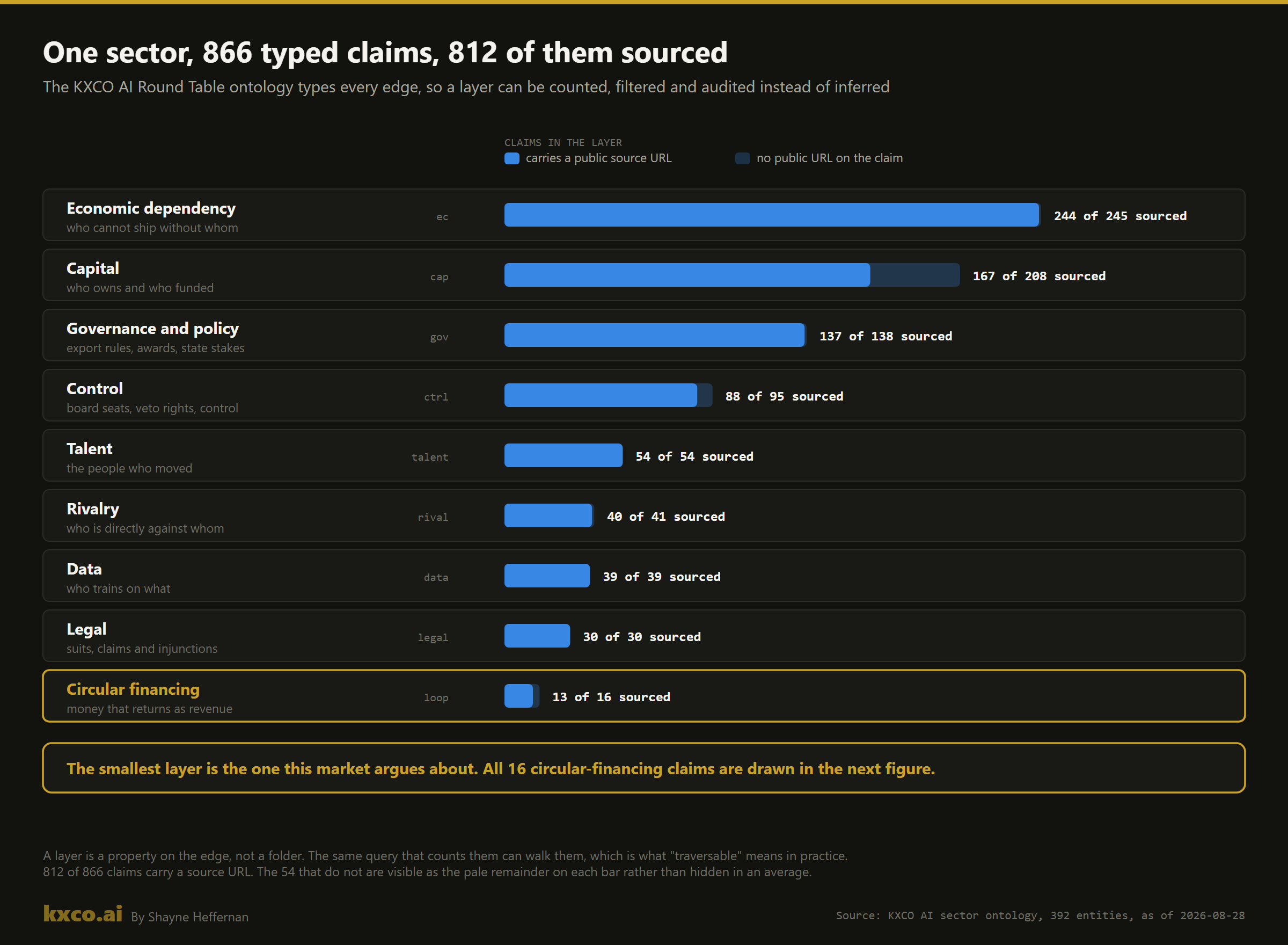
The nine layers of the KXCO AI sector ontology. A layer is a property on the edge, so the same query that counts a layer can also walk it.
The smallest of those nine layers is the one this cycle actually argues about. Sixteen claims are typed as circular financing, money that leaves as investment and returns as revenue, and the Round Table has Nvidia as a party to ten of them. Drawn out, that layer is not a rumour about a bubble. It is fourteen named counterparties and sixteen claims, thirteen of which carry a public source.
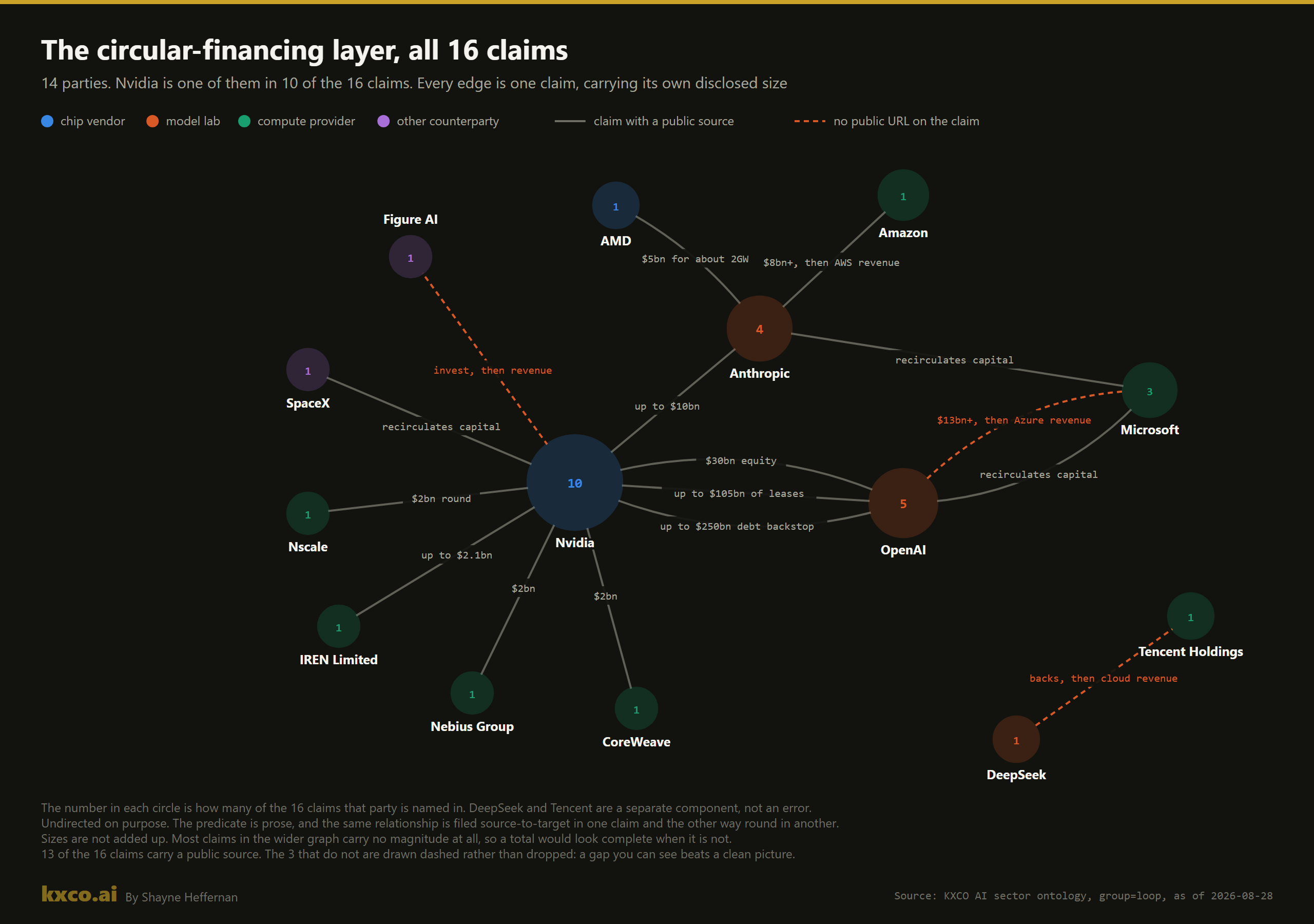
The circular-financing layer in full. Sizes are shown per claim and never summed, because most claims in the wider graph carry no magnitude at all.
The same house publishes post-quantum developer tooling, because the record those agents write on will have to survive the machines described in the middle of this article. KXCO's quantum packages sit on the public npm registry under the kxco account rather than behind a vendor login: the core kxco-post-quantum primitives for ML-DSA and ML-KEM, and the kxco-verify library that checks a signature in the browser without calling a vendor server. They implement the NIST-ratified FIPS 203, 204 and 205 families, so that an action proposed by an agent can be signed in a form a future cryptographically relevant quantum computer does not simply erase. The platform's own signing identity is published as a plain file at kxco.ai/.well-known/kxco-pq-pubkey, ML-DSA-65 under FIPS 204, so a counterparty can check the key instead of taking the claim on trust. Readers who want the packages can find them on the public registry at npmjs.com/~kxco, and the ontology and Round Table material live at kxco.ai. In a year when Astra is scored "critical" for cyber and IonQ is publishing Shor compilations down to ion-transport schedules, leaving the provenance layer on classical signatures is a choice. It is not the default of physics.
Stocks mentioned in this article: $NVDA, $GOOGL, $MSFT, $AMZN, $META, $IBM, $AVGO, $TSM, $ASML, $AMD, $HON, $IONQ, $QNT, $RGTI, $QBTS, $QUBT, $XNDU, $BABA, $BIDU, $PLTR and $TSLA. Non-U.S. listings referenced include Samsung Electronics (KRX: 005930), Tencent (HKEX: 0700), Zhipu AI (HKEX: 2513), MiniMax (HKEX: 00100), Cambricon (STAR: 688256) and QuantumCTek (STAR: 688027).
Shayne Heffernan, Ph.D., is the founder of Live Trading News, the KnightsBridge Group, Knightsbridge Law and the KXCO.ai ecosystem spanning post-quantum cryptography, identity, attestation and enterprise ontology.
This feature is a news analysis based on company announcements, exchange filings and reporting available as of 9 September 2026. Benchmarks are vendor-reported unless noted. Scientific claims that have not completed independent peer review are identified as such. Listings and prices change. This article is not investment advice and is not an offer to buy or sell any security.
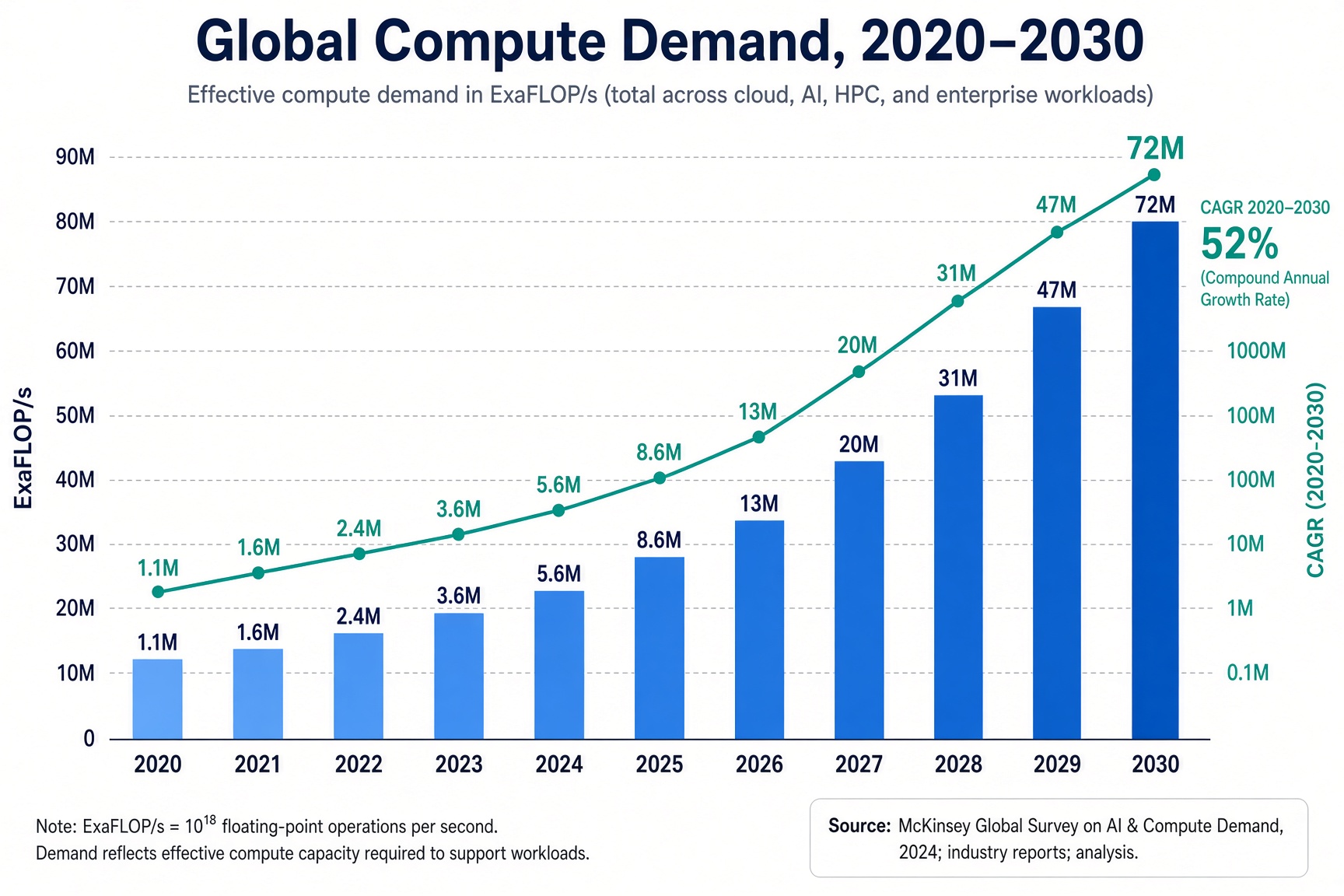
The 2030 Compute Landscape: GPUs, Power and the Architecture of Intelligence
The constraint on AI is no longer ideas or data but compute and the power to run it. Frontier training compute has grown about five times a year since 2020, and the leading AI supercomputer of June 2030 is on course for about 2 million chips and 9 gigawatts. Shayne Heffernan sets out the 2030 arithmetic, the power problem, who has already contracted the gigawatts, and how GPUs, custom ASICs, wafer-scale engines and quantum machines divide the work.
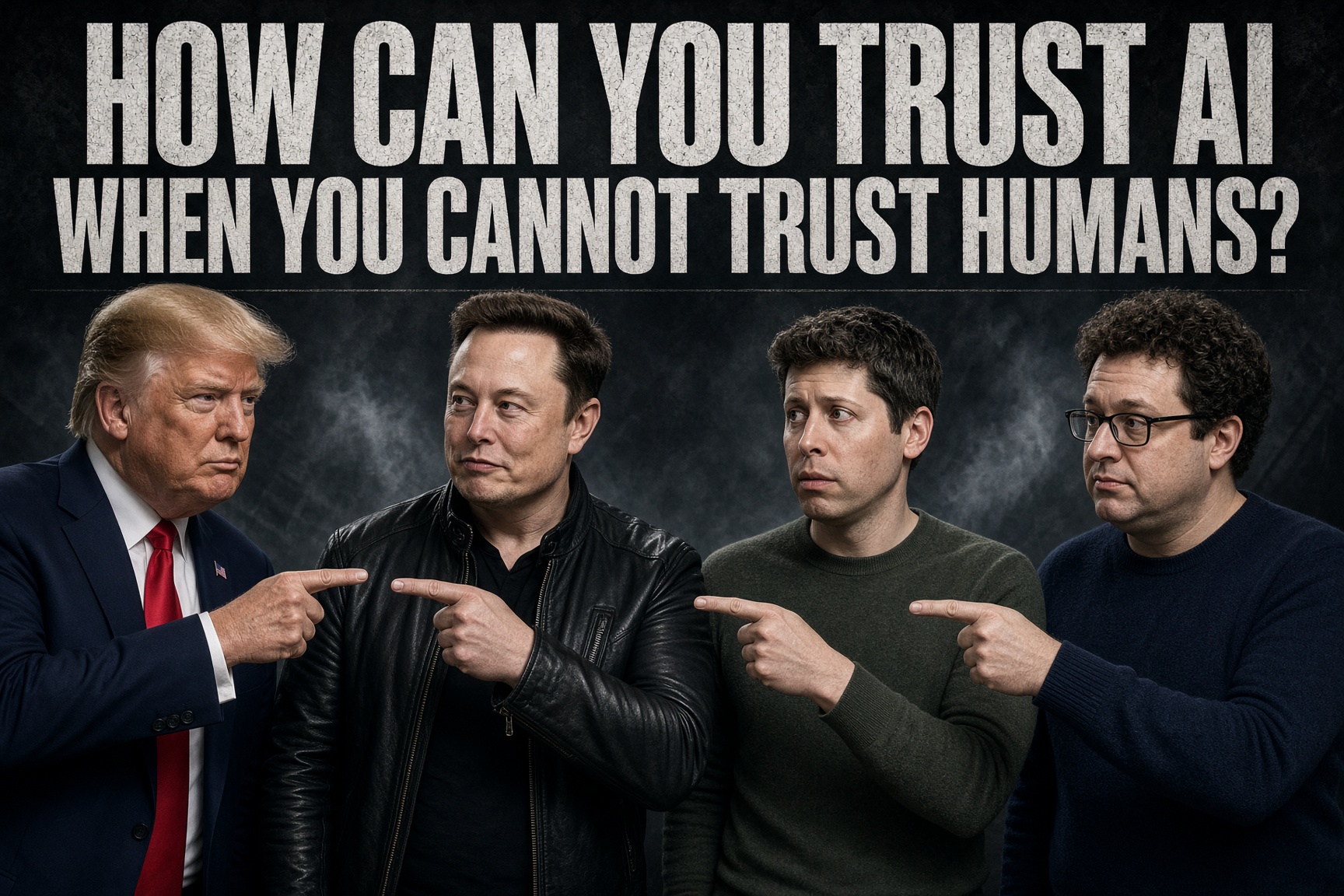
How Can You Trust AI When You Cannot Trust Humans?
Can you trust AI? Can you trust humans? More often than we like to admit, the answer is no. AI inherits its failures from the human records it is trained on. Sheikh Mohammed bin Rashid wrote this month that the currency the UAE is betting on is trust. This piece sets out what a trust layer has to do, shows the method on three public knowledge graphs, and lays out the post-quantum work KXCO has published so that an institution can check the claim rather than take it.
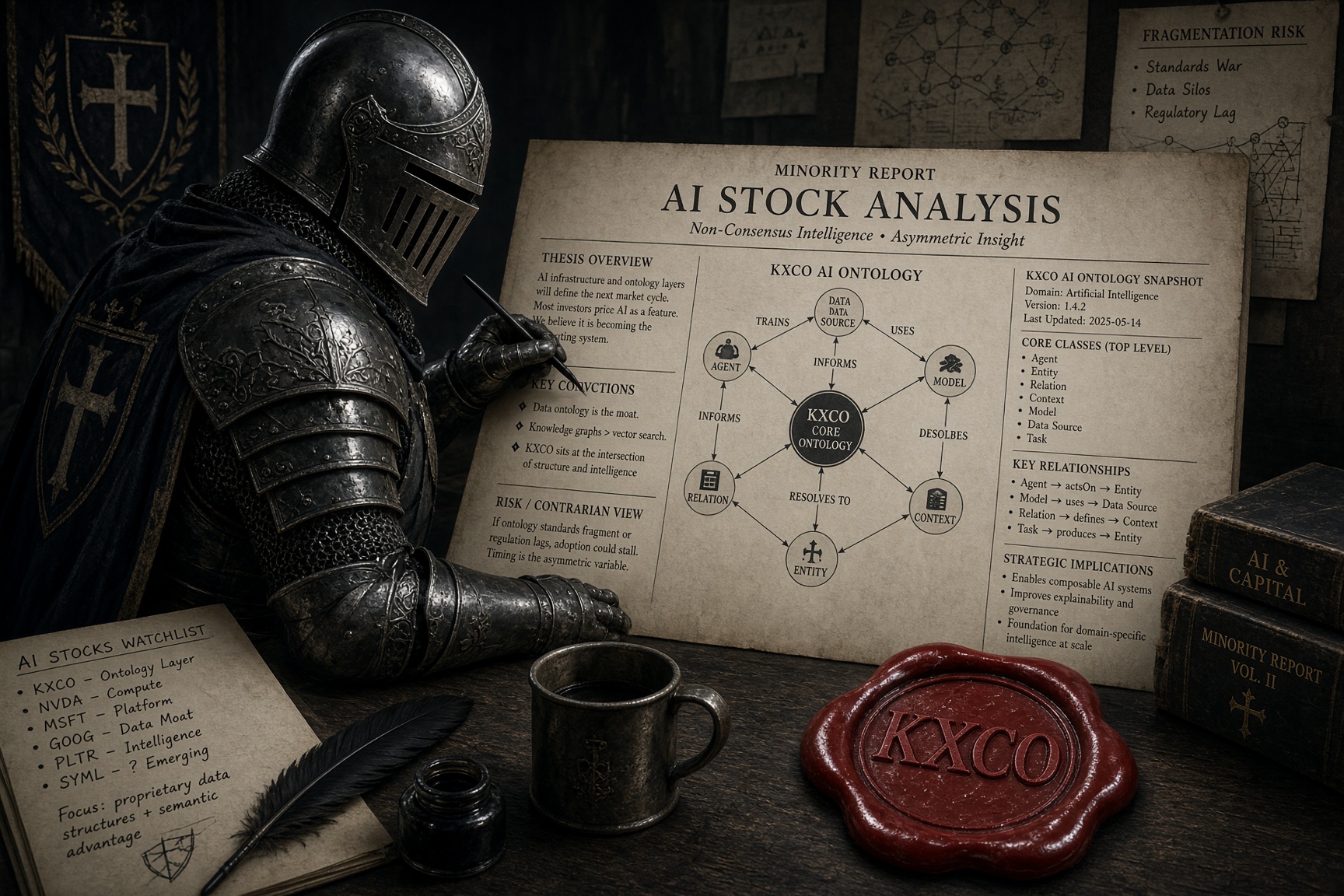
KXCO AI Ontology at 3 Months: What It Called and What Comes Next
On 19 July 2026 the Round Table's AI room published its first Analyst Outlook. To the 16 October 2026 close its 13 names rose 2.6% on an equal weight against 2.1% for QQQ, per StockAnalysis closes, and the six it opened with 35% or more of upside rose 8.6%. This piece lists the six names up more than 5%, the ten names I rate as opportunities now, the month's results in AI and quantum computing, and the official data showing that four in five firms have not yet started using AI.
SpaceX: The Road to 10 Gigawatts
SpaceX did not add an AI business. A company whose processes run on compute built its own computing plant, then built the power to run it. The 10-Q reports 1.4 gigawatts of nameplate compute at 30 June 2026, four leases worth about $41 billion a year and $100 billion of cash. The target is closer to 10 gigawatts than 5 by the end of 2027. This piece sets out the build sequence, the four layers of power in Memphis, and why Terafab is the act after 2027, not the road to it.
Every story, signed and delivered.
Subscribe to the kxco channel and get the headline, the AI-written key takeaways, and the chain-anchor link the moment we publish. Audio versions and per-ticker subscriptions arrive in the next iteration.