
Elon Musk and His SpaceX Plans: Terafab, Starmind and the Case for One Company
SpaceX as the parent, Tesla as the factory, Neuralink as the interface. The acquisition thesis tested against 866 sourced claims in the KXCO AI-sector ontology.
Part of theAI Stocks Center
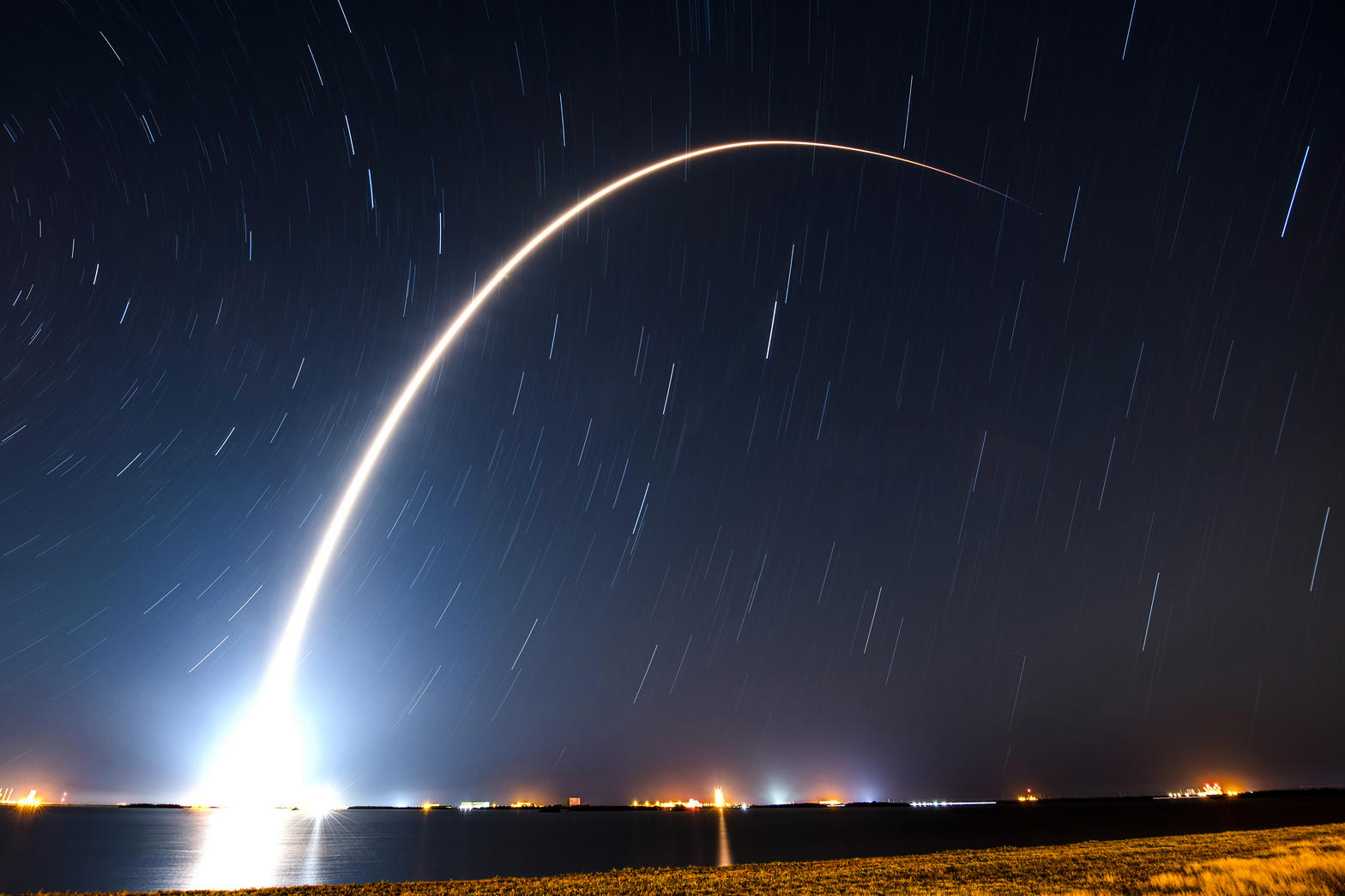
A SpaceX night launch. The company that once sold rides to orbit now sells compute, connectivity and a credible path to owning the rest of the Musk stack.
Elon Musk spent fifteen years telling anyone who asked that his companies were separate. In 2026 they stopped behaving that way. SpaceX listed on Nasdaq as $SPCX on 12 June, five months after it swallowed xAI. Tesla stopped pitching itself as a car company. Terafab, the semiconductor megafab announced in March and sited in Grimes County, Texas, in August, is a single factory that two separately listed public companies are paying for. Neuralink is putting electrode threads through the dura of living patients. The Boring Company just talked Clark County into permitting 123 Vegas Loop stations.
So the question about Elon Musk and his SpaceX plans is no longer whether these firms cooperate. They already do, in writing, with money attached. The question is which legal wrapper ends up owning the others, and in what order.
This piece argues the wrapper is SpaceX. Not because rockets are romantic. Because SpaceX now sits on the scarce layers of the artificial intelligence stack, and because the ownership arithmetic only closes in one direction. We then test that argument against the KXCO ontology at kxco.ai/ontology-live, a public sourced map of the AI sector, and report where the map agrees and where it does not. On one point it disagrees sharply, and we have left the disagreement in.
What are Elon Musk's SpaceX plans?
The short version, for anyone who wants the answer before the evidence.
SpaceX intends to become the largest independent supplier of artificial intelligence compute on Earth, and then above it. It has committed to build that compute exclusively on Nvidia silicon. It has told the market it is aiming at roughly 10 gigawatts of compute capacity by the end of 2027, against 1.4 gigawatts at the close of the second quarter, and it has floated 20 gigawatts of power and cooling to feed that. It has asked the U.S. Federal Communications Commission to authorise up to one million satellites for Starmind, a constellation of orbital data centres, and it is co-designing the payload with Nvidia. It rents the machines it already owns to the labs it competes with. And it does all of this under a founder who holds roughly 42 percent of the equity and roughly 82 percent of the vote.
Everything else in this article is the working behind those five sentences.
SpaceX after the IPO: a launch company selling intelligence
$SPCX closed Friday 28 August at $141.50, a little above the $135 listing price, for a market capitalisation near $1.9 trillion. The path there was violent. The stock opened near $150 on debut, tagged $225.64 on 16 June, slid to the $105 to $115 area in late July, then climbed almost 30 percent through August off the 1 August print. Mature aerospace names do not trade like that. Long duration AI names do.
The operating picture explains the volatility. Second quarter revenue as a public company came in at $7.8 billion, up 92 percent year on year, with the net loss narrowed to $541 million. Starlink has been disclosed at around 12 million subscribers, with connectivity revenue near $4.3 billion in the period. Government awards tied largely to Starshield sit above $6 billion on a multi-year basis. The line that changed the argument is AI compute, which came in around $2.6 billion for the quarter. Management has talked about a $100 billion annualised revenue run-rate by December 2026. Anthropic, Google and others are named in multi-year cloud contracts already running to tens of billions of dollars of contracted value.
xAI is not a sister startup any more. SpaceX acquired it on 2 February 2026 in an all-stock deal, at roughly $250 billion for xAI inside a combined private valuation near $1.25 trillion, after xAI's last standalone round at $230 billion. Grok travelled with it. So did the Colossus data centres and the X social network. Tesla's earlier investment in xAI converted into SpaceX equity when the merger closed. The corporate chart that used to need a whiteboard now has a parent.
Why SpaceX buys Tesla, and not the other way round
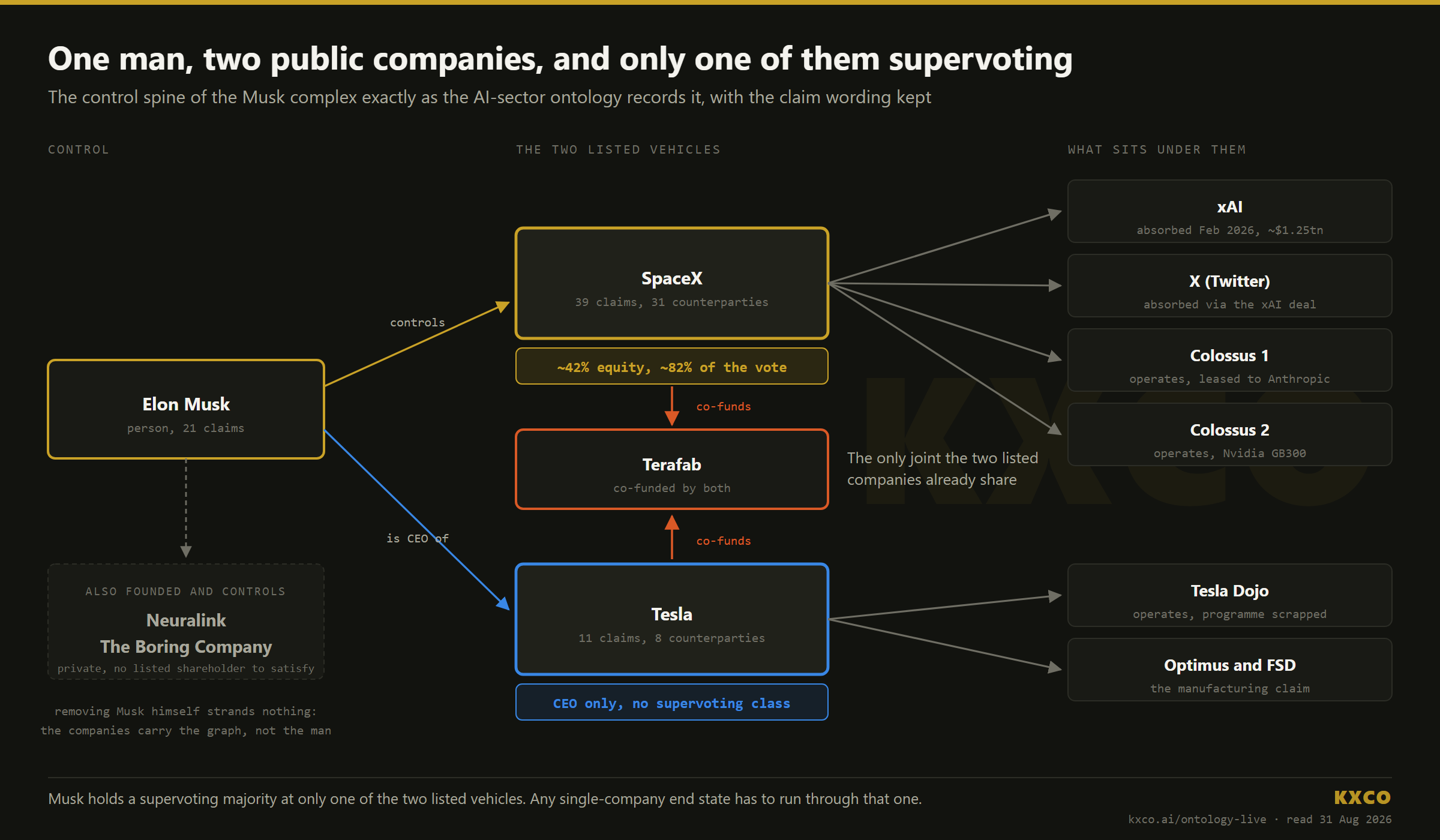
Figure 1. The control spine of the Musk complex as the KXCO AI-sector ontology records it. Read on 31 August 2026 against 392 entities and 866 typed claims.
The control argument is blunt and it is correct. The ontology records the SpaceX relationship as "controls, about 82 percent of the vote", sourced and dated to June 2026. It records the Tesla relationship as "is CEO of", sourced to the proxy filing. Those are two very different objects. One is a supervoting majority. The other is a job.
If the destination really is one company, SpaceX has to be the acquirer. Any structure that put Tesla on top would dilute Musk into a founder who can be outvoted on the thing he says he cares about next, which is orbital compute and an industrial base off the planet. A SpaceX-primary merger is not a marriage of equals. It is a control consolidation. Several commentators have made the same mechanical point since the listing: the freshly listed vehicle is the shell, and Tesla is the operating asset being absorbed. The New York Times reported in June that investors, analysts and at least one senior SpaceX executive had discussed a combination worth roughly $4 trillion.
The industrial argument is cleaner than the control one. The next decade at SpaceX is a manufacturing problem wearing the costume of a physics problem. Starmind satellites, Starlink V5 and V6, Starship cadence, Terafab modules, ground AI factories and the thermal hardware that has to survive launch all need a company that can design a factory as a product. Tesla spent fifteen years serving that apprenticeship. Gigafactory discipline, the unboxed process talk around Cybercab, the Optimus line going into Fremont, the Semi and Megapack ramps. Those are not automotive footnotes. They are the only proven mass-manufacturing culture anywhere in the Musk group. SpaceX can weld a stainless steel ship. It has never built a consumer-scale mechatronics line. That capability is what a SpaceX board would be buying, and the badge on the bonnet is not.
Who pays SpaceX, and who SpaceX pays
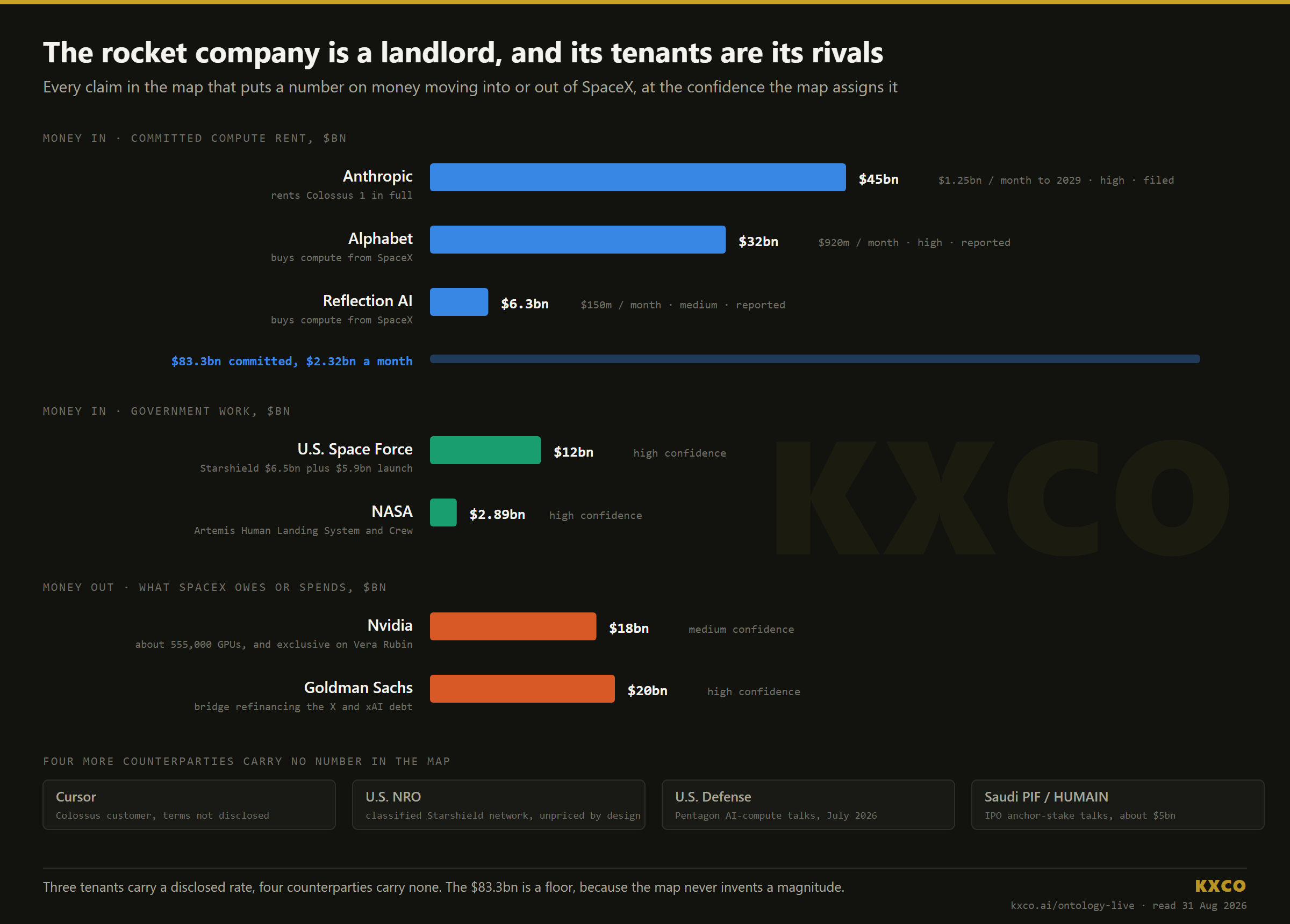
Figure 2. Every claim in the KXCO map that puts a number on money moving into or out of SpaceX, at the confidence grade the map assigns each one.
Here is the part that makes $SPCX an AI stock rather than a space stock. The ontology carries the rental book as typed, sourced claims, and the tenants are the competition.
Anthropic rents Colossus 1 in full at $1.25 billion a month, roughly $45 billion through to 2029, graded high confidence off a filed source. Alphabet buys compute at $920 million a month, roughly $32 billion, graded high. Reflection AI runs at $150 million a month, about $6.3 billion, graded medium. Cursor is recorded as a Colossus customer with no disclosed terms. Three disclosed rates come to $2.32 billion a month and about $83.3 billion committed, and that figure is a floor rather than an estimate, because four further counterparties carry no number in the map at all and the map does not invent one.
The government book sits alongside it. U.S. Space Force work is recorded at roughly $12 billion, split between Starshield and launch across five years. NASA carries $2.89 billion for the Artemis Human Landing System and Commercial Crew. The National Reconnaissance Office relationship is classified Starshield work and is therefore unpriced by design, not by omission. Pentagon talks on AI compute were reported in July.
Money flows the other way too, and it flows to one company. Nvidia is recorded as supplying about 555,000 GPUs for roughly $18 billion, and SpaceX committed on 4 August to build its AI compute exclusively on Nvidia's Vera Rubin platform going forward. Goldman Sachs arranged a bridge of about $20 billion that refinanced the old X and xAI debt down from 12.5 percent. That detail matters for anyone reading the IPO: the first tranche of listing proceeds repaid bankers before public money reached the business.
Alphabet appears on both sides of the same picture. It funds a rival lab, competes with that lab, and rents machines from a third party that competes with both. The map flags that as a cross-current rather than smoothing it out. $GOOGL, $NVDA, $MSFT and $ORCL all appear in this article for the same reason: none of them can be read in isolation any more.
Terafab is the joint that makes a merger thinkable
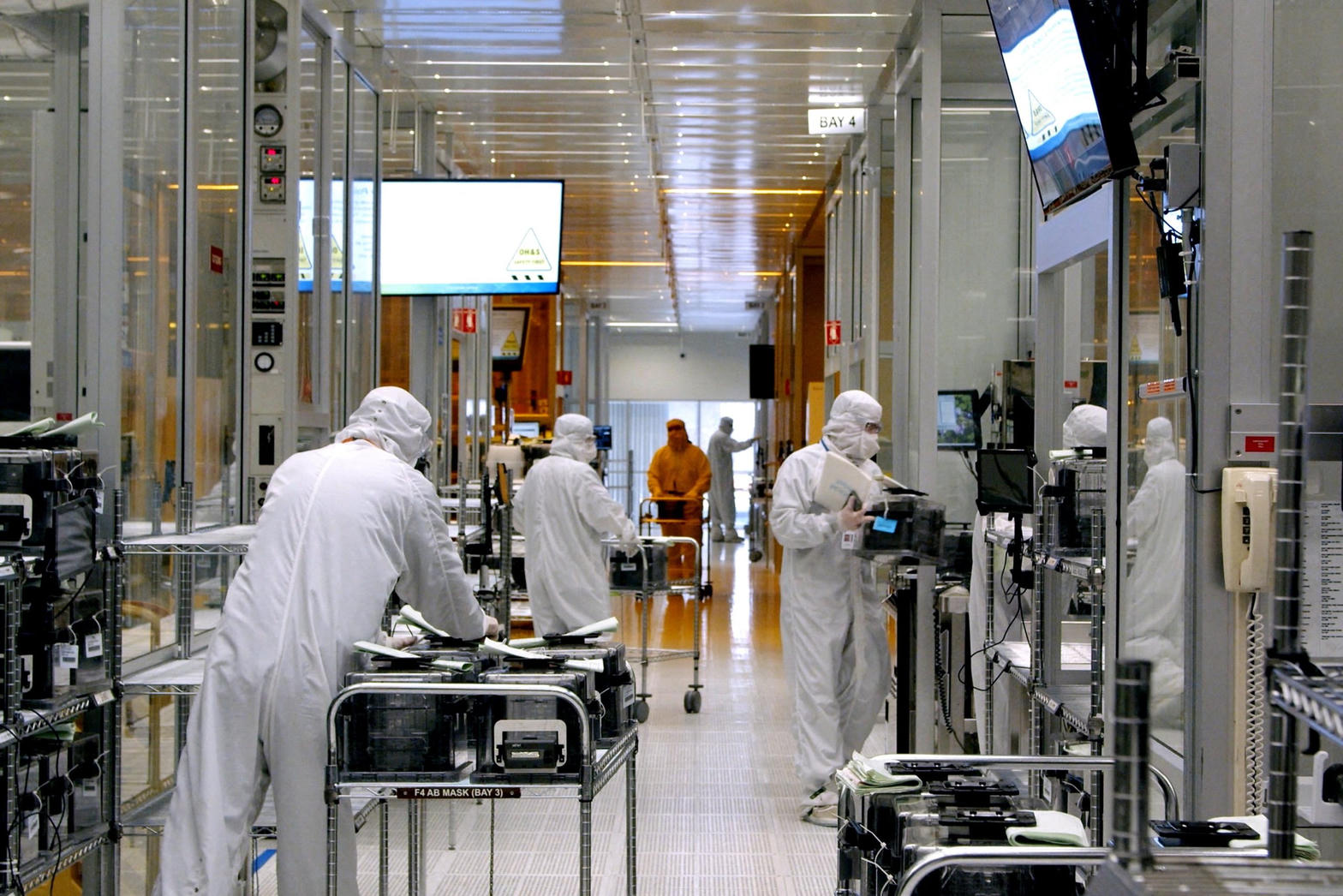
A working semiconductor clean room. Terafab's ambition is to put logic, memory, packaging and test under one Texas roof at a scale no merchant foundry currently offers Musk.
On 21 March 2026 Musk announced Terafab, a semiconductor fabrication complex jointly developed by Tesla, SpaceX and Intel and designed to produce more than one terawatt of AI compute capacity a year. A prototype effort sits near Gigafactory Texas in Austin. The full campus is in Grimes County, northwest of Houston, on land SpaceX controls. On 6 August the companies confirmed the site and an initial $16.8 billion phase. Texas put $30 million of Enterprise Fund money on the table and the county approved a 35-year abatement. First-phase employment is pegged at 3,000 jobs or more.
The capital numbers deserve care rather than a headline. Reporting from April described a $25 billion joint venture, and that is the figure the ontology carries with a Forbes source attached. County filings earlier in the year sketched $55 billion for a first major build and as much as $119 billion across all phases. The confirmed August number is $16.8 billion for phase one. Those are not contradictions so much as different scopes recorded at different dates, and the honest reading is a range between roughly $17 billion committed and $119 billion aspirational. Anyone quoting a single Terafab number without saying which one they mean is guessing.
The product mix is the tell. Roughly three quarters of planned output has been described as flowing to SpaceX, as high-power processors for orbital and terrestrial data centres, with the remaining quarter going to Tesla for Optimus and Cybercab inference silicon and the generations after AI4, AI5 and AI6 that $TSM and Samsung make today. That split is reported rather than filed, and it is not in the ontology, so treat it as directional. Intel is in the room because it wants foundry volume, and early phases have been described around Intel process technology. That does not make $INTC the strategic centre. It makes Intel a process partner while Musk tries to own the wafers.
Terafab is also the answer to anyone still describing Tesla and SpaceX as arm's-length cousins. The ontology records both companies as co-funding the same fab. They also share a software collaboration branded Macrohard, battery and vehicle sales running into the hundreds of millions of dollars, and a converted Tesla-into-SpaceX equity stub from the xAI deal. SpaceX's own listing documents warned that acquisitions and partnerships "may present significant challenges". That is lawyer language for something specific.
Tesla is the factory, and the AI map barely notices
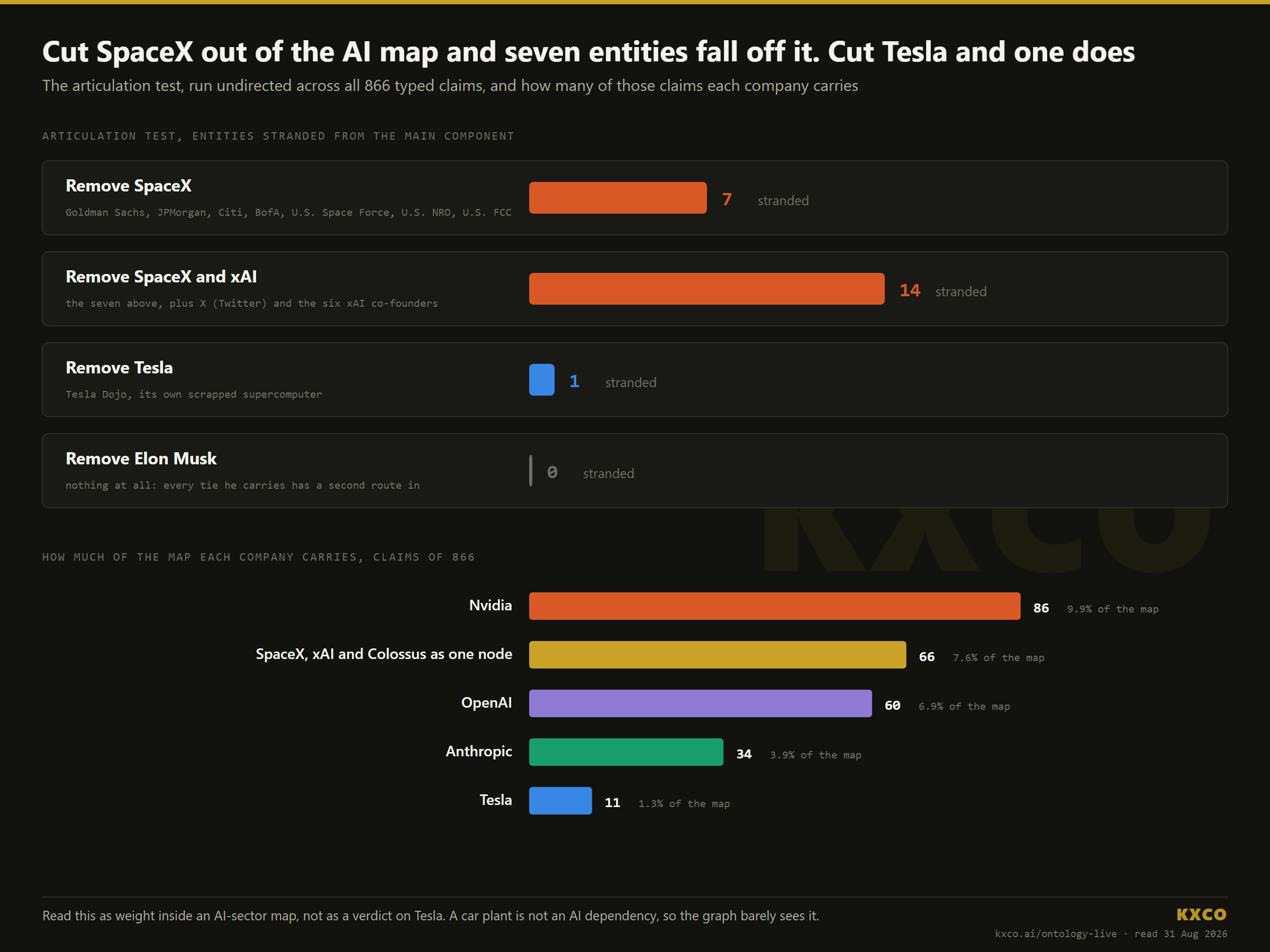
Figure 3. The articulation test, run undirected across all 866 typed claims in the KXCO AI-sector map.
Now the disagreement, and it is the most useful thing in this article.
Run an articulation test on the graph. Delete one node, re-flood the network from Nvidia, and count what can no longer be reached. Delete SpaceX and seven entities fall off the map: Goldman Sachs, JPMorgan, Citi, BofA, the U.S. Space Force, the National Reconnaissance Office and the FCC. Four banks and three arms of the American state lose their only route into the AI sector. Morgan Stanley survives the same cut, because it has a second way in. Delete SpaceX and xAI together and the count rises to fourteen, taking X and six xAI co-founders with it.
Delete Tesla and exactly one entity falls off: Tesla Dojo, its own cancelled supercomputer project.
By claim count the gap is just as wide. Nvidia carries 86 of the 866 claims. SpaceX, xAI and the two Colossus facilities read as a single node carry 66, which puts the merged entity second in the whole sector ahead of OpenAI at 60. Tesla carries 11. That is 1.3 percent of the map.
Read that correctly. It is a statement about an AI-sector ontology, not a verdict on Tesla. A stamping plant is not an AI dependency, so a graph built by following AI dependencies outward will barely see one. But it does put a hard limit on the merger case: you cannot argue Tesla into SpaceX on the strength of this map, because on this map Tesla is thin. The manufacturing argument has to be made on manufacturing evidence, which is exactly where it belongs.
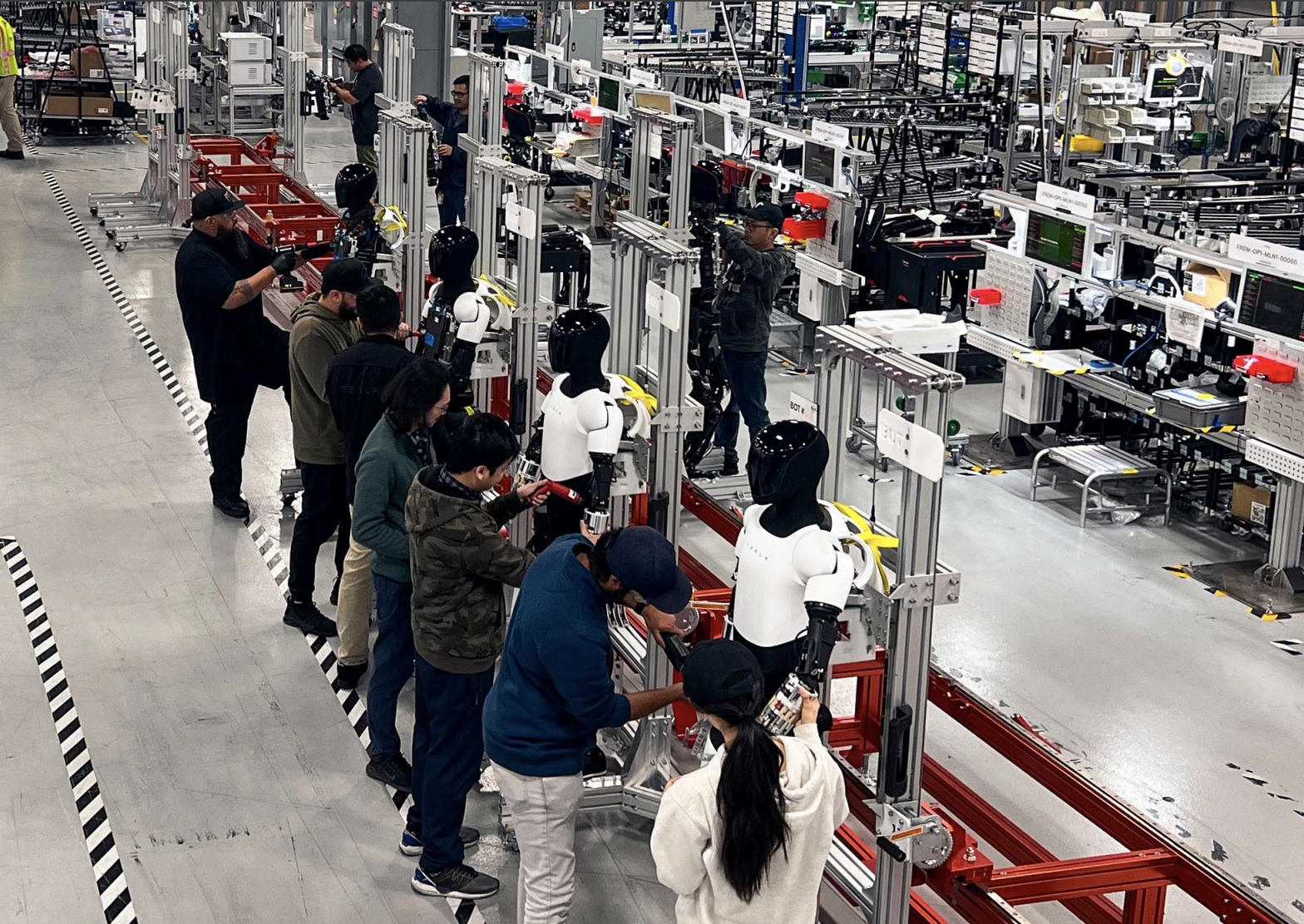
Optimus units on a Fremont pilot line. Musk has called the humanoid the hardest product Tesla has ever tried to scale, which is precisely why SpaceX would want the factory culture rather than the brand.
So what is that evidence? $TSLA closed Friday at $348.75, down 1.71 percent, for a market capitalisation near $1.37 trillion, against a 52-week range of $297.38 to $498.83. The market is no longer paying Tesla as though cars were the whole story, and it is not yet paying Tesla as though Optimus and Cybercab were proven. That gap is the acquisition opening.
Robotaxi now runs from 6am to 10pm across live markets that have included Austin, Dallas, Houston, Miami, Orlando and Tampa. Unsupervised miles are compounding at a double-digit weekly rate from a base above 380,000 miles with no notable incidents in the disclosed tally. FSD v15 is described internally as a step change, and roughly 40 percent of its planned improvements were already running in the Austin fleet when JPMorgan toured Fremont. Paid FSD customers have been cited near 1.5 million worldwide, with about 55 percent of North American second-quarter deliveries carrying an active subscription. Cybercab production has started and a launch event is set for 3 September in Austin.
Optimus is the harder object. Musk told the second-quarter call it is the most difficult product Tesla has ever tried to scale, with roughly 10,000 unique parts and a supply chain that had to be invented rather than borrowed from the car line. Limited Gen 3 production is starting on the old Model S and X line at Fremont. External sales have been sketched as early as the second half of 2027. Long-run capacity talk runs to a million units a year in Fremont and ten million in Texas for a later generation. Those dates will slip. The manufacturing claim will not.
The products are already merging faster than the cap tables. Starlink V5 is being integrated into Cybercab. Grok is in the car, and the ontology records the reverse flow as well: every FSD interaction trains Grok. A merger would not create that integration. It would recognise it, and delete the related-party tax that public company lawyers currently have to write around.
Neuralink is the interface, and it comes second
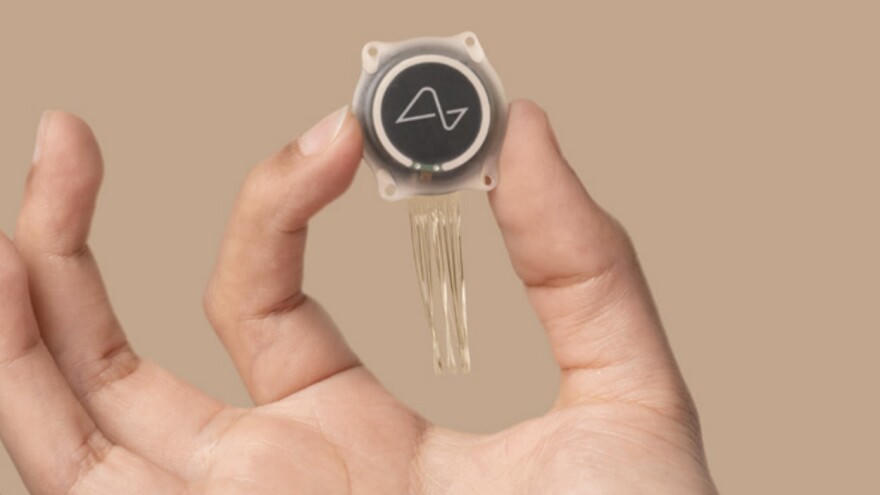
The N1 implant. The near mission is restoring cursor control and speech. The far mission, in Musk's own framing, is a high-bandwidth link between human cortex and machine intelligence.
Neuralink is still clinical-stage, but it is no longer a three-patient anecdote. The company's own January update put 21 participants in trials worldwide. Later Canadian and surgical disclosures pushed the case count higher: a Vancouver police sergeant with ALS became the first Canadian ALS patient to receive the implant at Toronto Western, described as the 26th person worldwide. The UK GB-PRIME study at UCLH enrolled seven patients between October and December 2025. Trials now run in the United States, Canada, the United Kingdom and the UAE. The programme board carries PRIME for motor control, CONVOY for robotic arm control, VOICE for speech restoration targeting conversational rates near 140 words per minute, and Blindsight for vision, which has carried FDA breakthrough-device language.
The milestone that matters for scale is the first implantation through an intact dura. The R1 robot inserted threads through the brain's outer membrane without the traditional durectomy, with insertion times on the order of 1.5 seconds, and participants have controlled a cursor within an hour of surgery. That is how a heroic operation becomes a procedure a hospital system can repeat. Musk has talked about large-scale production and a nearly automated surgical process during 2026. Discount those dates the way you discount every Musk production date. Do not discount the direction.
Why would SpaceX buy Neuralink after Tesla rather than before? Sequencing. Tesla is the factory that Terafab and Optimus already need. Neuralink only becomes strategic once there is a model worth putting behind a skull and a robot worth driving with intent rather than a joystick. Translate the manifesto into a cap table and it reads simply enough: if Grok-class models and Optimus-class bodies are going to live alongside people, the company that owns the model and the body will eventually want the socket.
The regulatory order of operations points the same way. Absorbing a listed car and robot company is a securities and antitrust problem. Absorbing a device company still running FDA-grade trials is a medical device and human-subjects problem. Attempting both in the same quarter is a reliable way to close neither. The ontology, for its part, is careful here. It records Neuralink as founded and controlled by Musk, and it records three named rivals: Synchron, Paradromics and Meta's non-invasive Neural Band. Remove Neuralink and only two entities strand, both of them competitors. This is a real company with a thin footprint, and pretending otherwise helps nobody.
The Boring Company is the plumbing, not the prize
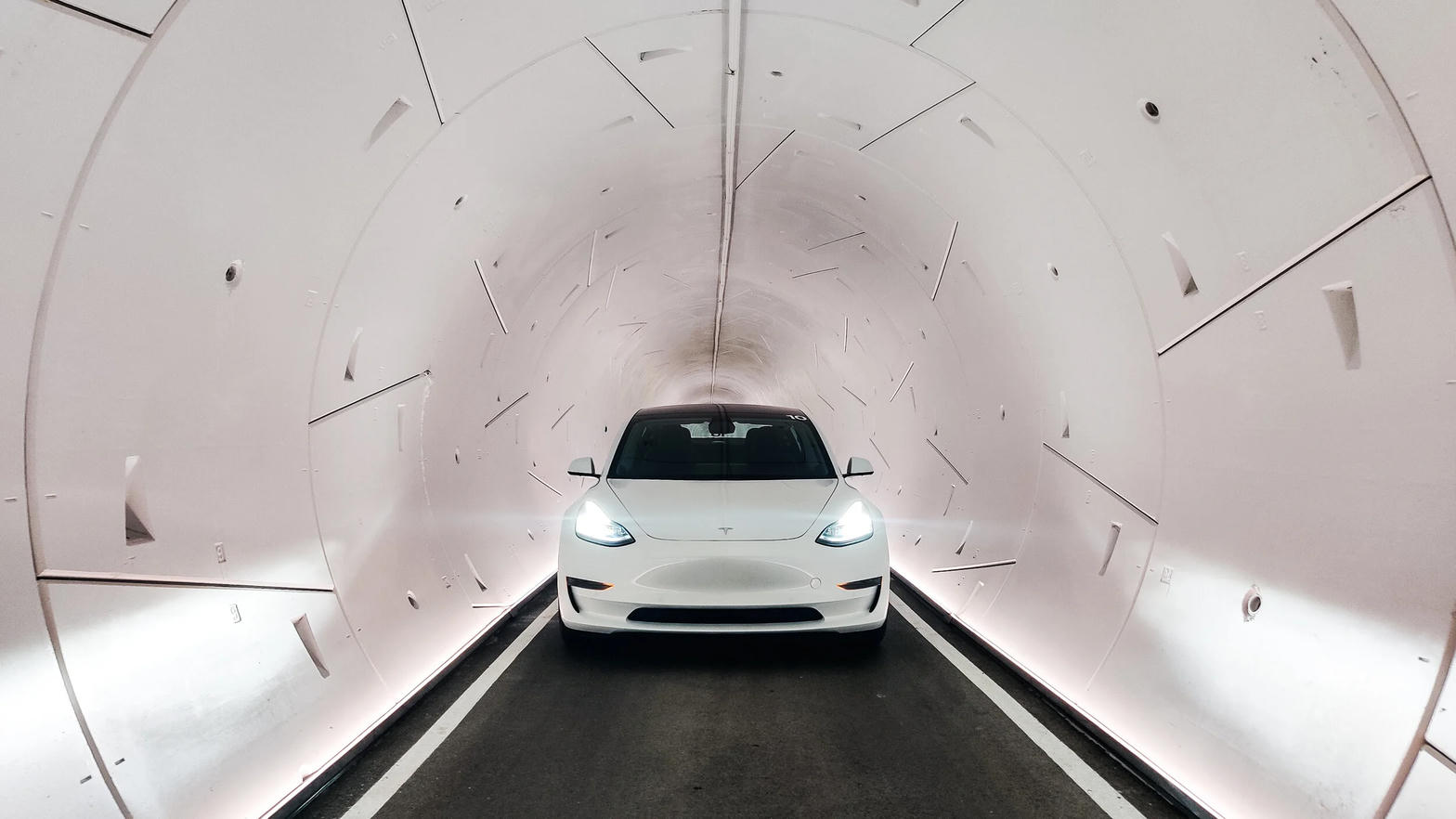
A Tesla in a Vegas Loop tunnel. The Boring Company is already a Tesla fleet customer and a civil-works version of the point-to-point logic Cybercab is meant to run above ground.
Clark County this month entitled 19 more Vegas Loop stations, taking the permitted total to 123 against a described build-out of 68 miles of tunnel. Operating stations include the Las Vegas Convention Center cluster, Fontainebleau, Sahara, Westgate and airport-adjacent stops, with the airport tunnel itself still completing, which is why some current airport rides still run on surface streets. Tickets sit in a $6 to $12 band. The Las Vegas Convention and Visitors Authority approved $25 million over five years to help run the convention-centre system. Crews are pushing a two-mile dual tunnel toward a Paradise Road station aimed at the November Grand Prix. Nashville has been cited as a second city.
Boring does not need to be acquired for any of this to work. It is already a captive customer for Tesla vehicles and a rehearsal for the underground logistics a city-scale robotaxi network will want when the surface clogs. If SpaceX and Tesla become one company, Boring is a tuck-in that keeps the tunnels, the boring machine intellectual property and the municipal relationships inside one indemnity structure. It is not the prize. It is the plumbing.
What Shayne Heffernan has written on SpaceX and the AI sector
The structural reading behind this article is not ours alone. Shayne Heffernan published "SpaceX the AI Company" on 25 August at shayneheffernan.com, arguing that once you read SpaceX against the shape of the AI sector it stops being a launch business. Anthropic rents an entire 220,000-GPU facility from it. Alphabet pays on the order of $920 million a month. Remove SpaceX from the record, he wrote, and several major banks and multiple arms of the American state disconnect from AI entirely.
That last claim is unusual, because it is falsifiable, and we tested it. The articulation test above is the test. It returns seven stranded entities: four banks and three government bodies. Heffernan's assertion survives contact with the graph. It is also worth noting what the test does not support, which is any equivalent claim about Tesla.
Two companion pieces sit on the same homepage. "A Linear Look at AI: Power, Compute, Intelligence" argues that AI is not weather but the last station on a production line that starts at a turbine. "What's Next in AI and Quantum", published 24 August, makes electricity the binding constraint on both revolutions. Put together, the three give you the frame this article uses: SpaceX is already an AI company, Tesla is a station on the power-compute-intelligence line, and Neuralink is how the final station, a human mind, gets wired in without pretending a chatbot is a person. His Live Trading News archive is at livetradingnews.com/author/shayne-heffernan-phd.
Read it on the ontology, not on a mood board
Fan charts of "Elon Inc." are cheap. Dependency graphs are not. The KXCO ontology at kxco.ai/ontology-live is a public, sourced map of the AI sector, standing at 392 entities and 866 typed claims when it was read for this article on 31 August 2026, with ranked findings and consensus fields on the listed majors. It was grown by following dependencies outward, which is why $ASML, a Dutch lithography vendor, keeps surfacing at convergence points rather than the loudest ticker. Every claim carries a source URL, a validity window and a confidence grade, and the grades are visible rather than buried.
Use it the way a desk would. Open the live view. Load SpaceX, Tesla, Nvidia, TSMC, Intel, ASML, Anthropic and Alphabet. Display the shared upstream nodes. Read the findings pane before the pretty network. Then click any claim that would size a position and keep clicking until the source URL and the validity window are on screen. The working guide is at kxco.ai/developers/blog/ontology-live-guide. The argument that ontology rather than another model is the missing layer in agentic systems is at kxco.ai/developers/blog/ontology-missing-layer-agentic-ai.
Two things the map records that a mood board would not. First, all eleven xAI co-founders have now departed, between 2023 and 2026, which is without precedent among the frontier labs and sits awkwardly beside a 10 gigawatt ambition. Second, President Trump disclosed buying between $15,001 and $50,000 of SpaceX stock on 23 June, eleven days after the listing, on a filing signed in August. The map records the holding and the counterparty and explicitly declines to record a motive, while noting that SpaceX carries roughly $12 billion of Space Force work, a classified NRO programme and Pentagon AI-compute talks. That is what a disciplined map looks like: it tells you the fact and refuses to tell you the story.
Frequently asked questions
Is SpaceX going to buy Tesla? Nothing has been announced and no bid exists. SpaceX is the larger vehicle with the tighter founder control, so if a combination happens the mechanical direction is SpaceX paper for Tesla paper. The New York Times reported in June that a roughly $4 trillion combination had been discussed internally.
Why would SpaceX be the acquirer rather than Tesla? Musk holds roughly 82 percent of the vote at SpaceX and no equivalent supervoting class at Tesla. A Tesla-led structure would dilute his control over orbital compute, which is the thing he has said matters most to him next.
What is Terafab? A semiconductor fabrication complex in Grimes County, Texas, jointly developed by Tesla, SpaceX and Intel, confirmed in August with an initial $16.8 billion phase and described in earlier county filings at up to $119 billion across all phases.
What is Starmind? SpaceX's planned constellation of orbital AI data centres. The company has asked the FCC to authorise up to one million satellites and is co-designing the compute payload with Nvidia.
Where can I check these claims? The KXCO AI-sector ontology at kxco.ai/ontology-live carries each one as a typed claim with a source URL, a date and a confidence grade.
What to watch next
Date or window | Event | Why it matters |
|---|---|---|
3 Sep 2026 | Tesla Cybercab launch event, Austin | Tests whether the vehicle SpaceX would be buying is a product or a prototype |
Q4 2026 | Terafab site work and Intel process milestones | The joint that makes a merger industrially respectable |
H2 2027 | Optimus external sales and Tesla guidance | Proof the factory SpaceX wants can print robots as well as cars |
2026 to 2027 | Neuralink VOICE and Blindsight readouts | The interface thesis either gets clinical data or stays a keynote |
Ongoing | $SPCX AI revenue against the $100bn run-rate talk | Whether the acquirer is an AI cash engine or a story stock |
Any 13D or S-4 | SpaceX and Tesla paper | The day the thesis stops being analysis |
What would falsify all of this
Plenty. Boards say no. Regulators stall. Founders change their minds. Optimus slips, as it has before. Terafab becomes a very expensive warehouse if Intel's process misses. Neuralink threads retract, as early cases already hinted they can. Antitrust review, CFIUS theatre and the optics of one man running a $3 to $4 trillion entity are all real obstacles, and none of them has been tested yet.
The claim here is narrower than a prediction. It is that the industrial logic now points one way. SpaceX as parent. Tesla as the manufacturing organ. Neuralink as the later cortical interface. Boring as plumbing. Terafab as the shared heart. Whether the dependencies deepen or decay is a question the ontology will answer in public, month by month, and it will answer it with sources attached.
Until a filing lands, trade these companies as what they are this week. SpaceX is a $1.9 trillion AI and connectivity business with a rocket attached. Tesla is a $1.37 trillion manufacturing and inference business with a car attached. Neuralink is a clinic. The Boring Company is a municipal contractor with a famous founder. The future in which those four sentences collapse into one ticker is visible from here. It is not priced as a certainty, and that is the point of writing it down.
Stocks mentioned in this article: $SPCX, $TSLA, $NVDA, $INTC, $GOOGL, $MSFT, $TSM, $ASML, $ORCL, $META, $AMD, $MU and $SMCI.
Shayne Heffernan, Ph.D., is the founder of Live Trading News, the KnightsBridge Group, Knightsbridge Law and the KXCO.ai ecosystem spanning post-quantum cryptography, identity, attestation and enterprise ontology.
Disclaimer. Analysis for Live Trading News readers, 31 August 2026. This is not personalised investment advice, a solicitation, or a statement that any transaction will occur. Prices are as of the 28 August cash close where quoted. Neuralink devices remain investigational. Graph figures were read from the KXCO AI-sector ontology on 31 August 2026 at 392 entities and 866 typed claims.
SpaceX: The Road to 10 Gigawatts
SpaceX did not add an AI business. A company whose processes run on compute built its own computing plant, then built the power to run it. The 10-Q reports 1.4 gigawatts of nameplate compute at 30 June 2026, four leases worth about $41 billion a year and $100 billion of cash. The target is closer to 10 gigawatts than 5 by the end of 2027. This piece sets out the build sequence, the four layers of power in Memphis, and why Terafab is the act after 2027, not the road to it.
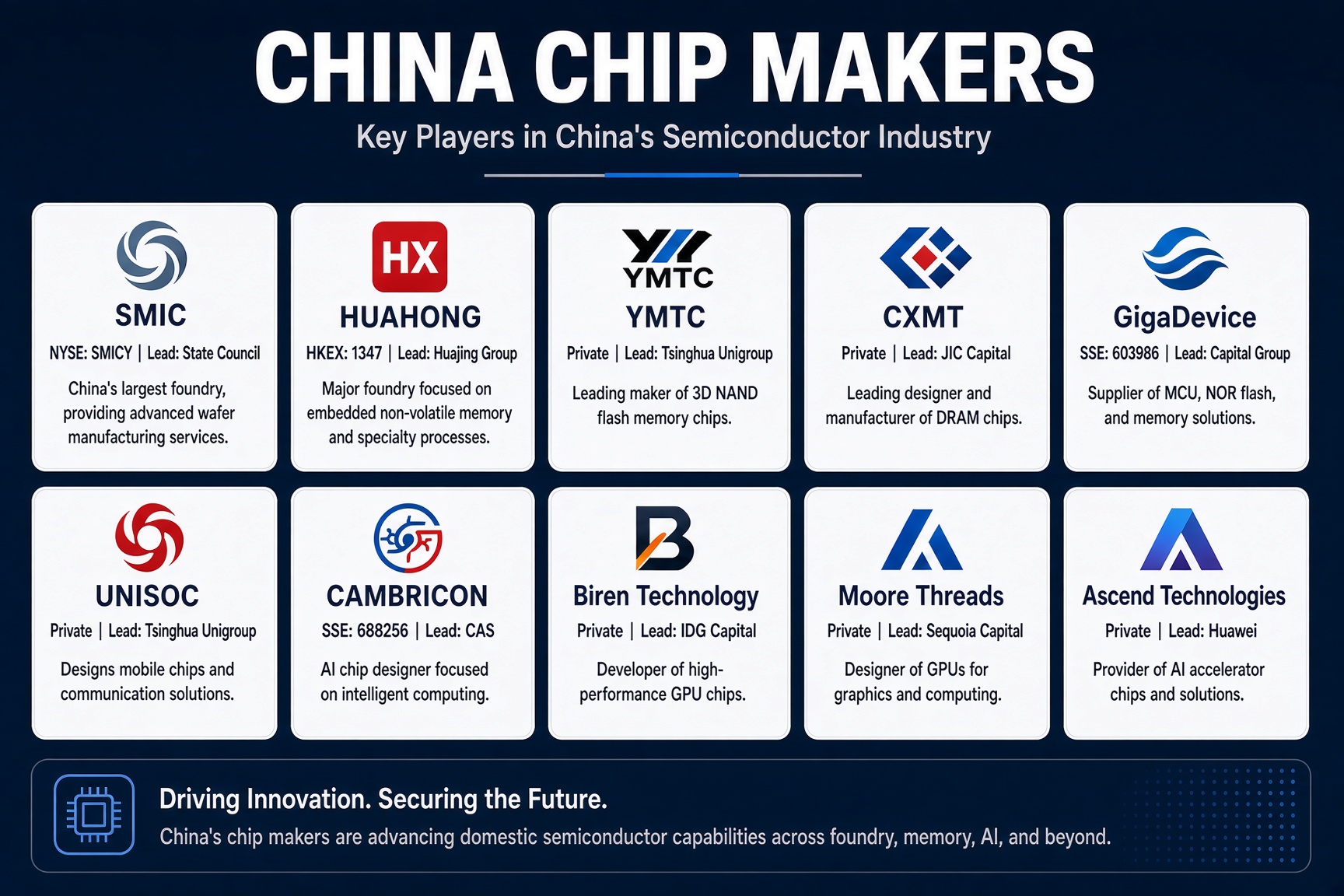
The China Chip Shock
On 10 October CXMT said it will ship DDR5 server modules on a 4F2 cell by year-end. Micron, SK Hynix, Samsung and Sandisk sold off for two sessions and Elon Musk said China scales faster than the rest of the world combined. This piece sets out China's memory makers, foundries, AI chip designers and toolmakers, with two knowledge graphs drawn from the KXCO AI Sector Ontology, and says what the sell-off prices and what it does not.
China's Coordinated Push in AI, Quantum Computing and Blockchain
On 9 October 2026 Beijing called for a nationally integrated computing-power network and a national blockchain network. DeepSeek is scaling on Huawei Ascend chips, China's intelligent computing reached 2,185 EFLOPS by June, per the industry ministry, and quantum communications remain a strength. This analysis explains the strategy and sets out the Hong Kong and US listed companies with exposure, from Tencent and Alibaba to China Mobile, HashKey and Nvidia.
Week Ahead on Wall Street: CPI, Banks and Oil
September CPI lands on Wednesday after a Fed hike and a 10-year yield at its highest since 2002. JPMorgan, Goldman and Citi open bank earnings on Tuesday, ASML and TSMC report midweek, and Saudi pipeline attacks kept Brent at $104.72 on 9 October 2026, per CNBC. The KXCO AI Sector Ontology still shows contracted demand. This week ahead sets out the calendar, the three facts that would change the call, and why dips in the AI leaders remain buying opportunities.
Every story, signed and delivered.
Subscribe to the kxco channel and get the headline, the AI-written key takeaways, and the chain-anchor link the moment we publish. Audio versions and per-ticker subscriptions arrive in the next iteration.