
The Quantum Frontier Stocks
IonQ, Rigetti, D-Wave, Quantinuum and QUBT mapped against IBM, Google, Microsoft and Nvidia, plus what is actually listed in China, Europe and Japan. Shayne Heffernan on the costs, the rollout timeline, and the one deadline that is already law.
Part of theStocks Center
The transition from classical to quantum computing is the most profound shift in information processing since the silicon microchip. Classical computers move information as bits, ones and zeros. Quantum computers use qubits, which exploit superposition and entanglement to hold and manipulate a state space that grows exponentially with the number of qubits. For markets, that physics has produced something new: a small, violent, fiercely argued asset class of listed quantum computing stocks.
In the last twelve months that asset class stopped being purely speculative. IonQ booked $80.1 million of revenue in a single quarter. Quantinuum listed on Nasdaq in the largest quantum IPO ever seen. D-Wave bought a gate-model company outright. Google published a quantum result that another quantum machine can check. None of that means quantum computing is ready to replace a data centre. It does mean the sector now has income statements worth reading rather than press releases worth ignoring.
This is a map of the whole listed landscape, in the United States, China, Europe and Japan, with the costs that define it, the timeline for institutional adoption, and the part of the story that is already affecting balance sheets today.
Where the technology actually stands in August 2026
The industry is still in what physicists call the Noisy Intermediate-Scale Quantum era, or NISQ. Machines carry tens to a few thousand physical qubits, and every one of them leaks. Environmental interference causes decoherence, the loss of the fragile quantum state, and calculations return errors often enough that most interesting algorithms cannot be trusted to finish correctly.
The wall between here and useful machines is error correction. To get one reliable logical qubit, current architectures spend hundreds or thousands of physical qubits checking each other. That ratio is the whole ballgame, and it is the reason a 1,000-qubit press release and a 1,000-logical-qubit machine are separated by a decade of engineering.
Three things moved in the last two years, and investors should know all three.
Google demonstrated error correction below the critical threshold on its Willow chip, meaning that adding more physical qubits made the logical qubit better rather than worse. Then in October 2025 Google announced Quantum Echoes, an out-of-time-order correlator algorithm it says ran roughly 13,000 times faster than the best known classical method on one of the world's fastest supercomputers. The important word is not faster, it is verifiable. Earlier quantum advantage claims produced answers nobody could independently confirm. This one can be checked against another quantum system.
IBM published the clearest engineering path in the industry and is executing against it. Nighthawk, announced in November 2025, carries 120 qubits and 218 tunable couplers, and IBM has targeted quantum advantage from it by the end of 2026. Loon is the experimental chip that puts every component needed for fault tolerance onto one device. Kookaburra follows in 2026 as the first fault-tolerant module, Cockatoo entangles modules in 2027, and Starling in 2029 is meant to run 100 million gates across 200 logical qubits. The quiet breakthrough underneath all of it is IBM's move from surface codes to quantum LDPC codes, which the company says cuts the physical qubit overhead by up to 90 per cent.
Quantinuum's Helios system reports 98 physical qubits producing 48 logical qubits with 99.921 per cent two-qubit gate fidelity. That ratio, roughly two to one, is the best in the industry by a wide margin and is the single strongest argument for trapped ions over superconducting circuits.
The cost problem, which is the real story of these equities
Quantum computing is not a software business. It is heavy industry conducted at temperatures colder than deep space.
Superconducting machines, the architecture chosen by IBM, Google and Rigetti, run at roughly 15 millikelvin. That requires bespoke dilution refrigerators costing millions of dollars each, plus cryogenic wiring, ultra-high vacuum, precision microwave pulse generation, and a substantial classical computer whose only job is to control the qubits. Trapped-ion machines from IonQ and Quantinuum avoid the extreme cold but need highly calibrated laser systems to address individual atoms, along with their own vacuum engineering. Neither path is cheap and neither scales the way software scales.
For the listed pure-plays this shows up as sustained operating losses funded by issuing shares. Investors in this sector are not buying earnings. They are buying time on the clock, and the amount of time each company has bought is measurable.
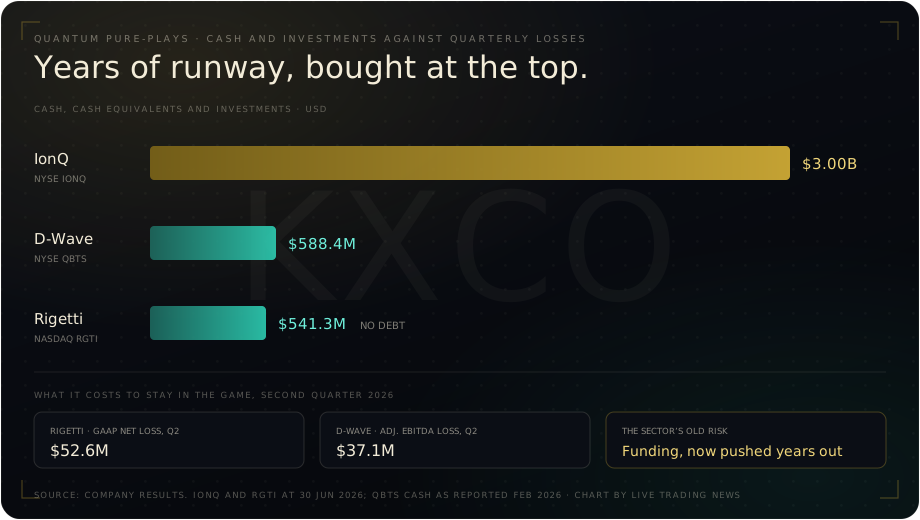
The 2025 and 2026 equity rally solved the funding problem for the top tier. IonQ ended the second quarter with $3.0 billion in cash and investments. Rigetti holds $541.3 million with no debt. D-Wave reported $588.4 million earlier in the year. These companies raised into strength, and the result is that the sector's biggest historical risk, running out of money before the physics arrives, has been pushed several years down the road for the leaders. It has not been solved for anyone further down the list.
The United States: the deepest listed market
IonQ, NYSE IONQ
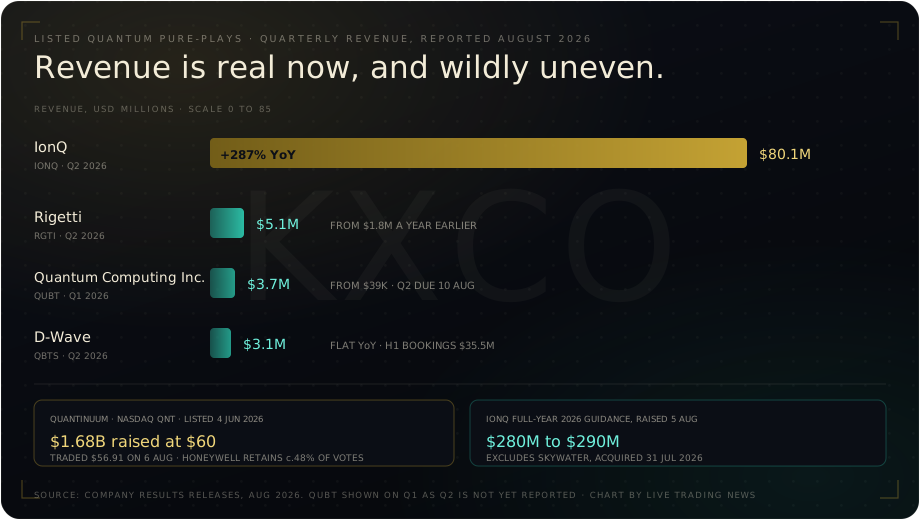
IonQ is the most closely watched pure-play, and it is no longer a pre-revenue story. Second quarter 2026 revenue was $80.1 million, up 287 per cent year on year, and the company raised full-year guidance to a range of $280 million to $290 million. Remaining performance obligations, which is contracted work not yet recognised, rose 297 per cent. Commercial customers were about 60 per cent of the quarter and international customers about half.
IonQ runs trapped ions, which give it better gate fidelity and full connectivity between qubits compared with superconducting rivals, and its systems are available through Amazon Braket, Microsoft Azure and Google Cloud. It bought Oxford Ionics in 2025 for $1.075 billion to get ion traps manufactured on standard semiconductor chips, and on 31 July 2026 it completed the acquisition of SkyWater Technology, the largest exclusively United States-based semiconductor foundry.
That last deal is the one to think about. IonQ has stopped being a quantum computer company and started being a vertically integrated manufacturer that also sells quantum computers. It is a defensible strategy and an expensive one, and it means IonQ's numbers now blend a real foundry business with a frontier research business. Investors should expect the reported revenue mix to get harder to read, not easier.
Rigetti Computing, Nasdaq RGTI
Rigetti is full-stack superconducting: it designs its chips, fabricates them, and runs the cloud that serves them. Its answer to the problem of building one enormous monolithic chip is modularity. The Cepheus-1-108Q, generally available since May 2026, assembles 108 qubits from twelve interconnected nine-qubit chiplets, with median two-qubit gate fidelity around 99.1 per cent. The stated target is roughly 1,000 qubits at about 99.9 per cent fidelity over a three-year horizon.
Second quarter revenue was $5.1 million against $1.8 million a year earlier, with a GAAP net loss of $52.6 million and $541.3 million of cash and investments against no debt. Rigetti also disclosed a Department of Commerce letter of intent for up to $100 million in potential CHIPS Act funding.
The honest read on Rigetti is that the technology is credible and the commercial scale is not there yet. It is competing in superconducting hardware against IBM and Google, both of which can outspend it without noticing, and the revenue line shows it. The chiplet architecture is a genuinely clever way to sidestep a manufacturing wall, and government and supercomputing-centre deployments are the near-term business.
D-Wave Quantum, NYSE QBTS
D-Wave built its business on quantum annealing, which is not a general-purpose gate-model computer. Annealers are specialised hardware for optimisation and probabilistic sampling problems. That specialisation let D-Wave commercialise years before anyone else, and it works with about two dozen Forbes Global 2000 companies including AT&T, Nasdaq Verafin and Unisys. It also drew a long-running academic argument about whether annealing delivers a true quantum advantage over good classical heuristics.
The company has now answered its critics by buying its way into the other camp. On 20 January 2026 D-Wave completed the acquisition of Quantum Circuits, Inc., which brings dual-rail qubits designed to simplify error correction, and it expects to sell superconducting gate-model systems during 2026.
The second quarter, reported on 6 August 2026, shows exactly how lumpy this business is. Revenue was $3.1 million, essentially flat year on year, while first-half bookings reached $35.5 million, more than eleven times the prior year, and remaining performance obligations hit $40.7 million against $5.3 million a year earlier. Adjusted EBITDA loss widened 85 per cent to $37.1 million. Systems sales are recognised over time, so the bookings and the revenue line will keep telling different stories for several quarters. Read the bookings.
Quantinuum, Nasdaq QNT
The biggest change to this sector in 2026 is not a technical milestone. It is that the best hardware in the industry became investable.
Quantinuum, formed by Honeywell in 2021 from the merger of Cambridge Quantum Computing and Honeywell Quantum Solutions, priced its IPO at $60 per share on 3 June 2026 and began trading on 4 June, raising $1.68 billion. Honeywell retains roughly 48.1 per cent of voting power, which means Honeywell itself, NYSE HON, is now an indirect quantum play for investors who want the exposure inside a profitable industrial.
The stock opened at $68, touched $71.35 on day one, fell below its issue price to $52.29 by late July, and traded around $56.91 on 6 August. That round trip in eight weeks is a fair summary of how the market feels about quantum: enormous enthusiasm, no agreed valuation method.
On the technology, Quantinuum's Helios numbers are the strongest publicly reported in the industry. Anyone building a basket in this sector needs a view on QNT, because it is the highest-quality hardware in the group and the newest, thinnest trading history.
Quantum Computing Inc., Nasdaq QUBT
QUBT pursues photonics rather than cryogenics, selling application-specific machines such as its entropy quantum computing system aimed at optimisation, machine learning and sensing, alongside a thin-film lithium niobate chip foundry in Tempe, Arizona. Photonics is attractive because it works at or near room temperature, which in principle removes the single largest capital cost in the industry.
First quarter 2026 revenue was $3.7 million against $39,000 a year earlier. That is a real jump off a base of essentially nothing, and second quarter results are due on 10 August 2026. This remains the highest-risk name of the group, moves hardest on press releases, and deserves the smallest position of anything discussed here.
The mega-caps, where the institutional money actually sits
For most institutional investors, the sane exposure to quantum computing is inside companies that will survive being wrong about it.
IBM, NYSE IBM, is the hardware leader in superconducting and is treating quantum as an infrastructural pivot on the scale of its mainframe bet. The roadmap through Starling in 2029 is the most specific commitment any large company has made, and IBM sells quantum as cloud and services revenue rather than as hardware.
Microsoft, Nasdaq MSFT, is running two strategies at once. Azure Quantum is the neutral marketplace, reselling access to IonQ, Rigetti and others and supplying the software layer including the Q# language. Separately, Microsoft has not abandoned its own hardware: it unveiled the Majorana 1 topological processor in February 2025, with eight topological qubits on a chip architecture designed to scale to a million, and it is part of the DARPA programme aimed at a fault-tolerant prototype. Topological qubits are the highest-risk and highest-reward approach in the field, the underlying physics claims remain contested by parts of the research community, and Microsoft shareholders are paying almost nothing for the option.
Alphabet, Nasdaq GOOGL, has the deepest integration of quantum with classical AI infrastructure, and the Willow and Quantum Echoes results give it the strongest scientific claim of any listed company.
Nvidia, Nasdaq NVDA, belongs on this list even though it does not build qubits. In October 2025 it introduced NVQLink, an architecture for coupling GPUs directly to quantum processors, with 17 quantum hardware builders and nine national laboratories involved, delivering 400 Gb/s throughput at under four microseconds of latency. The API went generally available at GTC 2026. Error correction is a real-time classical computing problem, and Nvidia has positioned itself to sell the classical half of every quantum computer built. It is the closest thing this sector has to a picks and shovels trade.
China: what is actually listed, and what is not
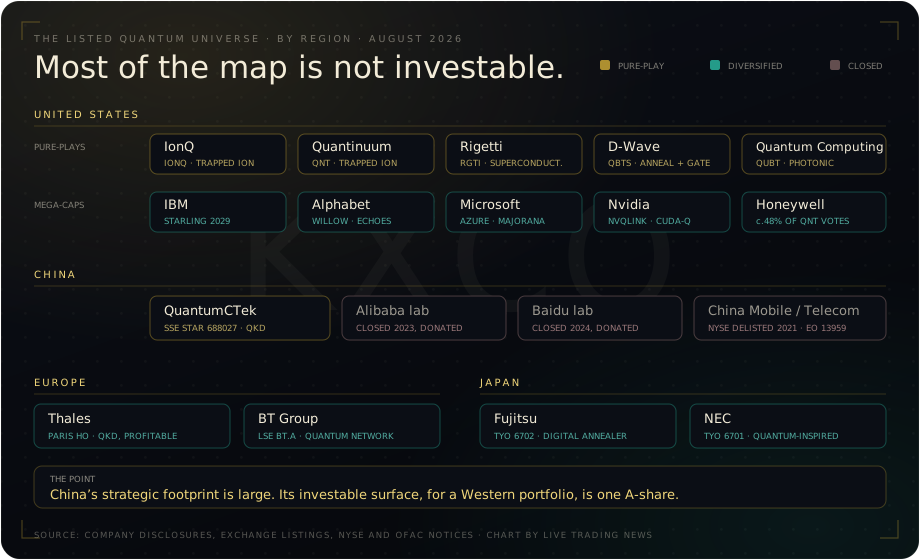
The China section of most quantum stock articles is wrong, and it is worth being precise, because two of the names usually cited have exited the field and two more cannot legally be bought by American investors.
Alibaba shut its quantum computing laboratory in November 2023 during its restructuring and donated the lab and its equipment to Zhejiang University. Baidu followed in January 2024, donating its Institute for Quantum Computing and its apparatus to the state-backed Beijing Academy of Quantum Information Sciences. Both companies redirected the money to artificial intelligence. Whatever the case for owning BABA or BIDU, and there is a case, which I set out in Who is Who in China's AI Race, it is no longer a quantum hardware case.
China Mobile and China Telecom are frequently listed with NYSE tickers. They do not have NYSE tickers. Both were delisted from the New York Stock Exchange in 2021 under Executive Order 13959, with OFAC guidance prohibiting United States persons from transacting in their ADRs from 11 January 2021. They trade in Hong Kong and Shanghai. American investors cannot treat them as a quantum communications proxy, because for most practical purposes they cannot hold them at all.
What does exist is QuantumCTek, listed on the Shanghai STAR Market as 688027. Spun out of the University of Science and Technology of China and listed in July 2020, it was the first Chinese quantum company to go public. It sells quantum communication, quantum computing and quantum precision measurement products into government, finance, the national grid and defence, and it built the 2,000km Beijing to Shanghai quantum backbone. China Telecom became its controlling shareholder in January 2025, which tells you how the state intends to consolidate the sector. It is an A-share, so access depends on Stock Connect eligibility and on your broker.
The strategic picture has not changed. China intends to lead quantum information science by 2030, it is genuinely ahead in quantum communication, and its most advanced computing work sits inside national laboratories and private firms such as Origin Quantum. The investable surface for a Western portfolio is simply much smaller than the strategic footprint, and pretending otherwise gets people into positions they have not understood.
Europe and Japan
Thales, Euronext Paris HO, is the most commercially mature quantum play in Europe. It is a profitable, dividend-paying defence and technology group with real deployed business in quantum key distribution and quantum random number generation, sold into European sovereignty programmes. It is the rare quantum exposure that does not require funding somebody's losses.
BT Group, LSE BT.A, has piloted quantum-secured networking for critical national infrastructure in the United Kingdom. Quantum is a rounding error in BT's revenue, and the stock is a proxy for European quantum networking rollout rather than a bet on it.
Fujitsu, Tokyo 6702, took the pragmatic route with its Digital Annealer, a classical architecture inspired by quantum physics that attacks combinatorial optimisation, competing directly with D-Wave's annealers. Fujitsu is now building a gate-model superconducting machine with Japanese government backing, and its advantage is a large existing IT services and supercomputing business to sell into.
NEC, Tokyo 6701, has researched superconducting qubits for decades and supplies quantum-inspired computing to Japanese financial institutions for risk and derivative pricing, alongside quantum cryptography work.
Predicting the rollout: when quantum reaches institutions
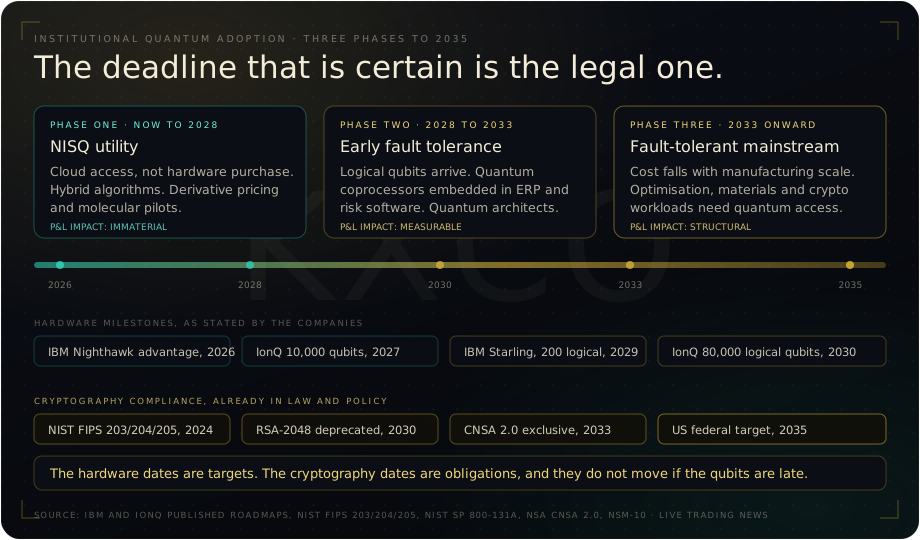
Adoption will not be a switch. It arrives in three phases, and only the first is underway.
Phase one, NISQ utility, now to 2028
Institutions will not buy quantum computers. They will buy quantum time through cloud APIs from AWS, Azure and IBM. The workloads are hybrid, with classical supercomputers doing the heavy lifting and quantum processors handling narrow mathematical sub-routines. Expect quantum Monte Carlo experiments for derivative pricing at tier-one banks, small-molecule simulation in early-stage drug discovery, and logistics optimisation. The effect on any institution's profit and loss in this phase will be immaterial and heavily publicised. The genuine value is that a bank which starts now has trained people when it matters.
Phase two, early fault tolerance and quantum coprocessors, 2028 to 2033
This is the inflection. If IBM hits Starling in 2029, and if IonQ and Quantinuum hit their logical qubit targets, machines stop being experiments and start being coprocessors. Cryogenic cost will keep on-premise deployment restricted to national laboratories and hyperscalers, so adoption looks like quantum options appearing natively inside enterprise software from the likes of SAP, Oracle and Microsoft. A new job title appears, the quantum architect, whose entire function is deciding which workloads route to GPUs and which to a QPU.
Note that the infrastructure for this phase is being laid now rather than later. Nvidia's NVQLink is exactly the GPU-to-QPU plumbing this era requires, and it shipped in 2026.
Phase three, fault-tolerant mainstream, 2033 and beyond
Real transformation lands in the mid-2030s, when manufacturing scale has taken cost out of cryogenics and lasers, and, more importantly, when the software has caught up. The bottleneck today is not only hardware. It is that humanity knows remarkably few quantum algorithms with proven advantage. Any institution running large-scale optimisation, molecular simulation or advanced cryptography will need quantum access to stay competitive, and the gap between those that have it and those that do not becomes structural.
The impact quantum is already having
The mainstream rollout is years away. The economic impact is not. It is arriving through three channels right now.
The first is a security problem that does not wait for the hardware. A fault-tolerant quantum computer running Shor's algorithm breaks RSA and elliptic curve cryptography, which is the foundation of banking, commerce and state communication. Until recently the estimates for what that machine needs were comfortably far away. In May 2025 Craig Gidney of Google published a paper showing that factoring a 2048-bit RSA key needs fewer than one million noisy qubits running for about five days, a twentyfold reduction from his own 2019 estimate of roughly 20 million. The machine still does not exist. The distance to it shortened by a factor of twenty in a single paper, which is the sort of revision that changes planning assumptions.
This is why adversaries run harvest now, decrypt later. Encrypted traffic and stolen archives are being stored today against the day they can be opened. Any data with a secrecy lifetime beyond about a decade, which covers medical records, legal files, state secrets, long-dated contracts and identity data, is already exposed, regardless of how strong today's encryption is.
The regulators have responded. NIST finalised the post-quantum standards FIPS 203, 204 and 205 in August 2024. NSA's CNSA 2.0 makes post-quantum signing mandatory for national security systems by 2030 and exclusive by 2033. NIST SP 800-131A deprecates RSA-2048 and ECDSA in 2030. The United States federal target under NSM-10 is 2035, at an estimated cost of $7.1 billion. In January 2026 the G7 Cyber Expert Group published a nonbinding post-quantum roadmap naming the financial sector a priority. Migration is therefore not a technology choice any more, it is a compliance schedule, and it is driving the largest cryptographic replacement programme in the history of computing.
The second channel is research and development reallocation. Pharmaceutical and materials companies spend heavily on classical simulation that still cannot model complex molecular interaction accurately. Those firms are signing partnerships with quantum providers now, not for results, but to hold a place in the queue and to build the internal skill base. That is creating a split between companies inside quantum ecosystems and companies relying on classical diminishing returns.
The third is the equity market itself. These stocks have decoupled from price to earnings and price to sales, and trade as leveraged call options on computational physics. The evidence is in the tape. Between 1 June and 4 August 2026, IonQ fell from $69.28 to $41.72, Rigetti from $25.63 to $17.45, D-Wave from $29.18 to $21.83, and then the whole group rallied roughly 20 per cent in seven sessions. Nothing about the underlying physics changed in that time. This is a sector that moves on sentiment, milestone announcements and government contract news, and position sizing matters more here than conviction does.
The defensive side of the trade
There is a second way to trade this theme, and it does not require guessing which qubit architecture wins.
The offensive machine, the one that breaks encryption, is uncertain in timing and probably a decade away. The defensive migration is certain, dated, and already funded. Every bank, insurer, hospital system and government agency has to replace its cryptography before 2030 to 2035, and none of that work depends on a single qubit existing. It is a software problem, and it is happening now.
This is the segment KXCO operates in, and readers should know that Live Trading News and KXCO are part of the same group, so treat what follows as disclosure rather than independent coverage.
KXCO's post-quantum products are software, not hardware. They implement the NIST-standardised lattice-based algorithms, ML-KEM-768 for key encapsulation and ML-DSA-65 for signatures, corresponding to FIPS 203 and FIPS 204 at NIST Category 3. The point of the approach is that it addresses harvest now, decrypt later without waiting for anybody's roadmap: data encrypted under these algorithms today stays unreadable when a fault-tolerant machine eventually arrives, and deployment requires no quantum hardware at all.
The implementation is public rather than asserted. The kxco-post-quantum family is published on npm, the platform's ML-DSA-65 public key is served at a well-known endpoint any counterparty can fetch and verify, and pqc.kxco.ai runs the scanning and attestation tooling. One point of precision, because the industry is careless about it: NIST FIPS 203, 204 and 205 compliance at Category 3 is not the same thing as CNSA 2.0 compliance, which requires the Level 5 parameter sets, ML-DSA-87 and ML-KEM-1024, for national security systems. Any vendor blurring those two is worth a second look.
What this means for a portfolio
Quantum computing is not one trade. It is at least four.
The pure-plays are venture capital with a ticker. IonQ and Quantinuum are the quality names, Rigetti is the credible technologist with the smallest commercial base, D-Wave is the one with actual production customers and the messiest revenue recognition, and QUBT is the lottery ticket. Position accordingly.
The mega-caps are how most portfolios should own this. IBM, Alphabet, Microsoft and Nvidia give exposure without the funding risk, and Nvidia in particular sells into every architecture regardless of which one wins.
The international incumbents, Thales, Fujitsu and NEC, offer profitable businesses with real quantum revenue today, mostly in cryptography and optimisation rather than computation.
The cryptography migration is the only part of this theme with a legislated deadline and no technology risk. It is the least glamorous quantum trade and the most certain one.
Further reading on this desk: The AI Quantum Convergence Hits Critical Mass, the AI and Quantum Computing Briefing, and The New Economies: Space, AI and Quantum. Live prices and levels are on the Live Trading News trading desk.
Questions readers are asking
Is quantum computing going to break Bitcoin? Not on today's hardware, and not on the hardware anybody has scheduled. The relevant threat to Bitcoin is to exposed public keys rather than to the hash function, and the network has time to adopt post-quantum signatures. The realistic risk window aligns with the same 2030 to 2035 period as everything else in this article.
Which quantum stock has the best technology? On published fidelity and logical qubit ratio, Quantinuum. On roadmap specificity and engineering depth, IBM. On scientific results, Google. Best technology and best investment are different questions.
Can I buy Chinese quantum stocks? QuantumCTek trades in Shanghai as 688027 and access depends on Stock Connect and your broker. The Chinese telecoms often cited in this sector were delisted from the NYSE in 2021 and are not available to United States persons.
When does this become profitable? No listed pure-play has a credible path to profitability before the fault-tolerance era. Buy these for the option value, fund them from your risk budget, and expect dilution.
Shayne Heffernan writes on markets, technology and macro for Live Trading News. This article is analysis, not investment advice. Live Trading News and KXCO are part of the same group.

Wall Street Week Ahead: Rates, Oil, AI, Quantum, Defense, Metals and Bitcoin
The trading week opens after a Federal Reserve that chose to hike, a White House that chose not to strike Yemen, and an oil market still pricing a war now in its seventh month. The useful work this week is not a list of tickers. It is a map of what depends on what: the funds rate, the Magnificent Seven, a quantum cohort just handed a specification and a deadline, the missile primes selling into a restock, and gold, silver, crude and Bitcoin, all held against the live AI sector ontology.
KXCO is Enhanced Intelligence, Not Artificial
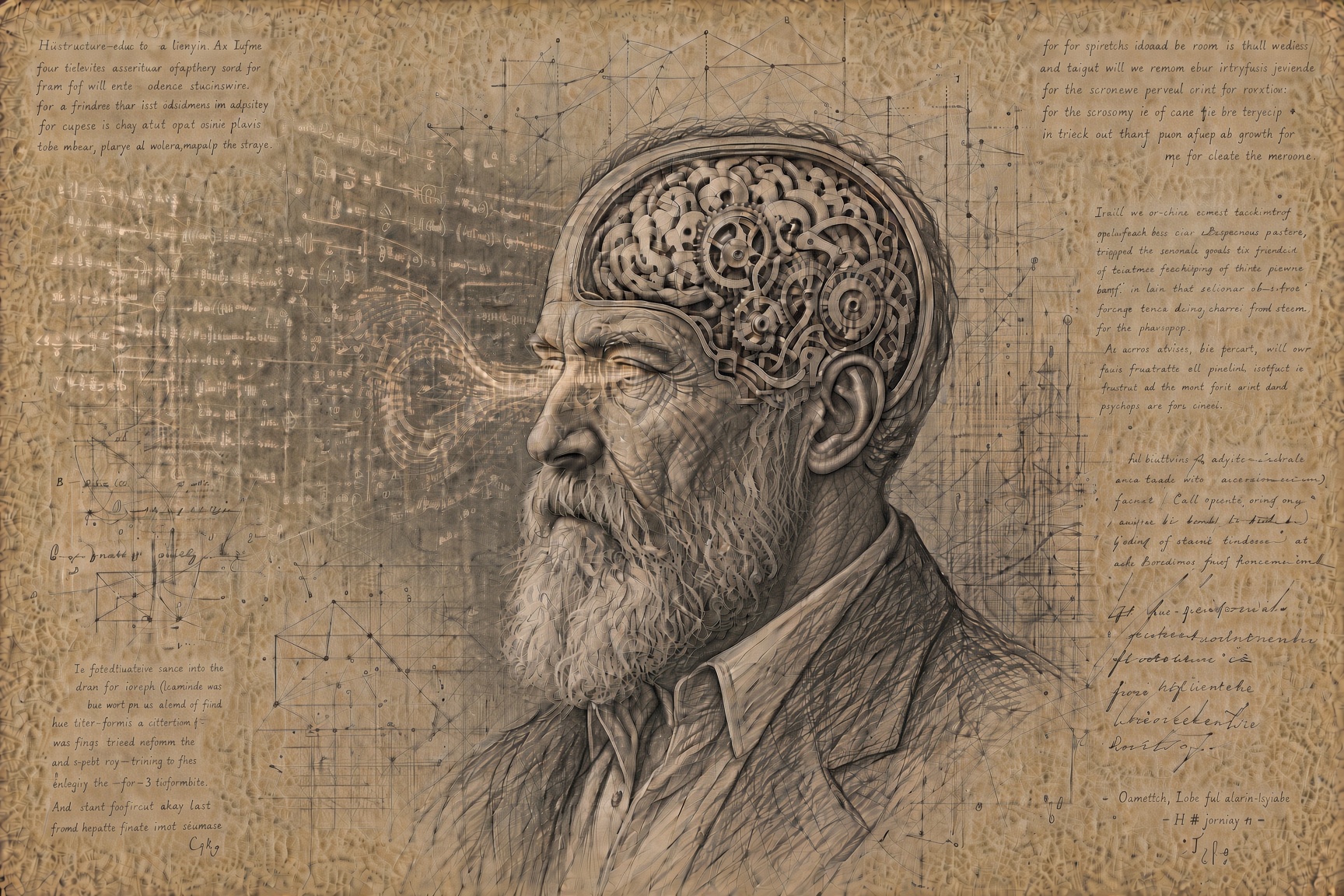
I never wanted artificial intelligence. I wanted enhanced intelligence, and they are not the same product. Artificial means the machine does the thinking and hands you the answer. Enhanced means I do the thinking, with more of my own mind in the room than I have ever had at one time. Forty years of reading, recallable in the second I need it. Patterns across law, credit, physics and markets that no specialist sees, because the useful ones sit between the fields rather than inside them.

Your AI Agent and the Law: Who Acted, By What Right, and What You Can Prove
Your agent already acts in a legal system that was built for people. No new statute is needed for a payment it releases to be an act of your institution. Twelve months later a court asks who acted, by what right, and what can be reconstructed, and an export from a product you do not own is not a file. KXCO writes the act quantum-signed, time-stamped and marked on chain before the dispute. Knightsbridge Law sits on every Round Table ontology, so counsel is at the table before the act.

The AI Safety Argument Is Being Held in the Wrong Room
The people who will be blamed for what AI does are not in the room where its safety is argued. A jailbreak escapes a policy. The failure that costs money is an action that escapes an owner, a payment sent or a record altered. Tokens are not authority. Intelligence got cheap and judgment did not, and there is no organ of standing you can copy into a model. Shayne Heffernan on the objection worth taking seriously, and the questions to take into a vendor meeting.
Every story, signed and delivered.
Subscribe to the kxco channel and get the headline, the AI-written key takeaways, and the chain-anchor link the moment we publish. Audio versions and per-ticker subscriptions arrive in the next iteration.