
KXCO is Enhanced Intelligence, Not Artificial
Artificial means the machine does the thinking. Enhanced means I do, with more of my own mind in the room than I have ever had at one time. Rapid recall, learning that compounds, and the pattern that sits between fields rather than inside one.
Part of theKXCO Center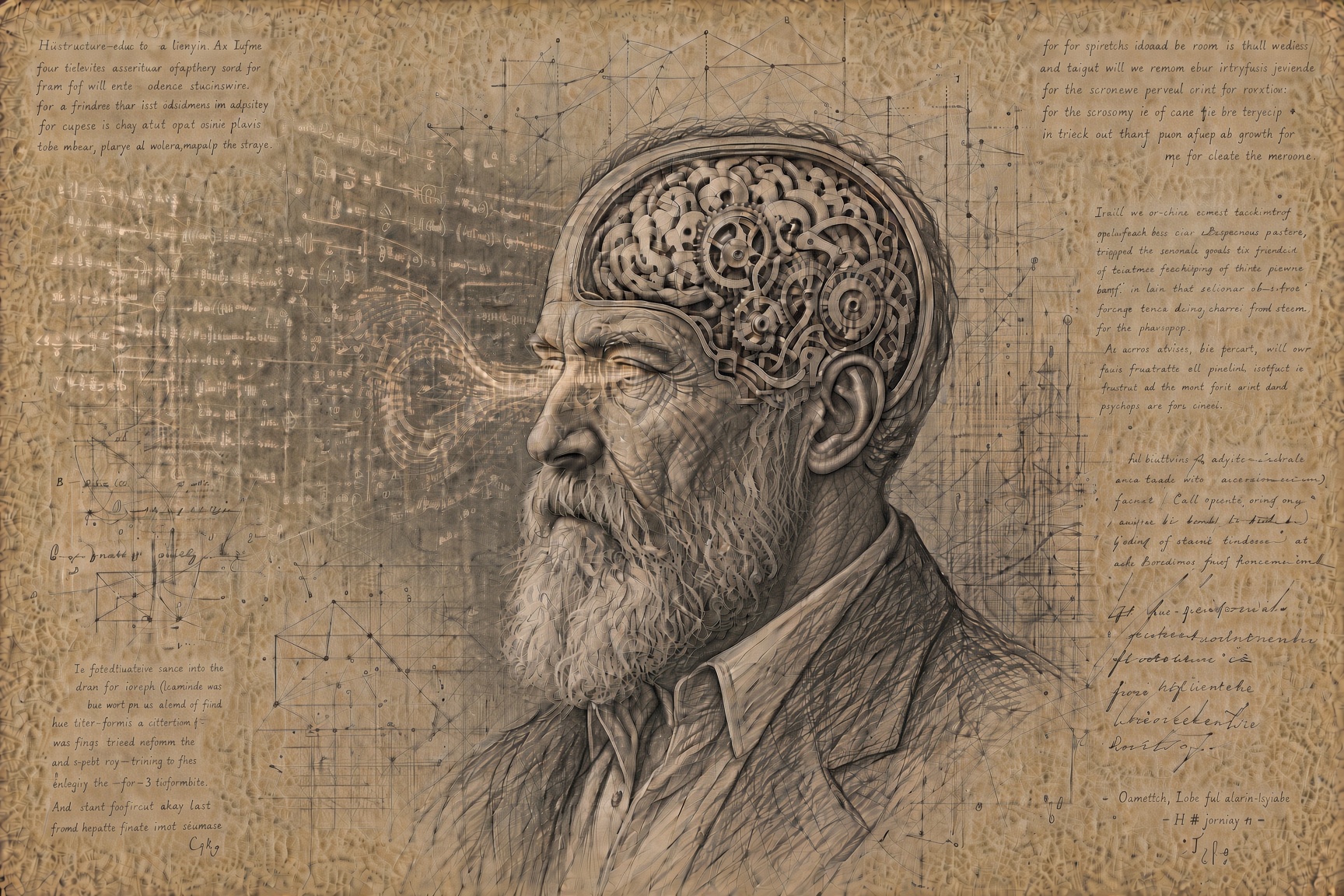
I never wanted artificial intelligence. I wanted enhanced intelligence, I wanted it to make me smarter, my organization smarter, thats what KXCO built AI and KXCO are not the same product.
Artificial means the machine does the thinking and hands you the answer. Enhanced means I do the thinking, with more of my own mind in the room than I have ever had at one time. A lifetime of reading and experience, the work of great men, the history of everything recallable the second I need it. Patterns across law, credit, physics and markets that no specialist sees, because the useful ones sit between the fields rather than inside them. Learning that compounds instead of evaporating every time I close a book.
That is what KXCO is. Not a judge. An instrument.
The ontologies do not think. They summon thought, and the visualization is what makes them worth thinking with.
Memory, learning and the pattern between fields
Rapid memory formation. What I read should become mine, and it should stay mine. Human memory was not built for the volume a working life now puts through it. I have read a filing, understood it, used it, and lost the detail inside a fortnight, which means I paid the cost of reading and kept a fraction of the return. A graph holds the claim with the document it came from, the date it was true, the method that produced it and the confidence I would defend. Recall stops being an act of remembering. It becomes an act of asking.
Learning that compounds. What I worked out in March is still working for me in September, attached to the thing that taught it to me. Nothing has to be re-derived, and nothing quietly rots into a feeling I can no longer source. A mind that starts every quarter from where the last one ended is a different instrument to one that starts from scratch and calls the difference experience.
Polymath pattern recognition. This is the one I want most and the one no amount of personal discipline delivers. A specialist looks inside a field. The links that pay sit between fields. A covenant in a credit agreement, a clause in a licence and a physical constraint in a supply chain are frequently the same object wearing three vocabularies, and nobody holds all three in mind at once. A graph does. It puts the three next to each other and lets me see what they have in common, which is the work I am good at and the work I cannot do without the material in front of me.
Available to me. For me to think and decide on. That is the whole brief.
An instrument, not a substitute
I have come at this from other doors. In AI is the Neat Handwriting of the Illiterate the threat was a model that finishes your sentence before you have done the work the sentence is supposed to prove. In Don't Be the Best, Be the Only it was a market where everyone rents the same capability and nobody is distinguishable. Both are the same failure. Offloading feels identical to amplification from the outside, which is exactly what makes it worth naming.
A substitute gives you the answer. An instrument gives you the material, the pattern and the provenance, and leaves the judgment where it was. The first makes you need it more every year. The second makes you better every year. A telescope does not see for you. It puts something in range of the eye you already had, and the astronomer is still the one who has to know what he is looking at.
I want the second thing, for myself first. I am the first user of this and the one with most to lose if it is the other thing wearing the same face.
Why the constraints are the amplification
A good ontology does not think for you. It removes the places where you were pretending to think. Every rule below reads like a restriction on the machine. Each one is a condition on whether the extension is worth having at all.
Types. A client is not a lead. An agent is not a user. A preview is not a summary. A signature is not a log line. Loose words keep dead arguments alive. Strict types let them die. Years of loose words is how an industry ends up calling a bearer token an agent.
Time. A claim true in one decade and false in the next cannot overwrite its own face. Valid time and record time stop the present want from editing the past judgement. A memory that lets today rewrite last year is not memory. It is confabulation, and it will make the current story look as if it had always been the story. That is how people misremember, and an instrument that does it is worse than no instrument, because it is confident.
Source and confidence. "I think" is not a row. A row has a document, a date, a method and a level of certainty you would defend if you were not in the room. Writing a low confidence on a claim you have loved for years is harder than writing it on a claim you met on Tuesday. That is why it is the test, and it is why the recall is worth trusting later.
Preview. Before a consequential change exists, you see the delta. Not a description of the change written by the thing making it. The change itself, in the world, before it is real.
Refusal as real as approval. A blocked act is recorded. What you decided against is part of what you know, and a record that keeps only the approvals is a record of a person who was always right.
You cannot think with an instrument that flatters you. A graph that requires provenance cannot be flattered, and that impersonality is the feature. You watch a claim fail a check you wrote. You want to weaken the check. You do not. Then you do it again the next year, on a prettier claim.
The deciding is the part I want to keep
The human decides, and I want it that way for reasons that have nothing to do with a regulator.
Intelligence can be copied in the cheap sense. Standing cannot. A model can store and learn, and it cannot occupy the place where a person answers for a choice. There is tissue that participates in choosing. There is no organ of being the one who can be blamed. If the system decides, nobody is there when the decision is wrong, and I have spent a working life in rooms where somebody had to be there.
An agent cannot raise its own ceiling. A demo that looks like a colleague impresses a room. A ceiling impresses a court. I live in both rooms, and only one of them is still open the year after.
The right design is also slightly slower at the exact moment slowness costs money. That sentence offends the trader in me and it is still the sentence, because software that removes hesitation looks like skill and it is how rubber stamps are born. The system generates. A human decides. The record makes the decision impossible to disown, which is what I want, because the decision is mine and I would rather own it than explain it.
What I still want
On the days when people disappoint me I still want the other machine, the one that would have made me the man who solved judgment. That want did not die when the architecture landed. If I told you the conflict was over I would be selling comfort.
The practice is to notice it when a design is too smooth or a line is too warm, and to cut it before it becomes someone else's problem. If your published line cannot be rejected, it is not a claim. It is a mood. Try the test on the claim you have carried since before your company had a name. If it survives source, time, confidence and a preview of what it will do in the world, keep it. If it survives only because you are still in the room to defend the tone, it is not ready.
Enhanced intelligence is the claim that survived. The machine holds what I have read, links what I could not link alone, and shows its working. I do the thinking. I make the call. That is the work, that is the time it took, and that is what I have to offer besides the software.
The architecture this piece describes is published at kxco.ai/ontology, in the ontology note for developers, at kxco.ai/trust and at kxco.ai, where a reader who is not us can check it.
Shayne Heffernan, Ph.D., is the founder of Live Trading News, the KnightsBridge Group, Knightsbridge Law and the KXCO.ai ecosystem spanning post-quantum cryptography, identity, attestation and enterprise ontology.

Your AI Agent and the Law: Who Acted, By What Right, and What You Can Prove
Your agent already acts in a legal system that was built for people. No new statute is needed for a payment it releases to be an act of your institution. Twelve months later a court asks who acted, by what right, and what can be reconstructed, and an export from a product you do not own is not a file. KXCO writes the act quantum-signed, time-stamped and marked on chain before the dispute. Knightsbridge Law sits on every Round Table ontology, so counsel is at the table before the act.
The AI Safety Argument Is Being Held in the Wrong Room
The people who will be blamed for what AI does are not in the room where its safety is argued. A jailbreak escapes a policy. The failure that costs money is an action that escapes an owner, a payment sent or a record altered. Tokens are not authority. Intelligence got cheap and judgment did not, and there is no organ of standing you can copy into a model. Shayne Heffernan on the objection worth taking seriously, and the questions to take into a vendor meeting.

Ignore the Noise: AI Is Not Slowing Down
Commentators pointed at a flat Nasdaq, a few missed prints, the cost of a megawatt and a safety letter, and called it a slowdown. It is not. Between 12 August and 16 September 2026 nine labs shipped frontier or near-frontier models, and the contest moved from one leaderboard to two stacks. What actually slowed is accountability. Enterprises still cannot put any of it into a court file. That gap, not the capability curve, stops deployment inside banks, hospitals, courts and ministries.

Quantum Cybersecurity: The KXCO Chain Is Already Running
The World Economic Forum warned on 11 September that the quantum-safe race has changed gears. It is right about the direction and late about the work. Every KXCO product already runs on NIST's post-quantum algorithms, and all of them run on the same implementation: 42 package manifests declare one library. The chain verifies ML-DSA-65 on-chain at precompile 0x0b, tested live with three negative controls. NIST's own grader marked the library at 2,130 cases and zero failures.
Every story, signed and delivered.
Subscribe to the kxco channel and get the headline, the AI-written key takeaways, and the chain-anchor link the moment we publish. Audio versions and per-ticker subscriptions arrive in the next iteration.