
AI is the Neat Handwriting of the Illiterate
Not all machine output is the problem. The danger is a finished page produced on behalf of someone who does not know. Pretty is what makes that page travel.
Part of theAI Stocks Center
In Nineteen Eighty-Four, Tom Parsons keeps a notebook. He can form letters. He cannot hold what the letters are for. Winston watches him enter a sum "in the neat handwriting of the illiterate." The title of this essay takes that image and names a present case. Artificial intelligence, used without knowledge behind it, is that handwriting at industrial scale.
This is not an argument against AI. A model in the hands of a person who already knows the material, who has read the filing, walked the plant, sat with the source, and can say where a number came from, is a clerk. It drafts, translates, hunts, and nags. That use is ordinary and often good. The problem begins at a different joint: when the machine presents something on behalf of someone with limited knowledge, or no knowledge at all. Then the output is not assistance. It is a disguise.
The disguise works because it is pretty. Slides align. Icons match. The infographic has three callouts and a tasteful navy palette. The memo has a framework. The chart looks like a chart. A room that would have stopped a messy first draft will pass a finished one, because finish used to be expensive and expensive used to mean someone had done the work. That proxy is dead. Finish is now the cheapest part of the stack. Knowledge is still the expensive part. When the two are decoupled, pretty output is not neutral. It is the delivery system for ignorance.
That is why we built KXCOSKILLS. Not to make our machines write more beautifully. The internet and the inbox already have more beautiful writing than they can use. We built a containment layer so that a model working inside KXCO and Live Trading News cannot ship a claim that does not carry a source, cannot treat a generated picture of data as data, and cannot put words in the mouth of an institution that has not yet decided they are true. Rent the intelligence. Own the knowledge. The skill pack is how that sentence becomes procedure.
The dangerous case is not the tool. It is the stand-in.
Most public talk about "AI slop" still aims at the wrong target. It treats the model as the offender and the volume of content as the crime. Volume is a symptom. The offence is representation. A person who does not understand a market, a statute, a plant, or a paper can now emit an artifact that looks as if they do. Colleagues downstream inherit the artifact, not the ignorance. The ignorance has been laundered through design.
Orwell saw the linguistic version in 1946. In "Politics and the English Language" he described ready-made phrases that think for you. They assemble themselves into the shape of an argument and spare the writer the labor of noticing what he does not know. The model is that mechanism with a render engine attached. It does not need malice. It only needs a prompt from someone who wants a deck by Thursday and does not possess Thursday's facts.
The same text, produced by two different people, is not the same object. When an analyst who has spent a decade on a sector asks a model to tighten a paragraph, the knowledge is already in the room. The machine is compressing. When an intern who has never opened the 10-K asks the same model for "a comprehensive sector overview with visuals," the machine is inventing a person who does not exist: a fluent expert wearing the intern's name. Pretty output makes that invention hard to see. That is the whole problem.
The rule. AI is safe as a clerk for someone who can fire it. AI is dangerous as a spokesman for someone who cannot tell whether the spokesman is lying. Containment is the difference between those two jobs.
Why pretty is the hazard
A crude error announces itself. A polished error travels. That is not a taste complaint. It is how organizations actually read.
For twenty years the convincing deck was a rational proxy. Attention inside companies is scarce. A partner, an IR officer, a campaign lead, and a product manager all had twelve minutes with people who would not read the memo. Design became a stand-in for diligence. If the type was consistent and the waterfall added up, the room granted a presumption of work. The proxy required scarcity. Good slides took a weekend and a frightened analyst. Generated slides take four minutes. Once the proxy is cheap, it stops carrying information. Fluency is background radiation.
The pictures are worse than the prose, because pictures still enjoy an unearned presumption of measurement. A 2026 paper at the International Conference on Advanced Visual Interfaces generated one hundred infographics with a current text-to-image system and scored them against a taxonomy of visualization lies. Ninety-nine contained at least one misleading element. The new failures were not only truncated axes and the wrong geometry. They were provenance failures: fabricated numbers, inconsistent encodings, incomplete charts that still looked complete. The machine produced pictures of the kind of object that usually contains a fact. That is copperplate. The letters are formed. The sum was never counted.
Full Fact's 2026 trial of chatbots as checkers of images and circulating claims reached the same junction from the other side. Models treated generated photographs as real, assigned war footage to the wrong country, and accepted fake official posters as official. Some corrected themselves days later. Some did not. The researchers' advice was the unfashionable one: if you need to know whether a picture is true, leave the model and triangulate primary sources. The butler who serves a finished plate is not a witness. He is especially not a witness when the person who sent him to the kitchen has never seen the food.
Inside firms the pattern has a management name. Harvard Business Review warned in June 2026 that generated drafts decay organizational knowledge when they are accepted because they look like last quarter's genuine work. World Economic Forum commentary in the same season described a believability gap: leaders who sound more professional than they are believed. A polished note from the C-suite that could have been written by anyone is read as having been written by no one. Pretty output does not only hide the junior who does not know. It eventually hides the institution.
What happens when the handwriting enters the record
Science has already measured the cost of letting fluent absence into the file. A January 2026 forensic audit of fifty survey papers on large models, covering 5,514 citations, found a 17 percent phantom rate: references that could not be resolved to any digital object after aggressive recovery. Some were inventions. Some attached invented identifiers to real-looking titles. Downstream papers cite the survey. Models train on the survey. Each cycle washes a little more of the original experiment out of the record and leaves the tidy apparatus behind.
Ross Andersen, writing in The Atlantic in January 2026, described peer review meeting its match: a flood of submissions, generated figures, and reviews that were themselves machine-written. At ICLR, a detection firm found more than half of reviews written with model help and about a fifth wholly generated. Researchers who appeared to be using language models were posting on the order of a third more papers than peers who were not. First-time preprint authors delivered dozens of manuscripts in a year. The copperplate hand had found the journal.
News has the demand-side version. An EBU and BBC audit of AI assistants answering news questions found significant errors in 45 percent of outputs across thousands of tests in eighteen countries. The Reuters Institute has a word for the product that results: factslop, finished answers that starve the reporters who still produce the raw material those answers pretend to rest on. A 2026 study of AI-to-AI transmission, the telephone game played by models, found that hedges, quotes, and attributions are stripped while human readers rate the surviving text as more polished and more credible. The system rewards the opposite of research. It keeps the posture of certainty and discards the chain of custody.
None of that is an argument that models cannot be used in a newsroom, a lab, or a desk. Live Trading News uses them. Claude sits in our queue as a contributor, not as a ghostwriter with the keys. The argument is narrower. The moment a generated sentence, figure, or slide is allowed to stand in for a person who does not know, the institution has accepted neat handwriting as a substitute for literacy. After that, the archive fills with pages that cannot be walked back.
Two uses of the same machine
Clerk, knowledge already in the room | Spokesman, knowledge absent | |
|---|---|---|
Who prompts | A person who can reject the draft | A person who needs the draft to look like expertise |
What the model does | Compresses, hunts, translates | Invents a fluent expert |
What pretty does | Saves time | Hides the gap |
What a chart is | A picture of a table that exists | A picture of a table that does not |
Failure mode | Sloppy prose, caught by the author | A finished lie that travels |
Institutional status | Tool | Stand-in for a missing mind |
Containment is the decision to keep the left column and refuse the right.
Research is being pushed back to people and to proof
The interesting institutional story of 2026 is not that slop exists. It is that the buyers of research who still have something to lose are changing what they will accept as work. The movement is uneven. It is also visible, and it runs in the opposite direction from the inbox.
On trading desks the tell is the footnote. A generated sector note that cannot produce the filing, the vendor, the timestamp, and the person who pulled the series is treated as color, not as input. Managers who were trained to skim a twelve-page initiation are asking for the three pages that contain original conversation: the supplier who would speak, the plant tour, the channel check that is not a blog. The model can still draft the industry overview. It cannot sit in a canteen in Rayong and notice that the second shift went home early. That noticing is literacy. The overview is handwriting.
In newsrooms the tell is the refusal to let a chatbot close a verification loop. Generated summaries are a starting index. The story still begins when a reporter calls someone who was in the room, reads the docket, or stands where the photograph was allegedly taken. A German field experiment with Süddeutsche Zeitung readers found that making AI-image risk salient increased concern about misinformation and increased visits to the paper's own digital work. Distrust of the synthetic raised demand for a human masthead. That is the market speaking in the only language markets speak.
In laboratories the tell is the demand that a figure come with a raw file and a script. Journals that still matter are moving toward the standard software engineering adopted after the reproducibility wars: show the pipeline. If the image was generated, say so on the figure. If the literature review was drafted by a model, the citations must resolve. Phantom references are not a style issue. They are a fabrication issue. Pretty will not fix them.
In companies the tell is the meeting that starts with "who did you talk to?" rather than "walk us through the slides." A document can be locally fluent and globally false: correct headings, wrong controls, last year's risks in this year's template. The fix is social. Someone accountable must have done the thing the document describes, or spoken to the person who did. Design is the last step of that work, not the proof of it.
If you want to do real research
The procedure is older than the internet and newly non-optional. It can be written without becoming a framework.
Talk to people who would know if you were mistaken. Not commentators. Operators, clerks, the statistician who owns the series, the lawyer who filed the brief, the junior who pulled the extract at one in the morning. Ask who disagrees. Record the date and the conditions of the conversation. A model can imitate the cadence of an interview. It cannot be surprised by an answer it did not expect. Surprise is how you find out you were illiterate on the point that mattered.
Establish provenance for every load-bearing fact. Provenance is a chain, not a vibe. Who produced the number? When? By what rule? Has it been revised? Who paid for it? What would falsify it? A citation that does not resolve is not a citation. A chart without a table is not a chart. A quote without a name and a date is atmosphere. "Studies show," with no link, is the neat hand at its most honest: it has stopped pretending there was a study.
Put your hands on the primary record. The filing, the judgment, the lab notebook, the customs printout, the raw table, the email with a timestamp. Secondary summaries, including this newspaper's, are maps. Maps omit. If a claim matters, the underlying object has to exist in a place that is not the chat window.
Separate generation from verification. Use the machine to hunt and to draft. Do not use it as a witness. Full Fact's models were worse at breaking news than at settled topics, which is exactly when the temptation to lean on them is strongest. Generated text is a draft. Generated images of data are hypotheses. Neither enters the file as evidence until a named person can walk it to a record.
Keep the ugly notes. The interview that went sideways, the table that does not fit the story, the source who said "I don't know." Slop sandblasts those marks because they look unfinished. They are how a later reader can see that a human being was present, and that the human being knew the limits of what he knew.
Why we built KXCOSKILLS
Policy does not contain a model. Procedure does. A style guide that lives in a document the model is free to ignore is decoration. We learned that the expensive way. An audit of the primary development machine found forty-one installed skills. Thirty were vendor documentation for a graph database. Not one of them encoded a KXCO standard. The machine could write. It could not be required to know.
KXCOSKILLS is the pack we wrote to close that gap: fifteen skills, thirteen of them ours. The full account is the Discipline Layer essay on Live Trading News, and the engineering write-up, "Building the KXCO Skill Set for Claude," on the KXCO developers' blog. It is not a wrapper around Claude or any other model. The model is rented intelligence. The skills are how we own the knowledge layer: what may be asserted, what must carry a source, what may never be invented to look complete, and who is allowed to sign. Capability stopped being the constraint some time ago. What is left is whether an institution can stand behind what its systems produce.
The layer has four working parts. A discipline engine interrogates intent, risk, and alignment before anything significant starts. A boundary layer enforces non-negotiables: no unsourced figure, no generated picture of data treated as a table, no claim that cannot be walked to a passage with a fetch date and a content hash. Steered intelligence shapes how the model reasons, including the awkward fact that different models fail in different ways; a prescriptive step-by-step that once helped an older system now wastes tokens on Opus and can make Fable worse. An accountability loop keeps the work retrievable. An objection is closed by answering it, never by proceeding past it.
Behind the pack sits a five-seat review (Strategist, Architect, Critic, Reviewer, Scribe) and a deliberate rule that the Critic starts from a clean slate. It receives the plan and nothing else. No transcript of how the plan was reached. If the work cannot survive a mind that did not help produce it, it is not ready to wear the institution's name. That is the opposite of pretty output on behalf of someone who does not know. It is friction placed exactly where the copperplate hand wants to run.
The same doctrine runs through the rest of the stack, because a skill pack that is not wired to reality is only a sterner prompt. The ontology is the typed graph the model is allowed to reason over: claims with a source, an as-of date, a confidence, and a basis, or marked unknown. Point a capable model at a pile of contradictory PDFs and you get confident nonsense. Point it at a graph in which every edge can be checked and the same model can surface a contradiction a human would have taken hours to find. Meridian's room may draft buyer questions and mark coverage; it closes nothing. Live Trading News may let Claude submit to the queue; an editor reviews, edits, and signs with ML-DSA-65, and the envelope is anchored on Armature L1. Two provenance layers, on every publish. If the database were rewritten in the night, the signature would fail and the chain would show the break.
That is containment. Not a ban. Not a vibe. A set of skills that refuse to let the machine speak as if it were the person who knows, when the person who knows has not yet spoken.
Round Table: demand a source, then validate the source
KXCOSKILLS is the handbrake on the model. Round Table is where that handbrake meets a room of people who actually know something. On Meridian, a deal room is not a filing cabinet. Every document, reader, question, link and forward is a typed node. Round Table exports that room into the ontology and puts the consultant, the lawyer and the operator into the same model the machine is reasoning over, not into a separate deck nobody reads. The public description of that layer is "Data Sovereignty: What Round Table and Sentinel Deliver," published 29 August 2026.
The rule inside that room is older than software and newly non-optional. Round Table demands a source. Then it validates the source. Those are two different acts, and slop collapses them into one. A URL is not a source. A source is a document that can be opened, dated, and shown to say what the claim says it says. Validation is the second step the copperplate hand always skips: does this page exist, is it the page we fetched, does the passage support the figure, and has it moved, rotted, or been walled since we took it? The Discipline Layer put it in the only form that survives a hostile reader. Verification proves we faithfully recorded what a credible source said. It does not prove the source was right. A claim of absolute truth dies on its first counterexample. A claim about faithful recording is defensible for as long as the records hold.
That is why a gap on the public ontology is left empty rather than filled. Cells without a source URL are marked as unsourced. Derived readings of the graph are marked derived and carry no invented citation, because inventing one would be the failure the map exists to prevent. Follow the source link and you leave our page for the filing. If the filing does not say what we say it says, we are wrong. That is the opposite of a generated infographic. It is also the opposite of a Round Table that would let a model propose a fact and then dress the proposal as a finding.
Soon the ambient information system will be awash with misinformation and half-facts, not only lies told on purpose, but fluent almost-truths issued on behalf of people who did not know they were almost-true. Half-facts are the more dangerous species. A clean falsehood can be contradicted. A half-fact has a real number, a real name, and a missing clause, and it travels inside a handsome page. Factslop in the search bar, phantom citations in the survey paper, charts of data that never existed, memos that sound like the chief executive: that flood is not coming. It is here, and it will get worse as the cost of finish keeps falling.
KXCO has built guards against it. KXCOSKILLS contains the model so it cannot speak as the institution until a source is attached. Round Table contains the room so that source must then be opened and checked, by the machine and by the people who would know if it were wrong. Sentinel contains the release so the proof can be verified by someone with no reason to believe us. Armature L1 contains the record so a silent rewrite fails the signature. None of that makes a claim true. It makes a claim accountable. In a market about to drown in half-facts, accountability is the scarce good.
The two-step. Demand a source. Then validate the source. A model that stops after the first step is still the neat handwriting of the illiterate. Round Table exists so the second step cannot be skipped.
KXCOSKILLS in one line. The model may draft. It may not stand in. Every load-bearing sentence carries a source that resolves. Every figure walks back to a document, a passage, a fetch date, and a hash. A human signs. Pretty is not a credential.
Close
Parsons' notebook was neat because neatness was what he had been taught. Understanding was extra, and the party did not require it. We have built machines that can supply that notebook on demand, in any typeface, with a chart on the facing page and a list of studies that do not exist. Used by someone who already knows, they are labor saved. Used as the public face of someone who does not, they are a forgery of competence.
The correction is not a better prompt and it is not a prettier deck. The correction is the older, slower, ruder work of research: asking a human being a question that might embarrass both of you, pulling the document that predates the narrative, writing down where the number came from. And a containment layer that will not let the machine skip that work on the institution's behalf. Infographics will keep arriving. Inboxes will keep filling. The rooms that still know things will treat those objects as packaging.
AI is the neat handwriting of the illiterate when it writes for the person who cannot read what it wrote. Teach the person. Contain the hand. Own the knowledge. That is the whole essay.
Shayne Heffernan, Ph.D., is the founder of Live Trading News, the KnightsBridge Group, Knightsbridge Law and the KXCO.ai ecosystem spanning post-quantum cryptography, identity, attestation and enterprise ontology.
This essay is commentary, not investment advice. The title takes an image from Orwell's Nineteen Eighty-Four and applies it to a present institutional problem. It is not a claim that Orwell wrote about language models.
Sources and further reading
George Orwell, Nineteen Eighty-Four (1949): Parsons enters a sum "in the neat handwriting of the illiterate."
George Orwell, "Politics and the English Language," Horizon, April 1946.
Shayne Heffernan, "The Discipline Layer: What KXCO Built On Top of Claude," Live Trading News, 30 August 2026. The public KXCOSKILLS essay.
KXCO, "Building the KXCO Skill Set for Claude," 30 August 2026. Engineering companion to the Discipline Layer.
KXCO, "Data Sovereignty: What Round Table and Sentinel Deliver," 29 August 2026. Why the room demands a source and then validates it.
KXCO Meridian, Ontology Round Table product page.
KXCO, "Chain, Quantum, Ontology, AI," July 2026.
KXCO, "How to use the KXCO Ontology," 5 August 2026. Demand a source, then walk it to the filing.
Live Trading News, About: Claude as a queued contributor; editor signs ML-DSA-65; envelope anchored on Armature L1.
"When AI Lies with Charts," AVI 2026: 99 of 100 generated infographics contained at least one misleading element. DOI 10.1145/3811427.3811469.
"The 17% Gap: Quantifying Epistemic Decay in AI-Assisted Survey Papers," arXiv:2601.17431, January 2026.
Ross Andersen, "Science Is Drowning in AI Slop," The Atlantic, 22 January 2026.
Full Fact chatbot trial, 28 August 2026. Recommendation: triangulate primary sources.
EBU and BBC audit of AI assistants and news: significant errors in 45% of tested answers.
Reuters Institute, "Your AI butler will serve you factslop," November 2025.
"Don't Let AI Slop Muck Up Your Company's Processes," Harvard Business Review, 16 June 2026.
World Economic Forum, "Why AI is creating a leadership believability gap," June 2026.
"Lost Before Translation: Social Information Transmission and Survival in AI-AI Communication," arXiv:2602.17674, 2026.
Ahrefs, "State of AI Slop 2026." KXCO ontology-live and Sentinel: agents reason over a typed, sourced graph; they do not approve what they did not check.
What the Round Table Is Predicting in Biotech Markets
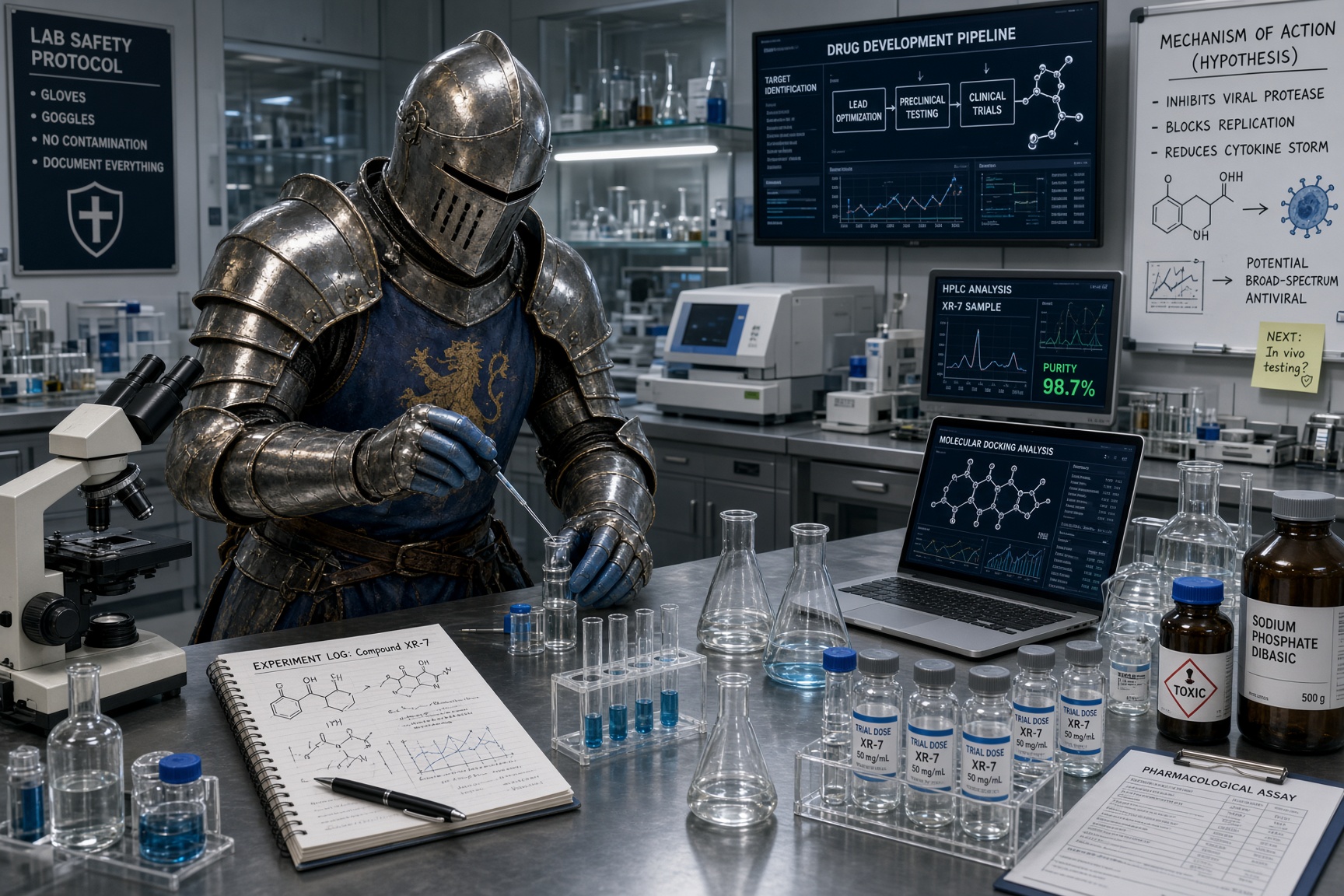
Seventeen FDA decisions fall due between 30 October 2026 and 29 June 2027, and KXCO's Round Table has called every one. Its model portfolio holds the thirteen Nasdaq companies behind them, led by BridgeBio, Cogent Biosciences and Praxis, and was signed with ML-DSA-87 and anchored on chain before the FDA acts. The first test is Inovio's INO-3107 on 30 October.
SpaceX: The Road to 10 Gigawatts
SpaceX did not add an AI business. A company whose processes run on compute built its own computing plant, then built the power to run it. The 10-Q reports 1.4 gigawatts of nameplate compute at 30 June 2026, four leases worth about $41 billion a year and $100 billion of cash. The target is closer to 10 gigawatts than 5 by the end of 2027. This piece sets out the build sequence, the four layers of power in Memphis, and why Terafab is the act after 2027, not the road to it.
Thoughts on Thinking: Take an Art Break
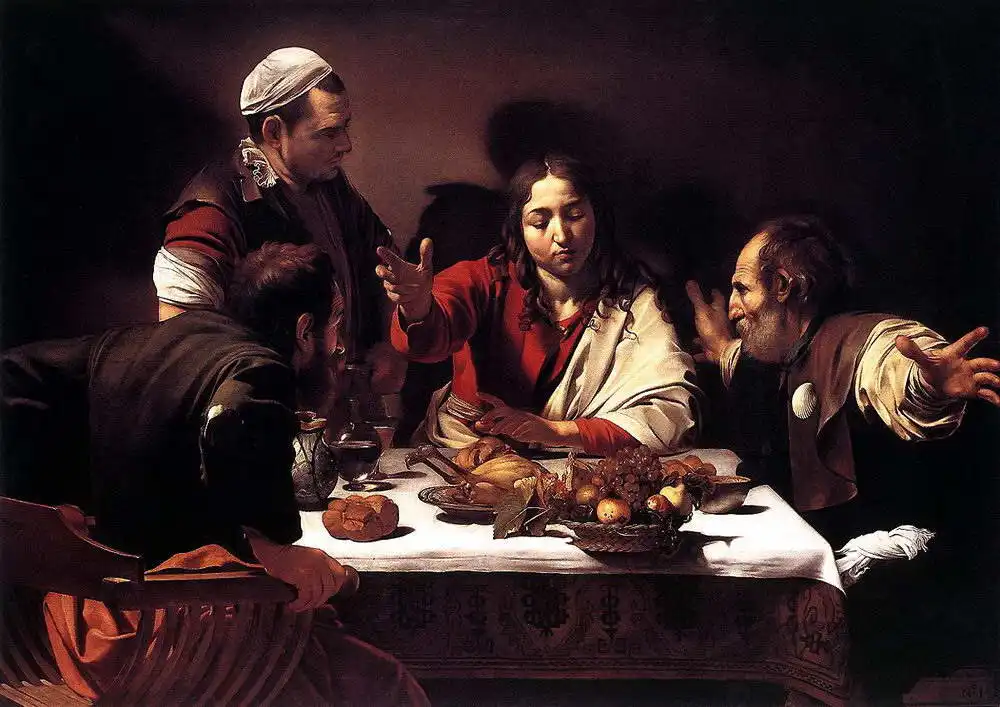
The best way I know to keep complex work in perspective is to stop at intervals and look at something that took the same order of sustained attention under real constraints. The studies now show what that does: a museum visit restored attention where an urban walk did not, judging the beauty of an object raised abstract thinking almost 14 per cent, and artistic film raised originality even in people who felt worse for it. Five works, Leonardo to Holbein, and the non-default decision in each.
KXCO's New Names, Explained
Sentinel became Portcullis, Treasury became Sovereign and Meridian became Guildhall when KXCO brought its products into one family of seven, the House, on 9 October 2026. This guide explains what each name means and where it comes from, maps every former name to the product or module it became, shows how the seven connect, and lists what did not change: the addresses redirect, the packages and the chain keep their names.
Every story, signed and delivered.
Subscribe to the kxco channel and get the headline, the AI-written key takeaways, and the chain-anchor link the moment we publish. Audio versions and per-ticker subscriptions arrive in the next iteration.