
The Discipline Layer: What KXCO Built On Top of Claude
Capability stopped being the constraint. Whether an institution can stand behind what its systems produce is what is left.
Part of theAI Stocks Center
The market has spent two years pricing AI capability. Capability stopped being the constraint some time ago, and pricing it is now largely a backward-looking exercise.
The constraint is whether an institution can stand behind what its systems produce. Whether a figure in a report can be walked back to a document a person can open. Whether the plan that led to a decision survived anything harder than agreement.
That is not a technology problem and it never was. Every large institution already has the data. It sits in twelve systems that disagree with each other, maintained in part by people who have left. What separates the firms that can answer for their numbers from the firms that cannot is whether the discipline is a policy or a property of the thing.
A policy gets applied when someone remembers. A property applies whether anyone remembers or not.
KXCO is not a wrapper. It is a discipline layer for real-world intelligence, and it has four parts.
The gap that was there
We audited our own position before writing a line of it.
Forty-one skills were installed on the primary development machine. Thirty of them were vendor documentation for a graph database. Not one of them encoded a KXCO standard.
Every rule we operate by lived somewhere passive. In a document. In someone's memory. In a chat history that scrolls away.
A standard in any of those places is advisory. It gets applied when someone remembers, which means it gets applied when the work is routine and skipped when it is urgent. That is precisely backwards, and it is where reputational damage comes from. Nobody publishes an unsourced figure because they decided to be careless. They publish it because the discipline was optional and the deadline was not.
Fifteen skills now close that gap, thirteen of them written at KXCO. They are grouped below by what they do rather than by how they install.
One. The Discipline Engine
Evaluates intent, risk and alignment before action. Think, choose, then act.
Most poor output is a poor brief. Model capability has moved faster than the average request has improved, and the gap between what someone asks for and what they meant is now the dominant source of wasted work.
So nothing significant starts until it has been interrogated. A plan is put through rounds of questions, each round asking every question whose prerequisites are already settled, with a recommended answer attached to each. Your answers reshape the tree and the next round asks what they unblocked. A question that depends on an answer you have not given yet waits for a later round, which is what stops the interview from asking you to guess.
It is not a code tool. It works on a hiring decision, a pricing model or a partnership structure exactly as well as on an architecture.
Behind it sits a five-seat review: Strategist, Architect, Critic, Reviewer, Scribe. One change in that process is worth stealing whatever industry you are in.
The Critic now runs from a clean slate. It receives the plan and nothing else. No transcript, no reasoning, no history of how the plan was reached.
A critic who watched the plan being built has already been persuaded by it. It sat through the argument and found it convincing, because it was there for the convincing. It will then produce output shaped exactly like critique while waving the plan through, which is worse than having no critic at all, because it manufactures confidence rather than merely failing to remove it.
The symptom of a compromised reviewer is approval, and approval looks like success. That is why the seat quietly stops working in most firms that have one.
A second rule sits beside it: an objection is closed by answering it, never by proceeding past it. Unanswered objections stay listed on the plan.
Two. The Boundary Layer
Enforces guardrails, values and non-negotiables. Protect what matters.
This part is defined by what it refuses.
No figure without a source. Every assertion carries a source that resolves and demonstrably supports it, and anything that fails is visibly marked.
And immediately alongside it, always, the ceiling. Verification proves we faithfully recorded what a credible source said. It does not prove the source was right.
That second sentence is not modesty. It is the reason the standard survives someone hostile reading it. A claim of absolute truth dies on its first counterexample. A claim about faithful recording is defensible for as long as the records hold.
No merge on a name. Two records are not the same company because they share a name, a close match, or a country. A merge requires an identifier that a registry actually issued, and it carries the person who admitted it and the record it absorbed, still retrievable.
The trap worth carrying out of our estate and into yours: street addresses lie about jurisdiction. A registered office, a trading address and a factory are three different places, and only one of them tells you the country. Read it off the wrong one and you produce wrong jurisdictions at scale, silently, and nothing errors.
No guessing where a mapping is missing. Nvidia $NVDA tags revenue in its XBRL as one element. Apple $AAPL uses a different one entirely. A two-row mapping produces a clean number for one and nothing for the other, and the correct output is "unmapped", not an approximation. A system that guesses there produces a comparison table that looks complete and is not.
No backdating. Verification runs forward from the day the system went live. Work published before that is unverified, and saying so is the honest answer rather than a gap to be quietly filled.
Three. Steered Intelligence
Shapes reasoning with context, constraints and clarity. Better direction, better outcomes.
The unglamorous half, and the half that compounds daily.
A rough brief is turned into a specification before anything runs. Where the vocabulary is missing, the route is mapped first and the terms named, because a large share of bad requests are people who know the outcome they want and not the words for it.
And the prompt is tuned to the specific model carrying it, because the current generation genuinely differs in ways that are counterintuitive.
Claude Opus 5 runs adaptive reasoning by default. Instructions like "think step by step" were useful on earlier models and now cost tokens and buy nothing, in some cases flattening output by constraining reasoning that would have gone further unprompted. Persona padding is similarly dead weight. Naming the audience, the standard and the format changes the result. Naming a fictional expert does not.
Claude Fable 5 inverts something most people assume is universal. A prescriptive step-by-step prompt makes it perform worse. It wants the goal, the constraints and the definition of done, and then wants you out of the way. Moving a prompt between the two is a rewrite in the opposite direction, not a copy.
Firms treating these models as interchangeable are leaving real performance on the table, in both directions.
Four. The Accountability Loop
Logs, audits and learns. Continuous alignment, not one-off answers.
Any figure we publish can be walked back through the claim that carries it, to the document that supports it, to the passage inside that document, with the fetch date and content hash recorded at the moment it was taken rather than reconstructed afterwards.
That last clause is the whole discipline. Retain, do not reconstruct. Nearly everything that later reads as decay began as something recorded loosely and rebuilt from memory afterwards.
Which brings us to the test that came out of this and is worth running on your own corpus.
A dead link is not one thing. Citations sort into eight verdicts, and three of the separations do real work.
Bot-walled is not dead. A 401 or a 403 means a paywall or a bot check, not a missing page, and on a real corpus that bucket runs to roughly one URL in seven. Counting it as failure understates the record. Counting it as success overstates it. The honest answer is a third category and a sentence admitting that share cannot be enforced by machine.
Moved is not gone. Large outlets restructure constantly, and triaging a moved article as a dead one generates work that fixes nothing.
And then the one almost nobody checks for.
Composed is not rotted. An address can be dead not because the page went away but because the address itself was rebuilt later from the outlet, the headline and a rough date, instead of being kept from the original fetch.
The test that separates them is clean, and once you have seen it you cannot unsee it. Link rot deletes the page and leaves the address alone. Nothing that happens to a live article changes only the date segment of its URL. So an address whose slug is byte-identical to the real one but whose date is wrong was composed. It was never right. Equally, an address whose slug is the headline run through a slugifier, where the outlet uses an editorial slug, cannot have been derived from the real one in either direction.
The distinction matters enormously, because the two have opposite remedies and opposite implications.
A rotted citation is gone and should be replaced. A composed one means the article is real, the headline is right, the claim is supported by the piece it points at, and only the address string is wrong. The analysis holds. The address does not.
An auditor who found composed addresses and called them fabrication would condemn a body of work that was sound. An analyst who found them and called them link rot would "fix" them by deletion and lose real citations. We built the test so that neither happens, and we run it on ourselves.
Not a wrapper
The skills are distributed as a private marketplace with access granted per GitHub account. Two commands and a restart, and improvements reach everyone through an update rather than a file emailed around. A zip diverges the moment it is opened.
Building it that way forced a decision worth reporting. A pre-distribution review of the skill files caught a database password sitting in a runnable command, alongside internal ports, container names and an itemised defect list. All of it useful to the skill. None of it shippable. That review is the reason a private repository is safe to grant against, and it is the step most teams distributing internal tooling do not run.
The separation that came out of it is the reusable part. The repository carries the method. A local file carries the estate. Where a skill needs a specific it names the local file, and where that file is absent the skill instructs the reader to establish the fact rather than guess it. The result is better guidance and it happens to be portable.
Three principles fell out of it that apply to anyone distributing internal tooling.
A secret inside an instruction file is a secret in every copy of that file. There is no private instruction file once it is shared.
An itemised defect list is not distributable, even privately. Fix quietly, publish the coverage percentage, keep the itemised list internally and complete so that "which ones" always has an answer.
And access is a one way door. Revoking someone stops future updates. It does not retrieve what they already hold. Every grant is permanent disclosure of everything in the repository at that moment.
What it is worth
Every firm using AI at this point has the same model. Capability is a commodity and it is priced like one.
What is not a commodity is whether the output can be defended. That is the question a counterparty asks, and it is asked after the work has shipped, not before. By then either the chain exists or it does not.
Ours exists. A plan we act on has been attacked by a critic that never saw it being written. A merge between two records carries the registry identifier that justified it and the person who admitted it. A figure carries its passage, its hash and the date it was taken.
The wider point is that discipline does not scale by being written down. Every institution that has published a standards document knows this even if it does not say so. The document is read once on arrival and then competes with a deadline every day after.
It scales by being loaded into the tool doing the work, at the moment the work happens, where skipping it requires a decision rather than a lapse.
Intelligence without discipline is just noise. That distance between the standard a firm holds and the standard it applies on an inconvenient day is where reputational damage lives, in any industry. We have closed it in ours.
Stocks mentioned in this article: $NVDA and $AAPL.
Shayne Heffernan, Ph.D., is the founder of Live Trading News, the KnightsBridge Group, Knightsbridge Law and the KXCO.ai ecosystem spanning post-quantum cryptography, identity, attestation and enterprise ontology.

SpaceX: The Road to 10 Gigawatts
SpaceX did not add an AI business. A company whose processes run on compute built its own computing plant, then built the power to run it. The 10-Q reports 1.4 gigawatts of nameplate compute at 30 June 2026, four leases worth about $41 billion a year and $100 billion of cash. The target is closer to 10 gigawatts than 5 by the end of 2027. This piece sets out the build sequence, the four layers of power in Memphis, and why Terafab is the act after 2027, not the road to it.
The China Chip Shock
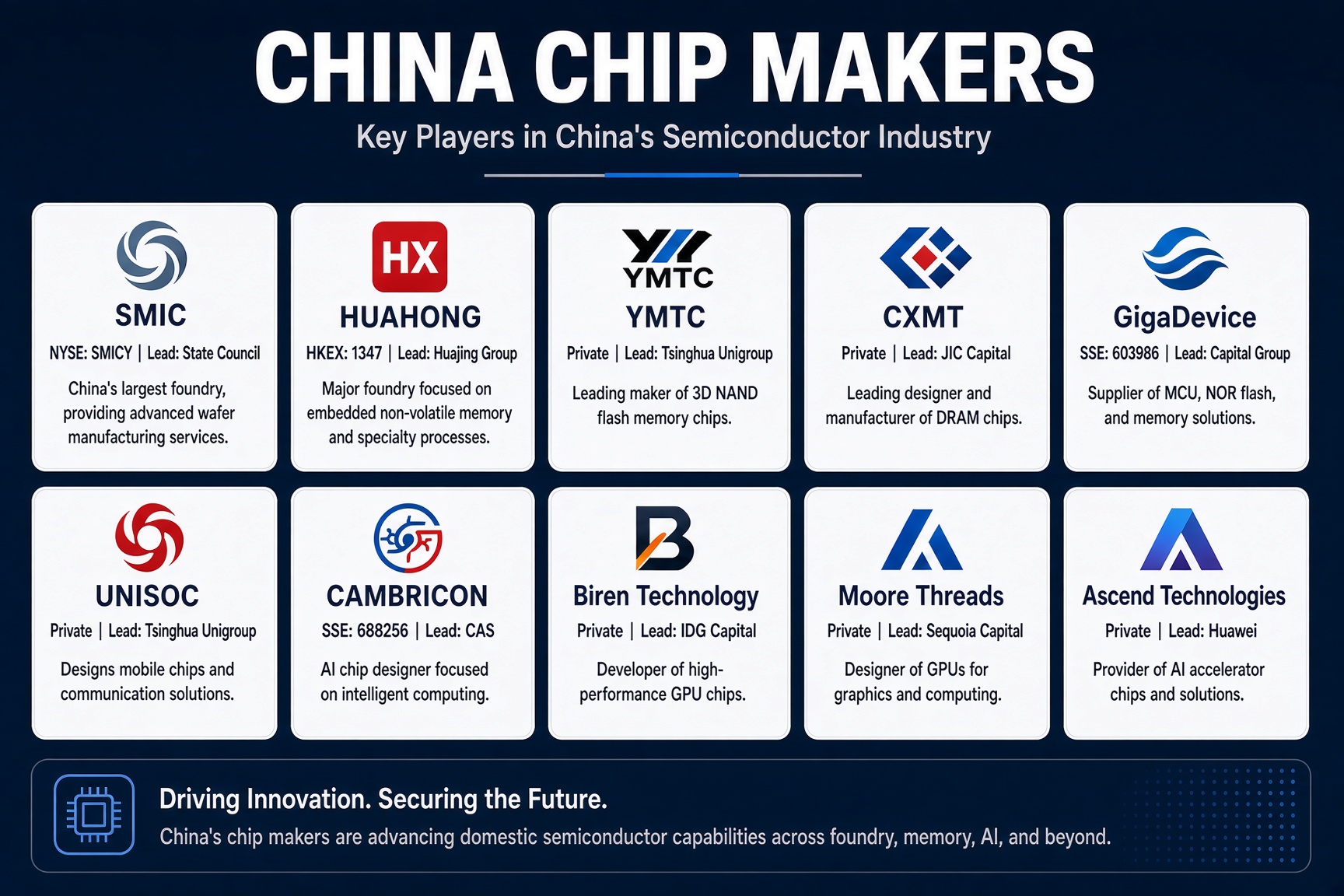
On 10 October CXMT said it will ship DDR5 server modules on a 4F2 cell by year-end. Micron, SK Hynix, Samsung and Sandisk sold off for two sessions and Elon Musk said China scales faster than the rest of the world combined. This piece sets out China's memory makers, foundries, AI chip designers and toolmakers, with two knowledge graphs drawn from the KXCO AI Sector Ontology, and says what the sell-off prices and what it does not.

China's Coordinated Push in AI, Quantum Computing and Blockchain
On 9 October 2026 Beijing called for a nationally integrated computing-power network and a national blockchain network. DeepSeek is scaling on Huawei Ascend chips, China's intelligent computing reached 2,185 EFLOPS by June, per the industry ministry, and quantum communications remain a strength. This analysis explains the strategy and sets out the Hong Kong and US listed companies with exposure, from Tencent and Alibaba to China Mobile, HashKey and Nvidia.

Week Ahead on Wall Street: CPI, Banks and Oil
September CPI lands on Wednesday after a Fed hike and a 10-year yield at its highest since 2002. JPMorgan, Goldman and Citi open bank earnings on Tuesday, ASML and TSMC report midweek, and Saudi pipeline attacks kept Brent at $104.72 on 9 October 2026, per CNBC. The KXCO AI Sector Ontology still shows contracted demand. This week ahead sets out the calendar, the three facts that would change the call, and why dips in the AI leaders remain buying opportunities.
Every story, signed and delivered.
Subscribe to the kxco channel and get the headline, the AI-written key takeaways, and the chain-anchor link the moment we publish. Audio versions and per-ticker subscriptions arrive in the next iteration.