
Will $SPCX Buy $TSLA at $420?
Elon Musk has a well-documented love of irony — and a habit of tweeting the number 420 at Tesla. With SpaceX now public on the Nasdaq, the case for a SpaceX-Tesla merger is stronger than the 2018 'funding secured' saga ever made it look. Opinion by Shayne Heffernan.
Part of theStocks Center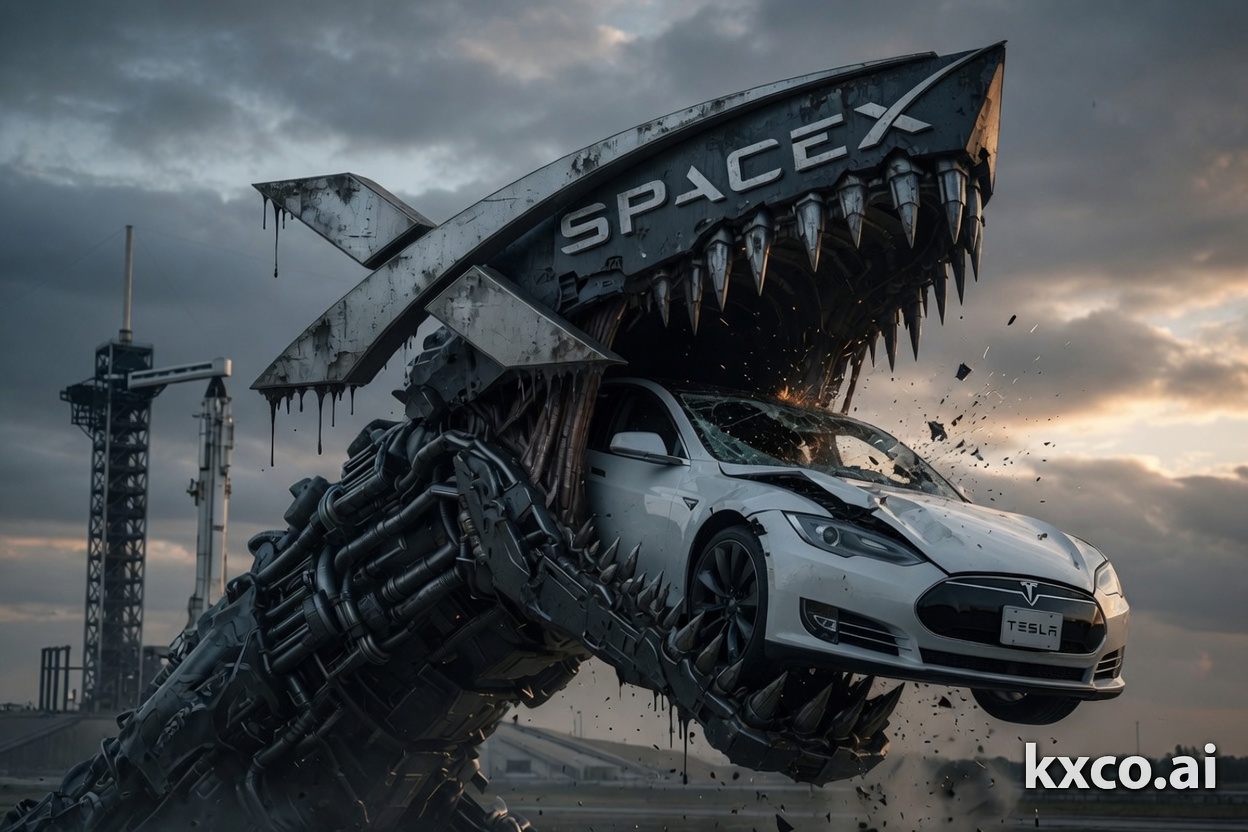
In August 2018, Elon Musk famously tweeted that he was considering taking Tesla private at $420 per share, adding the words "funding secured" that would later trigger an SEC investigation, a $20 million fine, and a saga that has since become part of Silicon Valley folklore. At the time, the market treated the tweet as a joke, a miscalculation, or possibly the product of sleep deprivation. But what if Musk was not joking at all? What if the number $420 was not arbitrary but rather a carefully considered valuation threshold at which a merger between SpaceX and Tesla would become structurally and strategically inevitable?
Today, the case for such a combination is dramatically stronger than it was in 2018. Tesla has evolved from a niche electric vehicle manufacturer into a vertically integrated manufacturing powerhouse with deep expertise in batteries, artificial intelligence, robotics, and energy systems. SpaceX has transformed from a scrappy rocket startup into the dominant force in global launch services, satellite communications, and deep-space exploration. Both companies share a common founder, a common mission to accelerate the transition to sustainable energy and multi-planetary civilization, and an increasingly overlapping technological portfolio. The only thing keeping them apart is a corporate structure that made sense when both companies were fragile startups, but now represents an artificial barrier to the kind of synergy that could define the next century of human industry.
This article argues that SpaceX acquiring Tesla at or near $420 per share is not merely plausible but strategically necessary. The convergence of their technologies, the economics of vertical integration, the imperative of manufacturing at scale for space hardware, and the emergence of shared AI and robotics capabilities all point toward a merger that would create the most powerful industrial entity on Earth. We will examine each dimension of this convergence in detail, from Tesla's manufacturing genius to SpaceX's orbital ambitions, and from the role of Tesla's humanoid robots in building Starship components to the way both companies are already mapped together in the KXCO Ontology, the live knowledge graph at kxco.ai/ontology-live that tracks the deep structural relationships between the world's most important technology companies.
$420: Elon's Favorite Number, and He Keeps Coming Back to It
To understand why $420 might be the price, you first have to understand the man choosing it. Elon Musk has a well-documented love of irony, in-jokes, and numbers that carry a second meaning. The figure $420 is the clearest example. When he tweeted in August 2018 that he was considering taking Tesla private at $420 per share, the number was not pulled from a discounted cash flow model. By his own later account, the true math pointed to roughly $419, and he rounded up to $420 because of the number's cultural resonance — a decision he has openly admitted was partly a joke, and one that cost him a $20 million SEC fine and the chairmanship of his own company.
But here is what the folklore misses: Musk did not stop using the number after it got him in trouble. He has returned to $420 again and again — in tweets, in pricing, in offers, and in throwaway references — long after the joke stopped being cheap. In 2022 he moved to buy Twitter at $54.20 per share, threading the same number into the largest acquisition of his career. This is not a man who used $420 once by accident. It is a man who treats it as a signature, a recurring motif he attaches to the deals that matter most to him.
That pattern is exactly why the $420 Tesla number deserves a second look rather than a dismissive laugh. Musk has a habit of telegraphing his intentions inside jokes that the market is too literal-minded to take seriously — until they happen. He is on record saying he wanted to take Tesla private. He has repeatedly signaled that Tesla, SpaceX, and his other ventures are components of a single mission rather than separate businesses. And he has demonstrated, more than once, that a number the world treats as a punchline can turn out to be the real price on the real term sheet. If SpaceX and Tesla ever do come together, the man orchestrating it would find it almost irresistible to close the loop on the number that started the whole saga. For Musk, $420 would not be a valuation. It would be a punchline finally delivered — with funding, this time, genuinely secured.
The Manufacturing Imperative: Tesla's Unfair Advantage
Tesla's most underappreciated asset is not its brand, its Supercharger network, or even its full self-driving technology. It is the company's manufacturing capability. Over the past decade, Tesla has built what is arguably the most advanced automotive manufacturing operation on the planet. The Gigafactory concept, pioneered with Gigafactory Nevada and now replicated in Shanghai, Berlin, Austin, and soon Mexico, represents a fundamentally new approach to industrial production that combines extreme vertical integration, rapid iteration, and data-driven process optimization.
Consider the numbers. Gigafactory Texas alone spans more than 10 million square feet and produces the Model Y, the Cybertruck, and the Tesla Semi simultaneously on a single campus. Gigafactory Shanghai, which went from an empty field to full production in under 12 months, has become the most efficient automotive plant in the world by virtually every metric, producing more vehicles per employee than any traditional automaker. Tesla's casting technology, which uses massive Giga Press machines to cast entire sections of a vehicle body as a single piece, has eliminated hundreds of robots, thousands of parts, and significant assembly time from the production process. This is not incremental improvement; this is a paradigm shift in how things are made.
The implications for SpaceX are enormous. One of the fundamental challenges in spaceflight is manufacturing at scale. Rockets are complex, precision-engineered machines that have traditionally been built in small quantities using processes that are closer to aerospace craftsmanship than mass production. SpaceX has already begun to change this with Starship, which uses stainless steel construction and iterative design principles that borrow heavily from the software world. But SpaceX is, at its core, a rocket company, not a manufacturing company. Its expertise lies in propulsion, orbital mechanics, and avionics. The hard, unglamorous work of building millions of identical parts to tight tolerances at the lowest possible cost is exactly what Tesla has spent the last decade perfecting.
Imagine Tesla's Gigafactory expertise applied to Starship production. Currently, each Starship vehicle requires months of fabrication at SpaceX's Starbase facility in Boca Chica, Texas. The process involves massive steel rings being welded together, thousands of Raptor engines being assembled by hand, and complex thermal protection systems being applied with painstaking precision. Tesla's manufacturing philosophy, with its emphasis on automation, parallel production lines, and continuous process improvement, could dramatically accelerate this timeline while simultaneously reducing costs. The same Giga Press technology that consolidated hundreds of Model Y parts into a handful of castings could revolutionize the production of rocket structures, propellant tanks, and engine components.
Optimus and the Robotic Workforce of the Future
Perhaps the most compelling bridge between Tesla and SpaceX is Optimus, Tesla's humanoid robot platform. Unveiled at AI Day in 2021 and steadily improving with each generation, Optimus represents Tesla's bet that the same AI, sensor, and actuator technology developed for autonomous driving can be adapted for general-purpose robotics. The latest iterations of Optimus demonstrate impressive capabilities in walking, object manipulation, and fine motor control, and Tesla has stated its intention to deploy thousands of these robots in its own factories within the next few years.
Now consider what Optimus means for SpaceX. Rocket manufacturing involves countless tasks that are difficult to fully automate with traditional industrial robots but that are well within the capability of a general-purpose humanoid. Wiring harnesses, one of the most labor-intensive components of any aerospace vehicle, require dexterous manipulation in confined spaces. Thermal protection tiles must be individually inspected, sorted, and applied with precision. Engine components must be assembled, tested, and calibrated by technicians working in awkward positions. These are exactly the kinds of tasks that humanoid robots are designed to handle. Rather than building custom automation for each of these processes, SpaceX could deploy Optimus units that are already trained on a vast library of manipulation tasks and can be rapidly adapted to new ones through Tesla's neural network training infrastructure.
The feedback loop between SpaceX and Tesla's AI teams would be extraordinarily powerful. SpaceX's engineering challenges, which involve operating in extreme environments with zero margin for error, would push Optimus's capabilities far beyond what factory work alone could achieve. Conversely, Tesla's massive scale in robot production would drive down the per-unit cost to levels that make widespread deployment at SpaceX economically viable. This is not speculative synergy; it is the logical extension of technologies that both companies are already developing in parallel. The KXCO Ontology at kxco.ai/ontology-live already maps the deep structural connections between Tesla's robotics research and SpaceX's manufacturing requirements, showing how both companies are converging on the same technological substrate from different directions.
SpaceX's Orbital Ambitions Require Tesla-Scale Manufacturing
SpaceX's long-term vision extends far beyond launching satellites and ferrying astronauts to the International Space Station. The Starship system, when fully operational, is designed to be the workhorse for a new space economy that includes orbital manufacturing, space-based solar power, lunar mining, and eventually the colonization of Mars. Each of these ambitions requires manufacturing at a scale that dwarfs anything humanity has ever attempted in space. The Starlink constellation alone, with its thousands of satellites requiring regular replacement and upgrade, represents a manufacturing challenge that is already stretching SpaceX's production capabilities.
Starlink is perhaps the clearest example of where Tesla's manufacturing expertise could be transformative. Each Starlink satellite incorporates custom phased-array antennas, laser communication terminals, ion thrusters, and sophisticated solar arrays. Currently, these satellites are produced at a facility in Redmond, Washington, using processes that, while advanced by aerospace standards, still fall far short of the mass-production techniques that Tesla has perfected. Applying Tesla's manufacturing principles to Starlink production, including automated assembly lines, just-in-time component delivery, and real-time quality control powered by machine vision, could dramatically reduce the cost per satellite while increasing production throughput. Given that SpaceX plans to launch tens of thousands of second-generation Starlink satellites, even modest per-unit cost reductions translate into billions of dollars in savings over the lifetime of the constellation.
Beyond Starlink, the real prize is orbital manufacturing itself. Both SpaceX and Tesla have publicly discussed the concept of building large structures in space, from space stations and solar power arrays to shipyards for interplanetary vehicles. The advantage of manufacturing in orbit is that you are not constrained by the size limitations imposed by rocket fairings; you can build structures as large as you want, limited only by the raw materials you can deliver. But building anything in space requires a manufacturing infrastructure that does not yet exist, and creating that infrastructure is fundamentally a manufacturing problem, not a rocket science problem. It requires exactly the kind of expertise that Tesla has spent years developing: designing and operating highly automated production systems that can work reliably with minimal human intervention.
The Starship Factory of the Future
The vision of a combined SpaceX-Tesla manufacturing ecosystem is not science fiction. It is a near-term possibility that becomes almost inevitable once you understand the trajectory of both companies' technologies. Imagine a Starship factory where rows of Optimus robots work alongside human engineers, assembling Raptor engines with sub-millimeter precision while Tesla-designed automated lines produce stainless steel hull sections at a rate of one per day. Imagine raw materials arriving at one end of the factory and completed Starship vehicles rolling out the other, ready for launch, with a production cadence that mirrors Tesla's vehicle output rather than the current hand-built approach. This is the kind of manufacturing revolution that would make not just Mars colonization feasible but economically rational.
The economic case is straightforward. Starship's per-launch cost is already projected to be in the range of $10-20 million once the system is fully operational, a fraction of the cost of any existing launch vehicle. But that cost is predicated on rapid reuse and high flight rates, both of which require a steady supply of vehicles. If each Starship takes six months to build and costs $200 million in materials and labor, the fleet size and launch cadence will be fundamentally limited. If Tesla's manufacturing approach can cut that build time to six weeks while reducing labor costs by 60 percent through automation, the entire economics of the space economy change. Launch costs drop further, fleet sizes grow, and the marginal cost of each additional mission approaches the cost of propellant alone.
The AI Convergence: One Brain, Two Bodies
At the deepest level, the argument for combining SpaceX and Tesla comes down to artificial intelligence. Both companies are among the world's most advanced AI organizations, but they are approaching the problem from different angles and with different constraints. Tesla's AI is focused primarily on perception, prediction, and planning in the context of autonomous driving and robotics. The company has assembled one of the largest AI teams in the industry, built a custom training supercomputer called Dojo, and accumulated more real-world driving data than all other autonomous vehicle programs combined. Tesla's neural networks process billions of frames of video per day, learning to recognize objects, predict behavior, and make driving decisions in the messy, unpredictable environment of public roads.
SpaceX's AI challenges are different in detail but similar in structure. Autonomous landing of Falcon 9 boosters requires real-time perception, prediction, and control under extreme conditions. Starship's automated rendezvous and docking procedures demand the same kinds of capabilities. SpaceX's satellite constellation management involves coordinating thousands of autonomous objects in orbit, optimizing routing, avoiding collisions, and managing power and communication resources across a global network. These are all fundamentally AI problems, and the neural network architectures that Tesla is developing for self-driving have direct applicability to SpaceX's autonomy challenges.
A merged AI division serving both companies would be extraordinarily powerful. Tesla's massive dataset of real-world driving and robotics experience would provide the training foundation, while SpaceX's extreme-environment requirements would push the technology to levels of robustness and reliability that no terrestrial application alone could demand. The same vision system that allows a Tesla to navigate a busy intersection could be adapted for orbital rendezvous and planetary landing. The same motion-planning algorithms that guide Optimus through a factory floor could control robotic systems on the surface of Mars. This is not about cost savings or administrative efficiency; it is about creating an AI capability that neither company could develop independently.
Energy and Propulsion: The Battery Connection
Tesla's energy division, which includes solar panels, Powerwall home batteries, and utility-scale Megapack installations, is another critical piece of the convergence puzzle. SpaceX's vehicles require enormous amounts of stored energy, both for propulsion and for the operation of onboard systems. While SpaceX's rockets primarily use chemical propulsion, there is a growing role for battery technology in spaceflight, from powering Starlink satellites to providing energy storage for lunar and Martian habitats. Tesla's position as the world's leading battery manufacturer and energy storage company makes it the natural partner for SpaceX's energy needs.
The 4680 battery cell, which Tesla developed and is now producing at scale, represents a significant advance in energy density, cost, and durability. Originally designed for electric vehicles, these cells have potential space applications that are only beginning to be explored. Battery-powered lunar rovers, energy storage systems for the Moon base that NASA has contracted SpaceX to build, and power systems for the Starship itself during coast phases all represent markets where Tesla's battery technology could provide a competitive advantage. More broadly, Tesla's expertise in thermal management, battery safety, and manufacturing scale are directly transferable to the space domain, where energy storage is a critical enabling technology for virtually every mission architecture.
The $420 Valuation: Not a Meme, a Milestone
Returning to the number that started it all, $420 per share is no longer the outlandish figure it appeared to be in 2018. Tesla's stock has split multiple times since then, and the company's market capitalization has grown from roughly $50 billion to over $800 billion at its peak. The company's revenue, profitability, and cash flow have all grown dramatically, driven by the expansion of its vehicle production, the growth of its energy business, and the increasing value of its AI and robotics capabilities. A buyout at $420 per share in today's terms, adjusted for stock splits, would represent a premium but not an unreasonable one given the strategic value that Tesla would bring to a combined entity.
For SpaceX, which completed its own historic IPO in June 2026 and now trades on the Nasdaq under the ticker SPCX at a valuation approaching $1.75 trillion, acquiring Tesla would provide several immediate strategic benefits. First, it would give SpaceX a public-market acquisition currency: having just raised roughly $75 billion in its offering, SpaceX now has both the cash and the highly valued stock needed to fund a large acquisition without the friction of a private raise. Second, it would bring Tesla's enormous cash generation capability under the same corporate umbrella, providing the combined entity with the financial resources needed to accelerate its most ambitious projects. Third, and most importantly, it would eliminate the artificial corporate boundary that currently prevents the kind of deep technological integration that both companies need to achieve their long-term goals — a boundary that looks even more anachronistic now that both companies answer to public shareholders.
The structure of such a deal could take several forms. A traditional acquisition, in which SpaceX purchases all outstanding Tesla shares for cash and stock, is the most straightforward approach. Alternatively, a merger of equals could create a new holding company that encompasses both entities, preserving their individual brands and operational identities while enabling technology sharing and coordinated strategic planning. A third option, and perhaps the most elegant, would be a stock swap in which Tesla shareholders receive shares in the combined company at a ratio that values Tesla at approximately $420 per share. Regardless of the specific structure, the end result would be the same: two of the most innovative companies in human history operating under a single strategic vision.
The KXCO Ontology: Mapping the Convergence
The deep structural relationship between SpaceX and Tesla is not merely a matter of observation; it is now being formally mapped and tracked by the KXCO Ontology, a live knowledge graph that captures the ontological relationships between the world's most important technology entities. The KXCO Ontology, accessible at kxco.ai/ontology-live, represents a new paradigm in understanding how companies, technologies, and industries are interconnected at a fundamental level, going beyond surface-level comparisons to reveal the shared conceptual foundations that drive innovation and value creation.
Within the KXCO Ontology, SpaceX and Tesla are connected through multiple high-weight relationship edges that span domains including artificial intelligence, advanced manufacturing, energy systems, autonomous systems, and materials science. The ontology captures the fact that both companies share not just a founder but a common technological substrate: machine learning systems trained on massive real-world datasets, vertically integrated manufacturing processes that blur the line between digital design and physical production, and a philosophy of rapid iteration that treats every product as a living system subject to continuous improvement. These are not superficial similarities; they are manifestations of the same underlying approach to building technology, and the KXCO Ontology makes these connections explicit and quantifiable.
The KXCO Ontology also reveals crossover points that may not be immediately obvious to casual observers. For example, the ontology maps connections between Tesla's work on neural network training infrastructure and SpaceX's need for real-time onboard AI processing, between Tesla's battery thermal management expertise and SpaceX's propellant temperature control challenges, and between Tesla's factory automation systems and SpaceX's vision for autonomous orbital construction. By making these relationships visible and navigable, the KXCO Ontology provides a powerful tool for understanding why a SpaceX-Tesla combination is not just a corporate finance story but a technological imperative.
Under One Banner: The Strategic Case for Unification
The strategic case for bringing SpaceX and Tesla under one corporate banner can be summarized in three words: manufacturing, intelligence, and capital. Manufacturing, because the scale of production required for SpaceX's space ambitions demands Tesla-level industrial capability. Intelligence, because the AI systems that will power autonomous vehicles, humanoid robots, lunar rovers, and orbital construction equipment are fundamentally the same technology, developed more efficiently by a single, unified AI organization. And capital, because the combined entity would have access to both public equity markets and the cash flow generated by Tesla's automotive and energy businesses, providing the financial foundation for multi-decade investment in the technologies that will define humanity's future in space.
Critics will argue that the two companies serve different markets and face different competitive dynamics, and that merging them would create a conglomerate discount rather than a synergy premium. This argument misses the point. The synergy between SpaceX and Tesla is not about selling rockets to car buyers or cars to rocket scientists. It is about shared technology, shared manufacturing philosophy, shared AI infrastructure, and a shared vision that transcends any individual product line. When Henry Ford vertically integrated his manufacturing operations, from rubber plantations to iron mines to assembly lines, critics called it empire building. History called it the most important industrial strategy of the twentieth century. The SpaceX-Tesla combination would be the twenty-first century equivalent, applied to the defining challenge of our era: building a multi-planetary civilization.
There is also a defensive dimension to consider. As the space economy develops, competitors are emerging on every front. Amazon's Blue Origin is building its own heavy-lift rocket and lunar lander. China's space program is advancing rapidly with the Long March family of rockets and plans for a lunar base. Multiple companies, from Relativity Space to Rocket Lab, are chipping away at SpaceX's dominance in launch services. In the automotive and AI domains, companies like BYD, Google's Waymo, and a growing list of humanoid robot startups are intensifying competitive pressure on Tesla. A combined SpaceX-Tesla entity would be far more resilient against these competitive threats, with the resources and technological breadth to compete on multiple fronts simultaneously.
Conclusion: The Inevitable Convergence
SpaceX buying Tesla at $420 is no longer a meme from a controversial tweet. It is a description of the most logical end point for two companies that have been converging for years. Tesla's manufacturing genius, its AI capabilities, its robotics platform, and its energy expertise are precisely what SpaceX needs to achieve its most ambitious goals. SpaceX's orbital infrastructure, its launch capabilities, and its vision for a space-based economy are precisely what Tesla needs to expand its impact beyond the terrestrial surface. Together, they would represent an industrial entity of unprecedented capability, one that could build cars, robots, rockets, satellites, and entire cities, on Earth and beyond.
The KXCO Ontology at kxco.ai/ontology-live already maps this convergence, documenting the deep structural connections that make a merger not just desirable but inevitable for those who understand the technological landscape at the deepest level. The question is not whether SpaceX and Tesla will eventually come together under one banner, but when, and at what price. $420 per share may yet prove to be the number that history remembers as the moment when the future became inevitable.
This is an opinion and analysis piece by Shayne Heffernan. It is not investment advice. Explore the live map of these relationships at [kxco.ai/ontology-live](https://kxco.ai/ontology-live/).
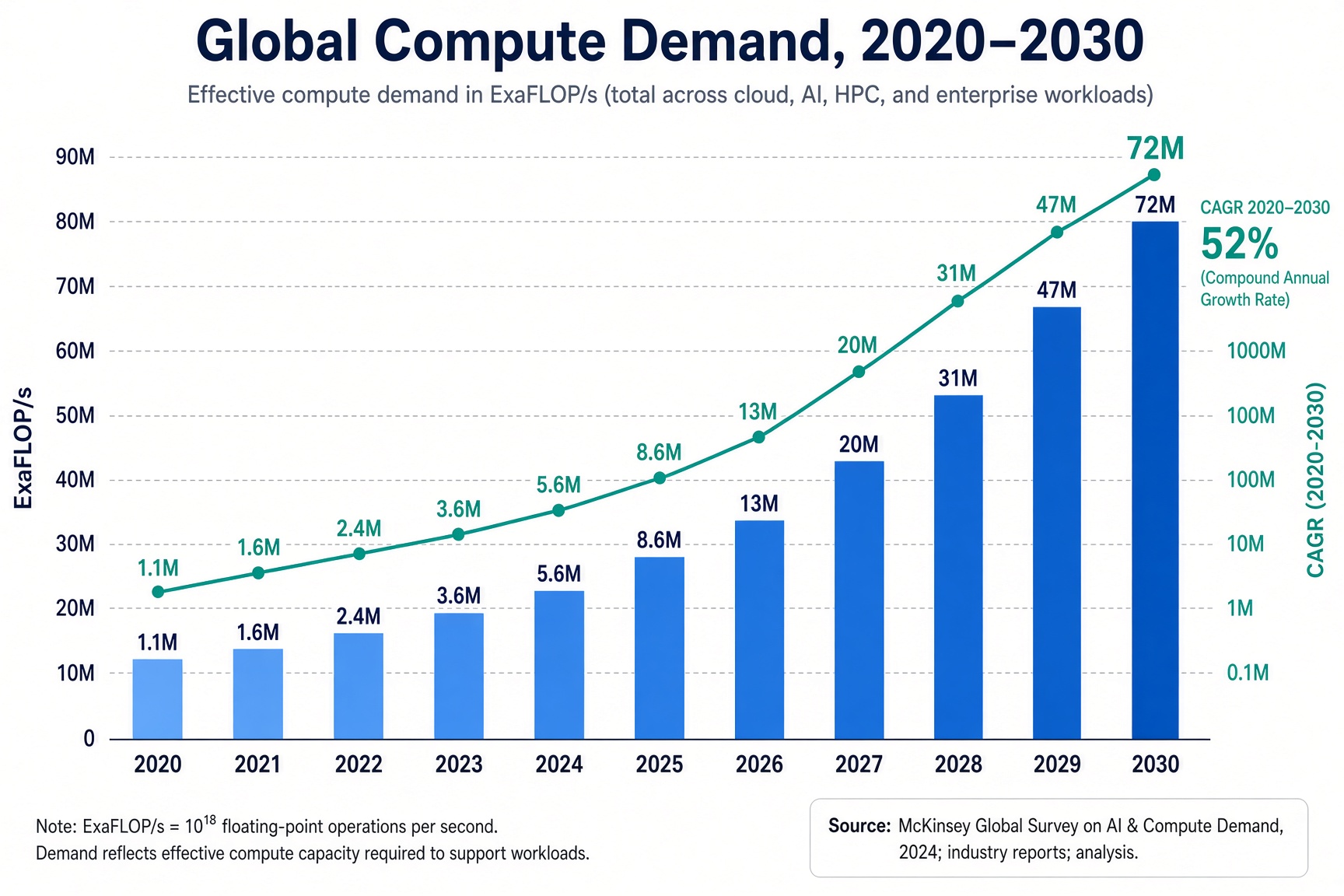
The 2030 Compute Landscape: GPUs, Power and the Architecture of Intelligence
The constraint on AI is no longer ideas or data but compute and the power to run it. Frontier training compute has grown about five times a year since 2020, and the leading AI supercomputer of June 2030 is on course for about 2 million chips and 9 gigawatts. Shayne Heffernan sets out the 2030 arithmetic, the power problem, who has already contracted the gigawatts, and how GPUs, custom ASICs, wafer-scale engines and quantum machines divide the work.
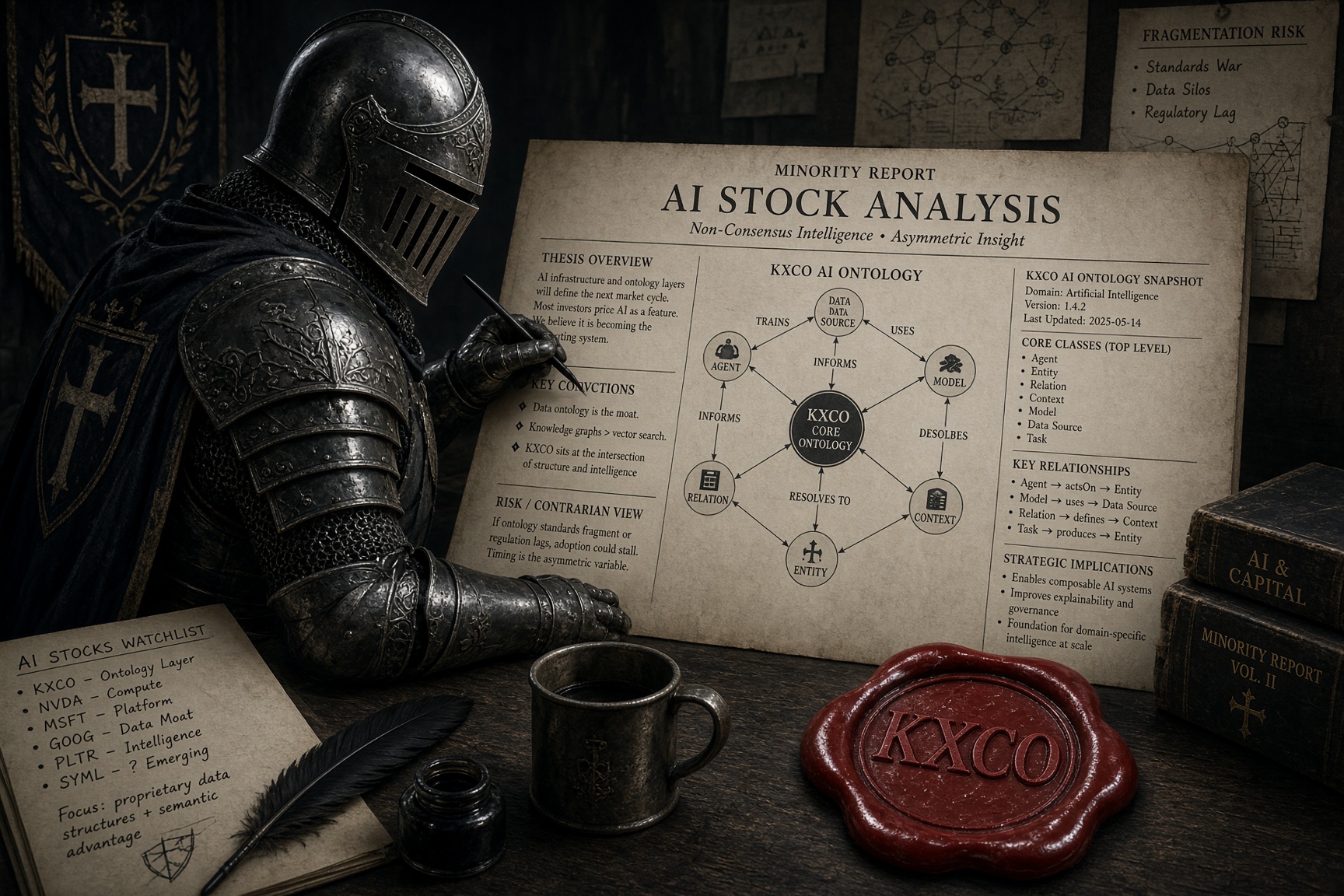
KXCO AI Ontology at 3 Months: What It Called and What Comes Next
On 19 July 2026 the Round Table's AI room published its first Analyst Outlook. To the 16 October 2026 close its 13 names rose 2.6% on an equal weight against 2.1% for QQQ, per StockAnalysis closes, and the six it opened with 35% or more of upside rose 8.6%. This piece lists the six names up more than 5%, the ten names I rate as opportunities now, the month's results in AI and quantum computing, and the official data showing that four in five firms have not yet started using AI.

SpaceX: The Road to 10 Gigawatts
SpaceX did not add an AI business. A company whose processes run on compute built its own computing plant, then built the power to run it. The 10-Q reports 1.4 gigawatts of nameplate compute at 30 June 2026, four leases worth about $41 billion a year and $100 billion of cash. The target is closer to 10 gigawatts than 5 by the end of 2027. This piece sets out the build sequence, the four layers of power in Memphis, and why Terafab is the act after 2027, not the road to it.
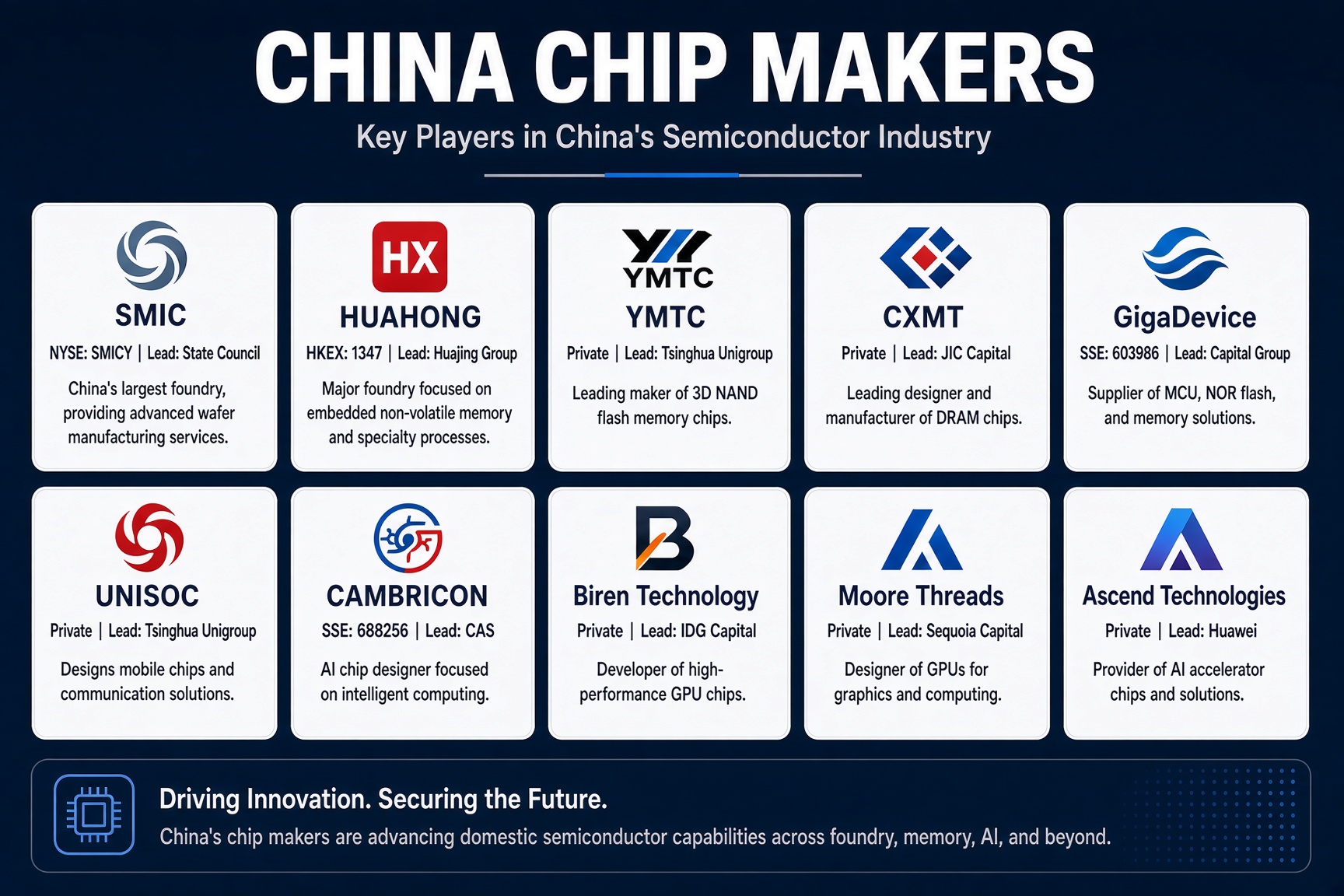
The China Chip Shock
On 10 October CXMT said it will ship DDR5 server modules on a 4F2 cell by year-end. Micron, SK Hynix, Samsung and Sandisk sold off for two sessions and Elon Musk said China scales faster than the rest of the world combined. This piece sets out China's memory makers, foundries, AI chip designers and toolmakers, with two knowledge graphs drawn from the KXCO AI Sector Ontology, and says what the sell-off prices and what it does not.
Every story, signed and delivered.
Subscribe to the kxco channel and get the headline, the AI-written key takeaways, and the chain-anchor link the moment we publish. Audio versions and per-ticker subscriptions arrive in the next iteration.