
AI Stocks: What to Buy Now
The KXCO ontology ranked thirteen AI majors on 24 July. Its top six returned 12.3% against 3.2% for the Nasdaq 100. Here is the scoreboard, the week that reshaped the sector, and where the value gaps sit now.
Part of theAI Stocks Center
The tape going into the last week of August is up, not down. The Nasdaq 100 gained 3.2% between 24 July and 24 August. Semiconductors are on pace for their best August in more than two decades. On Wednesday 26 August, Nvidia reports a quarter the Street thinks lands between $93bn and $95bn of revenue against the company's own guide of roughly $91bn, and that single print is the largest scheduled datapoint the sector will get this quarter.
So the question is not whether to own AI. It is which AI, and at what price. The gap between the best and worst performer among the seventeen public majors we track was more than fifty percentage points in a single month. Owning the theme was not the trade. Owning the right names inside the theme was.
This is where the mapping work earns its keep, so let me start with the scoreboard rather than the thesis.
The scoreboard: one month, thirteen names
On 24 July our public showcase ontology at kxco.ai/ontology-live carried thirteen listed AI majors, each with a recorded price, a consensus rating and an implied upside to the twelve-month price target. That snapshot is dated and checkable. Here is what those thirteen actually did to the 24 August close.
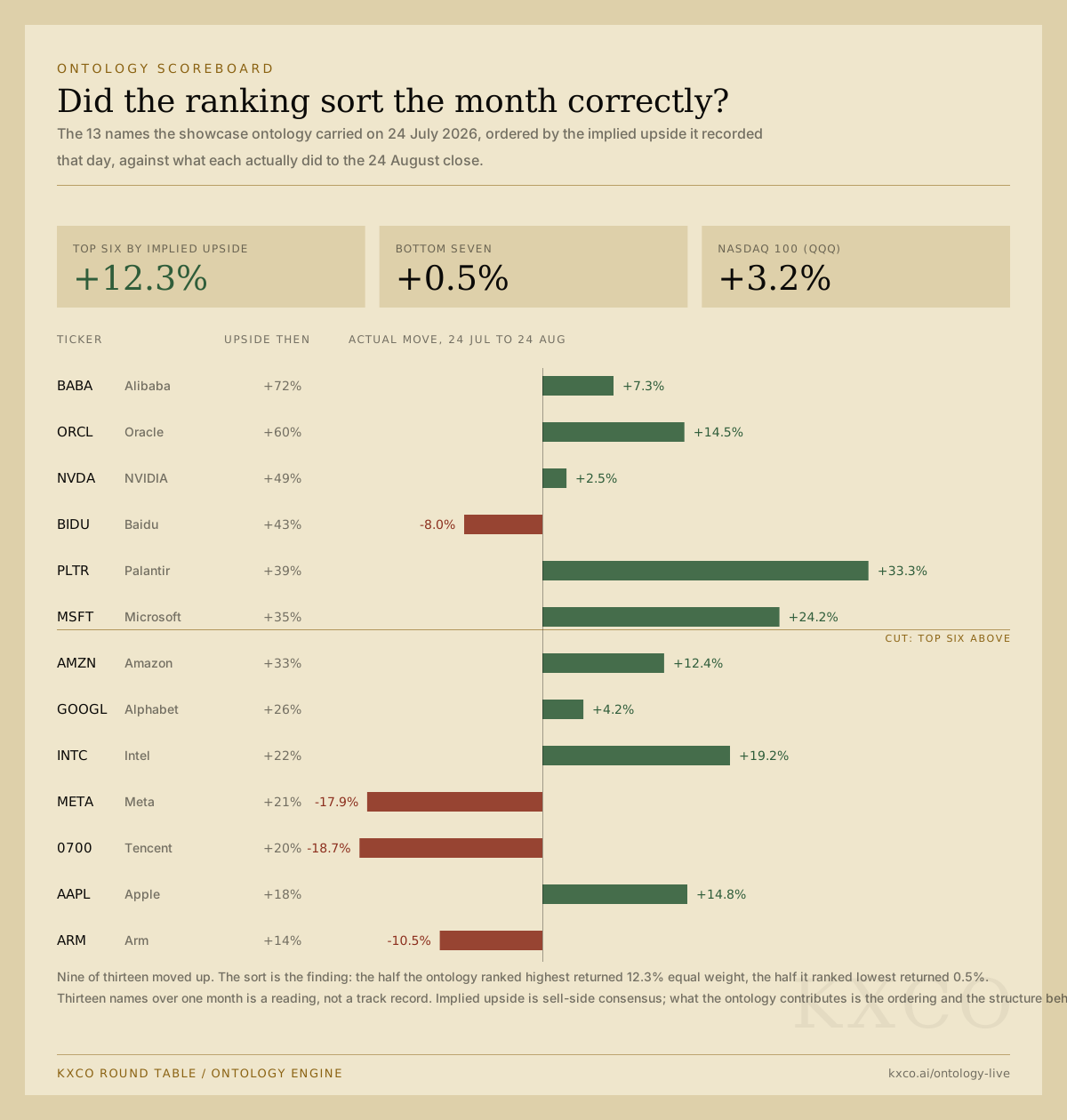
Nine of thirteen moved up. Equal weighted, the whole list returned 5.9% against 3.2% for the Nasdaq 100.
The interesting number is not the average. It is the sort. Take the six names the map ranked highest by implied upside on 24 July and they returned 12.3% equal weighted. Take the seven it ranked lowest and they returned 0.5%. That is an eleven point spread between the top half and the bottom half of the same list over four weeks, and it is the reason we publish the ranking rather than a watchlist.
The standout was Palantir. The ontology carried $PLTR at $132 on 24 July with 39% implied upside. It closed 24 August at $176, a 33.3% gain. Microsoft was next at 24.2%, then Intel at 19.2%. Oracle, the name carrying the widest upside gap in the sector, added 14.5%.
Two things need saying plainly, because a scoreboard that only reports the wins is marketing rather than measurement.
Baidu was in the top six and it fell 8.0%. The cheap-China-AI thesis broke during the month: Baidu swung to a trailing loss on AI spend, and the Street split hard, with consensus at $151 and Morgan Stanley cutting to $80. The map recorded the deterioration when it happened rather than quietly dropping the row, but it was ranked highly going in and it went the wrong way.
And thirteen names over one month is a reading, not a track record. Implied upside is sell-side consensus, not a KXCO forecast. What the ontology contributes is the ordering, the sourcing and the structure underneath each number. One month does not prove a method. It does show the method working on a month where the sector split.
What is doing the work, and what is on display
A note on terminology, because we are going to be using it consistently from here on.
The engine behind this is called Round Table. It is KXCO's proprietary ontology engine, and it is not available to the public. It is not a product page, it is not a free tier, and there is no waiting list link at the bottom of this article. It runs against private books of record for a small number of counterparties, and it stays that way.
What is public is kxco.ai/ontology-live, and it is a showcase. It exists to demonstrate what the engine does using data anyone can check: 388 entities and 857 typed claims across the AI and compute sector, 803 of them carrying a live source URL, every one stamped with when the claim held in the world and when we asserted it. It is deliberately built on public reporting, filings and official registers only, because the entire argument is that if the method is this useful on data everyone already has, it is considerably more useful on data only you have.
The showcase is not a lesser version of the engine. It is the same engine pointed at a deliberately weak dataset. That is the demonstration.
Two design choices in it are worth understanding before you read the rest of this piece, because they are why the scoreboard above is honest.
Claims carry two independent time axes. When something was true, and when we said it. That means we cannot quietly backdate a call. The 24 July snapshot in that chart is the 24 July snapshot.
And claims that stop being true are marked superseded rather than deleted. Fourteen claims in the current graph carry a closing date and are retained in the published data rather than removed from it, so you can query the graph as it stood on an earlier day. When our reading of the OpenAI listing timeline broke in August, the finding was rewritten in place with the reason stated, not silently swapped out. A map you can only check when it agrees with you is not a map.
The week that changed the shape of the sector
Four things happened between 20 and 24 August that matter more than the price action did, and three of them point the same direction.
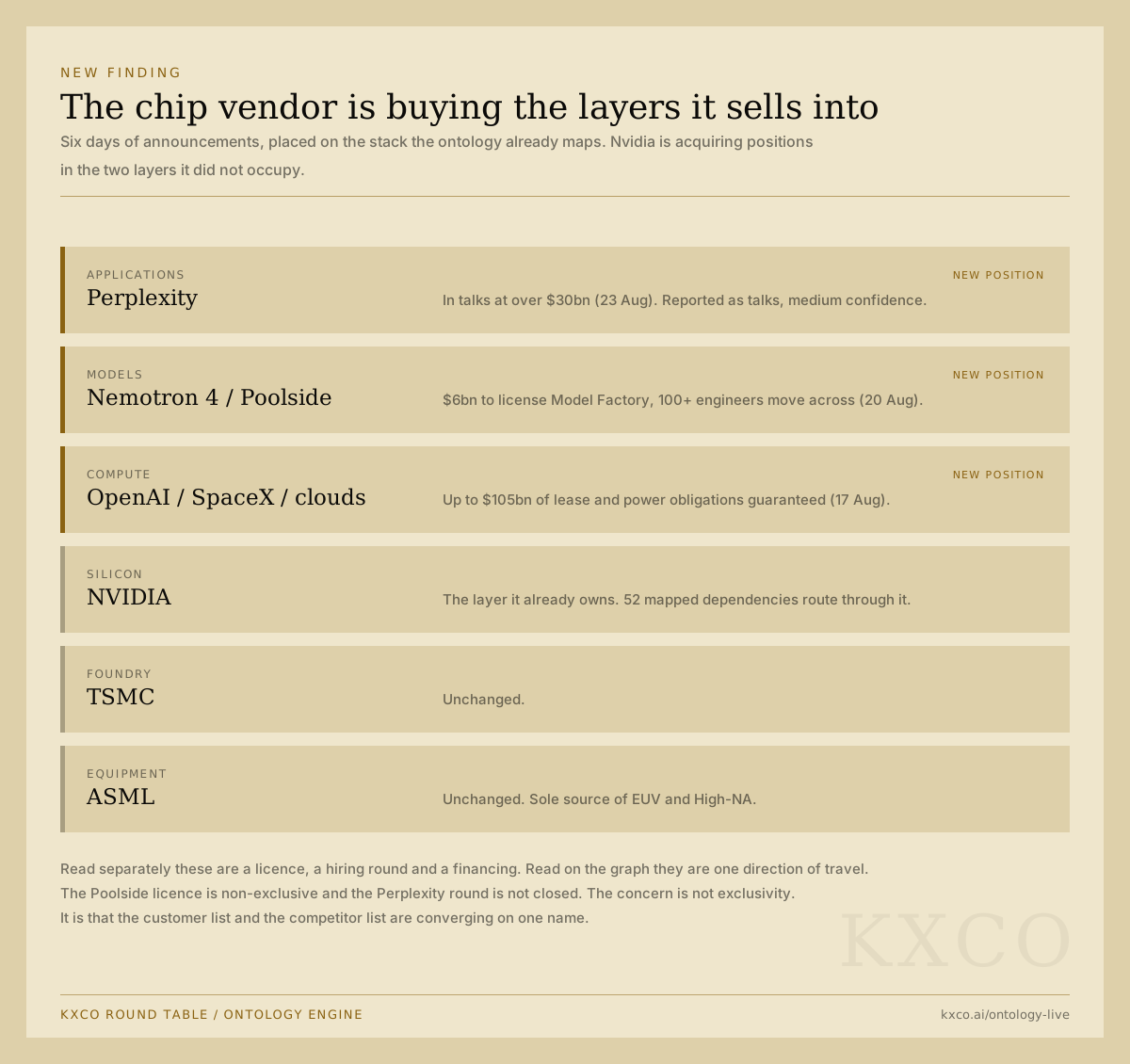
Nvidia bought a model factory. On 20 August it emerged that Nvidia is paying the code-model startup Poolside $6bn to license Model Factory, the internal system Poolside used to develop its own models, and that more than 100 Poolside engineers are moving across to work on Nemotron, Nvidia's open-weight model programme. The licence is non-exclusive. The three founders are not going. The shareholder letter is explicit that this is neither an acquisition nor an acquihire.
Nvidia opened talks on an application-layer company. On 23 August, The Information reported Nvidia in discussions to invest in Perplexity at a valuation above $30bn, up from roughly $20bn a year ago. Perplexity's annualised revenue has passed $750m from under $250m in January, helped by Perplexity Computer. These are talks, not a closed round, and we have recorded them at medium confidence accordingly.
The week before, Nvidia guaranteed up to $105bn of OpenAI's conditional lease and power obligations at the Ohio PORTS-Pike campus.
Read as three separate stories you have a licence, a hiring round and a financing. Read on the graph, they are one direction of travel. The supplier that every other layer already depends on is buying positions in models and in applications, the two layers of the stack it did not previously occupy. We have added this as a new finding, and the honest framing matters: the Poolside licence is non-exclusive, so it takes nothing away from anyone else, and the Perplexity round is not signed. The concern is not exclusivity. It is that the customer list and the competitor list are converging on one name. A lab buying Nvidia silicon in 2027 may be buying it from a company that also funds its distribution channel, publishes a free open-weight competitor to its models, and stands behind its largest rival's power contracts.
Alibaba went to the market for the money. On 23 August Alibaba priced HK$80bn, about $10.2bn, of new stock at HK$112.70, a 3.6% discount. It is the largest primary follow-on offering ever by a Hong Kong-listed company and the third largest anywhere this year behind Alphabet and Intel. One hundred per cent of net proceeds are earmarked for full-stack AI: chips, infrastructure, and model development and deployment. The book closed within hours at about $28bn of demand including roughly $6bn from sovereign wealth funds. The shares fell about 10% on pricing.
That last one deserves more credit than the tape gave it. The four US hyperscalers are guiding to roughly $725bn of AI capital spending this year, up about 77%, and a running question on this map has been how that gets funded without leaning on circular vendor structures. Alibaba answered it by diluting shareholders in the open market at a discount, and got punished on the day for choosing the transparent route. That is worth remembering the next time a vendor-financed deal is described as creative.
One more, quieter but structural. Hugging Face is reportedly exploring a sale at $13bn or more, against the $4.5bn it was valued at in 2023. Four frontier labs, Meta, Alibaba's Qwen, DeepSeek and Mistral, all publish their open weights through that one private hub, which also owns the local runtime most of those weights actually execute on. The open half of the sector is usually described as the decentralised half. Its distribution is not, and it is now for sale. No buyer is named, which is exactly why we have recorded it as a note against the entity rather than as a relationship: there is no counterparty to draw a line to yet.
The filing that closed a loop
The story that got the most attention this week was the smallest in dollar terms, and it is the one we think is most instructive about what an ontology is actually for.
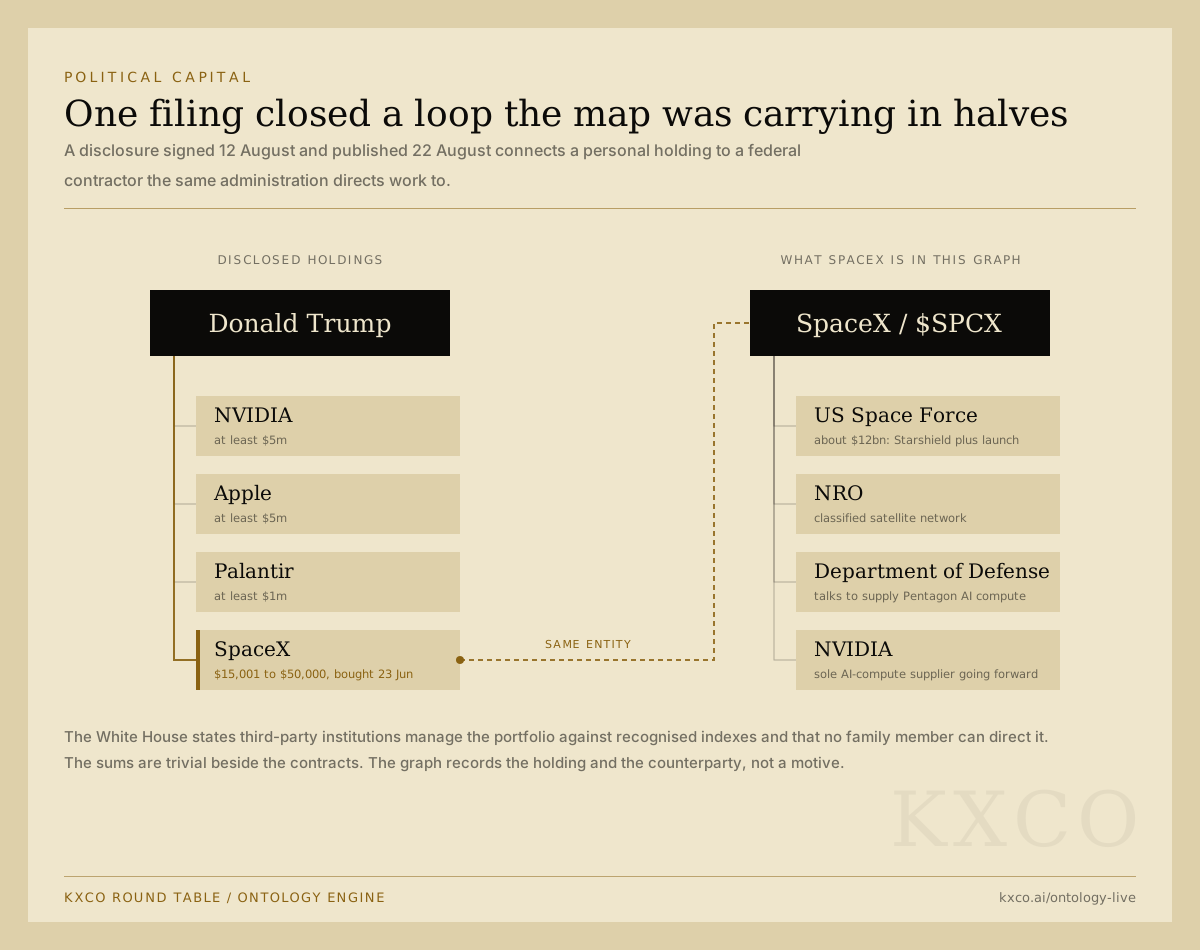
A financial disclosure signed on 12 August and made public on 22 August shows that President Trump bought between $15,001 and $50,000 of SpaceX on 23 June 2026, eleven days after the company's record-breaking IPO, with the stock in the mid $150s. It was one of more than 1,000 trades in June. The White House states that third-party institutions manage the portfolio against recognised indexes such as the Schwab 1000, and that neither the President nor any family member can direct how it is invested.
Taken alone, it is a rounding error. Fifty thousand dollars is not a story.
What makes it a story is what sits on the other side of the line. Our map already held presidential positions in Nvidia, Apple and Palantir. It already held SpaceX as roughly $12bn of US Space Force work through Starshield and launch contracts, a classified NRO satellite programme, active talks to supply the Pentagon with AI compute, and, since early August, an exclusive commitment to build its AI compute on Nvidia silicon. The administration has since directed an increase in US commercial space launches.
The graph was carrying both halves and no connection between them. One filing closed the loop.
This is the whole argument for typed claims in one example. Nobody reading the disclosure alone learns anything actionable, and nobody reading the contract awards alone sees the overlap. The value is not in either document. It is in the edge between them, and an edge only exists if something is holding both facts in the same structure with dates attached. We record the holding and the counterparty. We do not assert a motive, and no source cited here does either.
For investors the practical read is narrower and still worth having: $SPCX is a company whose federal revenue base, regulatory posture and now shareholder register all touch the same administration. That is a variable in the model, priced or not.
What to buy now
Here is the full table as of the 24 August US close, all seventeen names, ranked by implied upside to the consensus twelve-month target. Tencent is quoted at the 25 August Hong Kong open. Average implied upside across the seventeen is 37%.
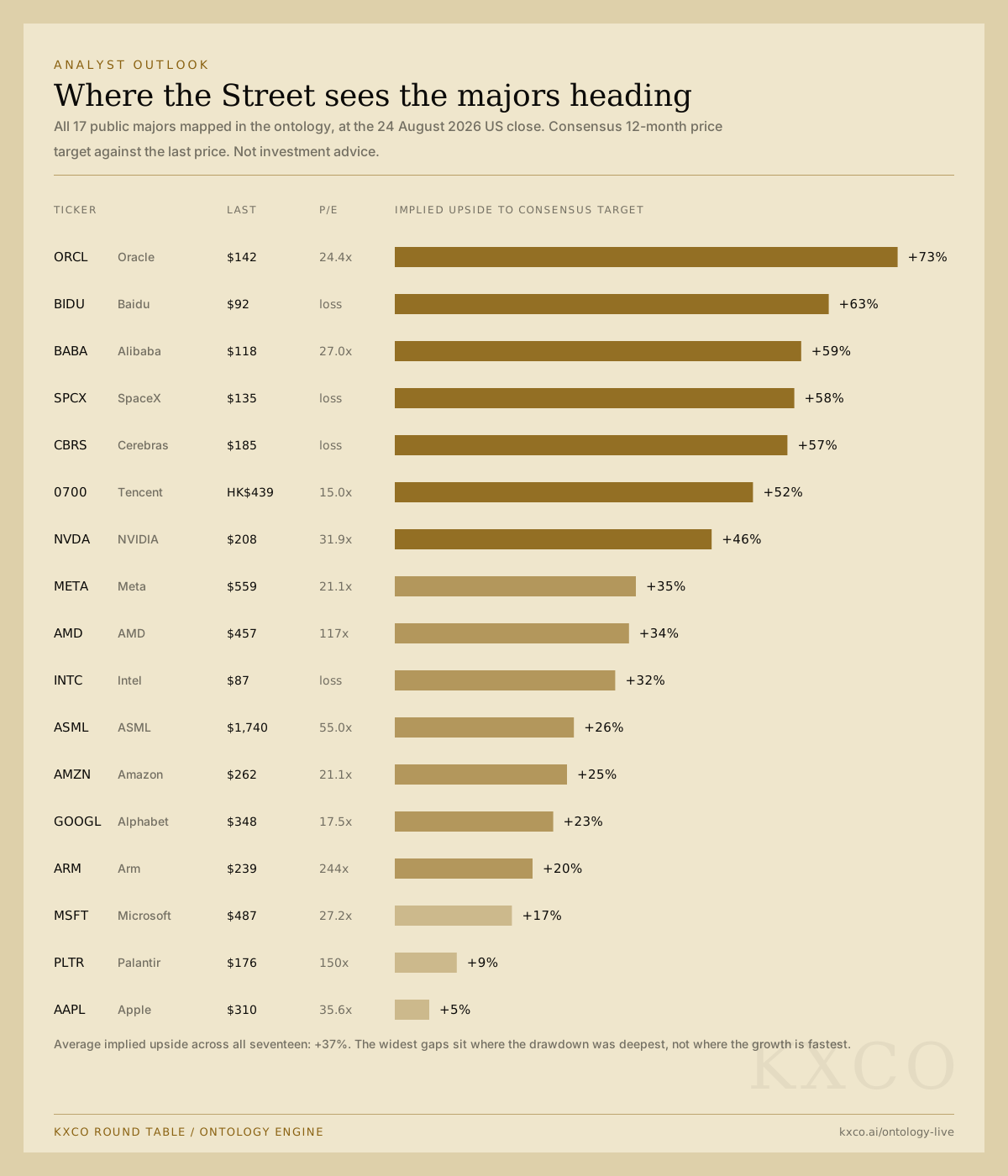
The pattern in that chart is the thing to notice before any individual name. The widest gaps sit where the drawdown was deepest, not where the growth is fastest. Oracle at 73% and Palantir at 9% are not a disagreement about AI. They are a disagreement about what has already been paid for.
The drawdown gaps. Oracle is the widest on the board at $142 against a $246 consensus target. OCI is growing 47%, the backlog is intact, and the shares sit roughly 60% below their September 2025 high. Alibaba at 27 times earnings has just told you what it thinks the opportunity is worth by raising $10.2bn at a discount to chase it, and took a 10% hit for saying so out loud. Tencent trades at 15 times, below its own five-year average, while capex rises 176% on the AI push. These are the value gaps, and they are where we would be adding rather than chasing.
The chokepoints. ASML at 26% upside remains the single most defensible position in the sector and the one the map keeps returning to: every leading-edge AI chip in the world is printed on its machines and there is no second source. Nvidia at 46% is the most connected entity in the entire graph, with 52 mapped dependencies routing through it, and Wednesday's print is the catalyst. Both are core rather than tactical.
The second sources. AMD at 34% is the only supplier to reach the frontier tier against Nvidia, with up to 2GW of MI450 and up to $5bn of equity going into Anthropic, plus roughly 6GW to OpenAI. At 117 times earnings it is priced for that transition completing rather than for the current book, which is a real risk and also the entire point of owning it. Cerebras at 57% is the only listed wafer-scale alternative to the GPU, rotating its revenue base away from the UAE concentration it listed with via a 750MW OpenAI agreement and AWS distribution.
The new listing. SpaceX closed 24 August at exactly $135, its June listing price, having traded above $200 in between. Consensus is Buy with a $214 target and 58% implied upside. Revenue is $23.0bn trailing and growing 122%, and it is losing $8.9bn. The forward multiple near 104 times tells you this is a bet on execution, not a value name. What the graph adds is that it is simultaneously the sector's largest new listing, a top-tier compute node sole-sourced to Nvidia, a major federal contractor and, since Saturday, a disclosed presidential holding. Size the position for that.
Priced to perfection. Palantir grew Q2 revenue 93% and US commercial 149%, and it is the best-performing name on our month scoreboard. It is also on 150 times earnings with 9% implied upside. That is not a sell case; it is a warning that the next leg has to come from earnings rather than from multiple. Apple at 5% upside and no model of its own, and Arm at 244 times with targets trimmed after its last print, sit in the same category. Own them if you own them. We would not be adding here.
The frame we would offer is the same one that has worked all year: stay long, do not buy everything, and buy the gaps. The sector is not expensive in aggregate. It is extremely unevenly priced, and the unevenness is legible.
The other half of the map
Three of the seventeen names above are Chinese, and they carry three of the four widest upside gaps on the board. That is not a coincidence and it is not simply a discount for political risk.
What the map records on the other side of the export controls is a near-complete domestic stack. DeepSeek's V4 trained end to end on Huawei Ascend silicon, the first frontier-class model built without Nvidia. A $295bn state plan for a unified national compute grid by 2028 mandates 80% domestic sourcing, which locks out Nvidia and AMD alike. Alibaba and Tencent jointly bankroll a fleet of open-weight labs. Alibaba's own Qwen family displaced Meta's Llama as the most downloaded on Hugging Face and is now one of four labs whose weights all route through that single hub.
The investment consequence is specific rather than general. These businesses are not waiting on an export licence to have a product. They are spending through the restriction, which is what Alibaba's $10.2bn raise actually funds, and the market is pricing them as though the restriction were the ceiling. Baidu is the counterexample and the caution: the same spending that builds the stack swung it to a trailing loss, and the Street is split between $151 and $80 on the same company. Cloud infrastructure revenue grew 50% and GPU cloud grew 283% in its last quarter, so the demand is not in question. The economics are.
Size China exposure smaller than the upside numbers suggest and hold it longer than a quarter. The re-rating, if it comes, will not come on a catalyst you can diary.
What would break this
Three things, all of them already on the map rather than invented for this article.
The circular structures. Roughly a trillion dollars of deals recycle inside one cohort of companies, now across fifteen mapped loops, and the newest ones changed the kind of risk rather than the amount. Nvidia guaranteeing up to $105bn of a customer's obligations means demand is now partly self-guaranteed as well as partly self-referential. That works while the spending thesis holds and unwinds badly if it does not.
The funding question. $725bn of hyperscaler capex in 2026 against cloud revenue that is accelerating but not accelerating that fast. Alibaba's dilution is one honest answer. Vendor credit is the other, and it is the one the market has been rewarding.
Concentration, now compounded. Nvidia was already a single point of failure on 52 dependencies. Vertical integration does not add a dependency, it makes the existing ones harder to substitute away from. If you own the sector, you own that risk whether or not you own the ticker.
None of these are reasons to be out. They are reasons to know what you own, which is a different instruction.
Wednesday
Nvidia's fiscal Q2 lands on 26 August. Guidance is about $91bn plus or minus 2%; the Street is at $93bn to $95bn with data centre revenue possibly above $80bn. The stock sold off 2.9% into it on Monday and sits at $208 against a $305 consensus target.
The result matters well beyond one ticker. It is the cleanest read available on whether the capex numbers above are being converted into revenue at the rate the multiples across this entire table assume. We will update the showcase ontology with the print and with whatever it does to the rest of the graph, and the snapshot will be dated, sourced and checkable like the last one.
Stocks mentioned in this article: $NVDA, $ORCL, $BABA, $SPCX, $PLTR, $MSFT, $AMZN, $GOOGL, $META, $AAPL, $INTC, $AMD, $ASML, $ARM, $CBRS, $BIDU and $TCEHY.
You can explore every claim behind this piece, including the sources and dates on each one, at kxco.ai/ontology-live. More market commentary from the author at shayneheffernan.com.
Shayne Heffernan, Ph.D., is the founder of Live Trading News, the KnightsBridge Group, Knightsbridge Law and the KXCO.ai ecosystem spanning post-quantum cryptography, identity, attestation and enterprise ontology.
This article is commentary and analysis, not investment advice. Prices, ratings and price targets are a point-in-time snapshot at the 24 August 2026 US close and move continuously. Do your own research and consider your own circumstances before trading.
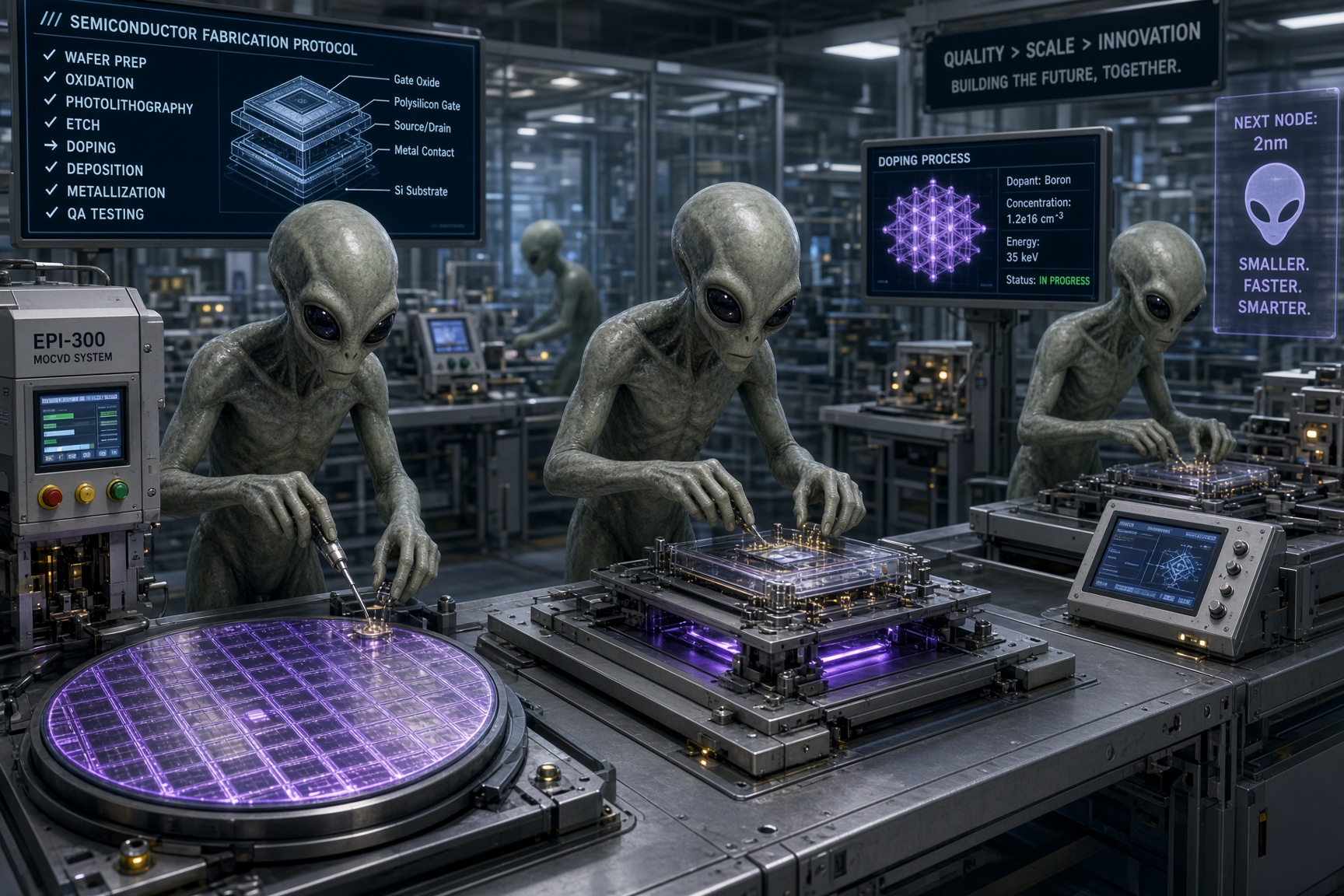
AI Is Being Powered by Tech That Looks Almost Alien
Every frontier AI model runs on chips printed by one Dutch machine. ASML's extreme-ultraviolet scanner fires a laser at up to 50,000 droplets of molten tin a second, per ASML, and bounces the light off mirrors whose deviations are tens of picometres. Veritasium called it the closest thing we have to alien technology. This piece takes the film as the brief and checks it: the machine, High-NA, and the wafer-scale chips and liquid-cooled racks downstream of it.
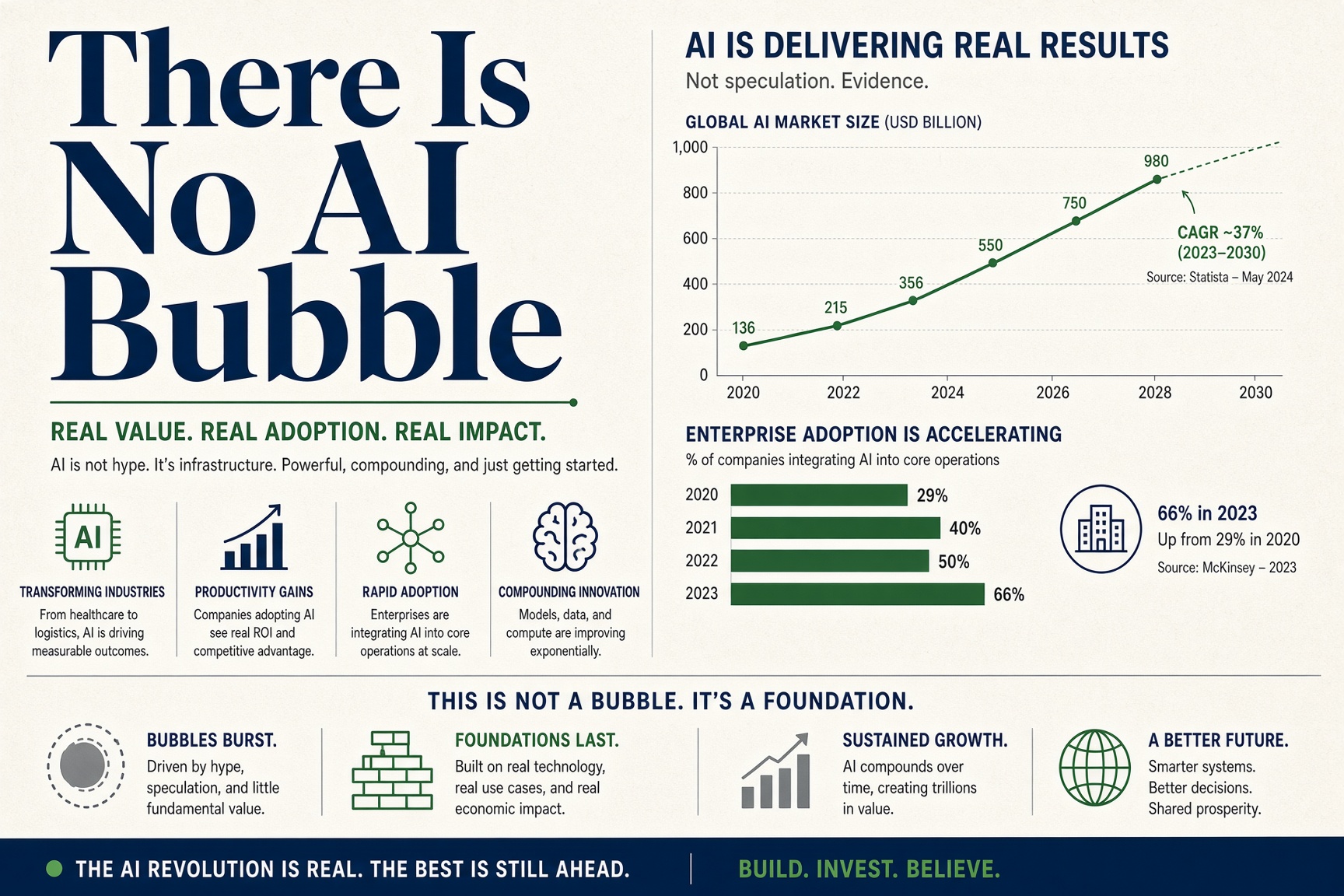
There Is No AI Bubble
There is no AI bubble. A bubble is capacity nobody uses, demand nobody signs for and a glut when the building stops. KXCO's AI sector ontology, refreshed on 7 October 2026, finds the reverse: adoption rising on six independent measures, about $2.35tn of contracted backlog at the four largest sellers of compute per their own reports, and supply rationed at every layer. It keeps the bear case in the same record, 20 circular capital claims, and answers it.
Weekly Market Outlook: Fed Minutes, Anthropic and OpenAI IPOs, Gold, Bitcoin, FX
The Fed raised rates in September and payrolls rose 29,000, per the Labor Department. This week the FOMC minutes, three Treasury auctions and a 10-year near 5.3 percent test that gap. Anthropic's IPO clock runs toward a 14 October investor day while OpenAI's chief executive says not 2026. Gold sits 26 percent below its record, bitcoin near $85,500, the dollar up three weeks running. Two knowledge graphs from KXCO's records map the IPO backers and the FDA board.
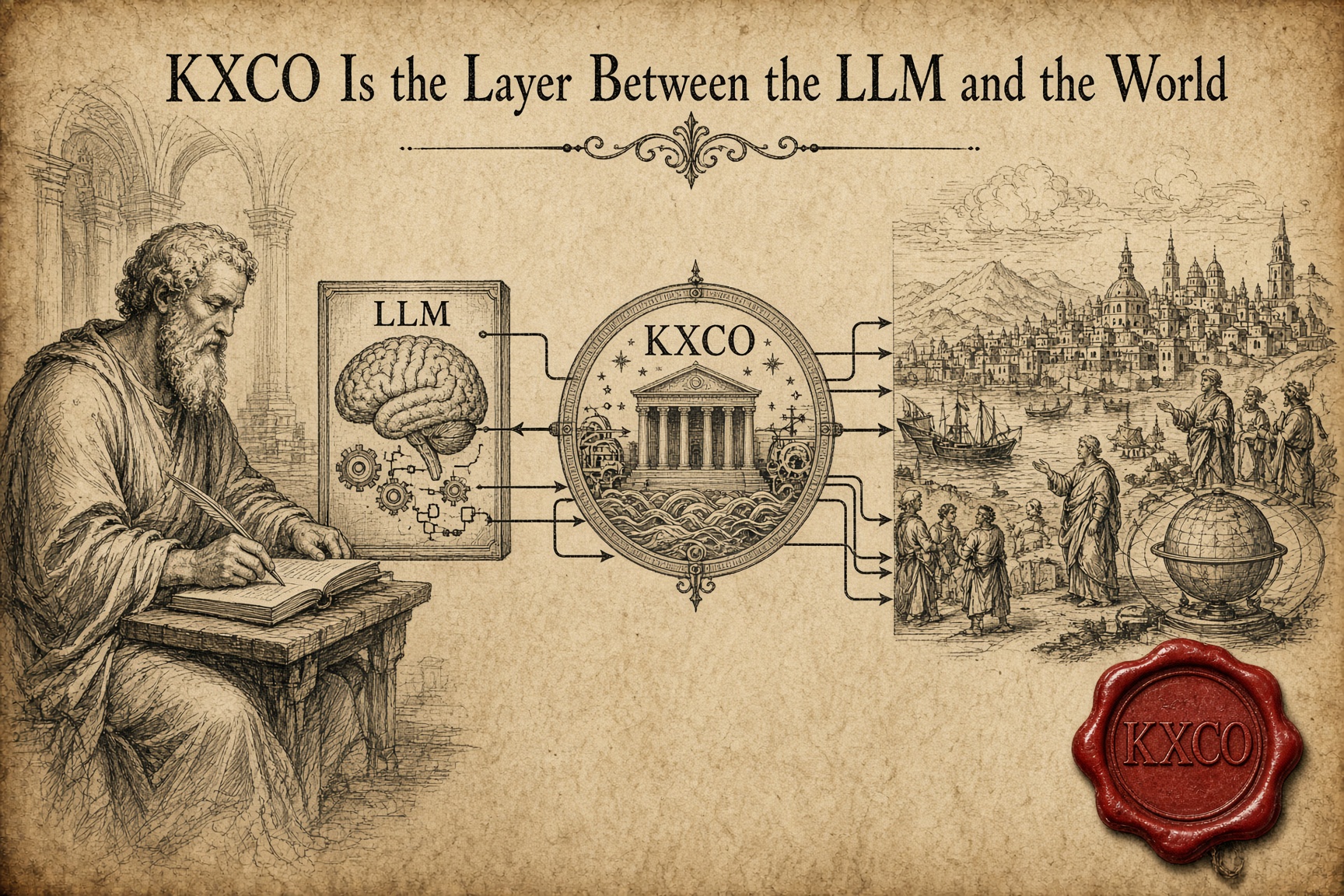
KXCO Is the Layer Between the LLM and the World
Give a hundred people the same book and very few will act on it. AI is that book: it distributes access, not understanding, and an institution cannot act on a paragraph. KXCO does not build another model or another agent. It builds the layer between the model and the world: who is speaking, what they are allowed to do, what they committed, and a post-quantum signature a stranger can check without asking us.
Every story, signed and delivered.
Subscribe to the kxco channel and get the headline, the AI-written key takeaways, and the chain-anchor link the moment we publish. Audio versions and per-ticker subscriptions arrive in the next iteration.