
TSMC $TSM at the Heart of the AI Boom
A confident 5–10% price rise into the world's most powerful customers is the clearest signal yet — the AI build-out is early, and TSMC makes almost every chip it runs on.
Part of theAI Stocks Center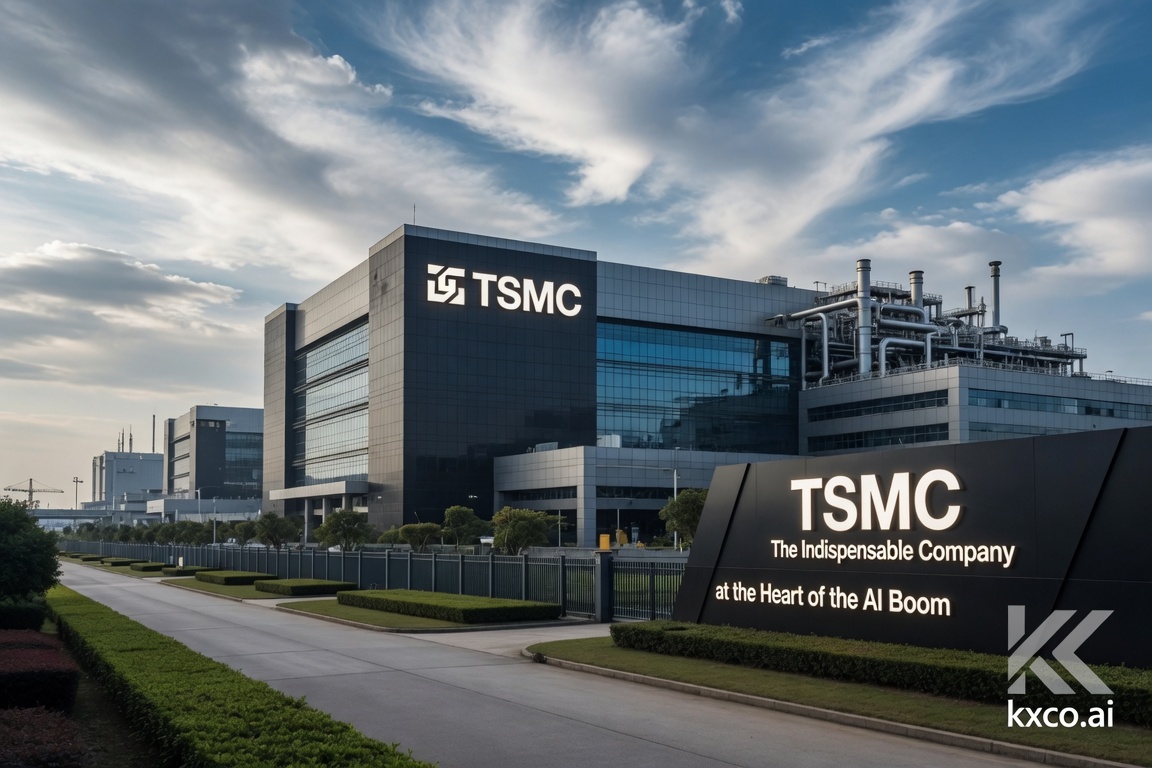
When a company raises prices and its customers pay without walking away, that is not greed — it is a market telling you something. This month, reports out of Asia say Taiwan Semiconductor Manufacturing Company (NYSE: TSM) intends to raise chipmaking prices by 5–10% starting in January 2027. The customers on the other side of that table are the most powerful technology companies on earth. None of them is walking away. That single fact tells you almost everything you need to know about where we are in the artificial-intelligence cycle, and who is positioned to win it.
I have been saying for some time that the AI story is not late — it is early. The pricing power TSMC is now exercising is the clearest confirmation yet.
What was actually announced
According to reporting from Nikkei Asia, relayed through the June–July negotiating season, TSMC is preparing price increases of between 5% and 10% that take effect at the start of 2027. The rises depend on the customer and the product. Interestingly, some of the sharpest increases — up to 10% — are aimed at mature nodes (12-nanometre, 16-nanometre and 28-nanometre process technologies), not just the bleeding-edge chips everyone associates with AI.
TSMC, as a matter of policy, does not comment on customer pricing, so the specifics come from supply-chain sources rather than an official disclosure. What the company will say is instructive. A spokesperson framed it plainly:
"Our pricing strategy is strategic, not opportunistic. We will continue to work closely with customers and sell our value to them."
And in June, chief executive C.C. Wei signalled a deliberate approach — a desire to raise prices while avoiding the "abrupt price hikes that some memory firms have imposed." Read that carefully. This is a company so confident in its position that its main concern is pacing the increases, not whether the market will bear them.
The numbers behind that confidence are extraordinary. TSMC posted a 77% jump in second-quarter profit, reaching T$706.6 billion — roughly US$22 billion — comfortably ahead of expectations. Rising costs for raw materials, equipment and overseas plant construction give TSMC a reason to raise prices. Its position in the market gives it the ability to make those increases stick. Those are two very different things, and only the second one makes a company worth owning.
Why TSMC can do this: the chokepoint nobody can route around
To understand why the world's largest customers absorb these increases, you have to see where TSMC sits in the machine that builds artificial intelligence. This is exactly the kind of structural relationship our team at KXCO has been mapping.
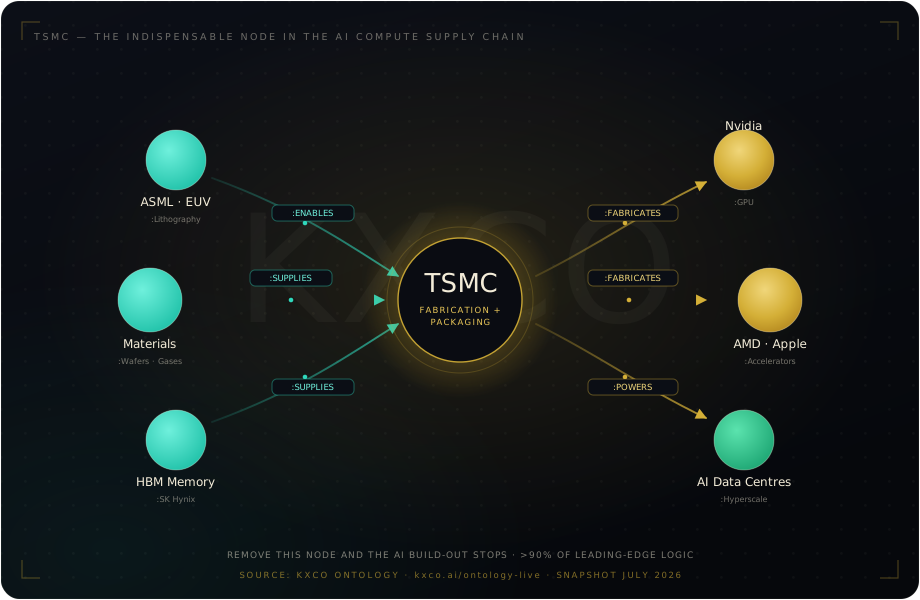
We maintain a live [AI-sector ontology](https://kxco.ai/ontology-live) — a graph of the companies, dependencies and capital flows that actually make the AI economy run, built entirely from public filings. As of the July 2026 snapshot it tracks 199 entities, 470 sourced claims and more than US$1 trillion in mapped capital flows. When you lay the supply chain out as a graph rather than a list of tickers, one thing jumps out immediately: a handful of nodes are load-bearing for the entire structure, and if you removed any one of them the whole build-out would stall.
TSMC is one of those nodes. The chain runs like this: ASML alone makes the extreme-ultraviolet (EUV) lithography machines that every leading-edge chip requires. Those machines sit inside TSMC, which is where the overwhelming majority of the world's advanced logic chips are actually manufactured. TSMC's output then becomes the Nvidia, AMD and Apple silicon that powers every serious AI data centre on the planet. ASML behind TSMC, TSMC behind Nvidia, Nvidia behind the models — each link depends on the one before it, and none of them is easily substituted.
That is what "indispensable" means in practice. It is not a marketing adjective. It is a description of a graph in which the arrows only point one way. Nvidia designs the most sought-after AI accelerators in history, but Nvidia does not own a single leading-edge fab — it hands its designs to TSMC. Apple builds the most profitable consumer hardware ever made, and it too relies on TSMC to fabricate its chips. The hyperscalers designing their own custom AI silicon to reduce their dependence on Nvidia? They route those designs straight back to the same foundry in Taiwan.
You can see the full picture, with the sources behind each relationship, in the KXCO ontology. The point I want to underline is this: when a single company sits at a chokepoint that every competitor must pass through, price increases are not a risk to the business — they are the business.
The AI sector is just beginning
Here is where I part ways with the nervous commentary. A lot of very intelligent people have spent the last year debating whether AI is a bubble about to pop. My view is close to the opposite: we are still in the opening act.
Consider the shape of the adoption curve. Enterprise deployment of AI has barely started. The vast majority of businesses on earth have not rebuilt a single core workflow around these models. Governments are only now moving from press releases to procurement — and when state money floods into a sector, as it inevitably will here, it does not trickle, it pours. The models themselves are improving faster than the infrastructure can be built to run them, which is precisely why the constraint in this industry is not demand or ideas. The constraint is compute. And compute, at the leading edge, means TSMC.
Every one of those forces — enterprise adoption, sovereign AI programmes, ever-larger models, custom accelerators, robotics, edge inference — resolves to the same physical bottleneck: someone has to fabricate the chips, and there is really only one company that can do it at scale and at the leading edge. The demand for TSMC's wafers is not a function of this quarter's sentiment. It is a function of a technological transition that is measured in decades, and we are in year two or three of it.
There is a second point buried in the pricing news that most coverage missed. The steepest increases — up to 10% — land on mature nodes, the older, cheaper process technologies used for the power-management chips, controllers, sensors and connectivity silicon that surround every AI system and fill every car, appliance and industrial machine. If demand were confined to a narrow band of AI accelerators, TSMC would have no leverage to raise mature-node pricing at all. The fact that it can tells you the tightness is broad-based — the whole electronics economy is competing for the same finite pool of fabrication capacity, and AI is simply the hungriest bidder at the table.
Scale matters here too. The KXCO ontology maps over US$1 trillion in capital already committed across the AI supply chain, and that figure captures announced spending, not the sovereign and enterprise budgets still to come. When more than a trillion dollars of committed capital all needs the same manufacturing capacity to become real, the company that owns that capacity does not have a demand problem. It has a pricing opportunity — and it is beginning to use it.
That is why I keep returning to the same conclusion in these pages. Investors who think they have missed the AI trade are typically looking at the wrong clock. The build-out of the physical layer — fabs, packaging, memory, power — has years left to run.
Why TSMC is the ideal way to own it
If AI is early, the question becomes how to own it without betting the farm on which model, which chatbot, or which application layer wins. This is where TSMC becomes almost uniquely attractive.
It is agnostic to who wins. Whether the future belongs to Nvidia or to a hyperscaler's in-house silicon, whether the breakthrough application is agents or robotics or something not yet invented, the winning chips get made in the same place. TSMC sells the picks and shovels to every side of every fight. In a gold rush where you cannot be sure which prospector strikes it rich, you want to own the only company that makes the shovels.
It has genuine pricing power, and it is only now using it. The 5–10% increases confirm what the graph already implied. A business that can raise prices into its most powerful customers and see 77% profit growth is not a commodity manufacturer — it is a monopoly-adjacent utility for the most important technology of our time. Crucially, the fact that increases hit even mature nodes tells you the pricing power is broad, not confined to the AI-halo products.
Its moat is measured in years and tens of billions of dollars. Building a leading-edge fab is one of the most capital-intensive and technically demanding undertakings in human industry. The equipment, the process knowledge, the yield learning, the ecosystem of materials and packaging partners — none of it can be bought off a shelf or spun up in a hurry. Competitors have spent enormous sums trying to close the gap and remain behind. That gap is the shareholder's friend.
Advanced packaging widens the moat further. As raw transistor scaling gets harder, the industry has shifted to stitching multiple chips together in advanced packages. TSMC's packaging capacity has become its own bottleneck for AI accelerators — another chokepoint layered on top of the fabrication chokepoint. More arrows, all pointing one way.
The risks, stated honestly
No thesis is complete without the other side of the ledger, and I will not pretend this one is risk-free.
The obvious concern is geographic concentration. The overwhelming majority of the world's most advanced chips are made on one island, in one geopolitical flashpoint. TSMC is building capacity in the United States, Japan and Germany to diffuse that risk, but those overseas plants cost more to build and run — one of the stated reasons for the price rises in the first place. This is a real risk and it deserves respect, not dismissal.
The second is cyclicality. Semiconductors have always been a cyclical industry, and even indispensable companies see their share prices swing hard with sentiment. The correct response to that is not to avoid the stock but to buy it well — to scale in on weakness rather than chase strength, and to hold across the cycle rather than trade around it.
The third is capital intensity. The same spending that builds the moat also consumes enormous cash, and if the AI build-out ever paused, that spending would look heavy. But a pause in AI compute demand is precisely the scenario the whole ontology argues against.
The bottom line
Strip away the noise and the situation is simple. The AI economy rests on a physical foundation, that foundation rests on a small number of indispensable companies, and TSMC is the most indispensable of them all. When a company at a chokepoint raises prices and its customers say thank you, the market is handing you a signal in plain language.
The AI sector is not ending. It is barely beginning. And the single best-positioned company to benefit from the decade ahead is the one that quietly makes almost every chip the revolution runs on. You can trace the dependencies for yourself in the KXCO ontology — the arrows all point back to Taiwan.
Shayne Heffernan is the founder of KXCO. This article is market commentary and reflects the author's opinion. It is not investment advice; do your own research and consider your own circumstances before making any investment decision.
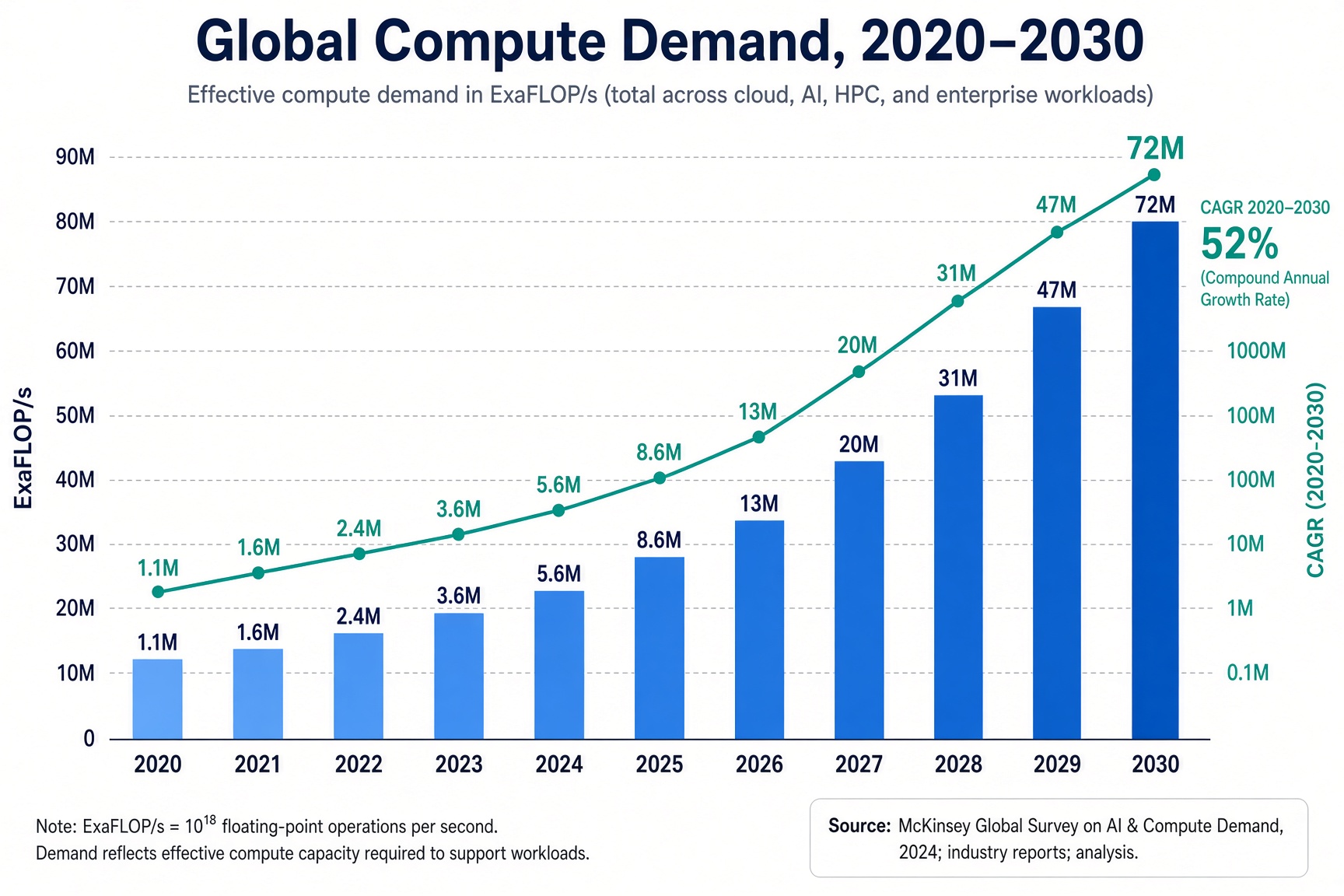
The 2030 Compute Landscape: GPUs, Power and the Architecture of Intelligence
The constraint on AI is no longer ideas or data but compute and the power to run it. Frontier training compute has grown about five times a year since 2020, and the leading AI supercomputer of June 2030 is on course for about 2 million chips and 9 gigawatts. Shayne Heffernan sets out the 2030 arithmetic, the power problem, who has already contracted the gigawatts, and how GPUs, custom ASICs, wafer-scale engines and quantum machines divide the work.
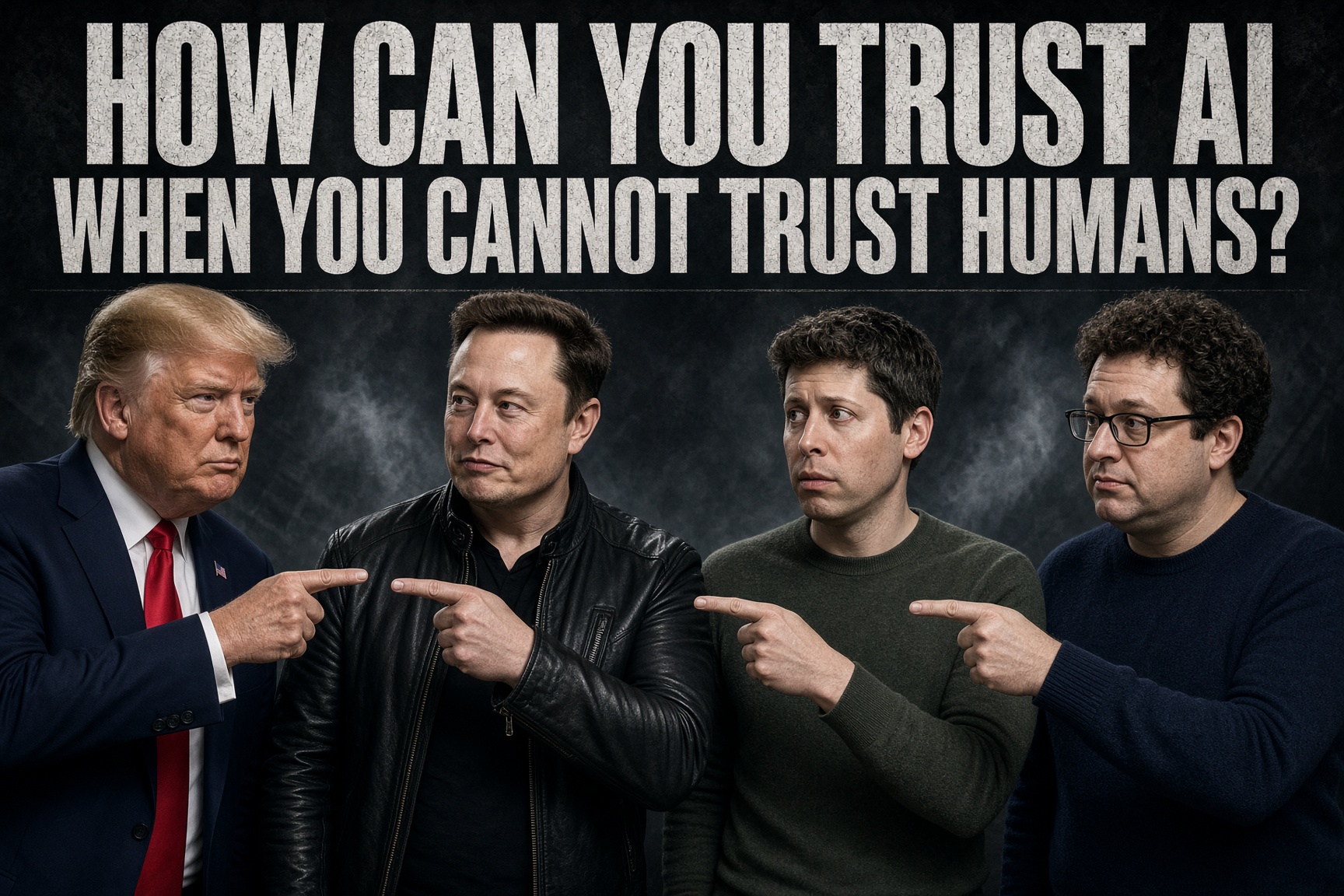
How Can You Trust AI When You Cannot Trust Humans?
Can you trust AI? Can you trust humans? More often than we like to admit, the answer is no. AI inherits its failures from the human records it is trained on. Sheikh Mohammed bin Rashid wrote this month that the currency the UAE is betting on is trust. This piece sets out what a trust layer has to do, shows the method on three public knowledge graphs, and lays out the post-quantum work KXCO has published so that an institution can check the claim rather than take it.

SpaceX: The Road to 10 Gigawatts
SpaceX did not add an AI business. A company whose processes run on compute built its own computing plant, then built the power to run it. The 10-Q reports 1.4 gigawatts of nameplate compute at 30 June 2026, four leases worth about $41 billion a year and $100 billion of cash. The target is closer to 10 gigawatts than 5 by the end of 2027. This piece sets out the build sequence, the four layers of power in Memphis, and why Terafab is the act after 2027, not the road to it.
The China Chip Shock
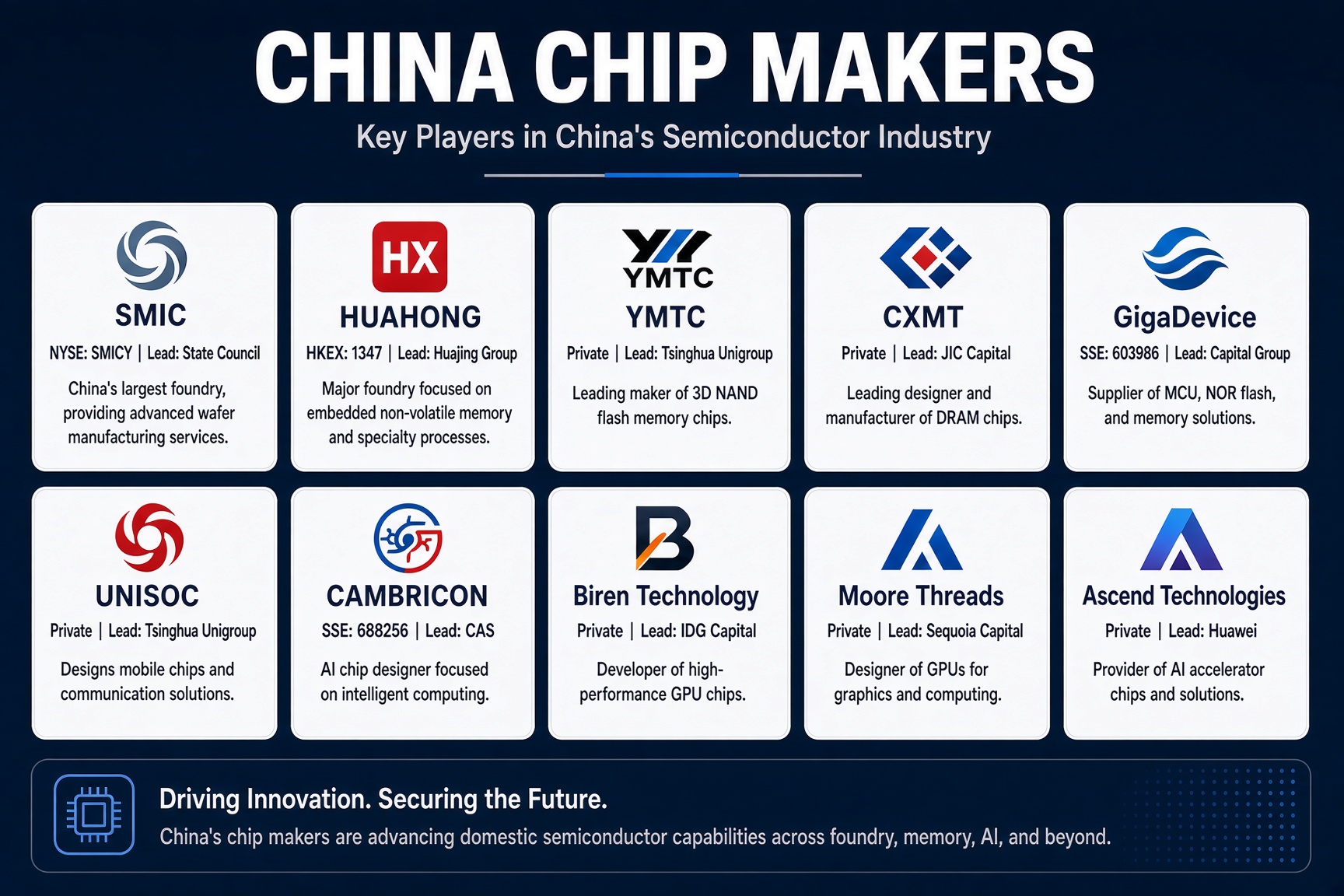
On 10 October CXMT said it will ship DDR5 server modules on a 4F2 cell by year-end. Micron, SK Hynix, Samsung and Sandisk sold off for two sessions and Elon Musk said China scales faster than the rest of the world combined. This piece sets out China's memory makers, foundries, AI chip designers and toolmakers, with two knowledge graphs drawn from the KXCO AI Sector Ontology, and says what the sell-off prices and what it does not.
Every story, signed and delivered.
Subscribe to the kxco channel and get the headline, the AI-written key takeaways, and the chain-anchor link the moment we publish. Audio versions and per-ticker subscriptions arrive in the next iteration.