
SpaceX’s AI Satellites: Revolution in AI Compute
$TSLA $NVDA $GOOGL $SPCX $ANTH
Part of theMacro Center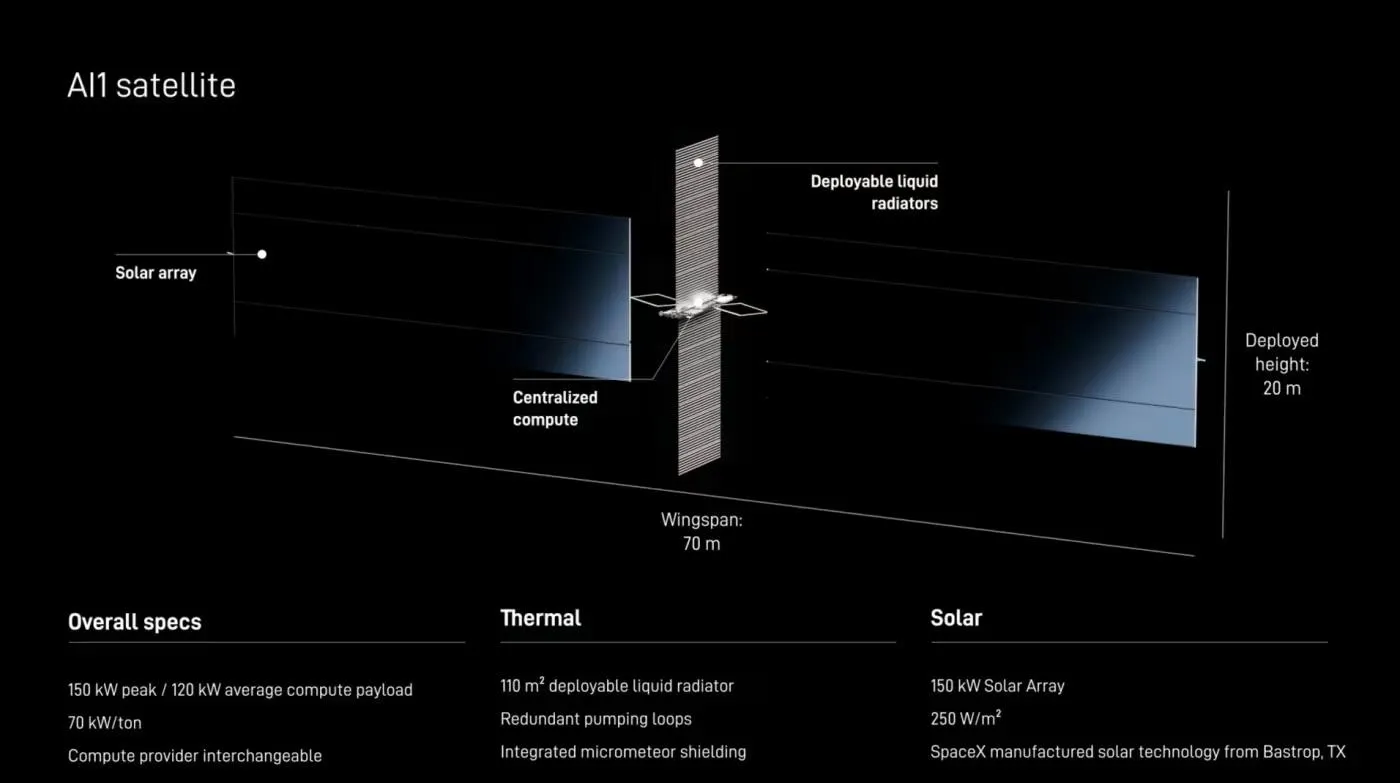
By Shayne Heffernan, Ph.D. Founder, Knightsbridge Group | KXCO.ai June 10, 2026
The convergence of space technology and artificial intelligence is no longer science fiction. SpaceX, under Elon Musk’s leadership, is pioneering a constellation of AI-powered satellites that promise to transform the economics of AI computation. These orbital data centers leverage the unique advantages of space—uninterrupted solar power, radiative cooling in vacuum, and massive launch capacity via Starship—to deliver compute at scales and costs unattainable on Earth.
This article examines the technology, ownership structure, beneficiaries across the ecosystem (with a focus on Tesla, SpaceX, Nvidia, Google, and Anthropic), the critical role of the Terafab chip manufacturing initiative, deployment timelines, and broader market implications including recent IPO developments. As an economist tracking fintech, crypto, and emerging technologies, I see this as a pivotal development with multibillion-dollar ramifications for investors and the AI industry.
The Vision: Orbital AI Data Centers
SpaceX’s AI satellite project, often referred to as AI1 or AI Sat Mini, envisions thousands to potentially millions of satellites functioning as self-contained AI compute nodes in low Earth orbit (LEO). Each satellite is dominated by large deployable solar arrays with a wingspan of approximately 70 meters, capable of delivering around 120-150 kW of power for AI workloads.
Core Capabilities:
Power and Cooling: Constant sunlight in space provides near-continuous energy without grid constraints or water for cooling. Excess heat radiates efficiently into the vacuum.
Connectivity: Inter-satellite laser links and integration with the Starlink constellation enable high-bandwidth data transfer. Results beam back to Earth for users.
Compute Payload: Satellites support Nvidia GPUs initially, transitioning to custom radiation-hardened chips. Designs build on proven Starlink V3 hardware but simplify for compute focus (solar panels, radiators, lasers, and modular compute).
Scale Ambition: FCC filings seek approval for up to 1 million satellites. Musk has outlined goals of 1 GW annualized deployment by end-2027, scaling exponentially toward terawatt-level capacity.
This addresses Earth’s AI bottlenecks: surging electricity demand, cooling water scarcity, and land constraints. Musk has stated that space could become the lowest-cost AI compute option within 2-3 years.
The project integrates deeply with xAI (Grok models), Tesla (autonomy and robotics), and broader infrastructure. Prototypes emphasize simplicity and rapid iteration using existing manufacturing expertise.
Ownership: SpaceX at the Center
SpaceX owns and operates the AI satellite project outright. Following the February 2, 2026, all-stock acquisition of xAI, the AI capabilities—including Grok and related infrastructure—became a wholly owned subsidiary integrated into SpaceX operations.
The deal valued xAI at approximately $250 billion and the combined entity around $1.25 trillion, creating one of the most valuable private companies (now transitioning public). Elon Musk retains dominant control through his equity and voting power in SpaceX (roughly 42-43% equity and 78-79% voting control via dual-class structure).
Tesla holds a modest but strategic stake: approximately 18,990,195 shares of SpaceX Class A common stock as of May 1, 2026 (less than 1% ownership). This originated from Tesla’s investment in xAI, converted post-acquisition.
SpaceX has filed its S-1 registration statement and plans to list on Nasdaq under the ticker SPCX. The IPO is imminent, with roadshow activities underway and potential trading as early as mid-June 2026, targeting a massive raise of around $75 billion at a valuation approaching $1.75 trillion or higher.
Who Benefits: A Deep Dive into the Ecosystem
A rigorous examination reveals a tightly coupled value chain with direct and indirect winners, amplified by major compute deals and IPO momentum.
SpaceX (Primary Owner/Operator, Ticker: SPCX):
New revenue streams from orbital AI services, alongside Starlink.
Leverages Starship for cost-effective mass deployment.
Strengthens valuation ahead of and through its IPO.
Positions SpaceX as an AI infrastructure leader with public market liquidity soon.
Tesla (TSLA):
Access to orbital compute for Full Self-Driving (FSD), Optimus robotics, and energy optimization.
Shared Terafab production for AI5/AI6 inference chips.
Small equity stake provides upside from SpaceX success.
Synergies in data and energy enhance Tesla’s AI moat.
Nvidia (NVDA):
Initial satellites rely on Nvidia GPUs (e.g., GB300-class or equivalents). Strong near-term demand.
Transition to custom chips complements rather than eliminates Nvidia’s role in the scaling ecosystem.
Google (Alphabet, GOOGL):
Multi-year cloud services agreement paying SpaceX $920 million per month ($11+ billion annually) for access to significant compute capacity in xAI/SpaceX data centers.
As a SpaceX investor, Google secures critical AI infrastructure amid surging demand.
Anthropic (Ticker: ANTH):
Secured full capacity of major data centers (e.g., Colossus 1 in Memphis, ~300 MW+), with payments around $1.25 billion monthly through 2029.
Anthropic confidentially filed its draft S-1 with the SEC on June 1, 2026, for a proposed IPO. The most likely ticker is ANTH, positioning it for public trading potentially later in 2026 at a valuation near $965 billion.
Strong interest in space-based compute further ties it to SpaceX’s orbital expansion. These deals generate substantial revenue for SpaceX while accelerating Anthropic’s Claude model capabilities.
Broader Beneficiaries:
xAI/Grok: Massive, affordable compute accelerates model training and inference.
Terafab partners (Intel, etc.): Advanced manufacturing scale.
Global AI ecosystem and humanity: Cheaper compute, multi-planetary progress.
These partnerships underscore pragmatic collaboration even among perceived competitors, de-risking SpaceX’s capex while fueling the entire AI sector.
Terafab: The Chip Manufacturing Backbone
Terafab is the joint semiconductor fabrication initiative by Tesla, SpaceX (post-xAI), and Intel, announced March 21, 2026. It aims to be the “most epic chip-building effort ever,” vertically integrating logic, memory, and advanced packaging in one facility.
Objectives:
Produce custom AI chips (e.g., Tesla AI5/AI6 for Earth/edge, D3 radiation-hardened for space satellites).
Target: 1 terawatt (TW) annual compute hardware output long-term—far exceeding current global capacity.
Address chip shortages for Optimus, satellites, and data centers.
Current Stage and Rollout Plan (as of June 2026):
Announcement & Early Construction: Formal launch March 2026 in the Austin, Texas area (near Giga Texas). Site preparation, earthwork, and foundations underway. Grimes County approved tax abatements in June for the full-scale facility.
Prototype/Initial Phase: Prototype fab at Giga Texas for rapid iteration (2nm-class tech, low-volume wafer starts). Focus on testing and de-risking.
Full Facility: Multi-phase build in Grimes County, with initial investment ~$55 billion scaling potentially to $119 billion. Intel partnership covers design, fabrication, and packaging.
Timeline: Aggressive ramp with meaningful output targeted by mid-2028 (pilot production possibly earlier). Volume scaling in 2027-2028 for AI5/AI6 and satellite D3 chips; full TW ambitions longer-term. Musk’s vertical integration and execution track record are accelerating what typically takes 5+ years for traditional fabs.
Terafab is crucial for satellites: it supplies radiation-hardened D3 chips optimized for space, reducing long-term reliance on commercial GPUs while maintaining initial Nvidia collaboration.
Deployment Timeline and Milestones
2026: Designs refined (AI1 details emerging); Gigasat factory and Terafab construction accelerate. SpaceX IPO provides additional capital.
Late 2027: Initial orbital AI compute tests/demonstrations; reasonable volume production. 1 GW annualized deployment targeted.
2028 Onward: Larger constellation rollout, full monetization. Path to 1 million satellites long-term.
Starship’s flight cadence remains key. Regulatory approvals (FCC, etc.) and technical challenges (radiation hardening) persist, but the project builds on Starlink’s proven scale (over 10,000 satellites operational).
Stock Implications: A Comparative Table
Here is a snapshot of key publicly traded (or soon-to-be) beneficiaries (approximate as of June 10, 2026; always verify latest market data and filings):
Company | Ticker | Key Exposure | Potential Upside Drivers | Risks |
|---|---|---|---|---|
Tesla | TSLA | Terafab chips, orbital compute access, SpaceX stake | AI autonomy/robotics acceleration, synergies | Execution delays, valuation |
Nvidia | NVDA | Initial GPU supply for satellites & data centers | Sustained near-term demand during transition | Shift to custom chips |
Alphabet (Google) | GOOGL | Major compute deal ($920M/mo), SpaceX investor | Secure AI infrastructure, partnerships | Competition, regulation |
SpaceX | SPCX | Direct ownership of AI satellites & revenue | IPO liquidity, $26B+ potential AI revenue | Launch/tech risks, dilution |
Anthropic | ANTH | Data center capacity deals, space compute interest | IPO valuation pop (~$965B), Claude growth | Market conditions, competition |
SpaceX’s SPCX listing and Anthropic’s ANTH IPO path mark a transformative wave of AI infrastructure IPOs, likely driving index inclusions, liquidity, and sector momentum. Post-IPO, cross-ownership and partnerships will create amplified market correlations.
Strategic and Economic Analysis
From an investor perspective, this project exemplifies vertical integration at planetary scale. SpaceX mitigates Earth energy constraints while creating proprietary advantages. Revenue from Google and Anthropic de-risks capex, Terafab addresses the chip famine, and public listings unlock broader capital.
Broader impacts include accelerated AI progress, orbital congestion concerns, astronomy interference, and geopolitical dynamics around space infrastructure.
What It Means for KXCO
SpaceX’s orbital AI infrastructure and the broader ecosystem shifts it enables have direct strategic implications for KXCO.ai and our portfolio of ventures. As a leader in post-quantum cryptography (PQC) hosting, verifiable attestations, and quantum-resistant infrastructure via pqc.kxco.ai, we are uniquely positioned to complement and secure these massive orbital compute platforms.
Security and Verification Opportunities: Orbital systems handling sensitive AI workloads will demand ML-DSA-65 signed attestations and Bastion-style quantum-vulnerability scanning—core offerings of our platform. Every satellite deployment, build, and data flow can benefit from independently verifiable cryptographic proofs, aligning perfectly with KXCO Bastion scans and deployment attestations. We can extend our PQC Host services to hybrid terrestrial-orbital architectures, ensuring compliance and resilience against future quantum threats.
AI Agent and Integration Synergies: Our KXCO AI agents, built as "intelligent glue" across sites and workflows, can leverage cheaper orbital compute for advanced RAG, financial services agents, compliance automation, and multi-site optimization. This enhances capabilities for trading, longevity (Target150.com), and fintech applications.
Market and Valuation Tailwinds: The SPCX and ANTH IPOs, combined with Terafab scaling, will drive massive capital flows into AI infrastructure. This elevates the importance of quantum-safe platforms like ours for institutional and developer adoption. We are accelerating optimizations for AI crawling (JSON-LD, llms.txt, E-E-A-T) while preparing white-label PQC solutions that could serve the growing ecosystem.
Long-Term Vision Alignment: KXCO’s focus on verifiable on-chain tech, PQC identity (KXCOIdentity), and enterprise AI positions us as a natural layer for secure, multi-planetary compute. This project reinforces our roadmap: expanding pqc.kxco.ai, merging verify.kxco.ai capabilities, and delivering quantum-resistant solutions that support the next wave of AI innovation.
In summary, SpaceX’s AI satellites do not just advance compute—they create demand for the exact security, attestation, and integration technologies KXCO is building today. We will continue monitoring these developments closely to capitalize on synergies that strengthen our multibillion-dollar ambitions.
Conclusion: Toward Galactic-Scale Intelligence
SpaceX’s AI satellites represent more than hardware—they are infrastructure for a multi-planetary future. With xAI integrated, Terafab ramping, major compute deals secured, and both SpaceX (SPCX) and Anthropic (ANTH) on IPO paths, the pieces are aligning rapidly. Timelines are aggressive but grounded in existing technology and proven execution.
Investors should monitor SpaceX IPO pricing and debut, Anthropic’s public filing progress, Terafab milestones, and early orbital tests. The AI compute landscape is shifting upward—literally. Those positioned across the ecosystem (TSLA, NVDA, SPCX, and soon ANTH) stand to benefit significantly.

Musk and Colossus: Inside the 1.29 Gigawatt Machine in Memphis
Elon Musk is sleeping in an Airstream beside a warehouse in Whitehaven with MACROHARD painted on the roof. The machine next to it is a two-state compute campus carrying about 1.29 gigawatts of IT load, roughly 670,000 accelerators and 48.7 billion dollars of modeled capital, per Epoch AI cards of 16 September 2026. A field brief on the buildings, the silicon, the turbines, the batteries, the tenants who now hold the hours, and what the compute is actually worth.
Quantum Is Accelerating
Quantum is accelerating. Not toward a machine that breaks RSA next quarter, which is still five orders of magnitude away on the first honest cross-platform yardstick the field has ever had, but toward foundries, clouds, logical qubits and government deadlines that are already fixed. Two clocks are running. Only one of them is slow, and it is not the one that decides what a bank, a court or a ministry has to do this year.

Ignore the Noise: AI Is Not Slowing Down
Commentators pointed at a flat Nasdaq, a few missed prints, the cost of a megawatt and a safety letter, and called it a slowdown. It is not. Between 12 August and 16 September 2026 nine labs shipped frontier or near-frontier models, and the contest moved from one leaderboard to two stacks. What actually slowed is accountability. Enterprises still cannot put any of it into a court file. That gap, not the capability curve, stops deployment inside banks, hospitals, courts and ministries.
Quantum Cybersecurity: The KXCO Chain Is Already Running
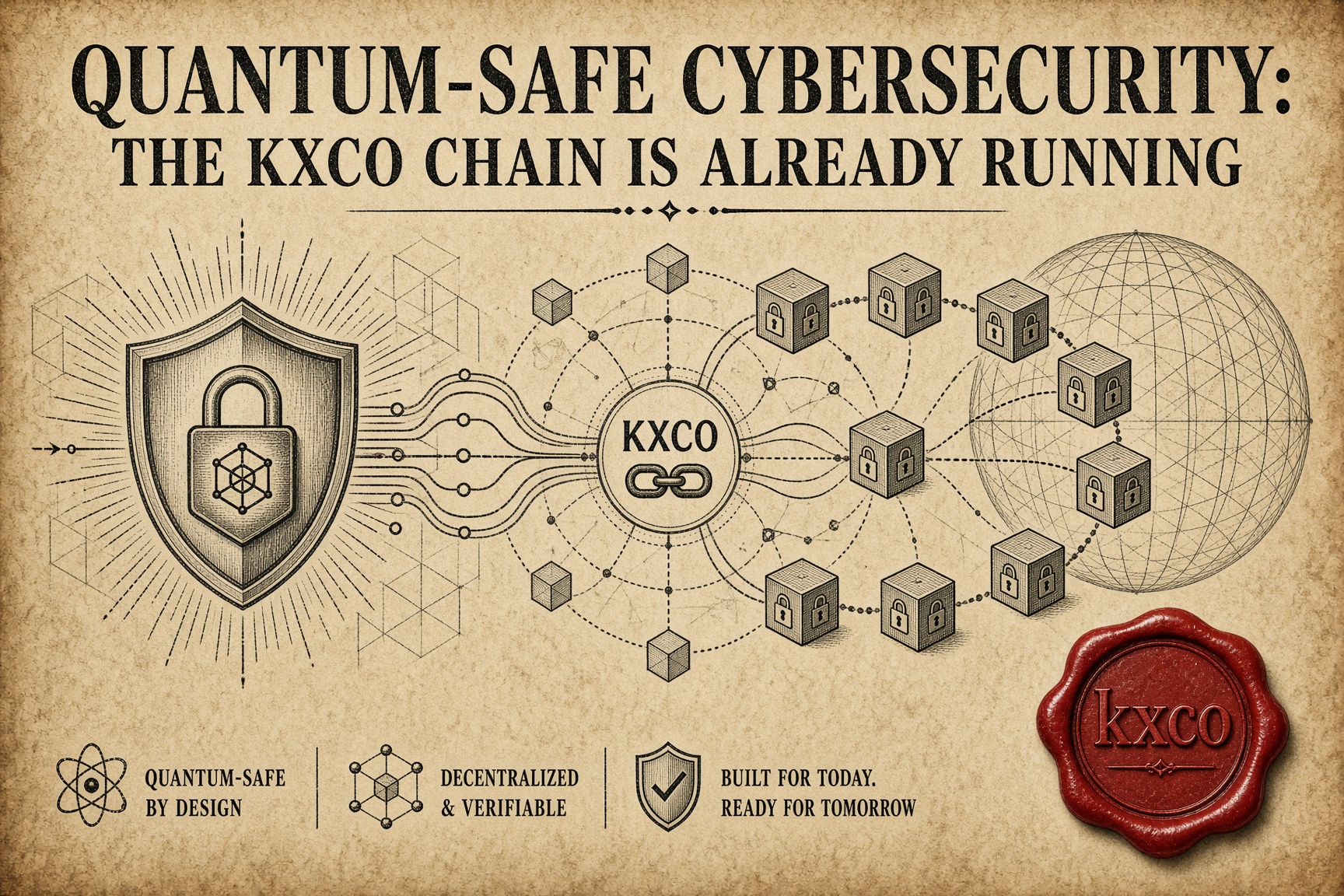
The World Economic Forum warned on 11 September that the quantum-safe race has changed gears. It is right about the direction and late about the work. Every KXCO product already runs on NIST's post-quantum algorithms, and all of them run on the same implementation: 42 package manifests declare one library. The chain verifies ML-DSA-65 on-chain at precompile 0x0b, tested live with three negative controls. NIST's own grader marked the library at 2,130 cases and zero failures.
Every story, signed and delivered.
Subscribe to the kxco channel and get the headline, the AI-written key takeaways, and the chain-anchor link the moment we publish. Audio versions and per-ticker subscriptions arrive in the next iteration.