
Reality Is the New Luxury
When everything can be generated, the unreproducible becomes precious. On heirloom tomatoes, wild fish, unbranded hours, and no logo in sight.
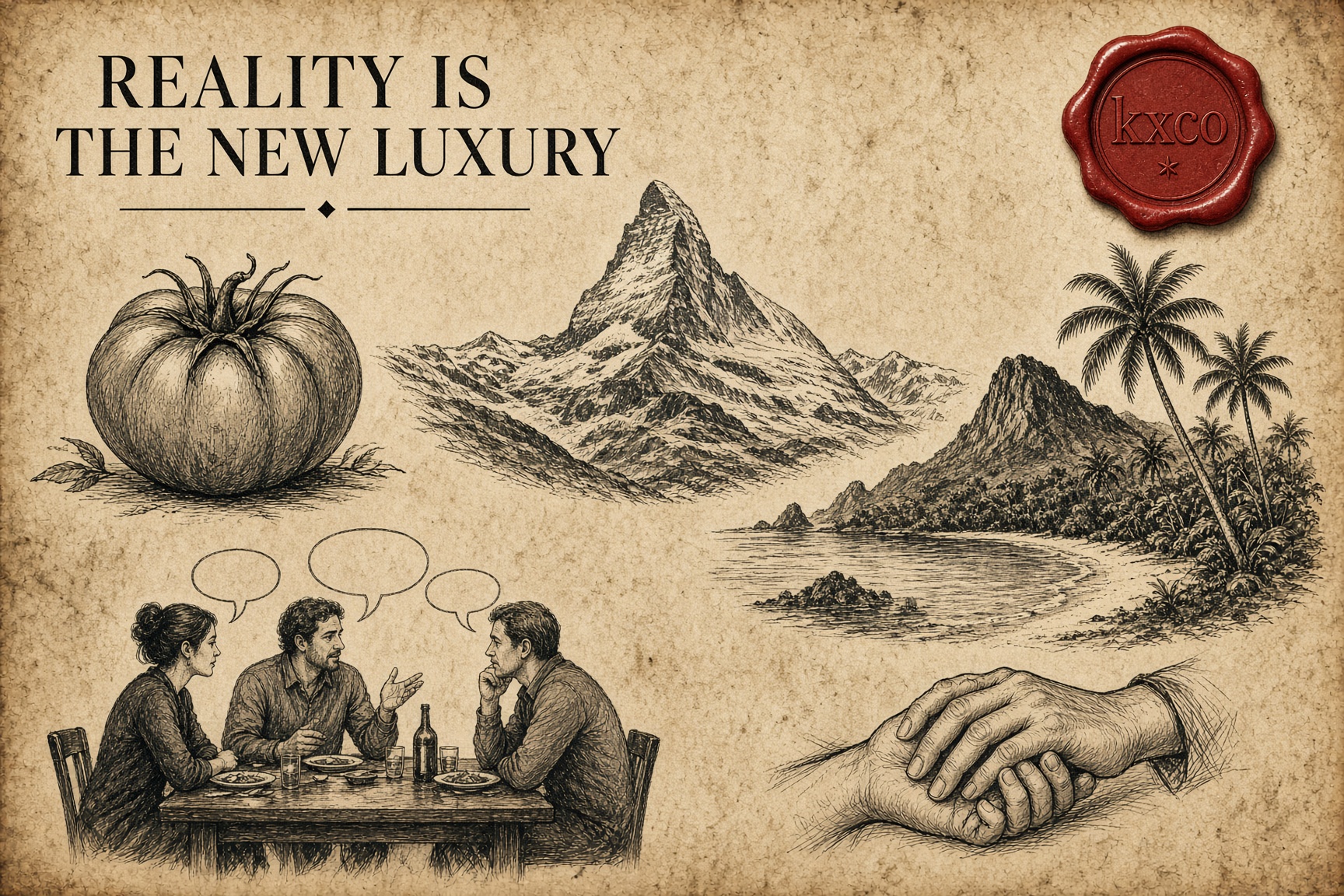
The argument in one sentence: when a machine can manufacture likeness at industrial scale, the expensive thing is no longer the thing that looks rare, it is the thing that actually happened.
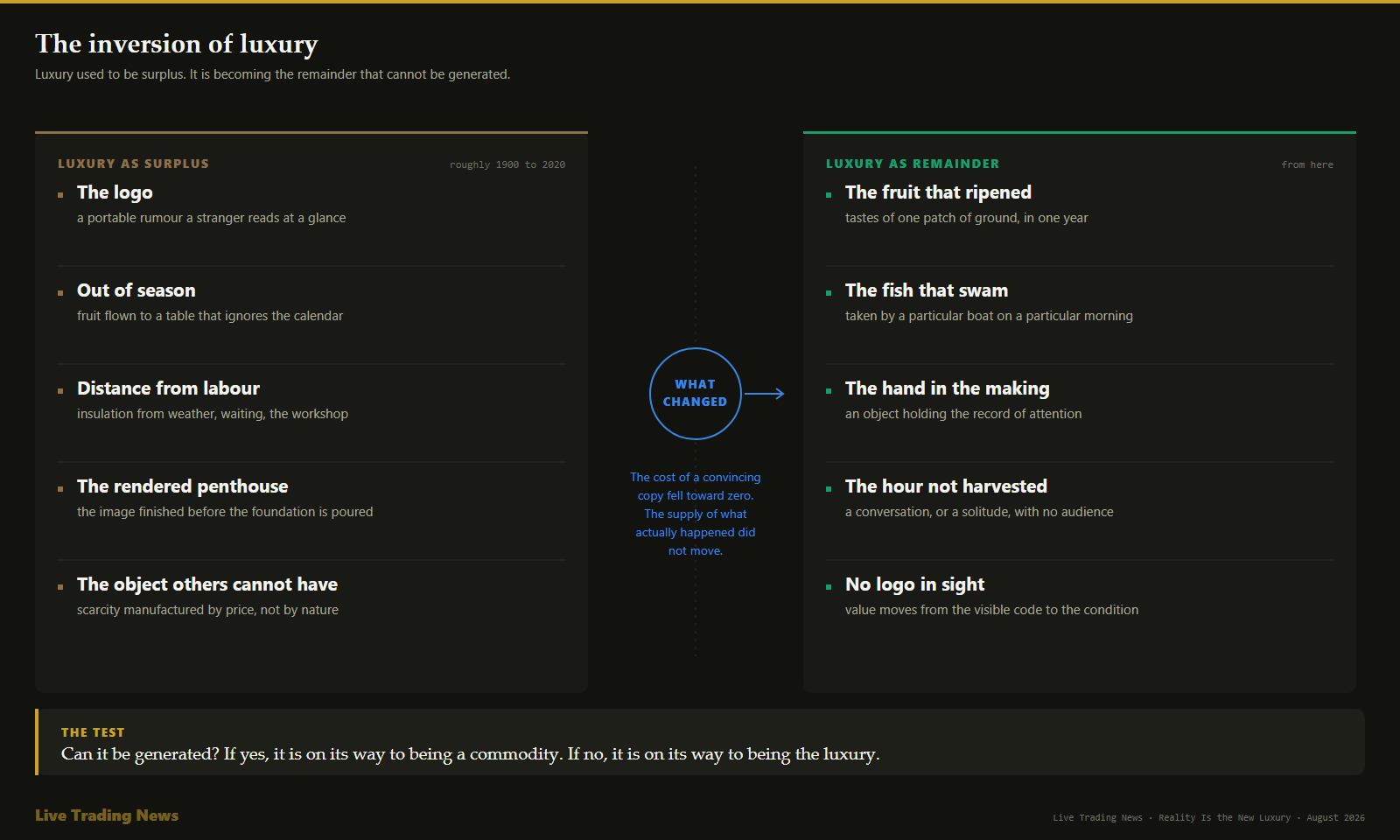
For most of modern history, luxury was a story about surplus. More gold. More square footage. More stitching that announced itself from across a room. More distance from the soil and the slaughterhouse and the workshop. The rich ate out of season. They wore animals they had never seen alive. They collected objects whose primary virtue was that other people could not have them. Status was a performance of insulation: from weather, from labor, from waiting, from the ordinary constraints that still governed everyone else.
That story is collapsing, and not because people have become more virtuous. It is collapsing because the old scarce things are no longer scarce in the way that mattered. A logo can be printed on anything. A penthouse can be rendered before the foundation is poured. A face, a voice, a meal, a landscape, a lover's sentence can be synthesized with enough fidelity to fool the hurried. In an age that can manufacture likeness at industrial scale, the expensive object is no longer the thing that looks rare. The expensive object is the thing that is actually rare: the thing that happened, the thing that grew, the thing a particular pair of hands touched, the hour that cannot be copied because it was lived.
This is the inversion almost no luxury house wants to admit out loud. In the artificial intelligence world, reality is the new luxury. Not reality as a marketing adjective slapped on a bottle. Reality as the stubborn remainder after every simulation has done its work. An organic heirloom tomato. A wild-caught fish. An animal or a plant that was not engineered into a parody of itself. Something you had a hand in making. Time away from devices and with people. Conversations that take place in the same air. Time alone without a screen. Time in natural settings that were not poured, planned, or branded. Time looking at the stars, staring at the ocean, standing in the mountains. Cloth from a plant. Leather from an animal. An afternoon in a gallery spent looking at a painting rather than collecting proof that you stood near one. Luxury, if the word is going to mean anything again, will be personal, human, and natural. It will mean not a logo in sight.
The tomato that refuses the warehouse
Consider the heirloom tomato. It is an unfashionable object to build an argument on, which is part of why it works. It bruises. It refuses to ship well. It arrives in a short season and tastes like a specific patch of ground in a specific year. It is uneven in a way that industrial produce has spent a century trying to erase. The supermarket tomato is a triumph of logistics: bred for color, shelf life, uniformity, and the ability to survive a thousand miles of cold storage. It looks like a tomato. It is, botanically, a tomato. It is also a mild accusation against the idea of fruit.
The heirloom is luxury not because it is expensive, though it often is, and not because a celebrity chef put it on a plate. It is luxury because it still contains accident. Someone saved seed that was not optimized for a warehouse. Someone watered, waited, and accepted loss. When you eat it, you are not consuming a brand story about authenticity. You are consuming a plant that was allowed to remain somewhat itself. In a world where images of tomatoes can be generated faster than tomatoes can ripen, the fruit that actually ripened is the scarce good.
The same logic governs the wild-caught fish. Farmed protein has its place, and piety about purity can become another luxury costume. But a fish that lived in a current, ate what the water offered, and was taken by a particular boat on a particular morning is not interchangeable with a filet whose entire existence was a production schedule. Over-domestication is not only a biological process. It is a metaphysical one. We take a living thing, strip out the inconvenience, standardize the yield, and then congratulate ourselves for having improved nature. What we have often improved is our ability to forget that we are eating a life.
Selective breeding is one of the great human arts. Dogs, wheat, roses, cattle: civilization is in many ways the history of choosing which traits will survive. The problem is not selection. The problem is selection without remainder, the drive to make every organism a product and every product a predictable unit. When a plant or an animal has been so thoroughly redesigned that it can no longer flourish outside our system, we have not simply invented a commodity. We have narrowed the range of what the living world is allowed to be. Eating something that still remembers a life outside the system is a form of contact with a larger order. That contact is becoming rare. Rarity of that kind is what luxury used to pretend to sell, and what it now has to actually deliver if it wants to keep the word.
In a world that can generate the image of a tomato faster than a tomato can ripen, the fruit that actually ripened is the scarce good.
The hand in the making
There is a second scarcity hiding inside objects, and it has nothing to do with materials. It is the scarcity of participation. Most of what we own arrives as a finished surface. We swipe, we click, we unbox. The object has a history, but the history belongs to a supply chain we will never meet. Corporate brands have spent decades converting making into mystery and mystery into margin. The customer is invited to feel chosen by the object, never to have chosen the object into being.
Something you had a hand in manufacturing or designing is a different category of possession. A table you cut and joined. A garment you patterned, or at least altered until it fit a body rather than a size chart. A loaf you baked. A garden bed you turned. A tool whose handle polished itself against your palm. These things are not automatically beautiful. They are automatically particular. They carry the record of attention, including the record of mistakes. In an economy of frictionless delivery, friction is a kind of proof.
This is easy to romanticize, and romance is how the market will try to recapture it. Already there are workshops sold as experiences, craft as weekend content, "made by you" kits whose every cut has been pre-decided by a designer you will never meet. The counterfeit of participation is now a product line. The real article is slower and less photogenic. It is the afternoon in which you were competent enough, or stubborn enough, to change the object with your own hands. It is the knowledge, afterward, that the thing in the room is not only yours. It is of you.
Artificial intelligence intensifies the contrast. Generation without effort is no longer a fantasy of the idle rich, it is a default setting. You can have a logo, a floor plan, a melody, a legal clause, a face in the style of a dead painter, a paragraph in the style of a living one. The cost of producing a plausible artifact approaches zero. What does not approach zero is the cost of having been there when the artifact took form. Touch in the creation process is not nostalgia for preindustrial labor. It is a claim about meaning. A thing that passed through your hands is located in a life. A thing that only passed through a model is located in a probability distribution.
None of this requires a retreat into Luddism. Tools have always extended the hand. The question is whether the tool still leaves a trace of a person, or whether the person has become a prompt. Luxury, in the coming order, will attach itself to the first condition. Not because handmade is morally cleaner in every case, but because handmade is finite in a way that generated is not. Finitude is what we pay for when abundance becomes noise.
The last unscalable hours
If objects are being emptied of particularity, time is being emptied of presence. The device is not evil. It is a brilliantly successful bid for the interior of the day. It offers connection, knowledge, entertainment, work, status, and a mild anesthetic for every pause that might otherwise become thought. What it cannot offer, except as a simulation of the thing, is the unmediated hour.
Time away from devices and with people is already a class marker, though we still pretend it is a lifestyle choice. The person who can close the laptop, leave the phone in another room, and sit across a table without performing for an audience is exercising a privilege that looks like manners and is in fact infrastructure. Attention has been monetized so thoroughly that withholding it feels almost rude. The conversation in person has to compete with the phantom conversation always available in the pocket. To choose the person in the chair is to refuse a market.
There is a companion luxury that looks like its opposite: time alone without devices. Solitude used to be a default condition of travel, waiting, walking, insomnia, and the long afternoon. It has become a practice that must be defended. The unaccompanied mind is where judgment forms, where memory rearranges itself, where desire notices what it actually wants instead of what it has been shown. A culture that cannot tolerate unstructured aloneness will have a great deal of content and a thin supply of selves. Sitting with no input, for no audience, is not productivity hygiene. It is one of the last private rooms.
Then there is time in natural settings that were not designed as destinations. Cities are extraordinary machines. They concentrate talent, medicine, food, argument, and chance. They are also total environments. Almost every surface has been decided by someone with a budget. The mountain does not care about your itinerary. The ocean does not optimize. The night sky, where it can still be seen, offers a scale that no interface can honestly reproduce, because the point of the sky is not information. The point is that you are small and the world is not a product.
Looking at the stars, staring at the ocean, being in the mountains: these phrases risk turning into calendar copy. They survive the cliche because the experiences they name keep refusing to become content. You can photograph the view. You cannot store the temperature of the air on your skin, or the way time dilates when there is no next notification. People will pay, increasingly, not for access to nature as scenery, but for the conditions in which nature can be met without a script. Silence. Darkness. Distance from the grid. The right to be unmarked for a while.
This is not a call to abandon cities or to sneer at those who cannot leave them. It is a description of a coming price structure. As synthetic environments become cheaper, more persuasive, and more complete, unsponsored reality becomes the good that cannot be piped into a headset at scale. The wealthy will not stop buying objects. They will start buying unmediated time, and they will dress it in the old language of taste so that it does not sound like what it is: an escape from the very system that made them rich.
To choose the person in the chair over the phantom in the pocket is to refuse a market.
Materials that remember they were alive
Natural fibers and leather are easy to turn into a morality play, and the morality play is usually half right. Cotton, linen, wool, silk, and hide come with costs: land, water, animals, labor, and the possibility of cruelty. Synthetics come with other costs: oil, microplastics, shed fibers that outlive the garment and the person who wore it. The honest conversation is about systems, not talismans. Still, there is a reason these older materials keep returning in any serious discussion of what luxury might become.
They age. That is the unfashionable miracle. A petroleum fabric often has only two states: new and wrecked. Wool pills and then softens into character. Linen slumps into comfort. Leather takes the map of a life: rain, sun, the particular grease of a particular hand. These materials do not merely cover a body. They keep a record. In a culture addicted to the reset button, a record is almost subversive.
There is also a sensory argument that no sustainability slide deck can quite replace. Linen on skin in heat is not an idea. It is a temperature. The smell of wet wool, the weight of a leather bag that has been carried for a decade, the sound of cotton as it folds: these are not branding assets. They are contacts with substances that existed before the brand and will exist after it. Luxury that wants to survive the collapse of logo-value will have to sell this contact, which means it will have to stop treating the material as a blank screen for a mark.
The deepest appeal, though, is temporal. Natural materials touch the human experience through eternity in a way that is almost embarrassingly simple. People have wrapped themselves in animal and plant for as long as there have been people. The cut changes. The dye changes. The meaning of status changes. The fact of a body needing a second skin does not. To wear something that belongs to that long chain is to step out of the fashion calendar and into a slower clock. Corporate brands prefer the fast clock, because the fast clock can be restarted next season. Eternity makes poor inventory.
The gallery without the selfie
Walk through a major museum on a crowded afternoon and you can see the new poverty in high resolution. People approach a painting the way they approach a landmark in a city they will not remember: they position themselves, they capture, they leave. The Mona Lisa is only the most famous casualty. The painting has not become less itself. The encounter has been replaced by documentation of proximity. What is consumed is not the work. What is consumed is the proof that one was in the room with the work.
Time in an art gallery spent observing and enjoying the art is a luxury because it requires the one resource the attention economy cannot counterfeit without remainder: surrendered duration. Looking is slow. Looking does not produce a record that can be posted. Looking may not even produce an opinion worth repeating. It may only produce the private adjustment that happens when a mind consents to be changed by something that will not negotiate.
Art, at its least commodified, is one of the technologies human beings invented for remaining human across centuries. A pot, a chant, a carved animal, a painted room: these were never only decoration. They were ways of saying that interior life had a shape and that the shape could be shared. To stand in front of a work without hunting for an angle is to join that old conversation. To treat the work as a backdrop for the self is to miss the conversation and keep the receipt.
There will be, already is, a market for unphotographed experience. Rooms that forbid phones. Dinners without documentation. Walks whose only souvenir is the walk. Some of this will be sincere. Some of it will be another enclosure, another velvet rope around conditions that used to be ordinary. The test is not whether a place bans cameras. The test is whether a person can still want an hour that leaves no trace except in them.
What they want to take
Modern society and corporate brands do not sit in a room and plot the theft of tomatoes and starlight. They do not need to. The incentives are enough. Whatever can be standardized can be scaled. Whatever can be scaled can be owned at a distance. Whatever can be owned at a distance can be rented back to you as identity. The heirloom becomes a limited drop. The wild becomes an expedition package. The handmade becomes a workshop with a photographer. The conversation becomes a networking format. The mountain becomes a content location. The painting becomes a backdrop. The hour becomes a wellness product.
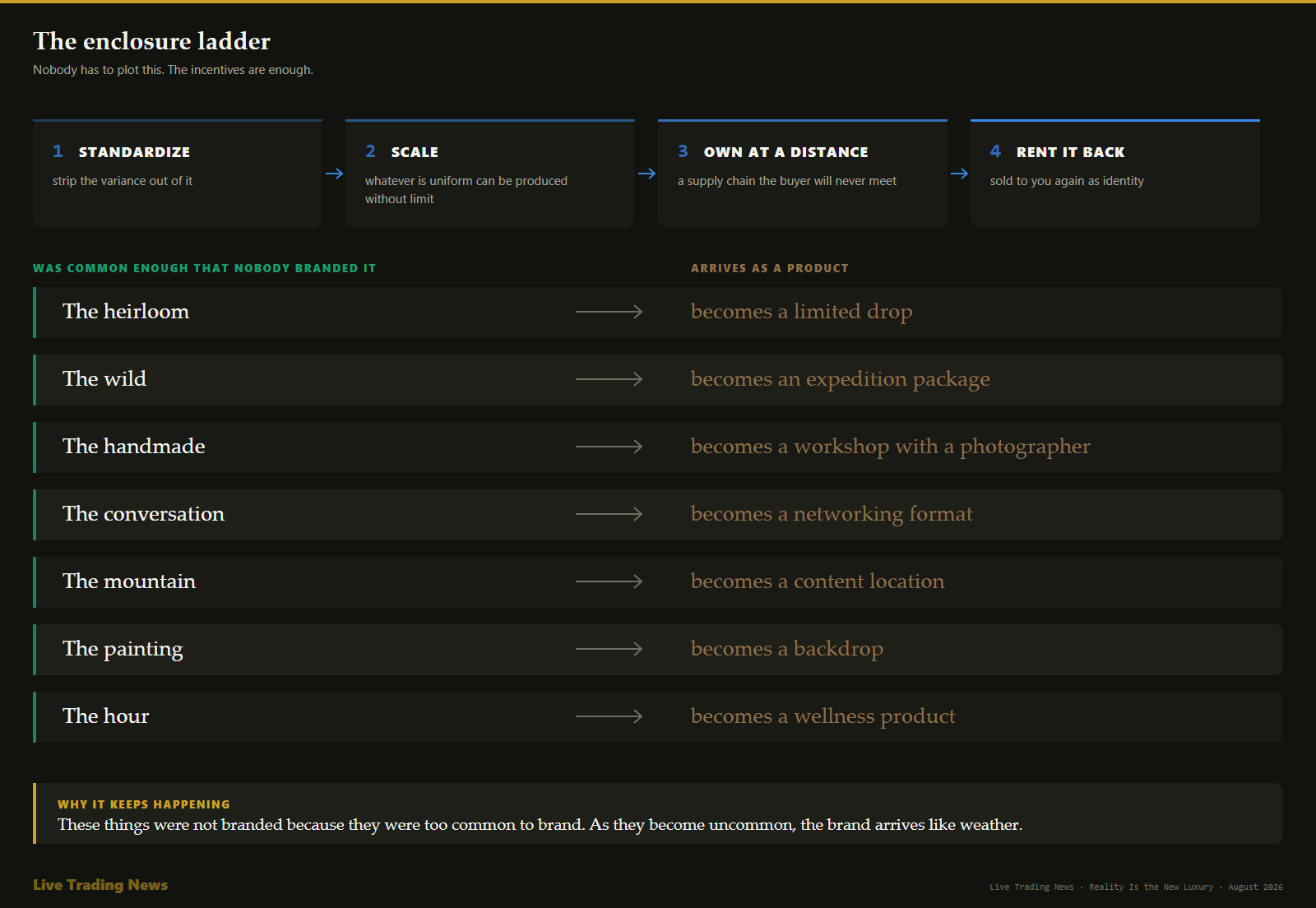
The extraction is intimate because the goods being enclosed are the ones that used to sit outside commerce, or at least at its edge. Silence. Darkness. Flavor that varies. Faces in the same room. The feeling of a tool in the hand. The unimproved animal. The plant that was not designed for a truck. These were not branded because they were too common to brand. As they become uncommon, the brand arrives like weather.
Artificial intelligence accelerates the enclosure by flooding the zone with substitutes. If a synthetic landscape is good enough, why protect the real one? If a generated companion is patient, why practice the difficult art of being with an actual person? If a meal can be optimized for dopamine and photographed for status, why accept the unpredictability of a kitchen and a season? The substitute does not have to be perfect. It only has to be cheaper, faster, and always available. Most people, most days, will take the substitute. That is not a moral failure. It is how convenience works. Luxury, in this climate, is the capacity to refuse the substitute without calling the refusal a personality.
There is a political edge here that taste language likes to sand away. Access to unsponsored reality is already uneven. Clean water, dark skies, safe parks, time off the clock, food that is food, neighborhoods where children can play without a feed: these are distributed according to money, race, border, and luck. If "reality is the new luxury" becomes only another aesthetic for people who already have land and leisure, then it is just the old luxury in rustic clothing. The observation can still be true while the conclusion remains open. The true part is that the real is being priced. The open part is whether the rest of us treat that pricing as destiny or as a warning.
No logo in sight
The final form of this luxury is almost comic in its simplicity: not a logo in sight anywhere. For a century, the mark was the point. The monogram on the trunk, the stripe on the bag, the word on the chest. The logo was a portable rumor about the wearer. It compressed class, tribe, and aspiration into a few letters that a stranger could read at a glance. It was efficient. It was also, eventually, cheap, because efficiency is what counterfeiters and algorithms both love.
When anyone can generate a mark, and when every mark can be printed on everything, the mark stops being a signal and becomes noise. The next signal is absence. Clothing that does not announce its maker. Rooms that do not look like campaigns. Tables set with plates that were chosen because they hold food, not because they photograph as a lifestyle. Cars, if they are still objects of desire, that do not arrive pre-loaded with a mythology. Even food without a story card explaining the farm as if the farm were a character in a novel commissioned by a publicist.
This will be faked too. Unbranded is already a brand. Quiet luxury was absorbed in a single news cycle and spat out as a shopping list. The absence of a logo is not automatically the presence of a life. A beige sweater can be as frantic as a covered-in-logos sweater if the person inside it is still hunting for an audience. The point is not a new uniform of restraint. The point is a transfer of value from the visible code to the invisible condition.
What does the condition look like, if we insist on being concrete? A tomato that tasted of a year. A fish that had a current in its muscle. A meal whose ingredients were not designed only to survive commerce. A chair you helped make, or at least chose without a campaign ringing in your ear. An afternoon in which you spoke with someone and did not perform the speaking. An evening in which you were alone and did not reach for a feed to prove that the aloneness was productive. A stretch of land or water or sky that had not been arranged for you. A shirt of linen or wool or cotton that will look more like itself in ten years. A painting you stayed with long enough to notice the second thing it was doing. A day in which no company got to write its name on your attention.
None of these require wealth in the old sense, which is why the old luxury industry is nervous. Some of them require time, land, health, or luck, which is why the new inequality will be cruel in familiar ways. All of them require a willingness to want what cannot be posted. That willingness is the actual scarce resource. Everything else, the tomato, the mountain, the unmarked coat, is only the form the willingness takes.
The human remainder
We should be precise about what artificial intelligence has and has not done. It has not ended the physical world. It has not abolished hunger, weather, grief, or the need to be touched. It has not made a mountain less a mountain. What it has done is collapse the cost of resemblance. It can look like care, sound like thought, plate like cuisine, compose like memory. Resemblance is a staggering achievement. It is also the reason resemblance will get cheaper every year while presence will not.
Presence is the human remainder. It is the part of experience that cannot be fully delegated because delegation is exactly what removes it. You can generate a letter in the style of love. You cannot generate the risk of saying the sentence to a face that can turn away. You can generate a landscape. You cannot generate the particular fatigue of having walked into it. You can generate a still life of fruit. You cannot generate the collapse of flavor when a real tomato is still warm from the plant.
If luxury is the name we give to what is scarce and desired, then luxury is migrating. It is leaving the glass counter and moving toward the unrepeatable: the organism that was not over-designed, the object that still has fingerprints, the hour that was not harvested, the place that was not built, the encounter that was not content. Personal. Human. Natural. The adjectives are plain on purpose. The market will try to complicate them, gild them, and sell them back. The work, for anyone who still wants a life rather than a feed, is to keep recognizing the thing itself when the packaging arrives.
The future will not be a clean choice between the machine and the garden. It will be a thicket of hybrids, some of them generous, some of them extractive, most of them both. In that thicket, the people who can still tell the difference between a representation and a world will hold a kind of wealth that does not show up in a lookbook. They will eat what grew. They will keep company with the living. They will make a few things. They will look at the stars as if the stars were not a feature. They will stand in front of a painting and forget themselves. They will wear no one's name on their chest.
That will look, to the old regime of luxury, like a downgrade: less shine, less proof, less applause. It is not a downgrade. It is a return of the word to something a body can use. Reality, which used to be the common room, is being furnished as a private suite. The task is not to romanticize the suite. The task is to notice the enclosure, to want the real things anyway, and to refuse, wherever refusal is still possible, the logo that wants to stand between you and the world.
Where this shows up in a portfolio
This is an essay, not a recommendation, and nothing below is a price target. But an argument about where scarcity is moving is also an argument about where pricing power is moving, and that is a market question. Four groups sit on the fault line.
The logo-value complex. The European houses built the most profitable business in the history of clothing on the premise that a mark is worth more than a material: $LVMUY, $HESAY, $CFRUY, $PPRUY and $BURBY in Europe, $TPR and $CPRI in the United States. They are not equally exposed. The houses whose margin rests on craft, waiting lists, repair and provenance are selling the thing this essay calls real. The houses whose margin rests on printing a monogram on entry-price leather goods are selling the thing that is being repriced. The gap between those two models inside the same sector is the interesting question, and quiet luxury was the market's first clumsy attempt to price it.
The standardization complex. The century of engineering that produced the shippable tomato is a listed industry: $CTVA in seed and traits, $ADM and $BG in the processing and logistics that reward uniformity, $DE in the machinery that makes uniformity affordable. Nothing here is going away, and the world is fed because it exists. The point is narrower. The product of that industry is defined by predictability, and predictability is precisely the attribute that no longer commands a premium at the top of the market.
The generation complex. The companies collapsing the cost of resemblance are the largest in the world: $NVDA in the compute, $MSFT, $GOOGL and $META in the models and the feeds, $ADBE in the tools that put generation inside professional workflows. The essay's argument is not bearish on them. It is the opposite. Every unit of cheap synthesis they ship raises the relative value of the unsynthesizable, which is a second-order effect almost nobody is underwriting yet.
The verified-real complex. Somebody has to answer the question the flood creates: is this thing what it claims to be. Part of that answer is retail positioning, where $SFM and $COST have both built on knowing what is in the box. Most of it is infrastructure that barely exists yet, being provenance, attestation, and signed records that hold up in a world where images and documents are free to fabricate. That is the work I do at KXCO, and it is why every article on this site is cryptographically signed at publication and anchored to an independent ledger. You can check this one. That is the whole point of doing it.
The honest summary is that the tape has not priced any of this, and it may not for years. Cultural inversions show up in earnings long after they show up in essays. What an investor can do now is stop treating brand equity and real scarcity as the same asset, because for a century they were close enough to the same thing that the distinction did not pay. That is changing.
Questions and answers
What does "reality is the new luxury" mean?
It means the scarce, desired goods of the next era are the ones that cannot be generated: food that actually grew, objects a person actually made, hours that were actually lived, places that were not designed for you. Artificial intelligence has driven the cost of a convincing copy toward zero, so value moves to whatever a copy cannot be made of.
Why is artificial intelligence making authenticity more valuable rather than less?
Because generation and presence scale in opposite directions. A model can produce an unlimited supply of things that look like care, thought, cuisine or memory, and each additional unit is nearly free. The supply of things that actually happened is fixed by time and bodies. When one side of a pair becomes infinite and the other stays finite, the finite side takes the premium.
Is this the same idea as quiet luxury?
No, and the difference matters. Quiet luxury is a visual style, the removal of the logo while everything else about the business stays the same, which is why the market absorbed it inside one news cycle and turned it into a shopping list. The argument here is not about how an object looks. It is about whether the object, the hour or the meal has an unrepeatable history behind it. A logo-free sweater made in the same factory on the same schedule is not the real thing, it is the costume of the real thing.
What are the actual examples of this kind of luxury?
An heirloom tomato that tastes of one patch of ground in one year. A wild-caught fish taken by a particular boat on a particular morning. Something you built or altered with your own hands. A conversation in the same air as another person, with the phone in another room. An hour alone with no input and no audience. Land, water or sky that was not arranged for visitors. Linen, wool, cotton and leather that will look more like themselves in ten years. A painting you stayed with long enough to notice the second thing it was doing.
Does this mean rejecting technology?
No. Tools have always extended the hand, and this is not an argument for Luddism. The question is whether the tool still leaves a trace of a person, or whether the person has become a prompt. This essay was written on a laptop and published on a cryptographically signed platform. The discipline is to keep the difference between a representation and a world in view, not to smash the representations.
Who gets locked out if reality becomes a luxury good?
Most people, and along familiar lines. Clean water, dark skies, safe parks, unmonetized time, food that is food and neighborhoods where children can play without a feed are already distributed by money, race, border and luck. That is the uncomfortable half of the argument. The observation that the real is being priced can be true at the same time as the conclusion stays open, and the open question is whether that pricing gets treated as destiny or as a warning.
Stocks mentioned in this article: $LVMUY, $HESAY, $CFRUY, $PPRUY, $BURBY, $TPR, $CPRI, $CTVA, $ADM, $BG, $DE, $NVDA, $MSFT, $GOOGL, $META, $ADBE, $SFM and $COST.
Further reading on this theme at Live Trading News: the Thinking Center on independent judgement in an AI world, and the Life Center on food, travel and the unoptimised parts of a life. Longer essays are collected at shayneheffernan.com.
Shayne Heffernan, Ph.D., is the founder of Live Trading News, the KnightsBridge Group, Knightsbridge Law and the KXCO.ai ecosystem spanning post-quantum cryptography, identity, attestation and enterprise ontology.
This article is commentary and analysis, not investment advice. Securities named are referenced to illustrate an argument about where scarcity and pricing power are moving, not as recommendations to buy or sell. Do your own research and consider your own circumstances before acting on anything you read here.
China's Coordinated Push in AI, Quantum Computing and Blockchain
On 9 October 2026 Beijing called for a nationally integrated computing-power network and a national blockchain network. DeepSeek is scaling on Huawei Ascend chips, China's intelligent computing reached 2,185 EFLOPS by June, per the industry ministry, and quantum communications remain a strength. This analysis explains the strategy and sets out the Hong Kong and US listed companies with exposure, from Tencent and Alibaba to China Mobile, HashKey and Nvidia.
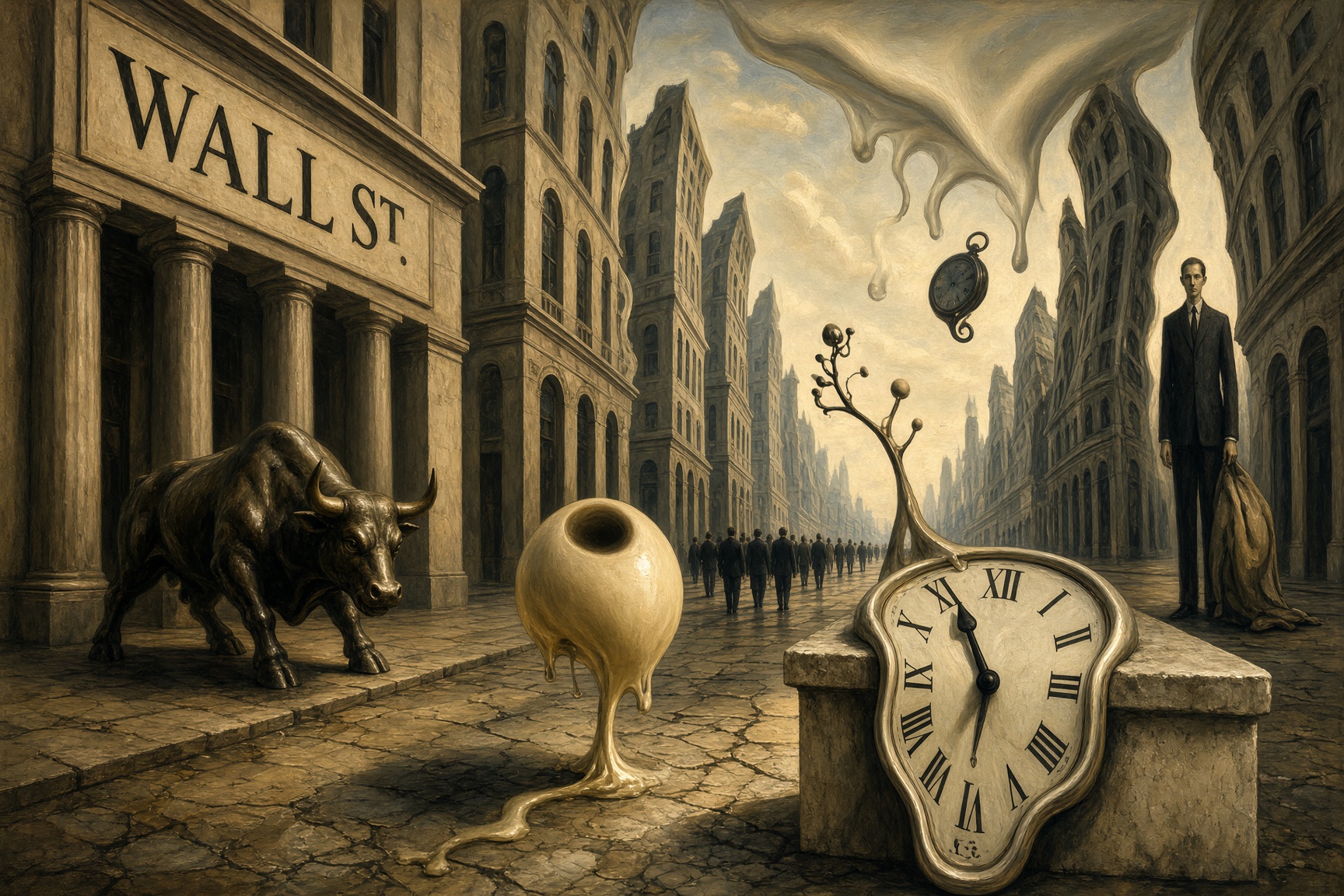
Week Ahead on Wall Street: CPI, Banks and Oil
September CPI lands on Wednesday after a Fed hike and a 10-year yield at its highest since 2002. JPMorgan, Goldman and Citi open bank earnings on Tuesday, ASML and TSMC report midweek, and Saudi pipeline attacks kept Brent at $104.72 on 9 October 2026, per CNBC. The KXCO AI Sector Ontology still shows contracted demand. This week ahead sets out the calendar, the three facts that would change the call, and why dips in the AI leaders remain buying opportunities.
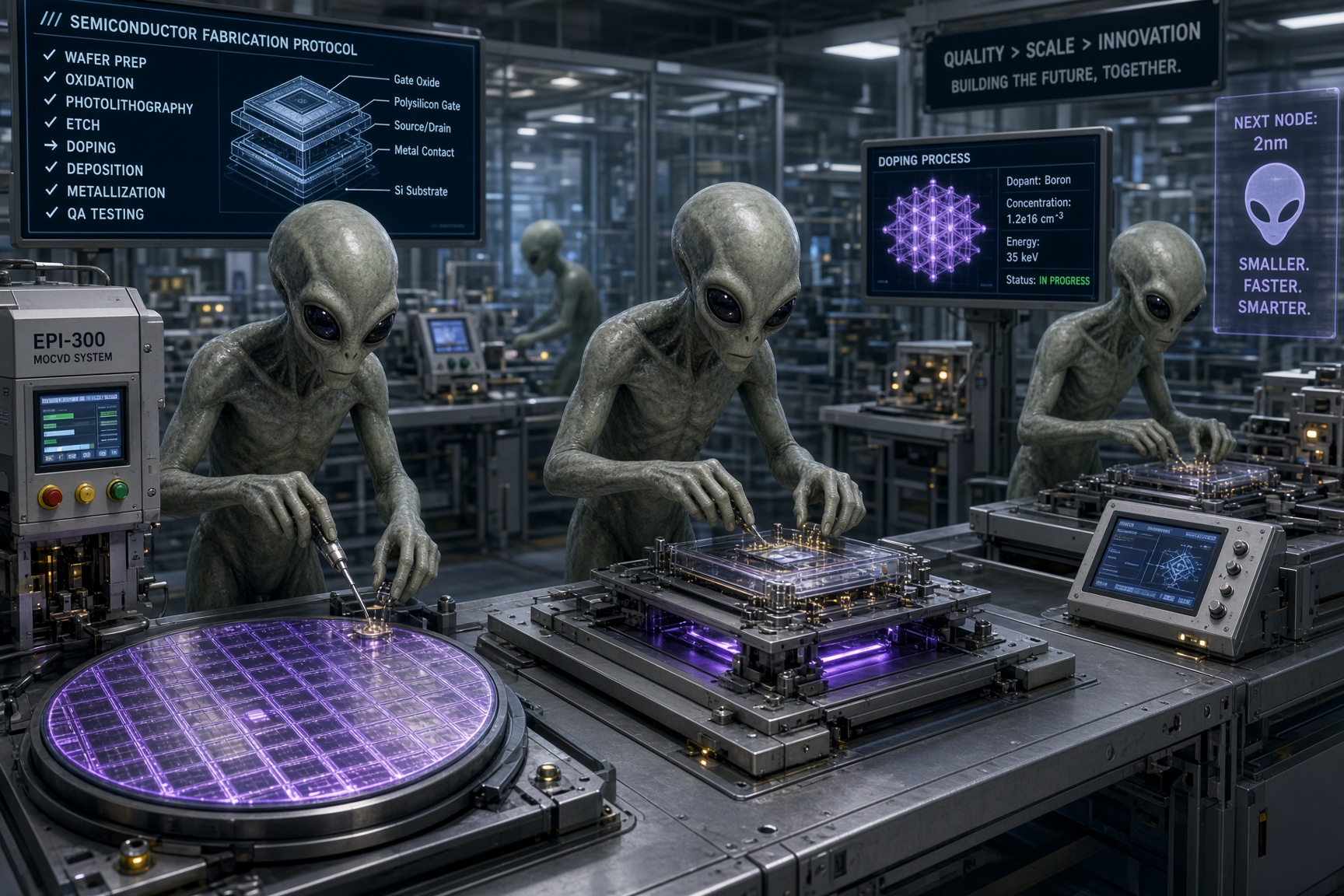
AI Is Being Powered by Tech That Looks Almost Alien
Every frontier AI model runs on chips printed by one Dutch machine. ASML's extreme-ultraviolet scanner fires a laser at up to 50,000 droplets of molten tin a second, per ASML, and bounces the light off mirrors whose deviations are tens of picometres. Veritasium called it the closest thing we have to alien technology. This piece takes the film as the brief and checks it: the machine, High-NA, and the wafer-scale chips and liquid-cooled racks downstream of it.
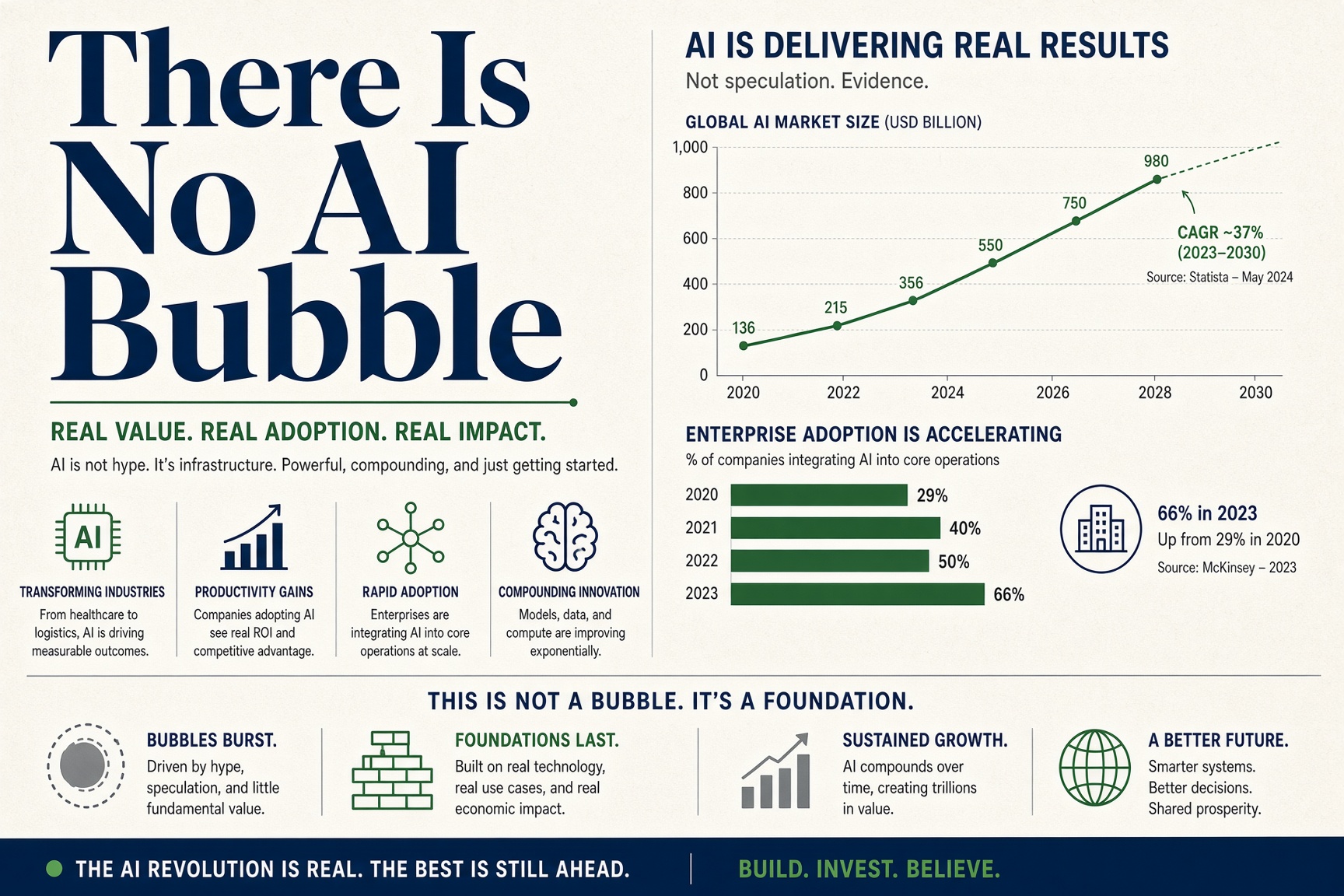
There Is No AI Bubble
There is no AI bubble. A bubble is capacity nobody uses, demand nobody signs for and a glut when the building stops. KXCO's AI sector ontology, refreshed on 7 October 2026, finds the reverse: adoption rising on six independent measures, about $2.35tn of contracted backlog at the four largest sellers of compute per their own reports, and supply rationed at every layer. It keeps the bear case in the same record, 20 circular capital claims, and answers it.
Every story, signed and delivered.
Subscribe to the kxco channel and get the headline, the AI-written key takeaways, and the chain-anchor link the moment we publish. Audio versions and per-ticker subscriptions arrive in the next iteration.