
Quantum AI Is Already Reshaping Markets
$NVDA, $GOOGL, $MSFT, $IBM, $AMZN, $IONQ, $QBTS, and $RGTI.
Part of theQuantum Computing Center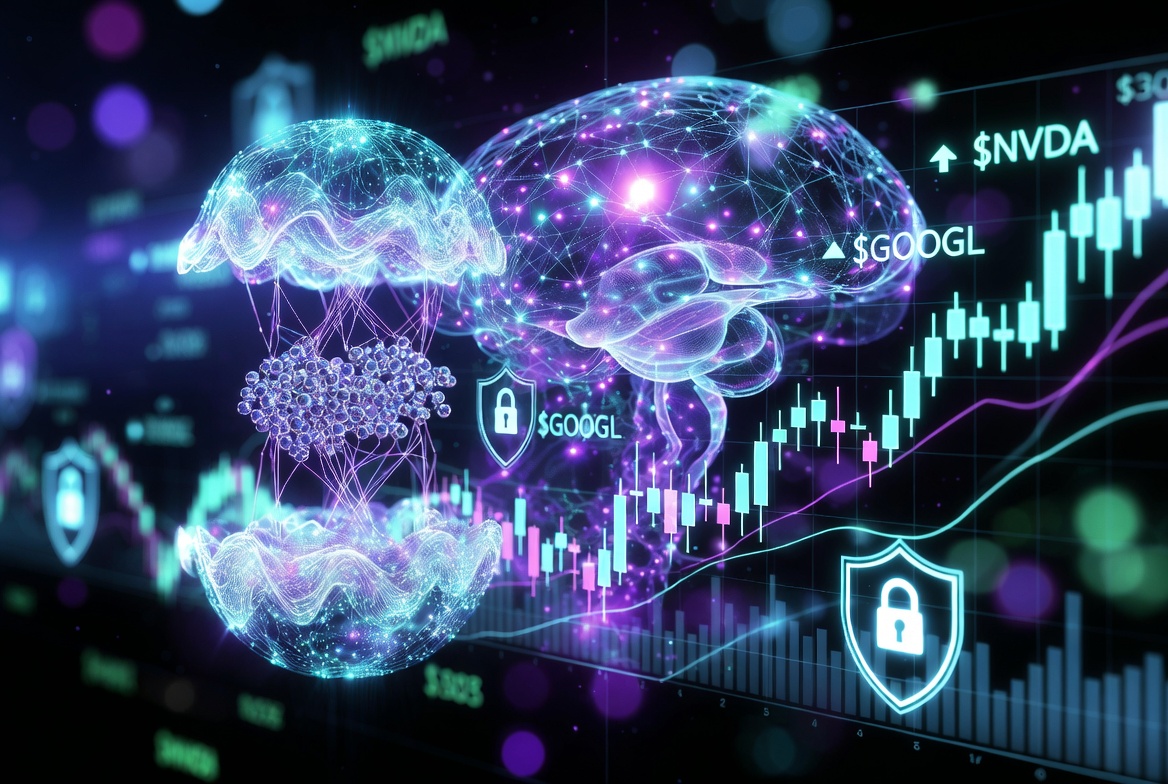
I've seen the cycles, the fads, and the bubbles. I have the grey hair to prove it. From the dot-com insanity in the late '90s to the housing mess, the crypto winters, and the wild AI ride we're still on, one thing stays constant: the real money goes to those who spot the infrastructure shifts early and build something that lasts. Quantum AI isn't some distant lab dream anymore. It's starting to hit trading floors and balance sheets in 2026, and it's going to rewrite risk, speed, and security in ways that matter. At KXCO, we didn't jump on the bandwagon — we engineered our stack around it from the jump because the threats and the upside are too damn real to ignore.
Let me break it down straight: what's changing, which stocks are catching the wave, the risks that keep me up at night, and why our setup at KXCO is built for this exact moment.
The Real Deal on Quantum AI in Markets
Look, classical computers are beasts for a lot of what we do. But throw them at problems with exploding complexity — simulating thousands of market scenarios at once, optimizing portfolios jammed with taxes, liquidity crunches, and random shocks — and they start approximating or taking forever. Quantum computing flips the script with qubits that can sit in multiple states simultaneously thanks to superposition and entanglement. Mix that with AI's pattern-matching muscle, and suddenly you've got tools that chew through those hard problems.
In finance, this means:
Sharper Monte Carlo simulations for pricing derivatives and stress-testing books — stuff that used to drag on for days now moves much faster in hybrid setups.
Portfolio optimization that actually handles the real-world mess instead of simplifying it away.
Faster spotting of fraud in transaction graphs.
And the elephant in the room: security. Shor's algorithm on a capable quantum machine could shred RSA and ECC encryption. "Harvest now, decrypt later" attacks are already a thing — bad actors grabbing encrypted data today to crack it tomorrow. That's why post-quantum migration isn't optional.
2026 feels different. IBM's pouring billions in, targeting fault-tolerant systems by 2029 with real advantage demos this year. Google's Willow work, IonQ's fidelity jumps, Microsoft's Majorana push — hybrid quantum-classical systems are moving from pilots into actual financial use cases like optimization and risk modeling. Governments are throwing serious funding at it too.
Stocks Riding the Quantum AI Shift
The market's always chasing the next narrative, and quantum AI is feeding it. We've seen pops on funding news and milestones, though volatility is brutal — just like early AI days. The big infrastructure names give you ballast; the pure-plays bring the lottery tickets (and the heartburn).
$NVDA Nvidia isn't pure quantum, but its GPUs and CUDA-Q are the heavy lifters for quantum simulations on top of the AI boom. As hybrids scale, that infrastructure demand isn't fading. I've watched this one carry sectors before.
$GOOGL (Alphabet) Google's Quantum AI lab keeps delivering on error correction and tying it into their broader AI tools. Solid revenue from search and cloud means they can fund the expensive R&D without sweating. Long-term hold material.
$MSFT Azure Quantum makes it easy for enterprises to experiment, and their topological qubit bets are ambitious. If your finance team already lives in Microsoft tools, this extends naturally.
$IBM They've got the maturity with Qiskit and deep ties to financial clients. Recent commitments show they're all in. Steady exposure here.
$AMZN AWS Braket lets you test quantum ideas without building your own rig, all on top of their cloud dominance. Practical for real-world trials.
Pure-plays have been volatile but exciting: $IONQ with trapped-ion tech and commercial traction. $QBTS (D-Wave) strong on annealing for optimization problems that fit portfolios. $RGTI (Rigetti) pushing gate-model progress.
Quantum AI & Finance Stocks Snapshot (Mid-2026)
Ticker | Company | Main Angle | Rough Position | My Take |
|---|---|---|---|---|
Nvidia | AI + quantum sim tools | Multi-trillion | Infrastructure king | |
Alphabet | Quantum AI lab + error correction | ~$2T+ | R&D powerhouse | |
Microsoft | Azure Quantum + hardware bets | Multi-trillion | Enterprise play | |
IBM | Mature systems & Qiskit | Large cap | Finance ready | |
Amazon | AWS Braket access | ~$2.8T | Easy experimentation | |
IonQ | Trapped-ion hardware | Growth pure-play | Fidelity leader | |
D-Wave | Annealing optimization | Volatile | Portfolio use cases | |
Rigetti | Gate-model systems | Smaller pure-play | Algorithm upside |
Figures are rough — markets swing. This isn't advice; verify and do your homework.
The Risks That Actually Matter
We're deep in the noisy NISQ era. Error rates, scaling costs, and talent shortages are real. Not every shiny announcement turns into revenue next quarter, and we've seen the pullbacks when hype gets ahead of delivery. Valuations can get frothy fast.
Security keeps me honest. Financial systems hold mountains of old encrypted data that's vulnerable. Banks and institutions dragging their feet are playing with fire. Add regulatory patchwork across countries and a potential "quantum divide" splitting prepared players from the rest — it could get ugly.
How KXCO Is Actually Ready
At KXCO, we built assuming quantum capabilities were coming. No bolt-ons.
We sign everything with ML-DSA-65 — the NIST FIPS 204 standard built to survive quantum attacks. Our pqc.kxco.ai and KnightsVault deliver real attestations and quantum-resistant identity via KXCOIdentity. This protects wallets, KYC, trades, and data right now against harvest threats.
Our RAG-powered AI agents connect everything — sales, compliance, reconciliations, analytics. They're the glue for clients layering in quantum tools. A partnership for embedded finance, thirdweb wallets, stablecoin rails — all with PQC baked in from day one. We've set things up compliant for places like St. Kitts, serving clients who expect it.
The full stack — Armature L1, tools on chain.kxco.ai and verify.kxco.ai — is about real utility. We're running it like the multibillion-dollar platform it’s designed to be, with partnerships and execution that matters. No vaporware.
What Smart Money Should Consider
Diversify smart: big names for stability, selective pure-plays for upside. Track NIST timelines, real finance pilots, and error-correction wins. Institutions should audit encryption exposure yesterday and test quantum-safe options. Markets reward the prepared on infrastructure turns like this.
Closing Thoughts
I've traded through enough hype to know quantum AI won't flip everything overnight. But the 2026 signals — funding, hybrids in finance, hardware progress — say it's accelerating. The players and platforms that nail security and optimization will carry the edge.
That's KXCO's lane: post-quantum infrastructure, AI that actually works across sites, verifiable blockchain for the real world. Head to kxco.ai or pqc.kxco.ai if this hits home. The shift is here. Better to stand on solid ground than scramble when it hits.
The 2030 Compute Landscape: GPUs, Power and the Architecture of Intelligence
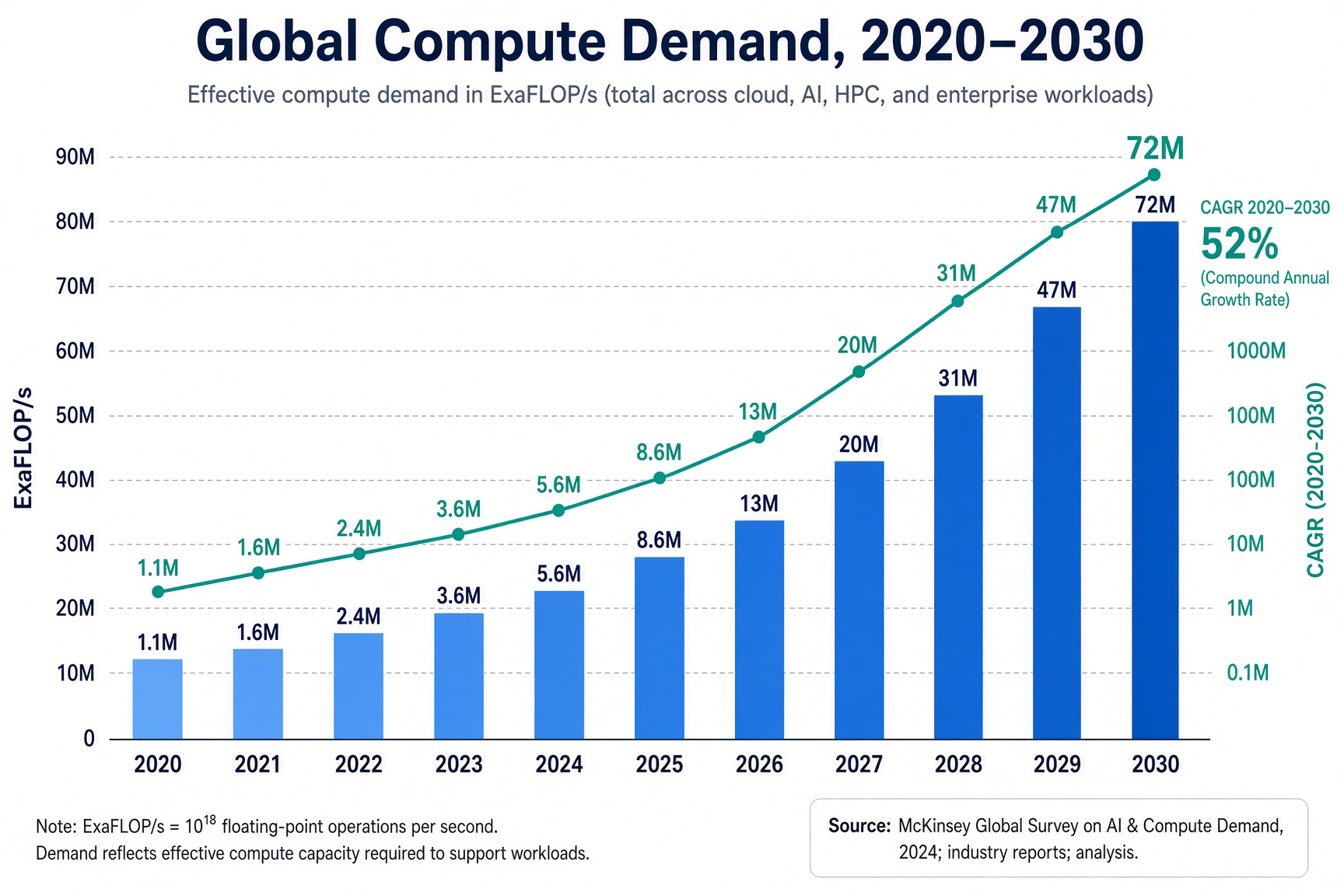
The constraint on AI is no longer ideas or data but compute and the power to run it. Frontier training compute has grown about five times a year since 2020, and the leading AI supercomputer of June 2030 is on course for about 2 million chips and 9 gigawatts. Shayne Heffernan sets out the 2030 arithmetic, the power problem, who has already contracted the gigawatts, and how GPUs, custom ASICs, wafer-scale engines and quantum machines divide the work.
How Can You Trust AI When You Cannot Trust Humans?
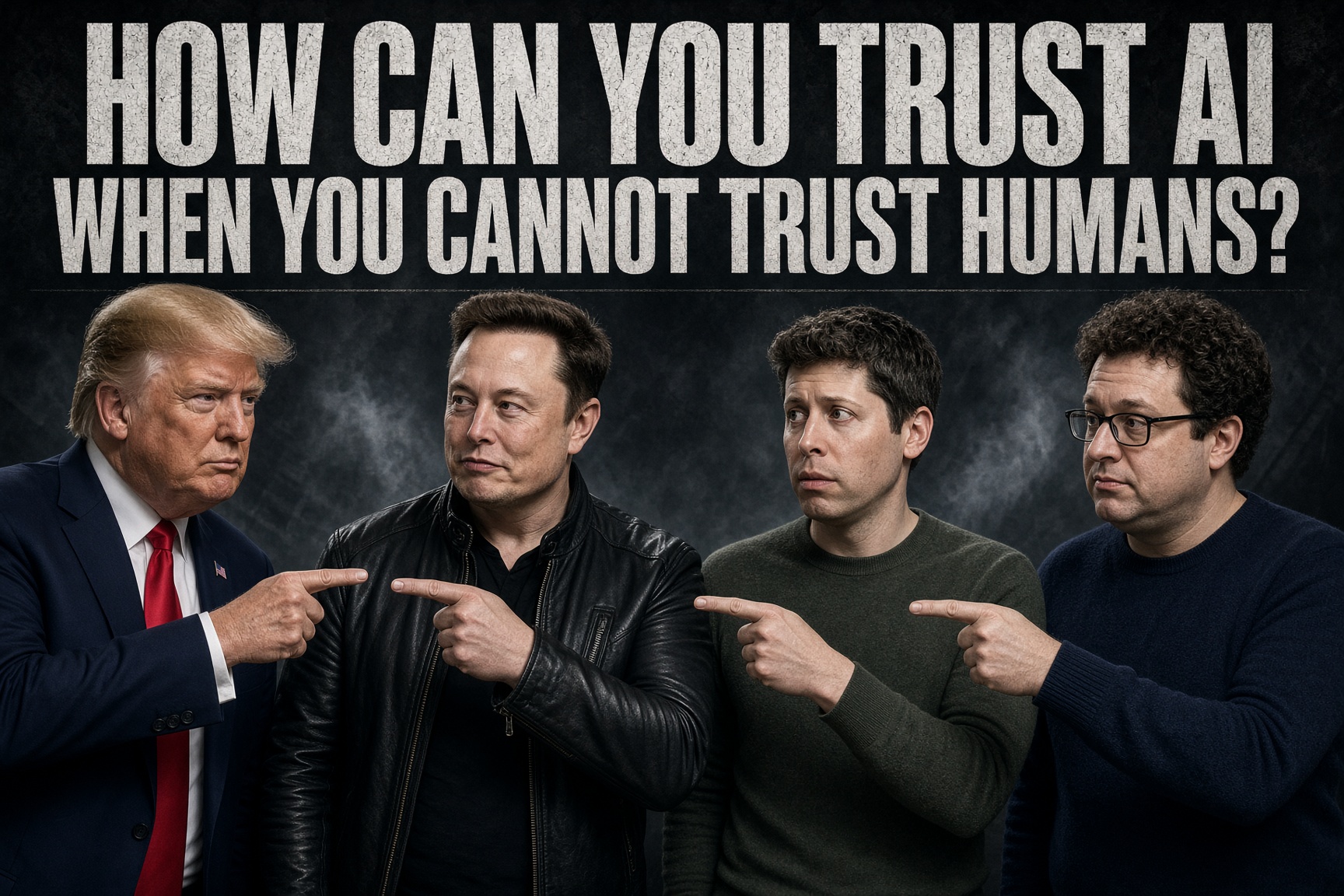
Can you trust AI? Can you trust humans? More often than we like to admit, the answer is no. AI inherits its failures from the human records it is trained on. Sheikh Mohammed bin Rashid wrote this month that the currency the UAE is betting on is trust. This piece sets out what a trust layer has to do, shows the method on three public knowledge graphs, and lays out the post-quantum work KXCO has published so that an institution can check the claim rather than take it.
KXCO AI Ontology at 3 Months: What It Called and What Comes Next
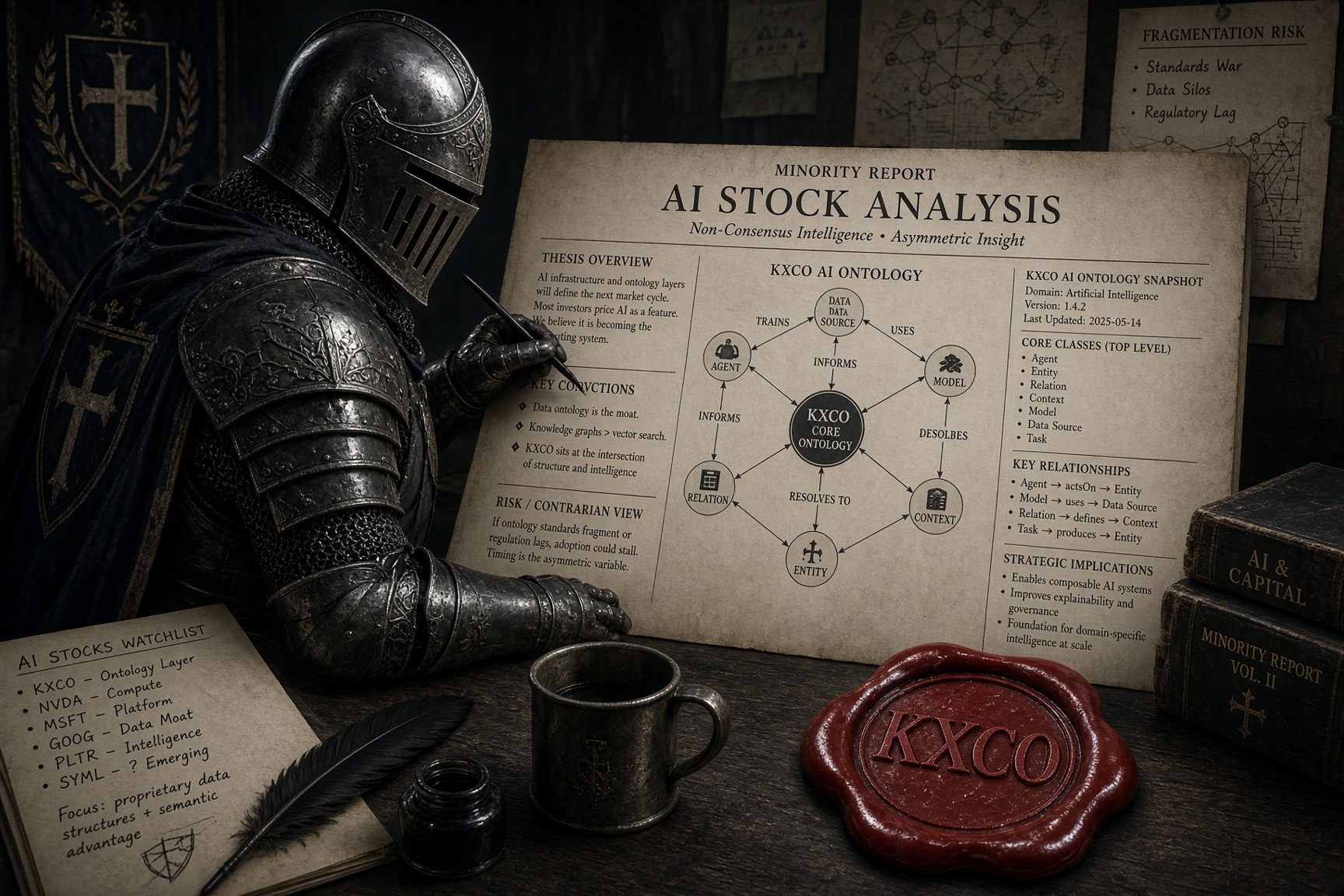
On 19 July 2026 the Round Table's AI room published its first Analyst Outlook. To the 16 October 2026 close its 13 names rose 2.6% on an equal weight against 2.1% for QQQ, per StockAnalysis closes, and the six it opened with 35% or more of upside rose 8.6%. This piece lists the six names up more than 5%, the ten names I rate as opportunities now, the month's results in AI and quantum computing, and the official data showing that four in five firms have not yet started using AI.

SpaceX: The Road to 10 Gigawatts
SpaceX did not add an AI business. A company whose processes run on compute built its own computing plant, then built the power to run it. The 10-Q reports 1.4 gigawatts of nameplate compute at 30 June 2026, four leases worth about $41 billion a year and $100 billion of cash. The target is closer to 10 gigawatts than 5 by the end of 2027. This piece sets out the build sequence, the four layers of power in Memphis, and why Terafab is the act after 2027, not the road to it.
Every story, signed and delivered.
Subscribe to the kxco channel and get the headline, the AI-written key takeaways, and the chain-anchor link the moment we publish. Audio versions and per-ticker subscriptions arrive in the next iteration.