
Perfect Timing for Knightsbridge Group IPO
As the global IPO market gains momentum, the timing appears ripe for the Knightsbridge Group IPO, joining a growing list of companies eyeing listings in the second quarter. With Wall Street and the world witnessing a resurgence in IPO activity, executives and financial partners are eager to capitalize on investors' heightened interest amidst a promising landscape.
Following the stellar debuts of semiconductor connectivity firm Astera Labs Inc. and social media platform Reddit Inc. last month, market sentiment remains buoyant, presenting an opportune moment for companies to tap into the robust investor appetite. Notable entries this quarter, including Microsoft Corp.-backed data security startup Rubrik Inc. and safety testing firm UL Solutions Inc., are poised to contribute over $1 billion to the $9.6 billion raised via IPOs on US exchanges this year.
Lauren Garcia Belmonte, co-head of technology equity capital markets Americas at Morgan Stanley, underscores the positive momentum spurred by recent successful deals, attributing it to investors' keen interest in exploring new ventures. This enthusiasm has translated into the most promising start for first-time share sales since 2019, with the 48 deals priced in the first quarter witnessing an average increase of about 25%, fueled by the impressive performances of Astera and Reddit.
However, amid the optimism, prospective issuers remain vigilant, monitoring the performance of upcoming listings like Rubrik and UL Solutions. Given the potential market volatility influenced by geopolitical factors, corporate earnings, interest rate trends, and the looming election, companies are mindful of market dynamics.
Gabe Gelman, head of Americas ECM at Goldman Sachs Group Inc., emphasizes the importance of the IPO as a viable exit strategy, particularly for private equity firms holding high-quality assets. With investors seeking companies demonstrating robust growth prospects and clear paths to profitability, valuation remains a key consideration for institutional investors.
Keith Canton, Americas head of ECM at JPMorgan Chase & Co., highlights investors' focus on identifying appropriate valuation multiples, underlining the importance of striking a balance between growth potential and valuation.
While second-quarter activity is expected to gain momentum, market participants anticipate a more measured pace compared to the IPO frenzy witnessed in 2021. Gelman notes a return to a more traditional IPO discount, signaling a shift from the exuberance of previous years.
Knightsbridge Groups Innovative IPO Approach
More KDA News https://www.livetradingnews.com/?s=kda
KDA is a utility token designed to facilitate seamless transactions within the Knightsbridge Ecosystem. As a versatile digital asset, KDA can be utilized for various purposes, including purchasing shares in our upcoming IPO planned for Europe, the UK, or Hong Kong. Additionally, KDA serves as a means of exchange for accessing real estate, products, and services offered by Knightsbridge Group. Built on the XT Smart Chain, KDA combines efficiency, security, and accessibility to empower users within our ecosystem.
More KDA News https://www.livetradingnews.com/?s=kda
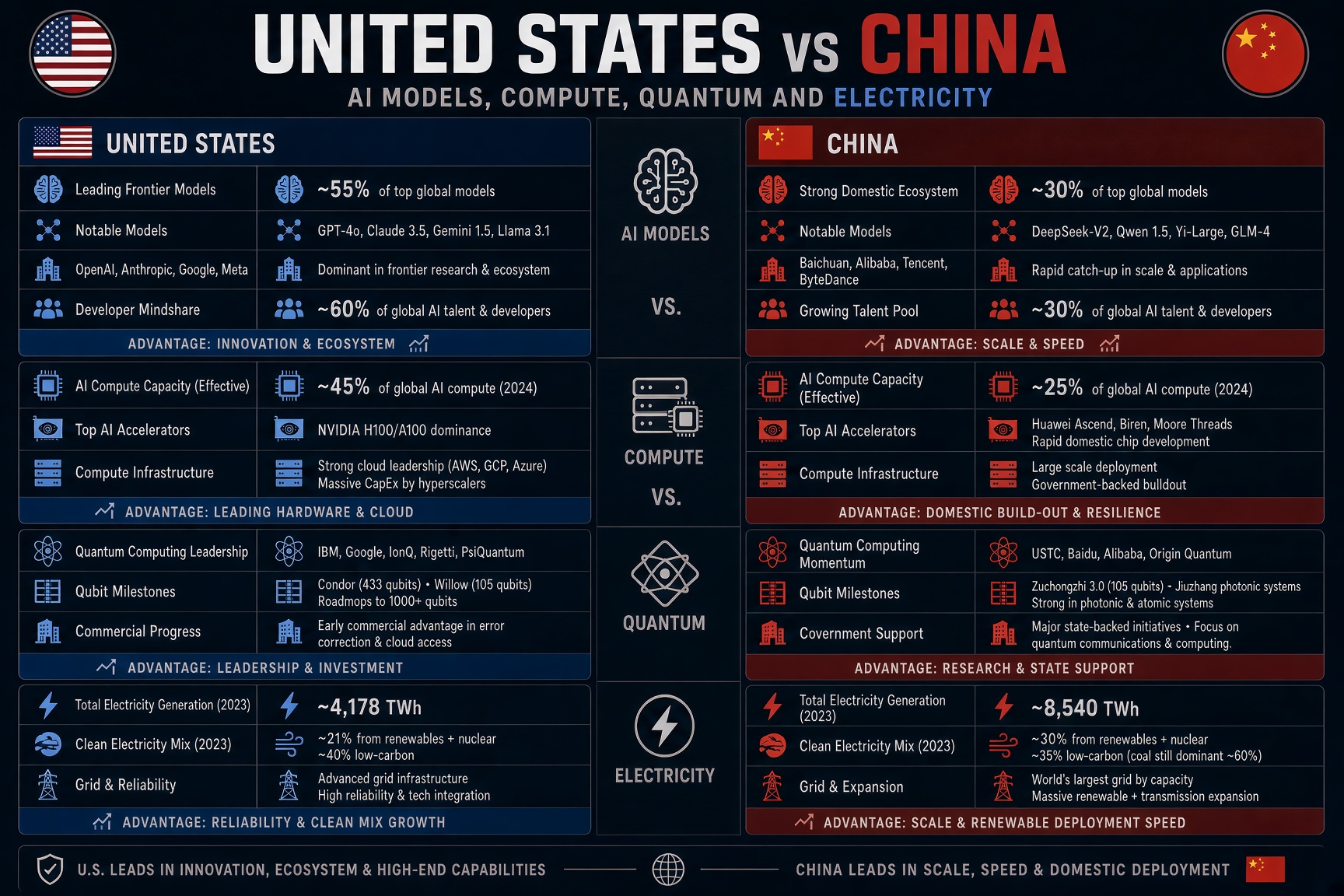
United States vs China: AI Models, Compute, Quantum and Electricity
The United States still leads in frontier model capability, total AI compute and quantum error correction, while China has narrowed the gaps in model performance, open-weight adoption and domestic chip volumes, and holds a structural advantage in power for data centres. Shayne Heffernan sets out the developments from July to October 2026 across models, compute, quantum and electricity, and how fast China is catching up.
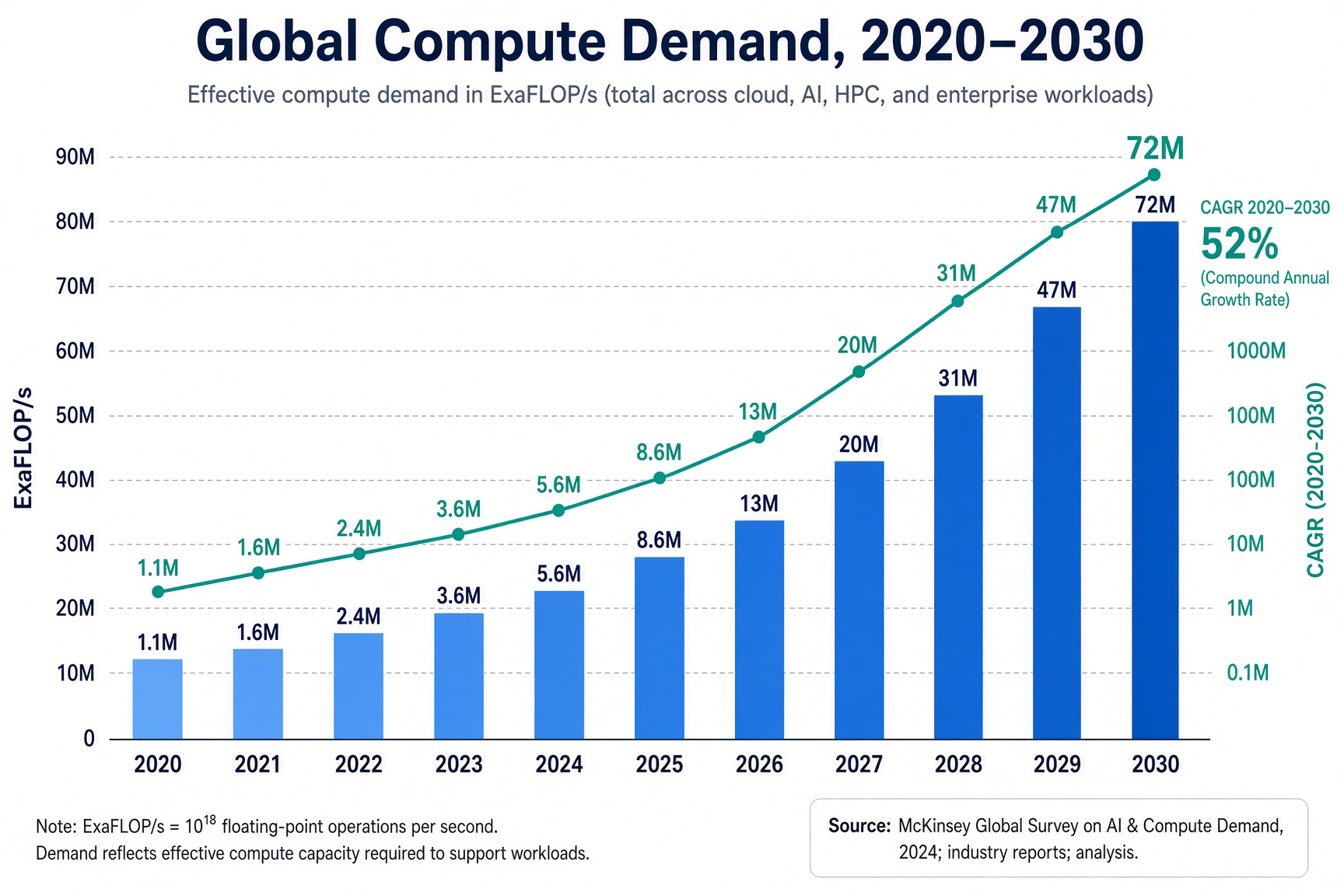
The 2030 Compute Landscape: GPUs, Power and the Architecture of Intelligence
The constraint on AI is no longer ideas or data but compute and the power to run it. Frontier training compute has grown about five times a year since 2020, and the leading AI supercomputer of June 2030 is on course for about 2 million chips and 9 gigawatts. Shayne Heffernan sets out the 2030 arithmetic, the power problem, who has already contracted the gigawatts, and how GPUs, custom ASICs, wafer-scale engines and quantum machines divide the work.
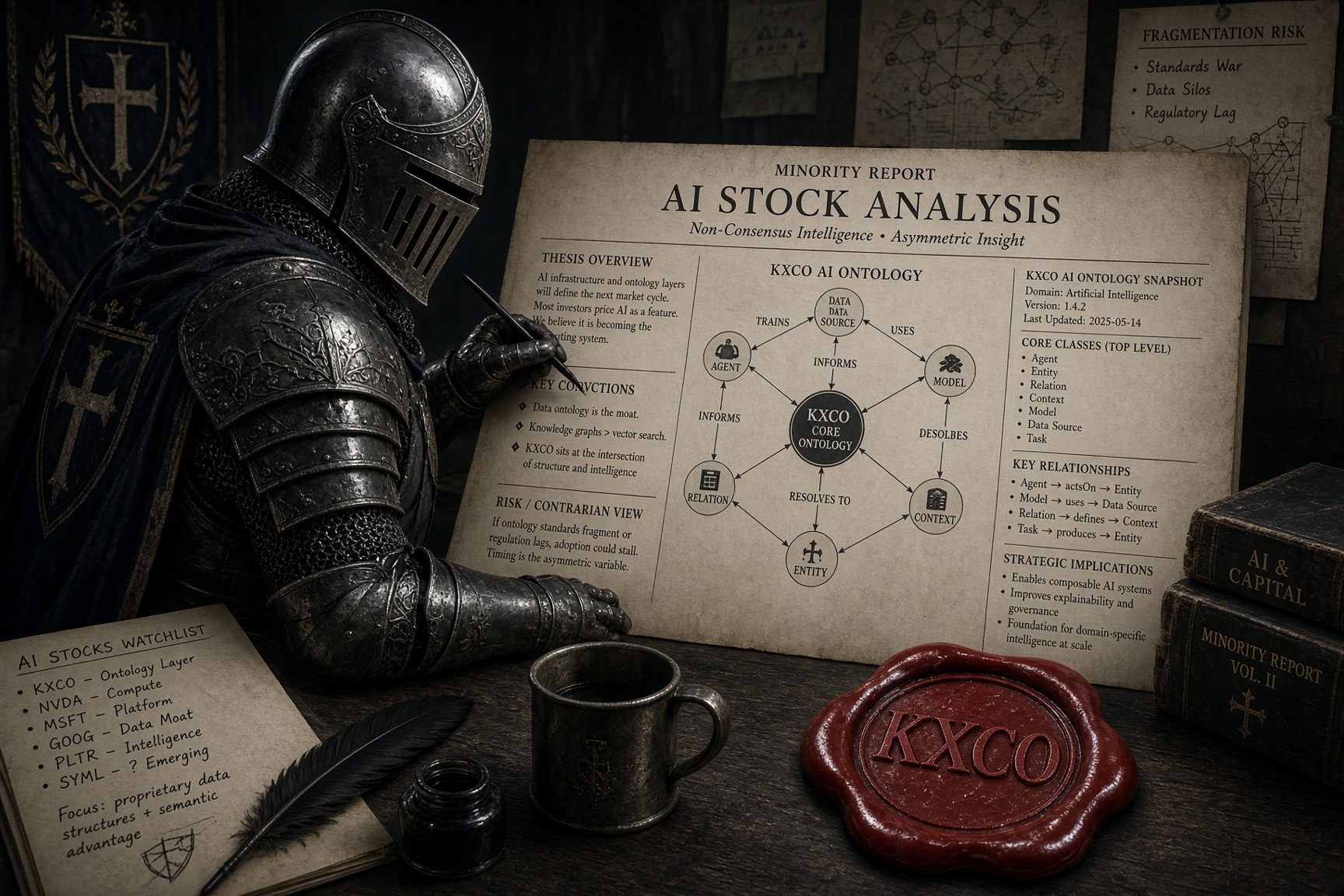
KXCO AI Ontology at 3 Months: What It Called and What Comes Next
On 19 July 2026 the Round Table's AI room published its first Analyst Outlook. To the 16 October 2026 close its 13 names rose 2.6% on an equal weight against 2.1% for QQQ, per StockAnalysis closes, and the six it opened with 35% or more of upside rose 8.6%. This piece lists the six names up more than 5%, the ten names I rate as opportunities now, the month's results in AI and quantum computing, and the official data showing that four in five firms have not yet started using AI.

SpaceX: The Road to 10 Gigawatts
SpaceX did not add an AI business. A company whose processes run on compute built its own computing plant, then built the power to run it. The 10-Q reports 1.4 gigawatts of nameplate compute at 30 June 2026, four leases worth about $41 billion a year and $100 billion of cash. The target is closer to 10 gigawatts than 5 by the end of 2027. This piece sets out the build sequence, the four layers of power in Memphis, and why Terafab is the act after 2027, not the road to it.
Every story, signed and delivered.
Subscribe to the kxco channel and get the headline, the AI-written key takeaways, and the chain-anchor link the moment we publish. Audio versions and per-ticker subscriptions arrive in the next iteration.