
Knightsbridge Group Positioned for Strong Asian Growth
Supported by a good economic environment and strong alliances, the Knightsbridge Group is on a bright future for notable expansion inside the Asian region. Based on the most recent Asian Development Bank (ADB) estimate, the projected economic growth for developing Asia and the Pacific has been somewhat raised to 5.0% for this year from a previous estimate of 4.9%. Rising regional exports and robust domestic demand help to explain this favorable change, therefore providing a strong basis for local economic growth.
Inflation Trends and Economic Growth
Thanks to declining world food prices and the residual consequences of higher interest rates, the ADB research notes that inflation is predicted to drop to 2.9% this year. This slowdown in inflation is probably going to help to maintain economic stability and growth, thereby giving firms working in the area a hopeful backdrop.

Export Rebound and Technological Advancements
Following a post-pandemic recovery mostly driven by domestic demand, exports are now rising, therefore accelerating the economic growth of the region. Exports from several Asian countries are being greatly increased by the worldwide need for electronics, particularly semiconductors used in high-tech and artificial intelligence applications. Companies like Knightsbridge Group, positioned to take advantage of these prospects with their sophisticated technology and financial services, should profit from this increase in export business.
robust regional foundations
"Most of Asia and the Pacific is enjoying better economic growth compared with the second half of last year, notes ADB Chief Economist Albert Park. The fundamentals of the area are still robust, but officials should pay close attention to several hazards that may influence the situation from interest rate choices and geopolitical tensions to concern about election results in big economies."
Growth Projections Specific to Countries
China: For this year, the biggest economy in the world still has a growth projection of 4.8%. Driving this growth are the ongoing rebound in services demand, more than projected exports, and industrial activity.
India: With a fastest-growing economy, India's looks for the fiscal year 2024 are likewise consistent at 7.0%. One important aspect is robust industrial sector expansion motivated by manufacturing and high demand in construction.
Southeast Asia: With strong increases in both internal and outside demand, the growth projection for this year remains 4.6%.
Strategic Partnerships and Market Penetration The company's expansion in the Asian market is likely to be quickened by Strategic Partnerships and Market Penetration Knightsbridge Group's strategic activities, which include collaborations in Thailand These partnerships not only improve Knightsbridge's market profile but also combine their offerings with approved government projects to guarantee constant demand and acceptance.
Knightsbridge Group is strategically positioned to seize the chances presented by the Asian area displaying solid economic foundations and development prospects. Along with strong alliances and favorable economic conditions, the company's technological innovations highlight its potential for notable expansion and market leadership in Asia.
As the ADB's positive economic forecast and Knightsbridge Group's strategic plans point to a bright future for the business as it keeps growing and flourishing in the vibrant Asian market.
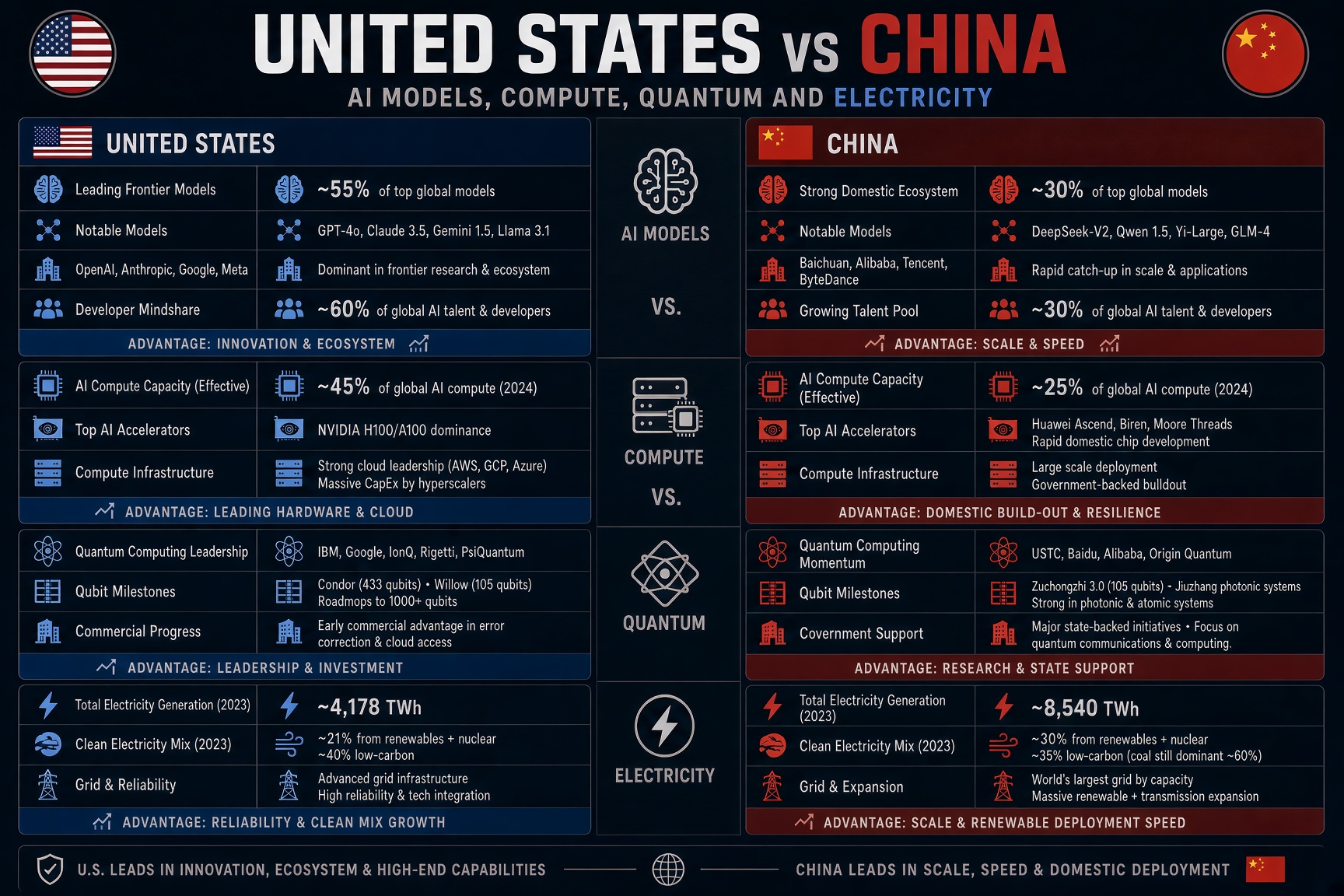
United States vs China: AI Models, Compute, Quantum and Electricity
The United States still leads in frontier model capability, total AI compute and quantum error correction, while China has narrowed the gaps in model performance, open-weight adoption and domestic chip volumes, and holds a structural advantage in power for data centres. Shayne Heffernan sets out the developments from July to October 2026 across models, compute, quantum and electricity, and how fast China is catching up.
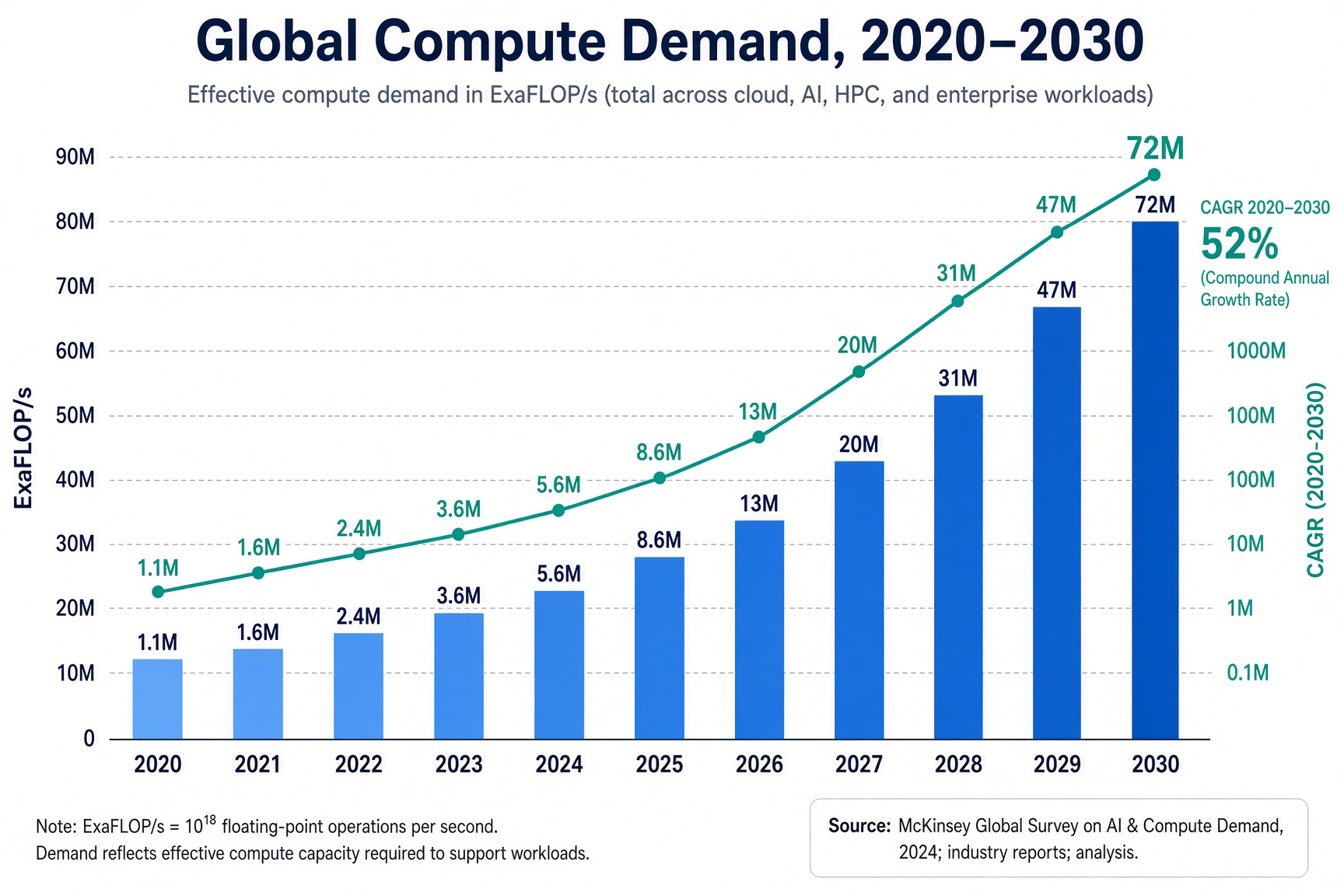
The 2030 Compute Landscape: GPUs, Power and the Architecture of Intelligence
The constraint on AI is no longer ideas or data but compute and the power to run it. Frontier training compute has grown about five times a year since 2020, and the leading AI supercomputer of June 2030 is on course for about 2 million chips and 9 gigawatts. Shayne Heffernan sets out the 2030 arithmetic, the power problem, who has already contracted the gigawatts, and how GPUs, custom ASICs, wafer-scale engines and quantum machines divide the work.

KXCO AI Ontology at 3 Months: What It Called and What Comes Next
On 19 July 2026 the Round Table's AI room published its first Analyst Outlook. To the 16 October 2026 close its 13 names rose 2.6% on an equal weight against 2.1% for QQQ, per StockAnalysis closes, and the six it opened with 35% or more of upside rose 8.6%. This piece lists the six names up more than 5%, the ten names I rate as opportunities now, the month's results in AI and quantum computing, and the official data showing that four in five firms have not yet started using AI.

SpaceX: The Road to 10 Gigawatts
SpaceX did not add an AI business. A company whose processes run on compute built its own computing plant, then built the power to run it. The 10-Q reports 1.4 gigawatts of nameplate compute at 30 June 2026, four leases worth about $41 billion a year and $100 billion of cash. The target is closer to 10 gigawatts than 5 by the end of 2027. This piece sets out the build sequence, the four layers of power in Memphis, and why Terafab is the act after 2027, not the road to it.
Every story, signed and delivered.
Subscribe to the kxco channel and get the headline, the AI-written key takeaways, and the chain-anchor link the moment we publish. Audio versions and per-ticker subscriptions arrive in the next iteration.