
IMF Pushes Global Money Printing, Bitcoin and Gold will Benefit
International Monetary Fund Managing Director Kristalina Georgieva has called for strong G20 policies to counter ‘dangerous divergence’.
"Today, powered by advancements in vaccinations and your strong monetary policy and fiscal actions, the world economy is on the path of recovery. Growth prospects for this year, enhanced by sizable additional stimulus in some large economies, are possibly even above our January 5.5 percent projection. Yet, uncertainties remain very high, as vaccinations still have a long way to go against new waves and variants of the virus, " she said Friday at the virtual meeting of the G20 Finance Ministers and Central Bank Governors.
"And we see dangerous divergence between and within economies. In emerging and developing countries, excluding China, we project by 2022 cumulative per capita income losses as high as 22 percent, versus 13 percent in advanced economies. And we forecast that only half of the countries that were narrowing their income gaps relative to advanced economies will continue to do so over 2020-22. Within countries, the young, the low-skilled, and women have been disproportionately affected by job losses," she added.
"And we cannot forget the major threat from climate change. We need strong and determined action.
"First, speed up vaccinations across the world. It is the most impactful support for the recovery. We need international collaboration to accelerate production and make vaccines available everywhere as fast as possible.
"Second, resolve to provide lifelines to business and households, tailored to countries’ circumstances, until there is a durable exit from the health crisis. And prepare for risks and unintended consequences once policy support is gradually withdrawn. We are likely to see rises in bankruptcies and financial stresses, including excessive volatility in financial markets.
"Third, step up support to vulnerable countries. Together with the World Bank we are working with countries to implement strong reforms, address debt transparency and sustainability, and expand concessional financing. We support the prompt and effective implementation of the Common Framework, with Chad, Ethiopia, and Zambia being the first candidates. We are also reviewing the case for extending the Debt Service Suspension Initiative.
"We must deploy all tools at our disposal. I am very encouraged by the growing support for a new Special Drawing Right (SDR) allocation, to boost reserves of all members in a transparent and accountable manner. And by the calls for an additional mechanism to enable our wealthier members to support low-income countries through on-lending part of their SDRs. We stand ready to present to our membership a robust assessment of long-term reserve needs and implementation modalities.
Finally, a word on aligning the use of public resources with the goal to shape a climate-resilient, digital, and inclusive future.
"We strongly support the Presidency’s proposal on global climate risks and environmental taxation. We will play our part in the areas of our comparative strength, such as integrating climate in public revenues and spending policies, climate-related financial stability risks and data.
"I am also encouraged by the new impetus to modernise the international tax system to better fit 21st century economies and support the goal of inclusive development as well.
"In all your vital work you can count on us."

Our Consciousness Is Linked to Our Humanity, and AI Should Extend It
The only systems in which science has strong evidence of consciousness are living animals, and the only consciousness any of us knows from the inside is human. Shayne Heffernan argues that our consciousness is linked to our humanity: it grows out of a body keeping itself alive and becomes a self through a human upbringing. AI can extend that consciousness. On today's evidence it does not share it, so AI should be built as an instrument of human minds.
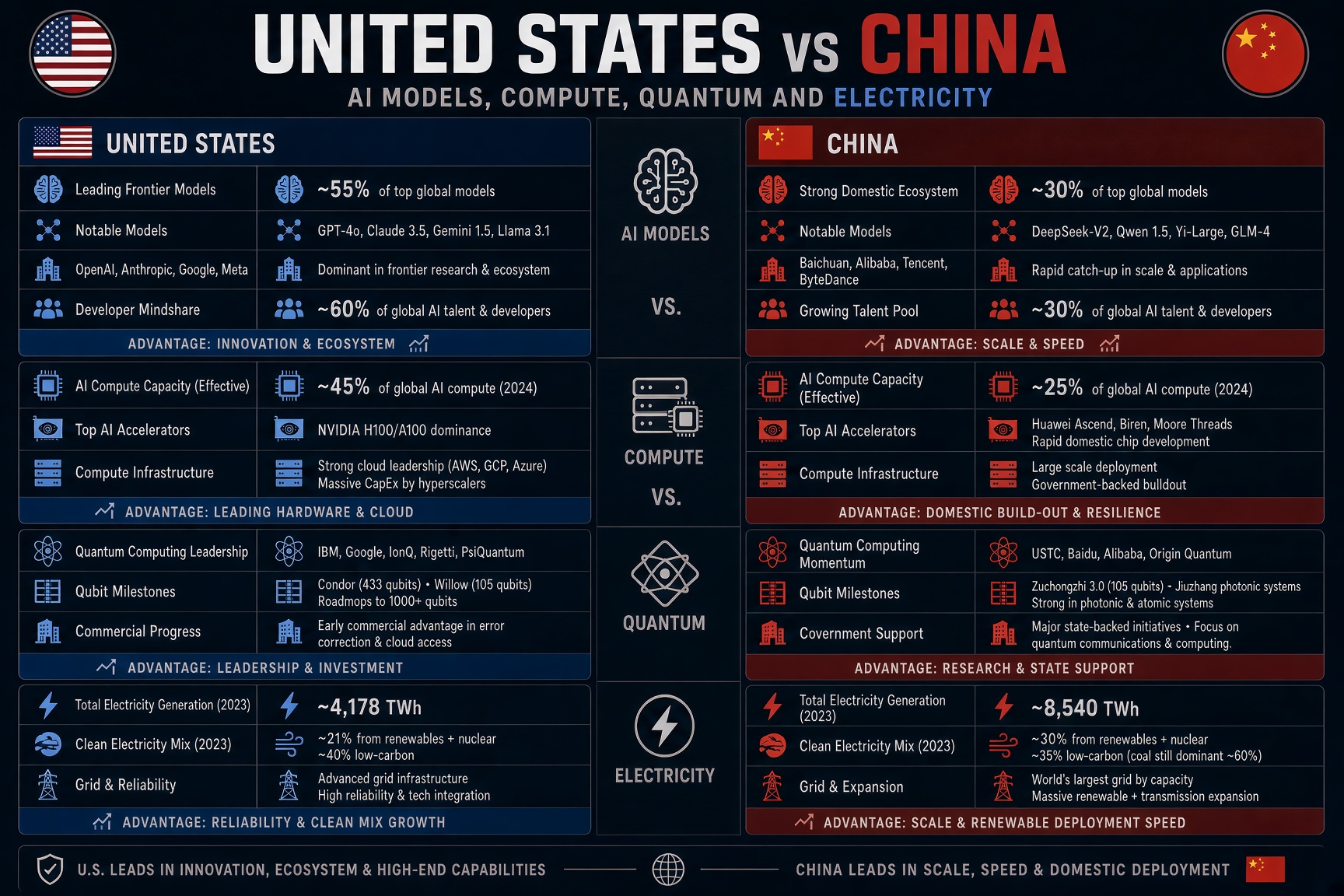
United States vs China: AI Models, Compute, Quantum and Electricity
The United States still leads in frontier model capability, total AI compute and quantum error correction, while China has narrowed the gaps in model performance, open-weight adoption and domestic chip volumes, and holds a structural advantage in power for data centres. Shayne Heffernan sets out the developments from July to October 2026 across models, compute, quantum and electricity, and how fast China is catching up.
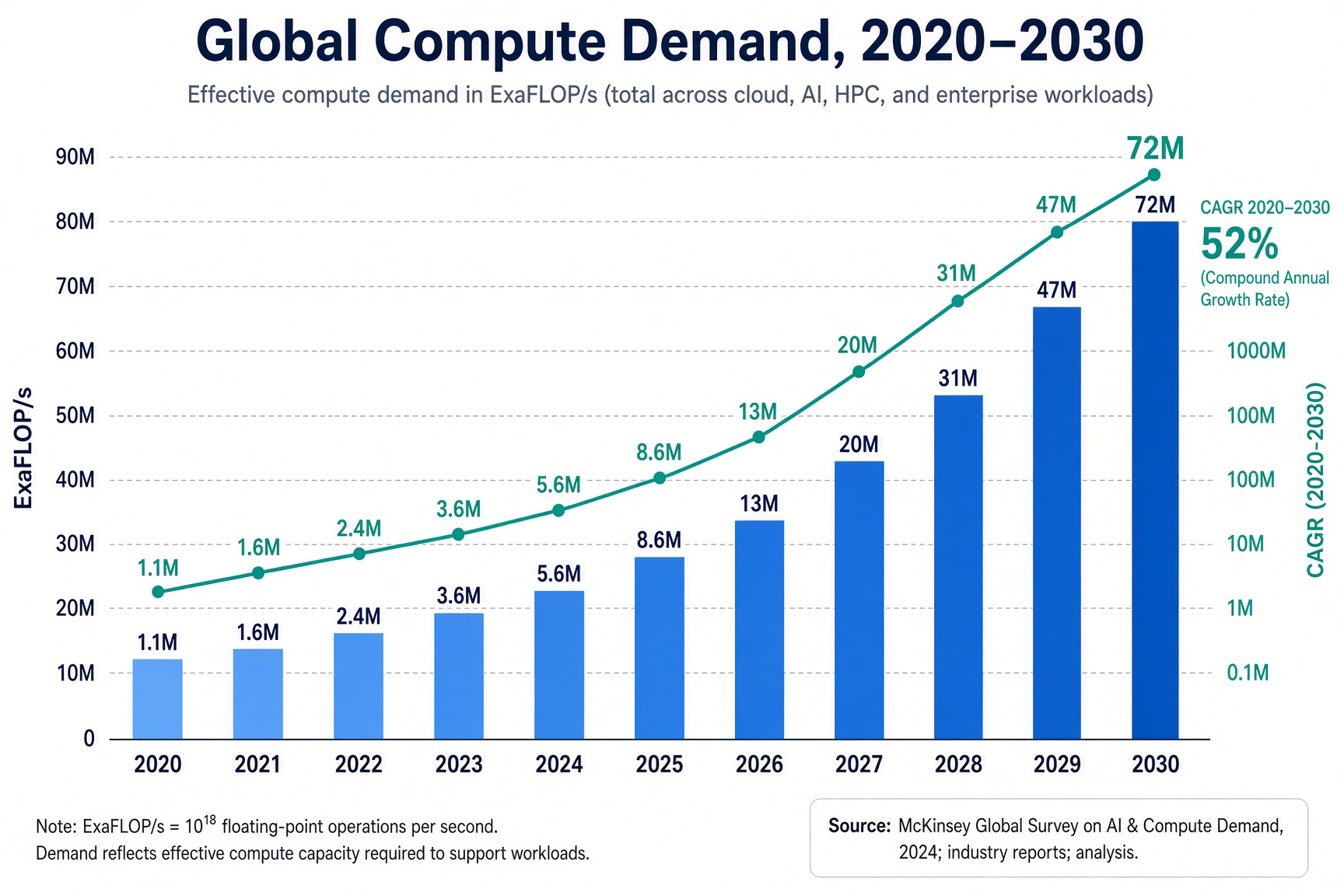
The 2030 Compute Landscape: GPUs, Power and the Architecture of Intelligence
The constraint on AI is no longer ideas or data but compute and the power to run it. Frontier training compute has grown about five times a year since 2020, and the leading AI supercomputer of June 2030 is on course for about 2 million chips and 9 gigawatts. Shayne Heffernan sets out the 2030 arithmetic, the power problem, who has already contracted the gigawatts, and how GPUs, custom ASICs, wafer-scale engines and quantum machines divide the work.
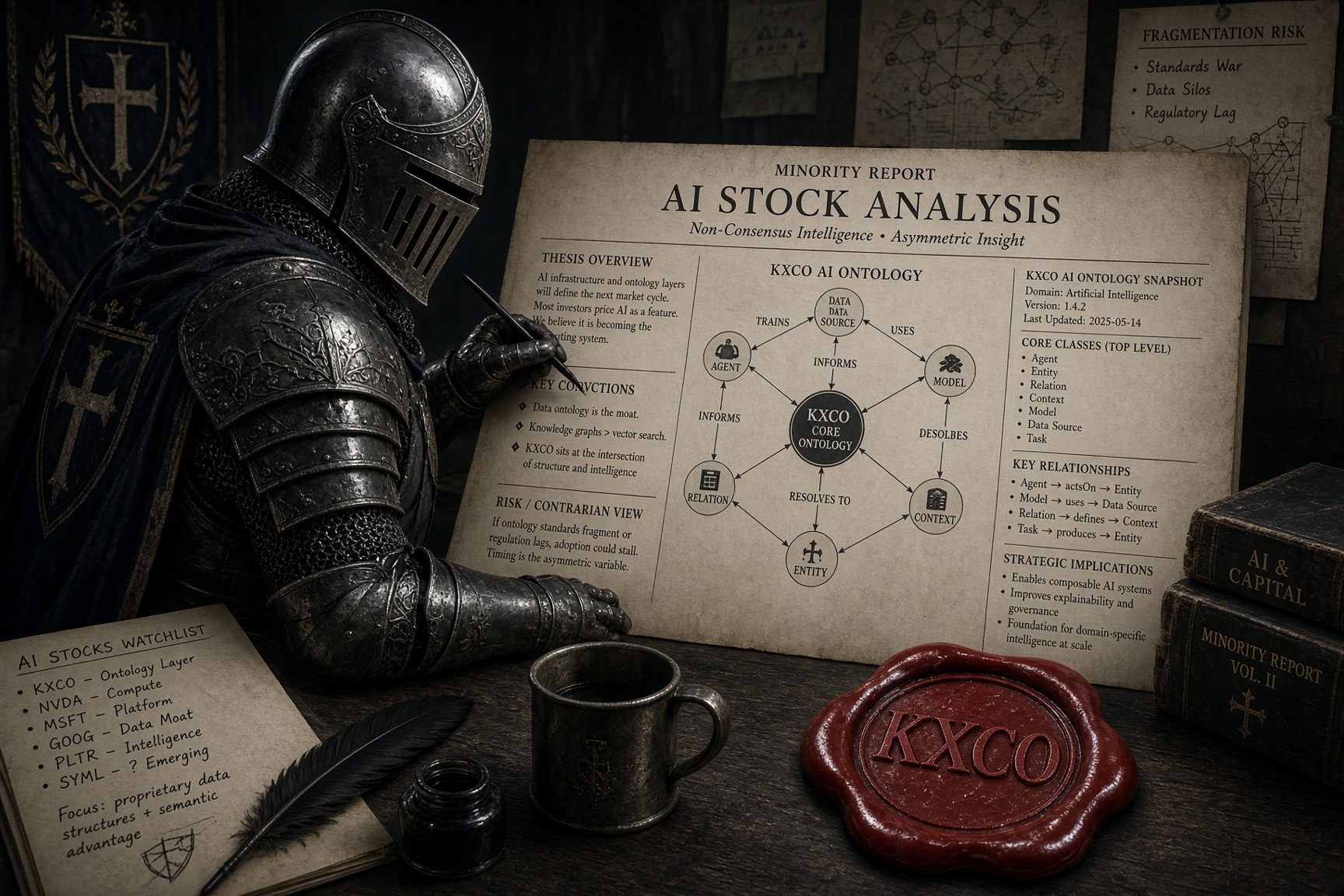
KXCO AI Ontology at 3 Months: What It Called and What Comes Next
On 19 July 2026 the Round Table's AI room published its first Analyst Outlook. To the 16 October 2026 close its 13 names rose 2.6% on an equal weight against 2.1% for QQQ, per StockAnalysis closes, and the six it opened with 35% or more of upside rose 8.6%. This piece lists the six names up more than 5%, the ten names I rate as opportunities now, the month's results in AI and quantum computing, and the official data showing that four in five firms have not yet started using AI.
Every story, signed and delivered.
Subscribe to the kxco channel and get the headline, the AI-written key takeaways, and the chain-anchor link the moment we publish. Audio versions and per-ticker subscriptions arrive in the next iteration.