
How to Trade the Nvidia Split
Nvidia (NVDA), the most dominant company in the artificial intelligence (AI) market will divide its stocks ten times for one at the end of the week. You will thus be able to purchase a share for over $100 rather than having to shell out over $1,000 to own one.
A stock split theoretically has no impact on the value of a corporation since an increase in shares balances its reduced price. For smaller accounts, it will, however, make the stock—not including its options—more reasonably priced. Should you therefore include NVDA in your portfolio? This week I'm looking at past performance of stocks after prices decreased following a stock split.
Divining Splits for NVDA
Over the past two years, Nvidia's price swings have been really significant; today, it sits at around $1,000 per share.
Among only a few corporations with a market capitalization over $2 trillion is Nvidia. In terms of perspective, the firm has only experienced 14 splits whereby its market capitalization exceeds $100 billion.
After stock splits, huge corporations greatly lagged behind. Over the next two weeks, the stocks averaged a loss of more than 2%; not even 30% outperformed the SPX in the near term. With just 38.5% of the six-month returns surpassing the SPX, the averages for the six-month returns again underperformed—just 0.3%.
Let's lastly look at pricey stocks with massive market caps that split. These equities generally underperformed the larger market, as you would predict following a review of the numbers above. Over the first two weeks, they lost 2.66% on average; following six months, they climbed from there to get just above breakeven.
Purchasing the stocks that split yielded a 0.5% return over the next six months; 37.5% of them were positive and the same amount matched the SPX. Should you have only purchased the SPX, the average return was 3.8%; six of eight were positive.
But if we go back in time to the wild dotcom days, it all changes. If AI is in that type of market, which it may well be, NVDA could triple on the split.
AI is the Neat Handwriting of the Illiterate
A model in the hands of someone who has read the filing and walked the plant is a clerk. The same model, speaking for someone who has done neither, is a disguise. On AI slop, phantom citations and factslop, why finish stopped being evidence of work, and the containment layer KXCO built so a machine cannot speak as the institution until a source is attached.
Worthship: Do Not Conform to the Age
Worthship is the older English word for worship, and it means to ascribe worth. Bishop Robert Barron preached Romans 12 on 30 August. This essay follows the text into the prison letters, and puts two questions to a graph: do the four readings of that Sunday agree, and was Paul free or in chains when he wrote about despair?
The Truth in All Its Ugliness Must Survive
A majority vote does not determine the truth. Consensus is a mood, gossip is a sport, and a model will write the pretty version for free. Why the ugly number has to survive, why a record beats a dashboard, and what KXCO was built to keep standing when the room changes its mind.
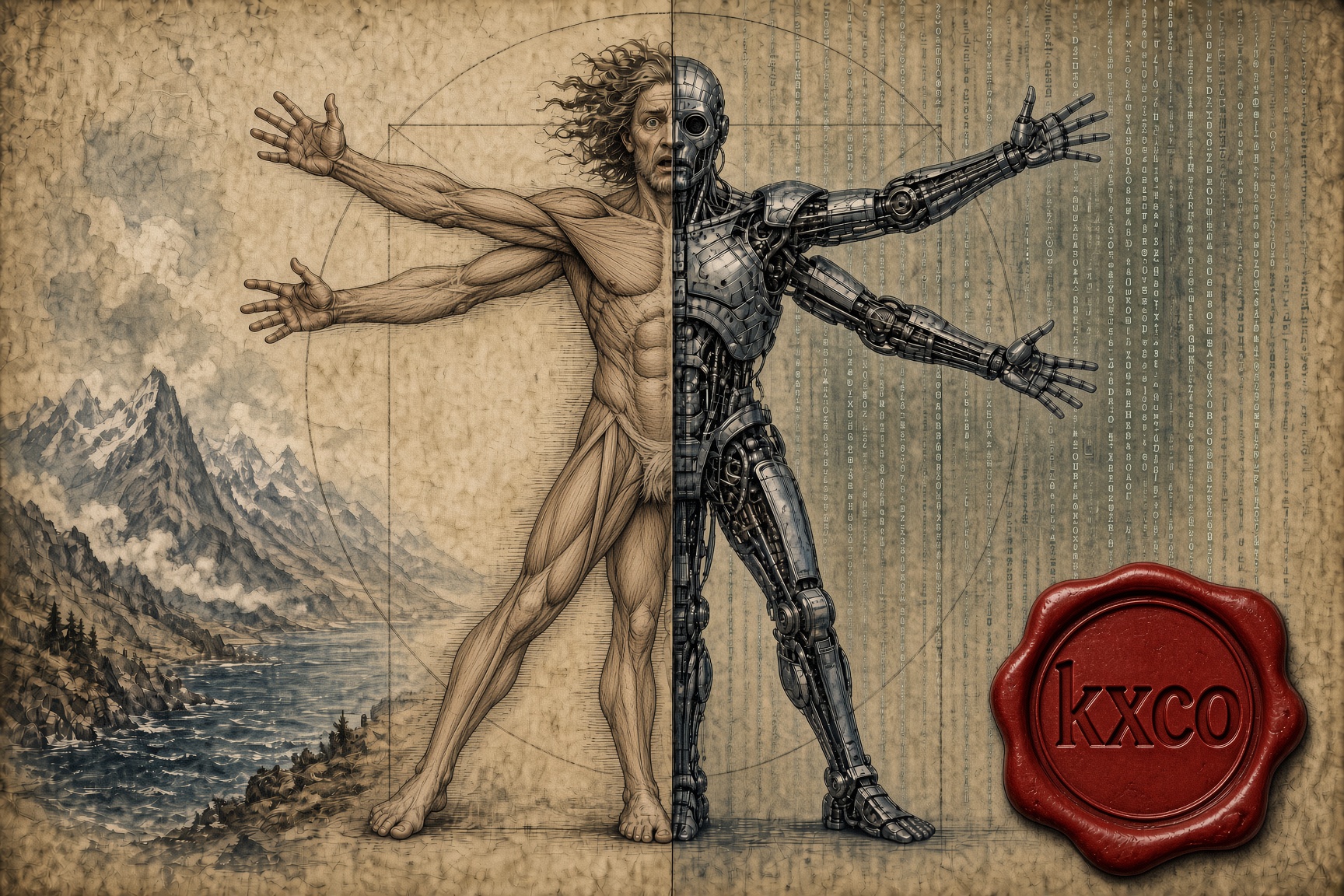
Don't Be the Best, Be the Only: Winning in an AI World
AI is repricing competence downward. What it cannot reproduce is a life. The case for remaining non-fungible, why friction still produces the best ideas, and what it means to build AI systems that keep the human intellect in them.
Every story, signed and delivered.
Subscribe to the kxco channel and get the headline, the AI-written key takeaways, and the chain-anchor link the moment we publish. Audio versions and per-ticker subscriptions arrive in the next iteration.