
Economic Calendar and Trading Strategy This Week: August 17 to 21, 2026
The Trader's Playbook: navigating AI earnings and rate fears across AI, Quantum, Semiconductors and Compute.
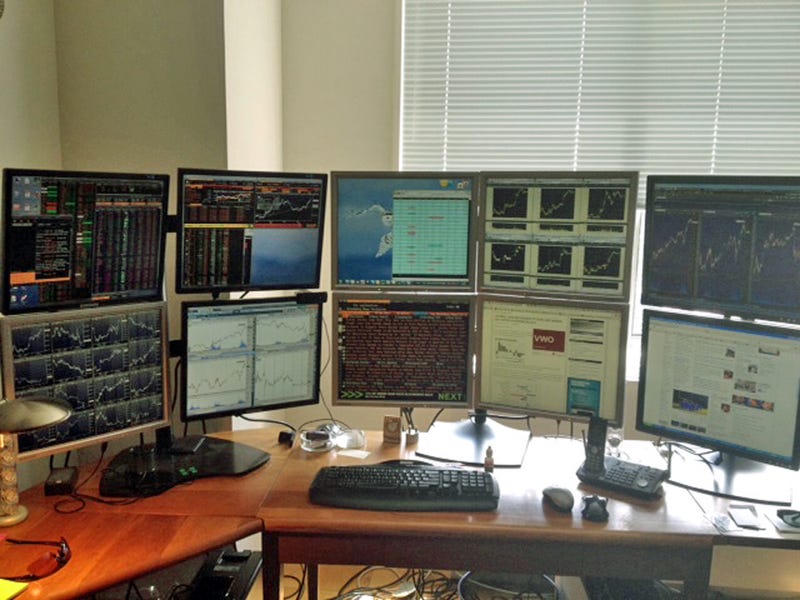
Let's not overcomplicate things. When you sit down at your desk this week, coffee in hand, staring at the blinking cursors on your terminals, you need to understand exactly what kind of market we are dealing with. We are caught in a titanic tug-of-war. On one side, you have the undeniable, gravity-defying momentum of the AI complex: residual strength from recent mega-cap reports and the continuing capital-expenditure cycle that is still rewriting growth narratives. On the other side, you have the cold, heavy anchor of interest rates, with the 10-year Treasury hovering near 4.65% to 4.70% and Federal Reserve internal debates fully visible.
If you try to trade this week using a standard playbook, you are going to get chewed up. The algorithms are going to fade your momentum trades on any hawkish read from the FOMC minutes or hotter-than-expected manufacturing data, and the institutional flows are going to squeeze your shorts the second the AI infrastructure names show relative strength. You have to be nimble, and more importantly, you have to be structured.
To get a lay of the land, I always start my week looking at the raw data. You can see exactly what we are up against by checking the economic calendar over at LiveTradingNews.com/trading. That calendar is your roadmap for the week. It tells you when to step on the gas and when to slam on the brakes. But a calendar is just numbers on a screen. The strategy is how you react to those numbers when they hit the tape.
When I look at where the real alpha is being generated right now, I don't look at the S&P 500 as a monolith. I look at the cutting-edge taxonomy of the market. That means leaning heavily on the KXCO Ontology. If you aren't using their live ontology to break down the market into AI, Quantum, Semiconductors, and Compute, you are trading with one eye closed. The KXCO system categorizes the supply chain and innovation lifecycle in a way that makes actual sense for traders like us. It shows us exactly where the liquidity is hiding, stripped of the noise of legacy sector ETFs.
So, let's break down the week. Let's look at the calendar, dissect the macro tug-of-war, and then dive brutally deep into the specific sectors, AI, Quantum, Semiconductors, and Compute, that are going to dictate your P&L over the next five days.
The Macro Chessboard: Duration Risk vs. Hyper-Growth
Before we look at a single ticker, we need to talk about the math driving this market. The financial media likes to give you narratives. They say "the market is worried about a hard landing" or "the market is pricing in a soft landing." That's nonsense. The market doesn't have feelings. The market is a massive discounting mechanism running on differential equations.
Right now, the core equation revolves around the discount rate. When you buy a stock, you are buying a stream of future cash flows. To figure out what that stream is worth today, you have to discount it back to the present using interest rates. When the 10-year Treasury yield sits in the mid-to-high 4% range, it violently alters the present value of future earnings for slower growers. For a mature, slow-growing utility or consumer staples company, elevated rates are devastating. Their future cash flows aren't growing fast enough to outpace the higher cost of capital. Their stock prices get crushed under the weight of duration.
But what happens when you apply that same discount rate to a company that is still seeing AI-related revenue doubling or cloud growth running in the high 30s to 40% range? The math breaks in the other direction. The growth rate is so astronomical that it overwhelms the discount rate for a meaningful period. This is the exact reason why we have a bifurcated market. The "rate concern" is a very real, very heavy anchor on the bottom 80% of the market. But for the top 20%, the AI complex and its supply chain, that anchor feels like a feather as long as the capital expenditure cycle remains intact.
The problem for traders this week is timing. The broader market is going to throw tantrums over rate data, particularly the FOMC minutes and any manufacturing or housing prints that feed the higher-for-longer narrative. The algos will dump futures at 8:30 AM if the data is hot. They will sweep the liquidity pools underneath the major moving averages. You will see the VIX spike. And right when the retail crowd panics and sells their broad market ETFs, the institutional buyers are going to step in and hoover up the AI leaders and the infrastructure names that feed them.
You have to accept this duality. You cannot trade the market as a single entity. You have to trade the macroeconomic data as a headwind for the laggards, and as a temporary buying opportunity for the leaders. The residual strength from the AI earnings complex, and the continuing evidence of hyperscaler spending, is the giant hand that is going to lift the market out of any rate-induced funk. Do not fight the giant hand. Position yourself in front of it.
The Economic Calendar: Parsing the Noise
If you pull up the Live Trading News calendar, you'll notice the week of August 17 to 21, 2026 is loaded with data that will test the patience of every bull. I want to walk you through exactly how I read this calendar, because the data itself doesn't matter as much as the market's reaction to the data.
We are in a weird macro phase. The labor market has shown cracks, continuing claims have been sticky in places, and housing is still navigating high mortgage rates. But the consumer has proven resilient in pockets, and AI-related business investment remains the standout bright spot in capital goods. The Federal Reserve is still debating the path, holding in the 3.50% to 3.75% range at the last meeting with notable hawkish dissents, and the minutes will be dissected for every word on the inflation and growth outlook.
Monday, August 17. Empire State Manufacturing Index (8:30 ET) and the NAHB Housing Market Index later in the day. Canadian CPI also hits. Do not just look at the headline Empire State number. That is amateur hour. Look at the prices paid component and the employment sub-index. If prices paid spike, the market is going to instantly price in a higher probability of a September or later hike, and the yield curve is going to react. The 10-year could jump several basis points, and the algos will immediately hit the sell button on the Nasdaq. Housing data will feed the same narrative: weakness keeps the soft-landing hope alive, strength feeds the higher-for-longer camp.
Here is the secret the financial media doesn't understand: institutional money does not sell its best AI holdings because of a hot prices-paid print. They rotate. They sell the lagging sectors, the brick-and-mortar retailers, the regional banks, the industrial stocks that are not tied to data-center buildout, and they pile the cash into the absolute leaders. They hide in the AI complex because it's the only place still generating actual top-line growth at scale. So when the market dumps on the Empire State or housing data, don't panic. Check the relative strength of the AI and Compute names. If they are holding their VWAP while the SPY dumps, that is your signal to buy.
Tuesday, August 18. Housing Starts, Building Permits, Industrial Production and Capacity Utilization, and Pending Home Sales. This is the housing and industrial pulse. Durable goods and capital expenditure trends feed directly into the AI infrastructure story. If businesses are still ordering the heavy machinery and the server-related components that show up in industrial production, it means the productivity bet is alive. Weakness will spark recession chatter. Use that weakness.
Wednesday, August 19. The main event for rates: FOMC Minutes from the July meeting (2:00 PM ET). Three hawks dissented in favor of a hike last time. The market will parse every sentence for clues on the September path and the longer-run neutral rate. UK CPI also lands. This is the day the algos will be most aggressive on rate narratives. Expect volatility around the 2:00 PM release.
Thursday, August 20. Philadelphia Fed Manufacturing Index and Initial Jobless Claims. Philly Fed prices paid and employment components matter. Claims will tell us if the labor softening is accelerating.
Friday, August 21. Flash S&P Global PMIs: Manufacturing, Services, and Composite. These are the high-frequency read on private-sector activity. A hot prices component or a sharp contraction can move yields into the weekend.
When you look at the calendar this week, don't just see "event risk." See opportunity. The calendar creates the volatility. Volatility creates the entry points. We are going to use the rate-induced dips to aggressively buy the names in the KXCO ontology that are driving the actual earnings growth and the infrastructure buildout.
The KXCO Ontology: Your Structural Edge
I want to take a moment to explain why I rely on the KXCO Ontology to structure my trades. Traditional sector classification is dead. It was built for an economy of railroads, banks, and oil wells. Grouping Microsoft, Apple, and Nvidia into "Technology" and assuming they trade together is financial malpractice in 2026.
When Nvidia moves, it moves AMD, Broadcom, the semiconductor equipment makers, and the data-center infrastructure names. It does not move Apple the same way. Apple moves on iPhone upgrade cycles, Services growth, and consumer sentiment. Grouping them together obscures the supply chain. The KXCO Ontology fixes this. It breaks the market down by its actual economic linkages. It isolates the AI vertical, the Quantum vertical, the Semiconductor supply chain, and the Compute infrastructure. When you look at the market through the KXCO lens, you stop seeing a noisy, random mess and start seeing a machine. You can see exactly where the capital is flowing. If the ontology shows capital rotating from AI software into Compute hardware or from pure-play quantum into the more established names with real contracts, you can front-run that move. It gives you a structural edge over the retail crowd that is still staring at the S&P 500 sectors. Keep this ontology open on your screen all week. It is your cheat sheet.
AI Stocks: The Giants Still Awaken
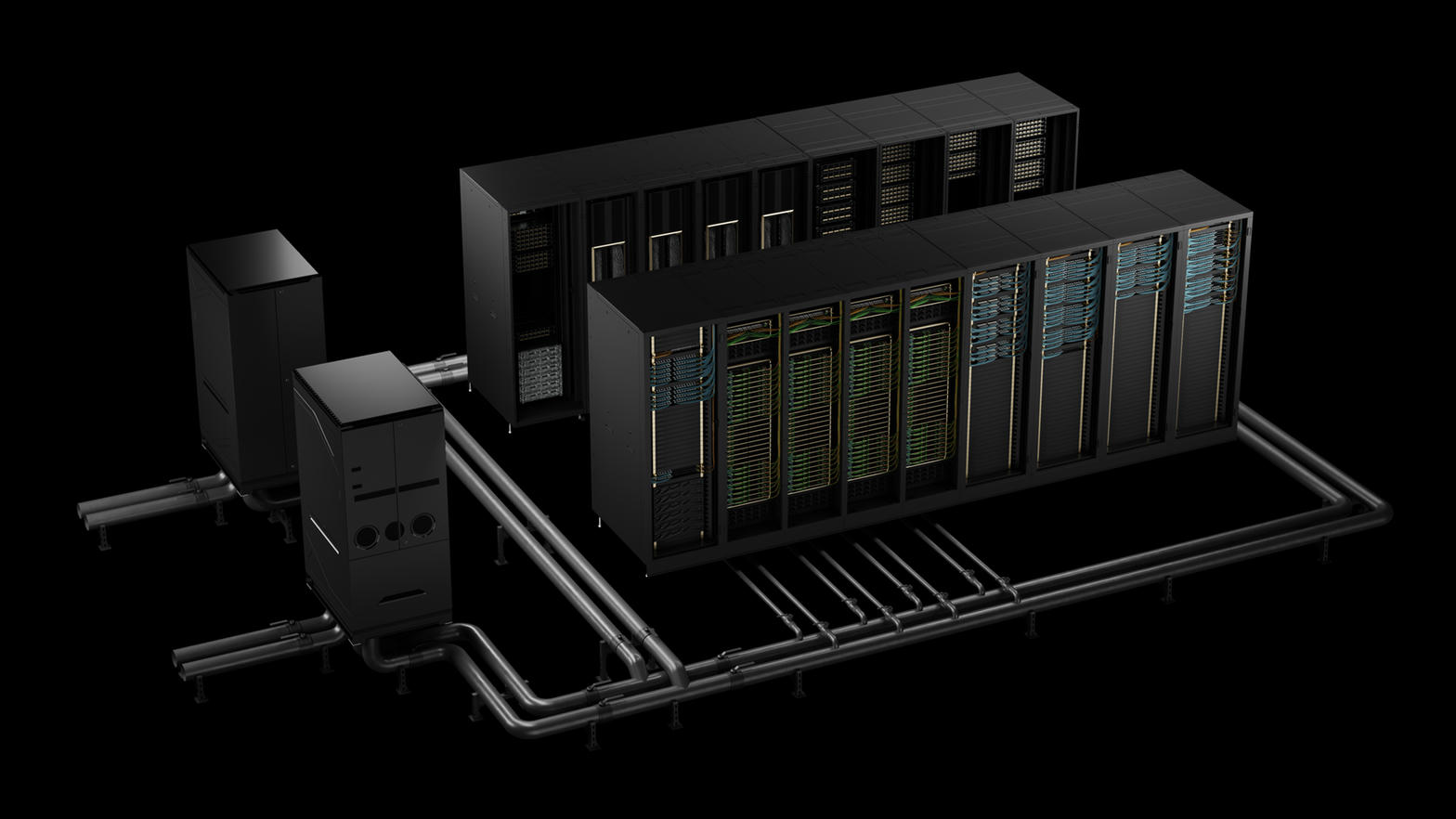
AI data-center infrastructure remains the physical backbone of the earnings narrative.
When we talk about the AI complex this week, we aren't talking about speculative penny stocks with fancy press releases. We are talking about the infrastructure providers, the platform monopolies, and the application layer that is fundamentally altering how the global economy functions. The recent mega-cap reports already showed the acceleration in cloud and AI services. The residual positioning and the continuing CapEx narrative are what matter now.
Looking at the KXCO Ontology, the AI category isn't just a list of tickers. It represents the hierarchy of who is actually making money in this cycle. You have the foundational models, the cloud hyperscalers, and the data orchestrators. Let's break down the specific trades.
$MSFT: Microsoft
Microsoft is the ultimate safe harbor in the AI trade. They aren't just selling AI. They are integrating it into every single enterprise contract they have. Azure growth and the AI contribution to that growth remain the numbers that matter. The strategy here is simple: if the broader market sells off on rate fears or FOMC minutes, wait for the first pullback to the VWAP on the 5-minute or 15-minute chart and load the boat. The rate fears won't matter here because their enterprise subscription revenue is practically an annuity. It's predictable, recurring cash flow that laughs at a 4.7% 10-year yield. Do not chase gaps higher. Let the market give you the entry.
$GOOGL: Alphabet
Google is the contrarian's play. Everyone loves to hate the stock because of the "Search under threat from AI" narrative. But let's be brutally honest: Google has a monopoly on global information distribution, and they are using AI to tighten that monopoly, not lose it. Cloud margins expanding on AI workloads is the re-rating catalyst. If the broader market is selling off due to rate fears, $GOOGL might lag initially because slow-moving mutual funds still view it partly through the ad-spend lens. But if the AI cloud narrative reasserts, it will decouple fast. Keep a close eye on options flow in the key strikes.
$META: Meta Platforms
Meta is the most misunderstood AI company on the planet. People still think of them as a social media stock that burns billions on the metaverse. They are an AI infrastructure company that happens to sell ads. Their open-source approach and massive CapEx are building a moat. When the market punishes CapEx guidance, that is often the buying opportunity. Buy the overreaction. The market is punishing them for investing in their own dominance. The precision of their ad targeting continues to improve with each new model generation.
$AAPL: Apple
Apple is the laggard in the pure AI narrative, and that's exactly why it belongs in the KXCO AI ontology for trading purposes. It is the most liquid stock on the planet. When institutions need to raise cash on rate fears, they sell Apple first. The strategy this week is defensive. You don't buy the breakout. You sell the rips into resistance and wait for the stock to get dragged toward major moving averages. When it touches support and the AI upgrade-cycle narrative resurfaces, that's when you strike.
$AMZN: Amazon
Amazon is the brute force of AI. AWS is still the market-share leader, and the Bedrock and custom-chip story continues. Amazon's numbers are a perfect proxy for two things: global e-commerce health and enterprise cloud spending. The AI growth will continue to offset consumer-side noise. Options straddles or carefully timed entries around volatility spikes remain viable. The company is too heavily weighted in the indices not to participate in any AI-driven lift.
$PLTR: Palantir
Palantir is where the institutional money goes when it wants pure, unadulterated AI exposure without the baggage of a mega-cap conglomerate. They sell undeniable ROI in commercial and government. The stock trades at a premium, so rate fears hit it hard. Trade the breakout. It is heavily shorted by legacy funds. If it clears the top of its recent consolidation on volume, the short squeeze can be violent. Focus on U.S. commercial revenue acceleration as the key fundamental driver.
$CRM: Salesforce
Salesforce is the old guard reinventing itself as an AI powerhouse. Einstein and the agentic push are real. The market doesn't give it a pure AI multiple, which makes it a relative-value play. Accumulate on weakness. It is a lower-volatility way to play enterprise AI adoption, and the dividend provides a floor when rates spike.
$SNOW: Snowflake
Snowflake is the infrastructure play for clean, governed data that feeds AI models. Consumption-based revenue can be volatile if enterprises throttle spend on rate fears, but AI workloads require continuous ingestion. Deep-in-the-money calls can limit downside while capturing the upside if the AI narrative reasserts. Do not buy the outright stock if the VIX is elevated. You will get chopped out.
Quantum Computing: The Asymmetric Lottery Ticket
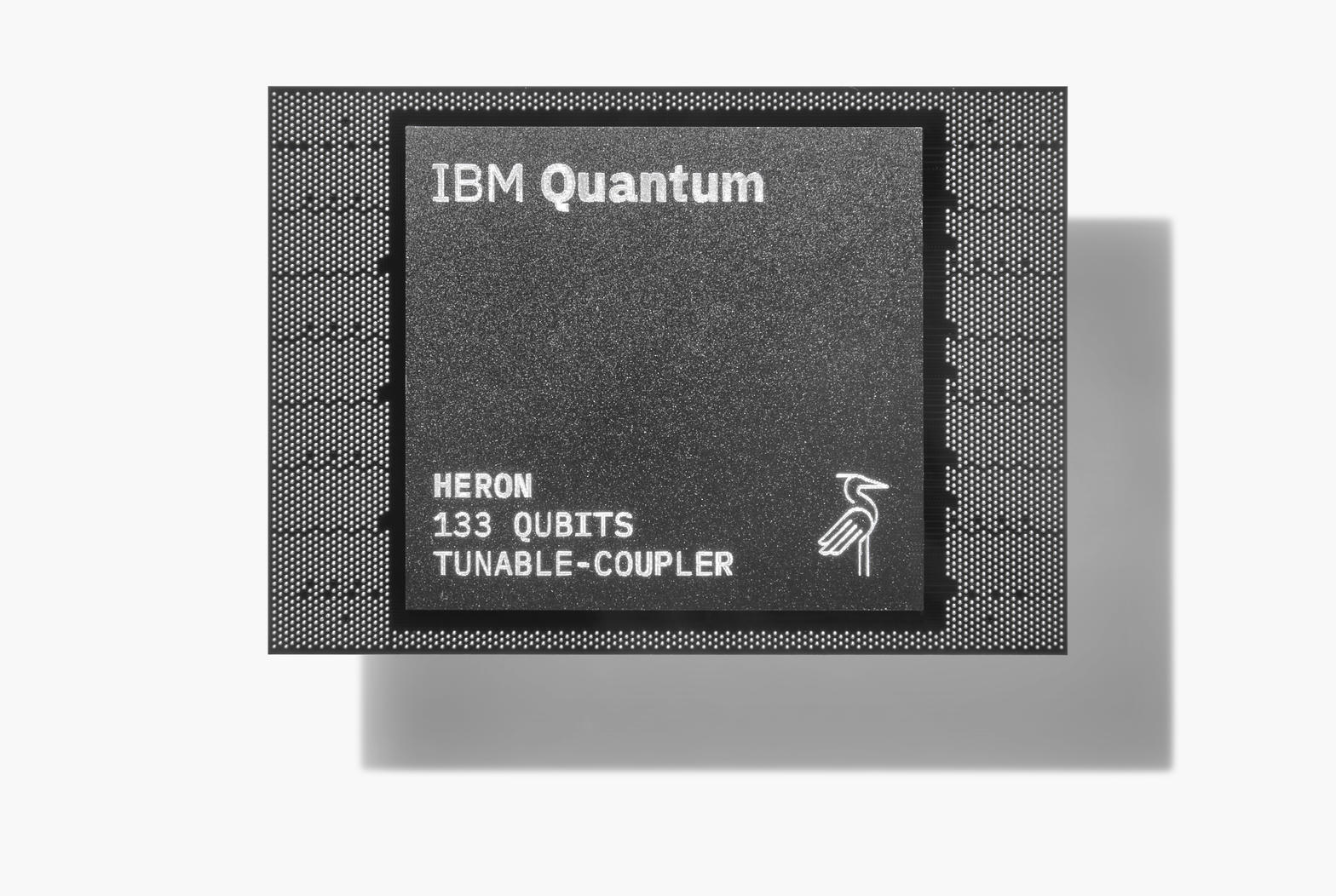
IBM Quantum Heron processor, the established player in a speculative sector.
Now, let's shift gears into the deep end of the pool. If AI is the present, Quantum is the distant, highly speculative future. But in the stock market, the future is always priced today. Quantum computing is arguably the most misunderstood sector in the entire KXCO Ontology.
Quantum stocks do not trade on earnings. Let me repeat that so it sinks in. Quantum stocks do not trade on earnings. Most of them barely have revenue. They trade on breakthroughs, government funding bills, patent approvals, roadmap milestones, and pure hype. This week, while the mega-cap AI complex provides the gravitational center, the Quantum sector will act as a high-beta lever to that AI sentiment. Why? Because the ultimate limit of the current AI boom is classical computational power and energy. Classical computers, even the massive GPU clusters, are hitting physical walls on power and heat. The next generation of models that can simulate physical realities or crack certain encryption standards will eventually need quantum.
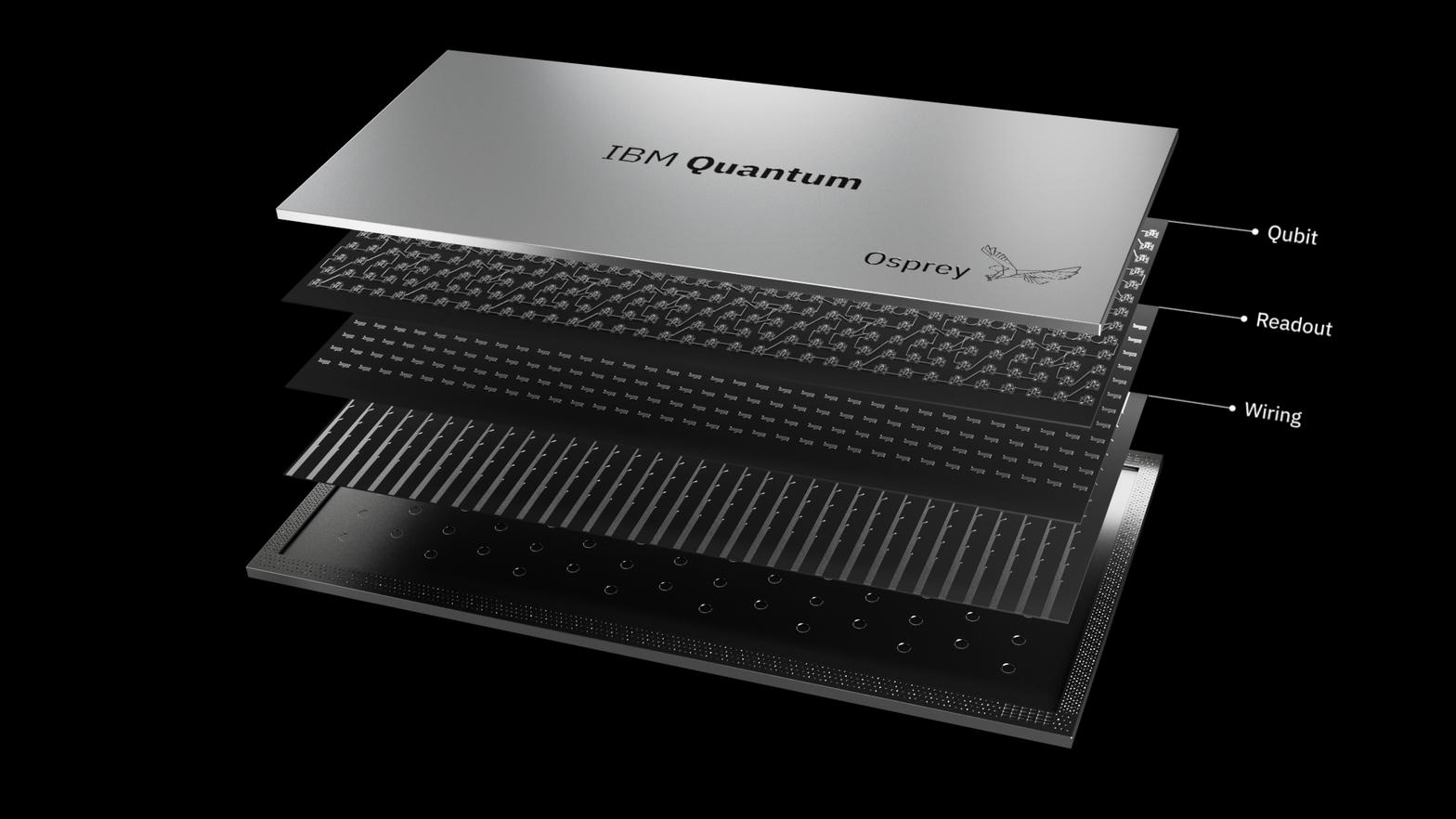
Layered quantum architecture illustrating the complexity still years from commercial scale.
When the AI narrative stays intact and capital looks for the next paradigm, speculative flows move into quantum. You need to be positioned before they do, or be ready to trade the volatility with strict risk controls.
$IBM: IBM
IBM is the grandfather of Quantum. They aren't a pure speculative play. They are an integrated R&D powerhouse with a massive consulting arm that actually makes money. Their quantum roadmap is public and they keep hitting milestones on qubit counts and error rates. When the market gets jittery about interest rates, $IBM acts as a relative safe harbor because of its sticky enterprise contracts and dividend. The quantum division provides the upside kicker. Use it as a hedge or a lower-volatility way to stay long the theme. It is a win-win positioning for a choppy, rate-feared week.
$IONQ: IonQ
IonQ is the pure-play speculator's dream: trapped-ion systems, defense and research contracts, bleeding-edge physics. It trades entirely on sentiment, volume, and news flow. Allocate a tiny percentage of capital you are completely fine losing. Trade it around the VWAP. Sell into gaps on AI hype, buy the low-volume dips. Do not marry this stock. It is a trading vehicle, not a retirement plan.
$RGTI: Rigetti Computing
Rigetti is another pure-play focused on superconducting qubits. It has been left for dead at times on roadmap concerns, which makes it a classic bounce candidate when speculative capital hunts for the cheapest ticket to the next computing paradigm. Look for hammer candles on volume at support. Tight stops are non-negotiable. If it breaks the low of the hammer, you are out instantly. No hoping, no praying.
$QBTS: Quantum ETF Proxy
If you want the sector without single-stock insanity, the purest proxy available gives you basket exposure across hardware, software, and supply-chain players. Buy the break of the 20-day moving average on rising volume when the AI complex is strong. Diversification matters here so you don't get wiped out if one pure-play misses a technical milestone or gets diluted.
Semiconductors: The Trench Warfare of the AI Trade
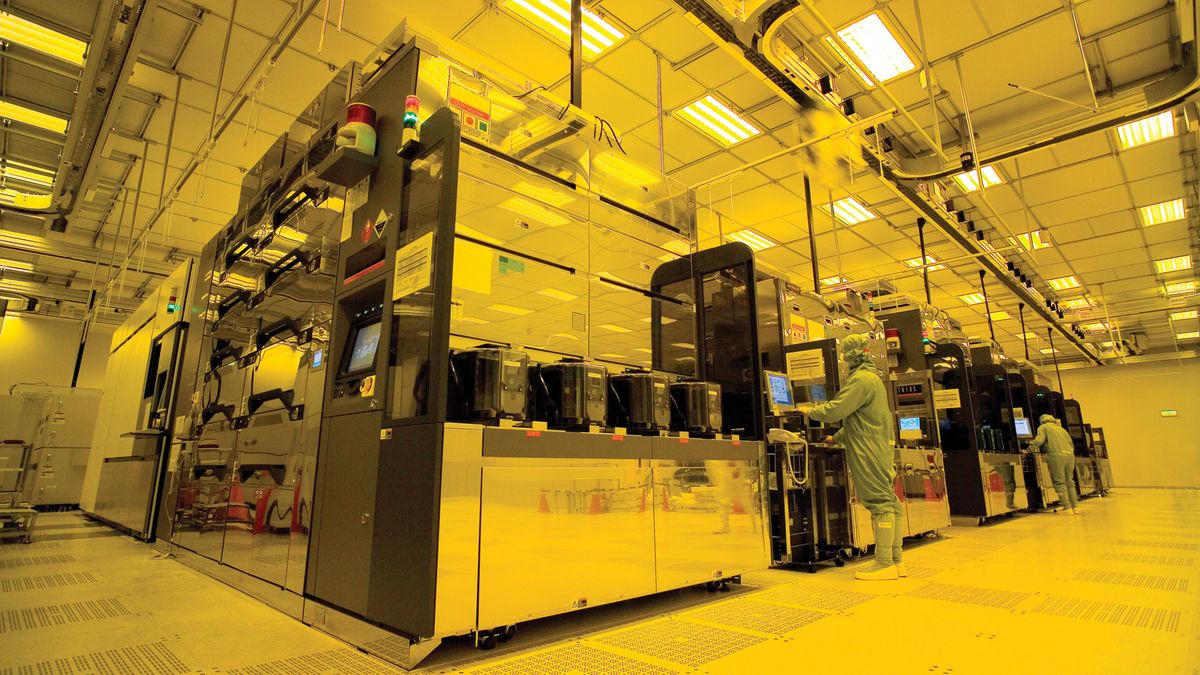
Inside a modern semiconductor fab, the physical foundation of every AI model.

Automated material handling systems in advanced chip manufacturing facilities.
You can't have artificial intelligence without compute, and you can't have compute without semiconductors. The semiconductor sector is the literal, physical foundation of the KXCO ontology. But right now, semiconductors are caught in a brutal crossfire. On one hand, AI demand remains insatiable. The hyperscalers cannot buy enough accelerators and the associated networking silicon. On the other hand, legacy markets in auto, industrial and smartphone still show cyclical softness, and geopolitics (export controls, Taiwan risk) remain a dark cloud.
The KXCO Ontology segments this beautifully: fabless designers, foundries, and equipment. Rate fears and geopolitical fears will not affect them equally. You must differentiate.
$NVDA: Nvidia
Nvidia is the sun in the semiconductor solar system. Everything else revolves around it. There is absolutely no point in over-analyzing the fundamentals heading into residual positioning. We all know the demand picture remains exceptional. The question is never "did they beat?" The question is always: "Is it priced in?" And the answer is usually no, because the Total Addressable Market for AI accelerators keeps expanding faster than Wall Street can model it. The strategy this week is navigating volatility. If the broader market is selling off because of a bad data print or hawkish minutes, the stock might dip in sympathy. That dip is a gift. You buy it with both hands. If it gaps up sharply, do not chase. Wait for the first pullback to the 10-day moving average and ride the next leg.
$AMD: Advanced Micro Devices
AMD is the classic "number two" play, and that is not a dig. In a massive, hyper-growth market like AI accelerators, the number two player can still generate tens of billions in revenue. AMD's MI-series chips are gaining real traction with cloud providers who want pricing leverage against Nvidia. The narrative this week is market-share capture. Asymmetrical options (slightly out-of-the-money calls with four to six weeks of duration) can work when implied volatility is depressed by rate fears.
$AVGO: Broadcom
Broadcom is the stealth AI play. Everyone on television talks about GPUs, but AI clusters require massive amounts of high-speed networking to talk to each other. Broadcom dominates the custom silicon (ASICs) and networking switches that make this possible. It pays a growing dividend, has immense pricing power, and trades at a more reasonable multiple relative to its growth. The strategy is straightforward accumulation. If rates spike and the Nasdaq sells off, $AVGO will hold its value better than almost any other tech stock.
$TSM: Taiwan Semiconductor
Taiwan Semiconductor is the bottleneck of the entire advanced AI world. They manufacture nearly all the leading-edge AI chips designed by Nvidia, AMD, and Broadcom. The risk here is not fundamental. It is geopolitical. If headlines flare up about Taiwan Strait tensions, $TSM gets hit immediately, regardless of how strong the demand picture is. The strategy is trading the geopolitical discount. Buy the panic if the AI demand thesis remains intact. The world economy cannot function without TSMC, and policymakers know it.
$INTC: Intel
Intel is the ultimate turnaround story, and turnaround stories are painful to trade. They are restructuring, their foundry business is still finding its feet, and the CHIPS Act subsidies are the longer-term bull case. The strategy this week is purely technical. Do not buy it for fundamentals. Look for a massive oversold bounce. If the broader market dumps on rate fears, $INTC will likely get hammered to critical support. If it holds and shows RSI divergence, that is your short-term bounce signal. Keep stops incredibly tight.
$MRVL: Marvell Technology
Marvell is a smaller, more nimble version of the Broadcom story. They dominate custom silicon for cloud hyperscalers and high-speed connectivity. High-beta proxy for the AI networking and custom-chip build-out. The strategy is to buy the breakout above recent consolidation when AI CapEx narratives reassert. Because it is less liquid than $AVGO, it moves faster on percentage terms.
$QCOM: Qualcomm
Qualcomm is trying to pivot from a smartphone monopoly into an AI-on-the-edge company. Near-term revenue is still heavily tied to the sluggish smartphone upgrade cycle. If rate fears crush consumer sentiment, $QCOM will struggle. The strategy is to wait. Let the AI euphoria lift the broader semiconductor complex, then look to buy when it finally breaks its downtrend. Patience is required here.
Compute and Infrastructure: The Physical Reality of AI
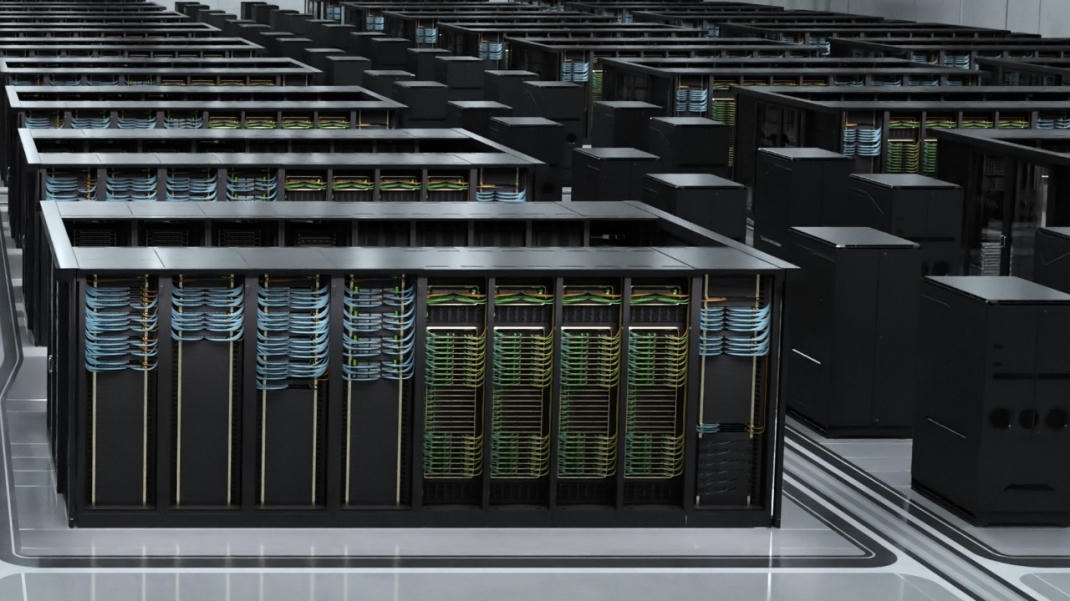
High-density GPU clusters driving the current CapEx cycle.
This brings us to the most underappreciated sector in the market: Compute and Infrastructure. The financial media focuses on the software and the chips because they are sexy. But AI is not magic. It is physics. It is electricity. It is heavy machinery. You cannot plug tens of thousands of high-power GPUs into a standard data center. Traditional racks draw 5 to 10 kW. AI racks draw 40 to 100 kW or more. We are talking about the energy consumption of a small town concentrated in a single building. The infrastructure required, power grids, cooling systems, liquid cooling, fiber optic switches, is undergoing a once-in-a-generation build-out.
When you look at the KXCO Ontology, the Compute section is where the rubber meets the road. If the AI complex is going to keep lifting the market this week, the smart money is going to flow into the infrastructure names because their order backlogs are becoming visible.
$ANET: Arista Networks
Arista is the absolute king of high-speed AI data-center networking. While Cisco dominates the legacy enterprise space, Arista owns the high-speed cloud and AI cluster switching layer. Margins are expanding because they have a near-monopoly in this specific high-end niche. The strategy is to buy the dips and hold. It is expensive, but it deserves to be expensive. Institutional buyers defend it because they must own it to maintain AI exposure.
$DELL: Dell Technologies
Dell is the ultimate "pick and shovel" play on AI infrastructure. They don't design the chips and they don't write the software. They build the server racks that hold the Nvidia GPUs. AI server order backlog has been historic. The concern is their legacy PC business, which is cyclical. But AI server growth has been overwhelming the PC weakness. Trade the reaction carefully, because gaps often get partially given back by profit-takers. If it gaps up, sell half into the spike and keep the rest with a trailing stop.
$HPE: Hewlett Packard Enterprise
HPE is in a similar boat to Dell but more focused on the enterprise edge and hybrid cloud. They are often a lagging indicator. If $DELL reports or the market prices in strong AI server demand, $HPE frequently rallies on sympathy the next day. One useful pairs approach is to go long $DELL ahead of confirmation and, if it rips, flip into $HPE for the catch-up trade.
$SMCI: Super Micro Computer
Super Micro is the wildest ride in the Compute sector. They build specialized high-performance servers optimized for AI and are famous for being first-to-market with new Nvidia architectures. Growth rates have been absurd. However, the stock is incredibly volatile and has faced intense short-seller scrutiny. The strategy is extreme caution. You can trade it, but you cannot trust it for long-term holding. Use options to define risk. Position size small.
$EQIX: Equinix
Equinix is a Data Center REIT. They own the physical buildings where the servers live. Here is where interest rates matter immensely. REITs are heavily sensitive to the cost of capital. If rates stay higher for longer, $EQIX struggles because debt servicing costs rise and the dividend yield looks less attractive versus Treasuries. However, AI is causing a massive shortage of data-center space with the right power density. The strategy is to watch the 10-year yield. If the economic calendar causes yields to spike, avoid. If yields pull back on weak data, $EQIX becomes far more interesting.
$VRT: Vertiv Holdings
Vertiv is the pure-play on power and cooling for data centers. AI servers run so hot that traditional air conditioning cannot cool them. Vertiv makes the liquid cooling systems and power distribution units that make high-density AI data centers physically possible. Their backlog has been exploding. Unlike $EQIX, $VRT is not a REIT, so it does not carry the same direct interest-rate sensitivity. It trades as a high-growth industrial tech stock. The strategy is to buy the breakout. If AI CapEx narratives hold this week, $VRT is well positioned to break out of any consolidation base. This remains one of my favorite structural setups.
Putting It All Together: The Weekly Playbook Execution
Let's synthesize this into an actionable playbook. You have the economic calendar from LiveTradingNews dictating the macro volatility. You have the KXCO Ontology mapping the sector linkages. You have the residual power of the AI earnings complex and the continuing CapEx cycle acting as the gravitational center of the market.
On Monday and Tuesday, trade the macro. If Empire State, housing, or industrial data comes in hot and the market dumps, do not sell your AI and Compute positions. Use the volatility to add to $VRT, $AVGO, $MSFT and the high-conviction names that held relative strength. The algos are creating a discount for you.
On Wednesday, the FOMC minutes will dominate. Manage risk tightly around the 2:00 PM release. If the minutes are hawkish and the market sells off, look for the same relative-strength buys in the ontology leaders. Money will flow down the KXCO structure, from the AI platforms into the Semiconductors and then into the Compute infrastructure. Follow the liquidity.
On Thursday and Friday, jobless claims and flash PMIs will fine-tune the rate narrative. If the AI complex remains firm, speculative capital often rotates into the frontier Quantum names on Friday afternoons when institutional volume thins. That can set up Monday gaps if the narrative stays intact.
This week is not about predicting the future. It is about reacting to the data with a structured plan. Leave the broad market ETFs to the mutual funds. Trade the ontology. Trade the supply chain. Respect the power of the AI complex to lift the market, but respect the math of interest rates enough to wait for your entry price.
Stay disciplined, keep your stops tight, and let the giants do the heavy lifting.
$MSFT $GOOGL $META $AAPL $AMZN $PLTR $CRM $SNOW $IBM $IONQ $RGTI $QBTS $NVDA $AMD $AVGO $TSM $INTC $MRVL $QCOM $ANET $DELL $HPE $SMCI $EQIX $VRT
For educational and informational purposes only. Not investment advice.

Weekly Market Outlook: Fed Minutes, Anthropic and OpenAI IPOs, Gold, Bitcoin, FX
The Fed raised rates in September and payrolls rose 29,000, per the Labor Department. This week the FOMC minutes, three Treasury auctions and a 10-year near 5.3 percent test that gap. Anthropic's IPO clock runs toward a 14 October investor day while OpenAI's chief executive says not 2026. Gold sits 26 percent below its record, bitcoin near $85,500, the dollar up three weeks running. Two knowledge graphs from KXCO's records map the IPO backers and the FDA board.
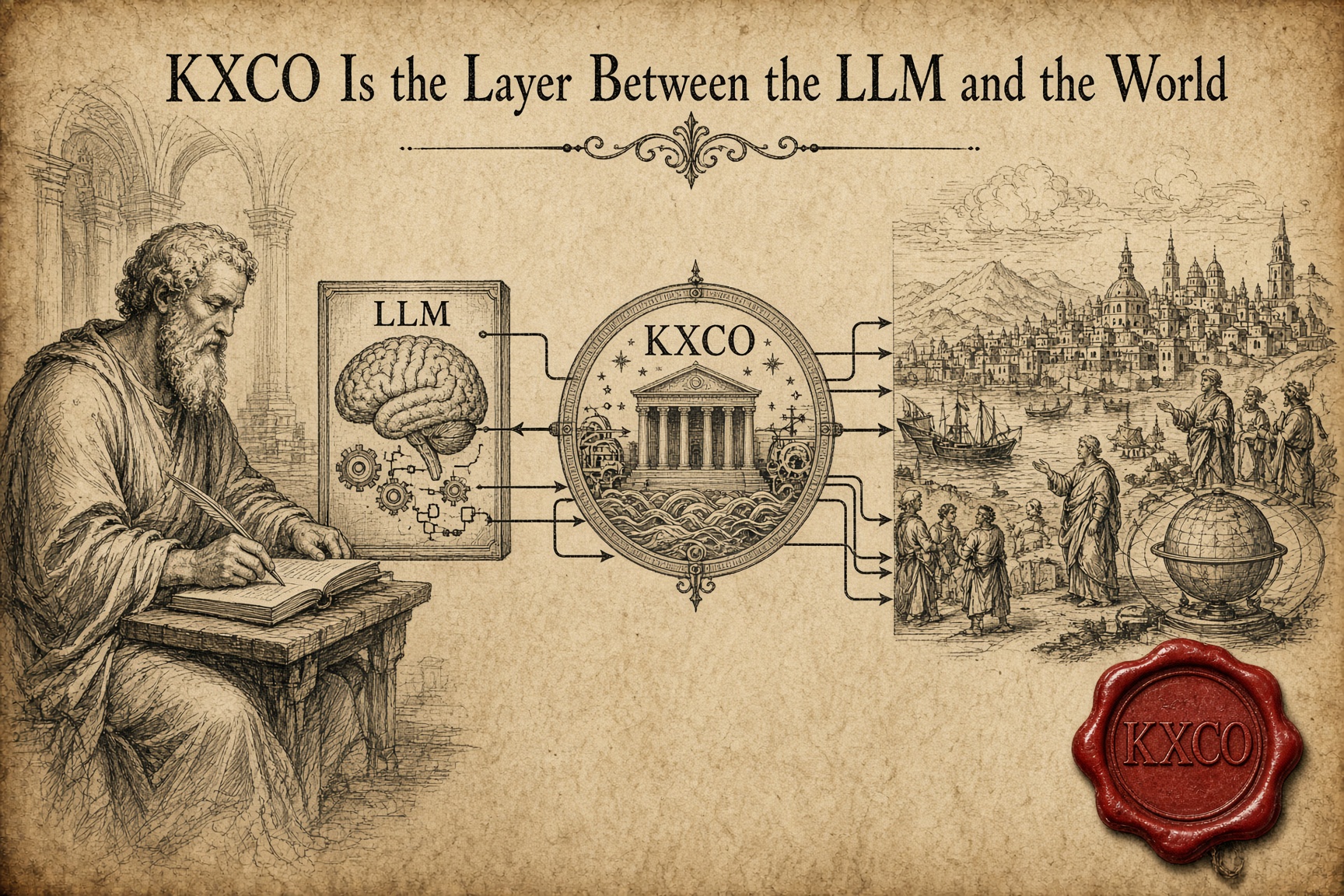
KXCO Is the Layer Between the LLM and the World
Give a hundred people the same book and very few will act on it. AI is that book: it distributes access, not understanding, and an institution cannot act on a paragraph. KXCO does not build another model or another agent. It builds the layer between the model and the world: who is speaking, what they are allowed to do, what they committed, and a post-quantum signature a stranger can check without asking us.

Thoughts on Thinking in an AI World
A model will write an answer about anything in seconds. What an AI world makes scarce is everything around the answer: what you believed last month and why you changed it, the link between fields nobody reads together, and a decision a named person can stand behind. Three knowledge-graph exhibits from the KXCO record show each one, from a reported Nvidia deal that became a signed 8-K to a war five links from a data centre.
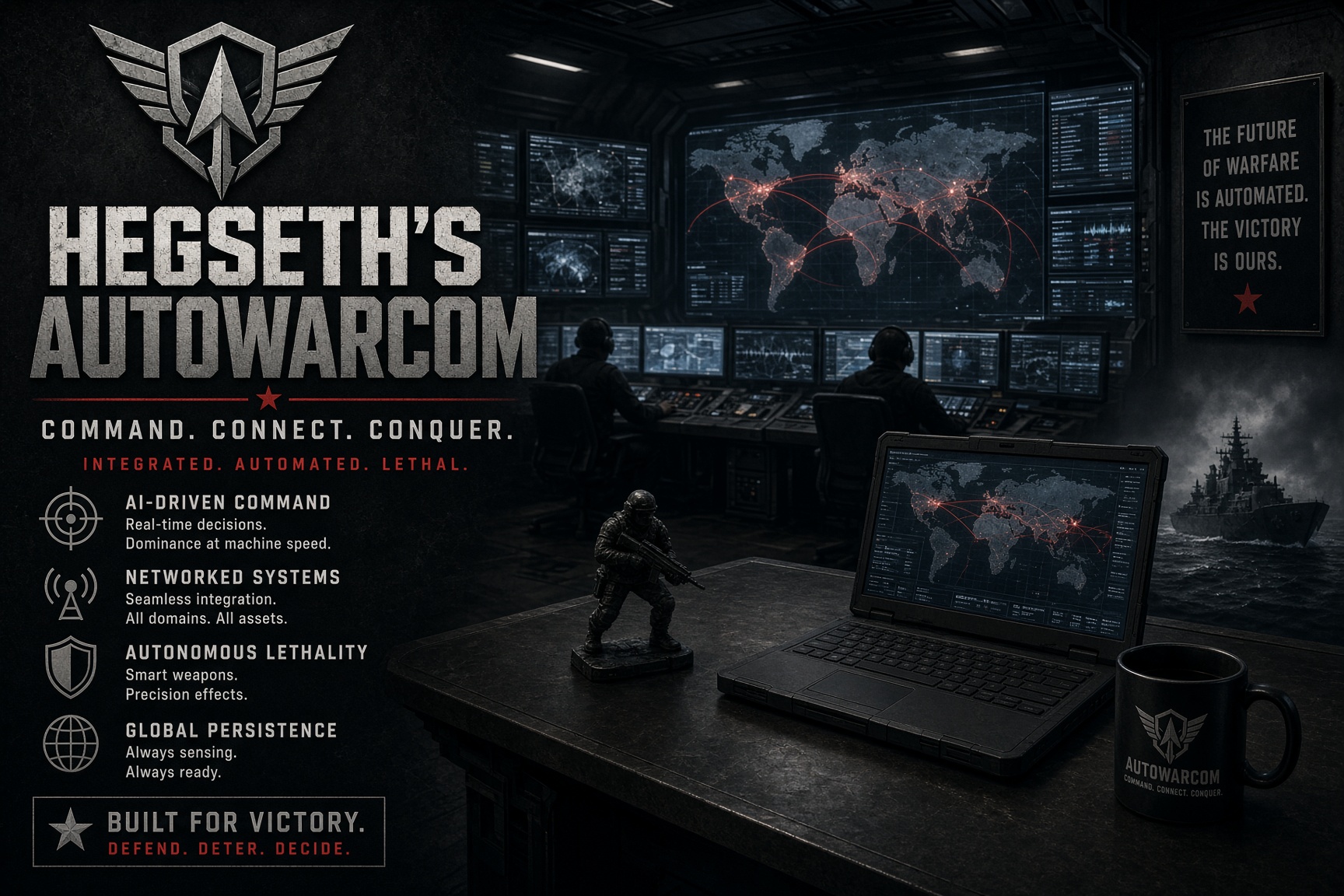
Hegseth's AutoWarCom: Who Builds It, What the Money Buys, and the Record It Needs
Pete Hegseth's Autonomous Warfare Command is a four-star proposal that needs Congress by 1 October 2027. Until then Project Agincourt holds the work, and the money moves through Drone Dominance, the Army's counter-drone contracts and DIU. The software layer, Palantir's Maven, Anduril's Lattice and Shield AI's Hivemind, is the one the KXCO AI Sector ontology had mapped before the speech. After Minab, its hardest problem is the record, not the model.
Every story, signed and delivered.
Subscribe to the kxco channel and get the headline, the AI-written key takeaways, and the chain-anchor link the moment we publish. Audio versions and per-ticker subscriptions arrive in the next iteration.