
Cryptocurrencies will usher in the next wave of innovation and...
#cryptocurrencies #economic #innovation #growth #CFTC #China #PBoC #Stablecoins
...according to the former head of the Commodities Futures and Trading Commission (CFTC).
Before the advent of the VirusCasedemic US economic growth and productivity had plateaued, having the knock-on effect of stagnating wages. The post-lockdown era has unleashed a productivity boom and pushed up worker pay in the face of a a growing labor shortage.
But digital currencies will be the economic game-changer that puts the economy on a path to far more sustainable growth, according to Chris Giancarlo, the ex-CFTC regulator who is the co-founder of the Digital Dollar Project.
“The internet is going to do to finance and money itself what it's done to retail shopping, what it's done to information, what it's done to journalism, what it's done it to so many walks of life,” Mr. Giancarlo told the financial press in an interview.
Mr. Giancarlo believes cryptocurrencies are the Key to creating a global, fully networked digital economy. He points to China as the 1st to do this, with the adoption of a central bank digital currency and its crackdown on outsiders. Nothing new here!
“All transactions in their economy, whether it be securities transactions, future transactions, commercial lending, commercial payments, retail payments, will be fully networked with their digital currency as almost the software operating system for a digital economy,” he said.
According to his logic, that will wring huge amounts of percentage points out of cost and latency out of China’s economy and drive the world’s second largest economy into hyperdrive in terms of speed and efficiency.
Friday, digital coins action was roiled by news that the world’s 2nd largest economy declared all crypto transactions illegal, the latest move by Beijing to exert more influence over Key sectors.
Mr. Giancarlo said China appears to be mimicking a “fight or flight” response of central bankers about whether to co-opt or clamp down on Stablecoins success.
He pointed out that Beijing has been on the offensive against digital tokens since early Summer, moving to ban crypto mining, prohibit online platforms from facilitating crypto transactions and tightening the reins on mobile payments.
“Today’s announcement by China is just a more aggressive version of earlier announcements. It does not change my thesis in the least,” Mr. Giancarlo added.
Elsewhere, firms like Yellowcard Cardano, and others are rapidly moving to offer payment services, micro-loans, yield bearing accounts, and more to places in the world where the infrastructure does not yet exist in the traditional banking sector.
People in places like Europe and North America are quickly realizing that they can park their assets in accounts earning significant yield, sometimes as high as 10% or more rather than leave them in a brick and mortar bank receiving near Zero interest.
Over the next 10 yrs, Mr. Giancarlo thinks that nation states will move forward, including the U.S., with creating sovereign digital currency. He noted it will be useful in paying taxes and other government obligations, and will be the dominant form of payment systems in most economies.
In order for innovation to take root, regulators need to put in place the proper regulations tailored to the new digital asset class. “I believe in regulation,” he said. “We've got to get regulation, but we've got to get it right.”
“I believe that the emergence of crypto is very big, it is a multi-generational change in the nature of finance and the nature of money. The question is what is the right regulatory envelope for it to fit into.”
As the former head of the CFTC, Mr. Giancarlo was responsible for creating regulations to oversee crypto derivatives and futures as well as derivative exchanges. Current statutes written in the 1930s are antiquated, he explained, and while certain parts could be applied to the crypto world, the space also requires new rules for the road.
Key to making a central bank digital currency work is ensuring that Americans’ privacy is protected.
“Now we've got something that's fundamentally different than what we've had before, and we need to think about whether those regulatory schemes without any further amendment are fit for purpose or whether we do need to make some adjustments to them to better accommodate this technology,” he stated.
The former CFTC chair warns if regulators use regulations from a previous century that are not well designed for crypto and are inapplicable they will stifle crypto innovations.
“We don’t have a regulatory mandate for what's called SPOT, physical delivery exchanges of non securities, crypto, which is basically Bitcoin and Ethereum,” he said.
“So if Congress could fill that gap, then those two regulators could bring to it long, well-developed standards for how exchanges should treat customer monies, customer accounts,” he added.
Have a happy, healthy prosperous weekend, Keep the Faith!

What is Cathie Wood Buying?
ARK fully exited Twilio in 2024, so the old $44.7 million story is history. The capital is now flowing into SpaceX, wafer-scale AI silicon, GPU cloud and stablecoin rails. Here is what Cathie Wood is actually buying as of mid-August 2026, what she is trimming, and whether the math still holds.

Understanding the US China AI and Quantum Landscape
AI and quantum are usually reported as a US–China race. The more useful story is two different systems — frontier capital versus open-source scale — entangled through shared chokepoints. Shayne Heffernan maps the landscape with the KXCO AI Sector Ontology, with comparison graphics and the investable names.
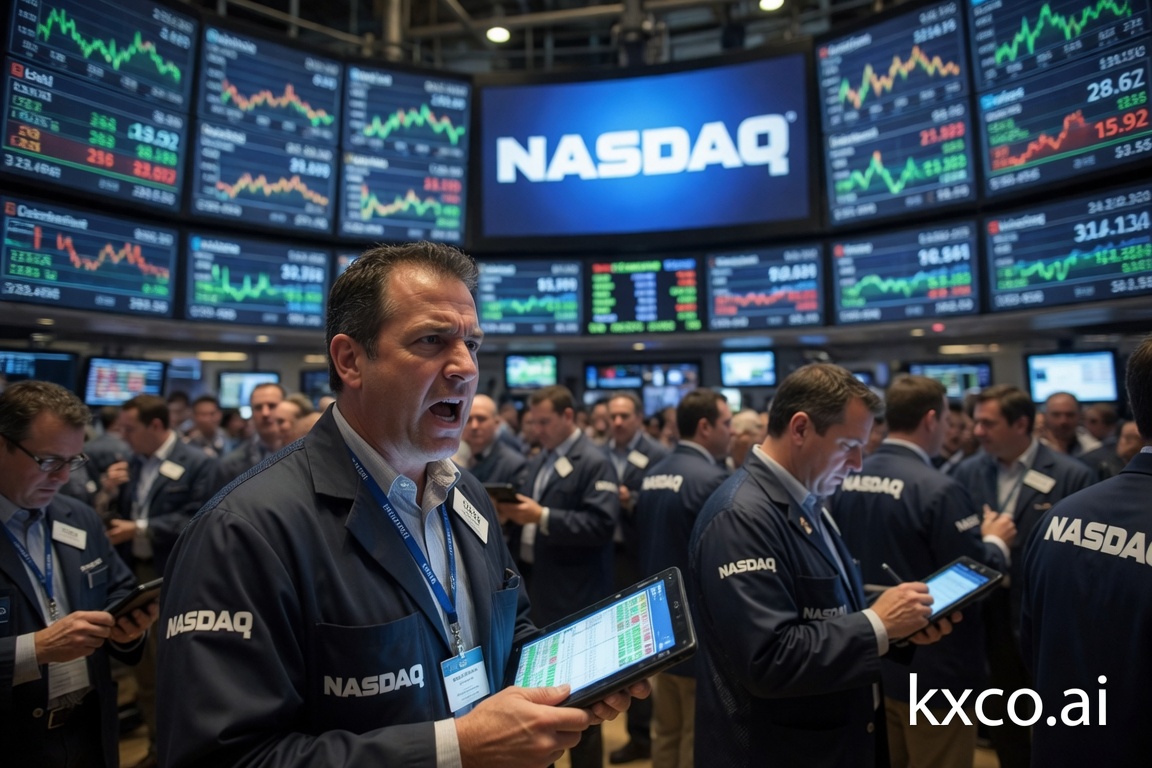
Economic Calendar and Trading Strategies for the Week Ahead: July 20–24, 2026
A pivotal week for markets: Iran's closure of the Strait of Hormuz sends crude above $86 and gasoline over $5, while Alphabet, Tesla and Intel earnings test the AI trade. Full economic calendar plus trading strategies across oil, gold, Bitcoin, FX and AI chip stocks.
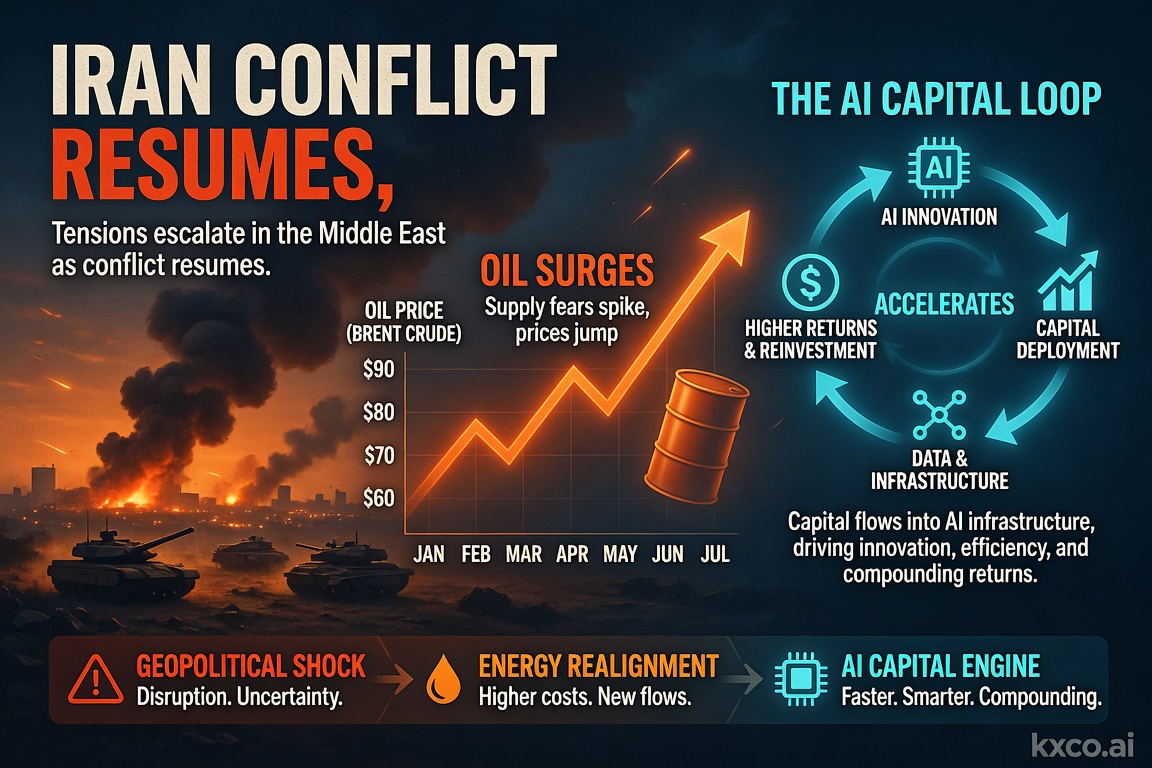
Economic Calendar and Trading Strategies for the Week Ahead: July 14–18, 2026
A pivotal week for markets: US strikes on Iran reignite the oil risk premium, June CPI and retail sales test the Fed's rate-cut path, and the $1 trillion AI capital loop keeps driving the tech trade. Full economic calendar plus trading strategies across oil, gold, Bitcoin, FX and AI stocks.
Every story, signed and delivered.
Subscribe to the kxco channel and get the headline, the AI-written key takeaways, and the chain-anchor link the moment we publish. Audio versions and per-ticker subscriptions arrive in the next iteration.