
Crypto Investors Lost $3.5 Billion to Scammers
Global cryptocurrency markets are reeling after the infamous FTX implosion burned an estimated $2 billion hole in investors' pockets. But a new survey reveals that nearly DOUBLE that amount has been lost to scams and 'rug-pulls' across 2022.
Cybersecurity and data privacy specialists from Privacy Affairs, in their round-up of Cryptocurrency Scams of 2022, cited the failure of crypto exchange FTX and its enigmatic founder Sam Bankman-Fried as the biggest loss to online investors in 2022.
The fall-out, says Privacy Affairs CEO and Founder Miklos Zoltan, will reverberate around the unregulated cryptocurrency markets for many months to come as investors try to extract themselves from flaming wreckage of FTX.
The survey revealed the five biggest crypto losses, scams and hacks of 2022 ranked by amount of money lost or stolen ($100 million and above) accounted for nearly $3.5 billion. They are:
1. FTX $1-2 billion
2. Axie Infinity's Ronin Network: $615m
3. Wormhole crypto bridge: $320m
4. JuicyFields.io scam: $273m
5. Unique-Exchange.co/PARAIBA scam $267m
The full research and data can be found here: https://www.privacyaffairs.com/cryptocurrency-scams-2022/
Their research showed that between January and July 2022, hackers stole $1.9 billion worth of cryptocurrency - a 37% increase on the same period in 2021. According to Solidus Labs, threat actors in the crypto industry launch up to 15 crypto scams per hour.
They revealed that in Q1 2022, 97% of all stolen cryptocurrency came from DeFi protocols. According to the FTC, consumers lost over $1 billion from the beginning of January 2021 through March 2022 to cryptocurrency scams.
While Americans lost $329m to cryptocurrency scams in Q1 2022, Australians lost $166m in investment and cryptocurrency-related scams across 2022. Investors in Hong Kong lost $50 million to cryptocurrency scams in 2022.
The dangerous nature of the market has been a positive for new Exchange KXCO with their Crypto for grown ups model, the more serious Crypto investor is moving to a more secure and more realistic investment platform where settlements and transactions occur in the real world and are not in house "black box" type games.
The research showed that scammers prefer Bitcoin (70%), Tether (10%), and Ether (9%) to set up their cons. Social media platforms, such as Instagram (32%), Facebook (26%), WhatsApp (9%), and Telegram (7%) are used for crypto scams.
Mr Zoltan said statistics show young people (20 to 40) are more susceptible to crypto scams than any other age group. "What our research shows is that cryptocurrency scams and related fraudulent activities are not plummeting anytime soon," he added.
Privacy Affairs research showed that in 2021, $2.8 billion was lost to rug pulls. Investors lost over $2.6 billion to the Thodex (Turkish crypto exchange) rug pull.
In 2022, more than 188,000 rug pulls on various blockchains, such as BNB and Ethereum, have been enacted. According to Solidus Labs, 2022 has seen an increase of 20% in crypto scams to 2021, with rug pulls taking a bigger share.
A rising trend seen by Privacy Affairs is cryptocurrency flash loan scams. These allow crypto users to borrow digital assets without collateral – usually, the loan is paid in the same transaction block. The process takes a few seconds once the loan is processed.
In Q2 2022, 27 flash loan attacks resulted in a loss of over $308 million. A flash loan attack on the cryptocurrency trading platform Mango Market resulted in a loss of $100 million in October 2022. Statistics show flash loan attacks increased 66.7% in Q2 from Q1 2022.
Mr Zoltan advised people to protect themselves by; using established cryptos and tokens, avoiding cryptocurrency projects that guarantee significant returns, and never get crypto investment advice from dating sites and influencers.
About Privacy Affairs
Miklos Zoltan, founder and CEO of Privacy Affairs, has long-time experience in cybersecurity and data privacy having worked with international teams for more than a decade in projects involving penetration testing, network security and cryptography.
Miklos founded Privacy Affairs in 2018 to provide cybersecurity and data privacy education to regular audiences by translating tech-heavy topics into easy-to-understand guides and tutorials.

AI Is Taking What You Publish and What You Type
Common Crawl holds more than 300 billion web pages, and 52 per cent of crawler requests on Cloudflare's network in June 2026 were for AI training. Models can give back what they took in: one chatbot reproduced 76.8 per cent of the first Harry Potter book near word for word. A US court ordered OpenAI to give the New York Times 20 million anonymised ChatGPT logs. This KXCO warning sets out what is exposed, what to do now, and how each KXCO client runs its own AI inside its own walls.

Industrialising Intelligence: Demand, Scarcity and the Boundary of Sovereignty
AI agents generate 80% of OpenRouter's tokens, about seven times human use, and Google's monthly tokens rose about 330 times in two years to over 3.2 quadrillion. In my view the limit on AI demand has moved from people to power: the International Energy Agency expects data-centre electricity to reach around 945 terawatt-hours by 2030. Execution is becoming a utility. Selection is not. KXCO builds the boundary that keeps the decision with a named person and lets another party check the record.
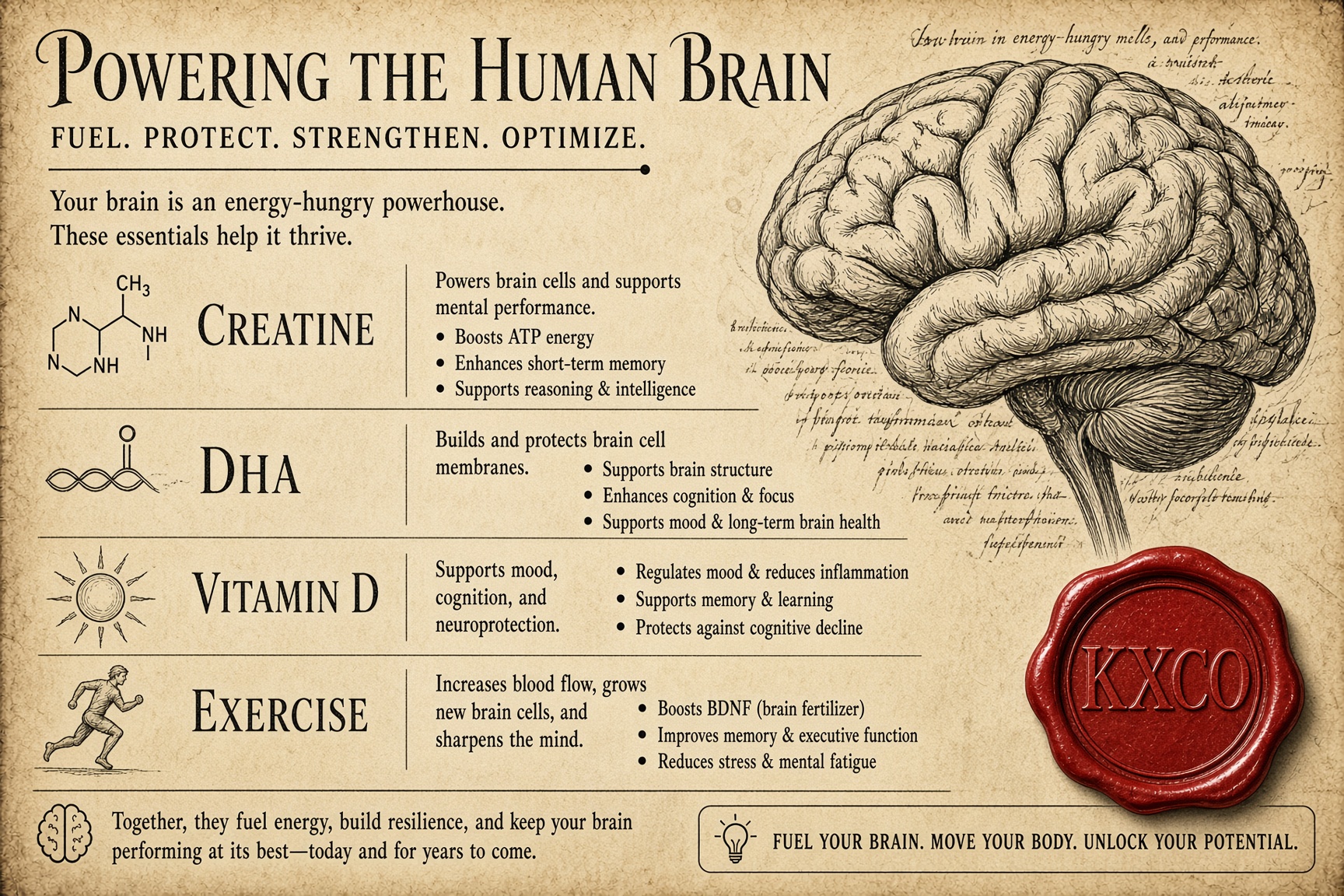
Thoughts on Thinking: Brain Essentials
Your brain runs on about 20 watts. The fastest supercomputer outruns it, but at the central published estimate the brain is about 680 times as efficient per watt as the best machine on the November 2026 Green500. It runs on four inputs most people overlook. Creatine buffers its energy, DHA builds its membranes, exercise raises its growth factors and, in older adults, enlarges the hippocampus, and low vitamin D goes with slower processing and more dementia.

The Week Ahead on Wall Street, 16 November 2026: Look for the Bounce
NVIDIA reports on Tuesday 17 November 2026, its first results since Jensen Huang resigned, and I expect the stock and the AI market to bounce. NVIDIA closed at $162.85 on 13 November 2026, 31.93% below its record, while the semiconductor index rose 8.05% on the week. The calendar leans to currencies, with the yen near 160 after briefly crossing it, and the US publishes retail sales, housing starts, jobless claims and the Fed's minutes. Follow them on the Live Trading News trading page.
Every story, signed and delivered.
Subscribe to the kxco channel and get the headline, the AI-written key takeaways, and the chain-anchor link the moment we publish. Audio versions and per-ticker subscriptions arrive in the next iteration.