
Bitcoins Have Value, Here is Why
#bitcoin #value #cryptocurrency #economy #value #money
"Currencies have value because they can function as a store of value and a unit of exchange, and demonstrate Key attributes to enable their use in an economy"-- Paul Ebeling
The definition of value in a currency has changed over centuries from physical attributes to the velocity of its use in an economy.
Bitcoin demonstrates some attributes for a currency, but its main source of value lies in its restricted supply and increasing demand.
If the price of 1 bitcoin were to reach $514,000, Bitcoin's market capitalization would reach approximately 15% of the global currency market.
There are 6 Key attributes to a useful currency: scarcity, divisibility, acceptability, portability, durability, and uniformity (resistance to counterfeiting). These qualities allow a currency to find widespread use in an economy. They also limit monetary inflation and ensure that the currencies are secure and safe to use.
Currency is useful if it works as a store of value or if it can reliably maintain its relative value over time. Throughout history, many societies used commodities or precious metals as methods of payment because they were considered to have a relatively stable value.
Bitcoin (BTCUSD) is often referred to as digital currency and as an alternative to central bank-controlled fiat money. However, the latter is valuable because it is issued by a monetary authority and is widely used in an economy. Bitcoin's network is decentralized, and the cryptocurrency is not used much in retail transactions.
One can argue that Bitcoin's value is similar to that of precious metals. Both are limited in quantity and have select use cases.
Precious metals like gold are used in industrial applications, while Bitcoin's underlying technology, the blockchain, has some applications across the financial services industries. Bitcoin's digital provenance means that it might even serve as a medium for retail transactions one day.
Currency is useful if it works as a store of value or, to put it differently, if it can reliably maintain its relative value over time. Throughout history, many societies used commodities or precious metals as methods of payment because they were considered to have a relatively stable value.
Assigning value to currencies is a matter of debate. Initially, their value came from intrinsic physical properties. For example, gold's value comes from the costs of extraction and certain qualitative factors, such as luster and purity content.
In the modern age, government-issued currencies often take the form of paper money, which does not have the same intrinsic scarcity as precious metals. For a long time, the value of paper money was determined by the amount of gold backing it.
Even today, some currencies are "representative," meaning that each coin or note can be directly exchanged for a specified amount of a commodity.
After countries abandoned the gold standard in an effort to curb concerns about gold supplies, many global currencies are now classified as fiat. Fiat currency is issued by a government and not backed by any commodity, but rather by the faith that individuals and governments have that others will accept that currency.
Today, most major global currencies are fiat (paper). Many governments and societies have found that paper currency is the most durable and least susceptible to loss of value over time. The value of fiat currencies is a function of their demand and supply. The USD is considered valuable because the world's biggest economy uses it and it dominates the flow of payments in international trade.
The Value of Bitcoin
Bitcoin does not have the backing of government, nor does it have a system of intermediary banks to propagate its use. A decentralized network consisting of independent nodes is responsible for approving consensus-based transactions in the Bitcoin network. There is no fiat authority in the form of a government or other monetary authority to act as a counterparty to risk and make lenders whole, so to speak, if a transaction goes awry.
Bitcoin does display attributes of a fiat currency system.
It is scarce, and cannot be counterfeited. The only way that 1 would be able to create a counterfeit bitcoin would be by executing what is known as a double-spend. This refers to a situation in which a user "spends" or transfers the same bitcoin in 2 or more separate settings, effectively creating a duplicate record.
The argument for Bitcoin's value is similar to that of gold, a commodity that shares characteristics with the cryptocurrency. The cryptocurrency is limited to a quantity of 21-M.
Bitcoin's value is a function of this scarcity. As the supply diminishes, demand for cryptocurrency has increased. Investors are clamoring for a slice of the ever-increasing profit pie that results from trading its limited supply.
Bitcoin also has limited utility like gold, the applications for which are mainly industrial. Bitcoin's underlying technology, called blockchain, is tested and used as a payment system. A Key use is in remittances across borders to bump up speed and drive down costs.
In aggregate, our estimate for the global value of stores of value comparable to Bitcoin including: savings accounts, small and large time deposits, money market funds, and gold bullion comes to $47.1-T.
Our total estimate for the global value of mediums of exchange and stores of value thus comes to $52.1-T. Assuming this total remains stable, if Bitcoin were to achieve 15% of this valuation, its market capitalization in today's money would be approximately $10.8-T. With all 21-M bitcoins in circulation, that would put the price of 1 Bitcoin at $514,000!
Have a happy prosperous Holiday week, Keep the Faith!
Economic Calendar and Trading Strategies for the Week Ahead: July 20–24, 2026
A pivotal week for markets: Iran's closure of the Strait of Hormuz sends crude above $86 and gasoline over $5, while Alphabet, Tesla and Intel earnings test the AI trade. Full economic calendar plus trading strategies across oil, gold, Bitcoin, FX and AI chip stocks.
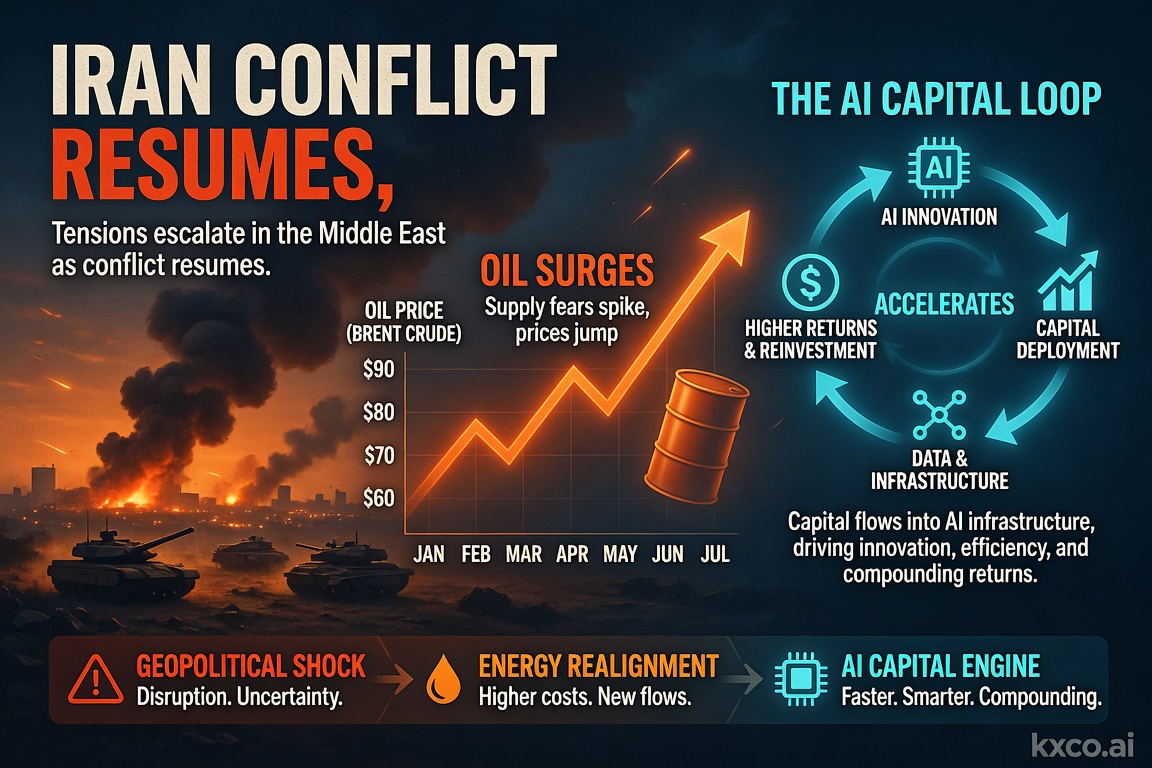
Economic Calendar and Trading Strategies for the Week Ahead: July 14–18, 2026
A pivotal week for markets: US strikes on Iran reignite the oil risk premium, June CPI and retail sales test the Fed's rate-cut path, and the $1 trillion AI capital loop keeps driving the tech trade. Full economic calendar plus trading strategies across oil, gold, Bitcoin, FX and AI stocks.
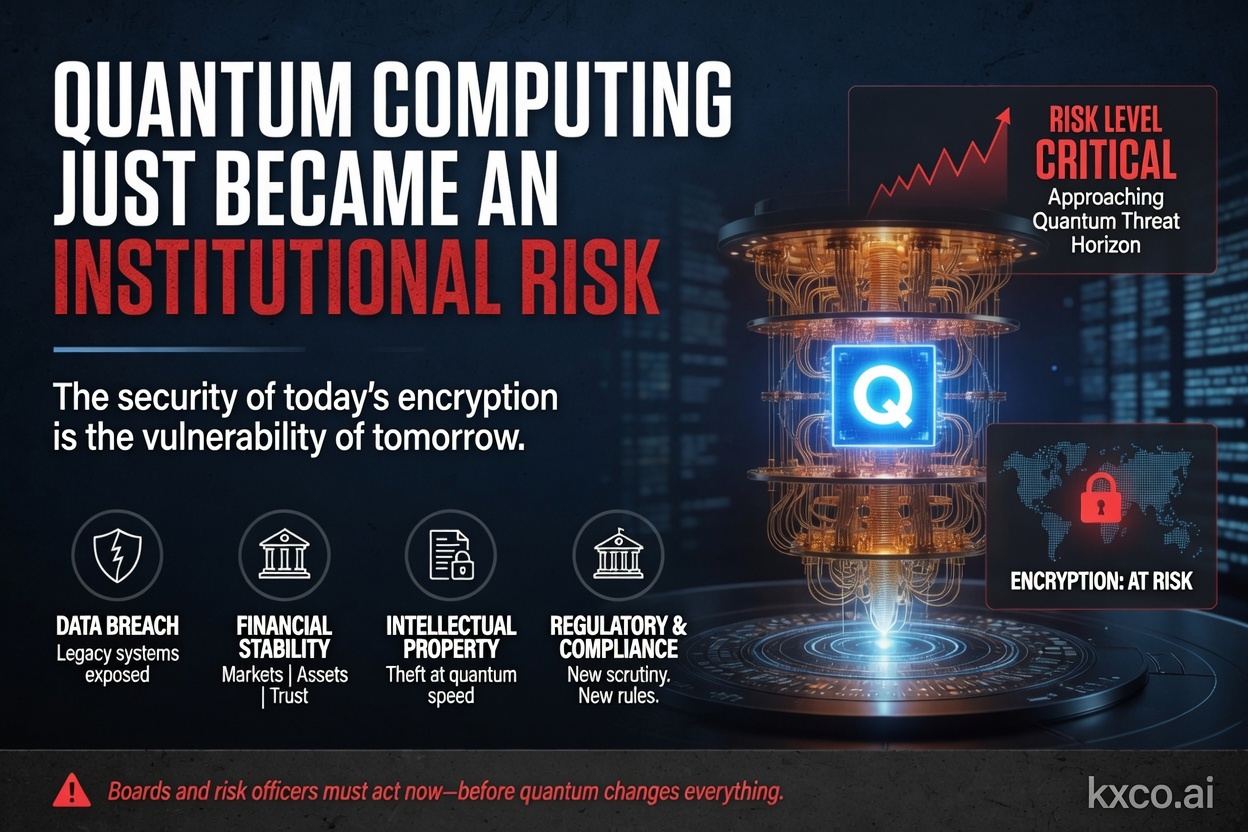
Quantum Computing Just Became an Institutional Risk
Shayne Heffernan on BlackRock's quantum-computing warning for Bitcoin and Ethereum, Google's cryptanalysis research, the two on-chain risk vectors, and how KXCO's Armature L1 — post-quantum from genesis, coordinated by its ontology — answers a threat that just went institutional.

Quantum, AI and the Trust Problem Markets Aren't Pricing
Quantum computing and AI agents are usually traded as separate stories. They are one story, and it is about trust. Shayne Heffernan on why the financial system needs verifiable infrastructure before the volume of machine transactions makes retrofitting impossible.
Every story, signed and delivered.
Subscribe to the kxco channel and get the headline, the AI-written key takeaways, and the chain-anchor link the moment we publish. Audio versions and per-ticker subscriptions arrive in the next iteration.