
Bitcoin is a Buy
Buy when there is blood in the streets, even if that blood is your own - Baron Rothschild
Part of theBlockchain Center
Bitcoin Is a Buy: The Ultimate Hedge in an Era of Endless Money Printing
By Shayne Heffernan June 4, 2026
I've been watching markets for decades, and I've rarely seen an asset as misunderstood yet fundamentally sound as Bitcoin right now. While the headlines scream volatility and the price hovers around $62,000–$70,000 after pulling back from last year's highs near $126,000, the big picture tells a different story. Bitcoin isn't just surviving — it's positioned to thrive as governments keep the printers running and traditional money loses purchasing power by the day.
This isn't hype. It's math, history, and cold hard economics. If you're waiting for the perfect dip, you might already be late. Bitcoin is a buy for anyone with a time horizon longer than a few months.
The Money Printer Won't Stop
Let's start with the elephant in the room: the United States government and the Federal Reserve's relentless expansion of the money supply. As of April 2026, M2 money supply has hit a record $22.8 trillion. That's up significantly from previous years, and the trend shows no sign of reversing.
Every month, trillions more dollars are being created through deficits, quantitative easing, and fiscal spending. This isn't abstract theory — it's eroding the value of cash, bonds, and anything denominated in fiat. When you print money at this scale, savers get punished and hard assets win. Bitcoin, with its fixed supply of 21 million coins, stands as the clearest beneficiary.
I've seen this movie before. During previous rounds of aggressive money creation, Bitcoin didn't just hold up — it delivered asymmetric returns. Today, with national debts ballooning and political incentives favoring short-term spending over fiscal discipline, the case is even stronger. The U.S. is effectively monetizing its debt, and Bitcoin serves as digital insurance against that reality.
Michael Saylor's Conviction: Bitcoin Is Money
Few voices have been as consistent and battle-tested as Michael Saylor's. The executive chairman of Strategy (formerly MicroStrategy) has turned his company into one of the largest corporate holders of Bitcoin, and he remains unwavering.
"It's not complicated. Bitcoin is money."
Saylor has repeatedly emphasized that Bitcoin is "digital energy" and a superior form of property. In recent appearances, he's doubled down: "We expect Bitcoin to go up more than the S&P 500 over time." His strategy of acquiring Bitcoin "every quarter forever" has turned Strategy into a leveraged play on BTC, and despite occasional dips, the long-term results speak for themselves.
Saylor understands what many traditional investors miss: in a world of infinite fiat, scarcity is king. Bitcoin's halving cycles continue to reduce new supply, while demand from institutions, ETFs, and nation-states grows. As he often says, "There will never be more than 21 million Bitcoin." That mathematical certainty is becoming more valuable by the day as governments print away the value of everything else.
Cathie Wood's Long-Term Vision
On the institutional side, Cathie Wood of ARK Invest has been one of Bitcoin's most vocal advocates. Even after adjusting some of her more aggressive targets, Wood's conviction has only grown.
She recently noted that Bitcoin acts as a hedge against inflation and that younger generations increasingly see it as "digital gold." Wood has highlighted Bitcoin's potential to reach $750,000 in a base case and significantly higher in bullish scenarios, driven by adoption as a global reserve asset.
"Bitcoin is getting ready for another big run."
Her analysis ties Bitcoin's upside to technological convergence, particularly with AI. As companies pour capital into AI infrastructure, the same energy and compute trends supporting $NVDA and $GOOGL also create tailwinds for Bitcoin mining and blockchain applications.
Why Bitcoin Stands Out in 2026
Bitcoin's current price — trading well below its all-time highs — represents a compelling entry point for long-term investors. The post-halving supply shock is still working its way through the system, ETF inflows continue (despite periodic outflows), and corporate treasuries are increasingly adding BTC to their balance sheets.
Compare that to traditional assets. Stocks are expensive by many historical measures. Real estate faces higher interest rates and demographic challenges. Bonds yield poorly after inflation. Bitcoin offers asymmetric upside with growing mainstream acceptance.
The correlation between Bitcoin and tech-heavy indices has increased, which makes sense. Both benefit from liquidity and innovation. But Bitcoin's fixed supply gives it an edge in an inflationary environment that stocks simply don't have.
The AI Convergence: Why Tech Stocks and Bitcoin Rise Together
One of the most fascinating developments in 2026 is the deepening connection between artificial intelligence and Bitcoin. The massive buildout of AI data centers requires enormous amounts of energy, specialized hardware, and capital — the same ingredients that power Bitcoin mining operations.
Companies leading the AI charge are also creating indirect tailwinds for Bitcoin. Here's a table of key stocks with significant AI exposure that investors should watch alongside their Bitcoin allocations:
Company | Cashtag | AI Focus Area | Why It Matters for Bitcoin Investors |
|---|---|---|---|
NVIDIA | GPUs & AI Accelerators | Powers both AI training and Bitcoin mining efficiency | |
Alphabet | Cloud AI & Data Centers | Massive infrastructure spend supports broader tech liquidity | |
Microsoft | Azure AI & Enterprise Adoption | Corporate balance sheets increasingly open to Bitcoin | |
Broadcom | Networking & Custom AI Chips | Benefits from data center expansion | |
Meta Platforms | AI Research & Infrastructure | High cash flow generation for potential BTC treasury plays | |
Tesla | AI Robotics & Energy | Energy innovations benefit Bitcoin mining | |
Oracle | Cloud Infrastructure | Enterprise AI driving compute demand | |
Super Micro Computer | AI Servers | Direct play on data center hardware boom |
These companies — $NVDA, $GOOGL, $MSFT, and others — are spending hundreds of billions on AI infrastructure. That capital flow creates liquidity that often finds its way into Bitcoin as a treasury asset or hedge. We've already seen mining companies pivot toward AI hosting, blurring the lines between the two sectors.
Risks and Realities
No serious analysis would ignore the risks. Bitcoin remains volatile. Regulatory uncertainty exists in some jurisdictions. Short-term price action can be brutal, as we've seen in recent weeks with prices dipping below $65,000 at times.
But volatility is the price of admission for an asset with this much upside potential. Those who bought during previous bear markets — 2018, 2022 — were rewarded handsomely. The same dynamic is playing out now.
The key is position sizing. Don't bet the farm, but don't ignore the opportunity either. Dollar-cost averaging into Bitcoin while maintaining exposure to quality AI stocks like $NVDA and $GOOGL provides a balanced way to play both the monetary revolution and the technological one.
The Institutional Tide Is Rising
Institutional adoption continues to accelerate. Spot Bitcoin ETFs have brought billions in new capital. Corporations from Strategy to smaller players are adding BTC. Even some sovereign wealth funds and nations are exploring allocations.
This isn't retail speculation anymore. It's becoming a structural asset class. As more money flows in, the volatility should gradually decrease while the upward trajectory strengthens.
Cathie Wood has pointed out that Bitcoin's four-year cycles are being disrupted by this institutional money. Michael Saylor continues to argue that Bitcoin is the apex property in the digital age.
Broader Economic Context
Zoom out further. Global debt levels are unsustainable. Central banks are trapped in a cycle of low rates and money creation. Geopolitical tensions make sound money more attractive. In this environment, Bitcoin's role as "digital gold" becomes even more compelling.
The U.S. alone faces trillion-dollar deficits as far as the eye can see. With M2 already at $22.8 trillion and climbing, the debasement of fiat currencies favors scarce assets. Bitcoin's supply schedule is transparent and immutable — unlike government promises.
My Final Take: Bitcoin Is a Buy
After years of following this space, my view is clear. Bitcoin isn't just a speculative trade — it's becoming a core holding for forward-thinking portfolios. The combination of fixed supply, growing adoption, energy innovation from the AI boom, and fiat money creation creates a powerful setup.
Are we going to see $100,000 Bitcoin again? Almost certainly. Higher than that in the coming years? The data and history suggest yes.
For investors tired of watching their savings eroded by inflation, Bitcoin offers a way out. Pair it with exposure to the AI leaders — $NVDA for the hardware backbone, $GOOGL and $MSFT for the cloud and applications — and you have a portfolio positioned for the defining trends of our era.
The printers keep running. The halvings keep coming. Institutional money keeps flowing in. The case for Bitcoin has never been stronger.
Don't wait for the headlines to turn euphoric. By then, the easy money will already have been made. Bitcoin is a buy today for those who understand where the world is heading.
Shayne Heffernan Ph.D. is an economist and founder of Live Trading News, with decades of experience analyzing global markets, emerging technologies, and capital flows.
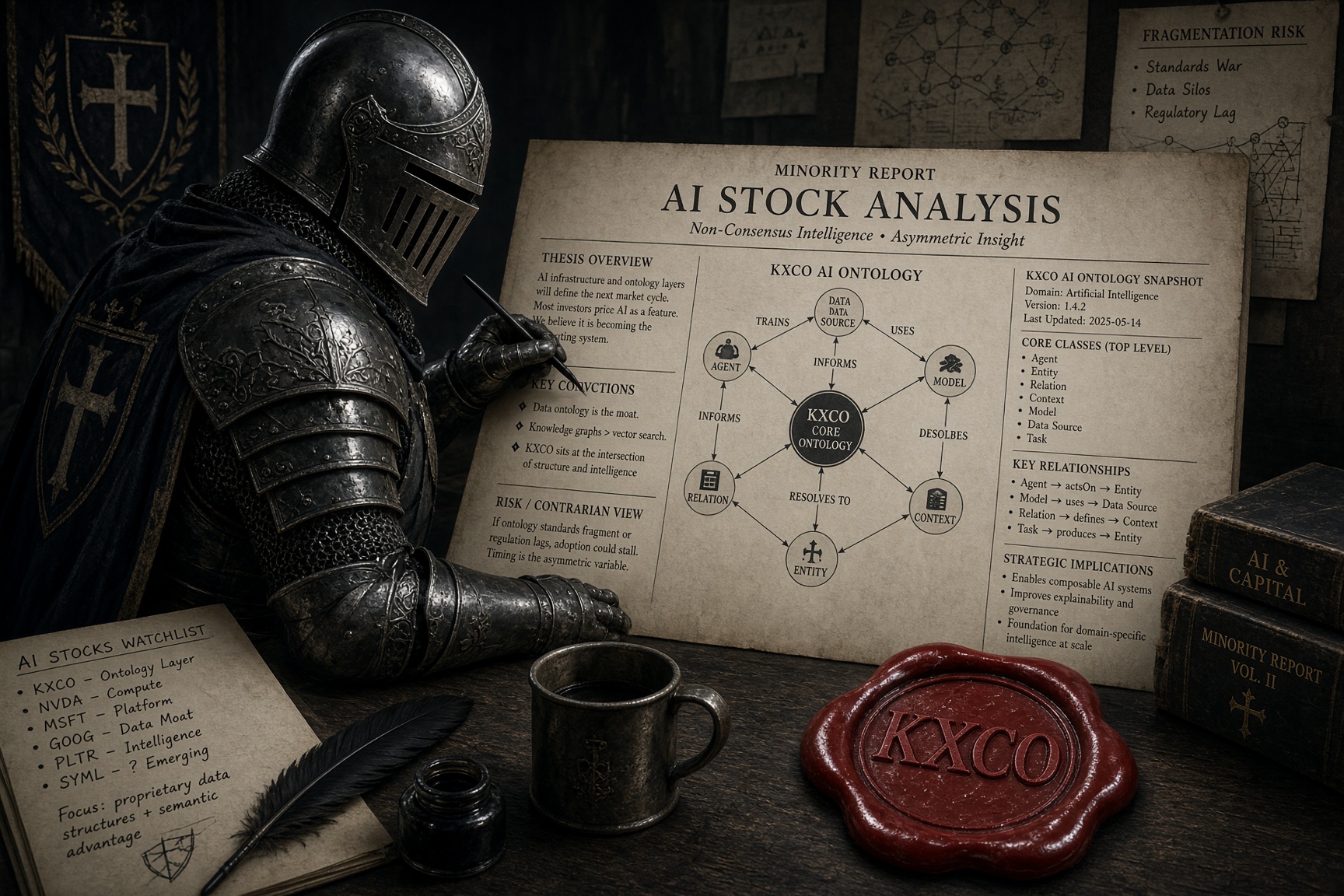
KXCO AI Ontology at 3 Months: What It Called and What Comes Next
On 19 July 2026 the Round Table's AI room published its first Analyst Outlook. To the 16 October 2026 close its 13 names rose 2.6% on an equal weight against 2.1% for QQQ, per StockAnalysis closes, and the six it opened with 35% or more of upside rose 8.6%. This piece lists the six names up more than 5%, the ten names I rate as opportunities now, the month's results in AI and quantum computing, and the official data showing that four in five firms have not yet started using AI.

SpaceX: The Road to 10 Gigawatts
SpaceX did not add an AI business. A company whose processes run on compute built its own computing plant, then built the power to run it. The 10-Q reports 1.4 gigawatts of nameplate compute at 30 June 2026, four leases worth about $41 billion a year and $100 billion of cash. The target is closer to 10 gigawatts than 5 by the end of 2027. This piece sets out the build sequence, the four layers of power in Memphis, and why Terafab is the act after 2027, not the road to it.
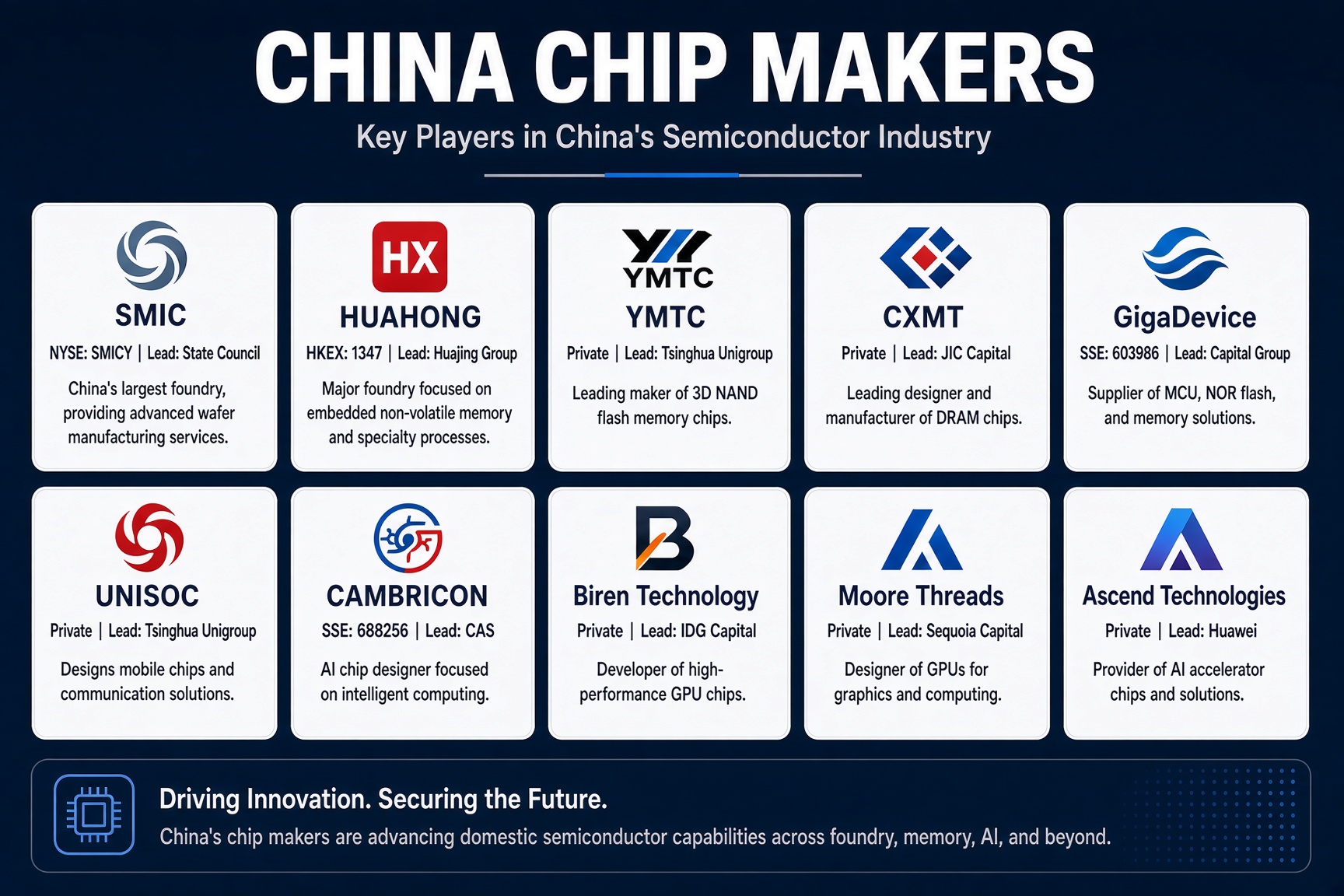
The China Chip Shock
On 10 October CXMT said it will ship DDR5 server modules on a 4F2 cell by year-end. Micron, SK Hynix, Samsung and Sandisk sold off for two sessions and Elon Musk said China scales faster than the rest of the world combined. This piece sets out China's memory makers, foundries, AI chip designers and toolmakers, with two knowledge graphs drawn from the KXCO AI Sector Ontology, and says what the sell-off prices and what it does not.

China's Coordinated Push in AI, Quantum Computing and Blockchain
On 9 October 2026 Beijing called for a nationally integrated computing-power network and a national blockchain network. DeepSeek is scaling on Huawei Ascend chips, China's intelligent computing reached 2,185 EFLOPS by June, per the industry ministry, and quantum communications remain a strength. This analysis explains the strategy and sets out the Hong Kong and US listed companies with exposure, from Tencent and Alibaba to China Mobile, HashKey and Nvidia.
Every story, signed and delivered.
Subscribe to the kxco channel and get the headline, the AI-written key takeaways, and the chain-anchor link the moment we publish. Audio versions and per-ticker subscriptions arrive in the next iteration.