
ASEAN: Destination for Investment- Knightsbridge
ASEAN has emerged as one of the most promising investment regions, with Knightsbridge Group underlining its potential as a key player in the global market. Investors seeking growth, stability, and innovation are drawn to the region's increasing economic integration, strategic location, and broad markets.
Economic Resilience and Growth
One of the primary reasons Knightsbridge sees ASEAN as a top investment location is its robust economic development and resiliency. The area, which includes eleven Southeast Asian countries, has maintained strong GDP growth despite global economic concerns. With a combined GDP of over $3 trillion and a population of over 660 million, ASEAN constitutes a sizable piece of the worldwide market. The expansion of the middle class, growing urbanization, and expanding consumer markets continue to boost demand in a variety of sectors, making the region an appealing destination for international investment.
ASEAN's rapid digital transformation has also contributed significantly to the region's economic growth. As more countries in the area embrace digital infrastructure, e-commerce, finance, and other digital services are growing at an unprecedented rate. This digital transition creates numerous chances for investors eager to capitalize on the next wave of innovation in areas ranging from finance to telecoms.
Strategic location and trading opportunities
ASEAN's advantageous location, sandwiched between the world's two largest economies—China and India—increases its significance in global trade. The region's proximity to key shipping lanes and existing commercial networks make it an important hub for global business.
Knightsbridge also identifies the Regional Comprehensive Economic Partnership (RCEP) as a game changer for ASEAN. The RCEP is the world's largest free trade agreement, bringing together 15 nations, including China, Japan, and South Korea, with ASEAN at its center. This agreement allows for better trade connections, lower tariffs, and greater access to foreign markets, benefiting both local firms and international investors wishing to establish a presence in the region.
Favorable Investment Climate
According to Knightsbridge, another reason ASEAN stands out as an investment destination is its strengthening legal structure and good business environment. Governments around the region have been actively promoting foreign direct investment by implementing pro-business legislation, tax breaks, and efforts to streamline company procedures.
Countries such as Vietnam, Thailand, Indonesia, and Singapore have emerged as popular destinations for foreign capital due to their stability, ease of doing business, and sectoral diversity. ASEAN offers investors numerous options in a variety of areas, including manufacturing, real estate, digital infrastructure, and renewable energy.
Sectorial Opportunities
Knightsbridge highlights that technology, manufacturing, infrastructure development, and green energy are among the most promising ASEAN investment sectors. The region is rapidly urbanizing and industrializing, resulting in an increase in demand for infrastructure projects including smart cities, transportation networks, and sustainable energy solutions.
The green economy looks especially promising, with ASEAN countries agreeing to renewable energy objectives as part of their efforts to combat climate change. This makes the region an excellent location for solar, wind, and hydropower projects, as well as sustainable agriculture and ecotourism.
Conclusion: A Bright Future for ASEAN.
In an era of economic instability, Knightsbridge Group sees ASEAN as a beacon of potential. Its robust development trajectory, digital revolution, attractive investment climate, and strategic position set it apart as a destination for long-term investors. With further economic integration through efforts such as RCEP, ASEAN is poised to become an even more important player in global markets, providing broad and profitable opportunities across sectors.
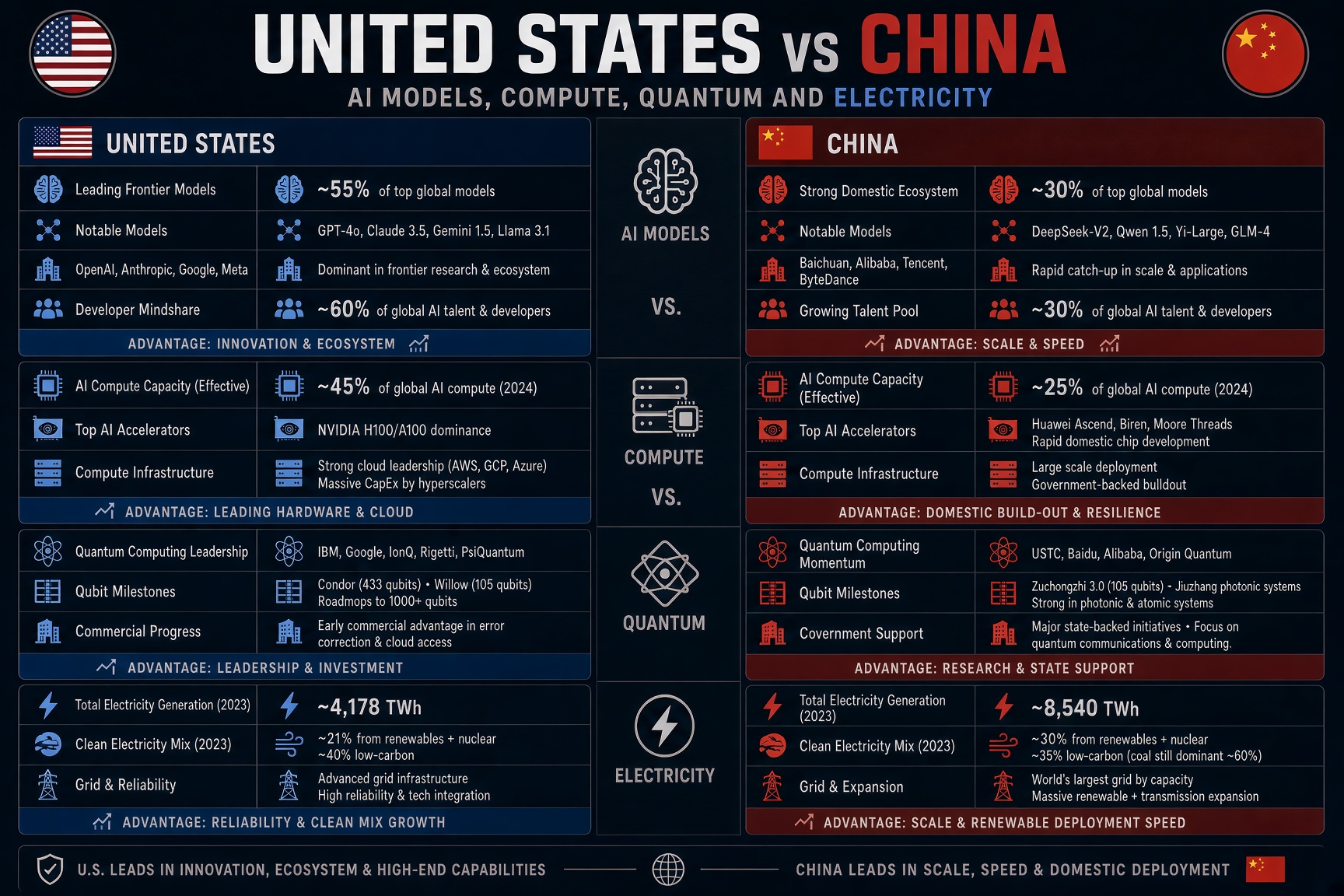
United States vs China: AI Models, Compute, Quantum and Electricity
The United States still leads in frontier model capability, total AI compute and quantum error correction, while China has narrowed the gaps in model performance, open-weight adoption and domestic chip volumes, and holds a structural advantage in power for data centres. Shayne Heffernan sets out the developments from July to October 2026 across models, compute, quantum and electricity, and how fast China is catching up.
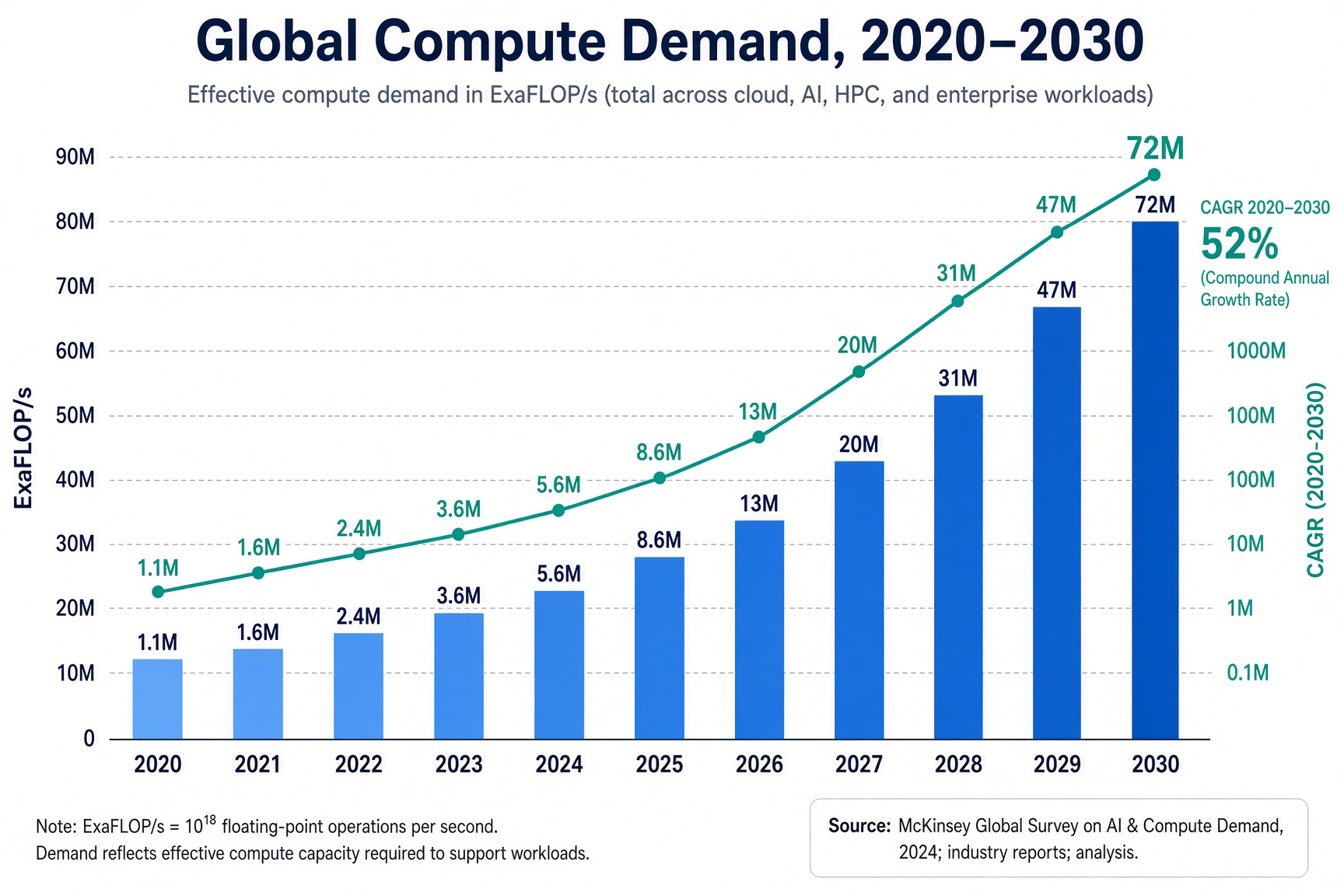
The 2030 Compute Landscape: GPUs, Power and the Architecture of Intelligence
The constraint on AI is no longer ideas or data but compute and the power to run it. Frontier training compute has grown about five times a year since 2020, and the leading AI supercomputer of June 2030 is on course for about 2 million chips and 9 gigawatts. Shayne Heffernan sets out the 2030 arithmetic, the power problem, who has already contracted the gigawatts, and how GPUs, custom ASICs, wafer-scale engines and quantum machines divide the work.
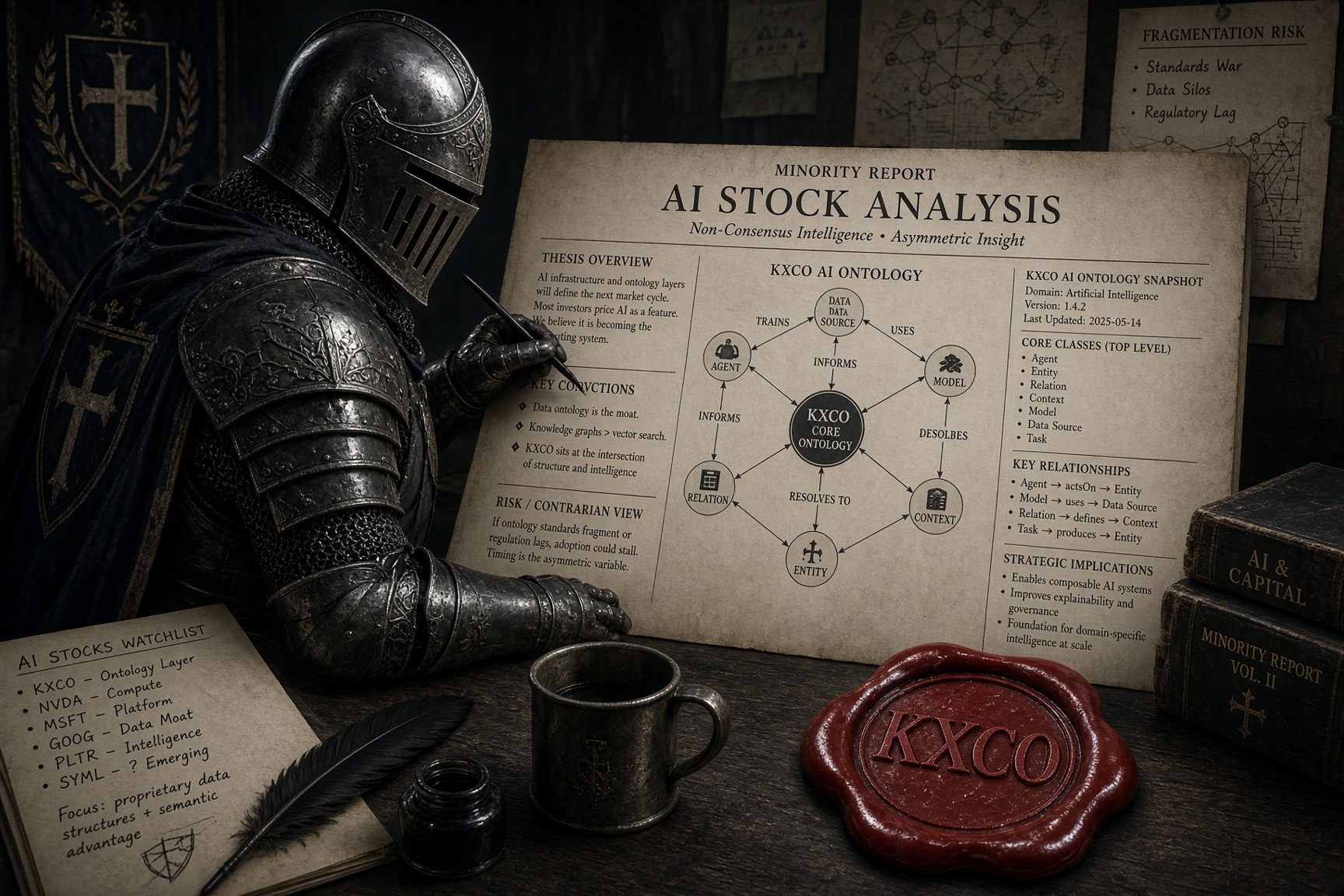
KXCO AI Ontology at 3 Months: What It Called and What Comes Next
On 19 July 2026 the Round Table's AI room published its first Analyst Outlook. To the 16 October 2026 close its 13 names rose 2.6% on an equal weight against 2.1% for QQQ, per StockAnalysis closes, and the six it opened with 35% or more of upside rose 8.6%. This piece lists the six names up more than 5%, the ten names I rate as opportunities now, the month's results in AI and quantum computing, and the official data showing that four in five firms have not yet started using AI.

SpaceX: The Road to 10 Gigawatts
SpaceX did not add an AI business. A company whose processes run on compute built its own computing plant, then built the power to run it. The 10-Q reports 1.4 gigawatts of nameplate compute at 30 June 2026, four leases worth about $41 billion a year and $100 billion of cash. The target is closer to 10 gigawatts than 5 by the end of 2027. This piece sets out the build sequence, the four layers of power in Memphis, and why Terafab is the act after 2027, not the road to it.
Every story, signed and delivered.
Subscribe to the kxco channel and get the headline, the AI-written key takeaways, and the chain-anchor link the moment we publish. Audio versions and per-ticker subscriptions arrive in the next iteration.