
Amazon Invests $4 Billion in Anthropic: An AI Safety Company
Amazon is stepping up its efforts in the artificial intelligence (AI) race with a deal to invest up to $4 billion in Anthropic, a research lab founded by former OpenAI researchers. The deal, announced on September 25, 2023, is one of the largest investments in a private AI company to date.
Anthropic was founded in 2017 by Dario Amodei, Daniela Amodei, Jack Clark, and Ilya Sutskever. The company has raised over $700 million in venture capital, and its investors include Peter Thiel, Jaan Tallinn, and Dustin Moskovitz.
Anthropic is focused on developing safe and beneficial AI. The company has developed a number of AI safety techniques, including adversarial training, reinforcement learning with human feedback, and interpretable models.
Amazon's investment in Anthropic is a sign of the company's growing interest in AI. Amazon is already using AI in a variety of ways, including product recommendations, logistics, and customer service. The company is also developing AI-powered products, such as the Alexa voice assistant and the Amazon Rekognition facial recognition service.
Amazon's investment in Anthropic is likely to accelerate the development of AI safety technologies. The deal will give Anthropic access to Amazon's vast resources and expertise. It will also help to raise the profile of AI safety and attract more talent to the field.
The investment is also a sign of the growing competition in the AI race. Companies like Google, Microsoft, and Facebook are all investing heavily in AI. Amazon's investment in Anthropic will help the company to maintain its competitive edge in the AI market.
Implications of the Deal
The deal between Amazon and Anthropic has a number of implications for the AI industry. First, it is a sign of the growing importance of AI safety. As AI becomes more powerful, it is important to ensure that it is used in a safe and beneficial way. Amazon's investment in Anthropic is a vote of confidence in the company's ability to develop safe and beneficial AI.
Second, the deal is a sign of the growing competition in the AI race. Amazon is one of the largest and most powerful companies in the world. Its investment in Anthropic is a signal that AI is a top priority for the company. Other tech giants, such as Google and Microsoft, are also investing heavily in AI. This competition is likely to accelerate the development of AI technologies.
Third, the deal is likely to attract more talent to the field of AI safety. Anthropic is a leading research lab in the field, and its partnership with Amazon will make it even more attractive to AI researchers. This influx of talent will help to accelerate the development of AI safety technologies.
Overall, the deal between Amazon and Anthropic is a positive development for the AI industry. It is a sign of the growing importance of AI safety, the increasing competition in the AI race, and the growing attractiveness of the field of AI safety.
My Opinion
I believe that Amazon's investment in Anthropic is a positive development. AI safety is a critical issue, and it is important to invest in research in this area. Amazon's investment will give Anthropic the resources it needs to continue its important work.
I also believe that the deal is a good sign for the AI industry as a whole. It shows that companies are taking AI safety seriously and that they are willing to invest in research in this area. This is good for the long-term development of AI.
Of course, there are also some potential risks associated with the deal. For example, some people have expressed concern that Amazon's investment could give the company too much influence over the development of AI safety technologies. It is important to ensure that AI safety research remains independent and unbiased.
Overall, I believe that the benefits of the deal outweigh the risks. I am optimistic that Amazon's investment in Anthropic will help to accelerate the development of safe and beneficial AI.
Don't Be the Best, Be the Only: Winning in an AI World
AI is repricing competence downward. What it cannot reproduce is a life. The case for remaining non-fungible, why friction still produces the best ideas, and what it means to build AI systems that keep the human intellect in them.
AI Demand in 2026: The Revenue Is Finally Catching Up to the Capex
The Q2 2026 numbers show AI capital spending finally converting into revenue. AWS up 37 percent, Google Cloud up 82 percent, Azure in the low-to-mid 40s and Nvidia data center near $75 billion, with combined hyperscaler capex tracking toward $740 billion and demand still outstripping capacity. Shayne Heffernan on what carries into 2027.
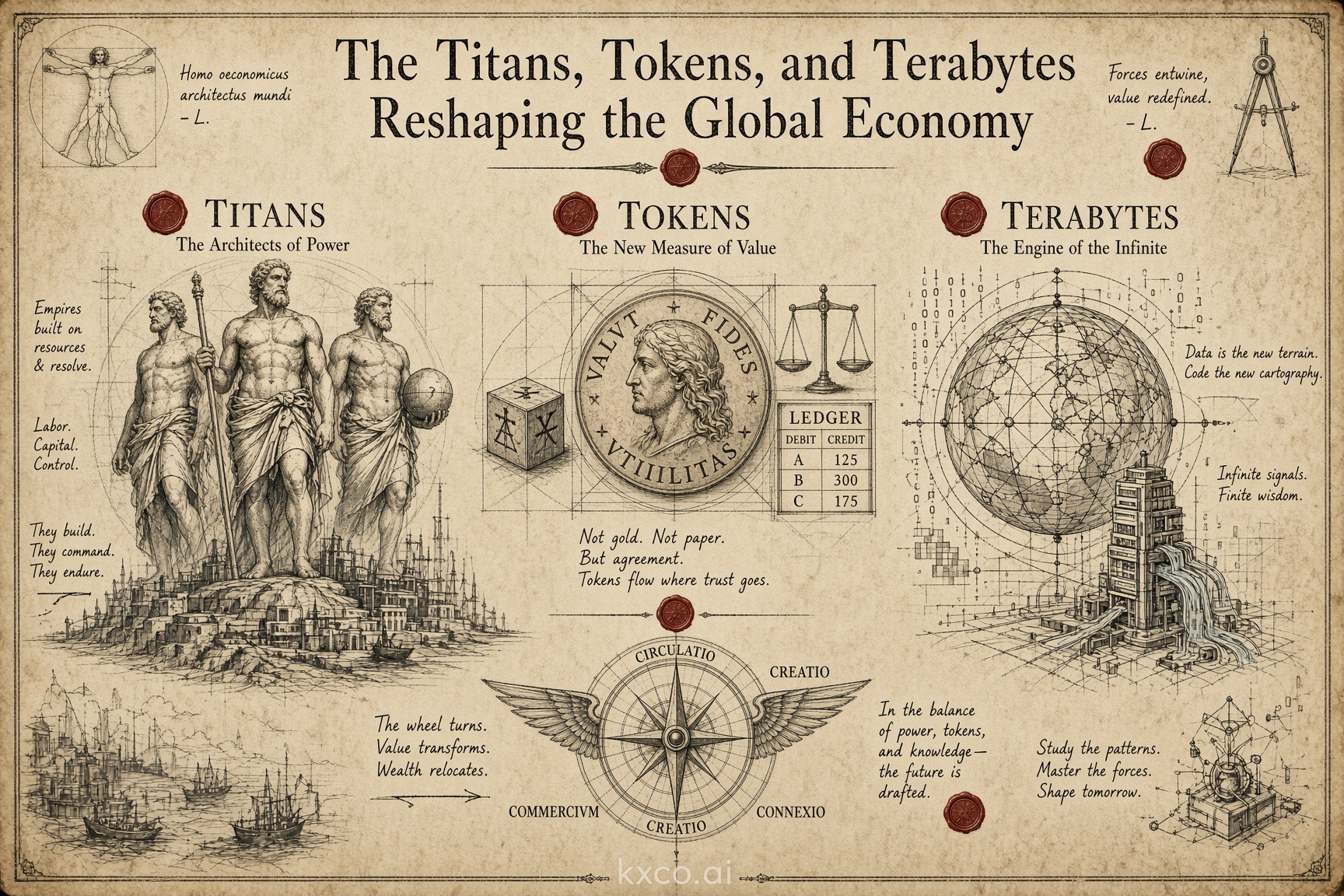
The Titans, Tokens, and Terabytes Reshaping the Global Economy
The AI arms race has moved from what the technology can do to who controls the compute, the data and the distribution. Anthropic now has five direct competitors on one cap table at a $965bn post-money. Meta is commoditising the model layer it does not sell. Nvidia carries 52 dependencies in the KXCO ontology and the sector resolves to nine critical nodes. Here is the state of the AI economy, checked line by line against our live map, and the five value gaps that map is pointing at.
Will $SPCX Buy $TSLA at $420?
The $420 tweet was treated as a joke. But Musk keeps coming back to the number — and with SpaceX now trading as $SPCX, the strategic case for it acquiring Tesla at $420 has never been stronger. Shayne Heffernan on manufacturing, AI, robotics, and the convergence the KXCO Ontology already maps.
Every story, signed and delivered.
Subscribe to the kxco channel and get the headline, the AI-written key takeaways, and the chain-anchor link the moment we publish. Audio versions and per-ticker subscriptions arrive in the next iteration.