
10 Best Stocks to Buy Right Now in June 2026 – My Current Watchlist
$NVDA, $MSFT, $GOOGL, $AMZN, $TSLA, $AVGO, $AMD, $IONQ, $META, and $LLY.
Part of theAI Stocks Center
By Shayne Heffernan, Ph.D.
The market just delivered another one of those classic reset moments. After the recent tech pullback driven by hotter-than-expected jobs data, rising yields, and oil pressure from the Middle East, quality names are offering better entry points. I've watched enough of these rotations to recognize when noise creates opportunity. Here are the 10 stocks I'm focusing on right now for the remainder of 2026.
Why June 2026 Sets Up Well
The S&P 500 and Nasdaq showed some resilience in early June, with AI-related names clawing back ground after last week's selloff. AI spending continues as the dominant long-term theme, but capital is rotating toward companies with strong earnings, reasonable valuations, and real infrastructure exposure. Oil volatility and sticky inflation are keeping rate-cut expectations tempered, favoring businesses that generate solid cash flow in this environment.
This isn't the moment for blind speculation. It's time for companies with durable moats, AI tailwinds, and resilience.
My Top 10 Stocks for June 2026
$NVDA – The undisputed leader in AI infrastructure. Recent pullbacks create buying opportunities as data center demand from hyperscalers shows no signs of slowing. Long-term positioning remains exceptionally strong.
$MSFT – Enterprise AI adoption via Azure, combined with cloud strength, makes this a core holding that performs across growth and more defensive phases.
$GOOGL (Alphabet) – Search dominance plus steady advances in AI and quantum initiatives. Attractive valuation after recent weakness.
$AMZN – AWS leadership in cloud and AI services, backed by e-commerce resilience. A practical infrastructure play.
$TSLA – Tesla continues to blend AI (Full Self-Driving, Optimus robotics) with energy storage and vehicle growth. Volatility is high, but strategic positioning in AI and autonomy offers significant upside for patient investors.
$AVGO (Broadcom) – Key AI chip and networking deals position it solidly in the ongoing capex cycle.
$AMD – Gaining share as a credible alternative in AI accelerators and data center chips. Clear asymmetric upside potential.
$IONQ – Leading pure-play in trapped-ion quantum computing. Early commercial traction and hardware progress make it an interesting high-risk, high-reward addition for quantum/AI exposure.
$META – Strong advertising resilience paired with heavy AI investments across platforms. Excellent cash generation and operational efficiency.
$LLY (Eli Lilly) – Continued strength in innovative therapies, including weight-loss drugs. Provides healthcare growth exposure with defensive qualities.
Quick Comparison Table – June 2026 Outlook
Ticker | Company | Key Driver | Valuation Note | Why It Fits Now |
|---|---|---|---|---|
Nvidia | AI GPUs & data center infra | Premium | Dip-buying in core theme | |
Microsoft | Azure AI & cloud | Reasonable | Stable compounder | |
Alphabet | Search + AI/Quantum | Attractive | Post-pullback entry | |
Amazon | AWS & e-commerce | Solid | Infrastructure backbone | |
Tesla | AI autonomy, robotics & energy | Volatile | Strategic AI upside | |
Broadcom | AI networking & chips | Balanced | Capex cycle beneficiary | |
AMD | AI accelerator gains | Competitive | Challenger with momentum | |
IonQ | Quantum hardware leadership | High-risk | Quantum/AI asymmetry | |
Meta Platforms | AI-powered ads & platforms | Strong cash flow | Efficient operator | |
Eli Lilly | Pharma innovation | Growth premium | Healthcare resilience |
Market conditions change rapidly. This is for discussion purposes only — always conduct your own research.
Final Takeaways for June 2026
Use selective dips in proven AI infrastructure leaders like NVDA, MSFT, and AVGO.
Consider exposure to AI-adjacent themes including autonomy/robotics ($TSLA) and quantum computing ($IONQ).
Balance the portfolio with cash-flow generators and healthcare names that hold up in uncertain times.
Focus on companies tied to real spending cycles in AI, power infrastructure, and innovation.
The market rewards discipline in moments like these. These are the areas I'm watching most closely as we move through mid-2026.
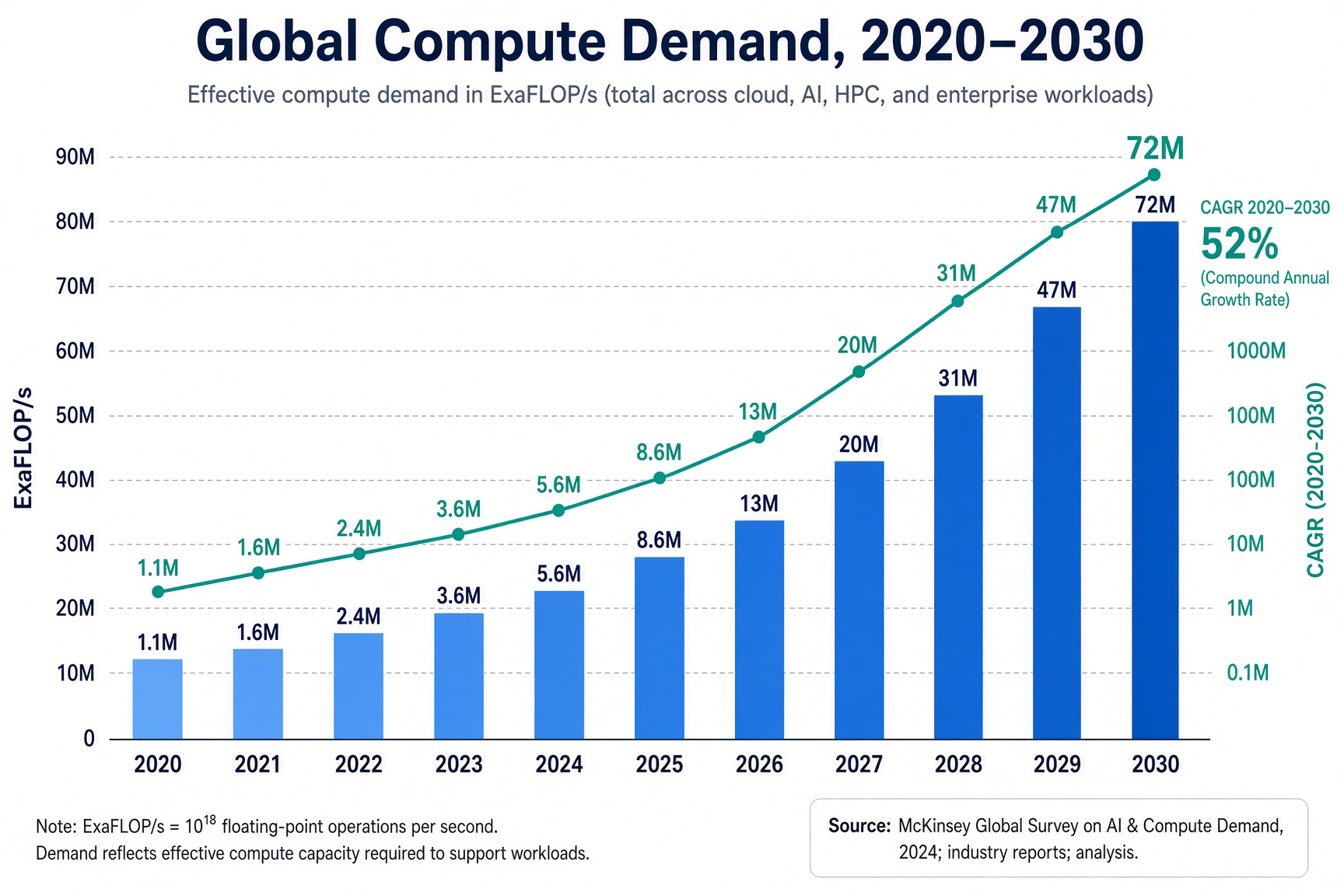
The 2030 Compute Landscape: GPUs, Power and the Architecture of Intelligence
The constraint on AI is no longer ideas or data but compute and the power to run it. Frontier training compute has grown about five times a year since 2020, and the leading AI supercomputer of June 2030 is on course for about 2 million chips and 9 gigawatts. Shayne Heffernan sets out the 2030 arithmetic, the power problem, who has already contracted the gigawatts, and how GPUs, custom ASICs, wafer-scale engines and quantum machines divide the work.

How Can You Trust AI When You Cannot Trust Humans?
Can you trust AI? Can you trust humans? More often than we like to admit, the answer is no. AI inherits its failures from the human records it is trained on. Sheikh Mohammed bin Rashid wrote this month that the currency the UAE is betting on is trust. This piece sets out what a trust layer has to do, shows the method on three public knowledge graphs, and lays out the post-quantum work KXCO has published so that an institution can check the claim rather than take it.
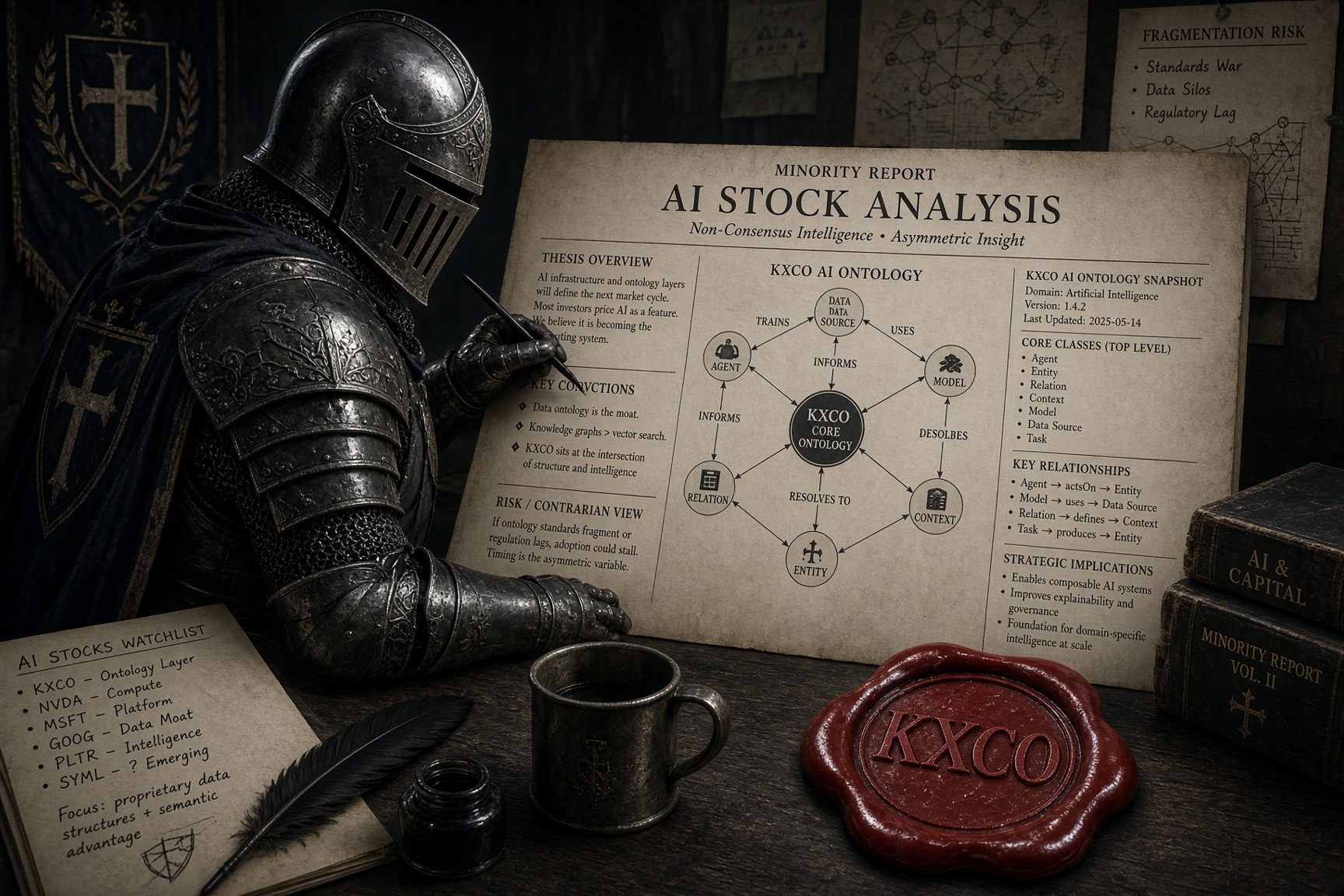
KXCO AI Ontology at 3 Months: What It Called and What Comes Next
On 19 July 2026 the Round Table's AI room published its first Analyst Outlook. To the 16 October 2026 close its 13 names rose 2.6% on an equal weight against 2.1% for QQQ, per StockAnalysis closes, and the six it opened with 35% or more of upside rose 8.6%. This piece lists the six names up more than 5%, the ten names I rate as opportunities now, the month's results in AI and quantum computing, and the official data showing that four in five firms have not yet started using AI.

Thoughts on Thinking: Physics, Biology and Thought
Thinking is not a faculty that sits on top of the body. It is the electrochemical activity of neurons, organised into rhythms whose frequencies are set by the time constants of channels, synapses and loops. Diet, light, noise, natural settings and 40 Hz drive can shift the balance, and an MIT study of essay writing found the weakest EEG connectivity in the group using a language model. The tools and the biology work on one resource: the capacity of a named person to form and defend a judgment.
Every story, signed and delivered.
Subscribe to the kxco channel and get the headline, the AI-written key takeaways, and the chain-anchor link the moment we publish. Audio versions and per-ticker subscriptions arrive in the next iteration.