
WW3: Israel Confirms Direct Attacks on Iran to Thwart Nuclear Weapons Program
TEL AVIV, Israel - Prime Minister Benjamin Netanyahu has broken Israel's traditional silence on its military operations against Iran, acknowledging on Thursday that the country is directly attacking the Islamic Republic and making every effort to prevent it from acquiring nuclear weapons.
Facing reporter questions about why Israel was focusing on Iran's proxies like Hamas, Netanyahu declared, "Who says we are not attacking Iran? We are attacking." This marks a significant shift in policy, as Israel rarely confirms such operations publicly.
The Prime Minister's statement comes amid heightened tensions following the October 7 Hamas attack near Gaza, in which Israel claims Iran played a role. The subsequent Israeli retaliation against Gaza has been devastating, with ongoing casualties exceeding 24,000.
Netanyahu reiterated his belief that Iran poses an existential threat to Israel, stating, "Imagine not what Iran can do to us, to destroy us." He insisted that any peace agreement with Hamas must grant Israel absolute security control over Gaza.
Iran has vehemently denied involvement in the October attack, calling such accusations "politically motivated." However, Israel and the US view Iran as a major destabilizing force in the region, supporting militant groups like Hamas, Hezbollah, and the Houthis.
While acknowledging past covert operations against Iran, Netanyahu's confirmation of ongoing direct attacks marks a stark escalation in the already volatile Middle Eastern conflict. His stance also underscores Israel's unwavering commitment to preventing Iran from attaining nuclear capabilities, a concern shared by the US and other Western nations.
With tensions at an all-time high, the world watches closely as Israel's direct targeting of Iran and its proxies in the region threatens to further destabilize the already fragile peace.
Key Points:
Netanyahu confirms ongoing direct attacks on Iran.
Israel justifies offensive based on claims of Iranian involvement in October attack and threat to its security.
Iran denies accusations and views Israeli actions as aggression.
Escalation raises concerns of wider regional conflict.
AI is the Neat Handwriting of the Illiterate
A model in the hands of someone who has read the filing and walked the plant is a clerk. The same model, speaking for someone who has done neither, is a disguise. On AI slop, phantom citations and factslop, why finish stopped being evidence of work, and the containment layer KXCO built so a machine cannot speak as the institution until a source is attached.
Worthship: Do Not Conform to the Age
Worthship is the older English word for worship, and it means to ascribe worth. Bishop Robert Barron preached Romans 12 on 30 August. This essay follows the text into the prison letters, and puts two questions to a graph: do the four readings of that Sunday agree, and was Paul free or in chains when he wrote about despair?
The Truth in All Its Ugliness Must Survive
A majority vote does not determine the truth. Consensus is a mood, gossip is a sport, and a model will write the pretty version for free. Why the ugly number has to survive, why a record beats a dashboard, and what KXCO was built to keep standing when the room changes its mind.
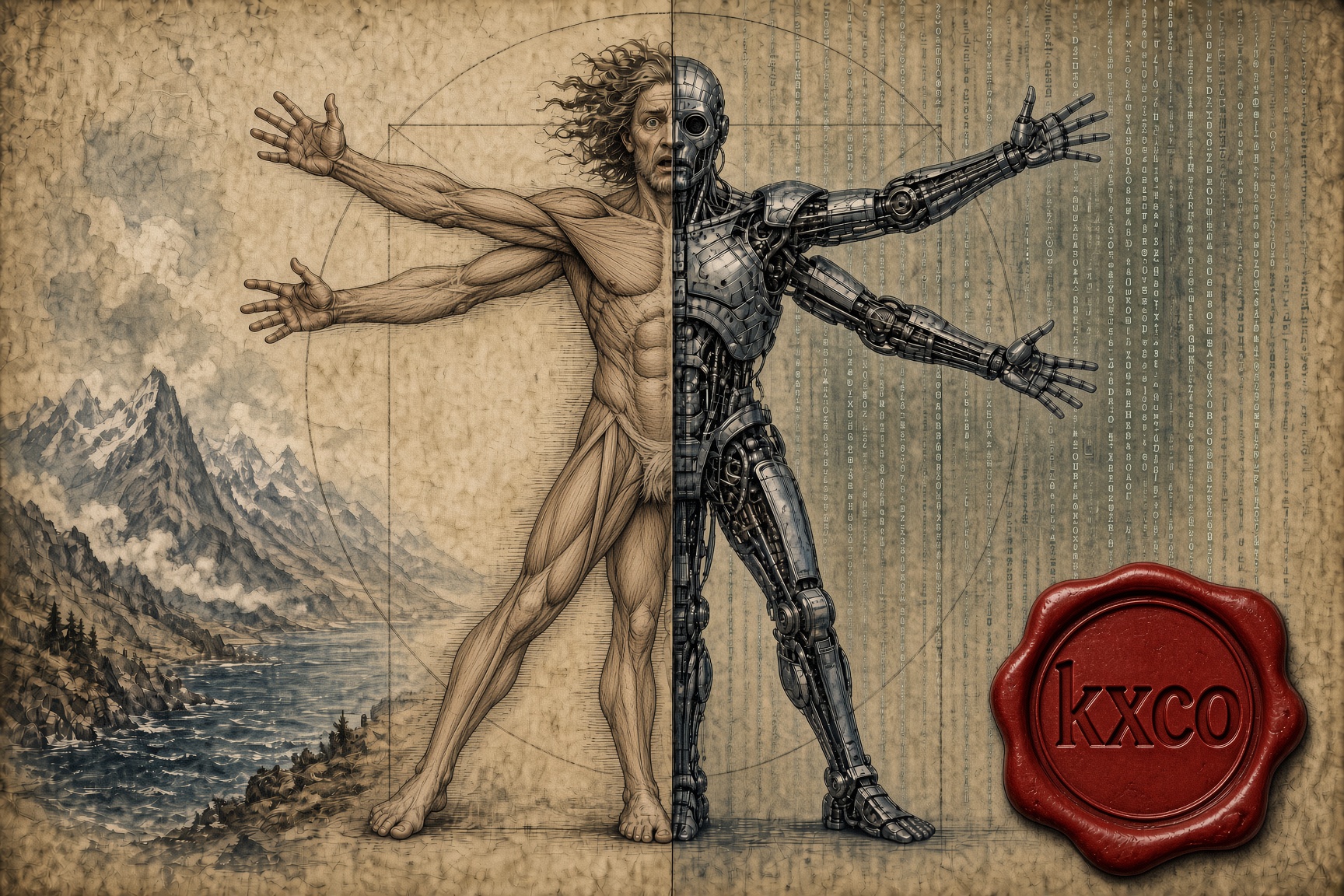
Don't Be the Best, Be the Only: Winning in an AI World
AI is repricing competence downward. What it cannot reproduce is a life. The case for remaining non-fungible, why friction still produces the best ideas, and what it means to build AI systems that keep the human intellect in them.
Every story, signed and delivered.
Subscribe to the kxco channel and get the headline, the AI-written key takeaways, and the chain-anchor link the moment we publish. Audio versions and per-ticker subscriptions arrive in the next iteration.