
We Must Kill the Military Industrial Complex, Killing the USD is a Good Start
The military-industrial complex (MIC) is a powerful force that has a significant influence on our government and our society. It is also a major driver of war and conflict around the world.
The MIC is a close-knit relationship between the government, the military, and the defense industry. The government provides funding for the military, and the military contracts with defense companies to develop and produce weapons and other military equipment. The defense industry then lobbies the government for more funding, and the cycle continues.
The MIC has a number of negative consequences. It leads to militarism, as governments are more likely to use military force to solve problems when they have a large and powerful military. It also diverts resources away from other important priorities, such as education, healthcare, and infrastructure. Additionally, the MIC can lead to corruption, as defense contractors have a vested interest in promoting military spending, even when it is not necessary.
We need to break the grip of the MIC on our government and our society. We need to invest in diplomacy and peacebuilding, rather than war and militarism. We also need to hold the defense industry accountable and ensure that it is not profiting from war and violence.
The military industrial complex is a self-perpetuating machine that feeds on fear and conflict. It is a parasite that consumes our resources and undermines our democracy.
Here are some things we can do to challenge the MIC:
Educate ourselves and others about the MIC and its negative consequences.
Support organizations that are working to promote peace and disarmament.
Hold our elected officials accountable and demand that they reduce military spending and invest in other priorities.
Boycott companies that are involved in the production of weapons and other military equipment.
It will not be easy to break the grip of the MIC, but it is essential that we do so if we want to create a more peaceful and just world.
The USD is the world's reserve currency, meaning that it is the most widely used currency in international trade and finance. This gives the US government a significant amount of power and influence over the global economy.
The MIC benefits from the USD's status as the world's reserve currency in a number of ways. First, it makes it easier for the US government to borrow money to fund the military. Second, it gives the US government more leverage in trade negotiations and other international disputes. Third, it allows the US government to impose sanctions on other countries by restricting their access to the US dollar.
The MIC also benefits from the fact that the US is the world's largest arms exporter. The US sells billions of dollars worth of weapons to other countries each year, and these sales are typically conducted in USD.
As a result of these factors, the USD is the currency of the MIC. The MIC depends on the USD to maintain its power and influence, and the USD benefits from the MIC's economic activity.
It is important to note that the MIC is not a monolithic entity. There are a variety of different companies and organizations that are involved in the MIC, and they have different interests and goals. However, they are all united by their desire to maintain and expand the US military's power and influence.
AI is the Neat Handwriting of the Illiterate
A model in the hands of someone who has read the filing and walked the plant is a clerk. The same model, speaking for someone who has done neither, is a disguise. On AI slop, phantom citations and factslop, why finish stopped being evidence of work, and the containment layer KXCO built so a machine cannot speak as the institution until a source is attached.
Worthship: Do Not Conform to the Age
Worthship is the older English word for worship, and it means to ascribe worth. Bishop Robert Barron preached Romans 12 on 30 August. This essay follows the text into the prison letters, and puts two questions to a graph: do the four readings of that Sunday agree, and was Paul free or in chains when he wrote about despair?
The Truth in All Its Ugliness Must Survive
A majority vote does not determine the truth. Consensus is a mood, gossip is a sport, and a model will write the pretty version for free. Why the ugly number has to survive, why a record beats a dashboard, and what KXCO was built to keep standing when the room changes its mind.
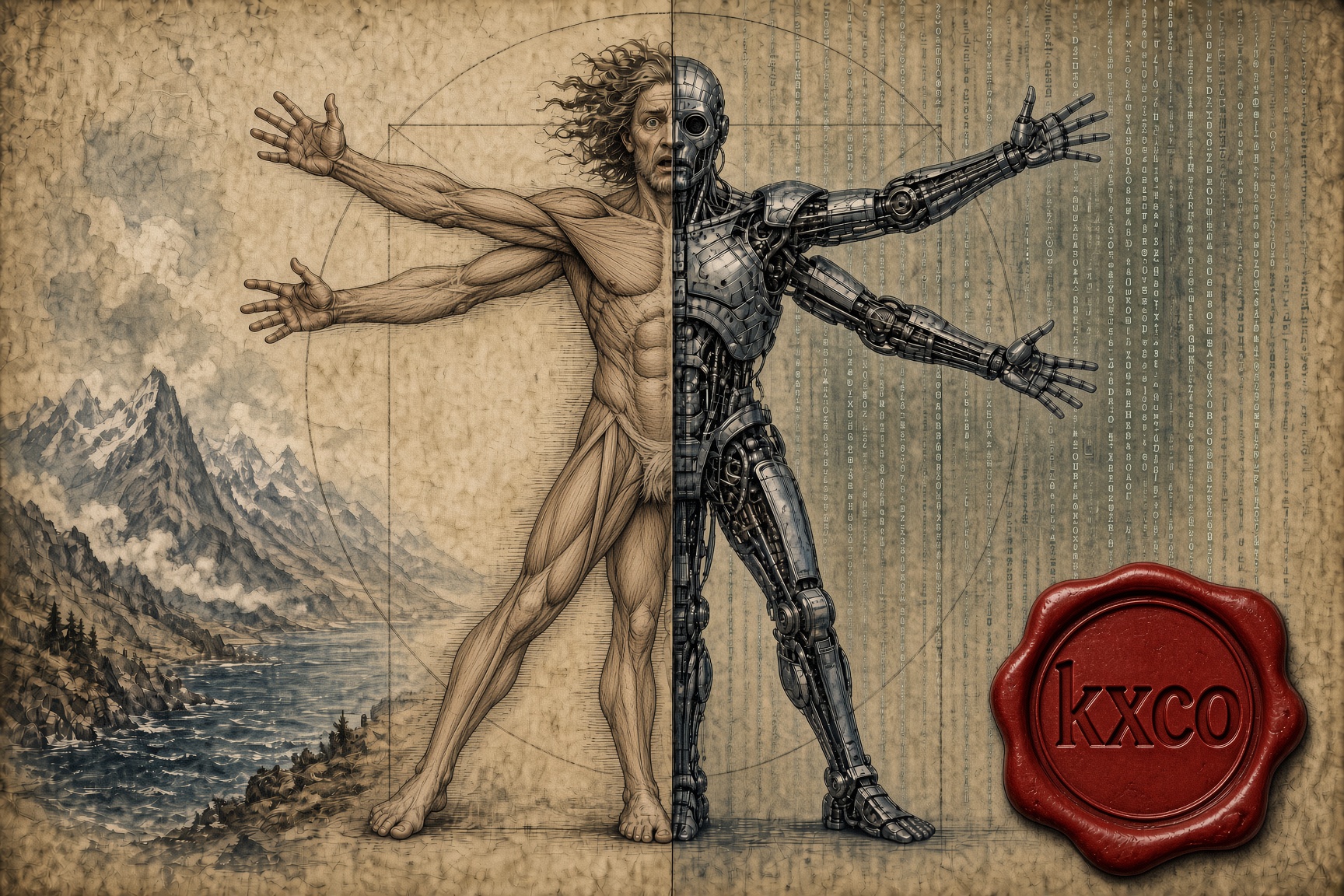
Don't Be the Best, Be the Only: Winning in an AI World
AI is repricing competence downward. What it cannot reproduce is a life. The case for remaining non-fungible, why friction still produces the best ideas, and what it means to build AI systems that keep the human intellect in them.
Every story, signed and delivered.
Subscribe to the kxco channel and get the headline, the AI-written key takeaways, and the chain-anchor link the moment we publish. Audio versions and per-ticker subscriptions arrive in the next iteration.