
Warner Music Head of NFTs and AI Departs: What This Means for the Future
According to a recent report, Warner Music’s Head of NFTs and AI, Oana Ruxandra, has departed the company. Ruxandra was responsible for spearheading Warner Music’s embrace of emerging technologies, including NFTs and AI.
Under Ruxandra’s leadership, Warner Music partnered with several blockchain-backed companies and projects, including OpenSea, Rarible, and Nifty Gateway. These initiatives were focused on forging closer ties between music artists and their fanbases.
For example, Warner Music partnered with OpenSea to launch a marketplace for music NFTs. The company also partnered with Rarible to launch a series of music NFT collections. And Warner Music partnered with Nifty Gateway to drop exclusive music NFTs from artists like Lil Pump and Grimes.
Ruxandra’s departure comes at a time when the music industry is still grappling with the potential of NFTs and AI. However, Warner Music’s commitment to these technologies remains strong. The company has already announced plans to continue investing in NFTs and AI in the coming months and years.
What does this mean for the future of NFTs and AI in the music industry?
Ruxandra’s departure is a setback for Warner Music’s NFT and AI initiatives. However, it is unlikely to derail the company’s long-term plans in these areas. Warner Music has already invested heavily in NFTs and AI, and it is committed to making these technologies a core part of its business strategy.
Other major music companies are also investing in NFTs and AI. For example, Universal Music Group has launched its own NFT marketplace, and Sony Music Group has partnered with several blockchain-backed companies.
The growing interest in NFTs and AI from major music companies is a sign that these technologies have the potential to revolutionize the music industry. NFTs can be used to create new revenue streams for artists, and AI can be used to personalize the music experience for fans.
It is still too early to say what the long-term impact of NFTs and AI on the music industry will be. However, it is clear that these technologies are here to stay. And Warner Music is at the forefront of this innovation.

AI Is Taking What You Publish and What You Type
Common Crawl holds more than 300 billion web pages, and 52 per cent of crawler requests on Cloudflare's network in June 2026 were for AI training. Models can give back what they took in: one chatbot reproduced 76.8 per cent of the first Harry Potter book near word for word. A US court ordered OpenAI to give the New York Times 20 million anonymised ChatGPT logs. This KXCO warning sets out what is exposed, what to do now, and how each KXCO client runs its own AI inside its own walls.

Industrialising Intelligence: Demand, Scarcity and the Boundary of Sovereignty
AI agents generate 80% of OpenRouter's tokens, about seven times human use, and Google's monthly tokens rose about 330 times in two years to over 3.2 quadrillion. In my view the limit on AI demand has moved from people to power: the International Energy Agency expects data-centre electricity to reach around 945 terawatt-hours by 2030. Execution is becoming a utility. Selection is not. KXCO builds the boundary that keeps the decision with a named person and lets another party check the record.

Democrats' AI Spending Curtailment: The Dumbest Idea in Washington
After the midterm sweep, Democrats want to slow America's AI build-out. The Sanders and Ocasio-Cortez bill would freeze building and upgrading of AI data centres nationwide, and a superintelligence ban Rep. Yassamin Ansari wants atop the agenda would pause every model trained with 10^25 operations or more. Governors-elect in Texas and Georgia back pauses, and Goldman Sachs puts 45% of planned capacity in Democrat-run states backing moratoriums. Shayne Heffernan: AI computing follows the power.
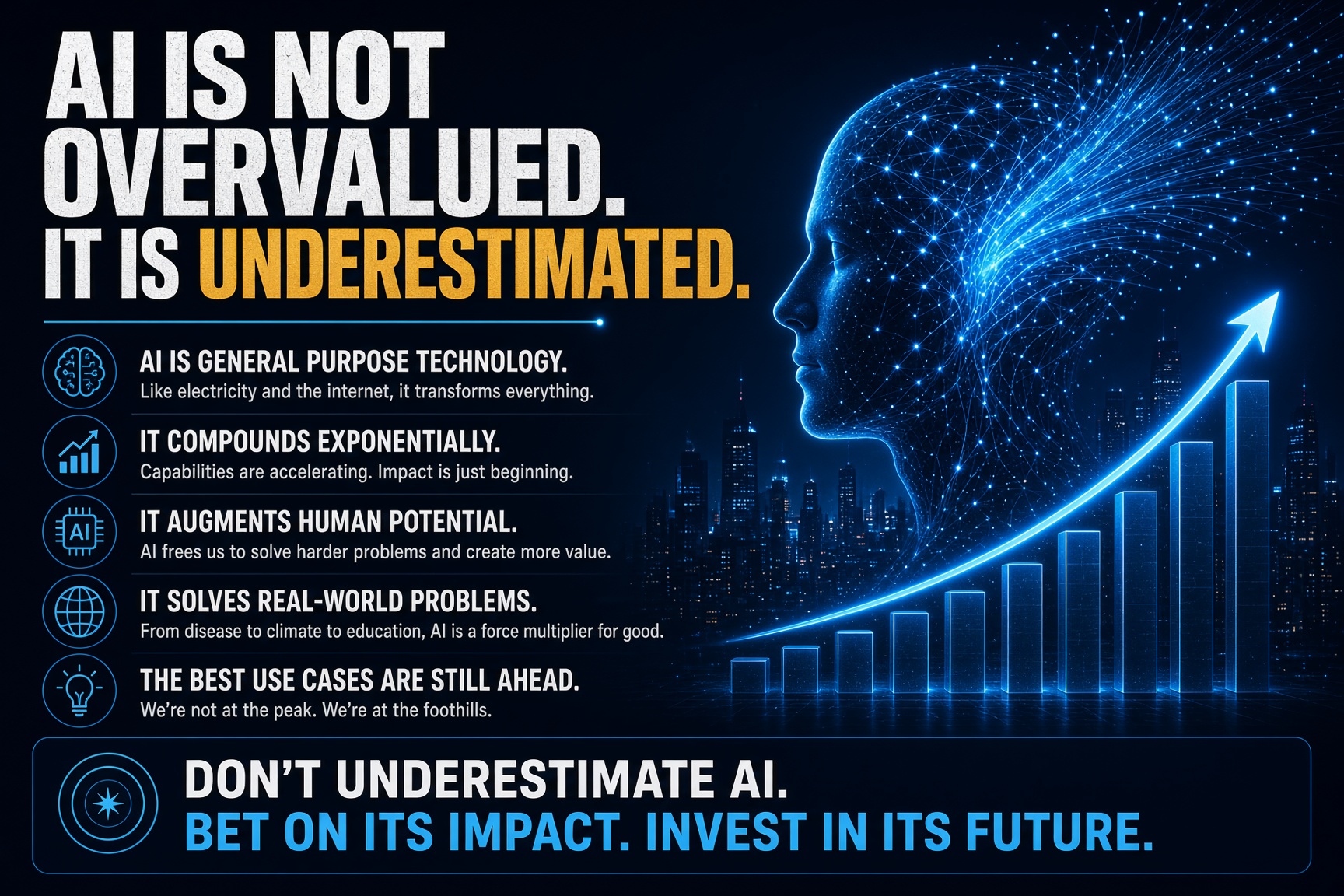
AI Is Not Overvalued. It Is Underestimated.
Markets debate whether artificial intelligence (AI) is overvalued. Shayne Heffernan argues the more material risk is underestimation. Alphabet's capital expenditure reached $51.4 billion in the third quarter, Google Cloud revenue rose 103% to $30.7 billion and the Cloud backlog stands at $561 billion, per its 28 October results and earnings call. Jurisdictions that block data centres do not remove the demand: they import the capability later, at a higher price.
Every story, signed and delivered.
Subscribe to the kxco channel and get the headline, the AI-written key takeaways, and the chain-anchor link the moment we publish. Audio versions and per-ticker subscriptions arrive in the next iteration.