
U.S. SEC labeled Binance Stablecoin as Unregistered Security
In Feb. 13, the U.S. Securities and Exchange Commission (SEC) told the Paxos Trust Company, the firm that backs up Binance's stablecoin, that they should have registered the product as a security. Regulators are planning to act against the platform.
"Prepared to vigorously litigate if necessary" responded Paxos in a statement on Monday with the disagreement of the SEC's allegations on Binance USD.
Even though the chairperson of the SEC Gary Gensler has stated that believes that there are securtes on some stablecoins, yet the allegations represent the SEC's first move on stablecoins.
Paxos announcement came just hours after the New York Department of Financial Services (NYDFS) prohibited Paxos from minting Binance USD in a consumer alert, citing "unresolved issues" between Paxos and Binance. According to the press release by Paxos, Biannce USD, a token which has traditional cash and U.S Treasury back up, will be stop issuing from Feb. 21. However, the support and redemption of the token's services will be effective until at least Feb. 2024.
A spokesperson from NYDFS has stated to the Reuters via email that Paxos had breached its requirements for "tailored, periodic risk assessments" and it's necessary to stop "bad actors from using the platform" with due diligence checks on Binance and Binance USD customers.
The SEC served a notice on Paxos on Monday, and the business answered that "there are clearly no more claims" against it. "Paxos has always prioritized the security of its clients' assets," Paxos added.
The agency did not necessarily comment on the possibility of such an inquiry according to an SEC representative.
Stablecoin
Most digital tokens are market-dependent; however, stablecoins are distinguished by the fact that the tokens themselves are often backed by traditional assets such as USD, money with a solid and stable value. With the evolution, stablecoins have emerged into a key cogs in the crypto economy. Although stablecoins are used for trading among volatile tokens such as Ethereum and bitcoin, they also assist to safeguard customer funds from inflation in some emerging economies.
According to the analysts, the lost against the New York regulator and the notice issued by the NYDFS will create a huge setback on Binance's appeal from the large investor meanwhile restraining Binance from gaining market share against other larger stablecoins such as Tether and USD Coin.
"It is a significant setback for Binance," said Ivan Kachkovski, FX and crypto strategist at UBS. He also stated that Binance is still looking for a U.S.-based partner for its stablecoin since "the latter is necessary in the wake of U.S. regulation on stablecoins, which is coming sooner rather than later."
The "Dollar of Crypto" Race has Begun
As of Feb. 14, the third largest stablecoin in the market is Binance USD, with approximately $15.7 billion in circulation along with the seventh biggest cryptocurrency in the market behind the two stablecoin market leader, Tether and USD Coin, according to the CoinMarketCap.
Changpeng Zhao, Binance CEO, has responded towards the issues given by the regulators with a series of tweets on Monday. He believes the regulator's decision was intended to indicate that the "BUSD market cap will only drop over time," along with Paxos' promise to Binance that the money was fully covered by the company's bank reserves.
https://twitter.com/cz_binance/status/1625067487984340993?s=20
According to Zhao, Binance would "continue to support BUSD for the foreseeable future," meanwhile he predicts that users would shift to "other stablecoins over time."
Previously, Binance has reported that they regularly cooperate with the regulatory agencies to address doubt and questions that they might have. However, a report given by Reuters previously stated that the Justice department is investigating Binance on suspicion of possible money laundering and sanctions breaches. Thus, the NYDFS move comes amid a wider crackdown by US regulators on cryptocurrencies and Binance which was first reported by the Wall Street Journal.
To find out more please speak to a professional in Cryptocurrency, contact KXCO.IO.
Read More
Wirex join forces with Visa: Expanding services to APAC
Digital Erasure, and Why KXCO Matters
Pew found 38 percent of 2013's web pages gone a decade later, and quantum computing will eventually let attackers forge the signatures that prove records authentic. Why durable history now depends on post-quantum cryptography, on-chain anchoring and verification that needs nobody's permission.

Your AI Agent Can Now Own a Wallet — and Keep It
The wallet has always assumed a person is holding the phone. Autonomous AI agents break that assumption. Shayne Heffernan on the self-custodial, quantum-secure wallet built so a machine can own value — and the one line where regulation begins.
Quantum, AI and the Trust Problem Markets Aren't Pricing
Quantum computing and AI agents are usually traded as separate stories. They are one story, and it is about trust. Shayne Heffernan on why the financial system needs verifiable infrastructure before the volume of machine transactions makes retrofitting impossible.
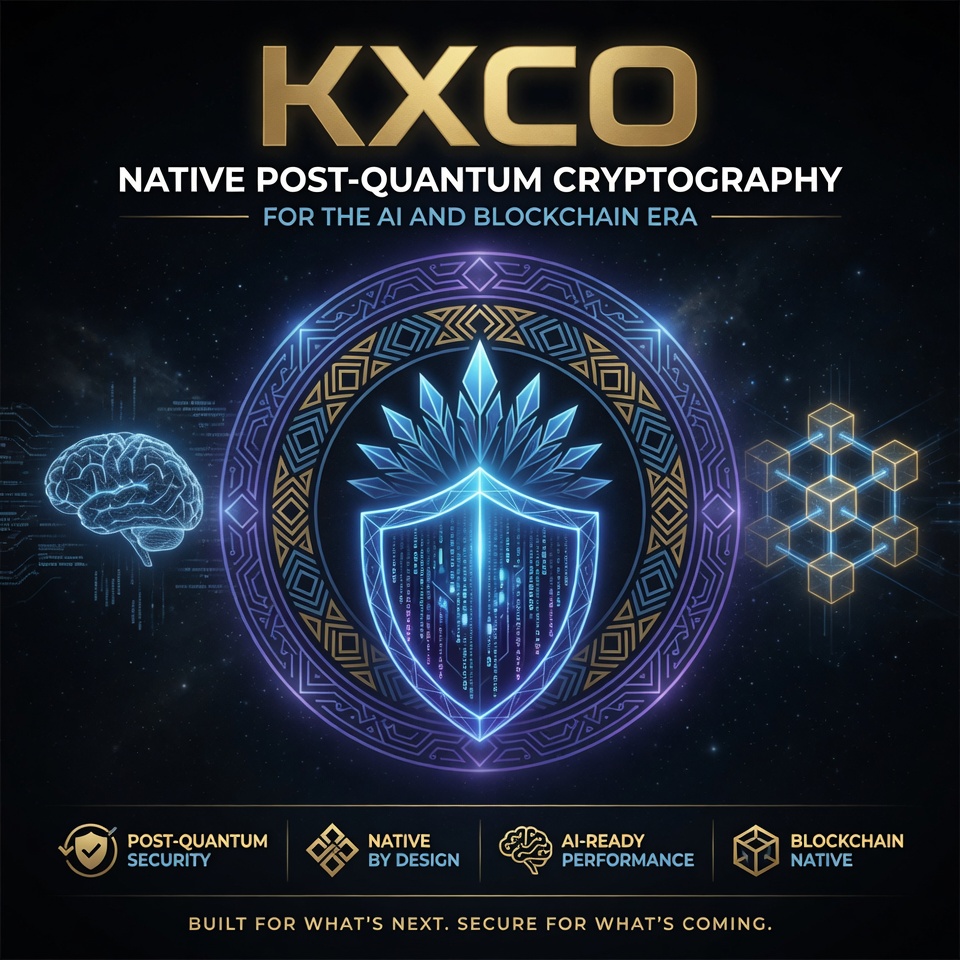
KXCO: Native Post-Quantum Cryptography for the AI and Blockchain Era
KXCO builds NIST FIPS 204 post-quantum cryptography natively into hosting, document signing and identity — including verifiable identity for AI agents.
Every story, signed and delivered.
Subscribe to the kxco channel and get the headline, the AI-written key takeaways, and the chain-anchor link the moment we publish. Audio versions and per-ticker subscriptions arrive in the next iteration.