
Top 10 Cryptocurrency Business Models: A Comprehensive Guide
Introduction: The world of cryptocurrency is expanding at a rapid pace, with new digital currencies and business models emerging every day. To help you understand the cryptocurrency business models, we've put together a comprehensive guide to the top 10 cryptocurrencies. This guide will cover the key features and benefits of each model and explain how it can be used to build a successful business.
#1: Decentralized exchanges (DEXs) A decentralized exchange (DEX) is a platform that enables the trading of cryptocurrencies without the need for a central authority. DEXs are decentralized, meaning that they are not controlled by any single entity. They use smart contracts to enforce trades, ensuring that users have full control over their funds. The key benefit of a DEX is that it eliminates the risk of centralized exchanges being hacked or manipulated.
#2: Stablecoins Stablecoins are digital currencies that are pegged to a fiat currency, such as the US dollar, or to a basket of assets. The aim of stablecoins is to provide a more stable and secure cryptocurrency that is less prone to price volatility than traditional cryptocurrencies. Stablecoins can be used as a means of payment, a store of value, and as a hedge against market volatility.
#3: Security tokens Security tokens are digital assets that represent ownership in an underlying asset, such as stocks, bonds, real estate, or other forms of property. Security tokens are created using blockchain technology and can be traded on decentralized exchanges. The key benefit of security tokens is that they enable faster, more secure, and more efficient transactions than traditional securities.
#4: Decentralized finance (DeFi) Decentralized finance (DeFi) refers to a growing ecosystem of financial services built on top of blockchain technology. DeFi services include lending, borrowing, and trading platforms, as well as insurance and investment products. The key benefit of DeFi is that it enables users to access financial services without the need for intermediaries, reducing costs and increasing efficiency.
#5: NFTs Non-fungible tokens (NFTs) are digital assets that are unique and cannot be replicated. NFTs are used to represent digital art, collectibles, and other forms of digital content. The key benefit of NFTs is that they provide a secure and transparent way of owning and trading digital assets.
#6: Privacy coins Privacy coins are digital currencies that use encryption and anonymization techniques to protect the privacy of users. Privacy coins are designed to provide users with greater financial privacy and security, and can be used for a range of purposes, including online transactions and payments.
#7: Platform coins Platform coins are digital currencies that are used as the native currency of a blockchain platform. Platform coins are used to pay for transactions, access services, and secure the network. They can also be used as a store of value and as a means of payment.
#8: Utility tokens Utility tokens are digital currencies that are used to access services or goods within a blockchain platform. Utility tokens are often used as a way of incentivizing users to participate in a network, and can also be used as a means of payment.
#9: Staking coins Staking coins are digital currencies that reward users for holding and supporting the network. Staking coins are used to secure blockchain networks and to enable faster and more efficient transactions.
#10: Mining coins Mining coins are digital currencies that are created through the process of mining. Mining coins reward users for verifying and adding transactions to the blockchain. The key benefit of mining coins is that they provide users with a way to generate passive income.
BONUS
FBX is not only a currency offering 7/10 of these including Staking, Utility, Platform, etc but will also be completely inflation-proof. Learn more at Finance Blocks - FBX By KXCO and buy on 0.01977 | Trade FBX/USDT FBX on MEXC Exchange.

Digital Erasure, and Why KXCO Matters
Pew found 38 percent of 2013's web pages gone a decade later, and quantum computing will eventually let attackers forge the signatures that prove records authentic. Why durable history now depends on post-quantum cryptography, on-chain anchoring and verification that needs nobody's permission.

Economic Calendar and Trading Strategies for the Week Ahead: July 20–24, 2026
A pivotal week for markets: Iran's closure of the Strait of Hormuz sends crude above $86 and gasoline over $5, while Alphabet, Tesla and Intel earnings test the AI trade. Full economic calendar plus trading strategies across oil, gold, Bitcoin, FX and AI chip stocks.
Economic Calendar and Trading Strategies for the Week Ahead: July 14–18, 2026
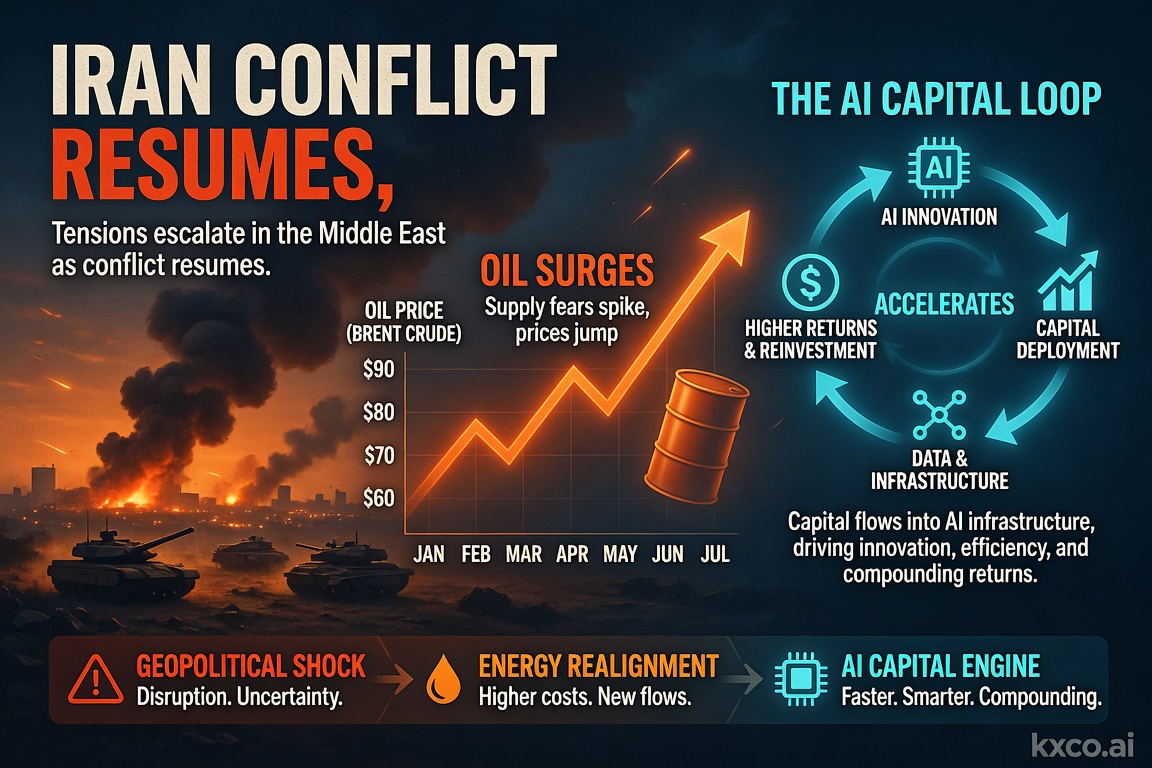
A pivotal week for markets: US strikes on Iran reignite the oil risk premium, June CPI and retail sales test the Fed's rate-cut path, and the $1 trillion AI capital loop keeps driving the tech trade. Full economic calendar plus trading strategies across oil, gold, Bitcoin, FX and AI stocks.
Quantum Computing Just Became an Institutional Risk
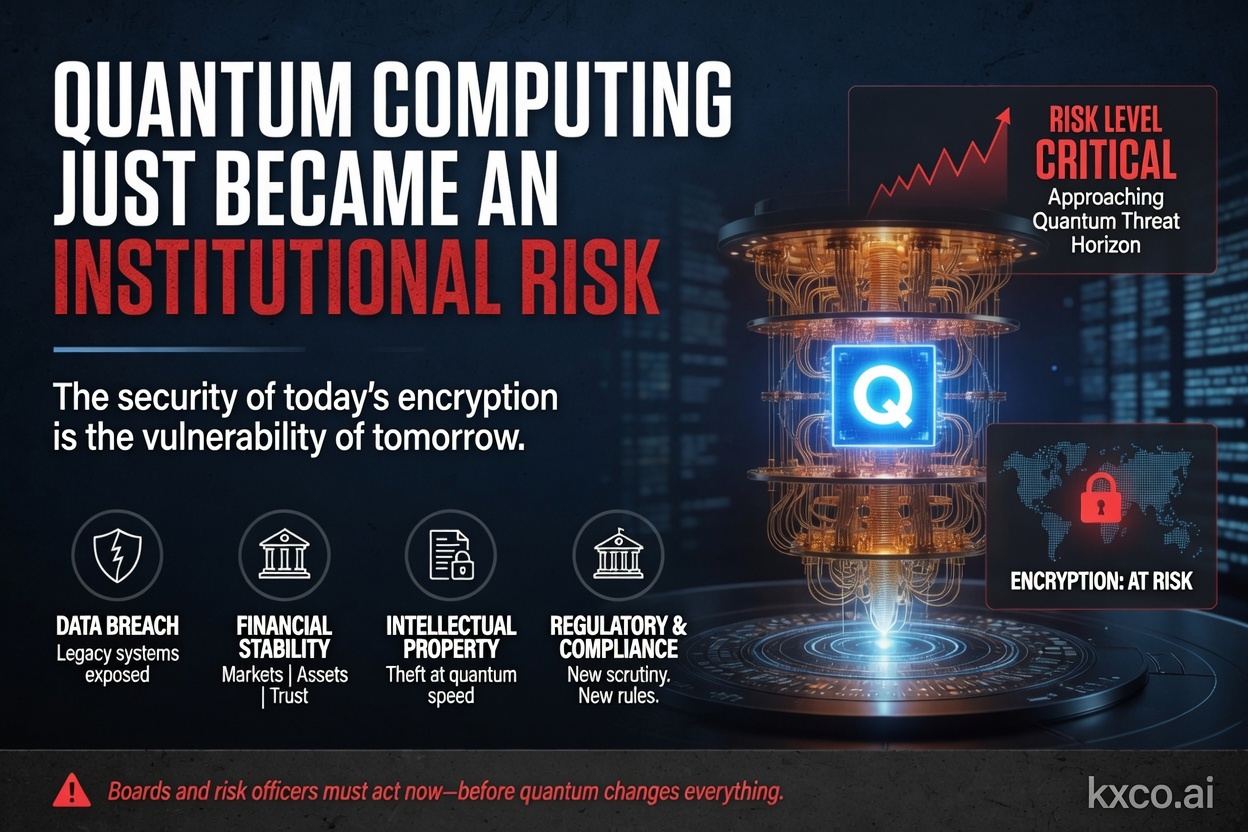
Shayne Heffernan on BlackRock's quantum-computing warning for Bitcoin and Ethereum, Google's cryptanalysis research, the two on-chain risk vectors, and how KXCO's Armature L1 — post-quantum from genesis, coordinated by its ontology — answers a threat that just went institutional.
Every story, signed and delivered.
Subscribe to the kxco channel and get the headline, the AI-written key takeaways, and the chain-anchor link the moment we publish. Audio versions and per-ticker subscriptions arrive in the next iteration.