
This is Bitcoin Mining
#bitcoin #mining #blockchain
"It is the only way to release new cryptocurrency into circulation"-- Paul Ebeling
By mining, you can earn cryptocurrency without having to put down money for it.
Bitcoin miners receive Bitcoin as a reward for completing "blocks" of verified transactions, which are added to the blockchain.
Mining rewards are paid to the miner who discovers a solution to a complex hashing puzzle first, and the probability that a participant will be the one to discover the solution is related to the portion of the total mining power on the network.
You need either a GPU (graphics processing unit) or an application-specific integrated circuit (ASIC) in order to set up a mining rig.
This is What You Need to Mine Bitcoins
Although early on in Bitcoin's history individuals may have been able to compete for blocks with a regular at-home personal computer, this is no longer the case. The reason for this is that the difficulty of mining Bitcoin changes over time.
In order to ensure the smooth functioning of the blockchain and its ability to process and verify transactions, the Bitcoin network aims to have one block produced every 10 mins or so. However, if there are 1-M mining rigs competing to solve the hash problem, they will reach a solution faster than a scenario in which 10 mining rigs are working on the same problem. For that reason, Bitcoin is designed to evaluate and adjust the difficulty of mining every 2,016 blocks, or roughly every 2 wks.
When there is more computing power collectively working to mine for bitcoins, the difficulty level of mining increases in order to keep block production at a stable rate. Less computing power means the difficulty level decreases. At today's network size, a personal computer mining for bitcoin will find nothing.
So, in order to mine competitively, miners must now invest in powerful computer equipment like a GPU (graphics processing unit) or, more realistically, an application-specific integrated circuit (ASIC). These can run from $500 to the tens of thousands. Some miners—particularly Ethereum miners—buy individual graphics cards (GPUs) as a low-cost way to cobble together mining operations.
Miners have to factor in the costs associated with expensive equipment necessary to stand a chance of solving a hash problem. And they must consider the significant amount of electrical power mining rigs utilize in generating vast quantities of nonces in search of the solution. All told, Bitcoin mining is unprofitable for individual miners as of this writing.
Have a prosperous day, Keep the Faith!
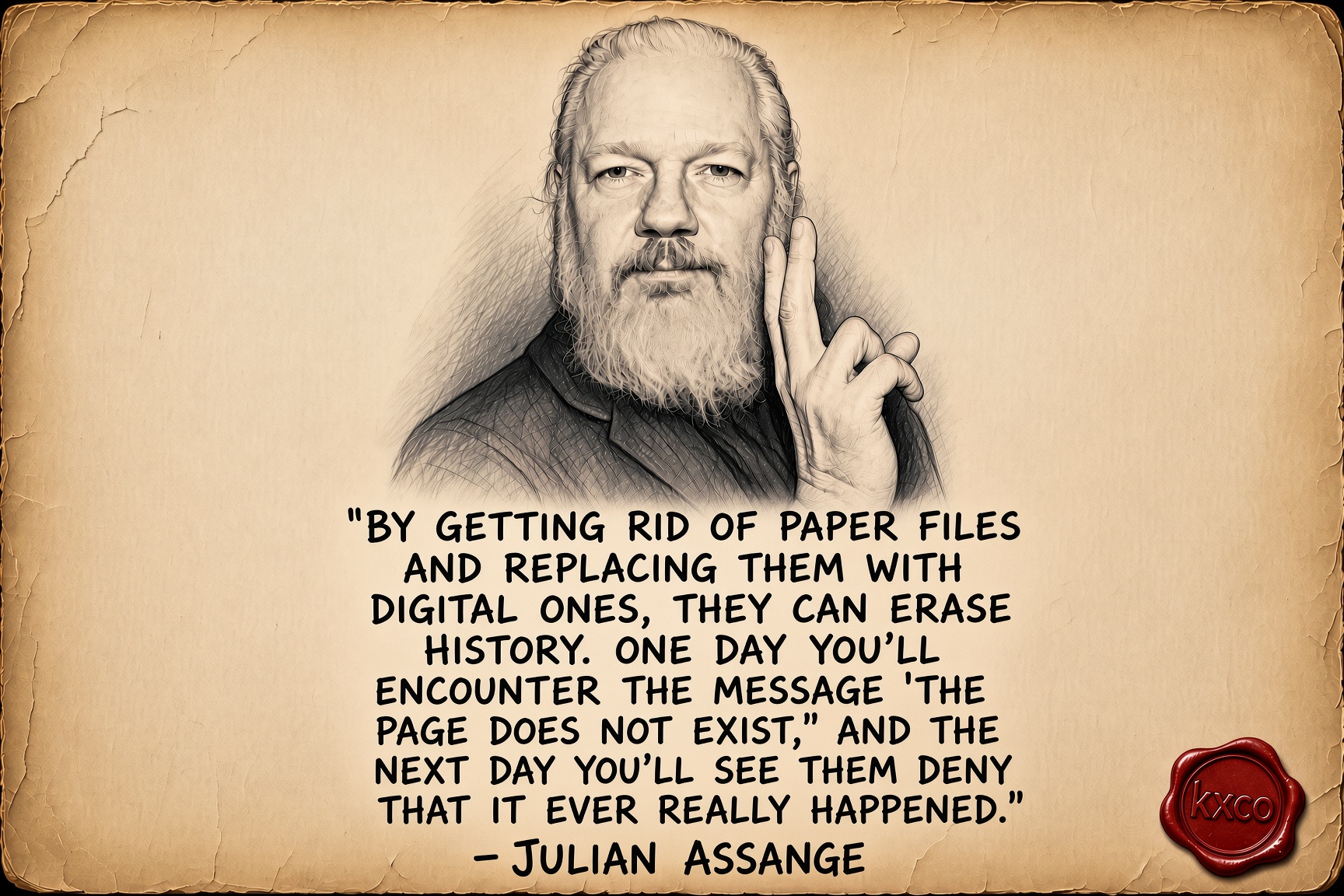
Digital Erasure, and Why KXCO Matters
Pew found 38 percent of 2013's web pages gone a decade later, and quantum computing will eventually let attackers forge the signatures that prove records authentic. Why durable history now depends on post-quantum cryptography, on-chain anchoring and verification that needs nobody's permission.
Economic Calendar and Trading Strategies for the Week Ahead: July 20–24, 2026
A pivotal week for markets: Iran's closure of the Strait of Hormuz sends crude above $86 and gasoline over $5, while Alphabet, Tesla and Intel earnings test the AI trade. Full economic calendar plus trading strategies across oil, gold, Bitcoin, FX and AI chip stocks.
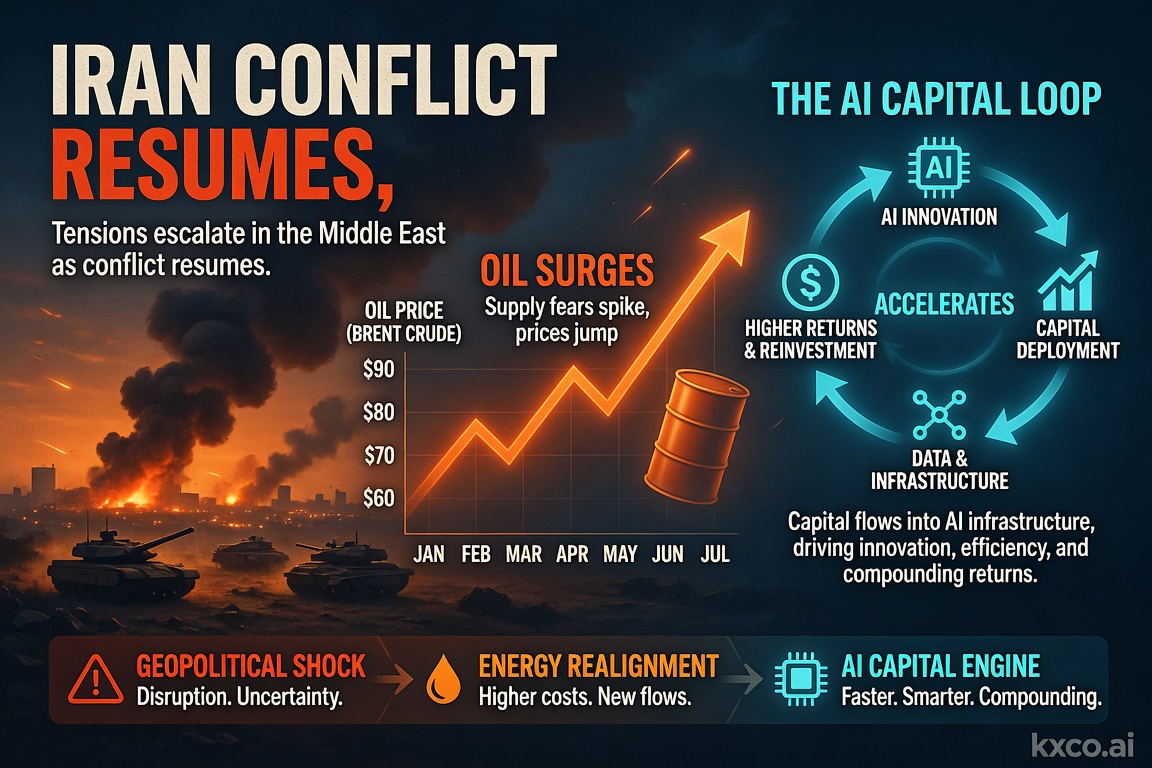
Economic Calendar and Trading Strategies for the Week Ahead: July 14–18, 2026
A pivotal week for markets: US strikes on Iran reignite the oil risk premium, June CPI and retail sales test the Fed's rate-cut path, and the $1 trillion AI capital loop keeps driving the tech trade. Full economic calendar plus trading strategies across oil, gold, Bitcoin, FX and AI stocks.
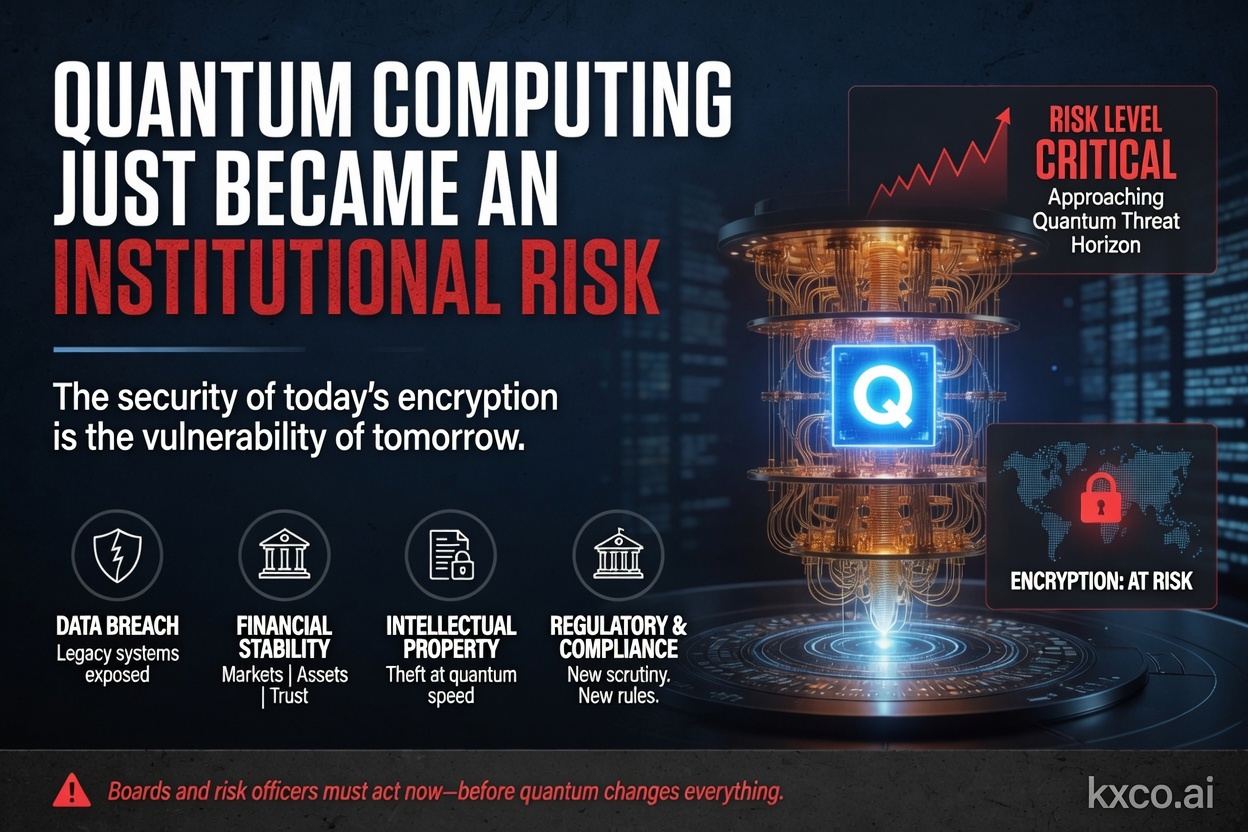
Quantum Computing Just Became an Institutional Risk
Shayne Heffernan on BlackRock's quantum-computing warning for Bitcoin and Ethereum, Google's cryptanalysis research, the two on-chain risk vectors, and how KXCO's Armature L1 — post-quantum from genesis, coordinated by its ontology — answers a threat that just went institutional.
Every story, signed and delivered.
Subscribe to the kxco channel and get the headline, the AI-written key takeaways, and the chain-anchor link the moment we publish. Audio versions and per-ticker subscriptions arrive in the next iteration.