
The Things I hate About Crypto
The Magical World of Crypto! Where the laws of economics, the realities of business and boring hard work disappear.
Unfortunately there is no such thing, let's go through and start to demystify some Cryptononsense.
Facts
Startup Failure Rates
About 90% of startups fail. 10% of startups fail within the first year. Across all industries, startup failure rates seem to be close to the same. Failure is most common for startups during years two through five, with 70% falling into this category.
According to business owners, reasons for failure include money running out, being in the wrong market, a lack of research, bad partnerships, ineffective marketing, and not being an expert in the industry. Ways to avoid failing include setting goals, accurate research, loving the work, and not quitting.
So maybe you were not "rugged", scammed or whatever other excuse you give yourself for your bad research and bad choices. Perhaps the answer would have been to divide your risk over a great many more projects, looked really hard in to the details and ignored industry rubbish like Tokenomics and Staking.
Tokenomics
Word of the Day Ponzinomics (also known as tokenomics) refers to the study of the design and use of tokens within a blockchain-based network to encourage buy and hold at a massive cost to the base coin resulting in dilution of biblical proportions. Ponzinomics is comprised of the economic incentives and disincentives associated with the use of tokens as a means of payment for goods and services, as well as the economic effects of the token's design, issuance, and circulation. Ponzinomics is a crucial element of any successful blockchain-based ponzi or pyramid scheme, as it dictates the point at which project's token and the overall economic sustainability of the project collapse.
Have a look at how much of the raise is going to the business and how much is "undefined" that will answer the scam question.
Community Driven Project = Ponzi
A Ponzi scheme is an investment fraud that involves the payment of returns to existing investors from funds contributed by new investors. The scheme relies on the continuous recruitment of new investors in order to sustain itself.
The scheme typically offers abnormally high returns on initial investments and often uses a “pyramid” structure, meaning that earlier investors receive returns from the investments of subsequent investors. In order for a Ponzi scheme to continue, it must attract new investors and increase the funds available for distributing returns.
The scheme does this by enticing new investors with promises of abnormally high returns and by using the funds from new investors to pay returns to earlier investors.
Eventually, the scheme will collapse when there are no more new investors or when the scheme is no longer able to pay returns to its earlier investors. When this happens, the earlier investors will lose all of their investment and the scheme will be exposed as a fraud.
Staking
Staking is completely misused.
I lock up my Tokens for a period for more of the same tokens or some other token. So it is a dilution for holders and an increase of the costs of the project. Tokens being locked up to generate a higher short term value, WHY? Why would anyone spend money for a short term price gain unless they were selling tokens in to the market? If it is being done to secure a financing, then what does that financing look like and what is the total cost of funds including the staking dilution.
The Value is in the Product
Factors that can influence the value of a Token include its earnings, cash flow, asset base, competitive advantages, and its strategic position in the market. Additionally, the company's management team and the quality of its products and services can also affect its market value. Influencers, community and hype are short lived bubbles not long term value.

Economic Calendar and Trading Strategies for the Week Ahead: July 20–24, 2026
A pivotal week for markets: Iran's closure of the Strait of Hormuz sends crude above $86 and gasoline over $5, while Alphabet, Tesla and Intel earnings test the AI trade. Full economic calendar plus trading strategies across oil, gold, Bitcoin, FX and AI chip stocks.
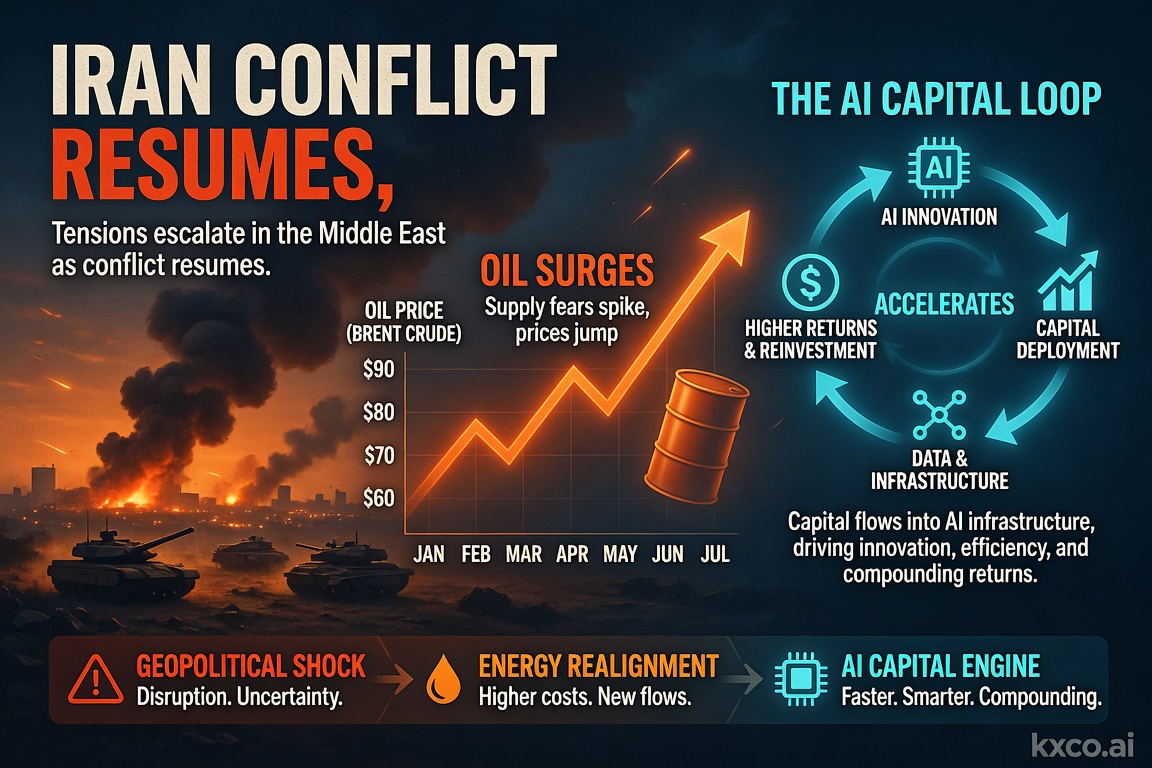
Economic Calendar and Trading Strategies for the Week Ahead: July 14–18, 2026
A pivotal week for markets: US strikes on Iran reignite the oil risk premium, June CPI and retail sales test the Fed's rate-cut path, and the $1 trillion AI capital loop keeps driving the tech trade. Full economic calendar plus trading strategies across oil, gold, Bitcoin, FX and AI stocks.
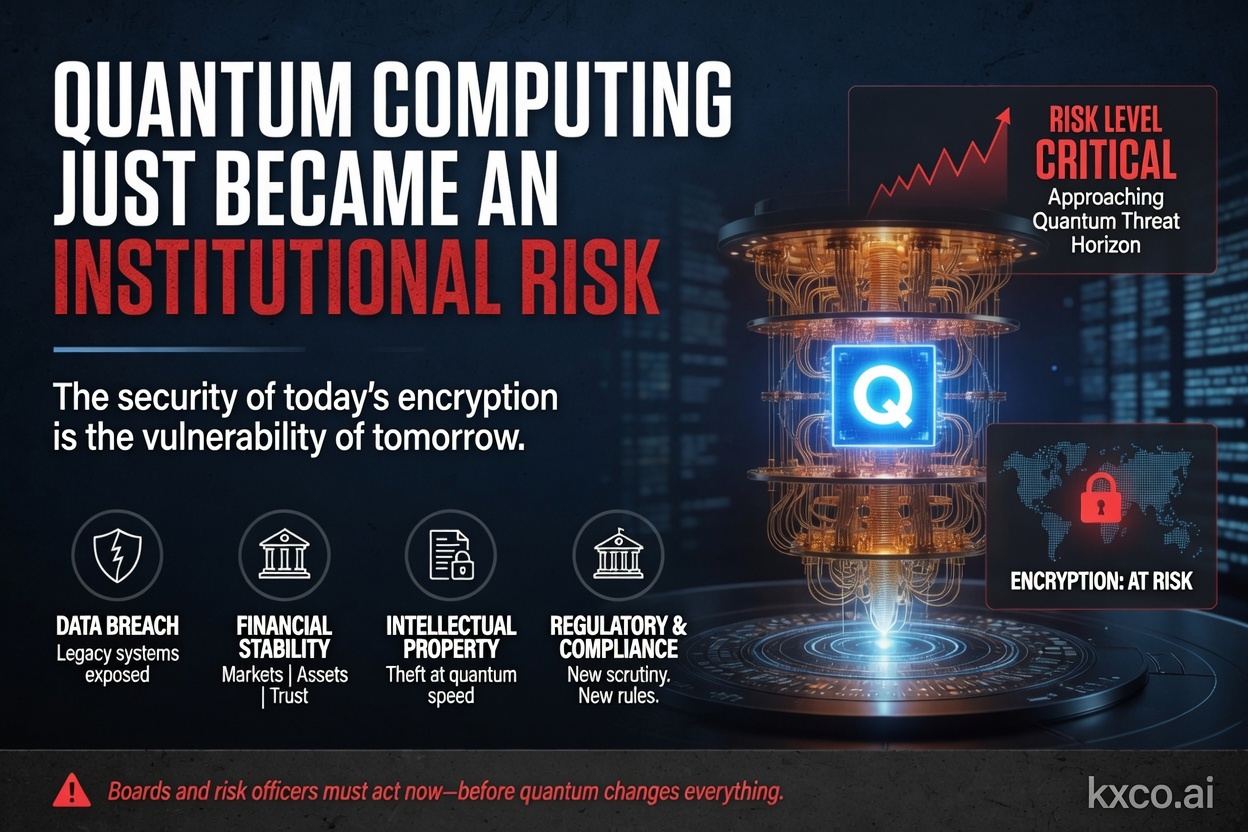
Quantum Computing Just Became an Institutional Risk
Shayne Heffernan on BlackRock's quantum-computing warning for Bitcoin and Ethereum, Google's cryptanalysis research, the two on-chain risk vectors, and how KXCO's Armature L1 — post-quantum from genesis, coordinated by its ontology — answers a threat that just went institutional.
Quantum, AI and the Trust Problem Markets Aren't Pricing
Quantum computing and AI agents are usually traded as separate stories. They are one story, and it is about trust. Shayne Heffernan on why the financial system needs verifiable infrastructure before the volume of machine transactions makes retrofitting impossible.
Every story, signed and delivered.
Subscribe to the kxco channel and get the headline, the AI-written key takeaways, and the chain-anchor link the moment we publish. Audio versions and per-ticker subscriptions arrive in the next iteration.