
Quantum, AI and the Trust Problem Markets Aren't Pricing
Two clocks are running at once - the quantum deadline and the rise of AI as an economic actor. Both point at the same missing layer: infrastructure that lets a claim be proven, not asserted.
There is a habit in markets of treating "quantum computing," "artificial intelligence," and "blockchain" as three separate stories — three different conference tracks, three different ETFs, three different hype cycles to trade. I want to argue that they are one story, and that the plot is about something markets have always priced but rarely named: trust. Specifically, the machinery by which one party proves to another that a thing is real, without either of them having to take the other's word for it.
That machinery is about to be tested from two directions at once, and I do not think the financial system is ready for either. This piece is my attempt to explain why, in plain terms, and to walk through the way one company I have been building — KXCO — has chosen to answer it. I will keep the marketing to a minimum and the argument in the open, because the argument is the point.
Two clocks, both running
Start with the first clock, the one everyone in security already hears ticking: the quantum deadline.
Almost all of the digital signatures and encryption that hold the modern economy together rest on a handful of mathematical problems — factoring very large numbers, and computing discrete logarithms — that classical computers cannot solve in any useful amount of time. That is why your bank login, your HTTPS connection, and the signature on a syndicated loan agreement are safe today. A sufficiently powerful quantum computer, running an algorithm we have known about since the 1990s, solves those problems and breaks that cryptography. Not weakens it — breaks it. A forged signature becomes mathematically indistinguishable from a genuine one.
The reflexive response is, "fine, that's years away." It is the wrong response, for a reason the security community has a blunt name for: harvest now, decrypt later. An adversary does not need the quantum computer today to profit from it. They can record encrypted traffic and signed records now, sit on them, and break the whole archive the day the hardware matures. Anything that has to stay confidential or verifiable for a decade — a mortgage, a medical record, a defence contract, a bond indenture, a corporate signature — is already exposed. The data being signed today is being harvested today. The clock on confidentiality started before the deadline did.
And it is a real deadline, with real dates. In August 2024, the US National Institute of Standards and Technology finalised the first post-quantum cryptography standards. Under current US federal guidance, the old RSA and elliptic-curve algorithms are slated for deprecation around 2030 and disallowal by 2035, with government systems required to complete the migration. The NSA's CNSA 2.0 suite pushes covered national-security systems onto quantum-safe signing on a similar timeline. In January 2026 the G7's Cyber Expert Group published a post-quantum roadmap and named the financial sector a priority. This is no longer a research topic. It is a calendared migration, and the institutions with the longest-lived records — banks, registries, governments — are the ones with the most to lose and the least slack in the schedule.
Now the second clock, which is louder every quarter: AI is becoming an economic actor.
We have spent two years talking about AI that answers questions. The shift underway now is toward AI that takes actions — agents that negotiate, transact, verify, and act on behalf of people and institutions. When an agent moves money, signs a document, or approves a counterparty, every one of those actions has to be authenticated, authorised, and accountable, at machine speed and machine volume, with no human standing by to vouch for it.
Here is the problem that keeps me up at night, and it is where the two clocks collide. Humans handle trust with judgment. When a signature looks wrong, a person picks up the phone. When a document smells forged, a lawyer asks for the original. When a counterparty feels off, an underwriter leans on reputation and context. It is slow and expensive, but it works, because a human can fall back on discretion when the data is ambiguous. A machine has no discretion to fall back on. An AI agent cannot get a feel for a wire or call the bank to confirm a signature. It needs an answer that is structured, that it can verify without asking a human, and that every other system will verify the same way. Absent that, an AI-participant economy is just the old, fragmented, trust-by-phone-call system running faster — and failing faster.
Put the two clocks together and the picture is stark. Precisely as machines are about to generate an explosion of consequential, autonomous transactions, the cryptographic foundation those transactions depend on is scheduled to fail. Building the AI economy on classical cryptography is building on a foundation with a demolition date already on the calendar.
Trust is infrastructure, and it is missing
The uncomfortable truth is that the digital economy has never had a shared model of reality. It has millions of private ones. Every bank keeps its own ledger. Every registry keeps its own definition of ownership. Every platform keeps its own copy of who you are and what you are allowed to do. These copies rarely agree, and there is no neutral venue to reconcile them. We have simply papered over the gaps with intermediaries and paperwork, and priced the friction as a cost of doing business.
That cost is about to balloon, because you cannot staff the gaps with judgment when the actors are machines transacting millions of times a second. What the moment demands is not a faster database or a better login. It is a common, verifiable layer beneath identity, ownership, authority, and history — a layer where a claim about the world can be proven rather than asserted, by anyone, in a way that survives both a dishonest counterparty and a future quantum computer. That is what I mean by trust infrastructure, and it is the thing that is missing.
Four primitives, one system
The mistake nearly everyone makes — including a lot of very well-funded companies — is to treat quantum, blockchain, AI, and regulation as four separate purchases from four separate vendors. Buy a post-quantum library here, a blockchain there, an AI platform from a third, a compliance engine from a fourth, and wire them together.
The problem is the seams. Your identity system does not know what your chain considers final. Your AI screens data your signature layer never validated. Your compliance rules encode a snapshot of a jurisdiction that drifts out of date while the other three components evolve. The real cost of a four-vendor stack is not four licences; it is the permanent, load-bearing glue code that has to keep four independently-versioned versions of reality agreeing — and the silent failures when they don't. A verification that "passes" because two systems quietly disagreed about what was being verified is worse than no verification, because it looks like assurance.
The design decision at the centre of KXCO is to refuse that trade. We treat quantum-grade cryptography, a shared record, machine judgment, and live regulation not as four products but as four primitives of one system, each answering a different half-question about reality:
Trust — the quantum layer. The mathematics that makes a claim unforgeable, and keeps it unforgeable even against a quantum adversary. In practice: post-quantum cryptography, the NIST standards ML-DSA-65, ML-KEM-768 and SLH-DSA.
Judgment — the AI layer. The intelligence that reads, screens, scores and interprets — that turns a pile of verified facts into a decision and flags the contradictions a human would miss.
Record — the blockchain layer. The shared, tamper-evident memory anyone can check without a referee.
Permission — the regulation layer. What is allowed, by whom, and where — kept live and cited, not assumed at build time and forgotten.
The rule that binds them is what we call the four-agreement rule: nothing is real until trust, judgment, record and permission all hold at once. A signature that is cryptographically valid but violates a jurisdiction's rules is not a valid action. A permitted action that was never recorded cannot be relied on later. A recorded action no intelligence screened may be laundering a contradiction nobody caught. Only when all four align does the system treat a claim as real.
I labour this because it is the whole thesis. The value is not in any one of the four technologies — each is, by now, a commodity you can buy. The value is in making them share one model of reality, so that "who this is," "what happened," "what it's worth," and "what's allowed" are four views of the same underlying object rather than four answers stitched together after the fact. That shared model is what we call the ontology, and it is the part that is genuinely hard to build.
Making it visible
Abstractions are easy to nod along to and hard to trust, so let me show you what this looks like in practice with three pictures from our Sentinel product — the part of KXCO pointed at the one estate every institution has and few have inventoried: their own software.
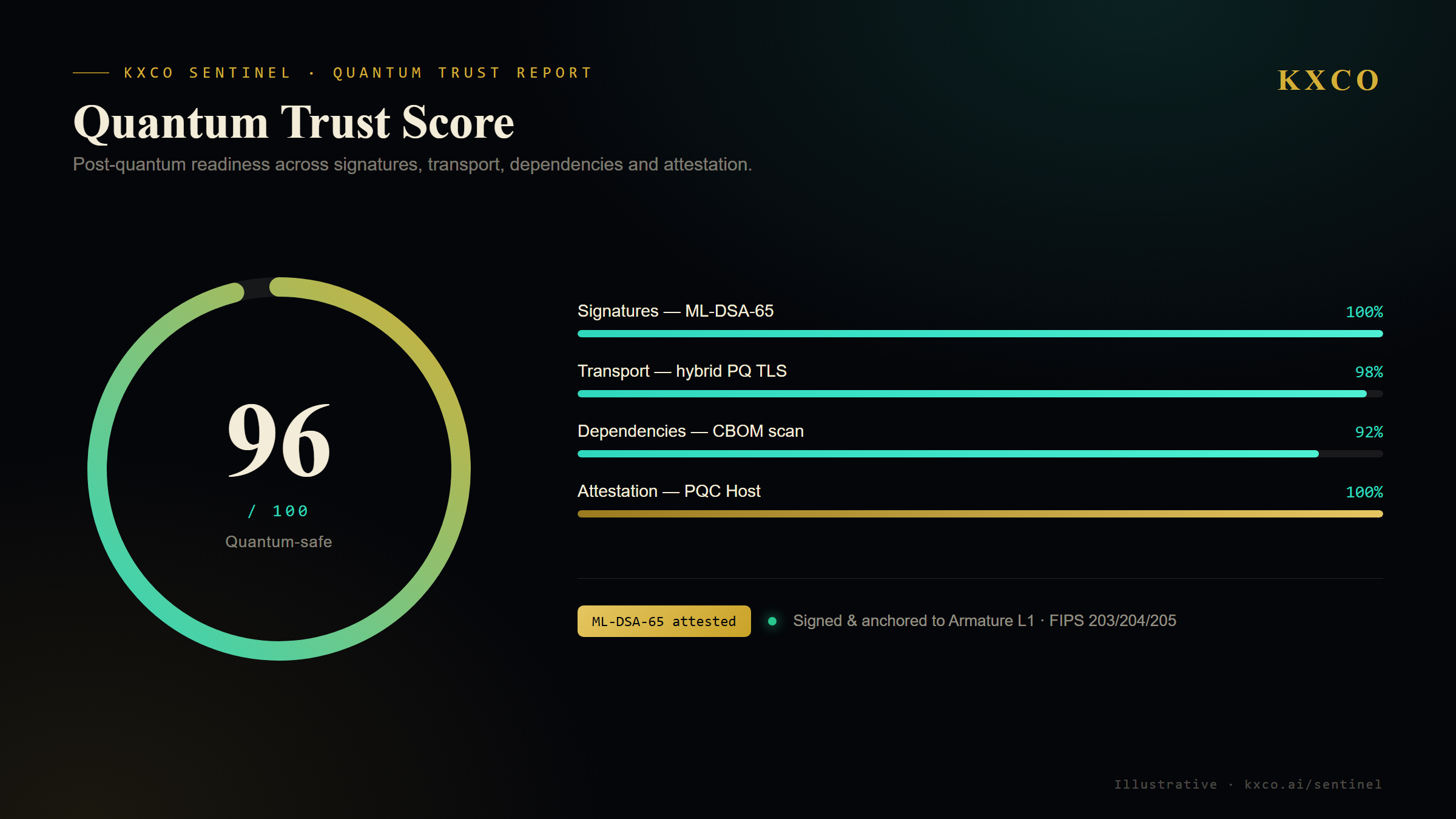
The first is a readiness score. Before you can migrate off quantum-vulnerable cryptography, you have to find it — and most large organisations have no accurate inventory, because RSA and ECDSA are buried in dependencies, certificates, and code nobody has touched in years. Sentinel scans the estate and scores the exposure across signatures, transport, dependencies, and attestation.
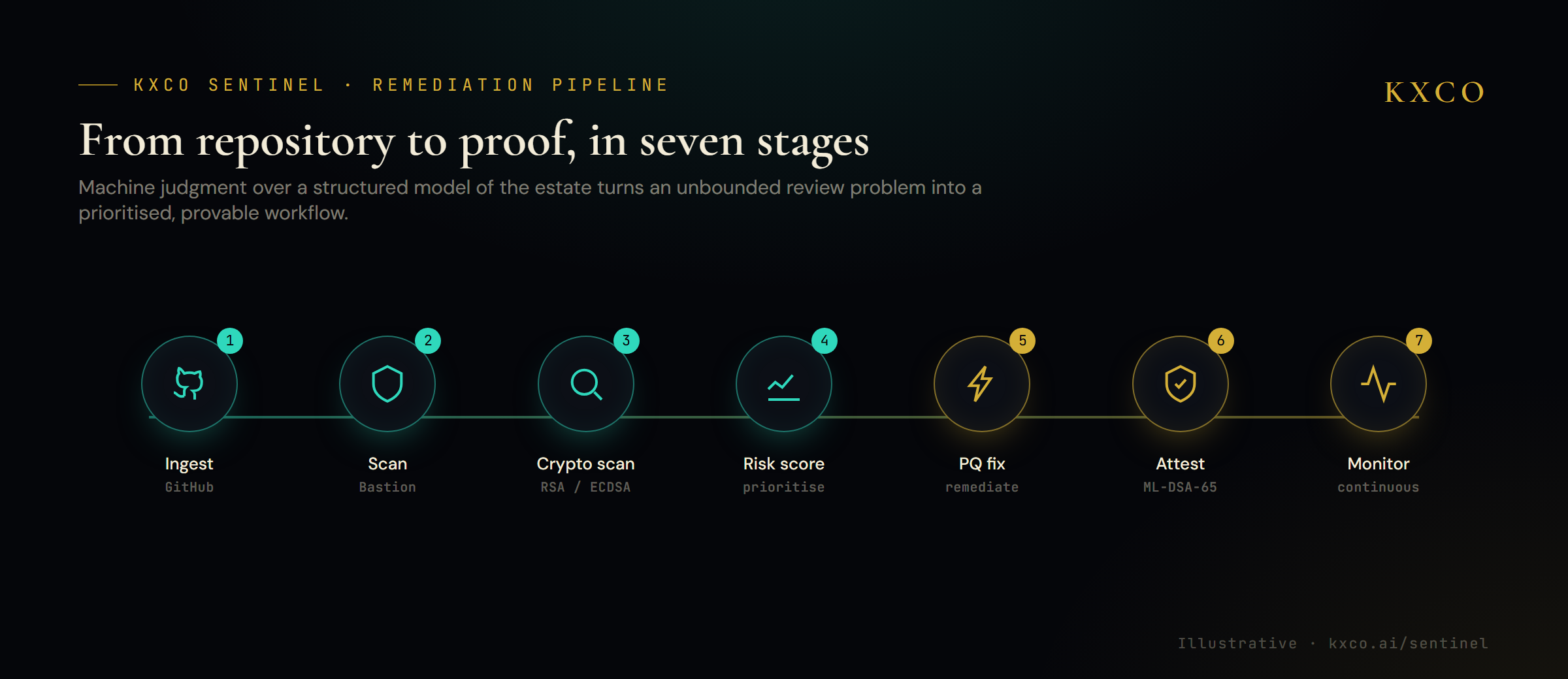
The second is the workflow that follows. This is where machine judgment earns its keep: a domain where a human reviewer drowns and a model reasoning over a structured representation of the code thrives. Ingest the repository, scan for vulnerable algorithms, score the risk (not every use of RSA is equally urgent — a long-lived signing key matters more than an ephemeral one), propose and apply post-quantum fixes, attest each remediated deployment with a quantum-safe signature, and monitor continuously, because a clean repository regresses the moment a dependency reintroduces a weak primitive.
The third is the part that ties back to the record. Every dependency and every proof becomes one typed graph a machine can reason over — verified components in one colour, quantum-vulnerable ones flagged, all resolving to a single attested anchor written to a public, tamper-evident ledger. This is the difference between "trust our dashboard" and "here is the proof, check it yourself."
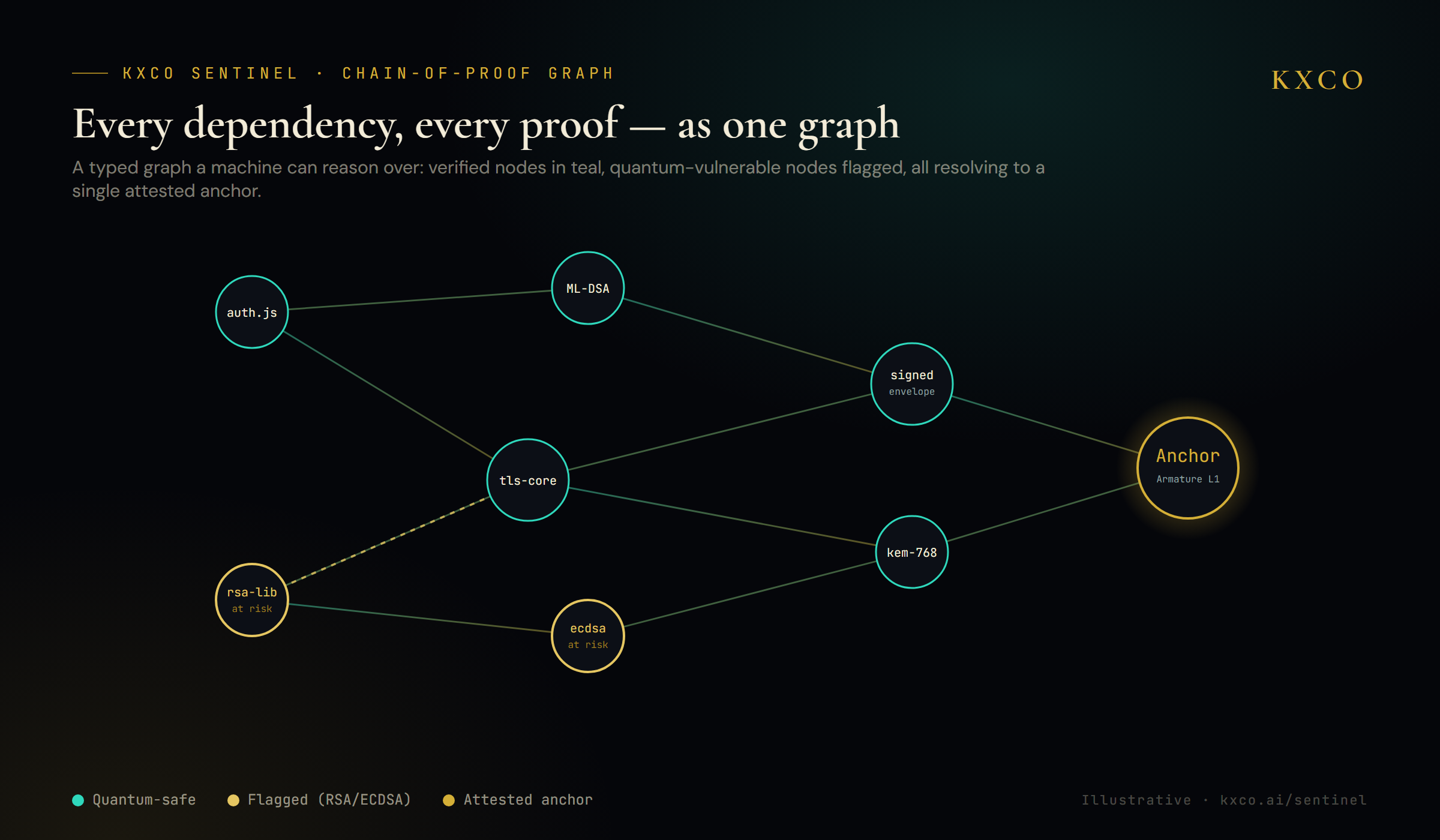
I want to be candid that the graphs above are illustrative — deliberately so; we label them that way on the live product too. But the capability underneath is live, and the honesty discipline is the point of the whole exercise: where a fact is known and sourced, it is shown; where it is not, we do not invent it.
Where this is real today
I have sat through enough pitches to be allergic to roadmaps dressed up as products, so let me be precise about what exists. The cryptography KXCO runs is not a research prototype. Every algorithm is NIST-standardised and in production: ML-DSA-65 (FIPS 204) for the signatures on every action, ML-KEM-768 (FIPS 203) for key encapsulation, SLH-DSA (FIPS 205) available for the longest-horizon signatures, AES-256-GCM for symmetric encryption, and hybrid classical-plus-post-quantum TLS for transport. The security level is NIST Category 3.
I am equally precise about the ceiling of that claim, because the market is full of people who are not. KXCO states compliance with NIST FIPS 203/204/205. It does not claim compliance with the NSA's CNSA 2.0 suite, which mandates the larger Category 5 parameter sets. Conflating the two is a common overclaim, and we don't make it. That kind of discipline is not lawyerly caution; it is the entire product. Infrastructure whose selling point is provability cannot afford to oversell, because the first false claim poisons the true ones.
On top of that cryptography sit products that are live in production today, each making one or more of the four primitives real:
KXCO Nexus is identity, legal execution and proof. Through its KXCO Verified capability it issues a permanent, independently checkable identity for a person, a business or an AI agent — the same primitive for all three; through its KXCO Sign capability it does post-quantum document signing where the proof must survive for decades and can be verified by anyone, with no dependency on KXCO still existing.
KXCO Treasury is payments, custody and banking. Its KnightsPurse wallet is a self-custodial, multi-chain wallet for people and businesses — the place where "an agent with a wallet governed by its own keys and its owner's limits" becomes something a real person operates — and it includes KnightsVault (in beta), white-label banking and exchange software institutions deploy under their own brand and their own authority.
KXCO Sentinel is the quantum-resistant cloud: software verification, and the scan-to-attestation pipeline in the pictures above — the Bastion scanner that finds quantum-vulnerable cryptography and PQC Host that signs and records every remediated deployment.
Armature L1 is the settlement layer and the public record: a post-quantum network with roughly two-second deterministic finality, standard EVM tooling, and quantum-safe attestation from its genesis block, with a public explorer.
That last point about Armature deserves a caveat I insist on internally. Most chains that talk about "quantum readiness" mean a future upgrade. Armature was rebuilt so that every block is post-quantum-attested from block zero — there is no pre-quantum era in its history to migrate away from. But I will not let anyone on my team claim the post-quantum chain has years of verifiable history, because it does not; it is young, and backdating a track record it has not earned is exactly the kind of dishonesty this whole system exists to make impossible. The moat is architectural — quantum-safe by design, from the start — not chronological.
One more clarification for the traders reading this, because it always comes up: ARMR, the native unit of Armature L1, is a settlement token, not a tradeable cryptocurrency. It meters and finalises activity on the network. It is not listed, not something to speculate on, and nothing here is investment advice.
What this means if you run an institution
Strip away the technology and the shift is economic. Today, trust is asserted — and re-established, expensively, at every boundary between systems. Every reconciliation, every audit, every counterparty you have never met is a place where somebody spends money to compensate for the fact that they cannot simply verify a claim. The whole edifice of intermediaries exists to stand in for proof that was never available.
When proof becomes cheap, universal, and durable, that cost structure changes. Reconciliation stops being a project and becomes a query. Audit stops being an archaeology dig. A counterparty you have never met becomes workable because you can verify their claims rather than underwrite your ignorance of them. The phone call to confirm the signature, the lawyer who asks for the original — those become unnecessary. That is what a protocol layer does to the layer above it, and it is why I keep insisting the right word for this is infrastructure, not product suite. Infrastructure is the thing that is invisible when it works and load-bearing for everything built on top.
There is a governance point here that regulated institutions will care about, and it is one KXCO treats as architecture rather than disclaimer. KXCO is a software company. It holds no financial licences and does not custody assets. When a token in this model represents value — a stablecoin as a claim on a reserve, a CBDC as a sovereign liability, a real-world-asset token as a claim on something off-chain — KXCO supplies the machinery to prove the claim, but the licensed institution issues the instrument and holds the licence and the custody relationship with its customers. That division is why the same infrastructure can serve banks, exchanges, and governments without competing with them. It hands them a provable substrate; they operate under their own authority on top of it.
And because the claims are typed and the relationships explicit, questions that are painful today become tractable. "How exposed are we to this reserve asset?" stops being a spreadsheet chased across systems and becomes a traversal of the graph — with every figure in the answer carrying its own source, and the whole thing expressible in the ISO 20022 vocabulary institutions already use. Look-through to the real asset underneath an instrument becomes a property of the data model rather than a manual investigation, and any link that does not resolve to real, sourced backing is a contradiction the system surfaces rather than a footnote nobody reads.
Let me make the durability point concrete, because it is the one that will bite institutions first. Picture a corporation executing a financing agreement today, signed the ordinary way, with the classical cryptography still standard across the industry. Fast-forward to a dispute in 2036. The software that produced the signature is several versions gone; the signer has left; and the RSA or elliptic-curve signature from 2026 is, by then, potentially forgeable by a quantum adversary — which means the document is contestable exactly when someone has an incentive to contest it. Now picture the same agreement signed with a post-quantum signature, its fingerprint anchored to a public record at execution. A decade later an auditor takes the retained document, recomputes its fingerprint, checks it against the anchor recorded in 2026, and verifies the signature against the signer's published key with open-source tools. The chain of reasoning — this exact text, authorised by this key, existed by this date — holds, with no dependency on the original software still running, the vendor still existing, or anyone's word being taken. For a mortgage, a bond, a title deed, or a treaty, decade-scale verifiability is not a nice-to-have; it is the actual requirement, and classical cryptography is the wrong tool for it starting now, not in 2035.
The honest limits
No serious piece should read as if it has solved everything, so here are the edges as I see them.
Post-quantum cryptography is young. The lattice schemes are the best-analysed candidates humanity has, standardised after years of public scrutiny — but they are newer than the classical algorithms they replace, which is exactly why the sensible posture on transport is hybrid: run classical and post-quantum together, so a break in either one alone does not open the door. Second, provable is not the same as true. This infrastructure can prove that a specific party signed specific bytes at a specific time; it cannot make the content of a claim honest. Signed garbage is provably-authored garbage — the judgment layer's job is to catch the contradictions, not to bless the inputs. Third, a model of reality is only as good as what has been wired into it; coverage grows deliberately, and the honest move is to mark what is unknown as unknown rather than fill it with a confident guess. And finally, being early means building against standards and threat models that will keep evolving, which is why the ability to change algorithms without rewriting everything around them — crypto-agility — has to be treated as a permanent discipline, not a one-time migration.
I would rather state those plainly than have you discover them and conclude the confident parts were oversold too.
What I am watching
For readers who think in catalysts rather than architecture, here is where I would point attention over the next few years. Watch the migration deadlines harden from guidance into procurement requirements — the moment "quantum-safe" becomes a checkbox in a government or bank RFP, demand stops being theoretical. Watch the auditors and standards bodies, because the first time a regulator asks an institution to demonstrate its post-quantum posture rather than assert it, the market for measurable, attestable readiness appears overnight. Watch the AI-agent side too: as agents start holding value and executing transactions, the bearer-token model that secures most integrations today becomes a liability that a single leaked secret can detonate, and per-action signed identity stops being a nicety. And watch the quiet indicator that matters most — how many organisations can actually produce an inventory of where they use vulnerable cryptography. Most cannot. That gap between obligation and capability is, in my view, one of the more under-appreciated operational risks sitting on balance sheets right now, precisely because it does not show up on any of them.
None of this is a trade recommendation. It is a lens. The companies and institutions that treat trust as infrastructure to be built ahead of demand will look, in hindsight, like the ones who wired their buildings for electricity before the appliances arrived. The ones who wait will be retrofitting under a deadline, at volume, which is the most expensive way to do anything.
The bottom line
Step back and the shape is simple. The world is moving toward an economy in which AI agents act alongside people and institutions, at a volume and speed that removes the human who used to vouch for things. That economy needs a way to answer "is this real?" that a machine can compute, a stranger can check, and a quantum computer cannot break. No single technology answers it. Cryptography makes a claim unforgeable but cannot say whether it is permitted or sensible. A blockchain records order but cannot make signatures quantum-safe or exercise judgment. AI can interpret but hallucinates without a verifiable world to reason over. Regulation defines what is allowed but is inert without the other three to enforce and record it.
The bet KXCO is making is that these four have to be fused into one system with a shared model of reality — such that a claim is treated as real only when trust, judgment, record and permission all hold at once — and that the sane time to lay that foundation is before the volume of machine transactions makes retrofitting impossible. The quantum clock says we do not have forever. The AI clock says the demand is arriving now. Those two facts are not separate stories. They are the same story, and it is about trust.
For readers who want the engineering underneath this — the algorithms, the network parameters, the data model, and the exact product that makes each claim checkable — my team has published a full technical walkthrough at kxco.ai/developers/blog. Everything asserted here can be verified there, which is, after all, the entire premise.
Shayne Heffernan is the founder of KXCO by Knightsbridge. This article is analysis and commentary, not investment advice. KXCO is a software company; it holds no financial licences and does not custody assets.
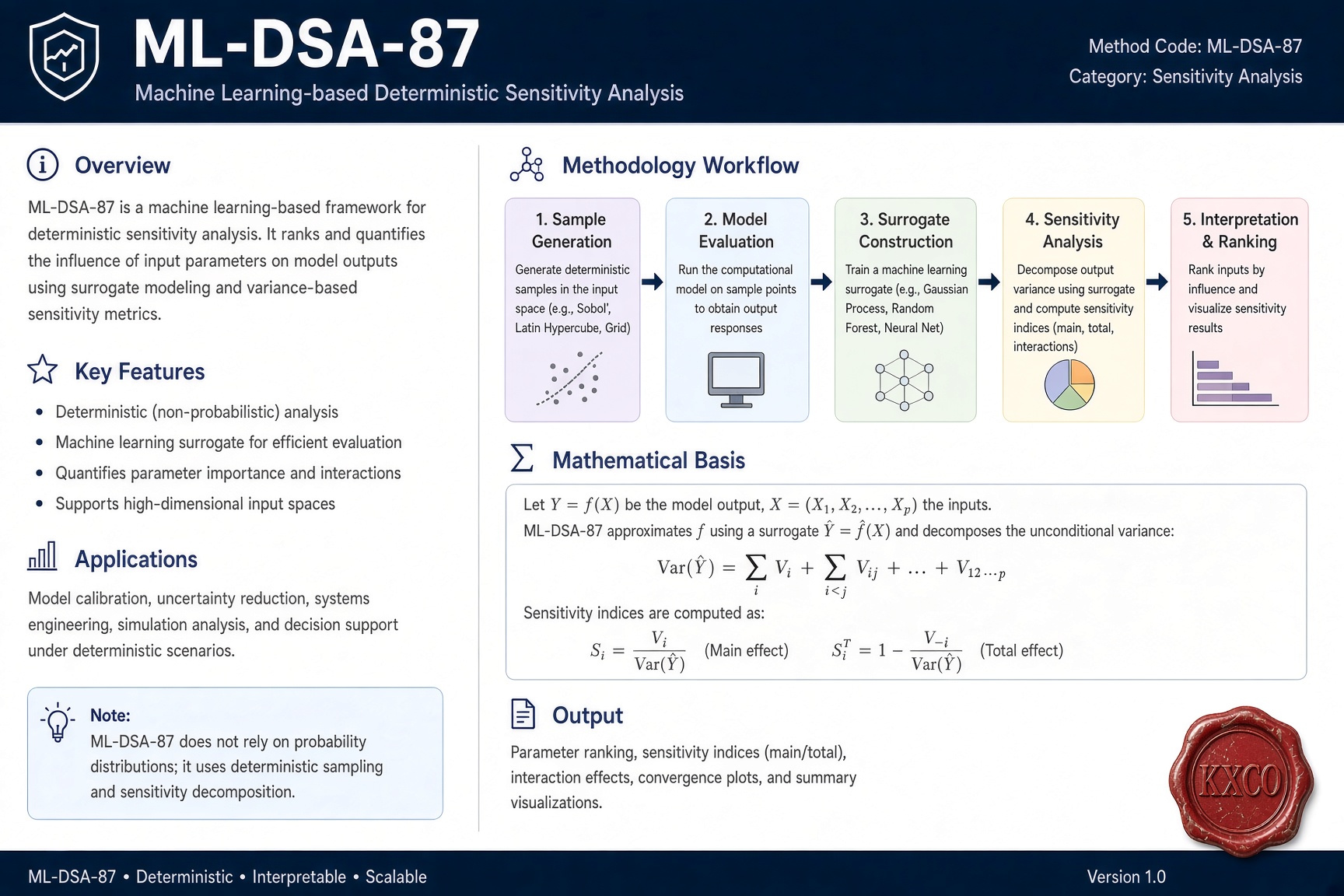
KXCO Now Verifies ML-DSA-87 in Consensus, the Signature Level Named by the NSA
On 6 October 2026 KXCO's chain began verifying ML-DSA-87 signatures as a rule of consensus, and the first ML-DSA-87 identity registered 28 seconds later. ML-DSA-87 is the category 5 level of NIST's FIPS 204, specified by the NSA for US national security systems and preferred by Australia's Information Security Manual. KXCO ships it for signing and for keys held in hardware, accepts it across its network and verifies it on chain, and anyone can check a verdict.
Post-Quantum Has a Deadline: 2030 for Keys, 2031 for Signatures
Executive Order 14412 gives federal high-value systems until 31 December 2030 for post-quantum key establishment and until 31 December 2031 for signatures. Six of the seven official calendars put a milestone in 2030. The Order reaches vendors through the contract, the purchase, the build, the data and the inventory. The runtimes already moved: a stock Node.js client negotiates X25519MLKEM768 by default. What is left is in the application.
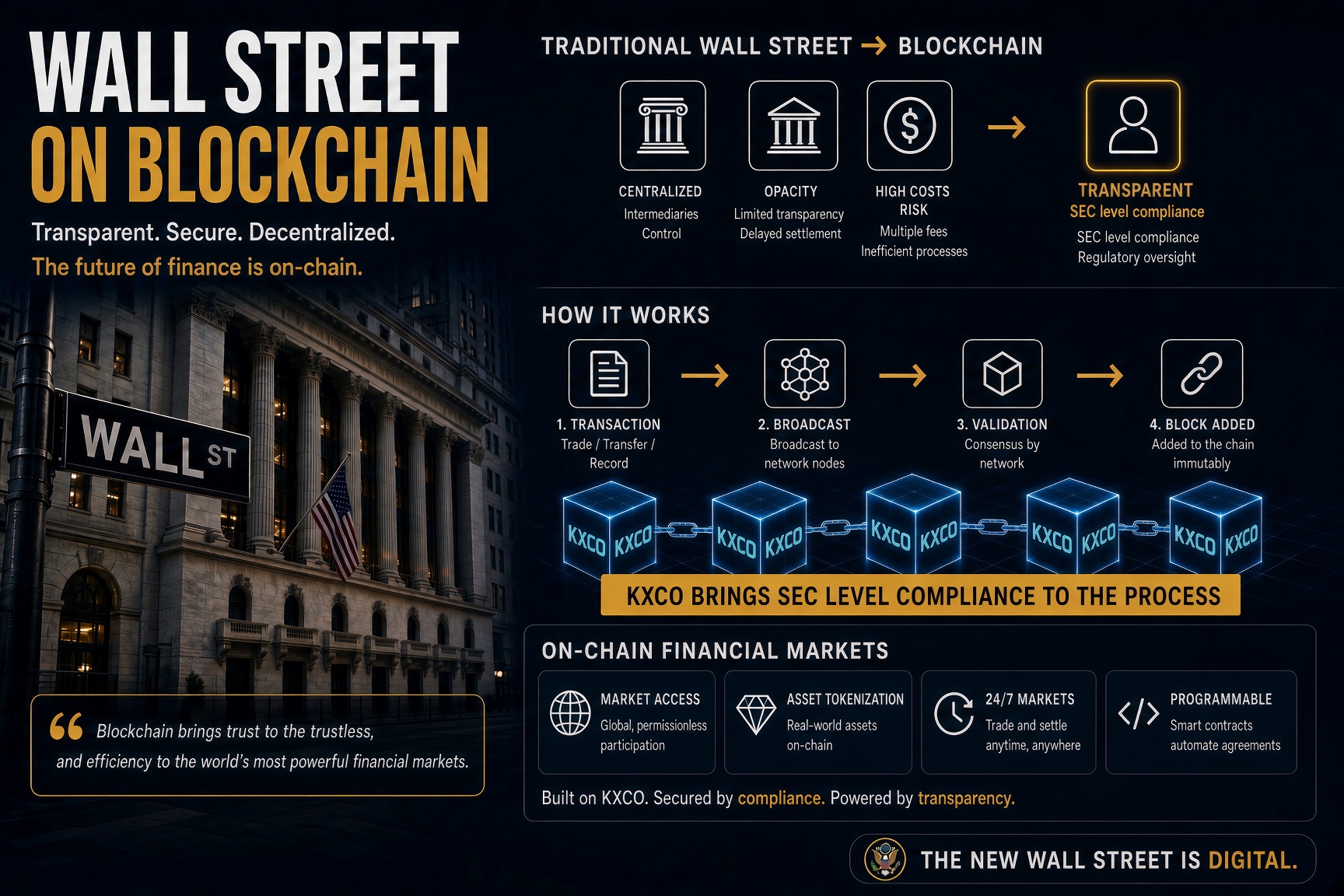
Tokenising a Share in Code: the Register Entry, the Credential and 4 Checks
The SEC has said what a tokenised share's record must hold: wallet, quantity and issue date on chain, the holder's name off chain, permissioned participants, and the same dividends as the share. This developer note builds it in JavaScript: an ML-DSA-65 signed register entry, a stranger's check, the same check at Armature's 0x0b precompile, a credential gate and an exact dividend at a record date.
The 2030 Post-Quantum Deadline in Code: 6 Changes and the Test for Each
A stock Node.js client already negotiates X25519MLKEM768, so TLS 1.3 took the first post-quantum step on its own. Nothing the application owns has moved. This developer note reads Executive Order 14412 and OMB M-26-15 as six changes: ML-KEM key establishment, ML-DSA signatures, a one-import move to Category 5, PQC-signed JWS at the gateway, re-encryption of long-lived data and a CycloneDX CBOM from the lockfile. Every block was run against the published packages.
Every story, signed and delivered.
Subscribe to the kxco channel and get the headline, the AI-written key takeaways, and the chain-anchor link the moment we publish. Audio versions and per-ticker subscriptions arrive in the next iteration.