
The Future of Artificial Intelligence
#AI
"A significant portion of the workforce could be facing displacement as artificial intelligence gains complexity and popularity"--Paul Ebeling
Technology advancements are being used to help people work more productively, to improve the lives of individuals, to make certain tasks faster and more convenient, and even to save lives.
To business leaders, the prospect of artificial intelligence is thrilling. Robots can be faster and more efficient than workers, and though they might require some upkeep; AI tools tend to be much more affordable than human employees.
Considering that AI solutions are becoming proficient at several “human” jobs, some futurist executives are looking forward to a time when most of their workforce consists of smart computers.
Yet, most AI experts claim that this future vision will never come. Instead of replacing human intelligence with artificial intelligence, workplaces will rely on a brand-new way of processing information and making decisions called collaborative intelligence.
There are less than 5% of occupations we automate entirely, but around 60% of occupations could have at least 30% of their tasks automated, and that number is likely to grow over the next 15 yrs. Thus, a significant portion of the workforce could be facing displacement as artificial intelligence gains complexity and popularity.
Most organizations see significant benefits in replacing human workers with machines, but these benefits hide serious downsides. Though machines might be more efficient and cost less than a human employee, existing AI solutions have narrow applications and are nearly impossible to adapt to new tasks or inputs. Thus, more significant changes in business strategy might require an AI overhaul, which could be more time-consuming and more expensive than assigning new responsibilities to a human workforce.
To harness the advantages of AI without succumbing to the disadvantages of non-human staff; businesses need to avoid displacement as much as possible and instead utilize collaborative intelligence.
Collaborative intelligence is merging the strengths of a human workforce with the strengths of AI. The goal of collaborative intelligence is to design human positions to best augment the capabilities of AI tools and systems and vice versa.
In a collaborative intelligence model, human employees have three crucial roles; train intelligent machines, explain the outcomes of AI efforts and sustain the responsible use of artificial intelligence. Meanwhile, AI has three functions: to amplify cognition, extend physical capabilities, and free humans for higher-level tasks. Humans and machines come to rely on one another, and the business sees only benefits from adopting AI.
Organizations should cultivate a workforce with the skills to integrate with AI machines seamlessly. Learning to delegate tasks to AI can take time; learning to navigate AI interfaces and decipher the results of AI efforts. Business leaders should train their current workforce and onboard new employees who have experience collaborating with AI.
Artificial intelligence is a promising technological development for business productivity; it should not be expected to do all the work of human employees.
By envisioning a future based on collaborative intelligence, businesses can radically improve productivity and quality without compromising on any aspect of their operations.
Have a prosperous day, Keep the Faith!

The Truth in All Its Ugliness Must Survive
A majority vote does not determine the truth. Consensus is a mood, gossip is a sport, and a model will write the pretty version for free. Why the ugly number has to survive, why a record beats a dashboard, and what KXCO was built to keep standing when the room changes its mind.
Don't Be the Best, Be the Only: Winning in an AI World
AI is repricing competence downward. What it cannot reproduce is a life. The case for remaining non-fungible, why friction still produces the best ideas, and what it means to build AI systems that keep the human intellect in them.
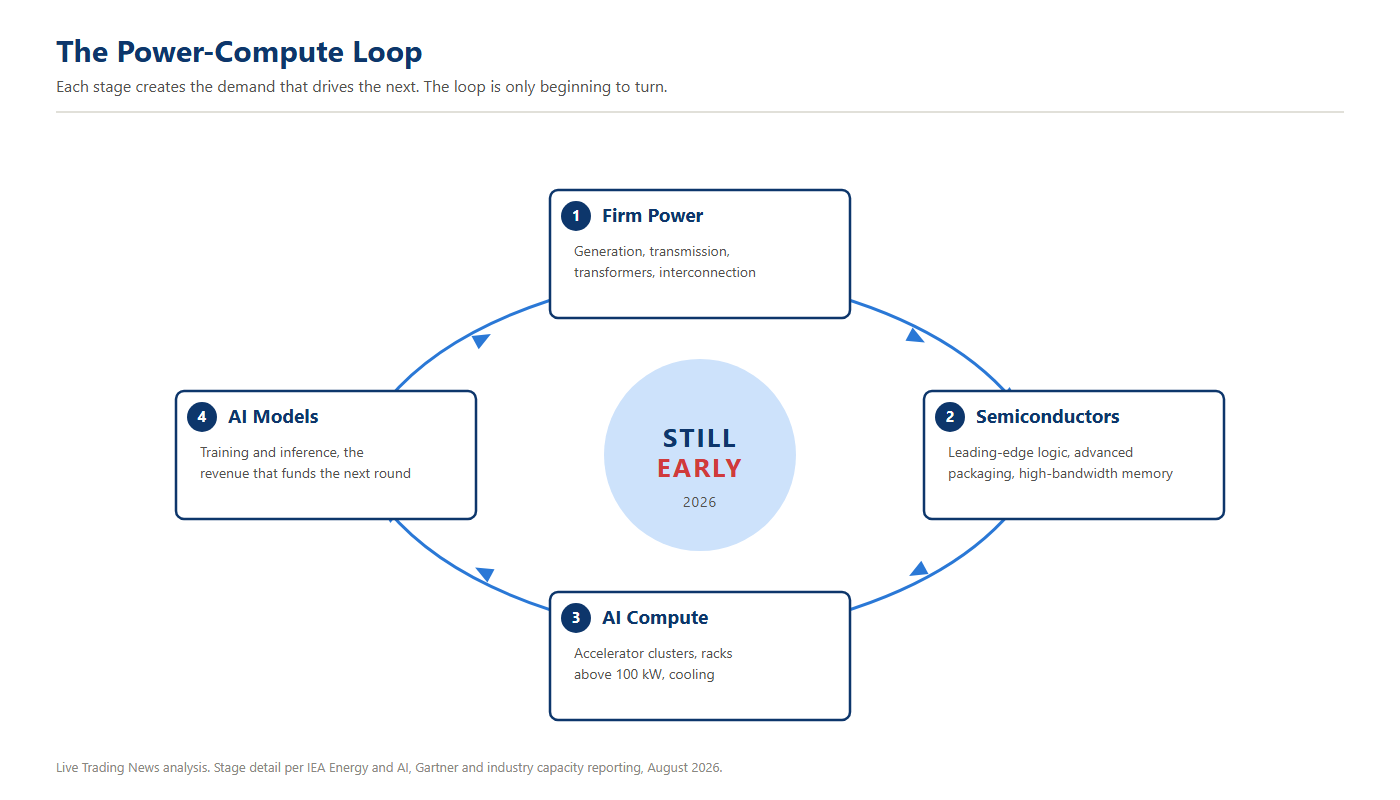
Energy IS the New Currency
Elon Musk said energy would become the de facto currency. He was describing a physical constraint, not a metaphor. Firm power delivered to the rack is now the limiting reagent in the AI build-out, and roughly 158 GW of data-centre capacity still has to be energised by 2030.
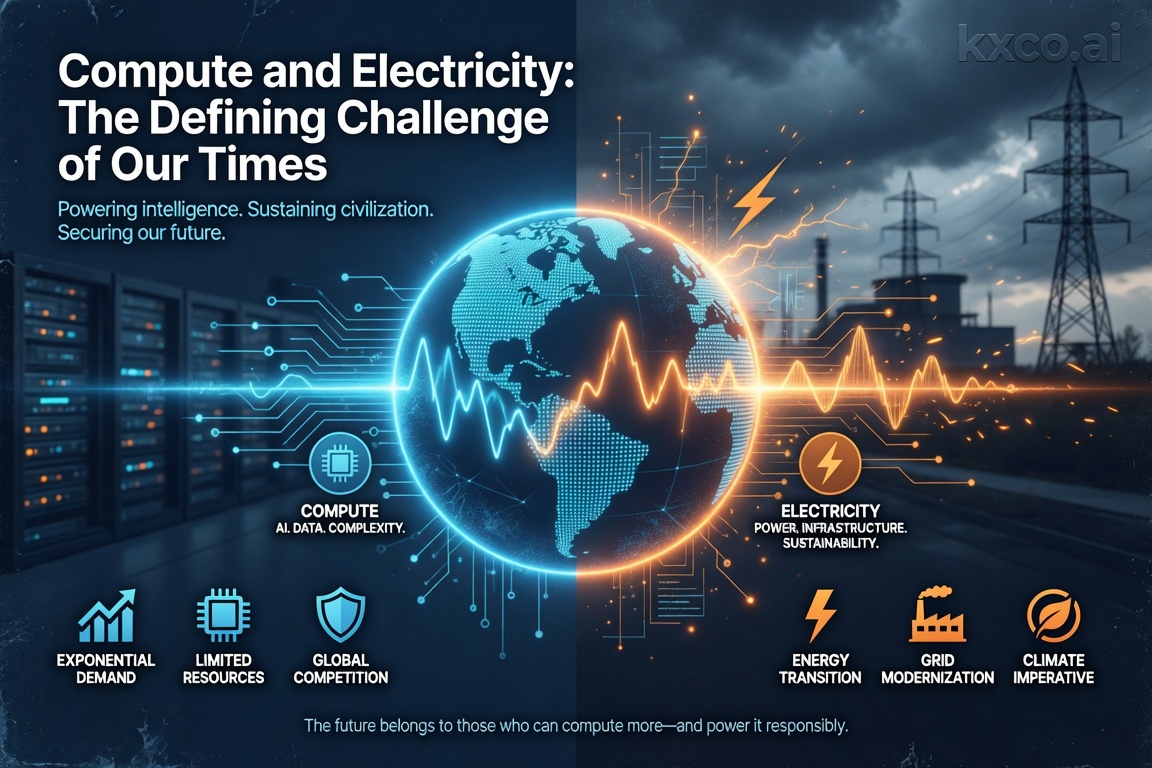
Compute and Electricity: The Defining Challenge of Our Times
Compute is no longer limited by silicon. It is limited by firm power. Shayne Heffernan on the AI electricity shock, the nuclear resurgence, the top ten electricity producing countries today and in 2036, who is building for the future, and the equity map of winners across nuclear, gas, fuel and grid.
Every story, signed and delivered.
Subscribe to the kxco channel and get the headline, the AI-written key takeaways, and the chain-anchor link the moment we publish. Audio versions and per-ticker subscriptions arrive in the next iteration.