
The Big Q: What About Web 3.0?
#crypto #cryptocurrency #ivestors #technology #NFT #DeFi #TVL #blockchain #web #3.0 #regulation #government #control
"The US economy exploded largely because of the tech companies that now form the foundation of web 2.0, but unless the United States steps up its regulatory game it is likely other countries will best its position and reap the economic and cultural rewards that come with playing host to the world’s most innovative technologies" -- Paul Ebeling
The Big A: Web 3.0 is dependent upon an environment ripe for innovation – not massive infrastructure systems
Over the last 2 yrs, we have seen total value locked (TVL) in DeFi surpass $200-B. In Y 2021, NFT volume exceed $25-B, and venture capital invested over $27-B in cryptocurrency and blockchain companies. The best part is that we have not scratched the surface of massive use cases like NFT implementation in legal documentation or the transition of traditional financial markets over to permissionless global exchanges.
Interestingly, the projects driving this extraordinary growth are often led by small teams of 20 people or less. There are few ‘headquarters’ in the world of crypto. Many of the most influential figures in the space do not have a home base and instead live itinerate lifestyles, traveling from place to place. This is because web 3.0 operations are often very lean, with a sole focus on putting out products and building communities of users.
Contrast that with the web 2.0 model, where VC valuations and growth targets often lead to a focus on achieving growth for growth’s sake. This leads to the construction of new offices, competition for headcount and absurd spending purely for the sake of demonstrating ‘success.’
In other words, governments and companies extract as much profit as they can rather than working to develop technologies that inherently benefit users and contributors. At the time, the huge model powered by VC was the best way to make the most progress. but now that very progress has made the model less important and the infrastructure can now drive future change much more efficiently.
With the web 3.0 model, the big corporate HQs, massive teams and capital investments from established leaders are no longer there.
The inherent nature of web 3.0 means that there are fewer points of influence for governments to control. Regulations operate largely by placing rules and responsibilities on financial intermediaries, which in exchange creates barriers to entry for would-be new participants. The new web 3.0 system that eliminates intermediaries presents a problem for governments that no longer have a way to control decision-making and/or king-making through centralized authority.
Unlike most industries, where people put up with yrs of red tape and millions in lobbying costs, many DeFi builders are voting with their feet, moving to jurisdictions that are more welcoming to innovation.
Singapore’s EntrePass, Portugal Non-Habitual Resident, Bahamas incentives to attract crypto entrepreneurs and Saudi Arabia’s government investment all make it relatively easy for entrepreneurs to present their intentions and go build with a supportive ecosystem behind them.
Note: money laundering accounts for less than 1/2 of 1% of the billions of transactions.
For the US to really 'get in the dance' it must start by not making rash judgments or snap decisions on policy. After that, define what the end goals of investor protection and consumer protection are. Sometimes existing disclosures or processes do not make sense in the web 3.0 world. Then present a frame for implementation that allows for a discussion or revision loop rather than an overarching threat of closure based on ambiguous commentary.
Whichever big, stable country can come up with a cooperative, conducive framework will not just keep their own engineers and entrepreneurs from leaving, but they will also attract global talent and sit at the center of a global financial and technological system that’s not held back by geographic restrictions or socio-economic censorship.
Have a healthy, happy, prosperous weekend, Keep the Faith!
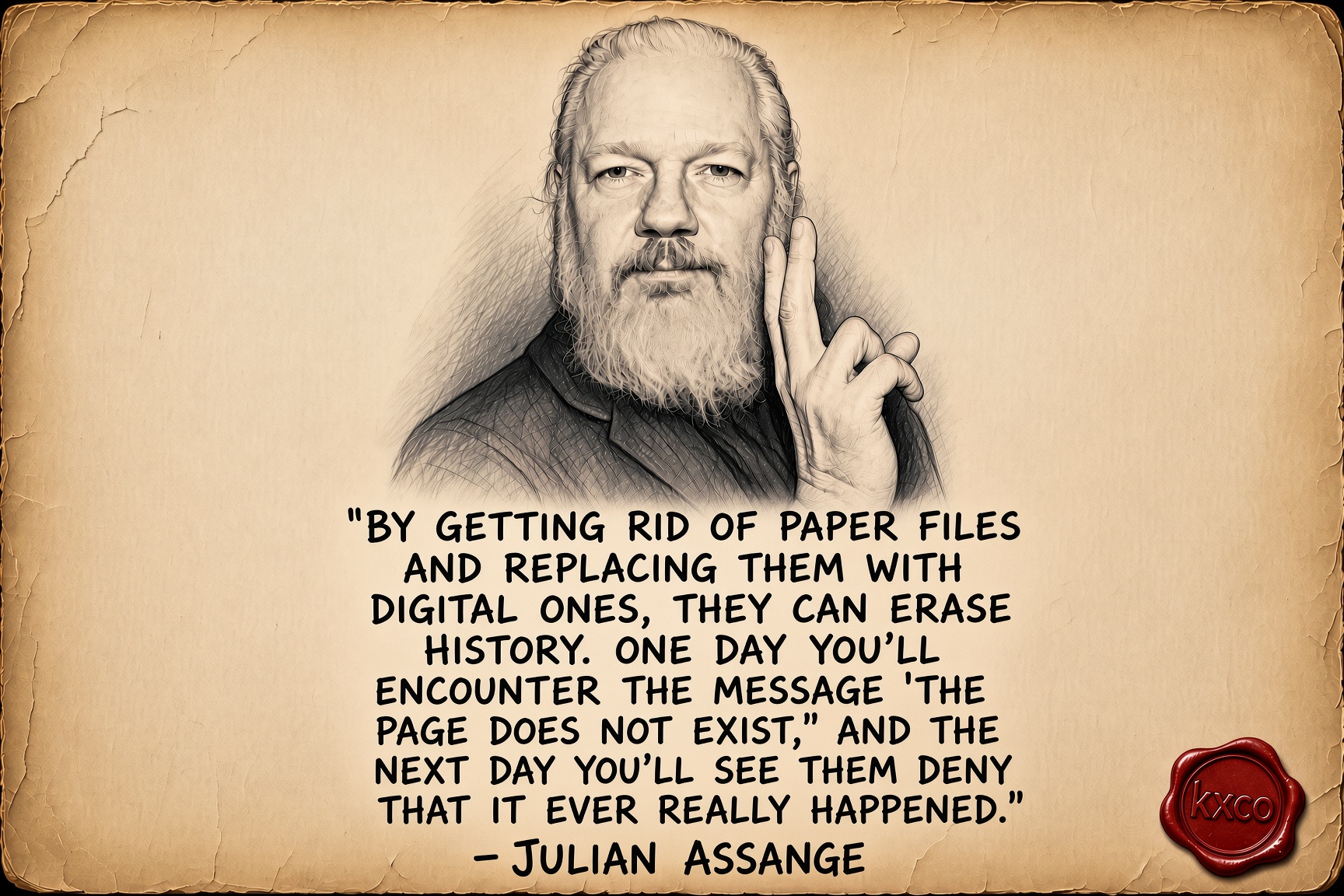
Digital Erasure, and Why KXCO Matters
Pew found 38 percent of 2013's web pages gone a decade later, and quantum computing will eventually let attackers forge the signatures that prove records authentic. Why durable history now depends on post-quantum cryptography, on-chain anchoring and verification that needs nobody's permission.

Economic Calendar and Trading Strategies for the Week Ahead: July 20–24, 2026
A pivotal week for markets: Iran's closure of the Strait of Hormuz sends crude above $86 and gasoline over $5, while Alphabet, Tesla and Intel earnings test the AI trade. Full economic calendar plus trading strategies across oil, gold, Bitcoin, FX and AI chip stocks.
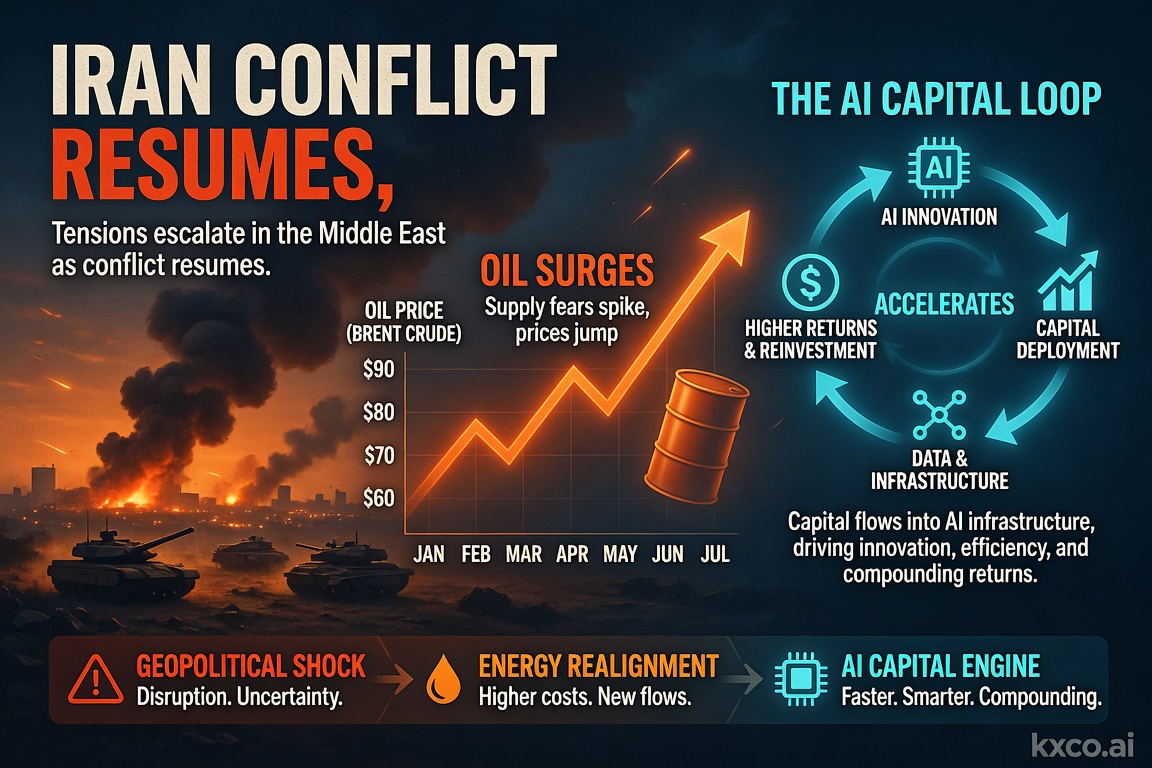
Economic Calendar and Trading Strategies for the Week Ahead: July 14–18, 2026
A pivotal week for markets: US strikes on Iran reignite the oil risk premium, June CPI and retail sales test the Fed's rate-cut path, and the $1 trillion AI capital loop keeps driving the tech trade. Full economic calendar plus trading strategies across oil, gold, Bitcoin, FX and AI stocks.
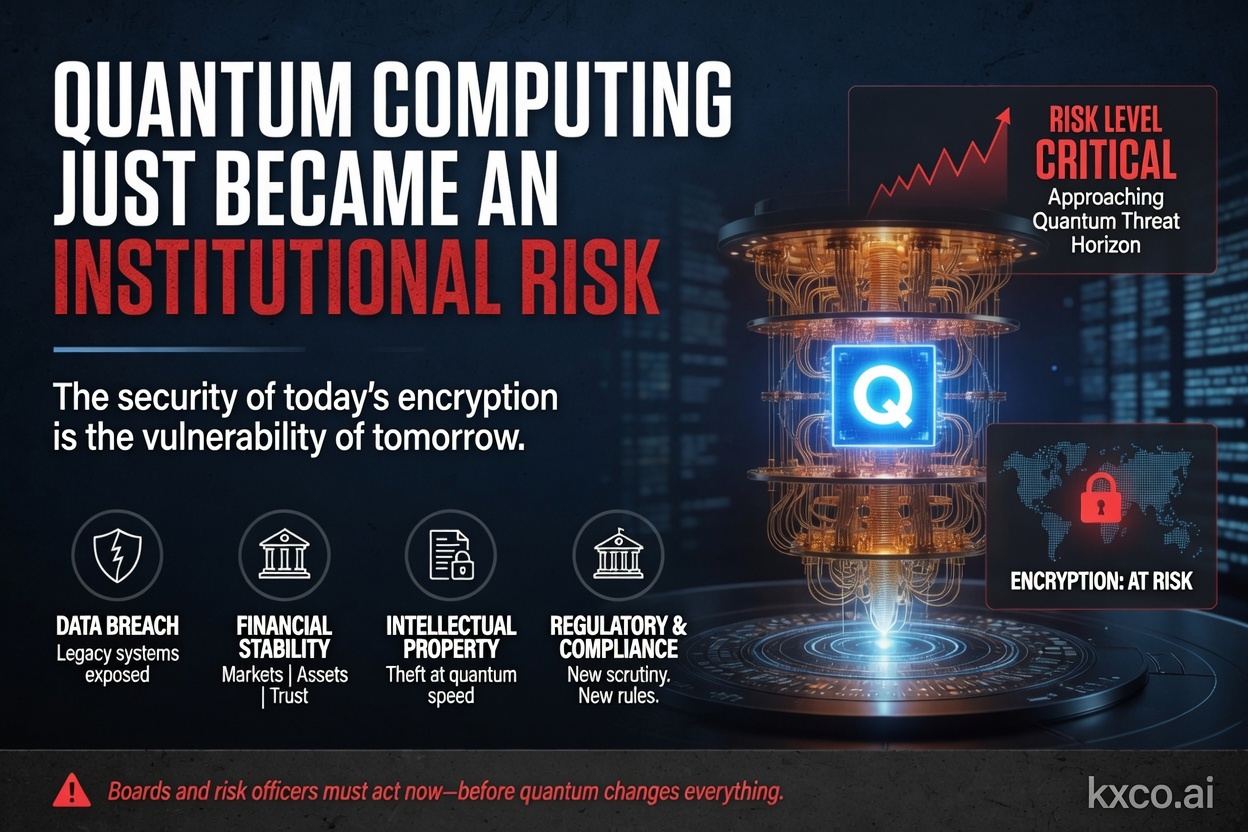
Quantum Computing Just Became an Institutional Risk
Shayne Heffernan on BlackRock's quantum-computing warning for Bitcoin and Ethereum, Google's cryptanalysis research, the two on-chain risk vectors, and how KXCO's Armature L1 — post-quantum from genesis, coordinated by its ontology — answers a threat that just went institutional.
Every story, signed and delivered.
Subscribe to the kxco channel and get the headline, the AI-written key takeaways, and the chain-anchor link the moment we publish. Audio versions and per-ticker subscriptions arrive in the next iteration.