
Shifting Global Dynamics: How Sanctions and Political Rhetoric Propel Russia and China into Economic Leadership
The geopolitical landscape is undergoing a profound transformation as sanctions and political rhetoric reshape the dynamics of global power. Notably, Russia and China are emerging as key players in a new economic order, leveraging the challenges posed by sanctions to assert their influence on the global stage.
Empowered by Sanctions: Historically, sanctions were intended to curb the actions of nations deemed to be in violation of international norms. However, their unintended consequence has been to fuel resilience and determination among targeted countries. Russia and China have skillfully navigated the obstacles presented by sanctions, transforming adversity into an opportunity to diversify their economic strategies.
Economic Cooperation: Sanctions have driven Russia and China into a closer economic partnership. Both nations have sought alternatives to traditional Western markets, fostering an environment conducive to bilateral trade agreements and joint ventures. This economic cooperation has not only mitigated the impact of sanctions but has also created a formidable economic bloc.
Technological Advancements: Facing restricted access to Western technologies, Russia and China have accelerated their domestic technological capabilities. Both nations are investing heavily in research and development, aiming to reduce dependence on foreign innovation. This drive for technological self-sufficiency enhances their global competitiveness.
Energy Dominance: Sanctions targeting Russia's energy sector have prompted the nation to pivot towards alternative markets, particularly in Asia. Simultaneously, China has strategically secured energy resources from Russia, fostering energy interdependence and reducing susceptibility to external pressures.
Political Rhetoric and Global Perception: The influence of political rhetoric cannot be underestimated in shaping global perceptions and alliances. The narrative of a multipolar world order is gaining traction, with Russia and China positioning themselves as alternative leaders in the face of perceived Western decline.
Diplomatic Alliances: Both Russia and China are actively cultivating diplomatic alliances with nations disenchanted with Western policies. By projecting an image of stability and non-interference, they are winning support from countries seeking alternatives to traditional Western alliances.
Multilateral Institutions: The establishment of alternative multilateral institutions, such as the Shanghai Cooperation Organization (SCO) and the Belt and Road Initiative (BRI), underscores Russia and China's commitment to reshaping the global economic architecture. These institutions provide avenues for participating nations to engage in mutually beneficial partnerships outside the influence of traditional Western-dominated organizations.
Cultural Soft Power: Beyond the economic and political spheres, Russia and China are investing in cultural exchanges and soft power initiatives. These efforts aim to shape a positive global perception, fostering relationships based on shared values and cultural understanding.
Conclusion: The convergence of sanctions and political rhetoric has inadvertently propelled Russia and China into prominent roles in the evolving global economy. As these nations navigate the challenges posed by geopolitical pressures, their resilience, strategic cooperation, and diplomatic finesse position them as formidable contenders in shaping the future of international relations. The world watches closely as new alliances are forged and economic landscapes transform, ushering in an era where Russia and China emerge as influential leaders on the global stage.
AI is the Neat Handwriting of the Illiterate
A model in the hands of someone who has read the filing and walked the plant is a clerk. The same model, speaking for someone who has done neither, is a disguise. On AI slop, phantom citations and factslop, why finish stopped being evidence of work, and the containment layer KXCO built so a machine cannot speak as the institution until a source is attached.
Worthship: Do Not Conform to the Age
Worthship is the older English word for worship, and it means to ascribe worth. Bishop Robert Barron preached Romans 12 on 30 August. This essay follows the text into the prison letters, and puts two questions to a graph: do the four readings of that Sunday agree, and was Paul free or in chains when he wrote about despair?
The Truth in All Its Ugliness Must Survive
A majority vote does not determine the truth. Consensus is a mood, gossip is a sport, and a model will write the pretty version for free. Why the ugly number has to survive, why a record beats a dashboard, and what KXCO was built to keep standing when the room changes its mind.
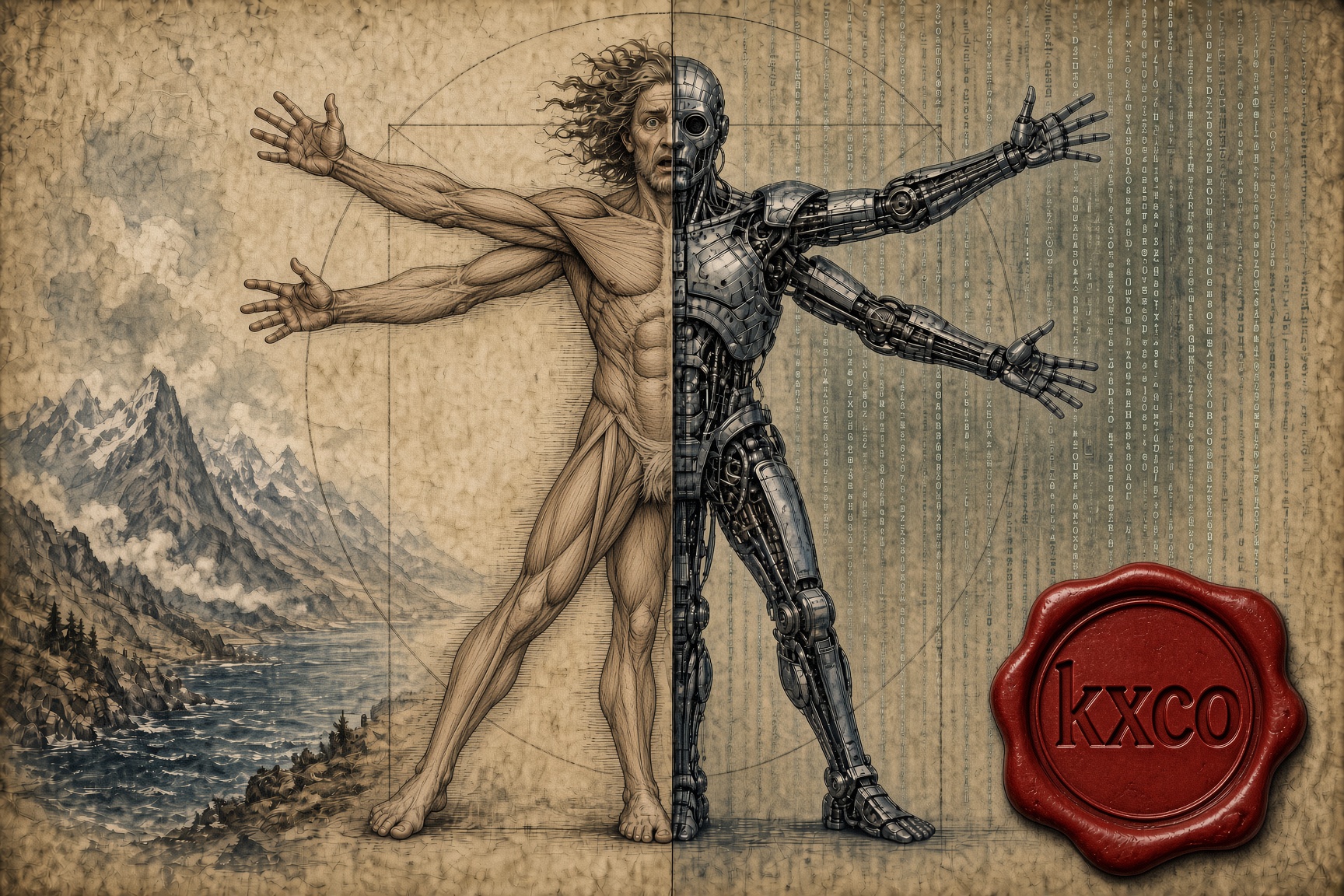
Don't Be the Best, Be the Only: Winning in an AI World
AI is repricing competence downward. What it cannot reproduce is a life. The case for remaining non-fungible, why friction still produces the best ideas, and what it means to build AI systems that keep the human intellect in them.
Every story, signed and delivered.
Subscribe to the kxco channel and get the headline, the AI-written key takeaways, and the chain-anchor link the moment we publish. Audio versions and per-ticker subscriptions arrive in the next iteration.