
Reassuring Beijing: South Korea Welcomes Japan and China for High-Stakes Talks
In a significant diplomatic overture, South Korea played host to its two East Asian neighbors, Japan and China, in a carefully orchestrated summit aimed at reassuring Beijing about the intentions of its regional allies. Against the backdrop of a changing geopolitical landscape and lingering historical tensions, this trilateral meeting signals a nuanced approach to diplomacy in East Asia.
The Unprecedented Summit
On a crisp morning in Seoul, the leaders of South Korea, Japan, and China gathered at the Blue House, the official residence of South Korean President Lee Joon-ho. The summit marks the first time these three nations have come together at the highest level in nearly a decade, reflecting the growing complexity of regional dynamics.
The agenda for the summit was expansive, including discussions on economic cooperation, regional security, climate change, and the ongoing humanitarian crisis in North Korea. These topics highlight the shared interests and challenges facing these neighboring countries.
Reassuring Beijing: A Delicate Balancing Act
At the heart of this summit was a concerted effort to reassure China, the regional powerhouse, that the trilateral alliance does not pose a threat to its interests. The United States, a key ally to both South Korea and Japan, has been keen on maintaining stability in the region while ensuring a free and open Indo-Pacific. This delicate balancing act was front and center during the discussions.
In recent years, tensions have flared between China and its neighbors over territorial disputes in the South China Sea and historical grievances. The leaders of South Korea and Japan, in particular, sought to convey their commitment to peaceful coexistence and diplomacy. President Lee Joon-ho emphasized the importance of dialogue, saying, "We believe that through open and honest communication, we can address our differences and work towards a more stable and prosperous future for our region."
Economic Cooperation and Connectivity
One of the key outcomes of the summit was a renewed commitment to economic cooperation and connectivity. South Korea's "New Southern Policy," which aims to strengthen ties with Southeast Asian countries, found resonance with both Japan and China. The three nations agreed to explore infrastructure development projects, trade partnerships, and technology collaboration.
Additionally, discussions on climate change yielded a commitment to combatting environmental challenges collectively. With all three countries being major contributors to global emissions, their cooperation in this area could have far-reaching consequences for the world's fight against climate change.
The North Korea Factor
The ongoing humanitarian crisis in North Korea loomed large over the discussions. While South Korea and China have maintained varying degrees of influence over the reclusive state, Japan's engagement has been limited. The trilateral meeting provided an opportunity to coordinate efforts on addressing the North Korean crisis, including humanitarian aid and denuclearization talks.
A New Chapter in East Asian Diplomacy
As the summit concluded, the leaders of South Korea, Japan, and China expressed their optimism about the future of trilateral cooperation. The careful choreography of this meeting underscores the need for nuanced diplomacy in an era of shifting alliances and emerging challenges.
The success of this summit in reassuring Beijing and fostering collaboration among East Asian neighbors will largely depend on the follow-through. Building trust and maintaining open lines of communication will be essential in navigating the complex web of regional and global dynamics.
In the end, South Korea's role as the host of this historic summit serves as a reminder that diplomacy and dialogue are indispensable tools in the pursuit of peace and prosperity in East Asia.

Democrats' AI Spending Curtailment: The Dumbest Idea in Washington
After the midterm sweep, Democrats want to slow America's AI build-out. The Sanders and Ocasio-Cortez bill would freeze building and upgrading of AI data centres nationwide, and a superintelligence ban Rep. Yassamin Ansari wants atop the agenda would pause every model trained with 10^25 operations or more. Governors-elect in Texas and Georgia back pauses, and Goldman Sachs puts 45% of planned capacity in Democrat-run states backing moratoriums. Shayne Heffernan: AI computing follows the power.

Kampot White Pepper: The Health Benefits
Kampot white pepper is the world's most expensive white pepper, and the health case behind it is better documented than most. A cited look at the piperine evidence on nutrient absorption, digestion, inflammation and metabolism, plus the protected origin economics that set the price.

Understanding the US China AI and Quantum Landscape
AI and quantum are usually reported as a US–China race. The more useful story is two different systems — frontier capital versus open-source scale — entangled through shared chokepoints. Shayne Heffernan maps the landscape with the KXCO AI Sector Ontology, with comparison graphics and the investable names.
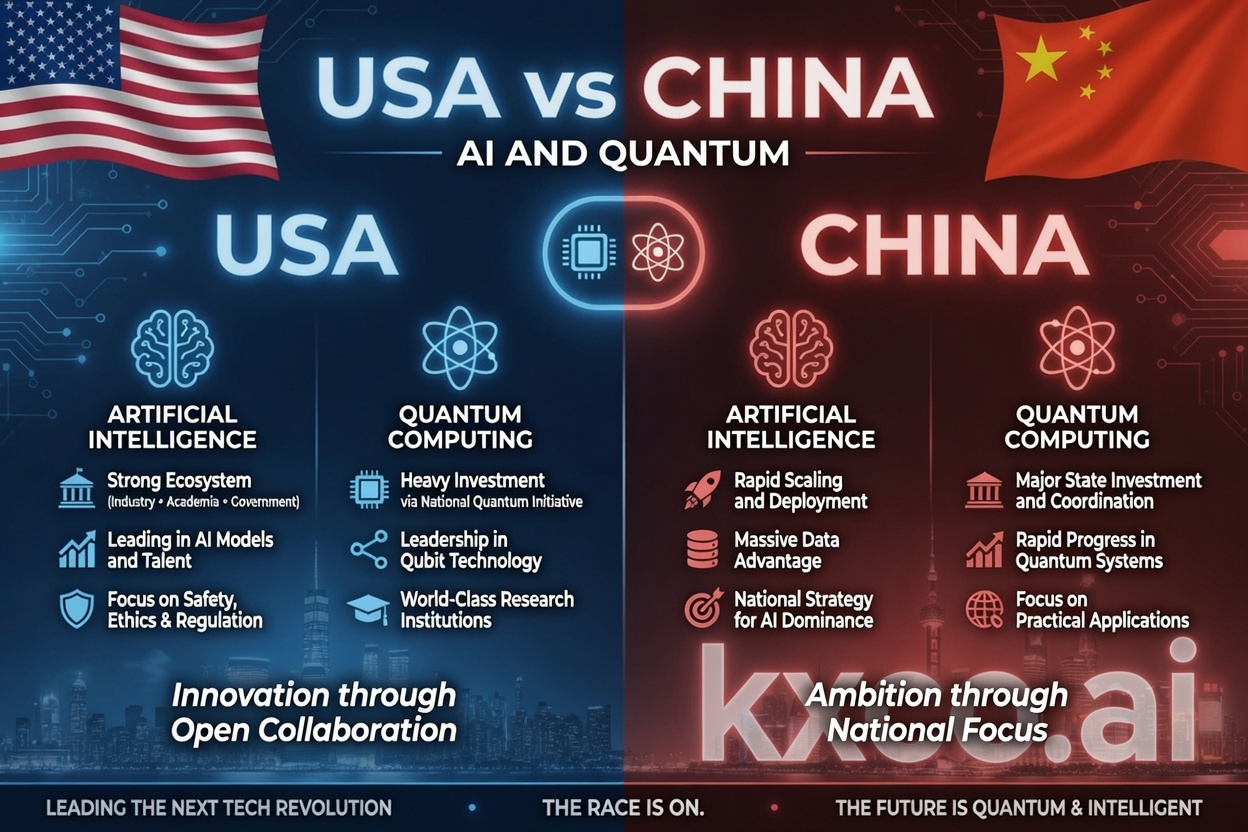
USA vs China: The AI and Quantum Scorecard
The US still leads AI models and chips by a whisker; China leads power and open-weight models outright. Shayne Heffernan scores the four races that will decide the decade.
Every story, signed and delivered.
Subscribe to the kxco channel and get the headline, the AI-written key takeaways, and the chain-anchor link the moment we publish. Audio versions and per-ticker subscriptions arrive in the next iteration.