
Oxford PhD student convicted for defrauding $2.6 million in cryptocurrency investors
Cryptocurrency crimes are growing more frequent, and law enforcement organizations are working hard to catch criminal actors and bring them to justice.
On January 27, the British Royal Court convicted a Ph.D. student at Oxford to four and a half years in jail for a 2-million-euro crypto fraud.
Wybo Wiersma, a 36-year-old student from Goredijk in the Netherlands, established a website while attending St Cross College.
Wiersma allegedly used a bogus name to set up the website iotaseed.io, which allegedly produced private keys (seeds) according to the report. Users can exchange IOTA using passwords (seeds) that he convinced were random 81-character strings. IOTA is a cryptocurrency that may only be accessed with passwords known as seeds. Users with the "seeds" can receive and send IOTA. However, Wiersma's website and promises were all a ruse designed to dupe naive consumers.
The Crypto Scam
According to sources, Wybo Wiersma convinced customers that the seeds on his website were generated at random, but the keys were planned. He made it feasible by putting malicious code on the website. Wiersma could utilize the malicious software to access each user's "seeds" when they carried out transactions and steal monies into his own account.
On January 19, 2018, Wiersma transferred the stolen cash to Bitcoin and Monero, an altcoin, on the cryptocurrency market Bitfinex. The assets were initially valued around $11 million, however the IOTA foundation and impacted crypto exchanges recovered a portion of the cash after banning Wiersma's accounts.
While this activity was taking place on Bitfinex, the cryptocurrency exchange got suspicious of the scammer's accounts and froze them. Bitfinex required Wiersma to authenticate himself before unfreezing his accounts, which he did by showing images of two fraudulent passports. One of the Belgian passports did not accurately indicate the nation listed on the paper. The other was a photograph of a man named Jason, who was carrying an Australian passport.
Because Bitfinex was unable to identify the account owners, the funds remained frozen, prompting Wiersma to switch to another exchange. Wiersma proceeded to Binance and registered five accounts, all of which were frozen, prompting him to present yet another forged British ID.
Please follow the link for the full details of the case.
Justice Served
In 2018, multiple victims reported stolen money to German and UK police using the website iotaseed.io. The police traced the crime to the United Kingdom and turned over the investigation to the South East Regional Organised Crime Team's cybercrime unit.
After connecting all of the blocked funds to a VPN that he used to access his Bitfinex account, this agency was able to trace the schemes back to Wiersma. Authorities then found four other exchange accounts used by the fraudster to collect stolen cash.
Following the finding, British authorities raided his Oxford residence in January 2019 and followed the movements on his desktop computer. Wiersma had already dropped out of his Ph.D. program at St Cross by that point. Even though there was proof against Wiersma, he disputed the claims, claiming that his computer had been hacked.
When the authorities questioned Wiersma about his malicious website, he too refused to answer. Due to a lack of hard proof, the police withdrew all accusations against him, and he returned to the Netherlands.
However, the police maintained their investigation until they traced Wiersma's VPN to a Bitcoin payment, which he used to construct the seed-generating website. On December 24, 2020, detectives seized his laptop, six hard drives, a memory card, and two USB sticks before arresting him.
As of January 27 2023, Wiersma was sentenced to four and a half years in jail by the Oxford Crown Court after pleading guilty.
For information on how to keep safe online, view SEROCU’s website.
To speak to a professional on Cryptocurrency, contact KXCO.IO.
Sources:/Bitcoinist/; /Reuters/
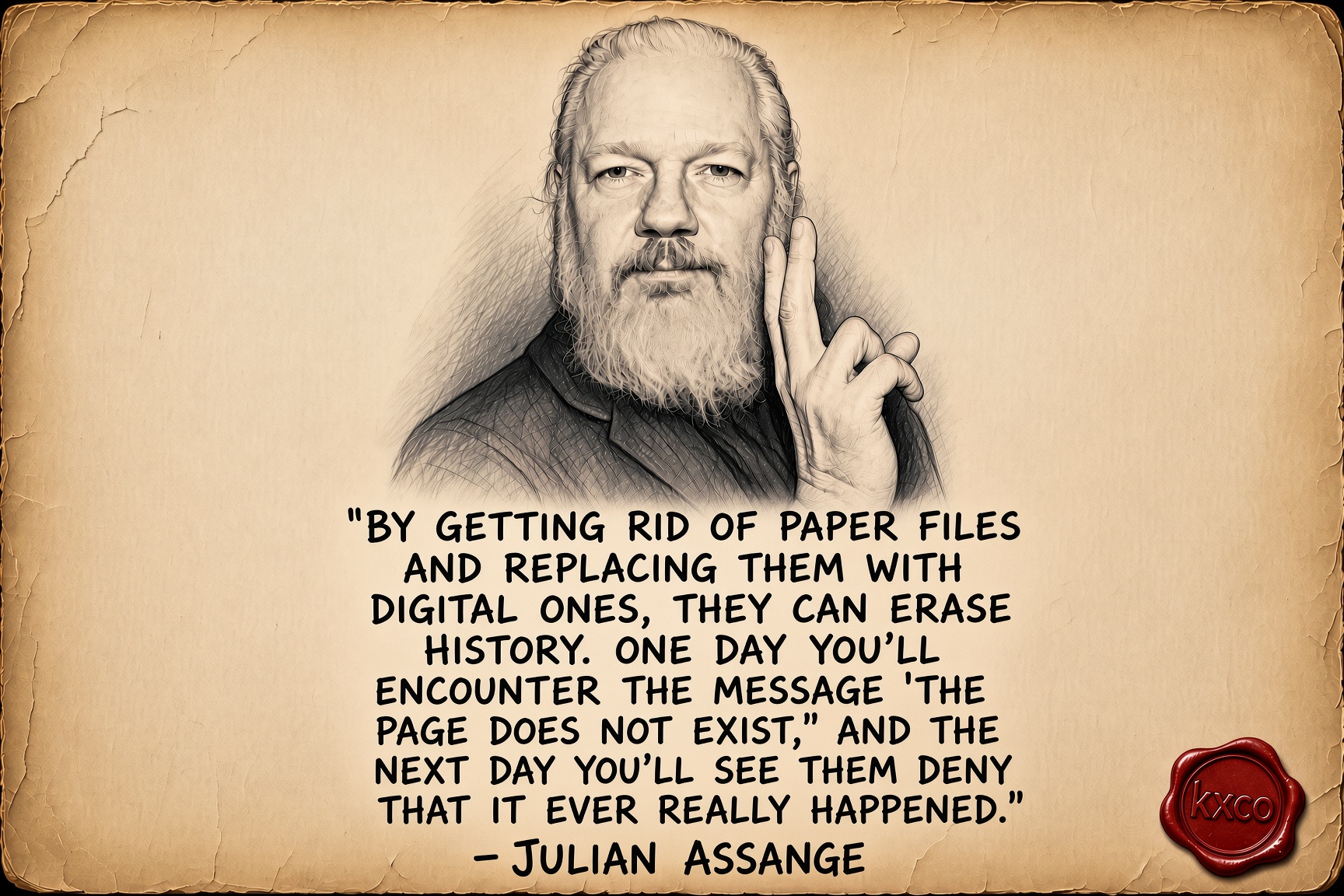
Digital Erasure, and Why KXCO Matters
Pew found 38 percent of 2013's web pages gone a decade later, and quantum computing will eventually let attackers forge the signatures that prove records authentic. Why durable history now depends on post-quantum cryptography, on-chain anchoring and verification that needs nobody's permission.

Your AI Agent Can Now Own a Wallet — and Keep It
The wallet has always assumed a person is holding the phone. Autonomous AI agents break that assumption. Shayne Heffernan on the self-custodial, quantum-secure wallet built so a machine can own value — and the one line where regulation begins.
Economic Calendar and Trading Strategies for the Week Ahead: July 20–24, 2026
A pivotal week for markets: Iran's closure of the Strait of Hormuz sends crude above $86 and gasoline over $5, while Alphabet, Tesla and Intel earnings test the AI trade. Full economic calendar plus trading strategies across oil, gold, Bitcoin, FX and AI chip stocks.
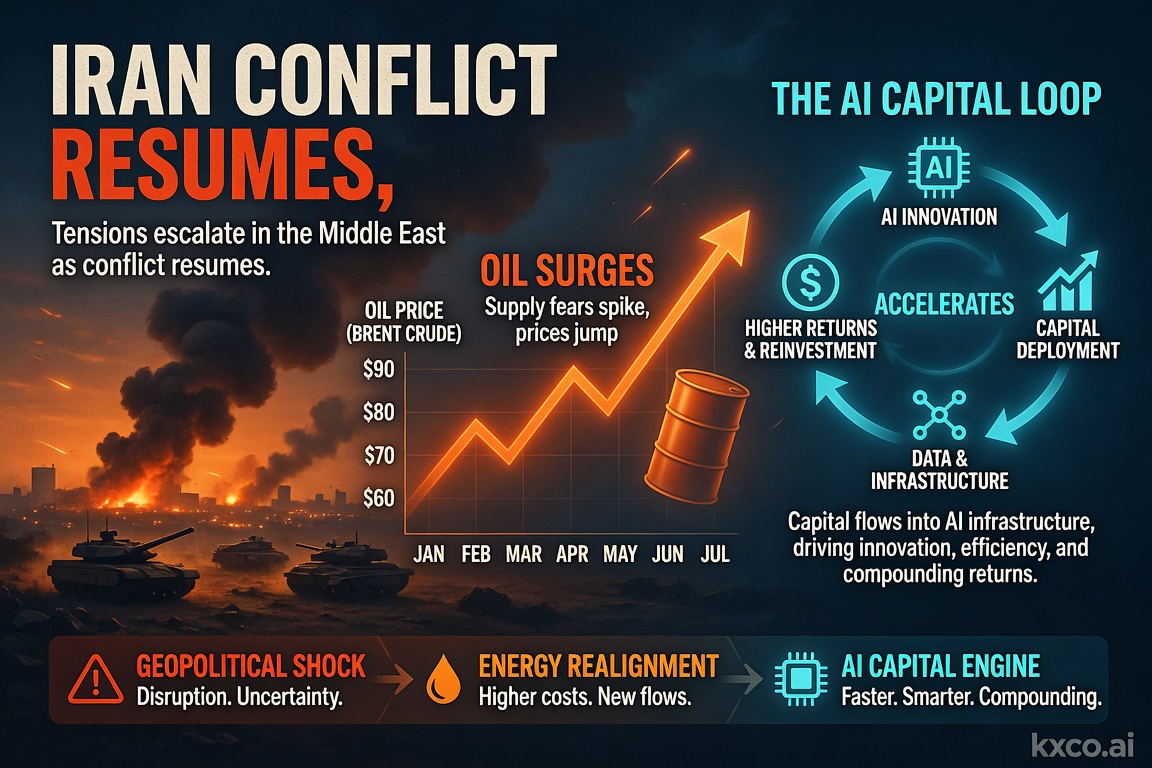
Economic Calendar and Trading Strategies for the Week Ahead: July 14–18, 2026
A pivotal week for markets: US strikes on Iran reignite the oil risk premium, June CPI and retail sales test the Fed's rate-cut path, and the $1 trillion AI capital loop keeps driving the tech trade. Full economic calendar plus trading strategies across oil, gold, Bitcoin, FX and AI stocks.
Every story, signed and delivered.
Subscribe to the kxco channel and get the headline, the AI-written key takeaways, and the chain-anchor link the moment we publish. Audio versions and per-ticker subscriptions arrive in the next iteration.