
OpenAI Voice Cloning AI
OpenAI revealed on Friday a voice-cloning tool that it intends to tightly control until safeguards are established to prevent audio fakes aimed at deceiving listeners.
According to an OpenAI blog post detailing the results of a small-scale test, a model named "Voice Engine" can replicate someone's speech based on a 15-second audio sample.
The San Francisco-based company acknowledged the serious risks associated with generating speech resembling people's voices, particularly in an election year. OpenAI stated, "We recognize that generating speech that resembles people's voices has serious risks, which are especially top of mind in an election year."
To address these concerns, OpenAI is collaborating with partners from various sectors, including government, media, entertainment, education, and civil society, to gather feedback and ensure responsible development.
Given the potential for misuse of synthetic voice technology, OpenAI emphasized a cautious and informed approach to a broader release.
This cautious approach follows a recent incident where a political consultant admitted to orchestrating a robocall impersonating US President Joe Biden during the New Hampshire primary.
Experts worry about the proliferation of AI-powered deepfake disinformation in key elections worldwide, including the 2024 White House race.
OpenAI stated that partners testing Voice Engine must adhere to rules requiring explicit consent from individuals whose voices are replicated. Additionally, audiences must be informed when they are listening to AI-generated voices.
To mitigate misuse, OpenAI has implemented safety measures such as watermarking to trace the origin of generated audio and proactive monitoring of its usage.
AI is the Neat Handwriting of the Illiterate
A model in the hands of someone who has read the filing and walked the plant is a clerk. The same model, speaking for someone who has done neither, is a disguise. On AI slop, phantom citations and factslop, why finish stopped being evidence of work, and the containment layer KXCO built so a machine cannot speak as the institution until a source is attached.
Worthship: Do Not Conform to the Age
Worthship is the older English word for worship, and it means to ascribe worth. Bishop Robert Barron preached Romans 12 on 30 August. This essay follows the text into the prison letters, and puts two questions to a graph: do the four readings of that Sunday agree, and was Paul free or in chains when he wrote about despair?
The Truth in All Its Ugliness Must Survive
A majority vote does not determine the truth. Consensus is a mood, gossip is a sport, and a model will write the pretty version for free. Why the ugly number has to survive, why a record beats a dashboard, and what KXCO was built to keep standing when the room changes its mind.
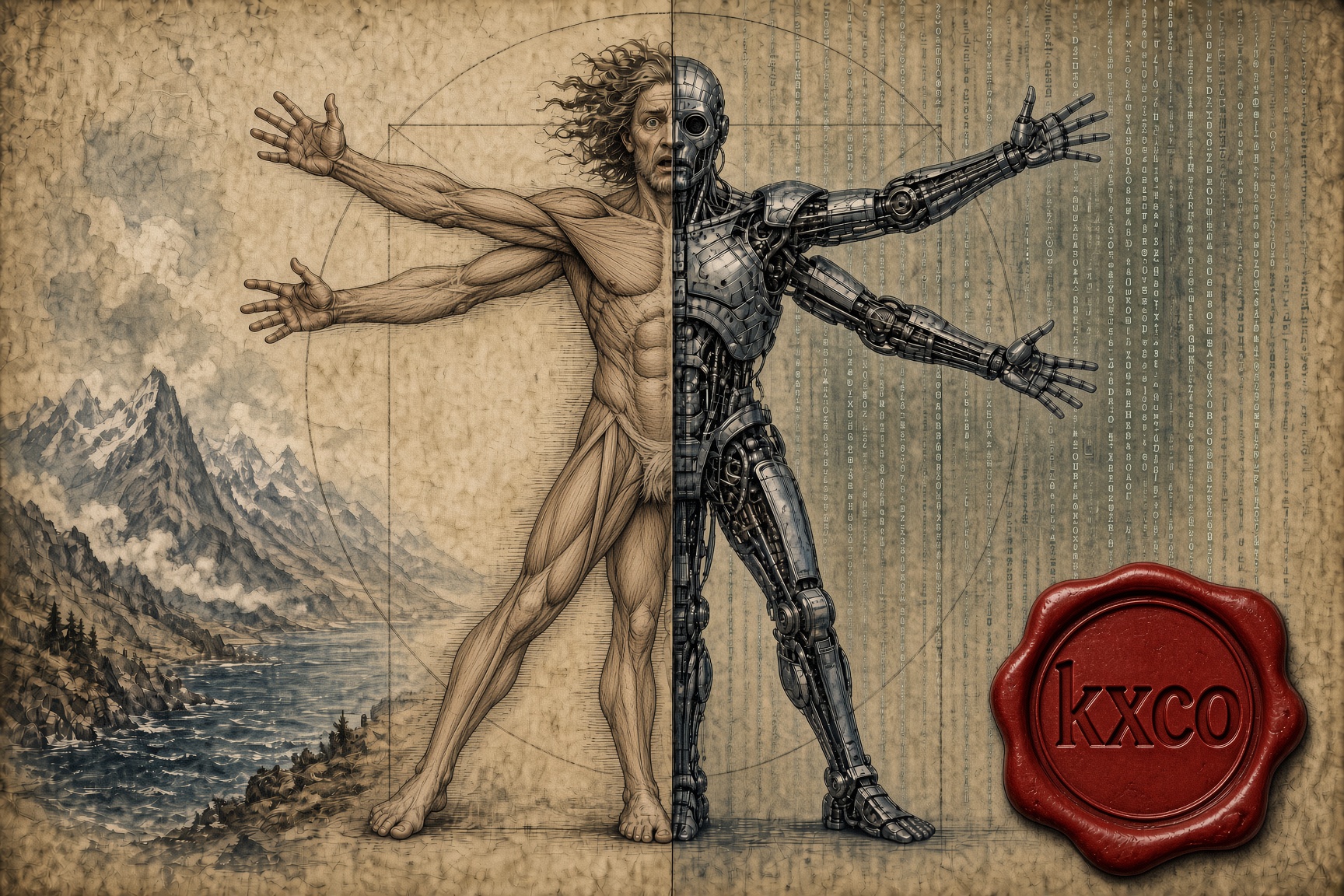
Don't Be the Best, Be the Only: Winning in an AI World
AI is repricing competence downward. What it cannot reproduce is a life. The case for remaining non-fungible, why friction still produces the best ideas, and what it means to build AI systems that keep the human intellect in them.
Every story, signed and delivered.
Subscribe to the kxco channel and get the headline, the AI-written key takeaways, and the chain-anchor link the moment we publish. Audio versions and per-ticker subscriptions arrive in the next iteration.