
Nextdoor IPO
The neighborhood-focused social network Nextdoor said Tuesday it would list its shares in a deal that gives it a value of some $4.3 billion.
Nextdoor, which operates as a local social network for some 275,000 neighborhoods across 11 countries, said it would become publicly traded in a merger with a Khosla Ventures "special purpose acquisition company" that raises $686 million.
Launched in 2011, Nextdoor allows people in neighborhoods to connect to find dog walkers, babysitters or to share news, and saw a surge in interest during the coronavirus pandemic when people sought out scarce supplies, testing and vaccination locations.
"Nextdoor has been at the forefront of cultivating 'hyperlocal' communities and neighborhoods since its inception, allowing neighbors to create meaningful connections -- both online and offline," said chief executive Sarah Friar.
"Our business strengthens as we scale, benefiting from strong network effects, and we believe the proposed transaction... accelerates the growth potential of our platform."
California-based Nextdoor claims nearly one in three US households use the platform and operates in other countries including Australia, Britain, France, Italy, Spain, Canada, Sweden, Denmark, Germany and the Netherlands.
Nextdoor touts itself as a "kinder" social network in an age where some people see abusive and hateful content on major platforms, but it too has been fighting inappropriate content and misinformation.
The deal calls for a merger with the Nasdaq-listed Khosla Ventures Acquisition Co., creating a combined company listed under the ticker symbol KIND.
The company was created by Khosla Ventures, a venture capital firm founded by entrepreneur Vinod Khosla, specifically for this acquisition.
New investors will pump in some $270 million to the company, led by T. Rowe Price, Baron Capital Group, Dragoneer, Soroban Capital, ARK Invest and ION Asset Management.
This will help fund expansion into new markets and ramp up Nextdoor's advertising platform, according to a statement.
AI is the Neat Handwriting of the Illiterate
A model in the hands of someone who has read the filing and walked the plant is a clerk. The same model, speaking for someone who has done neither, is a disguise. On AI slop, phantom citations and factslop, why finish stopped being evidence of work, and the containment layer KXCO built so a machine cannot speak as the institution until a source is attached.
Worthship: Do Not Conform to the Age
Worthship is the older English word for worship, and it means to ascribe worth. Bishop Robert Barron preached Romans 12 on 30 August. This essay follows the text into the prison letters, and puts two questions to a graph: do the four readings of that Sunday agree, and was Paul free or in chains when he wrote about despair?
The Truth in All Its Ugliness Must Survive
A majority vote does not determine the truth. Consensus is a mood, gossip is a sport, and a model will write the pretty version for free. Why the ugly number has to survive, why a record beats a dashboard, and what KXCO was built to keep standing when the room changes its mind.
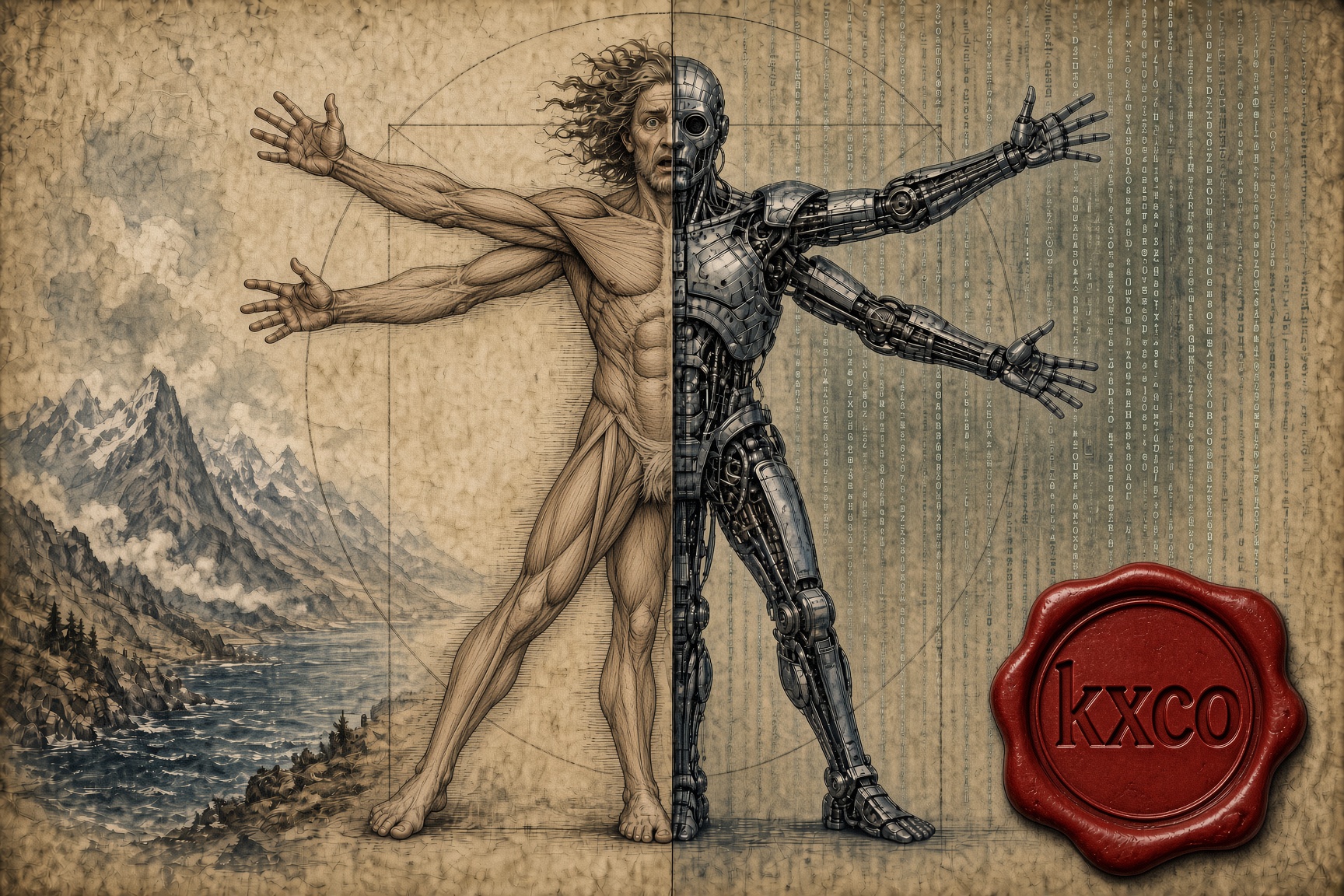
Don't Be the Best, Be the Only: Winning in an AI World
AI is repricing competence downward. What it cannot reproduce is a life. The case for remaining non-fungible, why friction still produces the best ideas, and what it means to build AI systems that keep the human intellect in them.
Every story, signed and delivered.
Subscribe to the kxco channel and get the headline, the AI-written key takeaways, and the chain-anchor link the moment we publish. Audio versions and per-ticker subscriptions arrive in the next iteration.