
Making Illiquid Assets Liquid
#NFTs #blockchain #cryprocurrency #tokens #digital #illiquid #liquid #assets #ICO #art #CBCD #investors #risk
"Today, it takes just a click to buy an airline ticket, a new or used sweater, but if you want to buy stocks or get a mortgage, transactions are time intensive and somewhat complex"-- Paul Ebeling
Liquidity is a gauge of how much access an individual or business has to cash. The easier an asset be it an investment, a collectible, or even a precious metal stored in a safe somewhere can be "liquefied" for its cash value, the higher its liquidity.
Whether it waiting for documents or settlement, many types of transactions are not instant.
Assets like gold, real estate, fine art, classic and vintage motorcars or carbon credits are more difficult to transfer, often obligating buyers and sellers to contend with regs, lots of paperwork and lengthy procedures.
So by representing physical assets as digital tokens on a distributed digital ledger or blockchain, it is now possible to unlock the value of real-world assets and to exchange them in real time.
Payments are the backbone of global commerce
Today’s cross-border payment processes are fraught with time delays, complexity, and inefficiencies.
Payments are the backbone of global commerce, but payment in real time has yet to be achieved. Whether it is payments or other asset classes, the ability to move real-world assets onto a blockchain offers the advantages of a secure digital platform, while retaining the characteristics of the asset.
Securitization is the process through which contractual obligations such as mortgages, car loans, personal debt or receivables are pooled, and their cash flows are sold as standard units to investors.
Since the early 1970s this process has become more common and broadly applied. But “tokenization” goes steps further. Instead of restructuring cash flows like securitization, it monetizes the “right to use.”
Digitization of assets is a process in which the rights to an asset are converted into a digital token on a blockchain. Ownership rights are transmitted and traded on a digital platform, and the real-world assets on the blockchain are represented by digital tokens.
Many types of financial assets are already digital, such as when cash is represented as numbers on a screen. But tokens enable certain assets to move swiftly across digital platforms or networks.
Opportunities for cross-border trade increase as geographic barriers are removed. Tokenization can unlock new markets for previously frozen, underutilized, or illiquid assets and offers possibilities for new types of fractional ownership.
Token-based assets are rapidly gaining widespread acceptance.
The ICO (initial coin offering) market is the case in point. This new method of crowdfunding recently broke the $5-B barrier globally. ICOs involve the creation and sale of cryptocurrency, or tokens, to fund projects.
With an ICO, a project has a viable alternative to the traditional routes of obtaining money through banks or venture capitalists, which typically involve a lot of time and sharing of control.
ICOs also bypass the limits of traditional crowdfunding by introducing a secondary market to their funders. This secondary market is why, despite ICOs generally being considered high-risk ventures, many people are willing to take the chance in the hopes of large payoffs later.
Digital currencies are another area that has grown quickly.
Recently, some countries have begun looking into creating a new form of money called a CBCD (central-bank digital currency). The goal is to complement electronic payment modes from commercial entities with a state-sponsored solution that is as inclusive and ubiquitous as traditional banknotes and coins used to be.
For the full report please click here.
Have a prosperous day, Keep the Faith!
Industrialising Intelligence: Demand, Scarcity and the Boundary of Sovereignty
AI agents generate 80% of OpenRouter's tokens, about seven times human use, and Google's monthly tokens rose about 330 times in two years to over 3.2 quadrillion. In my view the limit on AI demand has moved from people to power: the International Energy Agency expects data-centre electricity to reach around 945 terawatt-hours by 2030. Execution is becoming a utility. Selection is not. KXCO builds the boundary that keeps the decision with a named person and lets another party check the record.
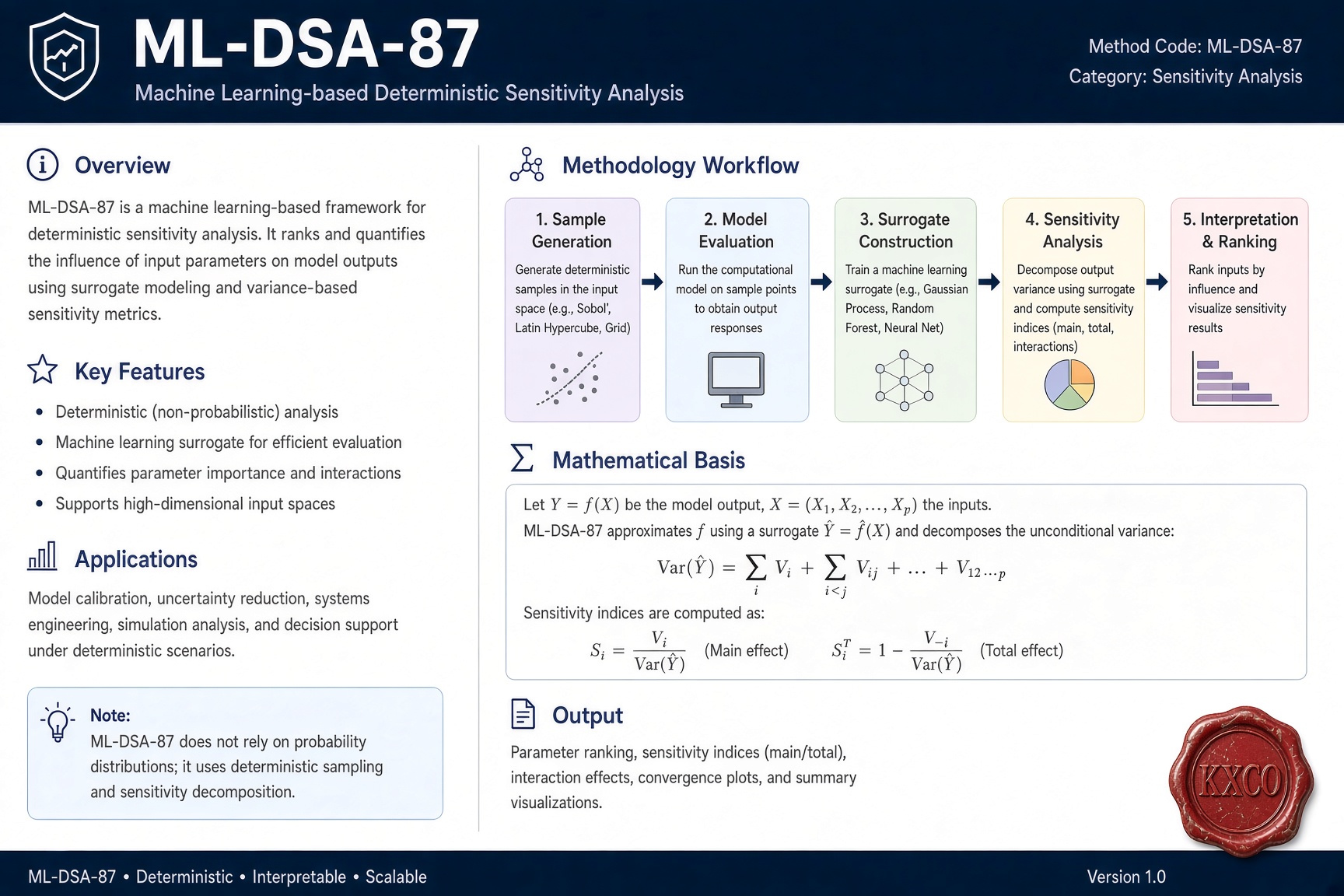
KXCO Now Verifies ML-DSA-87 in Consensus, the Signature Level Named by the NSA
On 6 October 2026 KXCO's chain began verifying ML-DSA-87 signatures as a rule of consensus, and the first ML-DSA-87 identity registered 28 seconds later. ML-DSA-87 is the category 5 level of NIST's FIPS 204, specified by the NSA for US national security systems and preferred by Australia's Information Security Manual. KXCO ships it for signing and for keys held in hardware, accepts it across its network and verifies it on chain, and anyone can check a verdict.
Careful of the Prompts You Give Yourself
A prompt is not only what you type into a model. It is any sentence that gets inside you and starts issuing orders. Most of what we call goals were written by comparison, media, competition and now the model, and they arrive dressed as ambition. Shayne Heffernan maps how an imported sentence becomes a week, why a want should carry its source the way a Round Table claim does, and how to strip, lock and guard the objective that is actually yours.

KXCO is Enhanced Intelligence, Not Artificial
I never wanted artificial intelligence. I wanted enhanced intelligence, and they are not the same product. Artificial means the machine does the thinking and hands you the answer. Enhanced means I do the thinking, with more of my own mind in the room than I have ever had at one time. Forty years of reading, recallable in the second I need it. Patterns across law, credit, physics and markets that no specialist sees, because the useful ones sit between the fields rather than inside them.
Every story, signed and delivered.
Subscribe to the kxco channel and get the headline, the AI-written key takeaways, and the chain-anchor link the moment we publish. Audio versions and per-ticker subscriptions arrive in the next iteration.